Showing posts with label market. Show all posts

Wednesday, November 14, 2012

Google Nexus 4 vs. Samsung Galaxy S3: In-depth comparison

Google Nexus 4 vs samsung galaxy s3 android smartphones

If you're in the market for a new Android smartphone and you want something truly top of the line then the Samsung Galaxy S3 and the Google Nexus 4 are bound to be in your sights. The question is: which is better? We put the Galaxy S3 and Nexus 4 head-to-head in this detailed comparison and try to pick a winner.

The Samsung Galaxy S3 has been the relatively undisputed heavyweight champ on the Android scene for half a year now. It is, quite simply, an awesome smartphone. The new challenger emerging is the Google Nexus 4 and it’s looking lean, mean, and dangerous. Manufactured by underdog LG, the Nexus 4 combines impressive specs with an affordable price tag. The question is – does the Nexus 4 have what it takes to steal the title?

Warm up for the main event with an undercard including our Samsung Galaxy S3 review and a detailed Galaxy S3 vs Nexus 4 spec showdown.

The Galaxy S3 has been on the market for a while now and you can get it from various carriers, although there are some slight differences between versions. The Nexus 4 comes in two flavors – 8GB or 16GB – and it went on sale November 13.

Display quality

Let’s open the bout with the first thing that strikes you about both devices: the screen. The Galaxy S3 has been lauded and derided for having a huge display. At 4.8 inches, the screen size was criticized by some for making the phone too large to handle comfortably. Consumers clearly didn’t agree with the critics because sales have been impressive and there’s a clear trend towards bigger displays in the market generally now. The Nexus 4 has a slightly smaller display at 4.7 inches.

The fact the Nexus 4 has a slightly higher resolution and a smaller screen than the Galaxy S3, means that the pixel density is greater. The Nexus 4 should be sharper. The displays also use different technology. The Nexus 4 display is IPS LCD and the Galaxy S3 is Super AMOLED (if you want to know what that means check out AMOLED vs LCD). Both displays have great color reproduction and good viewing angles and they both have Gorilla Glass 2 protection. The Galaxy S3 might edge it on better viewability in sunlight and that extra size, but the Nexus 4 display is sharper.

Winner: Draw

Design and feel

Neither Samsung nor LG are famed for high quality construction when it comes to smartphones. The Nexus 4 has a rounded form factor and is made of plastic with glass front and back and a chrome style rim. When the light catches the back you’ll see an eye-catching hologram design. It’s a premium look and feel not generally associated with LG, but it is indicative of the company’s push towards the top end of the Android market.

The Galaxy S3 is also rounded with a slightly textured pattern on the border which carries round onto the plastic frame and polycarbonate back cover. There is a single Home button on the front, while the Nexus 4 has no physical buttons on the front. Despite claims that the plastic feels cheap it is very durable and it obviously helps to keep the weight down.

In terms of size the Galaxy S3 is slightly bigger in height and width, but it is also slightly slimmer and it weighs a touch less. Ports and buttons are virtually identical, including right side placement for the power button, which helps you reach it more easily on larger form factor smartphones.

Winner: Draw

User interface and platform

As a Google release the Nexus 4 is vanilla Android and it sports version 4.2 which offers a handful of slight improvements over 4.1, but is still classed as Jelly Bean. There’s a new Quick Settings screen, widget support on the lock screen, improved Google Now, and Voice Search, among a few other new bits and pieces in version 4.2.

The Galaxy S3 launched with Android 4.0 (Ice Cream Sandwich), but the Jelly Bean 4.1 update has rolled out to many devices already. It also has Samsung’s TouchWiz interface, which has already added some features such as a Quick Settings menu in the Notifications bar.

There isn’t a huge difference in usability, but the latest version of Android is always the best. The 4.1 update for the Galaxy S3 brought a very noticeable improvement in speed and performance, alongside great features like expanded Notifications and Google Now. An S3 with Android 4.0 and TouchWiz is definitely behind the Nexus 4 with vanilla Android 4.2.

Winner: Nexus 4

Processor and RAM

Both devices have quad-core processors. The Galaxy S3 has a 1.4GHz Exynos 4412 and the Nexus 4 is sporting a Qualcomm Snapdragon S4 Pro clocked at 1.5GHz. The Nexus 4 has 2GB of RAM, which outperforms the 1GB of RAM in the European and international versions of the S3. The U.S. version of the Galaxy S3 matches the Nexus 4′s 2GB of RAM but lags behind with a dual-core processor.

Winner: Nexus 4

Storage

The Nexus 4 comes in 8GB and 16GB versions and in typical Nexus-style there is no microSD slot. You’ll need a screwdriver if you want to open it. The Galaxy S3 comes in 16GB, 32GB, and 64GB varieties and you can expand by a further 64GB thanks to the microSD slot which you can get to by removing the back cover. There is no contest here.

Winner: Galaxy S3

Cameras

When it comes to the main camera, both devices have excellent 8-megapixel rear-facing cameras that can record 1080p video at 30 fps. They also both have the usual LED flash, face detection, and a host of other features. Android 4.2 brings a cool new Photo Sphere feature for panoramas to the Nexus 4, but the Galaxy S3 camera app has some nifty features, too.

It’s easier to separate the two phones on the front-facing camera because the Galaxy S3 has a 1.9-megapixel camera and the Nexus 4 has a 1.3-megapixel camera. Do many people really care about the front-facing camera? For those that do, the S3 wins out.

Samsung Galaxy S3 review screen taking photo horizontal recording

Winner: Galaxy S3

Battery

Both phones have batteries rated at 2,100mAh. The Galaxy S3 battery is removable while the Nexus 4 battery isn’t, but few people will carry around a second battery anyway. We’ll need to wait for more extensive hands-on testing to see if there’s any real difference in actual use, but . It’s probably worth mentioning that the Nexus 4 does support wireless charging and has a nifty Wireless Charging Orb accessory, although you do have to buy it separately.

Winner: Draw

Connectivity

You’ve got NFC, Wi-Fi, Bluetooth, DLNA, and everything else you would expect to find on both smartphones. The widely noted difference is that the Nexus 4 doesn’t support 4G LTE. It’s debatable how much that matters, because HSPA+ can be very fast, but if you live in the right area then LTE is the fastest mobile network connection you can have right now so it was a surprising omission.

Winner – Galaxy S3

Price

This is where some of the losses above for the Nexus 4 can be cancelled out because it is significantly cheaper than the Galaxy S3. It is basically $300 for the unlocked 8GB Nexus 4 or $350 for the 16GB version. That compares to around $600 for an unlocked 16GB Galaxy S3.

On contract you can get the Nexus 4 for $200 while the Galaxy S3 is closer to $300.

Winner – Nexus 4

Overall Winner: Nexus 4
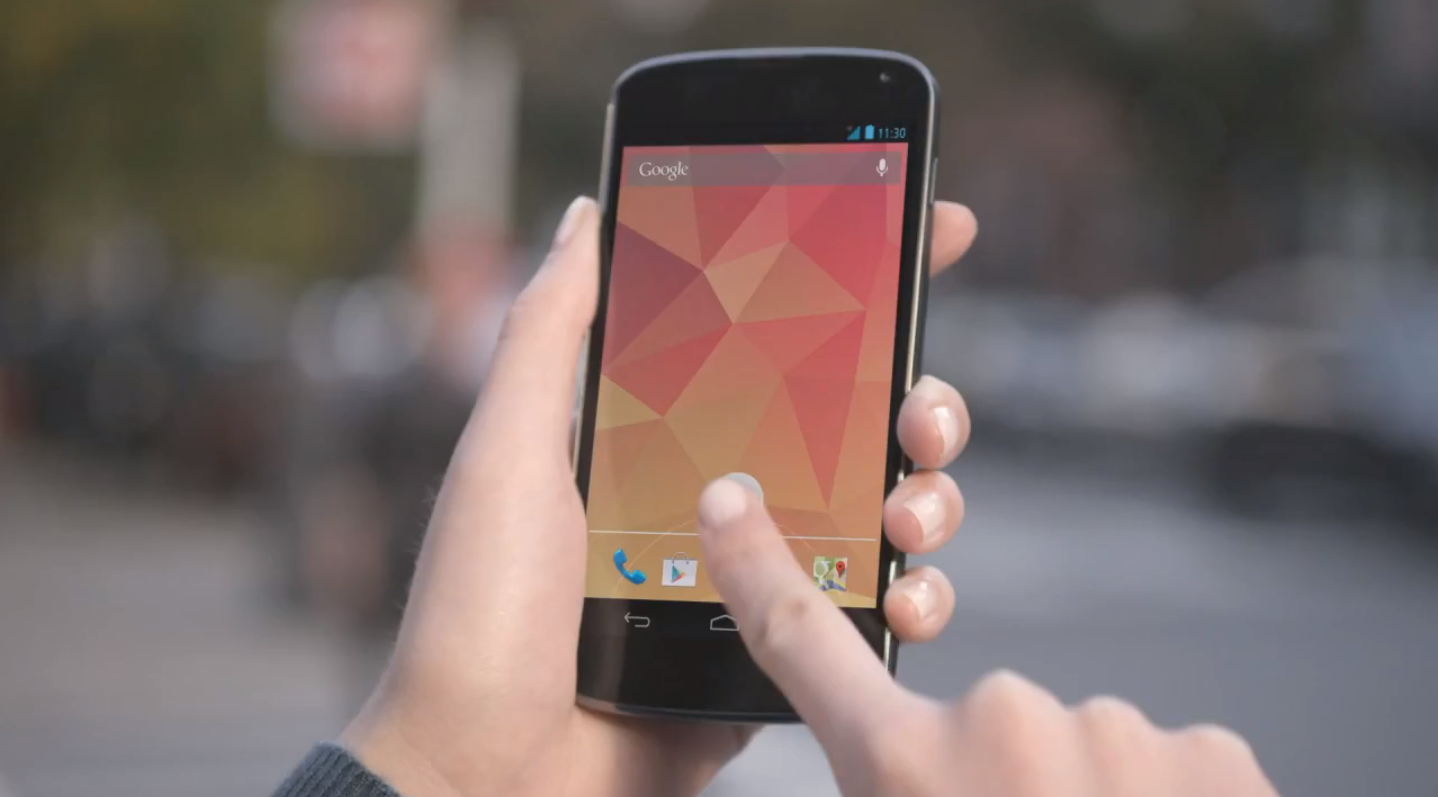
Google Nexus 4, Nexus 10 announced

If we add up the scores it actually turns out to be a tie with 3 wins apiece and 3 draws, but hopping off the fence we’ll give this one to the Nexus 4 because it manages to offer more value for your money. The wins that the Nexus 4 racked up will probably be more important to most people – it’s faster, it has the latest version of Android, and it’s cheaper. However, if you’re on a carrier with a robust 4G LTE network, or you heavily value storage or the quality of your front-facing camera, the Galaxy S3 may be the phone for you.


Source : http://www.digitaltrends.com/mobile/in-depth-comparison-google-nexus-4-vs-galaxy-s3/

Android and Samsung build on their market shares in Q3 2012

Android's market share increased significantly during the third quarter of 2012, with the Google OS powering 72.4% of all smartphones sold in the three months' period. Apple's iOS came a very distant second with a market share of 13.9%.


This is an impressive accomplishment for Google's mobile OS, considering Android's market share was 52.5% in Q3 of 2011.

Samsung saw its position as the leading mobile manufacturer increase to 22.9% after selling almost 100 million phones in the three month period ending in September. This was mostly at the expense of Nokia, which saw its market share slide almost 5 percent points year-over-year.


The holiday season should see Apple take back some of both of those pies, as many iOS-faithfuls held off on replacing their smartphones until the iPhone 5 came around. Apple's new smartphone top dog is expanding its availability to many new markets in Q4, which should help Apple arrest the fall in iOS market share.

Source | Via


Source : http://www.gsmarena.com/android_and_samsung_build_on_their_market_shares_in_q3_2012-news-5082.php

Friday, November 9, 2012

Best Microsoft Surface tablet cases and accessories

Microsoft covers surface tablet

What kind of cases and covers, or Microsoft Surface accessories are available on the market right now? Join us as we take a look at some great options for the Surface with Windows RT and the Surface with Windows 8 Pro.

If you’ve been tempted by Microsoft’s new Surface tablets then you’ll probably be on the lookout for a new case and maybe some accessories. There’s no denying that the magnesium shell and Gorilla Glass 2 screen look tough – just check out the skateboard demo – but that doesn’t mean you won’t want some protection or a practical bag to carry your shiny new tablet in.

We’re also going to take a look at the options out there for Microsoft Surface accessories. There are a couple of adapters that might prove essential and everyone could use some extra storage. The choices for cases are limited, partly perhaps because the Surface tablet has a built-in kickstand (something that cases and covers often offer) and partly because manufacturers are unsure how popular it will be.

Anyone still undecided about the new tablets should check out our Microsoft Surface with Windows RT review to find out how it stacks up.

Touch Cover ($120)

microsoft touch cover surface tablet

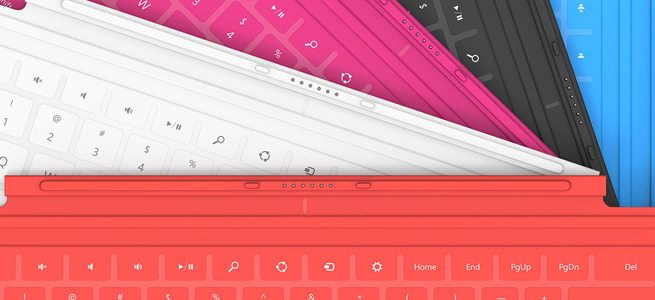
This super-slim, pressure-sensitive keyboard doubles up as a protective cover. It also has a trackpad and some handy Windows shortcut keys. It snaps into place with a magnetic seal that’s quite strong. It’s great to have a keyboard cover that’s only 3.5mm thick and weighs just 0.46 pounds, but there is a drawback. Most reviews have pointed out that it is uncomfortable to type on because it is so flat and unresponsive. The color choices of cyan, magenta, and red are also going to put some people off, but don’t worry they come in black and white as well.

Type Cover ($130)

It is bigger and it only comes in black, but for serious typists the mechanical keys of the Type Cover are going to be far preferable to the Touch Cover keyboard. It is still only 6mm thick and it weighs 0.55 pounds. It also has the trackpad and shortcut keys and it clicks on with the same magnetic attachment. The Type Cover really makes the Surface feel like a laptop and it’s much easier to get used to than the Touch Cover which makes it well worth the extra $10.

Incipio Padded Nylon Sleeve ($40)

A nylon sleeve isn’t going to offer major protection from bumps, but it will keep dust and scratches at bay. The close-seamed zipper has a neoprene lining and rubberized pulls for ease of use and comfort.  The inner lining is soft, faux-fur which provides some cushioning from bumps and there’s a handy external pocket with a zipper for extras. It comes in a range of two-tone color combinations and it’s one of the few options on the market right now designed specifically for the Surface.

Surface HD Digital AV Adapter or Surface VGA Adapter ($40 each)

If you were expecting to find any extras beyond the power supply in your Microsoft Surface box then you’ll be disappointed. Many will consider these pricey adapters to be essential, and they are described as “proprietary”. For $40 a piece you can get an adapter for any HDMI-compatible display or one for any VGA-compatible display. This is definitely the simplest way to see your Surface content on a big screen or through a projector. Don’t feel that you have to splash out for the official adapter, though, because the Surface has a standard micro-HDMI port so any HDMI-to-micro-HDMI cable will do and if you shop around there’s no need to spend more than $5.

SanDisk microSD Memory Card ($10 to $60)

Since there is actually only 16GB free in a 32GB Microsoft Surface you might be looking for extra storage sooner than expected. The Surface supports microSD, SDHC, and SDXC memory cards. You can pick one up from Amazon at about $10 for 16GB up to about $60 for a 64GB card. You’ll find the memory card slot behind the kickstand. For cheap storage without any added bulk a memory card is your best bet.

Thumb drive or flash drive ($10 to $60)

The Surface tablets also have a USB port. The RT has a USB 2.0 port and the Surface with Windows 8 Pro has a USB 3.0 port. If you invest in a fast flash drive you’ll be able to transfer files quickly and easily. You can back up emails or documents and you can watch movies or listen to music. These handy accessories are a cost-effective and convenient way to boost your storage capacity and they’re great for transferring files from your old PC or laptop. They come in all shapes and sizes and you can find a comparison via the link above. If you need more space then consider an external hard drive instead.

Bluetooth Headset ($50 to $150)

With support for Bluetooth 4.0 you could choose any Bluetooth headset to use with your Surface. The tablets do have built-in dual digital mics, stereo speakers, and a camera, but some people prefer a headset when they Skype. Whether you want to go for the Plantronics Voyager Legend or something from Jawbone, Motorola, or Aliph, really depends on your requirements and your budget.

Xbox 360 Controller ($40)

All the gamers out there will be glad to learn that the Surface tablet supports wired Xbox 360 controllers. It won’t work with wireless controllers, but just like any Windows PC, if you plug a wired Xbox 360 controller into the USB you’ll be able to play games with it. This is more exciting for the Windows 8 Pro version of the Surface tablet because it will support a lot more games. It will be interesting to see whether Microsoft tries to make XBLA games available as it pushes more cross-compatibility with the Xbox 360 in your living room. The second screen app soon to be released on Windows 8 and RT, Xbox SmartGlass looks like the first step.

More ideas

The fact that the Surface tablets boast USB ports and have Bluetooth support means there is already a long list of potential Surface accessories. There’s no need to wait for a bunch of dedicated accessories to be released. You may well find your existing mouse or Bluetooth headphones will work with your new tablet. Post a comment and tell us about your favorite Surface accessories so far.


Source : http://www.digitaltrends.com/mobile/surface-tablet-cases-and-accessories-roundup/

Wednesday, November 7, 2012

HTC DNA leaks in official photo

HTC DNA leaks in official photo
Is greatness in its DNA?

HTC is readying a 5-inch mobile-cum-tablet for the western market, and here's what appears to be its first official photo.

The HTC DNA is a repackaging of the HTC J Butterfly, a challenger to the Galaxy Note 2 that only launched in Japan.

The specs are said to be nigh-on identical to the J Butterfly, with a 5-inch screen that has a resolution equal to a 1080p HD TV. With 1,080x1,920 pixels, the screen resolution will be an eye-popping 440 pixels per inch (ppi). To put that in context, the iPhone 5's retina display only manages 326ppi. So the DNA should look amazing.

If the spec list is correct, it should be a real challenger to the Galaxy Note 2's phablet crown. It should have an 8-megapixel camera on the back, capable of shooting 1080p video, with 16GB storage and 2GB of RAM.

A Qualcomm Snapdragon processor should be inside, powering things, and it should come with Android Jelly Bean 4.1 straight out of the box.

December release

According to previous leaks, the DNA should be on sale in the US next month. There's no word of a European release as yet.

Samsung's Galaxy Note 2 has been a huge hit, selling 3 million units since it was announced in September. So the DNA could piggyback off some of that success.

HTC has been struggling of late, with profits down 79 per cent on the same time last year. October didn't prove any better for the Taiwanese company.

Via @evleaks


Source : http://www.techradar.com/news/phone-and-communications/mobile-phones/htc-dna-leaks-in-official-photo-1110764

Tuesday, November 6, 2012

Smartphone and tablet sales to top 1.2 billion devices in 2013

Gartner, a leading IT research and advisory company, has compiled estimates on the growth of smart devices and the effect they will have on the consumer electronics market. According to the report some 70 percent of total devices sold this year were either tablets or smartphones.


Android is expected to continue to dominate the mobile market even in the business sector, with 56% of devices expected to run on Google's OS by 2016 (up from 34 percent this year).

Tablets are expected to achieve a three-fold growth for business within the next four years, with 53 million units predicted to be sold in 2016.

Finally, Gartner predicts that Windows 8 tablets and smartphones will move to third place behind Apple and Android by 2016, with many businesses choosing smart devices rather than upgrading Windows on desktop PCs like in the past.

Source


Source : http://www.gsmarena.com/smartphone_and_tablet_sales_to_top_12_billion_devices_in_2013-news-5049.php

Our favorite iPad Mini accessories

Take a look at some of the best iPad Mini accessories on the market. We round up the stylish, the portable, the wireless, and the useful, for iPad accessory hunters on the prowl.

The iPad mini is likely to be a popular purchase over the next few months. Whether you’ve treated yourself to one or you know someone who has one, you may be on the lookout for some iPad mini accessories. You can extend the functionality of your new tablet and make it easier to use. You’ll also find that iPad Mini accessories make great gifts, much like the $330 iPad Mini itself.

If you’re looking for a decent set of speakers, a way to stream content to your TV, a stylus for sketching, or a sturdy stand. Whatever iPad Mini accessory you are hunting for there should be an option here to catch your eye.

If you haven’t got protection for your new Apple tablet yet then make sure to check out our iPad Mini cases and covers roundup for ten great suggestions. 

Breffo Spiderpodium iPad Mini stand ($20)

It can be a chore finding the right angle for your iPad mini and most of the stands on the market have a number of preset angles. The Spiderpodium is different. This stand is extremely lightweight and flexible and it allows you to get exactly the right angle for whatever you are doing on your iPad Mini. It feels like soft rubber which also provides good grip, but the skeleton inside is surprisingly strong. It’s a versatile option that you can use in a number of scenarios and it folds flat for when you’re traveling. It comes in a range of colors – there’s even a glow in the dark option.

Jawbone Jambox ($200)

Jawbone-Jambox

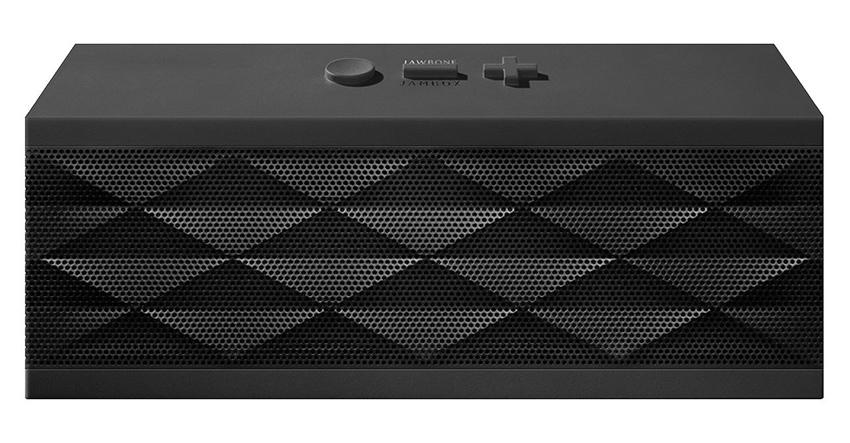
Although the iPad Mini does have stereo speakers, you’ll need to splash out for a decent speaker to enjoy really good sound. Since this is the most portable iPad yet, it makes sense to get a portable speaker and nothing else on the market packs the same quality sound into such a small form as the Jawbone Jambox. It is wireless, with support for Bluetooth, so there’s no need to carry a lot of cables around with you. You can also choose from a wide range of grills and colors to suit you.

Beyerdynamic DTX 101 iE In-Ear Headphones ($100)

If you prefer the compact in-ear style headphones, but you don’t want to sacrifice on quality, then this set from Beyerdynamic is worth considering. You’ll enjoy crystal clear sound with some real power, thanks to the Neodymium acoustic drivers. The headphones come with three different pairs of ear-pieces and a handy soft case for when you’re on the move.

IOGEAR Multi-Link Bluetooth Mini Keyboard for Tablets and Smartphones ($50)

You can actually control six different devices at the touch of a button using this mini Bluetooth keyboard. It’s an ideal wireless keyboard for the iPad Mini because it’s compact, has a number of hotkeys for easy media control, and is very quiet to use. It comes with a nice carry pouch so you can throw it in your bag on trips, as well. It will also work with most smartphones and it only needs two AAA batteries to operate. However, if you prefer to stick with the Apple aesthetic then the Apple Wireless Keyboard might be for you. It is also Bluetooth, it runs on two AA batteries, and it costs $70.

Arkon Deluxe Universal Tablet Headrest Mount ($35)

If you have passengers in the back or you’re taking the kids on a road trip then you can make the most of your iPad Mini with this clever headrest mount. It clamps onto the two poles of the headrest and extends the iPad Mini to sit in between the two front seats so everyone on the back seat can get a great view. It also has a 360 degree swivel ball so that you can switch it from landscape if portrait if you want to. You iPad Mini will fit in this mount even with a case on.

HAND Stylus ($35)

This started out as a Kickstarter project and it surpassed its goal thanks to an excellent design that circumvents the problems typically found in styluses. Namely that there is no way for this stylus to scratch your tablet’s screen because every edge is rounded and smoothed. The 4mm tip is retractable, rotatable, and replaceable. Overall, it’s a responsive and easy-to-use stylus that is ideal for people who prefer to hand write notes and sketch on their iPad Mini. It comes in various colors and that $35 price includes shipping. You can $10 for a bag of six extra tips.

Apple TV ($100)

apple tv ipad accessory

You’ve likely heard of Apple TV before. It’s no new. It’s a $100 device that lets you buy movies and TV shows from iTunes and you can access a handful of other services like Netflix, Hulu Plus, and YouTube on your big screen television. The real attraction for iPad Mini owners is the wireless streaming via AirPlay. You can choose content from your tablet, including your own videos and photos, and see it on your big TV. You can even mirror your iPad Mini’s screen which allows you to blow up games and apps or surf the web in style. There’s also an app that can turn your iPad Mini into a remote control.

If you don’t want Apple TV simply to play content from your iPad Mini you could consider the Lightning Digital AV Adapter, but it does cost $50 and you’ll still need an HDMI cable.

Suggestions? Let us know

You’ll find more and more iPad Mini accessories hitting the market over the next few weeks and there’s already quite a large selection at the Apple Store. If you find anything that’s so good you simply have to recommend it then please post a comment and let us know.


Source : http://www.digitaltrends.com/mobile/best-ipad-mini-accessories/

Monday, November 5, 2012

Samsung Galaxy S3 vs LG Optimus G spec showdown: Longtime rivals duke it out

Galaxy S3 vs Optimus G spec comparison

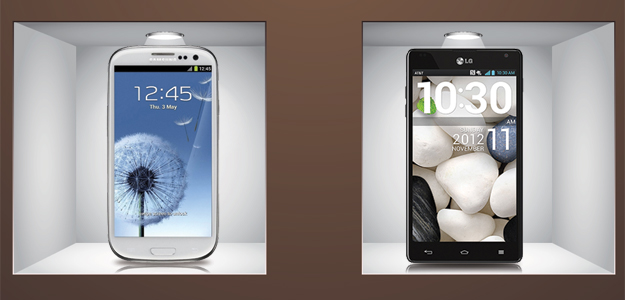
Samsung is currently enjoying its spot atop the Android market with its Galaxy S3. But no crown is safe from a good challenge, and LG is looking to provide one with the Optimus G. Can sheer power push LG's handset past Samsung's current king?

Samsung’s Galaxy S3 has managed to make itself the go-to phone when people look for an Android handset. Making its way up the sales charts on the back of its gorgeous Super AMOLED display, impressive processing power, and solid reputation of its predecessors, the Galaxy S3 snagged a top spot for Android-powered handsets right out of the gate. In a market marked by tons of competition though, there is someone vying for the throne. LG, Samsung’s South Korean rival, is hoping its Optimus G is capable of doing just that. With 2GB RAM and processor speed that matches the Galaxy S3′s offering and an HD screen of its own with the True HD IPS Plus Display, LG is making quite the case for itself. Take a look at how all the intangibles add up and see which phone best fits your needs.

Read our full reviews of the Samsung Galaxy S3 and the LG Optimus G for a more in-depth look at each option.


Galaxy S3

galaxy s3

LG Optimus G

LG Optimus G

Price
$200/$300 (with contract) $200/$300 (SIM-free)
Availability AT&T, Sprint, T-Mob, Verizon AT&T, Sprint
OS  Android 4.0.1 Touchwiz UX/US  Android 4.1 (Jelly Bean) 
Processor  Exynos 4412 (Quad-core)  Snapdragon S4 Pro (Quad-core)
RAM 2GB 2GB
Display  4.8″ Super AMOLED  4.7″ IPS LCD
Resolution  1280×720 pixels 1280×768 pixels
Dimensions (WxDxH)  5.38″ x 2.78″ x 0.34″  5.19″ x 2.71″ x 0.33″ 
Weight 4.69 oz 5.11 oz
4G LTE  Yes  Yes
NFC  Yes  Yes 
Wi-Fi  802.11 b/g/n (dual-band) 802.11 b/g/n (dual-band) 
Rear-facing camera  8 megapixels 13MP Sprint, 8MP on AT&T 
Front-facing camera  1.9 megapixels 1.3 megapixels
Video capabilities  1080p recording  1080p recording 
Internal storage  16/32GB  32GB Sprint, 16GB AT&T 
SD card slot  Yes (up to 64GB)  Yes (up to 64GB)
Max. battery life  11 hours (2100mAh battery)  10 hours (2100mAh battery)

What it means: LG clearly has a contender when it comes to the numbers. But with any boxing match, the tale of the tape only tells so much. You’d be best served taking each phone in hand and playing around with the UI. Both phones run on a modified version of Android 4.0, and those tweaks may be a deciding factor for you in one feels more natural than the other. You may also want to consider your carrier, because the Optimus G base model comes with a 13-megapixel rear-facing camera, but AT&T has neutered the device and dropped it to a standard 8-megapixel camera. The Optimus G ups the ante on the processor, jumping to a quad-core compared to the Galaxy S3′s dual-core. However, Samsung’s offering has the benefit of a sizable market share and some impressive NFC features that only work if two people have Samsung phones. If sheer power is your biggest sales point, consider the Optimus G, but if features outweigh numbers on your scale, the Galaxy S3 may be the way to go.


Source : http://www.digitaltrends.com/mobile/samsung-galaxy-s3-vs-lg-optimus-g/

Friday, November 2, 2012

Microsoft said to be testing its own smartphone

Ever since Microsoft announced the Surface tablet earlier this year, there have been rumors and speculations regarding Microsoft entering the smartphone hardware market as well.


Well, it seems they might. According to the sources at The Wall Street Journal, Microsoft is working with Asian component suppliers to test their own smartphone design. Having said that, the company is not sure if the device will go in mass production.

It is said that the device Microsoft is currently testing has a display between four and five inches. Also, according to The Verge, this device won't be making an official appearance any time before the next year and is supposedly Microsoft's 'Plan B' in case the existing Windows Phone 8 devices fail to make an impression upon the users.

This is certainly interesting news for Windows Phone fans, although we are not sure if the other hardware manufacturers feel the same way.

Source


Source : http://www.gsmarena.com/microsoft_said_to_be_testing_its_own_smartphone-news-5033.php

Thursday, November 1, 2012

Samsung Galaxy Note 2 now transforms into desktop PC

Samsung Galaxy Note 2 now transforms into desktop PC
Ready, steady, dock!

The Samsung Galaxy Note 2 is currently the most powerful smartphone on the market, but would you really want to use it as your desktop PC?

The Galaxy Note 2 Smart Dock lets you connect the phone to a HD monitor, keyboard, mouse and speakers, so you can use the beefy quad-core processor and 2GB of RAM inside to provide you with an all-in-one computing experience.

The dock itself is relatively unassuming, nothing like the Lap Dock you got with the Motorola Atrix, but at $99 (around £60/ AU$95) it's not exactly the cheapest of accessories.

Money, money, money

The price only covers the dock itself so you'll need to provide you own HD monitor as there's no VGA port in play here, as well as an HDMI cable, keyboard and mouse.

While we can't see ourselves using the Smart Dock to replace our laptop for business activities, we can certainly appreciate the advantages when it comes to media playback and sharing – providing an easy way to watch movies stored on the Note 2 on a bigger screen.

The Samsung Galaxy Note 2 Smart Dock only appears to be available in the US at the moment, but we wouldn't be surprised if it made its way to other markets soon.


Source : http://www.techradar.com/news/phone-and-communications/mobile-phones/samsung-galaxy-note-2-now-transforms-into-desktop-pc-1109211

Friday, October 26, 2012

Panasonic planning European smartphone market exit, less than a year after its return

Panasonic Eluga

Panasonic could be planning to withdraw from the European smartphone market, despite only having rejoined at the beginning of the year. Poor sales are cited as the reason, but a lack of effort and financial problems could be closer to the mark.

A new report indicates Panasonic is considering withdrawing its range of phones from Europe, despite only having re-entered the market at the beginning of the year.

Having previously left Europe in 2005, so it could concentrate on sales at home, Panasonic announced its return in February, and showed off its new handsets during Mobile World Congress. A Reuters report says it wanted to sell 1.5 million phones this year, but it’s unlikely to reach this figure, prompting talk of a withdrawal.

It placed its hopes on two phones, the Eluga and the Eluga Power. The former is an Android 2.3 Gingerbread phone with a 4.3-inch touchscreen, and a 1.2GHz, dual-core Texas Instruments processor. Despite boasting a slim, 7.8mm chassis and an attractive, waterproof body, this specification barely provided the phone with the power to compete with devices from Samsung, Apple and HTC.

The Eluga Power could have been a bigger success, as it has a 5-inch, high definition touchscreen, a dual-core Snapdragon S4 chip, Android 4.0 and IP57 water and dust proofing. A true competitor to the Galaxy Note, then.

Both phones could be purchased through online retailers, but Panasonic never appeared to sign any deals with UK networks. While this isn’t quite as important as it is in the US, it would have been essential for Panasonic to re-connect with buyers and promote its new phones.

Evidence of trouble brewing came when the firm told TechRadar.com in August that it was selling its two phones “to consumers in Germany and Italy and currently does not have any plans to change this.” A report in The Times around the same time said Panasonic had put its European smartphone plans on hold, and “looked likely to abandon its mass market ambitions.”

The smartphone market is tough, but Panasonic’s potential exit could be directly related to the $7.6 billion bailout given to it by Japanese banks this month after record losses, rather than any failure to perform following its half-hearted attempt to break back into Europe.


Source : http://www.digitaltrends.com/mobile/panasonic-could-be-about-to-leave-the-european-smartphone-market/

Samsung tops the global smartphone market, as HTC, Nokia and RIM fall further behind

Samsung Logo Door Offices

Research published by market analysts IDC has put Samsung way out in front of its rivals in the global smartphone market share charts, where Nokia has disappeared from the top five for the first time, and HTC has dropped several spots too.

Market analyst company IDC has released the latest version of its Mobile Phone Tracker information chart, showing where it places the world’s major phone manufacturers regarding smartphone market share and sales. Samsung is the star of the show, a fact reflected in its own quarterly results, while Nokia, HTC and Research in Motion all show signs of suffering at both its, and Apple’s hands.

Samsung has retained its position at the top of the charts, with a 31.3-percent market share, up from 22.7-percent last year. It’s estimated to have shipped 56 million smartphones between July and September, a huge improvement over the already impressive 28 million from the same period last year.

The Korean company has also announced its financial report for the same period, posting $7.4 billion in profits, beating its previous record for the fourth consecutive time. A Reuters piece on the subject puts its smartphone shipments at 58 million, slightly higher than IDC’s figure, and says that between 18 and 20 million of that amount were Galaxy S3 handsets.

HTC drops behind RIM and ZTE

Apple comes second in IDC’s ranking, with 15-percent of the smartphone market, up from 13.8-percent this time last year, and we all know how it has been performing recently. Research in Motion is gamely holding on to third position with a market share of 4.3-percent, down from 9.6-percent last year, but ZTE is a mere 0.1-percent behind — making a position change likely in IDC’s next report.

Finally, the top five is rounded out by HTC. This time last year, it had a 10.3-percent market share, and was ahead of both RIM and ZTE, but now, with a dismal 4-percent, it trails both of them. It’s shown to have sold 7.3 million smartphones this quarter, highlighting the gulf that has opened up between it, Apple and particularly Samsung.

To try to drum up some business in Europe, HTC has today launched Best Deals, a variation on the popular daily deal system, where HTC owners can enter their own deal preferences and, based on location, the app will return relevant offers. There are 12 providers signed up to Best Deals, including iVoucher, Daily Deal, Qype and LivingSocial, but perhaps crucially, not Groupon. The Best Deals app looks to be part of HTC Sense, is compatible with the One X, One S, One X+, the 8X and 8S, and will be available in the UK, Italy, Germany, France and Spain in November.

Nokia leaves the top five for the first time

Finally, we come to Nokia, a company absent from IDC’s top five smartphone companies for the first time since it first began keeping records in 2004. It does still appear in the overall list of general phone manufacturers though, and in second position. It has shipped a massive 82 million phones during the third quarter, down from the 106 million it shipped during the same period last year, and it retains an 18.7-percent market share.

Samsung again tops this list, with a 23-percent market share and a grand total of 105.4 million phones leaving its warehouse.

There’s no sign of the global smartphone market slowing down either, as the 179 million smartphones sold this summer is 45.3-percent more than this time last year.


Source : http://www.digitaltrends.com/mobile/research-shows-samsung-tops-the-global-smartphone-market/

Panasonic pulls out of the European mobile game… again

Panasonic pulls out of the European mobile game… again
But it can't fail! It's waterproof!

Panasonic's decided that if it can't make it in nine months, it'll never make it in the European mobile market. So it's pulling out. Again.

According to Japanese newspaper Nikkei, the company has decided to discontinue mobile sales in the European market by spring 2013.

It was December 2011 when Panasonic announced that it was going to give Europe another go, and it unveiled the Panasonic Eluga at MWC 2012 the following February.

Fruity

The newspaper column cites the dominance of Apple and Samsung as a major cause for its pull-out.

Apparently Panasonic plans to focus more on partnerships in Japan rather than eyeing world domination.

The Panasonic Eluga's luke-warm reception was thanks in-part to its distinctly average performance (we gave it three stars) and the fact that a higher-specced edition was announced before it even hit Europe's shop shelves. But it is waterproof, so there is that.


Source : http://www.techradar.com/news/phone-and-communications/mobile-phones/panasonic-pulls-out-of-the-european-mobile-game-again-1107661

Tuesday, October 23, 2012

iPad 3 vs iPad 4: Spec Showdown

Making a far quieter entrance into the market than its Mini counterpart, the iPad 4 has arrived. It's the fourth refresh the iPad has had in two years. Check out its specs alongside its predecessor and see if the iPad 4 is worth it for you.

Every company with a tablet on the market wants its product to be the “iPad Killer.” Unfortunately for its competitors, Apple has a tendency of killing its own products and bringing them back to life with improvements that leapfrog the last benchmark. In its nearly regular refresh — the fourth in two years — to the iPad, Apple is making some small changes. Visually, nothing changes as the device holds steady at the same dimensions and identical Retina display that was introduced on the iPad 3. The processor got a slight boost to a 1.3GHz A6X dual-core and the front-facing camera gets clearer with a 1.3-megapixel lens. The charging port is also changed out for the new Lightning Connector. Take a look at the full side-by-side spec breakdown below.

It doesn’t seem like Apple will be chasing too many current iPad owners with the iPad 4. The upgrades are fairly minimal from what the 3rd generation offered and likely won’t convert iPad 3 owners. More than likely, the iPad 4′s market will be for folks that are still without a tablet in their possession or for people who passed on the last two refreshes and still own the original iPad or the iPad 2. Assuming the price for the iPad 3 drops similarly to how the iPad 2 did (currently $400 in the Apple Store), it may become an attractive entry level tablet for people that prefer the Apple brand. The iPad 4 feels like it got pushed out to market to make the Lightning connector the universal offering in Apple’s mobile line. It may still be an option for hold outs, but iPad 3 owners may be wise to skip this generation.

(*A quick note: We use the words iPad 3 and iPad 4 to mean 3rd generation and 4th generation iPad.)


Source : http://www.digitaltrends.com/mobile/ipad-3-vs-ipad-4/

Wednesday, October 17, 2012

Nokia's Windows Phone 8 handsets could be most expensive

Nokia's Windows Phone 8 handsets could be most expensive
Lumia 920 is going to be pricey

The Windows Phone 8-powered Nokia Lumia 920 and Lumia 820 handsets will apparently be priced out of the market by HTC and Samsung.

This is according to the (admittedly erratic) Digitimes, which cites 'industry sources' claiming HTC and Samsung will implement aggressive pricing strategies for their Windows Phone 8 devices as they look to undercut the Finnish firm - something that would at least give the platform a decent boost.

Currently Nokia is the manufacturer of choice when it comes to Windows Phone, thanks to its partnership with Microsoft, however that could be about to change as the software giant has selected the HTC Windows Phone 8X as its flagship device for the latest version of its mobile platform.

Good for Windows Phone

With prices set to be competitive in the Windows Phone 8 arena, this can only be a good thing for the new operating system, hopefully making it a more attractive option to consumers.

Apparently the HTC 8X will fall into the $500-600 (£310-370/AU$485-580) SIM-free bracket, while the sources say the Samsung Ativ S is likely to push closer to $700 (£430/AU$680), and Nokia's Lumia handsets are said to range from $600-800 (£370-495/AU$580-775).

A separate source suggests than the Huawei Ascend W1, the Chinese firm's first Windows Phone 8 device, could come in as low as $300-$350 (£185-215/AU$290-340), which may be perfect for people looking for a cheap Windows thrill.


Source : http://www.techradar.com/news/phone-and-communications/mobile-phones/nokias-windows-phone-8-handsets-could-be-most-expensive-1105007

Monday, October 15, 2012

A whole lotta clickin’: Microsoft launches its first Surface ad

A week before its new Surface tablet hits the market, Microsoft has launched its first ad for the device, giving nothing away about its price....or anything else for that matter.

OK here we go, it’s lift-off for Microsoft’s Surface ad campaign, a week before the tablet is due to launch.

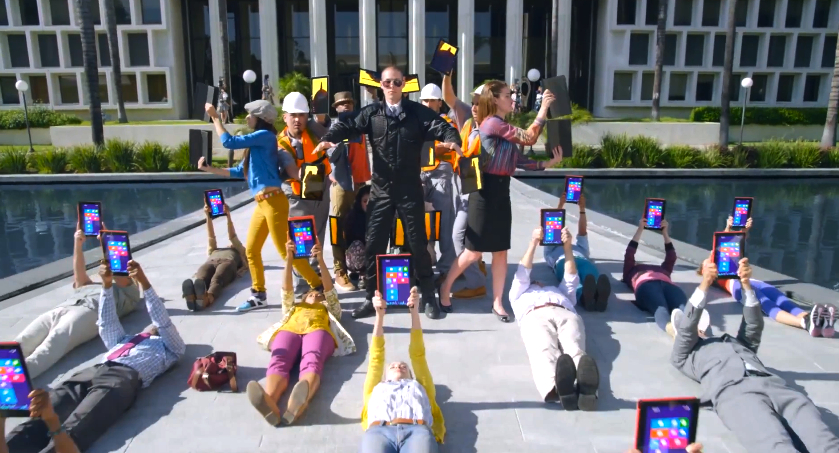
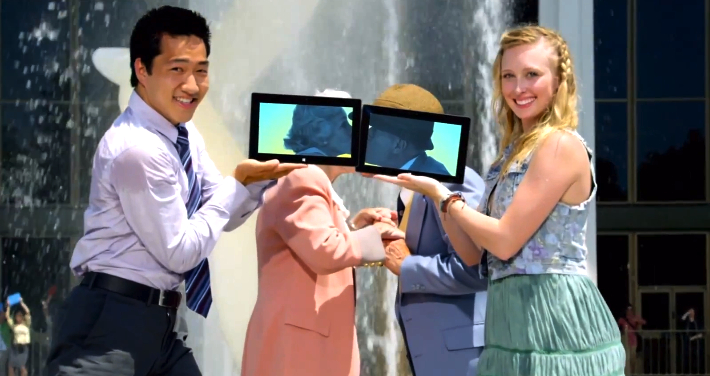
Microsoft’s first ad for its new tablet is a stylish 60-second skit, an all-clicking, all-dancing affair featuring, among others, young families, business workers, dancing schoolgirls, smooching senior citizens and a whole lot of colorful Surface tablets. The wide range of participants in the ad is the Redmond-based company saying, “Hey, this tablet’s for you (oh, and you and you and……).”

It’s more of a teaser than anything else – there’s nothing about specs and no pricing information – designed to create awareness and make those who haven’t heard about Microsoft’s first foray into the tablet world look up and say, “What’s that all about then?”

The ad starts in silence – you might think your video player is on mute at first. Then things start to make sense. It’s all about the click – the click the tablet makes when it connects with its magnetic Touch Cover keyboard; the click it makes when the kickstand is put into action. Within seconds, the screen is filled with a mass of dancing people clicking their tablets to the music. And, well, that’s about it. You can check out the new ad below.

Microsoft’s upcoming Surface tablet has a 10.6-inch display with a 16:9 aspect ratio and comes together with the Touch Cover click-on (yes, it clicks on, did we mention that?) keyboard. The tablet comprises two models, one powered by Windows 8 Pro and a more basic version running Windows RT.

The RT model launches next week while the Surface Pro is expected to be available early 2013.

The Surface’s price tag is still a mystery, though last month Microsoft boss Steve Ballmer dashed hopes of a cut-price tablet when he suggested a likely launch price of between $300 and $800. C’mon Steve, you could’ve narrowed the range a little, no?

Next week looks set to be a busy one in the world of tablet computers, with Apple reportedly unveiling (no, really, it might be happening) its iPad Mini on October 23, three days before the launch of the Surface.


Source : http://www.digitaltrends.com/mobile/a-whole-lotta-clickin-microsoft-launches-first-surface-ad/

Huawei W1 with Windows Phone 8 images emerge

Alleged images of the Windows Phone 8 booting Huawei W1 have emerged. The smartphone is expected to be unveiled by the end of the year with its home market in China being the first to receive it.

Despite looking a lot like the Windows Phone 8X by HTC, the Huawei W1 will pack mid-range specifications. They include a 1.2GHz dual-core CPU, 512MB of RAM, 4GB of built-in memory, 4" WVGA display, and a 5MP camera. A 2000mAh will power the handset.

Via


Source : http://www.gsmarena.com/huawei_w1_with_windows_phone_8_images_emerge_-news-4953.php

Friday, October 12, 2012

Samsung Galaxy S3 Mini release date: when will you get it?

Samsung Galaxy S3 Mini release date: when will you get it?
Who wants a Samsung Galaxy S3 Mini?

The Samsung Galaxy S3 Mini flaunts itself as the little brother of the big, powerful Galaxy S3 - which took the mobile market by storm this year.

Samsung is yet to give us an official Galaxy S3 Mini release date, but according to the Phones4U website, it will start shipping the smartphone from November 2.

The Samsung Galaxy S3 Mini offers up a 4-inch, 480 x 800 Super AMOLED display, 1GHz dual-core processor, 8GB of internal storage, 5MP rear camera with flash, micro SD card slot and comes running Android 4.1 Jelly Bean.

We've been hunting down the UK networks and retailers to find out who's offering it, and at what price.

Phones4U - the high street retailer has got ahead of the pack and already has its pre-order page up for the Samsung Galaxy S3 Mini, with a range of tariffs from O2, Orange and Vodafone for you to select.

You can pick up a free Galaxy S3 Mini on contracts starting at £25 per month, and the first 350 customers to pre-order will also get a free Samsung S Pebble – a mini MP3 player which pairs with the phone.

Carphone Warehouse – there's nothing currently on the Carphone website, so we contacted the retailer to find out its plans, and a spokesperson has confirmed it will be stocking the Galaxy S3 Mini.

Vodafonetook to Twitter soon after Samsung's announcement to declare that it will indeed be selling the Galaxy S3 Mini – however all it said was that it's "coming soon", with no word on price.

O2 – while various O2 tariffs are listed on the Phones4U pre-order page, the bubbly network is yet to confirm whether if will be offering the Galaxy S3 Mini directly.

Orange – we've contacted Orange and asked if the Galaxy S3 Mini would be gracing its line-up, but we're still waiting on a response.

However thanks to Phones4U, we can be pretty sure the colour- or fruit-inspired network will offer the Galaxy S3 Mini to its customers.

T-Mobile – we're also waiting to hear back from T-Mobile on whether it will be stocking the Samsung Galaxy S3 Mini.

Three – the data-friendly network will probably complete the network line up and stock the Galaxy S3 Mini, although we're yet to hear anything official.

SIM-free – if you hate being tied down to a contact or forcibly linked with a network, then you may want to pick up the Galaxy S3 Mini SIM-free.

Online retailer Clove already has its pre-order page up, but it's asking for £298.60 for the handset, which seems a little on the steep side to us.


Source : http://www.techradar.com/news/phone-and-communications/mobile-phones/samsung-galaxy-s3-mini-release-date-when-will-you-get-it-1103982

Thursday, October 11, 2012

Japanese mobile carrier SoftBank may buy Sprint

SoftBank of Japan could potentially have a new market to try to conquer. Reports say the Japanese provider is looking to take control of Sprint and enter the U.S. market.

Apparently bored by its meteoric rise through the ranks of Japan’s telecom market, SoftBank is now ready to make a major play for a piece of the American pie. According to the New York Times, Japan’s second largest wireless service provider is close to taking controlling interest in Sprint, America’s third largest mobile carrier.

SoftBank is no stranger to growth through acquisition, as it has made its way toward the top of the Japanese market by buying up other competition. This includes the purchase of eAccess, which occurred earlier this month and bumped SoftBank into the second slot for service providers in Japan. It has yet to make a move as sizable as the proposed Sprint purchase, though. While details are still hazy, a report from Reuters set the cost for controlling stake at 1 trillion Yen, or about $15.9 billion. Other sources the cost to be as high as $30 billion. It’s a sizable price tag, but it also introduces one of the shrewdest of companies to the huge American market that is ripe for competition.

For Sprint, the would deal finally give it the deep pocket backing it so desperately needs. The carrier has struggled to gain its footing after royally screwing up its Nextel merger years back. It has since attempted to expand its infrastructure in hopes of offering a competitive LTE network, but the $21 billion debt and consistent money loss since 2007 has hindered any chance at growth. A recent attempt to buy MetroPCS and block the merger between the regional provider and the Deutsche Telekom owned T-Mobile is the latest in Sprint’s seemingly futile attempts to retain its share of the U.S. market. SoftBank could be the boost it needs to get back in the fight.

While most reports claim the deal to be nearing its final stages and are expecting an announcement soon, Sprint and SoftBank appear to be completely shocked by the news leaking out. Sprint has declined any comment and SoftBank issued a statement that staunchly said, “The story about SoftBank and Sprint Nextel Corporation being reported is based on speculation. We have not announced anything. We do not comment on speculation.”


Source : http://www.digitaltrends.com/mobile/japanese-mobile-carrier-softbank-may-be-buying-sprint/

Tuesday, October 2, 2012

Google edges ahead of Microsoft, becomes world’s second most valuable tech company

Google has passed Microsoft to become the world's second most valuable technology company.

It’s all-change at the top of the financial market charts, as old-hand Microsoft has been toppled from its lofty position as the second most-valuable technology company in the world, by young upstart Google.

At the close of trading on Monday, Google narrowly topped Microsoft’s total value, with reports showing Google hitting a valuation of $249.1 billion (Bloomberg.com puts the figure at $249.9 billion) compared to Microsoft’s $247.2 billion. The New York Post shows that the trend was evident when trading opened too, although the gap was much smaller at $248.8 billion for Google and $248.1 billion for Microsoft.

On the surface it appears that Microsoft’s stock has been falling, but it’s the opposite, as its share price has stayed fairly steady over the past few months, with a positive upturn occurring recently. But Google’s stock has been steadily rising, and a sudden drop-off for Microsoft provided the catalyst for the position swap.

Google is fresh from its astonishing performance during the second quarter of 2012, where IDC reported that 85-percent of all smartphones shipped between April and June this year had Android installed, giving the OS a massive 68-percent market share.

Microsoft on the other hand, should be in a similar position, with plenty of attention focused on Windows 8 and Windows Phone 8. Both are due for release very soon — October 26 for Windows 8 and potentially, November for Windows Phone 8 — and hardware manufacturers have been busy announcing products for both. It’s surprising then, to see Microsoft slip at this stage.

So, with Google moving into second position, you may be thinking that it’s only a short leap before it become the world’s number one most valuable tech firm. While this is always possible, the leap is far from being short, as Apple holds the number one spot at the moment, and is worth more than Google and Microsoft combined at $618.1 billion.


Source : http://www.digitaltrends.com/mobile/google-edges-ahead-of-microsoft-becomes-worlds-second-most-valuable-tech-company/

Friday, September 28, 2012

A BlackBerry partnership could help Intel battle ARM

Intel Offices

Motorola's Razr i is a good start for Intel's attack on the mobile chip market, but it'll need a few more big-name partners if it wants to succeed.

Recently, Motorola announced its first smartphone powered by Intel’s Medfield processor, the Razr i, and it’s an important device for both companies. For Intel, it represents the very first Atom-powered phone to come from a “big-name” manufacturer, and for Motorola it marks a return to Europe, a market it has neglected in recent years. Motorola signed a “multi-year, multi-device” partnership with Intel in early January and so far it has the best end of the deal, as the Razr i is not only good-looking, but it’s capable too.

Intel however, doesn’t seem to be making in-roads into the ARM-controlled mobile chipset market, and thanks to the Razr i’s limited initial release — it’s out in the UK, Germany, France, Brazil, Argentina and Mexico next month — the only Intel phone that people might actually want to buy may not be available where they live.

What Intel needs is a new best friend — someone who is also trying to break into a market with which it has lost touch. Right now, that company is Research in Motion, which is doing a decent job of talking up BlackBerry 10, but neatly avoiding the subject of the accompanying hardware. Both it and Intel have challenging times ahead and a partnership could be mutually beneficial.

A huge mountain to climb

One could argue that it’s still early days for Intel, but is it? Intel shouldn’t have missed the smartphone boat. We’re talking about the best known PC chip manufacturer on the planet, with decades of experience here. Medfield wasn’t announced yesterday either. Intel has been chatting about its Lenovo and Motorola partnership as far back as CES in January and MWC in February.

If Intel wants its processors to challenge the dominant ARM mobile chips, then it needs to get its act together, because the mountain it needs to climb is huge. ARM controls 95-percent of the mobile market and more than 270 companies are licensed to use its architecture. Its performance reflects this, and its 2011 revenue climbed 24-percent over 2010 to $785 million, exceeding expectations.

To make matters worse for Intel, ARM is slowly but surely pushing its way into the PC market too, thanks in no small part to Microsoft’s decision to support ARM architecture with Windows 8 RT. ARM’s CEO has stated he wants to own between 10 and 20-percent of the notebook market by 2015.

Unsurprisingly, ARM has played down Intel’s move into its primary business, saying it expects the company to take only about 5 to 10-percent of the smartphone market share “within a few years.” Intel has remained tight-lipped concerning its own expectations, but as forecasters are predicting a downturn in its PC business over the coming years, mobile is only going to become more important.

Intel dominates the PC processor market in the same way ARM does with mobile, with estimates putting Intel’s share at around 80 percent; however, analysts are predicting tough times ahead, with an Endpoint Technologies researcher quoted as saying “the outlook looks grim right now through the new year.” Smartphone and tablets though, are experiencing considerable growth.

So, it’s clear that one device from one manufacturer, plus a few others scattered around the globe, probably won’t bring the success Intel desires. Motorola is a great partner to have, especially because of its new owner, but Intel needs to split the Atom between a few other big companies too.

Samsung and LG were linked with Intel last year, but nothing has come of it, and HTC has remained quiet as well. Research in Motion has always used a variety of processor manufacturers, so why not Intel? After all, it needs all the help it can get right now.

Could Intel save RIM, and vice versa?

Research in Motion is nervously treading water ahead of BlackBerry 10’s eventual release. If it’s not in talks with Intel, or at the very least considering a switch, then it should be.

A long time ago, RIM used Intel 386 chips in its early BlackBerry 950 and 957 handsets, then in 2005 trumpeted another deal with Intel, where it would use its XScale architecture (which is ARM-based anyway) and “Herman” chips in future BlackBerry devices. BlackBerry 10 phones are expected to use ARM architecture and chips from Texas Instruments or Qualcomm, but imagine for a moment the impact of the news that RIM had switched to Intel.

The relationship is there, it just needs to be reinvigorated. The mobile industry thrives on partnerships, from Sony and Ericsson to Microsoft and Nokia. Right now, a new friend would go a long way to helping Research in Motion overcome public perception, and Intel to add another big name to its list.

It makes good sense for Intel too, as RIM is placed third — and rising — in terms of market share in India — an important emerging market — behind Nokia and Samsung. It also made it very clear during BlackBerry 10 Jam that emerging markets were high on its list of priorities, and as Intel has already partnered with Lava to produce the Xolo Android phone in India, we’re assuming it is for Intel too. The combination of both Atom-powered BlackBerrys and Android phones could see them on their way to a significant slice of the market.

RIM on the other hand, needs a differentiator, something to make its BlackBerry 10 phones standout in amongst iPhone 5s, Jelly Beans and Windows Phone 8. Packing in a 2GHz Atom chip could do exactly that. Plus, with Texas Instruments taking a step back from the mobile market, a gap has opened up at RIM into which Intel could neatly slip.

Yes it would be a risk for both parties, and would require plenty of adjustment on RIM’s side, but that could be exactly what’s needed to push forward in today’s fiercely competitive mobile market.


Source : http://www.digitaltrends.com/mobile/blackberry-could-help-intel-fight-arm/