Showing posts with label world. Show all posts

Monday, November 19, 2012

12 Android battery life tips and tricks

12 Android battery life tips and tricks
Improve your Android phone's battery life with these tips

Battery life is one of the biggest issues in the Android world today. Take your SIM card out, turn off Wi-Fi and never touch it and it'll sit there happily, lasting for a whole week on one charge. But try to use it for anything "smart" and, well, that's where the problems start.

It's a pretty sorry state of affairs when we count the uptime of today's smartphones in numbers of hours rather than days, with the standard metric of decent battery life being whether a phone can last a whole working day on a single charge.

So are there any realistic things you can do to improve your phone's battery life, other than just switching it off, putting it a sock drawer and hoping no one ever wants to call you?

Yes, yes there are. Of course it's not possible to suddenly double your Android phone's uptime by magically tweaking a few settings, but you should be able to squeeze out a few more hours of life from even the puniest of batteries without compromising on performance too much.

Here are some easy, not-too-compromising methods of boosting your Android phone's battery life.

1. Set a rigid bedtime

Some of today's phones feature automation tools, which let you, say, turn off the mobile signal and Wi-Fi after a certain time. Putting your phone in this sort of induced coma will save power, so if your phone doesn't support scheduled activities, install a management app like Tasker and turn off all non-essential stuff over night. Or stick it in airplane mode yourself. You'll sleep better, too.

2. Deactivate Wi-Fi when not needed

If your phone's constantly sniffing out and trying to connect to every Wi-Fi signal in the area like a robot dog on heat, you're wasting power. Switch off Wi-Fi when out and about or when you know you're not going to be needing it. A Home screen toggle will make this easy. Think of it as something boring but essential you have to do, like always putting your seat belt on.

3. Upload and sync only on Wi-Fi

If you're a keen Dropbox user or rely heavily on music syncing services, you'll benefit greatly from only doing your uploading through Wi-Fi. It's vastly quicker, which means less connectivity time for your phone and less strain on the battered old lithium reserves.

Android battery life

4. Uninstall unnecessary apps

You can never be too sure what's running itself in the background, what with all the multi-tasking, self-uploading, auto-replicating features in today's modern Android apps, so at least minimise the chances of something randomly hoovering up all your battery by constantly trying to connect to some non-existent server, by deleting any unused or old apps.

Android battery life

5. Use push notifications if possible

Android's built-in email application is great and stylish and everything, but having it poll for messages every 15 minutes isn't the best for your battery. If your mail provider offers push notification support use it - the excellent standalone Hotmail app does, for example, which will help lessen power drain a little.

6. Check yourself

Apps like Battery Doctor will give you a much better indication of what's literally eating away at your phone's battery over time than Android's own limited battery life checker, which could help finger something that's the key culprit in draining power. And if you can live without it, bin it.

7. Install a brightness toggle widget

Set your phone to its minimum possible brightness by default, as it's your display that's by far the biggest user of power. Then stick a big brightness high/low toggle widget on the home screen, in a place you can find it without being able to see it (like when using your now ultra-gloomy phone outside). Then only max the brightness when you need to. It might help, and even the automatic brightness option uses a marginal amount of power, as the light sensor needs to... sense light.

Android battery life

8. Dump the widgets

Yes, widgets are a key part of Android, and we're trying to keep this guide practical and not simply tell you to nuke everything, but do you really need a constantly updating Facebook widget on a Home screen? It's just full of boring people's boring baby photos these days anyway, and updating widget content puts a constant strain on your battery throughout the day, even if you just activate your phone for a few seconds to check a text message.

9. Remove haptic feedback

Surely your brain's had enough practise using touch devices that it knows if you've pressed something or not by now? If so, turn off all the haptic feedback options. These little bumps and grinds use power each time you press a key, so try to get used to life without physical feedback.

10. Switch off GPS

Unless you're one of those people who's still using Foursquare to tell the world about it every time you go out to the shop to buy a packet of crisps, there's little reason to have GPS constantly active on your phone. Turn it on when you need it, and use the option to have your phone detect your location through the wi-fi connection. Wi-fi location is usually close enough an approximation for most apps. And if they do need GPS, they're clever enough to tell you anyway.

Android battery life

11. Put your phone on the windowsill...

A strong connection to your phone network requires less power to maintain, so the technical people tell us. So instead of keeping it in your pocket, stick it somewhere and point it in the right direction so you see the maximum number of connection strength bars. Simply flipping your phone 45 degrees on your desk might actually make the battery last longer. What a mind-blowing revelation, eh?

12. ...and keep it cool

Batteries work best in cooler temperatures, with prolonged warm periods gradually lowering their efficiency over time. Putting your phone in a looser pocket might help, or perhaps just gently fanning it while it charges. That might not be the best use of your working day, but at least you'll still be able to get on Twitter on the train home.


Source : http://www.techradar.com/news/phone-and-communications/mobile-phones/12-android-battery-life-tips-and-tricks-697772

Wednesday, November 14, 2012

Samsung Galaxy S4: what we want to see

Samsung Galaxy S4: what we want to see
The S3 still could do with a few tweaks

It certainly feels like Samsung is taking over the world right now – at least, the Android world. There's no doubt that last year's Galaxy S2 was arguably the phone of the year.

And not in recent times, discounting Apple of course, can we remember the anticipation and expectation of a phone as much as the Galaxy S3.

If you needed a barometer of this, just look at how it was unveiled. Not at MWC like lots of others, but its own event. Yep, the Galaxy line has reached the level where it can guarantee hoards will come just for an unveiling. Very Cupertino.

But despite the whooping masses and the queues on launch day, it wasn't the five star phone we hoped it would be... there's still very much room for improvement. So here's what we'd like to see for next year's SIV.

Samsung Galaxy S4 screen

This was the main source of criticism. The Galaxy S2 had an amazing Super AMOLED Plus display – and boy, was it vibrant. The S3 upped the screen size from 4.3-inches to 4.8-inches and the pixel density went from 217 to 306 to take a run at the iPhone's Retina Display.

But, Samsung also opted for a PenTile approach, to the chagrin of geeks. What does that mean for the end user?

Well, the screen looks great but you can make out pixels if you really, really strain. And some of the vivacity and colour saturation is lost. On the plus side, Samsung reckons the screen will last longer – but we'd rather see a much more S2-like screen with a sharper resolution - and given that's now appeared on the Samsung Galaxy Note 2, we're pretty hopeful we'll get it on the Samsung Galaxy S4 too.

Alternatively, there have been a number of rumours that Samsung is going to bring a flexible screen to the Galaxy S4 - but given the Korean brand is already pushing the delivery of such tech back into 2013 for its customers, we think we'll be in Galaxy S5 territory before that happens.

Samsung Galaxy S4 release date

It seems more than likely that Samsung will eschew MWC 2013 once more for the release of its top handset, instead focusing on the launch in May 2013, which we'd really like to see.

This makes sense for a number of reasons: time to allow the current customers to buy the S3, being able to scoop up all the customers about to come out of contract from the S2 and also not making its fans feel like its throwing out a new flagship phone every three seconds.

However, that didn't stop the rumour mill deciding that the Galaxy S4 launch was set for March 2013, based on something a Samsung 'representative' said to the media. The brand quickly took to Twitter to discredit the rumours, so it looks like the middle of the year launch is still firmly on the cards.

Beam and beam again

Samsung may be setting up its Galaxy Beam smartphone as an individual entity but we'd love the ability to be able to beam stuff straight from our S4 onto a wall and truly show off the eight-core and Super HD capabilities. Imagine the faces of iFans when it's a spec-off and you shine THAT (literally) in their faces.

Galaxy Beam

The fact of the matter is that the S3 has the processing power to run graphically-intense offerings and the Google Play store lets you download movies. As long as there was some way of also booming out the sound, we think this would be a great addition

Samsung Galaxy S4 battery

Ok, we admit we always want more. The S2's 1,650mAh was manageable and the S3's 2,100mAh blows that out of the water. But it's still only OK.

You can get by on a day of moderate use but if you use this phone heavily (and we're talking watching TV shows on the morning and evening commute alongside your normal tinkering), this handset will still want a plug in at some point.

Motorola has proven it can be done by whacking a 3,300mAh power pack into the RAZR Maxx which can still be considered a skinny Minnie. Something of that size – along with ICS and Samsung's power management abilities – would really be the icing on the Ice Cream Sandwich.

Samsung Galaxy S4 design

We've lost count of the amount of people we've shown our device off to who've replied with the words: "Yeah, it's great but looks like a bit of a toy." It's a double-edged sword: the plastic is used to keep this handset nice and light, but does detract from what should be a premium device.

A bit of glass wouldn't go amiss. Android users, say what you like about the iPhone 4/4S (and we know you won't be short of words), but aside from being smash-tastic, the glass really adds that premium and expensive feel that the S3 just doesn't have.

Forget what your mum told you – it's what's on the outside that counts too, so the Samsung Galaxy S4 needs to step it up in the design stakes.

Better S-Voice

Galaxy S4 reviewS-Voice just isn't there. At least Siri had the nous to call itself a BETA so that it could be excused for not getting things right at times. The problem we have with S-Voice is it just doesn't seem to be able to do much.

Sure, it can tell you what the weather is like if you really can't be bothered to look out the window. And it'll save you 10 seconds by setting an alarm.

But it's just not powerful enough - and is, frankly, awful for something that's supposed to be a headline feature on one of the world's best smartphones.

We've actually been using Speak To It Assistant far more often because it's superior. Samsung could do worse than buy a company like this to give the Galaxy S4 a real chance of being the best voice-controlled mobile out there.

Better Mac support

Yep, we know many consumers believe Mac users account for only 0.000001% of Android owners (why wouldn't they just buy an iPhone, right?)

But there are lots who like Apple computers as well as Android devices. And up until the S3, they got on famously.

But Android has changed the rules and how storage works so that it follows the MTP Protocol which plays along brilliantly with Windows but can't stand Macs.

Yes, we know this is a Google issue and not something that Samsung can be blamed for. But having said that, the HTC One X also runs Ice Cream Sandwich and it has managed to tweak the code enough for there to not be a problem.

Please Samsung – don't shut them out. Ice Cream Sandwich may be frozen – but we shouldn't be, so when you bring out the Jelly Bean or Key Lime Pie-powered Galaxy S4, let's get some support.

Samsung Galaxy S4 accessories

Samsung unveiled the SIII alongside a raft of accessories – the usual things like cases were complimented by the C-Pen (like the Note 2's S-Pen but smaller) and the dongle for connecting to your TV to stream stuff.

The problem is, they're all so expensive: £20 for the C-Pen and the best part of £70 for the AllShare Dongle. They're not mainstream accessories – and little wonder.

If Samsung made these cheaper – or even threw them into the box for the Galaxy S4 (highly unlikely, but we can dream) then it would make for a much happier customer.

Perhaps a premium package where you spend a little more but get the accessories at the same time would work... people like to get the most out of things when they get their shiny new device.

Better charging

Plug it in and charge until it's full. That's always been the way. But we'd love to see a more advanced version of charging - ditching the wires should be more prevalent.

Galaxy S4

Maybe something similar to the conductive methods used by Palm in the Pre which never really caught on. The idea being that you don't have to plug the phone in to charge, just place it on a particular mat or place and it does it automatically.The S3 has that functionality, but it's hardly been well-publicised since launch.

The likes of Nokia with the Lumia 920 have been banging on about the amazing world of wireless charging for ages now, with a range of accessories too. Given that it will all be based on the Qi wireless charging standard, we'll soon see reams of coffee shops and airports with these charging stations littered around - just don't forget to watch your phone.

Or how about something really radical – like a battery that can also charge kinetically on the S4. Sure, it would be slow but wouldn't it be great if you could go for a run and manage to gain an extra 10 or 20% just by doing so to get you through the day? Radical – yes. But Samsung is known for its innovation.

Improved speakers

As beautiful and wonderful as the S3 is, the speaker still sounds tinny. Ringtones sound cheap and when it is on its back, they're also muffled. At least the iPhone has a bit of bass.

But what about going a bit further? Have three or four powerful but small speakers around the rim so when you play music, it comes out loud and with a bit of bass.

Hell, even make it so strong that it negates the need for a travel dock so you can play music at a decent volume when you nip away for the weekend or are sitting on the beach. That'd be a real selling point.

Better media offerings

The range Samsung has in its various hubs is admirable - the Music Hub has a lot of functionality with streaming and radio recommendations, and the Video Hub... well, it has some videos. But it's bitty and on top of that you've got all of Google's media offerings too. This is one of Apple's strengths – it just all works as one ecosystem.

Maybe Samsung could look at teaming up with Google or even Amazon to create a 'super media store' that would really knock the socks off Apple when it launches the S4 - imagine a service where you got unlimited movie streaming each month as part of your contract.

But even if it's just incorporating a Samsung Galaxy Store, open to all, into Google Play, that would at least be an improvement. Some say Android is fragmented. Why not lead the way, Samsung, and end that by pushing to have it all in one place?


Source : http://www.techradar.com/news/phone-and-communications/mobile-phones/samsung-galaxy-s4-what-we-want-to-see-1089523

Friday, November 9, 2012

CES 2013: what to expect

CES 2013: what to expect
CES 2013

The Consumer Electronics Show, or CES, is one of the largest showcases of new technology in the world. Hosted by the Consumer Electronics Association in Las Vegas, CES 2013 will open to press and exhibitors from every facet of the electronics industry, and TechRadar will be there. We'll descend upon the gambling capital of the world for four days of basking in the glow of the latest computers, televisions, cameras, phones and more.

With plenty of winners and losers, last year's CES 2012 was big news for many reasons. Firstly, the show floor opened on January 9th, a week later than usual. LG and Sony unveiled 55-inch Ultra High-Definition TVs, then the largest in the world. Intel gave us a glimpse of the touch enabled Ultrabooks we've been seeing everywhere lately. Lastly, and most notably, Microsoft CEO Steve Ballmer gave the company's last CES keynote, introducing the world to Windows 8's Metro interface, and announcing Xbox 360 apps for Fox, IGN and more.

To follow that, CES 2013 will be a mix of keynote razzle dazzle, sneak peeks at the latest tech, and introductions to products that will go from patently unaffordable to a given in every living room, a lot faster than you'd believe.

Before TechRadar hits the CES 2013 show floor from January 8-11, we thought we'd put together a preview of the gadget glory you can expect from our on the ground coverage.

Samsung rebrands itself

Despite having the best selling smartphone in the world and running an operating system on clip to eclipse all others, Samsung is reportedly preparing quite the rebranding at CES 2013.

CES 2013


While we don't necessarily anticipate a "radical" image reimagining, we do expect Samsung will take advantage of the stage (and a keynote speech) to introduce a new facet to its business identity – a refresh, as it were.

One of CES's exhibit categories is "Digital Health and Fitness," so Samsung will likely tack onto that theme with the introduction of products (or the retooling of current devices) that fit into the health and wellness category.

Samsung has reportedly hired a design team that's worked with Nike on some of that company's branding initiatives, so we'll likely see some dynamic stuff from South Korea in Vegas.

As Samsung continues to grow from an Asian powerhouse to a global one, how it sells itself to a broad international audience will be key to its future.

We expect Stephen Woo, president of Samsung Electronics' device solutions division, to set the tone of the company's refreshed self during his keynote address Jan. 9.

The debut of Ultra High-Definition television

It took a while but CRT televisions have finally become the stuff of garage sales and trips to grandma's house, and 3D screens have just started to crack the home market. Now everyone's lovely flatscreen is about to become a little bit obsolete, thanks Ultra High-Definition.

After a brief flirtation with 4K high-definition, the CEA settled on the name Ultra HD. However, Sony, always one to buck a naming trend (remember Blu-Ray vs. HD-DVD?) has said it will stick with numbered moniker, calling its pixel-dense displays 4K Ultra High-Definition (4K UHD).

CES 2013
LG's 55-incher, we've its since topped

Still, everyone seems to be in agreement over the spec requirements set by the CEA, defining what it takes to be called Ultra HD. According to the group, Ultra means at least 8 million pixels, with a minimum resolution of 3840 x 2160, and an aspect ratio of at least 16 X 9.

Now the question is how big will the screens at CES 2013 be? There's debate between engineers as to whether anyone can even tell the difference between UHD and regular HD on a display that's less than 100-inches. And when will these TVs become affordable? Right now they're around $20,000 (UK£12,515, AUD $19,210), keeping them firmly in Donald Trump and Richard Branson territory.

Intel introduces a new mobile processor, stakes its claim

Intel is probably one of the most recognizable names coming to CES 2013, though it's not the only chipmaker making a stand on the Vegas exhibit floor.

We expect Intel to show up big at the event, schooling the competition on how it's done, and very likely announcing a new mobile processor or two as well as some destined for PCs.

CES 2013

Intel is in an interesting position in terms of its mobile future: although it claims to have 20 Windows 8 tablets sporting its new Z2760 processor coming to market soon, the firm's chips are currently only found in six smartphones.

ARM and its licensees (Nvidia and Qualcomm) are making a killing in the mobile space and all are heading down to Nevada for the show, creating a perfect storm for one-up-man ship on the Strip.

ARM-based chips, while found in major money makers like the iPad and various Android tablets, aren't terribly up to snuff when it comes to processing prowess.

Yet Intel hasn't even breached the realm of relevancy smartphone space, making CES the time where it needs to stake that claim.

There's been talk that Apple may chuck Intel as its CPU provider in the coming years. Cupertino recently developed a poppy processor for its iPad 4 – the A6X – a chip that's reportedly twice as fast as those found in older iPads.

For that reason alone, Intel has got to show why it's relevant in mobile and why it deserves to be considered the top chipmaker in the world now and for years to come.

We'd love to see Intel not only announce a new mobile processor, but unveil a new partnership. It's got to prove it can work well with others (and capture consumer imagination) if it hopes to move deeper into smartphones and tablets.

Nvidia trumps out Tegra 4

Nvidia's Tegra 3 has done quite for itself this year, jumping into phones like HTC's One X+ and tablets such as Google's Nexus 7 and Microsoft's Surface.

That doesn't mean Nvidia doesn't have its eyes to the horizon, and we believe the company will introduce its Tegra 4 processor come CES.

CES 2013
We might see the Tegra 3's successor at CES 2013

Word of the T40 (the new Tegra's model number) got going in April, with a report pointing to early 2013 as the time the Tegra 3's successor would ascend the throne.

At the time, it sounded like the Tegra 4 would fit four new Cortex A15 ARM chips, taking it way past the A9 Cortex chip summit.

Speeds of 1.8GHz are probably going to be average for the new processor, while by the middle/end of the year, 2.0 should be its cruising GHz.

If we're lucky, we might even see an Android or Windows 8 tablet poke about with the Tegra 4 inside.

Microsoft's show no more

The Consumer Electronics Show has long been Microsoft's chance to shine. The software giant has always given flashy presentations, usually involving celebrities. Shaq, Conan O'Brien, Ryan Seacrest, Dwayne "The Rock" Johnson and more have all appeared to help co-founder Bill Gates and current CEO Steve Ballmer show of the company's latest tech.

Sadly, CES 2013 will be the first year where Microsoft won't be giving one of its signature keynote presentations. It gave the world plenty of notice, saying in December 2011 that CES 2012 would be its last. Steve Ballmer's last presentation at the Las Vegas trade show focused on Metro, the new Live Tile-based interface for Windows 8.

CES 2013
Ballmer and Seacrest present at CES 2012

Companies have moved quickly to fill the space left by Microsoft's exodus. Qualcomm has nabbed the open keynote slot. The telecommunications mogul will be giving its Born Mobile keynote on Monday, January 7th. Meanwhile, satellite provider Dish and appliance manufacturer Hisense snapped up Microsoft's booth space in under an hour.

However, Venturebeat has quoted CEA president Gary Shapiro as saying, "Microsoft will have something" at CES 2013. While it's unknown what that something will be, there are plenty of possibilities. More Windows Phone 8 devices? A Microsoft Surface Pro running Windows 8? Its all in the realm of possibility.

Via Venturebeat

LG unveils Smart TV platform underpinned by HP's webOS

While we expect LG to march out a bevvy of phones and TVs, including some we haven't seen before, what's really piquing our interest heading into January is word that it may launch a Smart TV service based on webOS.

CES 2013

webOS, the open source system developed by HP, could take the reigns from LG's antiquated NetCast Smart TV interface during the show, a move that wouldn't leave our jaws dropped.

HP delivered on its promise to walk out webOS to the public by September, a vow it made in January, and now it needs a big product and solid partner to get its face out there.

The marriage between the two should be equal – reports have HP providing the OS while LG will plug in its dual-core L9-powered motherboards.

If our expectations pan out, we'll likely see the death of LG's small screen partnership with the struggling Google TV service, a relationship LG championed at CES 2012 yet has since cooled.

Automotive electronics

The CEA estimates that factory-installed automotive technology will generate $8.7 billion dollars in 2013, so it's no wonder seven major car companies will be on the show floor.

Audi, Chrysler, Ford, General Motors, Hyundai, Kia and Subaru will be joined more than 100 auto tech companies displaying the latest in-car tech. This is a record setting presence for the automotive industry at CES.

Displays and presentations will include electric drive technology. GoElectricDrive TechZone will demonstrate electric vehicles paired with their respective charging stations, ones that can be used at homes and in public facilities. The Safe Driver presentation will show more than the typical hands-free devices, highlighting technologies that can help drivers park, watch their speed and avoid collisions.

However, not everything between automakers and car tech designers is completely sunny. With so much hardware being put into cars before they even leave the factory, will the aftermarket industry be facing an all-time low? A presentation titled "Are Automakers Running the Aftermarket Off the Road?" will address the issue.


Source : http://www.techradar.com/news/computing/ces-2013-what-to-expect-1111489

Thursday, November 8, 2012

Apple drops out of Top 5 in China, Galaxy S III tops iPhone 4S in Q3

The iPhone is the most common smartphone almost everywhere in the world... almost. According to analysts at Canalys, in the third quarter this year Apple dropped out of the Top 5 smartphone makers in the Chinese market.

And it's an important market - according to Canalys again, China became a bigger market than the US earlier this year.

Samsung maintains a tentative lead in China holding 14% of the market, with local maker Lenovo breathing down its neck with 13%.

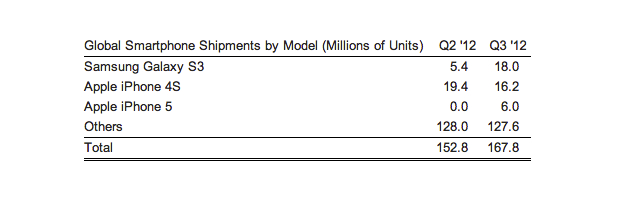
To rub salt in the wound, Samsung's Galaxy S III took the title of "World's best-selling smartphone in Q3 2012," according to Strategy Analytics. There were 18 million Galaxy S III units sold and "only" 16.2 million iPhone 4S phones. Of course, iPhone 4S sales were down in Q3 because everyone was waiting for the iPhone 5 to launch.

Anyway, back to China. The third place there is surprising - it's held by Yulong, who are not known outside of China, but managed to score partnerships with the country's to major carriers - China Telecom and China Mobile.

Two better known brands round up the Top 5 - ZTE and Huawei. The last three companies have around 10% market share each. Apple is currently sixth with 8% (it had 9% in Q2).

In Q3 this year, there were around 50 million smartphones shipped in China, which is over a third of all smartphones shipped in the whole world for the three month period.

The growth in China comes primarily from cheap models ($70-$120) and the iPhone 4S can't compete with its price of $713 (the iPhone 5 is yet to launch in China, probably in December).

Source 1Source 2


Source : http://www.gsmarena.com/apple_drops_out_of_top_5_in_china_galaxy_s_iii_tops_iphone_4s_in_q3-news-5058.php

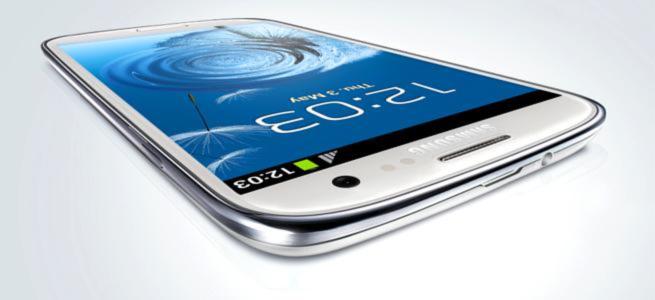
The Galaxy S3 is the world’s best selling smartphone, but for how long?

According to the latest research, the Samsung Galaxy S3 has become the world's most popular smartphone, after it outsold the Apple iPhone 4S and the iPhone 5 between July and September 2012.

Research into global smartphone sales for the July to September period of 2012 has revealed that the world’s number one smartphone was the Samsung Galaxy S3, knocking the Apple iPhone 4S into second position.

The report comes from research firm Strategy Analytics, and it puts the Galaxy S3 in first place with 18 million devices sold globally, and the iPhone 4S trailing with 16.2 million sold. In third place it’s the iPhone 5 with 6 million sales.

So, its a fanfare for Samsung, a company well on its way to beating Apple in the battle for smartphone supremacy. But is it? Well, as a headline, it is indeed good news for Samsung, but the sales from the third quarter of 2012 tell only a percentage of the story.

Samsung released the Galaxy S3 at the beginning of May 2012, spreading it to as many networks and countries as possible. In the slightly truncated second quarter results, it shifted 5.4 million phones.

But take a look at the iPhone 4S’s performance. The 4S went on sale in October 2011, and still sold 19.4 million in the second quarter, and then 16.2 this quarter. Not bad for a phone that was a fairly unremarkable evolution of the previous model, that has been on sale for, now at least, more than a year.

Strategy Analytics Global Smartphone Sales

These past couple of months have also been filled with anticipation over the iPhone 5, which then arrived at the tail end of September, and it still managed to sell more than the Galaxy S3 did in its opening weeks, and in a shorter time too.

Many potential iPhone 4S buyers decided to wait for the iPhone 5 in the run up to its release, which explains the drop off in 4S sales, and in effect, allowed Samsung to swoop in and grab the “world’s best selling smartphone” crown.

The question is, can it retain its crown in the all-important Christmas period between October and December? Strategy Analytics doesn’t think so, and expects Apple to “soon reclaim the title.”

The Galaxy S3 unquestionably deserves to top the charts, but the figures also highlight the struggle it faces to maintain that position over a longer period of time.


Source : http://www.digitaltrends.com/mobile/samsung-galaxy-s3-becomes-the-worlds-most-popular-smartphone/

Monday, November 5, 2012

How to maximize your iPhone’s battery life

iPhone Battery Large

Get the most out of your iPhone battery by following these steps, which should see you return the phone to it's charger less often.

It’s one of those first-world problems that we’re all trying to solve: How to make the battery on our iPhone last just that little while longer. Thanks to Apple’s wisdom, we can’t pull the battery and replace it with a fully charged one, so we have to examine our usage and the phone’s activities to extend the amount of time between charges.

The basics

Battery life can be increased just by familiarizing yourself with the Settings menu and toggling a few switches, some of which are fairly obvious, while others not so. Let’s get started: Open the Settings menu, and pay close attention.

  • Wi-Fi: This one is an easy one: If you don’t need it or are using 3G/4G, then turn off Wi-Fi. The convenience of not having to switch it on and off isn’t a fair trade for the power it uses while searching for networks.
  • Bluetooth: Another obvious one, but leaving Bluetooth on when you aren’t using it causes considerable battery drain.
  • Location Services: This one needs some consideration, as some apps — Maps for example — require location services to be active, so you may want to explore the Location Services menu (found under Privacy in iOS 6) and only turn off those you don’t use on a regular basis. For example, does IMDb and Ocarina really need to know where you are?
  • Time Zone: While you’re digging about in the Privacy menu, scroll down and tap System Services, where you’ll find a range of options including the chance to turn off automatic time-zone changes. In iOS 5 this was found to be a power hog, so if you don’t need it, turn it off. In fact, while you’re there, turn off Location-based iAds and Diagnostics too.
  • Push: Whether it’s Push emails or Push notifications, your phone will be chatting to the network on a regular basis with both activated, and therefore using precious power. Email accounts can be individually set up for Push data, so switch off those that you don’t always need to check, or if you’re serious about saving battery power, turn them all to “manual.” You’ll find these options under Settings, Mail/Contacts/Calendars and Fetch New Data. For notifications, there’s an entire menu dedicated to them in iOS 6, and each app that offers Push notifications can be activated or crucially, deactivated. Like Push emails, if you’re serious about your iPhone’s battery, turn all but the essentials off.
  • Brightness: Turn Auto-Brightness on, but at the same time drag the brightness slider down as low as you dare. This will save significant energy.

iPhone App TrayIntermediate level

By managing Wi-Fi, Bluetooth, Push, and the brightness of your iPhone’s screen, you’re well on your way to a longer lasting battery. But if you want more, then you’ll want to try these suggestions, although the effect won’t be as great as those described above.

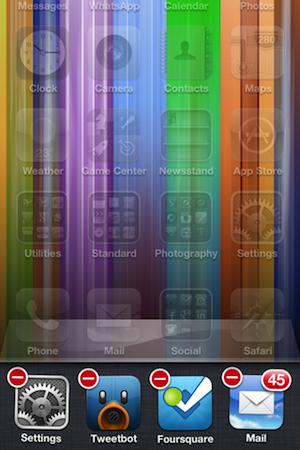
  • Manually Close Apps: This is a controversial one, as Apple will tell you that apps living in the app tray are in stasis, and shouldn’t drain your battery at all. Possibly, but many users will know certain apps still draw power when in this state. So, double tap the Home button, hold down an icon to enter “jiggly” mode, and close everything using the little “x.”
  • Siri: If you never ask Siri a question, shut her down under the Settings menu. She doesn’t do much unless you ask her something, but one less active feature can only be a good thing.
  • Screen Lock: Make sure your phone locks itself — which turns off the screen — after one minute. The less time it’s idle with the screen on, the better. Do this under Settings, General, and Auto-Lock.
  • iCloud: This works in a similar way to Push, where data is being transmitted from your phone to Apple’s servers in the background. If you don’t need to back up to iCloud, turn it off under iCloud in the Settings menu. You can also individually select what’s backed up too, and the fewer there are, the less time it takes. Plus, there’s the added benefit of using less iCloud storage space too.

For the hardcore among you

So, you’ve done all that you can, but the charger still beckons. Then it’s time to get serious. If you want your battery to last, really last; then sacrifices need to be made.

  • Cellular Data: No arguing, if you don’t need it, head to Settings, General then Cellular and turn it off. If calls are unimportant, putting the iPhone into Airplane mode will really stretch the battery’s life too. You’ll just be left holding the equivalent of an iPod Touch.
  • External Battery Packs: You may not be able to change the battery, but you can add a battery to the iPhone instead. There are many long-life battery packs available — mostly using the 30-pin connector, but that will change over time — where you sacrifice size and weight in return for a heavy duty battery case plugged into your slim and light iPhone.

Finally, if you want the best from your battery; look after it. Regular charging patterns are good for phone batteries, and continually having it at 10-percent and only charging it halfway will shorten its lifespan, and provide poor performance. Modern Li-ion batteries may not have the same issues as older Ni-cad cells, but that doesn’t mean they don’t respond to proper treatment.


Source : http://www.digitaltrends.com/mobile/maximize-iphone-battery-life/

Thursday, November 1, 2012

Physical Google Wallet card reportedly coming soon

Physical Google Wallet card reportedly coming soon
Game changer (credit: Android Police)

Google may be soon drop a bombshell on the mobile commerce world as a report surfaced Thursday the company is preparing to launch a physical credit card.

Dubbed the "Google Wallet card," this piece of plastic is for those times users can't tap and pay.

It will work just like a regular credit card anywhere major credit and debit cards are accepted.

The news comes from an anonymous tipster who gave Android Police the heads up that he had already received a confirmation email for his card.

Cut up the others

According to the Google Wallet cards set-up instructions, users can add credit and debit cards to the Google Wallet app, then use any of them to make purhcases by using the Google Wallet card.

All users need to do their Wallet card and their default card in the Google Wallet app will be charged.

Whenever users want to swap the card, they can simply select a different card through the app.

All cards - except Google's - can stay at home.

Google Wallet instructions
Swipe and swap it with ease (Credit: Android Police)

The card can be ordered through the Google Wallet app and sent to recipients' addresses, as was the case with the tipster who will receive an email when the card is in the mail.

Access to exclusive offers is also available and deals are instantly redeemable. If the card is lost, all a user needs to do is cancel their Google Wallet card - not every card they own.

Big surprises

This may very well be the service Google recently opened sign ups for, though the "next version of Google Wallet" seemingly suggested the app would soon open to more devices, including iOS products.

However, it could all be part of a huge Google scheme to conquer the mobile (and beyond) commerce world.

While a physical card steals the lede, other new features are reportedly on the way as well.

New Google Wallet features
More features are in the offing (Credit: Android Police)

A "Wallet Balance" feature looks like it will let users deposit and withdraw funds while a person-to-person money transfer feature is also coming.

There's also compelling evidence a transit card is part of the new Google Wallet package.

Whether the card and new features will extend beyond the U.S. isn't yet clear, but all this could make carrier approval obsolete for everything but tap payments.

A Wallet card would let owners of iOS and Windows Phone devices utilize a non-NFC version of the Google Wallet app, too.

TechRadar has reached out to Google for comment and will update this story if and when the company responds.


Source : http://www.techradar.com/news/phone-and-communications/physical-google-wallet-card-reportedly-coming-soon-1109411

Physical Google Wallet credit card reportedly in the works

Physical Google Wallet credit card reportedly in the works
Game changer (credit: Android Police)

Google may be soon drop a bombshell on the mobile commerce world as a report surfaced Thursday the company is preparing to launch a physical credit card.

Dubbed the "Google Wallet card," this piece of plastic is for those times users can't tap and pay.

It will work just like a regular credit card any where major credit and debit cards are accepted.

The news comes from an anonymous tipster who told Android Police he already received a confirmation email for his card.

Cut up the others

According to the Google Wallet cards set-up instructions (provided by the tipster), users can add credit and debit cards to the Google Wallet app, then use any of them in stores by using just the Google Wallet card.

To make purchases swipe the Wallet card and their default card in the Google Wallet app will be charged.

Whenever users want to swap the card, they can simply select a different card through the app.

All cards - except Google's - can stay at home.

Google Wallet instructions
Swipe it and swap it with ease (Credit: Android Police)

The card can be ordered through the Google Wallet app and sent to recipients' addresses.

Access to exclusive offers is also available and deals are instantly redeemable. If the card is lost, all a user needs to do is cancel their Google Wallet card - not every card they own.

Big surprises

This may very well be the service Google recently opened sign ups for, though that new service seemingly suggested the app would soon open to more devices, including iOS products.

However, it could all be part of a huge Google scheme to conquer the mobile (and beyond) commerce world.

While a physical card steals the lede, other new features are reportedly on the way as well.

A "Wallet Balance" feature looks like it will let users deposit and withdraw funds while a person-to-person money transfer feature is also coming.

There's also signs a transit card is part of the new Google Wallet package.

Whether the card and new features will extend beyond the U.S. isn't yet clear, but all this could make carrier approval obsolete for everything but tap payments.

A Wallet card would let owners of iOS and Windows Phone devices utilize a non-NFC version of the Google Wallet app, too.

Until Google makes all of this official, competitors and consumers alike are going to be watching Google with eager eyes.


Source : http://www.techradar.com/news/phone-and-communications/physical-google-wallet-credit-card-reportedly-in-the-works-1109411

Wednesday, October 31, 2012

BlackBerry 10 phones being tested by carriers as Pentagon says it will keep using RIM handsets

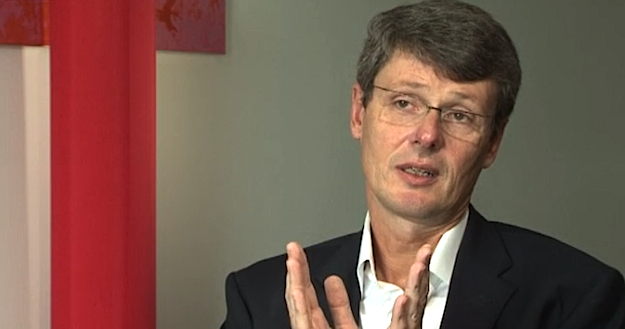
Research In Motion boss Thorsten Heins has announced that devices running the firm's next-generation OS, BlackBerry 10, are now being tested by carriers around the world, keeping it on course for release early next year. Meanwhile, the Pentagon has said it will continue to use BlackBerry devices in its work.

It’s encouraging. It’s a step in the right direction. It might mean Research In Motion (RIM) really will fulfill its promise of a first-quarter 2013 launch of its next-generation BlackBerry 10 OS and handsets.

RIM CEO Thorsten Heins announced in a statement on Wednesday that handsets running the new OS were now being tested by more than 50 carriers worldwide.

Heins said reaching the testing phase meant the company had “passed a critical milestone” in the development of its new mobile computing platform.

“The hard work will not stop here as we build towards launch,” Heins said in the statement, adding, “Our developer teams are continuing to generate momentum to bring a wealth of applications to BlackBerry 10, our enterprise teams have started to present BlackBerry 10 devices and services to our business customers, and our engineers are fully mobilized to ensure that BlackBerry 10 launches flawlessly in the first quarter of 2013.”

In an interview with the BBC last week, Heins urged consumers not to underestimate “the dynamic [BlackBerry 10] is going to create in the market.”

In other news involving the mobile company, the Pentagon made clear this week that it would carry on supporting “large numbers” of BlackBerry handsets despite going ahead with plans to allow the US military to use other devices such as the iPhone.

“The Defense Information Systems Agency is managing an enterprise email capability that continues to support large numbers of RIM devices,” a spokesman told Reuters this week. A number of government agencies and businesses have said in the last year they would be issuing staff with iOS or Android devices, ending long-standing contracts with BlackBerry. While the Pentagon also appears to be relaxing its association with RIM, things are so serious at the Canadian company that the defense agency’s announcement that it’s not switching entirely to rival devices will actually be perceived as good news by many.

The BlackBerry was once the phone of choice for many agencies and firms thanks largely to its strong security features. However, security on rival handsets such as Apple’s iPhone and a number of Android-powered devices has improved over time, offering an alternative to the BlackBerry.

The launch of RIM’s next-generation OS and handsets is its make-or-break moment. Perhaps the Canadian mobile maker – once the country’s most valuable company – can still turn things around, remain a viable player in the mobile game and consequently help to keep competitors on their toes.


Source : http://www.digitaltrends.com/mobile/blackberry-10-phones-being-tested-by-carriers-as-pentagon-says-it-will-keep-using-rim-handsets/

Thursday, October 18, 2012

Will Lightt fade in Instagram’s shadow or could its future make it more than just another image app?

lightt web site

Lightt is a new take on content sharing, producing animated GIF-like video clips of the world as you're seeing it. Will the platform prosper thanks to a future integration or is it doomed to fall on Instagram's sword?

You can’t launch a new photo-sharing app without being called an Instagram challenger, and the unfortunate label has not escaped Lightt. The new app launched yesterday, revealing a new take on the photo feed. Instead of creating a network based on stills and filters, Lightt takes 10-second videos and plays them back fast-forwarded with no sound. Will Lightt face the same fate as the amibitious yet ill-fated Color, or will its future integration with Google’s Project Glass keep it safe from being buried in the underbelly of the App Store?

How Lightt works

Your Lightt sign-up experience is nothing new: Download the app, create your account, idly flip through the initial instructions pointing out icons and what they do, and you’re off. Perhaps the strangest part of the whole thing is your profile picture: Instead of letting you pull a still from your gallery or even take a photo, you create a short video that Lightt speeds up and turns into your avatar. It’s disorienting… and honestly, the result is a little strange – it’s like one of those haunted house paintings where the eyes follow you.

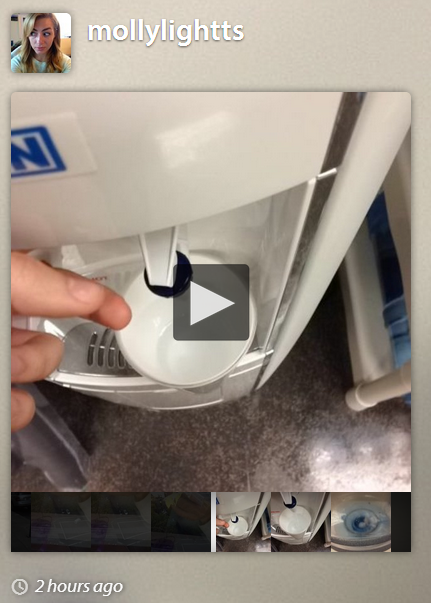
light web viewerAfter that, you should just jump in and start using Lightt. You hit the center camera icon to take quick videos. You can take one (10 seconds), or keep hitting the icon in order to continue to capture the scene – or what Lightt calls a highlight (“A highlight is a burst of pictures that captures about 10 seconds of time in one tap. Your highlights upload immediately and play back faster than real life, like the speed of our memories,” per the Lightt blog).

You can share photos to Facebook or Twitter – thought realize that they aren’t grouped together and you’ll just be posting continuous blocks of this content. From there, you’re sent to a Web viewer, but this is the only way to see your media via desktop, to share it out, and then hit the link. There aren’t any embed options right now, either, so you can’t host your Lightt content on your Tumblr, WordPress, or any other blog yet. 

The app has a home page, which is segmented by your feed, a “happening now” feed, and a “featured” feed. You can also navigate to your own page, your friends list, and an activity bar. Users are able to leave comments or like highlights – and you can strangely share other users’ highlights to your own social networks.

mobile screenshots

The Color connection

If you immediately started playing with Lightt or looking through the available feed and thought things seemed familiar, you’re not the only one: My first thought is that this is  exactly what Color tried to do. When the beleaguered startup first launched, it had a rather simple photo-sharing mechanism (no filters, no editing, no video, no captions, just point and capture) but did introduce what was a rather revolutionary location-aware social network.

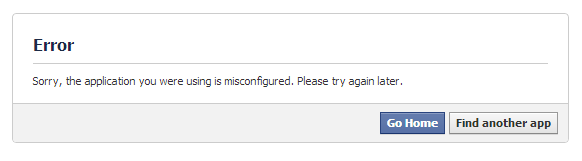
Eventually Color pivoted into a video streaming application and became a Facebook Timeline app. The idea was to “show the world what you’re up to,” and users with the app would get an invitation to “visit” the recorded moment in real-time via Facebook. However, when I tried to use the Color app, I recieved this notification from Facebook.

facebook color misconfigured

This, on top of the mountain of rumors that Color is not long for this world (which, honestly, could end up meaning very little if the company is indeed acquired by Apple, not to mention the money it stands to make off patents), all points to the fact that the app wasn’t a hit with users.

And there are some similarities between Color and Lightt. There’s the fact that they are both image, media-focused apps. But that’s not exactly a novelty anymore (you could create a daily newsletter full of these app launches). Then there’s the location element; Color bet heavy on this and ended up scaring the crap out of users. Lightt is using location as well, but it’s not nearly as important to the app (you can choose to have location settings turned on or off, though Lightt will prompt you to give up the data so it can auto tag the vicinity of your content).

The big difference between the two apps is the fact that Lightt has a much more user-friendly, explanatory interface. Color was without words, without explanation, without guidance; you were thrown into this entirely new and unfamiliar territory with no gentle hand to lead you through it. Lightt didn’t make this mistake. And in Color’s defense, the team never thought they’d get the type of early fundraising or attention that they did – the startup has been honest about that fact that mistakes were made.

Don’t look a GIF horse in the mouth

While Lightt falls squarely into the photo-sharing genre, the media it creates is actually far more similar to apps like Cinemagram or Gifture, which take your short-form videos and turn them into animated GIFs.

[Via cinemagr.am]

Lightt sees the result as more of a visual timeline of your activity, but the rest of us are surely going to see the sped-up, stop-motion effect as an animated GIF. This medium has at once become the pride and joy as well as the scourge of the Internet. Twitter has fiercely fought animated GIF avatars (you’re no longer able to upload them to the site), and there’s a quiet but budding movement supporting cleaner Web design that eschews the ostentatious, attention-demanding art form. Despite any of this, they are assuredly the Web’s bread and butter, and it’s hardly an exaggeration to say Tumblr is bursting at the seams with the stuff.

Animated GIFs are the Internet’s comeback kid: After a brief love affair with them in the 90s, they died down for whatever reason. And now, they’re back with a vengeance.

However, while there are a handful of apps tapping into this popularity, they aren’t able to produce as high quality of results. The limitations of working on a small screen with nothing but your hands and the video you can capture with a smartphone means your creations probably won’t enjoy to the viral success many Web animated GIFs do.

While Lightt makes the process far easier (anyone who’s tried Cinemagram, Kinotopic, or Gifture knows the inaccuracy and frustration of coloring in the desired moving segment of media with your finger), the effect isn’t quite an animated GIF. Not that Lightt wants it to be – but maybe we want it to be.  The jury is still out on how well we’ll ever be able to make these with mobile devices, or whether we even want to, but what you’re able to make with Lightt right now sort of feels like a half-hearted effort. 

Instagram, you’re safe 

Instagram killer, Lightt is not – but the most interesting part about the app is where it’s going, which is to Google Glasses. This is where Lightt could make sense; walking around, holding my iPhone up while I record a scene still just feels awkward. That’s the beauty of Instagram: It’s instant. It’s a quickly captured moment. Lightt is still a little too much work, but the minute you implement it into something I’m wearing, the results could be stunning.

For the time being, the actual quality of what you create using Lightt isn’t up to par – Instagrams, and photo apps for stills in general – are still much prettier to look at. Video is a trickier beast, it’s a much more complicated process under-the-hood. Which is why time will only tell if Lightt can bring something compelling to the table when it hits Google Glasses. 


Source : http://www.digitaltrends.com/mobile/lightt-launch/

Wednesday, October 17, 2012

HTC J Butterfly has our hearts aflutter with it’s high-res screen

HTC rolls out a new version of the HTC J -- the J Butterfly. The handset will be exclusive to Japan, but comes with a screen that will make the world envious. It's 5-inch display comes packed to the brim with 440ppi resolution.

HTC brought its latest creation to Tokyo today, and now we’re wondering how long it takes a butterfly to fly over the Pacific Ocean. The HTC J Butterfly is the new flagship handset from the Taiwanese phone maker and it comes fully equipped with a screen that you just can’t help but to stare at. There’s plenty to see with the 5-inch HD Super LCD 3 display that is ready to run at 1080p — the highest resolution yet for a phone.

The screen isn’t the only attraction on the J Butterfly, the successor to the HTC J. The black-and-red skinned phone will come running Android 4.1 (Jelly Bean). It’s powered by a 1.5GHz Snapdragon quad-core processor and 2GB of RAM and is equipped with a 2020mAh battery that will have its work cut out for it. It’s also loaded with an 8-megapixel camera with a f/2.0 lens. All of this is housed within a thickness of 9.1mm. A quick comparison of the specs makes the J Butterfly most comparable to the One X, the crowd-pleasing offering from HTC released earlier this year.

It’s that screen that puts the J Butterfly in the league of its own, though. The HTC One X came with an impressive Super LCD screen that was worthy of comparison with the best displays on the market. The J Butterfly aims to float above the competition, and may well do so. It’s promising a resolution that reaches 440-pixels per inch (ppi). For comparison purposes, the iPhone 5 sits at 326ppi. I’d hate to be the guy that has to try to pack all those pixels in. That’s how those things work, right?

The J Butterfly will be exclusive to the Japanese market, but that doesn’t mean the Super LCD 3 screen won’t find its way on the front of some U.S.-bound handsets. Until then, we’ll just have to look forward to the day we can wipe the drool off our screen.


Source : http://www.digitaltrends.com/mobile/htc-j-butterfly-has-our-hearts-aflutter-with-its-high-res-screen/

Monday, October 15, 2012

Photos of Nokia Lumia 920 version for China Mobile leak

It looks like Nokia is about land its flagship on the carrier with the largest subscriber base in the world. Images of Nokia 920T for China Mobile have leaked out, showing us a TD-SCDMA version of the Nokia Lumia 920.

There is no information on whether the Nokia 920T will also support China Mobile's soon to be developed LTE network. In any case, LTE on board or not, having its top smartphone available to some many potential users is surely a welcome piece of news for the Finnish company.

Source | Via


Source : http://www.gsmarena.com/photos_of_nokia_lumia_920_version_for_china_mobile_leak_-news-4955.php

Friday, October 12, 2012

Rumor: Samsung working on midrange Galaxy Premier smartphone

Rumor: Samsung working on midrange Galaxy Premier smartphone
The Premiere is said to pack the same display size and resolution as the Galaxy Nexus (credit: unwiredview.com)

While the tech world is still reeling from Samsung's introduction of the Galaxy S3 Mini, reports surfaced on Friday claiming that yet another exciting new Galaxy phone is in the works at the Korean company.

Called the Galaxy Premier, the new device is rumored to lie somewhere between the Galaxy S3 and Samsung's Galaxy Nexus in tech and scope.

What's now being called the Galaxy Premier appears to have surfaced for the first time in late September, when a photo taken by an unknown device with the model number GT-i9260 appeared online.

At the time, the unknown device was assumed to be Samsung's Galaxy Nexus 2, but the Galaxy Premiere is more than a simple Nexus successor.

Origins of a rumor

The rumor about the Samsung Galaxy Premiere first appeared on German site Mobile Geeks, which may have caught wind of the device at the same event at which the S3 Mini was unveiled.

The exact origin of the Galaxy Premier rumor is unclear, though, and TechRadar reached out to Samsung for clarification, though the company hasn't yet responded.

Either way, the information that's currently available suggests that the Galaxy Premier may only be planned for European markets at this time.

Samsung Galaxy Premiere specs

The Galaxy Premier carries specs that place it in the middle territory somewhere between the Galaxy S3 and Galaxy Nexus, with Android 4.1: Jelly Bean and a 1.5GHz dual core processor.

The Premier is said to pack the same display size and resolution as the Galaxy Nexus, with a 4.6-inch 1280x720 Super AMOLED screen.

According to the reports, the Premier also features a 8-megapixel camera, Bluetooth 4.0, NFC capabilities, and DLNA.

Hopefully, more concrete information about the Galaxy Premier appears soon.


Source : http://www.techradar.com/news/phone-and-communications/mobile-phones/rumor-samsung-working-on-midrange-galaxy-premier-smartphone-1104118

Tech's top table is getting bigger all the time

Tech's top table is getting bigger all the time
It's been a busy few weeks for Jeff Bezos

The world of tech is hugely competitive and ridiculously fast-moving, and that's why we like it so much: today's hero can quickly become tomorrow's zero as something more interesting, elegant or exciting comes along.

That's definitely the case in the ultra-competitive smartphone market, where we've discovered the very best thing money can buy: it has "every kind of feature we could ask for and more, and [it] raises the bar once again in terms of what consumers should be expecting in terms of battery life, processor speed and media management." We'd recommend you buy one "without hesitation".

Is it the iPhone 5? Nope! It's the Samsung Galaxy S3, which we've spent some more time living with to see how it compares to Apple's latest. As nice as the iPhone is, we still think the S3 is better - even though it "doesn't have the same wow factor" as its predecessor.

Something musical

There's a new king of the MP3 player market too, although it looks rather like the old king: yep, it's the new iPod touch, which started shipping this week.

As we explained in our hands on review, "the fifth-gen iPod touch is a big step forward. Its battery life and low cost of ownership (since it has no cellular contract) beat the iPhone, and it can do just as much, in a thinner, lighter package."

The late Steve Jobs was seen by many as the king of the technology industry, and our Gary Marshall makes a strong argument that Amazon's Jeff Bezos is his successor: "In a world of dull tech CEOs – ten points for anyone who can say three interesting things about Samsung's CEO; hell, ten points for anyone who knows his name without Googling it – Jeff Bezos stands out," he writes, arguing that "like Jobs, Bezos thinks big and plays for keeps."

Something bad

According to the US House Intelligence Committee, the Chinese mobile makers Huawei and ZTE are kings too: kings of EVIL! After an 11-month investigation, the Committee said that the companies are an espionage threat to western firms and governments, and accused them of bribery, corruption, discriminatory behaviour and copyright infringement.

As you might expect, the companies angrily denied the allegations - in Huawei's case, over 81 no doubt riveting pages - but the news sparked "dozens and dozens" of fresh complaints to the Committee, so the story isn't going away any time soon; meanwhile the Committee is urging US firms to buy kit from other companies and TechRadar news writer Matt Swider's pun generator is set to max: he describes the growing international consensus against Huawei as "The Coalition of the Un-Huaweilling." Zing!

Could we have a new king of small tablets this time next week? It's certainly looking that way as the world greets the imminent arrival of a new Apple product with the traditional rumour-mongering, leaked product images and wish lists. You know it's coming. We know it's coming.

Something small

Pretty much the only thing we don't know is whether it'll be called the iPad mini, iPad Air, or Sharon - although it's unclear whether we'll see a 3G/4G version or, as The Guardian reports, just a Wi-Fi one to keep the small iPad distinct from its bigger sibling. Yet more allegedly leaked pictures are doing the rounds, showing the expected Lightning connector and a more squared-off case. Unless Apple really messes up or charges too much, it's clearly going to sell squillions.

Something bright

Are you planning to buy an iPad mini or similar device for your kids? Some experts say you shouldn't, and that "your gadgets will eat your children's brains and turn them into something even more horrible than George Osborne," Gary Marshall warns, agreeing that too much screen time and not enough exercise is unlikely to have a happy ending.

"As a geek parent I'm a paid-up member of the Gadgets Are Great club, and I think tech can be great for teenagers and tots alike," he says. "The trick, as with most things, is to get the balance right. If your kids are trying to pinch and zoom their picture books, you should probably give the screens a break."


Source : http://www.techradar.com/news/world-of-tech/techs-top-table-is-getting-bigger-all-the-time-1103910

Thursday, October 11, 2012

Lenovo to build on PC success with international smartphone release, leaves HP in its dust

Lenovo K890

Research indicates Lenovo has become the world's number one PC manufacturer, as the company announces plans to expand its smartphone range.

Lenovo is riding a wave of success at the moment, after announcing some exciting Windows 8 tablets, and now it appears the company has become the world’s number one PC manufacturer, and is preparing to release its smartphone range internationally too.

Research firm Gartner has released data that shows Lenovo has pushed past Hewlett-Packard to take the number one spot, and the figures read like this: HP can claim a 15.5-percent global market share, with 13.55 million units shipped, while Lenovo has a 15.7-percent market share with 13.77 million units heading out the door this quarter.

Perhaps more importantly, Gartner shows HP’s sales as down 16.4-percent on last year, while Lenovo is up by just under 10-percent. If you had to choose a direction as a company, you’d want to be the one going up.

According to Reuters, researchers from IDC still put Lenovo ahead of HP, with market shares of 15.7 and 15.9-percent respectively. HP told them that IDC’s report was “more expansive,” but then, they would say that. Almost regardless of who’s right today, the trend certainly indicates the position swap will happen soon.

HP’s CEO Meg Whitman has been quoted as saying the company is in the first year of a five-year restructuring plan, but despite the much-publicized downturn in PC sales — IDC says global sales have dropped by 8.6-percent since July — it still hasn’t made up its mind about re-entering the smartphone and tablet market. Recent reports seem to indicate confusion regarding this market segment within HP.

Lenovo to enter international smartphone market

Lenovo feels rather differently. It already produces smartphones for a variety of Eastern markets and in June this year, overtook both Nokia and Huawei to take second place in the Chinese market. Perhaps most tellingly — and a point HP needs to hear — is that its phone sales surpassed that of its PC sales for the first time there too.

It’s not just low-end hardware the company produces either, as it introduced the LePhone K860 in August, which has a 5-inch display with a 720p resolution, a quad-core processor (actually Samsung’s Exynos 4 Quad, also seen in the Galaxy S3), Android 4.0 and an 8-megapixel camera. It’s destined for Japan sometime later this year.

The momentum is there for Lenovo, and it’s already producing some interesting hardware, so it’s no surprise to see the following message posted on its Facebook page: “We won’t stop at laptops and tablets. For the first time, Lenovo is making plans to sell smartphones outside China.”

Introducing new hardware into the already massively competitive US and European markets isn’t going to be easy, but Lenovo knows it has little choice. Besides, it can always look at the lucrative African, Russian and South American markets initially, before hitting the rest of Europe and the US with devices such as the K860.

Lenovo hasn’t provided any further details, and we’d be surprised to see any releases this year, but it’s still a very positive step from a highly motivated company. Whether HP will respond remains to be seen.


Source : http://www.digitaltrends.com/mobile/lenovo-to-build-on-pc-success-with-international-smartphone-release/

Thursday, October 4, 2012

Jolla to demo MeeGo-based Sailfish OS at Slush Conference next month

Jolla to demo MeeGo-based Sailfish OS at Slush Conference next month
Open-source OS codenamed Sailfish to embark from Finland

Jolla's MeeGo-based OS is official saying "me too" in the crowded world of mobile operating systems.

The Finnish smartphone start-up was rumored to introduce its new OS, codenamed Sailfish, as reported by TechRadar yesterday. Now the company is saying when and where.

The Slush start-up conference in Helsinki, Finland will be the venue for the first Sailfish demo. With the event running Nov. 21- 22 - the unveiling is expected to take place on one of those two days.

Jolla is made up of ex-Nokia employees who worked on the Nokia N9 - the only smartphone to run MeeGo despite Nokia's prior commitment to iOS and Android rival.

The new company is promising to continue with a highly scalable, open source version of the OS and UX for smartphones, tablets, TVs, and vehicles.

MeeGo-based Sailfish goes to China

Jolla expects to license its Sailfish operating system to other device manufacturers, design houses and service companies in spring 2013.

One advantage that Jolla has already is a partnership in China with phone retailer D.Phone Group.

"China is a game changer in the technology industry," said Jolla CEO Jussi Hurmola in a press release. "The next big mobile change will come from China and Jolla wants to be enabling it. There are massive resources and competence to transport the whole industry."

Plenty of Sailfish competitors in the sea

Sailfish remains an unproven OS, despite the commitment in China and Jolla's game plan to keep the mobile OS open to community participation.

Google's Android and Apple's iOS are making tremendous gains throughout China, and BlackBerry 10 is set to launch in 2013, around the same time as Sailfish.

What's more, Firefox OS is also throwing its hat in the ring, targeting "budget phones." Samsung could easily do the same with Bada, and Chinese phone manufacturer Huawei is working on a fail-safe OS just in case.

Still, it will be interesting to see what new features this open-source mobile OS has to offer next month, especially knowing that it will continue MeeGo's unique community involvement initiative.


Source : http://www.techradar.com/news/phone-and-communications/jolla-to-demo-meego-based-sailfish-os-at-slush-conference-next-month-1102082

Panasonic launches world's thinnest laser projector module

Panasonic launches world's thinnest laser projector module
The future of projectors?

A prototype of the world's slimmest 100-lumen laser projector module has been spotted in Japan.

The laser projector module (or OIU, as Panasonic prefers to call it) throws out a picture at 800x480-pixels. That's not too impressive, but considering the device is just 75mm thin, it's a wonder Panasonic could fit any processing power in there at all.

Also on display was a scan-type OIU, which manages a resolution of just 400x300-pixels. Again, it's far from finished, especially considering Panasonic wants to shrink it down and install it in mobile phones.

But this tech is quite interesting. It's different from normal projectors in that it doesn't need focussing. The light doesn't travel through an LCD filter like regular projectors, and instead is just one single laser beam producing the image.

Early days

It's still early days with this tech. And as ever with a new technology, the devices are too bulky at the moment (relative to when they'll be on sale, anyway) and crazily expensive.

But if the resolution improves and the price comes down, we could see a whole new era of pico projectors hit the shelves.

Samsung is the only company to have launched a mobile with a built-in projector in the UK. The Samsung Galaxy Beam is a neat piece of kit, with great battery life and a decent camera. But it's too expensive, and the projector really struggles in daylight.

Will projectors one day be as common as cameras in phones? We'll have to wait and see.

Via Engadget


Source : http://www.techradar.com/news/home-cinema/projectors/panasonic-launches-worlds-thinnest-laser-projector-module-1101839

Tuesday, October 2, 2012

Google edges ahead of Microsoft, becomes world’s second most valuable tech company

Google has passed Microsoft to become the world's second most valuable technology company.

It’s all-change at the top of the financial market charts, as old-hand Microsoft has been toppled from its lofty position as the second most-valuable technology company in the world, by young upstart Google.

At the close of trading on Monday, Google narrowly topped Microsoft’s total value, with reports showing Google hitting a valuation of $249.1 billion (Bloomberg.com puts the figure at $249.9 billion) compared to Microsoft’s $247.2 billion. The New York Post shows that the trend was evident when trading opened too, although the gap was much smaller at $248.8 billion for Google and $248.1 billion for Microsoft.

On the surface it appears that Microsoft’s stock has been falling, but it’s the opposite, as its share price has stayed fairly steady over the past few months, with a positive upturn occurring recently. But Google’s stock has been steadily rising, and a sudden drop-off for Microsoft provided the catalyst for the position swap.

Google is fresh from its astonishing performance during the second quarter of 2012, where IDC reported that 85-percent of all smartphones shipped between April and June this year had Android installed, giving the OS a massive 68-percent market share.

Microsoft on the other hand, should be in a similar position, with plenty of attention focused on Windows 8 and Windows Phone 8. Both are due for release very soon — October 26 for Windows 8 and potentially, November for Windows Phone 8 — and hardware manufacturers have been busy announcing products for both. It’s surprising then, to see Microsoft slip at this stage.

So, with Google moving into second position, you may be thinking that it’s only a short leap before it become the world’s number one most valuable tech firm. While this is always possible, the leap is far from being short, as Apple holds the number one spot at the moment, and is worth more than Google and Microsoft combined at $618.1 billion.


Source : http://www.digitaltrends.com/mobile/google-edges-ahead-of-microsoft-becomes-worlds-second-most-valuable-tech-company/

Friday, September 28, 2012

Apple’s Tim Cook ‘extremely sorry’ iOS 6 Maps app sucks

Tim Cook: I'm sorry

Apple CEO Tim Cook issued a rare apology to iOS 6 users today for not making Maps the best navigation app in the world from day one.

Well, would you look at that. In a letter to customers released this morning, Apple CEO Tim Cook said that he is “extremely sorry” that the company’s new Maps app for iOS 6 “fell short” of expectations. He promises that the app will improve, but suggests that users try out alternative apps, like Bing, in the mean time. Freakin’ Bing!

This un-Steve-Jobs-like display of humility comes just over a week after the release of iOS 6, which was drowned by a flood of reports about the various failings of Maps. The issue was so big that a blog about it popped up. Twitter and Facebook users predictably freaked out. The New York Times even jumped in to give the dead horse a few whacks.

And the most amazing thing is that this could have all been avoided. Since the release of the iPhone in 2007, Apple has included Google Maps — a far more mature navigation product — as a pre-installed app in iOS. But earlier this year, Apple and Google had a falling out over Google Maps. According to AllThingsD, Apple wanted turn-by-turn voice navigation in the iOS version of Google Maps, just like Android users have. Google said no. Apple pulled out of their contract a year early, ending the reign of Google Maps with iOS 6, which apparently caused Google to scramble to put together a new version — a development melee that is ongoing.

As Cook points out in his letter, the more “customers use our Maps the better it will get” — a process that will be accelerated significantly with today’s release of the iPhone 5 in 22 more countries around the world. Whether or not Cook will have to issue 22 more apology letters remains to be seen.

Check out Cook’s letter in full below:

To our customers,

At Apple, we strive to make world-class products that deliver the best experience possible to our customers. With the launch of our new Maps last week, we fell short on this commitment. We are extremely sorry for the frustration this has caused our customers and we are doing everything we can to make Maps better.

We launched Maps initially with the first version of iOS. As time progressed, we wanted to provide our customers with even better Maps including features such as turn-by-turn directions, voice integration, Flyover and vector-based maps. In order to do this, we had to create a new version of Maps from the ground up.

There are already more than 100 million iOS devices using the new Apple Maps, with more and more joining us every day. In just over a week, iOS users with the new Maps have already searched for nearly half a billion locations. The more our customers use our Maps the better it will get and we greatly appreciate all of the feedback we have received from you.

While we’re improving Maps, you can try alternatives by downloading map apps from the App Store like Bing, MapQuest and Waze, or use Google or Nokia maps by going to their websites and creating an icon on your home screen to their web app.

Everything we do at Apple is aimed at making our products the best in the world. We know that you expect that from us, and we will keep working non-stop until Maps lives up to the same incredibly high standard.

Tim Cook
Apple’s CEO


Source : http://www.digitaltrends.com/mobile/apples-tim-cook-extremely-sorry-ios-6-maps-app-sucks/