Showing posts with label choice. Show all posts

Wednesday, October 24, 2012

How can the EU accuse Microsoft of stifling competition, but Apple gets a pass?

How can the EU accuse Microsoft of stifling competition, but Apple gets a pass?

Microsoft may be on the hook for up to $7.4 billion thanks to a glitch that stopped offering users a choice over which browser to use, but how come an increasingly dominant Apple has escaped antitrust allegations?

Guess what? Microsoft is the baddie again.

The European Commission has accused Microsoft of ignoring its legal obligations under a 2009 antitrust settlement agreement by failing to offer European users a “browser ballot.” The ballot is supposed to inform European computer users of multiple Web browsers available for the Windows platform and enable them to set a default browser that’s not Internet Explorer. But from February 2011 to July 2012, millions of European users probably did not see the required ballot, meaning Microsoft could potentially be on the hook for many billions of dollars.

What’s the big deal here? Surely most computer users are aware they can download and install any browser they like on their PC? And why is Microsoft required to present a browser ballot and un-bundle Internet Explorer, but Apple can bake its Safari browser (and WebKit) deep into both iOS and OS X without any government scrutiny? What does any of this mean for Microsoft’s tablet-centric Windows RT?

EU browser ballot
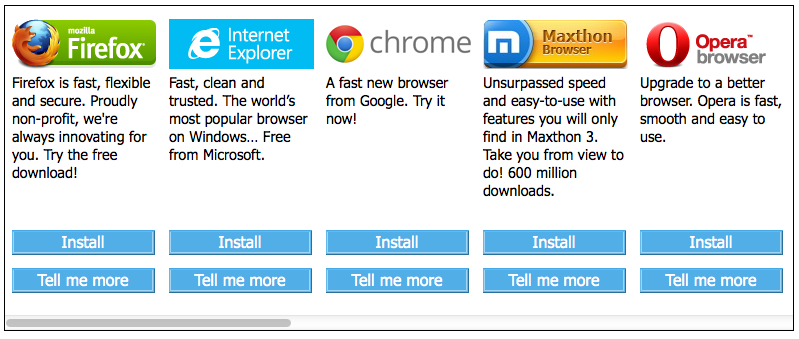
EU Browser Ballot

Windows users in Europe have been confronted with a browser choice ballot since 2009 as part of the Microsoft broader antitrust settlement with the European Union. Among other things, Microsoft was accused of abusing Window’s dominant status in the desktop operating system market to give Internet Explorer a major advantage in the browser wars. Microsoft argued bundling IE with Windows was just innovation, and it was no longer meaningful to think of Internet Explorer and Windows as separate things, but European authorities disagreed. Microsoft was required to let PC makers pre-install and ship any browser they liked with Windows (although most stuck with IE), let users uninstall IE if they liked, and offer Windows users a ballot with a choice between a wide variety of other browsers they can download and install. The browser ballot does include IE, but presents browsers randomly to avoid fights over placement. The settlement agreement requires the ballot to be offered through 2014.

Just one problem: When Microsoft released Windows 7 Service Pack 1 in February 2011, Windows stopped showing the browser ballot to many European users. Microsoft has admitted that the browser choice ballot was not displayed, blaming the trouble on a technical error that it corrected within a single business day of hearing about the problem. (However, Microsoft somehow avoided hearing about the problem for almost 18 months.) Microsoft estimated some 28 million Windows 7 PCs that should have seen the browser ballot did not, but the glitch also impacted an unstated number of systems running versions of Windows XP and Vista.

The browser ballot wasn’t the full scope of Microsoft’s settlement with the European Union, and has generally been derided as a weak solution to the larger issue of Microsoft stifling browser competition by bundling Internet Explorer with Windows. However, it is the most public example of changes Microsoft has had to make to avoid antitrust scrutiny, and it may have had an impact: according to StatCounter, Internet Explorer has been eclipsed by both Firefox and Google Chrome in Europe since the browser ballot went into effect.

Microsoft’s settlement with the EU is legally binding. If Microsoft is found to have violated the terms of that settlement, the company could be on the hook for as much as 10 percent of its global annual revenue. For Microsoft’s 2012 fiscal year, that would total up to almost $7.4 billion. The EU could also decide to impose additional requirements on how Microsoft operates within the European Union. For Microsoft, the stakes are high. Microsoft has four weeks to respond and can request an oral hearing. However, the EU will almost certainly see calls to give Microsoft more than a slap on the wrist.

“If companies enter into commitments, they must do what they have committed to do or face the consequences,” noted European Commission President Joaquín Almunia, in a statement. “Companies should be deterred from any temptation to renege on their promises or even to neglect their duties.”

What about Apple?

Whenever we cover news about Microsoft’s legal obligations and what regulatory agencies like the Justice Department and the European Commission have to say about Windows, Internet Explorer, Windows Media Player, and other products, we always get questions about Apple. Why doesn’t Apple have to serve up a browser ballot in OS X? How can Apple bake its Safari browser into iOS (and make it perform better than any third-party browser) without antitrust authorities crying foul? Basically: Why does Microsoft get a hard time while Apple gets a free ride?
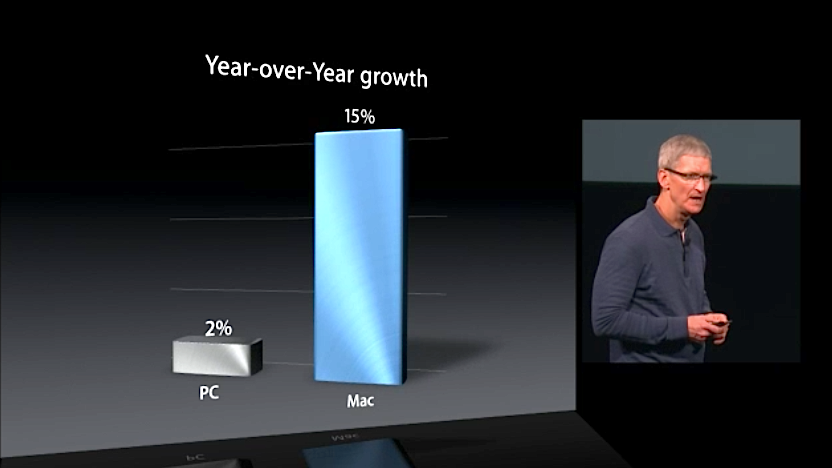
Apple CEO Tim Cook Mac Market Growth Oct 2012

It’s easy to understand why folks ask these questions. After all, at Apple’s high-profile media event yesterday, Apple CEO Tim Cook lauded Apple’s performance in the PC market, noting that Apple not only makes the number one desktop and notebook computers in the U.S. market, but also is seeing its computer business grow about seven times faster than the rest of the PC industry — where the PC world will be lucky to see 2 percent growth for 2012, Apple is looking at 15 percent.
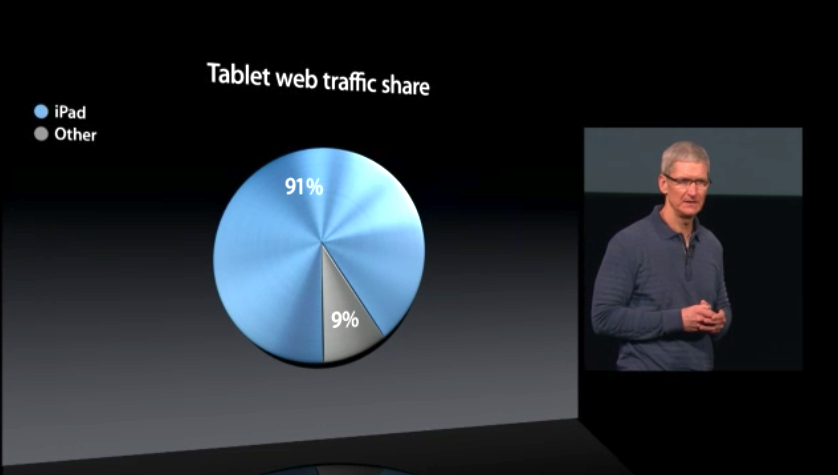
Apple CEO Tim Cook Tablet Web Traffic Oct 2012

And what about Apple’s dominance in other markets? Firms like ABI Research and IHS iSuppli put the iPad’s share of the tablet market at nearly 70 percent for the second quarter of 2012. And since the EU is so concerned about Web browsers, Apple’s CEO Tim Cook trumpeted that iPads are responsible for more than 90 percent of Web browsing traffic from tablets. Why aren’t regulators crying foul over Apple baking Safari so deeply into iOS? Apple even makes it more difficult for third-party iOS browser to compete by consistently rating competing browsers 17+ in the App Store and barring them from using the souped-up Nitro JavaScript engine Safari relies on.

Isn’t Apple’s curated approach to Macs and the iOS ecosystem just another way of saying Apple locks out competition?

Why Apple isn’t getting scrutiny

The reasons Apple skates clear of antitrust scrutiny for its Mac and iOS lines have to do with market share and how the company conducts business.

On the desktop and notebook computer side, Apple may be seeing its computer business grow at a faster rate than the overall PC market, but Apple is not a dominant player. Recent figures from IDC and Gartner don’t even put Apple in the top five PC makers worldwide, and Gartner places Apple third in the U.S. market with a 13.6 percent share. Apple may have the number one desktop and notebook computers in the U.S. market, but it shipped fewer than half the number of computers as HP. What’s more, these figures represent near-historic highs for Apple; it’s tough to argue Apple has somehow been abusing a dominant position in the PC market and needs to be reined in by governments. Moreover, since Apple doesn’t license its operating system, Apple’s computer sales are also representative of OS X’s share of the desktop market. The vast majority of all computers sold from other manufacturers are running Windows — so Microsoft remains the dominant player in the operating systems market.

On the mobile side, the success of the iPhone and the iPad means Apple has a much stronger presence…but guess what? Apple isn’t the market leader in mobile either — that’s Android. According to IDC, in the second quarter of 2012 Android accounted for 68.1 percent of the worldwide smartphone market; Kantar Worldpanel Comtech recently found Android accounted for more than 60 percent of the global smartphone market, and two-thirds of the European mobile market. The iPad does currently account for 70 percent of the tablet market, but remember the iPad got there first, and the market is new enough that being first still carries weight. Amazon, Google, and Samsung are all aggressively marketing Android-based tablets, and Microsoft is about to enter the market with its Surface products.
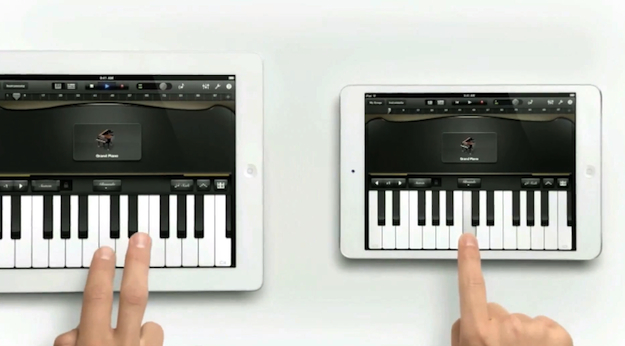
iPad mini ad

But even if the iPad continues to be the dominant tablet line for years to come — and regulators eventually decide smartphones and tablets are separate markets — Apple likely will still not be subject to the kind of antitrust scrutiny visited on Microsoft over the years. Microsoft drew the ire of regulators not just for having a dominant position in the desktop operating system market (that’s not illegal, and neither is a monopoly), but for abusing that position. Among other things, Microsoft cut deals with computer makers to dictate what software could and could not be included on new systems, fiddled with its APIs so Internet Explorer and other Microsoft applications would have an inherent advantage over competitors, and used its Windows monopoly as a distribution channel for Internet Explorer with the intention of wiping out competitors like Netscape.

With one possible exception, Apple isn’t capable of committing these abuses. Apple doesn’t license its operating system, so it can’t strong arm partners who make iOS devices — there aren’t any. Similarly, with Android the dominant mobile operating system, it’s difficult to argue Apple deciding to bundle capabilities into iOS — like Photo Stream and iCloud, for instance — constitutes an abuse. Competitors can (and are) offering similar services for iOS (Dropbox, Instagram, anyone?) and are free to develop for Android, Windows Phone, Windows RT, or even BlackBerry or Symbian if they like.

The one antitrust concern in iOS might be the built-in Safari Web browser. Apple does permit third-party browsers for iOS — Google Chrome Opera Mini, Atomic, Dolphin, and (heck!) iCab are available for iPhone and iPad, although Mozilla recently “retired” Firefox Home. But Safari outperforms the competition by being able to tap into the high-performance just-in-time (JIT) compiler in the Nitro Javascript engine. Although Web apps got the same capability in iOS 5, third-party Web browsers have to rely on a slower JavaScript engine or (in Opera’s case) outsource Javascript to a remote service. Apple also won’t approve a browser that includes a JIT compiler of its own. Apple claims these restrictions are all about security — iOS is more secure than Windows, OS X, and Android in this regard — and Apple gives Safari a pass because Apple can perform rigorous QA on it as part of iOS. However, is does mean that Safari has an inherent advantage on iOS that competitors can’t match. That’s eerily reminiscent of the API adjustments Microsoft made to favor Internet Explorer on Windows.

What might happen to Microsoft?

Steve Ballmer Microsoft

Although Microsoft is undoubtedly in hot water for breaking the browser ballots (and thus the terms of its settlement with the European Commission), few expect the company will be on the hook for billions of dollars over the issue.

Microsoft doesn’t seem to be slithering out of its mistake. “Although this was the result of a technical error, we take responsibility for what happened, and we are strengthening our internal procedures to help ensure something like this cannot happen again,” the company said in a statement. Microsoft has suggested it be required to display the browser choice ballot for an additional 15 months, which would mean European Windows users would see a browser choice screen through at least 2015. The European Commission hasn’t commented on that suggestion, or any possible sanctions against Microsoft.

Looking forward, Microsoft might face difficulties with Windows RT. When Microsoft ships its ARM operating system this week, it will support one and only one Web browser: Internet Explorer 10. Microsoft is denying third-party developers access to components that would be necessary to create a competitive browser on the platform: not just a JIT Javascript compiler, but lots of other internals that just aren’t accessible to Windows RT apps. Microsoft’s reasons for this decision are very similar to Apple’s reasons for denying access to the Nitro engine: stability and security.

However, Microsoft is also unlikely to see any antitrust action over browsers in Windows RT — at least, not anytime soon. Right now, Windows RT accounts for essentially zero percent of the mobile or tablet market, so Microsoft can’t possibly be abusing a dominant position. Competitors might argue Microsoft’s existing antitrust settlements in the United States and the European Union should be extended to Windows RT, but that’s also difficult. In the United States, federal oversight of Microsoft formally concluded in mid-2011. Oversight in the EU is still ongoing — hence the scuffle over the browser ballot — and terms of the settlement could conceivably be applied to ARM-based devices running Windows RT. However, regulators will probably wait to see if Windows RT goes anywhere. After all, Windows Phone has been out for two years, and nobody is worried about Microsoft abusing its monopoly power there.


Source : http://www.digitaltrends.com/mobile/how-can-the-eu-come-after-microsoft-for-anticompetiveness-but-apple-gets-a-pass/

Friday, October 19, 2012

Why I won’t be buying a Windows RT tablet (And why Microsoft doesn’t mind)

surface rt tablet microsoft

Windows RT tablets will be crippled out of the gate by a lack of applications, making holding off a wise choice for smart consumers.

Microsoft yanked back the veil obscuring its Surface RT tablet earlier this week, and if you ask me, it’s the finest example of tablet hardware that we’ve seen to date. Microsoft poured a ton of mental and engineering resources into the Surface, and it shows; the Surface tablet and its oh-so-attractive Touch Cover keyboard is one of just three tablets to ever make me drool with desire. It even has Office 2013! And the new-look Windows is actually kind of awesome on mobile devices once you make a few tweaks.

Even still, I won’t be buying a Surface RT tablet on October 26th. The same goes for any Windows RT tablet. There’s no chance. Nada, nil, zero.

My reluctance doesn’t have anything to do with pricing concerns. Some people think the Surface RT is overpriced at $500 to start, but not me. The Surface RT is a top-tier piece of hardware worthy of a top-tier price point. My concerns lie in Windows RT’s crippled nature, and before you grab your pitchforks, they have nothing to do with the Modern-style overhaul.

Here’s the kicker, though: Microsoft doesn’t need me or you or anybody to buy Windows RT tablets on October 26th. They can be a complete flop in the short term and still be a massive success in the long run.

Let me explain.

Why I won’t buy a Windows RT tablet

In a word: apps.

Windows RT and Windows 8 may look the same on the surface (get it?), but they’re two totally different beasts under the hood. Windows 8 runs on x86-based processors, which means it can run both the new Modern-style Windows apps as well as the programs currently available for Windows 7 PCs.

Windows RT, on the other hand, runs on the ARM-based processors — such as the Qualcomm Snapdragon and Nvidia’s Tegra 3 — that thoroughly dominate the mobile gadget world. That makes Windows RT tablets incompatible with the legion of programs written for past generations of Windows-based operating systems. Basically, Windows RT can only run the new Modern-style apps.

Modern-style apps can only be purchased through the Windows Store, and as it stands today, there simply aren’t enough Windows apps — either in quality or quantity — to make purchasing a Windows RT tablet worthwhile. Not even the breathtaking Microsoft Surface RT with its baked-in Office app.

windows app store microsoft surface tabletThe vast majority of 4,326 current Windows Store apps are tablet-style games or instantly forgettable novelties. (Fart Soundboard, anyone?) Aside from standout apps by Netflix, Evernote and Slacker, most of the must-have essentials aren’t there. I’ve spoken to several developers about the situation; it seems as though quite a few apps are waiting in the wings, set to appear in the Windows Store when it officially launches on October 26, but I don’t expect the Windows Store selection to skyrocket out of the gate.

That’s a big problem

Windows 8 devices can lean on the current Windows programs we know and love until the Modern-style apps hit full speed. Windows RT tablets don’t have that luxury.

Knowing that, the little flaws in Windows’ new Modern-style apps take on a whole new light. Intel CEO Paul Otellini was recently reported as saying that Microsoft is releasing Windows 8 before it’s ready — a statement that Intel didn’t exactly deny — and I’m inclined to agree with him. As a whole, Windows 8 is a joy on a tablet, but odd little quirks occasionally prove frustrating.

Those rough edges could be a whole post in and of themselves — tune in next week! — but let’s talk about a particular frustration that highlights Windows RT’s issues: The native Mail app’s complete lack of POP3 support. A recent update to the Mail app fleshed out support for the vastly superior IMAP protocol, but if your email provider only provides POP3 remote access (as is the case with many Internet Service Providers, including Comcast and Fairpoint) you’re in trouble.

Windows 8 users can just switch to desktop mode, download Thunderbird or one of the dozens of other freely available POP-compatible classic Windows programs, and start slinging messages in no time. Windows RT users are just screwed unless they switch to a webmail service or perform complex workarounds that Everyday Joe would never figure out for himself.

Nope, Windows RT just isn’t worth the hassle. Gimme a Nexus 7 for half the price instead.

Getting Over the Hump

Manufacturers aren’t stupid. They know Windows RT tablets will be limited at the outset. That’s why we’re seeing an overload of x86-based Windows 8 devices, but only a handful of Windows RT tablets. And that’s totally fine; Windows RT tablets will have their day in the sun. Microsoft’s very future depends on becoming as mobile-friendly as possible — and the company knows it.

Even if Windows tablets fizzle from the get-go, Windows 8 will still be installed on damn near every PC and laptop sold after October 26. Even if traditional computer sales are somewhat lagging, hundreds of millions of them are sold year in and year out.

win8 metro microsoft surfaceNothing attracts developers faster than a massive user base; Windows’ tremendous desktop presence will eventually draw them like flies, and Microsoft is doing everything it can to make developing Windows apps as painless as possible. Modern-style apps and their associated Live Tiles are the heart of the new Windows experience, and those apps will come. There’s no way the major software and service providers will leave the world’s most popular desktop operating system by the wayside.

Sure, those Modern-style Windows apps might be developed to satisfy the hordes of PC users clamoring for Modern-ized versions of classic Windows programs, but they’ll work just as well on mobile devices — regardless of whether those devices run on ARM or Intel processors. Microsoft and its partners don’t need to sell a single Windows RT tablet; a year or two down the line the Windows Store will be packed with Metro apps even if Microsoft’s initial mobile ambitions flop.

It’s genius.

So no, I won’t be buying a Surface RT tablet on October 26, even though the thought of holding it makes my fingers twitch with excitement. Microsoft’s mobile future — its entire future — hinges more on what I will be doing that day, anyway: Taking advantage of the dirt-cheap upgrade offers to upgrade some of my secondary PCs to Windows 8.


Source : http://www.digitaltrends.com/mobile/why-i-wont-be-buying-a-windows-rt-tablet-and-why-microsoft-doesnt-mind/

Thursday, October 11, 2012

Samsung Ativ S price revealed in pre-order listing

Samsung Ativ S price revealed in pre-order listing
Will this be your WP8 weapon of choice?

The first pre-order page for the Samsung Ativ S has popped up in the UK, with the online retailer asking for £479.99 (around $770/AU$750) in return for the Korean firm's flagship Windows Phone 8 smartphone.

Unveiled at IFA 2012 in Berlin, the Ativ S joins the likes of the HTC Windows Phone 8X and Nokia Lumia 920 at the top of Microsoft's new pile of handsets.

Online retailer Handtec has the Ativ S listed on its site for pre-order, and as well as being upfront about the potential price of Samsung's handset, it also reckons stock will arrive in the first week of November.

Bang for you buck?

Now that's a pretty safe bet, as we expect all the Windows Phone 8 smartphones to go on sale around this time, but back to that £479.99 price tag – is it worth it?

Well for your money you'll be getting a huge 4.8-inch, 720p Super AMOLED HD – which is the same size as you find on the Samsung Galaxy S3.

Under the hood you'll find a 1.5GHz dual-core processor, 1GB of RAM, 16GB of internal storage plus a couple of cameras - an 8MP offering round the back, while the front sports a 2MP sensor.

So while the Samsung Ativ S is by no means cheap, it's pretty much the Windows Phone 8 equivalent to the Android-toting Galaxy S3 - so perhaps the claimed price is not all that shocking.


Source : http://www.techradar.com/news/phone-and-communications/mobile-phones/samsung-ativ-s-price-revealed-in-pre-order-listing-1103689

Wednesday, September 26, 2012

iPhone 5 (Verizon) review

iPhone 5 (Verizon) review

While the handsets may look identical between networks, your choice of provider for the iPhone 5 can result in picking up (or losing) some very helpful perks, many of which seem to fall in the favor of Verizon.

iPhone 5 Verizon review

Notably, Verizon allows iPhone 5 users on any data plan to use FaceTime over 4G LTE without an additional charge, which runs contrary to AT&T's own approach in that regard. Likewise, those without unlimited data plans can use the included Personal Hotspot function to create a wireless network for other devices as needed. It might suck your data plan dry, depending on use, but at least it's there in a pinch.

Verizon's 4G LTE performance

iPhone 5 Verizon review

It's been a long time coming, but we finally have an iPhone that supports 4G LTE, leaving the sluggish 3G days in the past – or for those times when you're outside of the LTE coverage zone. Lucky for Verizon users in the U.S. that's a pretty slim area, at least compared to AT&T and Sprint.

We tested our iPhone 5 around the city of Chicago and had no trouble maintaining our LTE signal throughout – and notched very impressive speeds along the way. Using the Speedtest.Net app, we managed to ring up a top download speed of 32.07 Mbps on Verizon, while the top upload speed we saw was 15.29 Mbps.

That's the extreme; more commonly, we saw a download speed in the range of 23-28 Mbps and an upload rate of between 5 -10 Mbps. Occasionally, we notched slower results in testing (only when pinging a specific server, it seemed), but in average day-to-day use, the service didn't disappoint.

iPhone 5 Verizon review

Pulling up websites over LTE on Safari still showed a marked speed improvement at all times over what we'd experienced on the iPhone 4S, and even sending iMessages and emails had a previously unseen immediacy that caught us by surprise.

Much as Maps has taken flak for its myriad issues, at least the 3D models loaded pretty quickly for us over LTE (not so much on Wi-Fi, though). Call quality also proved quite good on the iPhone 5, with a clearer signal coming in from the other line than when using Verizon's 3G service on the iPhone 4S.

Verizon unlocks the iPhone 5

And as we surprisingly discovered this week, Verizon did not – and says it will not ever – lock the iPhone 5 hardware, meaning you can bounce to a competing network and use its service (not LTE, however) via a different SIM card, as well as use the phone overseas on other networks. What's unprecedented about this move is not that Verizon sold the phone unlocked, but that it seems intent on keeping it that way.

iPhone 5 Verizon review

What's the downside to Verizon? Sadly, the iPhone 5 can't manage simultaneous voice and data use over LTE, which means no downloading emails or browsing the web while chatting up a pal over speakerphone. For heavy multitaskers, that could well be a deal-breaker. More casual users may not even notice it until the need pops up in a random future situation.

New Verizon customers must choose from a Share Everything plan, which combines data, voice, and text service, and also includes access to the Personal Hotspot feature. You'll pay $40 a month per device for access and then $40 more on top of that for 300MB of data, with scaling options reaching $50 for 1GB, $60 for 2GB, $70 for 4GB, and so on and so forth. All plans come with unlimited calls and texts.

Existing Verizon customers, meanwhile, can maintain their existing plans with one key exception. Unlimited plan holders who wish to retain their plan aren't eligible for a discount on the iPhone 5 hardware, so the trade-off is either keeping unlimited data at the full retail price of the phone ($650-850) or taking a limited plan and saving money on the phone, assuming you're eligible for an upgrade.

Verdict

In our initial days of using the iPhone 5 on Verizon's LTE network, we've come away pleased with the results, as it's been speedy and reliable in regular use. It's about on par with other Verizon LTE handsets we've tested in the same market, though for longtime Apple users, it's a late but appreciated revolution that dramatically enhances the iOS 6 experience.

Be sure to read TechRadar's complete review of the iPhone 5.


Source : http://www.techradar.com/reviews/phones/mobile-phones/iphone-5-verizon-review-1099984/review