Showing posts with label devices. Show all posts

Tuesday, November 20, 2012

Smartphone holiday gift guide

Smartphone holiday gift guide

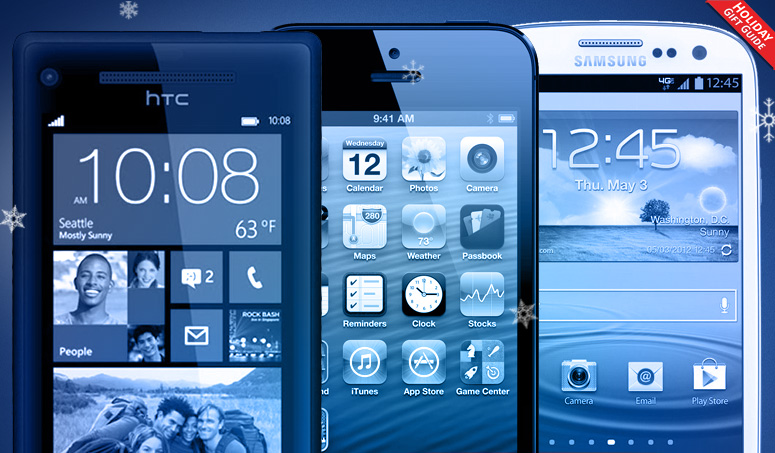
It's that time of year. All of the new devices are hitting shelves in hopes of making it under a Christmas tree and into your hands. From the iPhone to the Razr M, check out our favorite phones this holiday season.

2012 Holiday Gift Guide

The last three months of the year are always packed with new smartphone releases. It’s when manufacturers roll out the biggest and best devices they’ve got (and we put the emphasis squarely on “biggest” this year) and people like you and I groan that our wireless contracts ended in the summer. For the last couple years, we’ve been able to point to a couple devices that are “must haves” and stand above the crowd, but this year is different. For the first time, nearly every major phone manufacturer – Apple, HTC, LG, Motorola, and Samsung – have a flagship phone worth talking about, and every major operating system – Android, iOS, and Windows Phone – is accounted for. In fact, there are a number of great devices we haven’t included here. Unless you’re hoping to get a free phone, it’s almost hard to go wrong this holiday season. 

And so, without further adieu, here is our smartphone gift guide for the 2012 holidays.

galaxy s3

Samsung Galaxy S3, $200 w/2-yr contract

AT&T, Sprint, T-Mobile, Verizon, U.S. Cellular, Ting

For five years, the iPhone has been the undisputed champion of the smartphone game. Phones like the Motorola Droid and HTC EVO have come and gone, but with the Galaxy S3, Samsung took its game to a new level. The S3 is the first phone to rival the iPhone in sales and buzz. After nearly half a year on the market, the S3 is still one of the top phones to have.

We still wouldn’t say that the design and user interface of the Galaxy S3 are able to match the fluidity of the iPhone 5, but Samsung’s phone has many technical advantages over the new iPhone 5, including near-field communication sharing, a larger screen, expandable memory, better maps (Google Maps), a removable (replaceable) battery, and Android itself, which boasts some technical prowess over Apple’s OS in the area of communication and notifications.

Whether you’re a die-hard iPhone user, a renewer, or someone new to smartphones, we recommend you check out Samsung’s smartphone this holiday season.

iPhone 5

Apple iPhone 5, $200 w/2-yr contract

AT&T, Sprint, Verizon

It’s the new iPhone. What more is there to say? Actually, a lot. With the iPhone 5, Apple has taken its hardware design to a new level, outputting one of the thinnest, most durable smartphones on the market. It will take a ding, but in a number of drop tests against the Galaxy S3 and other rivals, the iPhone survived longer. The phone also sports a slightly longer 4-inch screen and an upgraded version of iOS (6.0.2). The overall design of iOS is beginning to look aged, but for smartphone users who just want things to work and don’t want to worry about managing things like background processes, the iPhone is still the champ.

This is the smartphone both you and your parents might use. With a heap of competent rivals hitting the market, the iPhone is losing its place as the supreme leader of all smartphones, but that doesn’t mean much. The iPhone is still arguably the best smartphone choice for the widest variety of users. If you’re debating between this and the GS3, check out our in-depth iPhone 5 vs. Galaxy S3 comparison.

HTC Windows Phone 8X

HTC Windows Phone 8X, $200 w/2-yr contract

AT&T, T-Mobile, Verizon

The Galaxy S3 was the first non-iPhone smartphone to go multi-carrier, but it wasn’t the last. With the 8X, HTC has delivered the first flagship Windows Phone 8 device. If you are up for renewal and happen to use AT&T, T-Mobile, or Verizon (sorry Sprint subscribers), you should check out the 8X. We’ve been recommending you try out Windows Phone for years, but this time, we mean it. Microsoft’s mobile OS has a different look and feel to it than Android or iPhone, and with an upgraded homescreen that allows Live Tiles (widgets/icons) of different sizes and shapes, Windows Phone 8 is finally displaying the flexibility it promised when it debuted two years ago. There are a few big apps still missing from Microsoft’s app store, but most people should have few problems adapting to the world of Windows Phone, especially if you like music and podcasts. Windows Phone has decent built-in solutions for both.

LG Optimus G

LG Optimus G / Nexus 4, $200 w/2-yr contract

AT&T, Sprint, T-Mobile (Nexus 4), Unlocked (Nexus 4)

LG was (and still is) one of the biggest names in basic phones (flip phones), but the transition to smartphones has been rough. However, with the Optimus G, LG has finally taken a strong step toward regaining its image, and maybe some market share. The G is one of the best smartphones on the market. And though LG wasn’t able to blanket the market with the G, it has done everything in it could to make the phone available, in some form, to almost everyone. Sprint owners can enjoy the Optimus G that we love most, with its refined design and detailed edging; AT&T users get the same basic phone, though made to blend in with the carrier’s phone lineup; and anyone on T-Mobile can purchase the Google Nexus 4, which may not bear the LG name, but is most definitely an Optimus G on the inside. The only downside of the Nexus 4 is its lack of 4G LTE connectivity, though that shouldn’t bother T-Mobile users.

We recommend you buy the Nexus 4 through the Google Play Store. There, you can pick it up for $300 with no contract. To give you an idea of how good a deal that is, most smartphones retail for $600 – $700 unless you lock yourself into a two-year contract with a carrier.

Motorola Photon Q

Motorola Photon Q, $200 w/2-yr contract

Sprint

Fans of physical keyboards, we feel your pain. Even fewer top phones come with a QWERTY slide-out keyboard than a year ago, and a year from now, we can’t guarantee there will be any at all. But for now, you can cling tight to the Photon Q. Sadly, the Q is only available on Sprint, but if you love keyboards, it’s worth the jump. The Q runs a relatively clean version of Android 4.0, is incredibly comfortable to hold, and has the same 5-row QWERTY keyboard that made the Droid 4 one of our favorite Verizon phones last year. The only downside to the Q is its battery life. If you happen to be in an area served by Sprint 4G LTE, that’s another good reason to consider the Q. Did we mention that each key on the phone is individually backlit? Yep.

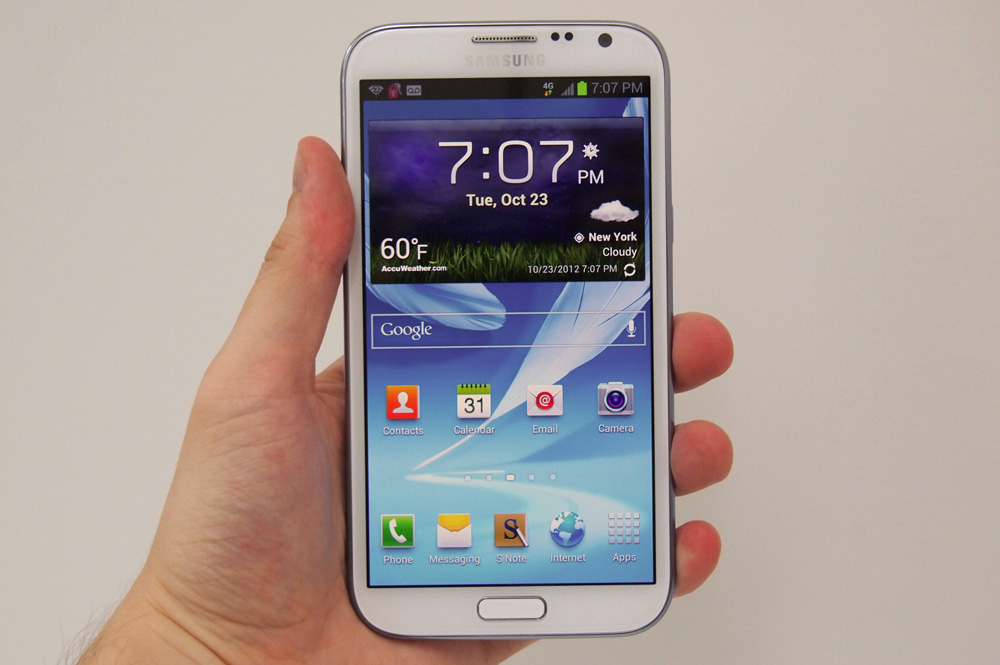
Samsung Galaxy Note 2Samsung Galaxy Note 2, $300+ w/2-yr contract

AT&T, Sprint, T-Mobile, Verizon, U.S. Cellular

I stand by my review of the first Galaxy Note. To me, the Galaxy Note and Note 2 are just too large to make for effective phones. But the people have spoken, and big is in. Due to strong sales of the original, the Galaxy Note 2 is available on almost every major carrier, but it will cost you at least $300 with a two-year contract, making the Note 2 one of the most expensive devices on the market this year. If you really want a 5.3-inch super screen, crave a pop-out stylus, and really want to block half of your face when you make a phone call, the Galaxy Note 2 is the device for you. Outside of its size, this is a solid phone, with most of the benefits of the Galaxy S3 with Android 4.1 (Jelly Bean) to boot. Our advice: hold an iPhone, then hold a Galaxy S3, then pick up the Galaxy Note 2. Whichever one fits your hands best, go for it.

Motorola Photon Q

Motorola Droid Razr M, $100 w/2-yr contract

Verizon

We have nothing bad to say about the Droid Razr HD and Razr Maxx HD. They are both great Verizon handsets (though the Maxx is your best bet due to battery life). So why the Razr M? We feel it might be the best-sized and most comfortable phone on the market. In a market dominated by phones made for giant hands, the Razr M, like the iPhone 5, is sized for all. Though it has roughly the same dimensions as Apple’s new iPhone, the Razr M packs in a more spacious 4.3-inch screen, which is just wide enough that you won’t continuously mistype all of your emails and texts (sorry iPhoners, you know it to be true). The placement of key buttons like the volume and power are also better than the iPhone. If you’re hesitant to move toward the giant 4.7- to 5-inch smartphone range, then the Razr M is a solid choice.


Source : http://www.digitaltrends.com/mobile/smartphone-holiday-gift-guide/

Monday, November 19, 2012

Surprise Samsung Ativ S release date revealed

Surprise Samsung Ativ S release date revealed
Samsung Windows devices, coming soon...

The Samsung Ativ S and Samsung Ativ Tab could both be in stock before the month is out, according to one online retailer.

First to touch down in the UK will apparently be the Ativ S smartphone, with Expansys claiming it will receive stock of the Windows Phone 8 device in two days' time - November 21.

If you have a hankering for a Windows tablet, then Samsung's offering could be less than two weeks away, with an Ativ Tab release date pegged for November 28.

As sure as we can be

We asked Expansys how sure it was of the dates and a spokesperson told TechRadar: "Those are the dates that have just been given to us by our Samsung distributor - so as sure as we can be."

We've already seen the Nokia Lumia 920 and HTC 8X smartphones hit shelves in the UK, with both handsets offering up a different experience to what you find on the iOS and Android handsets also on the market.

The Windows 8 tablet market, like its smartphone platform, is still in its early phases with only a handful or tablets currently on sale, most noticeably the Microsoft Surface.

We hope to get both devices in soon, so keep an eye out for our in-depth Samsung Ativ S review and Samsung Ativ Tab review.


Source : http://www.techradar.com/news/phone-and-communications/mobile-phones/surprise-samsung-ativ-s-release-date-revealed-1113600

Thursday, November 8, 2012

iOS 7: 12 things we want to see

iOS 7: 12 things we want to see
What will Apple introduce in iOS 7?

The latest major update for Apple's mobile devices, the iPad, iPhone and iPod touch, was mostly hit, but with a Maps-shaped miss.

Lots of people were rightly angry about Apple ditching Google data, but beyond that mis-step there were things to like: a more useful Siri (App launching plus the recognition that a world exists outside of the USA), shared Photo Streams, handy Phone app controls such as 'send to voicemail', and major improvements to Mail, Safari, accessibility and the Camera app.

But regardless of what Apple achieves, it's never really enough. As soon as you've sat there playing with the latest iOS, ideas pop into your head regarding what you'd like to see next. This article explores a dozen of the features we're clamouring to see in iOS 7. (And by 'clamouring', we of course mean 'asking really nicely'. C'mon, Mr Cook - pretty please?)

1. Hide Apple apps

Pretty much everyone we know with an Apple device has a folder entitled 'Apple'. This isn't filled with must-have apps from the geniuses at Cupertino, but all the junk Apple installs that you can't get rid off. To be fair, what each individual considers junk is different, and these apps—Compass, Stocks, Voice Memos, Passbook, and so on—have their fans; but is it too much to ask for a switch in Settings that will hide those we don't use?

Hide Apple apps

2. Better app management

Change for change's sake is rarely a good thing. Recognition is key to satisfying experiences with technology. That's why we're not yelling at Apple to change how iOS home screens work. What we would like to see is improvements to app management: more screens; by default saving app data on delete; and an alphabetical list of installed apps, perhaps accessible from Spotlight.

3. Change app defaults

We're pretty certain this request would be met with wide-eyes from Apple CEO Tim Cook, swiftly followed by a full twenty minutes of belly laughing, but we want the ability to use non-default apps for important things like email and calendaring. Apple's own apps would remain the defaults, but you should also be able to pick your own in Settings.

Want a browser other than Safari as your default? Maybe in iOS 7

4. Provide a guest account

It's extremely unlikely that Apple's ever going to enable multiple user accounts on iOS devices—they are, after all, designed as extremely personal computers. What is perhaps more realistic is some kind of guest account you could switch to when handing your device over to someone for a short while; something similar already exists on the Mac in OS X.

5. Change Siri's voice

OS X is blessed with dozens of high-quality voices that witter away to you in various dulcet tones. By contrast, Siri is Siri. In the US, you get a slightly robotic woman; in the UK, Siri's that bloke who did The Weakest Link for a decade. It'd be great if you could choose the voice your device uses to speak. (Possible exception: Yoda voice.)

6. Provide App Store demos

Apps and games might be cheap, but that doesn't figure cheapskates into the equation. Too often, people are unwilling to risk 69p on the latest release, forcing devs into irritating freemium models or making them clutter up the App Store with 'lite' versions of their output. Apple should just allow demos: 24 hours from first launch and then you buy or the app won't run. Boom.

7. Power up 'Do Not Disturb'

Fed up of getting woken up in the middle of the night by the marketing efforts of [redacted, but quite possibly a well-known mobile network] or Game Center fanfares? Do Not Disturb is a great feature that enables you to time when your phone will quit bugging you. But you can define only a single schedule, and we want to see alternative options for weekends.

Do Not Disturb: a great start, but it needs separate settings for weekends

8. Make locking location-aware

Locking is a great thing on iOS devices, making it at least a little harder for some scallywag to get at your data if they pinch your shiny Apple joy. But it could be more intelligent, locking on a location-aware basis, and not when you're, say, happily sitting at home on the sofa.

9. Improve the lock screen

There's something to be said for Apple's minimalism regarding the iOS lock screen, and it's mostly that it's too minimal. We're not sure we want to see Android-style widgets sprayed everywhere, but a little more functionality wouldn't go amiss. For example, artwork from a currently playing song is displayed on the lock screen, but there are no controls for pausing or skipping to the next track, until you double-press Home, which isn't hugely discoverable. And beyond notifications, nothing else shows up there at all.

The lock screen, showing currently playing audio which we can't pause

10 Cut all iTunes ties

In recent years, Apple's made great leaps away from iTunes, and you can technically get away with never using the monstrous jukebox. However, there's still no way to easily get your existing music collection nor your photographs on to your device, and there should be. (Alas, with Apple wanting to push iTunes Match and the iTunes Store, there almost certainly never will be for the first of those.)

11. Make more icons dynamic

We're hesitant at arguing Apple's home screen icons should be more like Windows 8 tiles, but there's something to be said for dynamic updates when such things work well. With iOS, you get update badges and a live calendar. It'd be nice at the least if Apple made its own Clock and Weather icons dynamic.

The calendar shows the date, but why can't other icons be this useful?

12. Enable cross-platform installs

On a device, you now often see iOS-style banners on websites that when tapped take you right to the equivalent App Store app. But if you're browsing elsewhere, you have to email yourself a reminder and then install later. How good would it be if you were surfing on your PC, saw a great app and could install it across your devices without going near them, nor even to iTunes?


Source : http://www.techradar.com/news/computing/apple/ios-7-12-things-we-want-to-see-1111123

Tuesday, November 6, 2012

Analysts: 1.2 billion smartphones, tablets to be sold in 2013

Analysts: 1.2 billion smartphones, tablets to be sold in 2013
1.2 billion smart devices is enough for entire population of India

Analysts are predicting that it's wise to be in the smartphone and tablet business right now, with a forecast of 1.2 billion "smart devices" to be sold worldwide in 2013.

This figure is up from the 821 million devices that technology research firm Gartner is predicting for this year.

Crossing that billion-sold mark will be due in part to businesses and IT departments being influenced by their workers' demands.

"BYOD [is] becoming a part of the devices policy," said Gartner Research Vice President Carolina Milanesi in a press release.

"We have seen consumer preferences shaping not only the vendors' landscape but also the way IT departments need to think about devices in the enterprise."

Predictions into 2016

Gartner analysts predict that 70 percent of total devices sold in 2012 will be "smart devices," which is defined as smartphones and tablets.

"In 2016, two-thirds of the mobile workforce will own a smartphone, and 40 percent of the workforce will be mobile," said Milanesi.

Tablets will be the key accelerator to mobility, according to analysts who are meeting in at the Gartner Symposium/ITxpo 2012 in Barcelona this week.

The firm estimates that businesses will purchase 13 million tablets this year and more than triple that number by 2016, reaching 53 million units sold.

"For most businesses smartphones and tablets will not entirely replace PCs," explained Milanesi.

"But the ubiquity of smartphones and the increasing popularity of tablets are changing the way businesses look at their device strategies and the way consumers embrace devices."

The smart money Android smart devices

Google's Android operating system will be the biggest beneficiary of this ever-increasing smart device sales trend.

By 2016, Gartner estimates that the Android OS will account for 56 percent of smartphones sold to businesses in North America and Europe.

That is up from 34 percent in 2012 and virtually no penetration in 2010, says the firm.

"Today the wide range of brands and price points that the Android ecosystem is offering is winning over users," said Milanesi.

"While Apple remains the heartbeat by which the market moves, Google has rapidly become its archrival."

Windows 8 the third wheel as RIM loses ground

Gartner sees Windows 8 as a strong No. 3 tablet OS by 2016, with demand coming from businesses as opposed to consumers.

"Tablets and convertibles will be the way into businesses for Windows 8," predicted the firm.

Windows 8 tablets and ultramobiles in businesses will reach 39 percent in 2016, estimated Gartner.

Milanesi didn't lay out such a rosy forecast for RIM and its line of Blackberry devices.

"As businesses are looking for a multi-device strategy and a rich application portfolio it is clear that RIM has a huge challenge ahead in regaining its key presence in the enterprise."


Source : http://www.techradar.com/news/phone-and-communications/mobile-phones/analysts-1-2-billion-smartphones-tablets-to-be-sold-in-2013-1110631

Smartphone and tablet sales to top 1.2 billion devices in 2013

Gartner, a leading IT research and advisory company, has compiled estimates on the growth of smart devices and the effect they will have on the consumer electronics market. According to the report some 70 percent of total devices sold this year were either tablets or smartphones.


Android is expected to continue to dominate the mobile market even in the business sector, with 56% of devices expected to run on Google's OS by 2016 (up from 34 percent this year).

Tablets are expected to achieve a three-fold growth for business within the next four years, with 53 million units predicted to be sold in 2016.

Finally, Gartner predicts that Windows 8 tablets and smartphones will move to third place behind Apple and Android by 2016, with many businesses choosing smart devices rather than upgrading Windows on desktop PCs like in the past.

Source


Source : http://www.gsmarena.com/smartphone_and_tablet_sales_to_top_12_billion_devices_in_2013-news-5049.php

Analyst: 1.2 billion smartphones, tablets to be sold in 2013

Analyst: 1.2 billion smartphones, tablets to be sold in 2013
1.2 billion smart devices is enough for entire population of India

Analysts are predicting that it's wise to be in the smartphone and tablet business right now, with a forecast of 1.2 billion "smart devices" to be sold worldwide in 2013.

This figure is up from the 821 million devices that technology research firm Gartner is predicting for this year.

Crossing that billion-sold mark will be due in part to businesses and IT departments being influenced by their workers' demands.

"BYOD [is] becoming a part of the devices policy," said Gartner Research Vice President Carolina Milanesi in a press release.

"We have seen consumer preferences shaping not only the vendors' landscape but also the way IT departments need to think about devices in the enterprise."

Smartphone, tablet sales predictions into 2016

Gartner analysts predict that 70 percent of total devices sold in 2012 will be "smart devices," which is defined as smartphones and tablets.

"In 2016, two-thirds of the mobile workforce will own a smartphone, and 40 percent of the workforce will be mobile," said Milanesi.

Tablets will be the key accelerator to mobility, according to the analysts who are meeting in at the the Gartner Symposium/ITxpo 2012 in Barcelona this week.

The firm estimates that businesses will purchase 13 million tablets this year and more than triple that number by 2016, reaching 53 million units sold.

"For most businesses smartphones and tablets will not entirely replace PCs," explained Milanesi.

"But the ubiquity of smartphones and the increasing popularity of tablets are changing the way businesses look at their device strategies and the way consumers embrace devices."

The smart money Android smart devices

Google's Android operating system will be the biggest beneficiary of this ever-increasing smart device sales trend.

By 2016, Gartner estimates that the Android OS will account for 56 percent of smartphones sold to businesses in North America and Europe.

That is up from 34 percent in 2012 and virtually no penetration in 2010, says the firm.

"Today the wide range of brands and price points that the Android ecosystem is offering is winning over users," said Milanesi.

"While Apple remains the heartbeat by which the market moves, Google has rapidly become its archrival."

Windows 8 plays the third wheel, as RIM loses ground

Gartner sees Windows 8 as a strong No. 3 tablet OS by 2016, with demand coming from businesses as opposed to consumers.

"Tablets and convertibles will be the way into businesses for Windows 8," predicted the firm.

Windows 8 tablets and ultramobiles in businesses will reach 39 percent in 2016, estimated Gartner.

Milanesi didn't lay out such a rosy forecast for RIM and its line of Blackberry devices.

"As businesses are looking for a multi-device strategy and a rich application portfolio it is clear that RIM has a huge challenge ahead in regaining its key presence in the enterprise."


Source : http://www.techradar.com/news/phone-and-communications/mobile-phones/analyst-1-2-billion-smartphones-tablets-to-be-sold-in-2013-1110631

Monday, November 5, 2012

Android tablet sales explode, but iPad holds firm

best upcoming tablets

A new report by research firm IDC says that tablet sales are growing immensely, but most of that growth is by devices running Google's Android operating system.

The market research firm International Data Group (IDC) today announced its latest findings in the market trends and performance for worldwide tablet sales, and while it’s looking good for all of the top manufacturers, Apple’s beginning to show some slip in its market share control.

The firm released data showing, after a strong Q2 performance in the tablet realm, that the iPad manufacturer was beginning to slip in market share, falling to about 50 percent of all tablet sales for Q3, down from an impressive nearly 66 percent market share in Q2. Despite this apparent loss in market share, Apple still sold 14 million tablets in Q3, while its nearest competition (Samsung) sold just 5 million. In the bigger picture, Apple is actually selling more tablets, the problem is that it’s selling these tablets up against a roaring amount of competition composed of Samsung, Amazon, HTC, and now Microsoft — which spells trouble for its Q4 market share.

The IDC also drew a comparison in Q3 performance this year with that of 2011, and that’s where the numbers get startling. While Apple’s sales have grown by about 26 percent, Samsung’s have grown by an impressive 325 percent, and Asus by 242 percent. Apple’s top dog position won’t remain if it can’t slow down competitors’ momentum. In one such attempt to stop this momentum, Apple launched the iPad Mini and iPad 4, which sold 3 million in their first weekend alone.

Despite the momentum of the Apple iPad Mini, it seems that Apple cannot change the fact it’s competing against dozens of other companies who continue to refine and build upon their own mobile user experiences. They will do everything in their power to nibble away at the iPad market share. While lawsuits have been one route to settle this, the fact remains that Apple couldn’t have certainly expected its huge, 60-70 percent market share to last much longer.

At the end of the day, we’ve seen this coming. The introduction of two more tablets today alone only confirms it. The tablet market is exploding. That means that there will be plenty of competitors coming over the next few years, and they’ll all be doing whatever they can to have a piece of the multi-billion dollar pie. While Apple is far from hurting now, the IDC’s reports are just a taste of what’s to come.


Source : http://www.digitaltrends.com/mobile/idc-reports-android-market-share-growing-apples-dwindling/

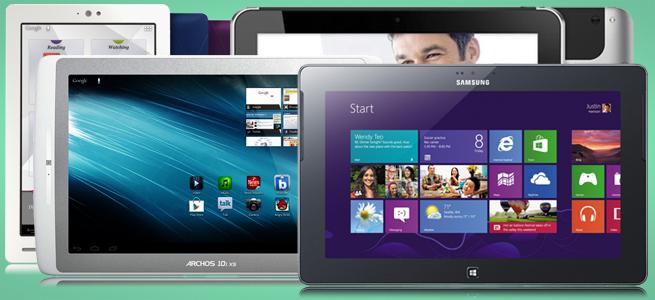
Samsung Ativ and Galaxy Tab 2 10.1 coming to AT&T Nov. 9

Samsung and AT&T announce the Ativ and Galaxy Tab 2 for a November 9 release, bringing new Android and Windows 8 devices to the carrier this week.

If you were planning to buy a tablet this holiday season, rest assured you’ll have plenty of variety to choose from when you head to the stores on Black Friday. Today AT&T has announced two more tablets to hit stores on November 9: The Windows smart PC Samsung Ativ, and latest member of the Android-powered Galaxy family, the Samsung Galaxy Tab 2 10.1. The Samsung Ativ will retail for about $8o0, and the Galaxy Tab 2 10.1 will cost about $500 — neither of which require a contract for purchase. 

The Samsung Ativ comes as the first of Microsoft’s beefier Windows 8 tablets to hit the market in contrast to its Windows 8 RT tablets released late in October. The tablet features an included clamshell keyboard for high-speed typing when you need it, and a multi-touch display to take full advantage of the Windows 8 UI experience. The device also features an Intel Atom 1.5GHz dual-core processor, 64GB of internal memory, and 2GB of RAM all viewed from a crisp 11.6-inch display. Clocking in at $800, this tablet is a small fortune, but runs the robust Windows 8 OS for a totally mobile and productive experience.

The Galaxy Tab 2 10.1 serves as Samsung’s sequel to their Galaxy Tab 10.1 released back in 2011, and features Android 4.0 (Ice Cream Sandwich), an external storage slot, and a slightly beefier battery all viewed from a high resolution 10.1-inch screen. At $500, the Galaxy Tab 2 is certainly not the cheapest Android tablet out there, but nonetheless a feature rich one. Read our full DT review on the Galaxy Tab 2 10.1 for more info.

To encourage new customers, AT&T is offering a promotional discount for those who buy two qualifying Samsung devices this holiday season. With a new 2-year agreement, customers can get an instant $100 discount for buying any Samsung Galaxy Smartphone along with any Samsung smartphone or tablet of equal or lesser value. As Sprint also announces its roll-out of the Galaxy Tab 2 10.1 for November 11, it’s safe to say AT&T is trying to grab some essential territory before the rest of the carriers release their tablets for the forthcoming holiday season. 

The tablet market this holiday season is well inundated with devices of all shapes and sizes, ranging from the iPad Mini to Windows 8 smart PC — the only question is figuring out which one is right for you, and just what the wake of the coming holiday-season tablet war will bring to the market.


Source : http://www.digitaltrends.com/mobile/samsung-att-release-ativ-galaxy-tab-2/

Friday, November 2, 2012

Samsung sells 3 million Galaxy Note 2 devices while it waits for the competition to catch up,

samsung galaxy note 2 hardware screen

Samsung has announced that it has sold 3 million Galaxy Note 2 tablet/smartphone hybrid devices, despite it only have been on sale since September. That's a lot of sales for a niche product, so where is its competition?

Samsung must be looking at the latest sales figures for the Galaxy Note 2, which it has just made public, shaking its head and then having a good laugh. It has released a device nobody thought they wanted and critics instantly took against, then went on to sell millions of them. So why is it laughing? Because there still isn’t any competition.

The Galaxy Note 2 went on sale during September in Korea, reached the UK on October 1, and has steadily made its way to the US and other regions around the world since. According to Samsung, in 37 days it has racked up more than 3 million sales.

The original Galaxy Note arrived in September 2011, but didn’t reach 1 million sales until the end of December, so the Note 2‘s performance is impressive going, particularly when you take into account the Note 2 is still a niche device.

But is it so niche that it doesn’t need some competition? Who does Samsung think it is? Apple? Has it really produced an initially derided product that in reality, just caught other manufacturers napping?

Rumors and half-releases

It seems so, as viable alternatives to the Note 2 are few and far between, despite the product line having been on sale for more than a year. There’s the LG Optimus Vu, or the LG Intuition if you buy it from Verizon; but in its infinite wisdom, LG hasn’t bothered to give it a wide release, so its sales are unlikely to impress.

HTC’s bizarrely named J Butterfly phone has a 5-inch, 1080p screen, but it’s only available in Japan, while Panasonic has picked up its 5-inch Eluga Power and taken it home, after it failed to gain any traction in the European market. At least these have seen a release, as phones such as the LG Optimus Vu II, the Oppo Find 5, Lenovo’s S880 and the Thomson X-View 2 are all seemingly in some kind of release date limbo.

Huawei and ZTE have woken up and started talking about their own tablet/smartphone hybrid machines. For Huawei, it will be the Ascend D2 and the rumor is it will be equipped with a quad-core chip and a 720p 5-inch display. ZTE’s Nubia Z5 will have the same specification, but will add a 13-megapixel camera too. Neither are confirmed though, and both are likely to do the rounds in China before possibly going international sometime next year.

There are also a few other rumored devices with 5-inch-plus sized screens coming soon. HTC may adapt the J Butterfly for international release — possibly to be named the Droid DNA and launched on the Verizon network — while the Sony C650X, codename Odin, may arrive next year too, along with a 6-inch screen version codename Yuga. Both of these and the Droid DNA are said to have 5-inch, 1080p screens.

All this gives the Galaxy Note 2 an almost entirely open playing field until well into 2013. How many Note 2 handsets will it have gone on to sell before a true alternative finally goes on sale?


Source : http://www.digitaltrends.com/mobile/samsung-sells-3-million-galaxy-note-2-tabletsmartphone-hybrids/

Thursday, November 1, 2012

Apple releases iOS 6.1 beta to devs, complete with new Map Kit framework

Apple releases iOS 6.1 beta to devs, complete with new Map Kit framework
iOS 6.1 is expected to arrive sometime after the holidays

Following its mini-update to iOS devices Thursday, Apple released iOS 6.1 beta and a Xcode 4.6 preview for developers to tinker with.

On Apple's developer website, engineers have identified a file named "Build 10B5095f" as the iOS 6.1's beta.

It's the first peek at the next version of iOS 6. Now programmers can play with the beta in the iPhone 5, 4S, 4 and 3GS environments as well as on the fifth and fourthiPod touches and the full versions of the iPad.

A version of iOS 6.1 that works with the new iPad mini has yet to pop up on the site. It it, however, expected to appear Friday.

New tools for making Maps

The most notable new tool is a class called "MKLocalSearch" for the Map Kit framework.

The kit lets programmers "search for map-based addresses and points of interest," plus lets developers enter placename information and portions of addresses and have search returns that match the info and provide additional data.

One example given by Apple was if a user searched for "coffee," the new tool would generate returns with the location of local coffeeshops and provide extra info on each java joint.

The new Xcode 4.6 per-release was released too. It's said to be identified as "Build 4H90b." It includes the software development kits for both iOS 6.1 and Mac OS X 10.8 for the desktop.

The beta version comes stocked with Xcode IDE, the iOS simulator and all the necessary tools and frameworks for building OS X and iOS apps.

Maps still lost with 6.0.1

The release of both betas comes the day Apple updated iOS to version 6.0.1, which was mainly aimed at fixing a host of bugs. Since iOS 6 is about a month old, Apple still had some kinks to work out.

Those hoping Apple Maps would be fixed during the incremental update should continue to hold their collective breath.

Many users have been upset with the inaccurate and missing data in the navigation app Apple launched during iOS 6 to replace Google Maps.

After the public backlash, Apple CEO Tim Cook apologized to customers through an open letter.

In it, Cook said Apple was working on Maps' problems and recommended other avenues (like Bing and even Google Maps) that would help customers find their way until Maps was fixed.

Finding a way for Maps

Since Tim's letter there have been rumors that Apple was enlisting its army of Apple Store employees to help fill in the information gaps. But there hasn't been much movement on the Map-improvement front for a while.

The release of these new map-themed developers tool is the first glimmer of hope that Maps might become more accurate and informative. Or at least tell users where to get a decent cup of coffee.

We'll know after the new iOS 6.1 launches, which is expected to release some time after the holidays.


Source : http://www.techradar.com/news/software/operating-systems/apple-releases-ios-6-1-beta-to-devs-complete-with-new-map-kit-framework-1109424

Wednesday, October 31, 2012

BlackBerry 10 phones being tested by carriers as Pentagon says it will keep using RIM handsets

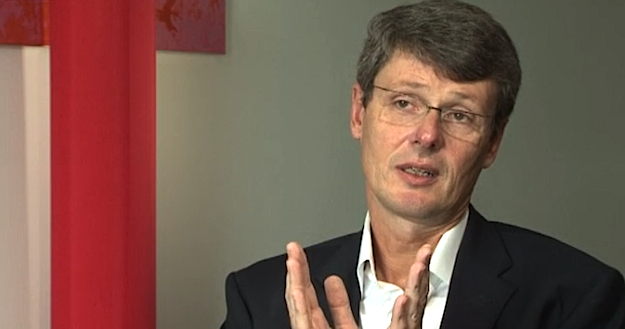
Research In Motion boss Thorsten Heins has announced that devices running the firm's next-generation OS, BlackBerry 10, are now being tested by carriers around the world, keeping it on course for release early next year. Meanwhile, the Pentagon has said it will continue to use BlackBerry devices in its work.

It’s encouraging. It’s a step in the right direction. It might mean Research In Motion (RIM) really will fulfill its promise of a first-quarter 2013 launch of its next-generation BlackBerry 10 OS and handsets.

RIM CEO Thorsten Heins announced in a statement on Wednesday that handsets running the new OS were now being tested by more than 50 carriers worldwide.

Heins said reaching the testing phase meant the company had “passed a critical milestone” in the development of its new mobile computing platform.

“The hard work will not stop here as we build towards launch,” Heins said in the statement, adding, “Our developer teams are continuing to generate momentum to bring a wealth of applications to BlackBerry 10, our enterprise teams have started to present BlackBerry 10 devices and services to our business customers, and our engineers are fully mobilized to ensure that BlackBerry 10 launches flawlessly in the first quarter of 2013.”

In an interview with the BBC last week, Heins urged consumers not to underestimate “the dynamic [BlackBerry 10] is going to create in the market.”

In other news involving the mobile company, the Pentagon made clear this week that it would carry on supporting “large numbers” of BlackBerry handsets despite going ahead with plans to allow the US military to use other devices such as the iPhone.

“The Defense Information Systems Agency is managing an enterprise email capability that continues to support large numbers of RIM devices,” a spokesman told Reuters this week. A number of government agencies and businesses have said in the last year they would be issuing staff with iOS or Android devices, ending long-standing contracts with BlackBerry. While the Pentagon also appears to be relaxing its association with RIM, things are so serious at the Canadian company that the defense agency’s announcement that it’s not switching entirely to rival devices will actually be perceived as good news by many.

The BlackBerry was once the phone of choice for many agencies and firms thanks largely to its strong security features. However, security on rival handsets such as Apple’s iPhone and a number of Android-powered devices has improved over time, offering an alternative to the BlackBerry.

The launch of RIM’s next-generation OS and handsets is its make-or-break moment. Perhaps the Canadian mobile maker – once the country’s most valuable company – can still turn things around, remain a viable player in the mobile game and consequently help to keep competitors on their toes.


Source : http://www.digitaltrends.com/mobile/blackberry-10-phones-being-tested-by-carriers-as-pentagon-says-it-will-keep-using-rim-handsets/

Tuesday, October 23, 2012

Rumor: Sony to launch MyXperia cloud service

Rumor: Sony to launch MyXperia cloud service
Send in the Clouds

A "MyXperia" trademark filed by Sony possibly points to the company putting together a new cloud service for its Xperia mobile devices.

The European Office for Harmonization in the Internal Market-registered trademark is intended to enable the "upload, storage, retrieval, download, transmission and delivery of digital content and media."

Trademark 011197332 says that these functions apply to "mobile phones, smart phones, digital or electronic tablets, PDAs and/or portable and handheld digital electronic devices."

The forecast for Sony's cloud-based service is backed up by the existence of MyXperia.com. Going there forwards users to the subdomain MyXperia.Sony.com, which asks for credentials.

Cloudy with a chance of "Me Too"

Sony is just the latest mobile device manufacturer with a desire to capitalize on cloud storage.

Apple iCloud and Google Drive are already helping users sync files between their devices and computers. Both offer 5GB of free storage with the ability to expand for a fee.

Microsoft is trying to up the storage ante by offering 7GB for free. Its SkyDrive service is also the only one that is compatible with iOS, Android and Windows Phone.

Dropbox doesn't have a horse in the mobile device game and only offers 2GB initially. But the popular storage-only service allows users to expand (up to 16GB) with referrals.

But Sony has XPERience

Sony is late to the cloud storage game when it comes to mobile devices, but its experience in video games is once again a help to its technology division.

One of the features of PlayStation Plus, the paid service for PlayStation Network users, is the ability to sync 1,000 save files (up to 1GB) with Sony's servers.

Sony's gaming cloud has been running on PlayStation 3 for one year and is slated to come to the handheld PlayStation Vita next month with an extra 1GB of storage.

There's no word on a release date for the company's MyXperia service. But given the fact that MyXperia.Sony.com is already up and running, it may not be long.


Source : http://www.techradar.com/news/computing-components/storage/rumor-sony-to-launch-myxperia-cloud-service-1106668

Wednesday, October 17, 2012

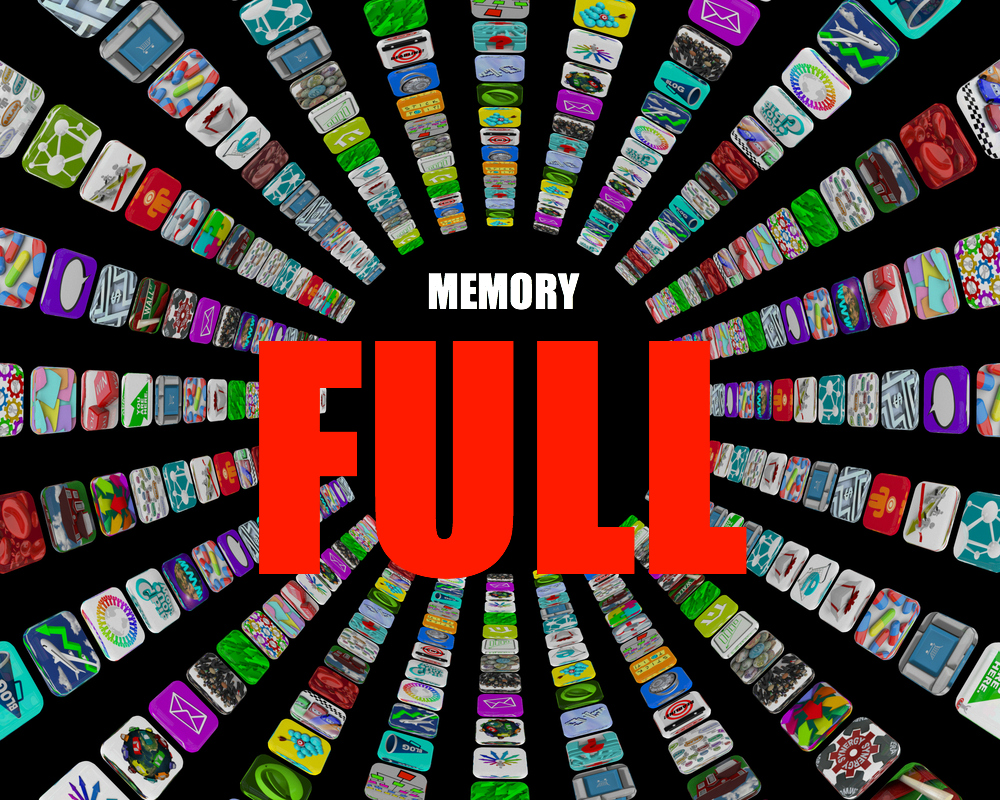
Losing your memory? Average size of iOS game apps increases by whopping 42% in last 6 months

iOS and Android apps are taking up more memory on mobile devices, with the average size of game apps for iOS devices increasing by a hefty 42 percent in the last six months.

Apps for Apple’s iOS devices have grown in size significantly in the last six months, according to the results of a survey released Tuesday.

Of course, those with iPhones, iPads or iPod touches holding 64GB of storage won’t be particularly concerned at the news, but anyone with an 8GB or 16GB device will have already noticed it really isn’t much memory at all by today’s standards.

The survey, conducted by ABI Research, showed that over the last six months the average app size has grown by 16 percent. Looking at specific genres, it’s the games category – the most popular category of all – where apps have really beefed up, with the average game app now standing at 60MB, an increase of 42 percent since March.

ABI points to two main reasons in its report. First, Apple decided in March to up the limit for 3G/4G-downloadable apps from 20MB to 50MB which, as senior analyst Aapo Markkanen says in ABI’s report, “clearly had an unleashing effect on developers,” allowing them to develop more complex games with improved graphics.

The other factor is linked to the new iPad’s Retina display, with developers launching new graphically rich apps, as well as pushing out updates for old apps to take advantage of the new high-resolution display. This must be a bit of a drag for owners of the first and second-generation iPads (without Retina displays), who have to take on the extra load without seeing any benefit.

Owners of older devices like the 8GB iPhone 3G and iPhone 4 probably filled their handsets to bursting point long ago, but even those with more recent 16GB devices are likely having to be more careful about what they choose to download.

Markkanen points out that this creates more of a challenge for developers: “The consumers with 16GB devices are likely to become more conscious about what apps to keep and what to uninstall, so the developers’ bar to impress will be getting even higher than it is now,” he said, adding, ”This could also speed up the adoption of the mobile cloud as a storage remedy quite significantly.”

As for Android apps in the Google Play store, the report said these have also seen a size increase in the last six months, in this case of 10 percent. Again, when you look at apps in the games category, the change really stands out, with Android apps almost quadrupling in size in the last six months to an average of just over 40MB.

Are you finding the amount of available memory on your mobile device disappearing fast recently? Found a way of getting around it?

[via MacRumors]  [Image: iQoncept / Shutterstock]


Source : http://www.digitaltrends.com/mobile/average-size-of-ios-game-apps-increases-by-whopping-42-in-last-6-months/

Monday, October 15, 2012

Sources say Apple reducing Samsung's role in chip production

Sources say Apple reducing Samsung's role in chip production
Expect fewer Samsung chips in iOS devices

A new report once again points to Apple wanting to put more than just an arm's length between the Cupertino company and bitter rival Samsung as the firm's primary chip provider.

According to The Korea Times, Apple has already reduced its involvement with Samsung, though it's still relying on the manufacturer for the A6 chips powering its latest idevice, the iPhone 5.

"There are three kinds of chip clients," an anonymous Samsung source allegedly told The Korea Times.

"Some want us to handle everything from chip design, architecture and manufacturing. Some want us to just design and manufacture. Some want us to just make the chips. Apple is now the third type."

"Samsung's agreement with Apple is limited to manufacturing the A6 processors. Apple did all the design and we are just producing the chips on a foundry basis," the source added.

Change is in the air

Since the A6 processors used in the new iPhone were entirely designed by Apple, the firm is freed to take its production elsewhere without running into another patent face-off with Samsung.

Recent reports indicate that Apple is courting Taiwanese Semiconductor Manufacturing Company (TSMC) for future chip production.

TSMC is capable of building chips for Apple using its advanced 20 nanometer manufacturing process, which would create chips that are 30 percent faster and 25 percent more efficient than the current 28nm chips found in the iPhone 5.

Another Samsung official commented on the possible shift to TSMC chips, telling The Korea Times, "Samsung has already acknowledged that Apple has an appetite to carry out its own central processing unit (CPU) design."

Losing Apple as a client would surely mean a big loss for Samsung, but the firm reportedly isn't worried as the unnamed Samsung official went on to cite increased custom CPU orders coming in from Qualcomm, Nvidia and Texas Instruments.

In the meantime, Apples can't afford to completely cut Samsung out yet, forcing the two rivals to continue a deteriorating partnership.

However, when Apple is finally ready to announce its next-generation A7 processor (or whatever it will be called), don't expect to see Samsung's name anywhere near it.


Source : http://www.techradar.com/news/phone-and-communications/mobile-phones/sources-say-apple-reducing-samsungs-role-in-chip-production-1104625

Sources say Apple reducing Samsung's role in A6 chip production

Sources say Apple reducing Samsung's role in A6 chip production
Expect fewer Samsung chips in iOS devices

A new report once again points to Apple wanting to put more than just an arm's length between the Cupertino company and bitter rival Samsung as the firm's primary chip provider.

According to The Korea Times, Apple has already reduced its involvement with Samsung, though it's still relying on the manufacturer for the A6 chips powering its latest idevice, the iPhone 5.

"There are three kinds of chip clients," an anonymous Samsung source allegedly told The Korea Times.

"Some want us to handle everything from chip design, architecture and manufacturing. Some want us to just design and manufacture. Some want us to just make the chips. Apple is now the third type."

"Samsung's agreement with Apple is limited to manufacturing the A6 processors. Apple did all the design and we are just producing the chips on a foundry basis," the source added.

Change is in the air

Since the A6 processors used in the new iPhone were entirely designed by Apple, the firm is freed to take its production elsewhere without running into another patent face-off with Samsung.

Recent reports indicate that Apple is courting Taiwanese Semiconductor Manufacturing Company (TSMC) for future chip production.

TSMC is capable of building chips for Apple using its advanced 20 nanometer manufacturing process, which would create chips that are 30 percent faster and 25 percent more efficient than the current 28nm chips.

Another Samsung official commented on the possible shift to TSMC chips, telling The Korea Times, "Samsung has already acknowledged that Apple has an appetite to carry out its own central processing unit (CPU) design."

Losing Apple as a client would surely mean a big loss for Samsung, but the firm reportedly isn't worried as the unnamed Samsung official went on to cite increased custom CPU orders coming in from Qualcomm, Nvidia and Texas Instruments.

In the meantime, Apples can't afford to completely cut Samsung out yet, forcing the two rivals to continue a deteriorating partnership.

However, when Apple is finally ready to announce its next-generation A7 processor (or whatever it will be called), don't expect to see Samsung's name anywhere near it.


Source : http://www.techradar.com/news/phone-and-communications/mobile-phones/sources-say-apple-reducing-samsungs-role-in-a6-chip-production-1104625

Wednesday, October 10, 2012

Apple launches new iPod ad, lots of colors and bouncing

ipod ad

Apple unveiled a snappy new ad for its refreshed iPod devices on Wednesday highlighting the range of colors on offer.

As Apple begins shipping the first batch of orders for its refreshed iPod range of media players to expectant customers around the world, the tech company has launched a new ad called ‘Bounce’ featuring the new devices.

The 30-second slot, posted on YouTube on Wednesday night and set to air on TV, features a bunch of iPods (touches, nanos and shuffles) bouncing around to a funky track called Yeah Yeah by London-based singer Willy Moon. It’s pretty, slick, and quick, and you can check it out below.

Apple unveiled a new iPod touch last month, featuring a larger 4-inch screen identical in size to that of the iPhone 5. Compared to its predecessor, the updated fifth-generation device is slimmer and lighter, and sports a vastly improved 5-megapixel camera. More RAM and a faster processor make for a much zippier device compared to earlier touches, too. It also comes in six colors – no longer just black and white – a feature that forms the basis of the new ad.

The new seventh-generation iPod nano, described as the thinnest nano to date, has done away with the small square design of its predecessor and returned to the longer look of the fifth-generation nano. An extra color has been added to the range, too.

As for the shuffle, three new colors have been added to the range.


Source : http://www.digitaltrends.com/mobile/apple-launches-new-ipod-ad-lots-of-colors-and-bouncing/

Interested in Windows Phone 8? Here’s a complete roundup of upcoming devices

Windows phone 8 upcoming samsung nokia htc

We give a quick and comprehensive overview of the devices set to launch alongside Microsoft's Windows Phone 8.

Windows Phone has struggled to establish a foothold in the crowded smartphone marketplace, and the distance between Microsoft and its competitors is only growing. Microsoft hopes this will all change with the release of Windows Phone 8 and device manufacturers like Nokia, HTC, Samsung, and Huawei ready to back it up on the hardware front. 

We surfed the web for hours (seriously, it was hard) to put together a list of all the WP8 devices set to launch alongside the new OS at the end of October. And if we may be so bold, each company has put out some of its best work under the Microsoft name. Below are the first Windows Phone 8 devices.

(*Note: All devices below run on Qualcomm Snapdragon S4 processors.)

Nokia Lumia 920

Nokia Lumia 920Screen: 4.5 inches, 1280×768 pixels, 332ppi, IPS LCD
Specs: 1.5GHz dual-core, 1GB RAM, 32GB storage
OS: Windows Phone 8
Camera: 8.7MP rear (1080p video), 1.2MP front (720p video)
Connection: 4G LTE, 3G HSPA+ 
Price: TBA

Description: The Lumia 920 is posed to be Microsoft’s savior for Windows Phone 8, a White Knight on horseback ready to cut a swath through all the iPhones and Androids out there. Nokia claims the big draw for consumers comes from its superior camera technology and software innovations. Its latest line up comes with wireless charging and elements of its PureView camera. On the software front, it has its own maps and a music streaming app. Not to mention it looks gorgeous with a polycarbonate, high-gloss, unibody design.  

Nokia Lumia 820

Nokia Lumia 820Screen: 4.3 inches, 800×480 pixels, 217ppi, AMOLED
Specs: 1.5GHz dual-core, 1GB RAM, 8GB storage
OS: Windows Phone 8
Camera: 8MP rear (1080p video), 0.3MP front (VGA video)
Connection: 4G LTE, 3G HSPA+
Price: TBA

Description: The Lumia 820 may be aimed at more budget-minded consumers, but it still holds onto the wireless charging (with the right accessory) and software present in its older brother (but a lesser camera). Like the 920, the 820 comes in a bunch of bright colors but in this case, the colored backplates are interchangeable. Since it doesn’t follow a unibody design, the 820 also has a removable battery and supports microSD so you can jack up the storage up to 32GB.

 
HTC Windows Phone 8X

HTC Windows Phone 8XScreen: 4.3 inches, 1280×720 pixels, 341ppi, Super LCD 2
Specs: 1.5GHz dual-core, 1GB RAM, 16GB storage
OS: Windows Phone 8
Camera: 8MP rear (1080p video), 2.1MP front (1080p video)
Connection: 4G LTE, 3G HSPA+
Price: $200 with a 2-year contract 

Description: At first glance, the HTC Windows Phone 8X looks like it may just be a cheap knock-off of Nokia’s Lumias. However, once you get past the familiar form factor and dizzying color options, the 8X does hold its own. It’s crafted from the same polycarbonate that gives the Lumia its signature swagger. HTC has also included Beats Audio here, much like in its One-branded smartphones. The non-expandable 16GB storage may be a drawback, but that wholly depends on your storage needs.


 HTC Windows Phone 8S

HTC Windows Phone 8SScreen: 4 inches, 800×480 pixels, 233ppi, Super LCD
Specs: 1GHz dual-core, 512MB RAM, 4GB storage (32GB)
OS: Windows Phone 8
Camera: 5MP rear (720p video)
Connection: 4G LTE, 3G HSPA+
Price: TBA

Description: HTC’s Windows Phone 8S is the cheaper option in the company’s WP8 offerings, and it’s a fairly large step down spec-wise from its more luxurious counterpart. The two-toned coloring is pretty flattering, but the cheaper, plastic build can’t compete with the polycarbonate body of the 8X; the saving grace is that HTC opted for a matte finish. Like the Lumia 820, the 8S supports microSD for added storage. The 8S also doesn’t have a front-facing camera, a rather weird move considering Microsoft’s acquisition of Skype and it’s RAM, screen resolution, and storage are lacking. 

Samsung ATIV S

Samsung ATIV SScreen: 4.8 inches, 1280×720 pixels, 306ppi, HD Super AMOLED
Specs: 1.5GHz dual-core, 1GB RAM, 16 or 32GB storage
OS: Windows Phone 8
Camera: 8MP rear, 1.9MP front
Connection: 4G LTE, 3G HSPA+
Price: TBA

Description: Judging by the looks of the ATIV S, Samsung wasn’t invited to Microsoft’s neon-centric design meeting. In stark contrast to its fellow WP8 devices, the ATIV S is rocking a brushed metallic finish and only comes in a single color option. However, it’s certainly nice to see Samsung can make a device that isn’t made of plastic. The ATIV S wins in terms of storage space, supporting up to 32GB of added storage through an appropriately sized microSD. But all in all, the ATIV S isn’t as unique as what Nokia and HTC are presenting. Samsung may, literally, be phoning it in.

Huawei Ascend W1 and Ascend W2

Huawei Ascend W1
Not a lot is known about Huawei’s rumored pair of Windows Phone 8 devices. We’re still waiting for the official unveiling, but we do know the W1 will be its flagship device and the W2 will most likely be a mid-range device.

However, if the Ascend is anything like the Android-powered P1 then the smartphone will pack a 4.3-inch screen, Super AMOLED display, and 4GB of storage. Due to Microsoft’s restrictions on Windows Phone 8 devices, we can expect the Ascend will also come with a 1.5GHz Qualcomm Snapdragon S4 and 1GB of RAM. It will also probably look a lot like the device pictured at left. 

Here’s hoping Huawei puts its best foot forward here and launches an incredible pair of smartphones. 

Any of these new devices stand out to you? Are you planning on upgrading to Windows Phone 8 when it launches? Let us know in the comments below.


Source : http://www.digitaltrends.com/mobile/upcoming-windows-phone-8-devices/

Nokia Belle FP2 update is now fixed, reseeded to users

Finally, the issues have been ironed out and Nokia has restarted the rollout of the Nokia Belle Feature Pack 2 firmware update.

The update is headed for Nokia OS devices including the Nokia 808 PureView, 701, 700 and 603. The PureView will also get some extra imaging and gallery features.

As for other changes - the user interface will get a new swipe to unlock, the camera UI will get a refresh, while the navigation bar, widgets and transition effects all get minor tweaks. The keyboard will now offer word completion and predictive text input. The web browser is also updated and comes with an improved JavaScript engine for better performance.

The update is available through Nokia Suite and owners of the eligible devices should be getting the update notification any moment now.

Via
Source : http://www.gsmarena.com/nokia_belle_fp2_update_is_now_fixed_heads_towards_users-news-4927.php

Wednesday, October 3, 2012

Sandia’s MegaDroid goes public

What has 300,000 Android Operating Systems and helps tech professionals predict how mobile devices would react in a crisis? It's a massive project called MegaDroid, based in California.

What do you call an artificial system that simulates a network of hundreds of thousands of Android devices, allowing to predict the behavior of said devices in case of new app, malware or unforeseen technological breakdown? If your answer was “The Matrix,” then somewhere the Wachowski siblings would like to thank you, but the real answer is something far more entertaining than any amount of Keanu Reeveses staring blankly at the screen. World, meet the MegaDroid.

The MegaDroid is the creation of researchers at California-based Sandia National Laboratories, and virtually simulates 300,000 separate Android devices in an attempt to analyze the reactions of large-scale networks to any number of situations. According to computer scientist John Floren, the MegaDroid is completely insulated from all other networks in the world, but nonetheless offers a realistic network environment inside itself, complete with full domain name service, Internet relay chat server, web server and multiple subnets. It even includes a fake GPS system so that the fictional users of the multiple Android devices being simulated can be tracked in different environments to see whether environment would have any effect on the particular data being studied, and also whether areas without WiFi or Bluetooth impact service significantly.

The need for MegaDroid is explained by Floren very simply: “You can’t defend against something you don’t understand,” he says, pointing to the system’s use in running simulations that will allow Android users to be protected against cyber attack or disruption of service from more benign sources. It’s something echoed by Sandia’s David Fritz, who says that, although “smartphones are now ubiquitous and used as general-purpose computing devices as much as desktop or laptop computers,” they remain easy targets for those seeking to disrupt the system. “No-one appears to be studying them at the scale we’re attempting,” he added.

Continuing, Fritz said that “It’s possible for something to go wrong on the scale of a big wireless network because of a coding mistake in an operating system or an application, and it’s very hard to diagnose and fix. You can’t possibly read through 15 million lines of code and understand every possible interaction between all these devices and the network.”

MegaDroid uses data gleaned from 2009′s MegaTux project, in which Sandia ran a million virtual Linux machines (They have also created MegaWin, which runs multiple Windows OSs simultaneously; clearly, they find mass production very attractive). The experience helped when it came to duplicating the surprisingly complex Android code, with Google’s coding running on top of Linux. Sandia plans to make much of MegaDroid open source once the bugs have been worked out, with Fritz explaining that decision with remarkable ease. “Tools are only useful if they’re used,” he said. What would you do with 300,000 Android devices…?


Source : http://www.digitaltrends.com/mobile/megadroid-farm/

The 10 hottest phones you can’t buy yet

best new phones

We list the smartphones rumored to come out in the next few months, including some new Android smartphones and phablets, and some Windows Phone 8 devices.

We don’t report every leaked shot of every rumored handset — there are blogs for that — but we try to keep you informed about what’s out there and what’s coming up. Lately, we’ve been hearing a number of new rumors and leaks. Below is a list of the major smartphones we’re expecting to see companies like Apple, Samsung, Sony, Nokia, HTC, and Motorola unveil this fall. 

Google Nexus 4

We don’t know the specifics on this one yet, but there are strong rumors that we’ll see a new Nexus smartphone in the very near future. It might be a simple update to the Samsung-made Galaxy Nexus; it might be the HTC phablet; it might be a variant of LG’s flagship Optimus G; or it could be something completely different. Whatever it is, it will run the latest version of Android and it’s bound to appear on several Christmas wish lists. The Galaxy Nexus hit shelves in December 2011. Expect the new Nexus around that timeframe.

LG Optimus G

An impressive and valiant attempt to claim the ascendancy in the Android smartphone race, the LG Optimus G doesn’t fail to impress. It has a 4.7-inch WXGA True HD IPS+ display, Qualcomm’s Snapdragon S4 Pro Quad-Core processor, 2GB of RAM, and a 13-megapixel camera. There’s also LTE, NFC, and 32GB of storage. Whatever way you slice it, this smartphone looks fast. The only obvious drawback is the fact that it ships with Android 4.0 (ICS) and not 4.1 (Jelly Bean).

HTC Windows Phone 8X

HTC Windows Phone 8X

Android has not proven to be such a happy hunting ground for HTC of late and so we see a renewed push to release a flagship device on Microsoft’s new Windows Phone 8 platform. WP8 finally appears like it will catch the platform up to Android and iOS when it comes to features and hardware — it only took 2 years. The HTC 8X has a 4.3-inch Super LCD 2 screen, a dual-core 1.5GHx Snapdragon S4 processor, and 1GB of RAM. There’s 16GB of storage and an 8-megapixel camera. It also has NFC, Beats Audio, and LTE support. That display is probably the8X highlight – it boasts an iPhone 5-topping 341.5 ppi (pixels per inch).

Sony Xperia SL

Sony Xperia SL official shot

This phone has been confirmed by Sony via a new page on Sonymobile.com. The Sony Xperia SL is essentially an Xperia S with a couple choice enhancements. The SL will have a 1.7GHz dual-core processor instead of the 1.5GHz dual-core chip in the S and will run the “latest version” of Android — though we’re not sure if that means Android 4.0 (ICS) or 4.1 (Jelly Bean). We’ve asked Sony, but have not yet heard back. No pricing or availability info is yet known. Keep an eye out for this one.

HTC One X+ (and possibly XXL)

HTC One X+

HTC hasn’t made a splash this year with its One X, S, or U line of smartphones, though we think they’re pretty great, but as the old saying goes, if at first you don’t succeed… HTC hopes to change its fortunes  with a a revamped version of the handset with updated specs. We haven’t heard anything since June, but it’s still possible that HTC is also working on a big “phablet”-sized phone that may compete with the Galaxy Note and come with a 1080p screen resolution, 2GB of RAM, and powerful quad-core processor. While we’re sure HTC is working on something for release this fall, take this rumor with a grain of salt. We do think it’s likely that HTC will release a new phone on Verizon. Late last year, it released the Rezound and has a good relationship with the big red carrier.

Nokia Lumia 920 and 820

Nokia Lumia 920

No company needs Windows Phone to succeed like Nokia does — Microsoft included. Nokia has bet the farm on WP and the beleaguered manufacturer is hoping to turn its fortunes around with the Nokia Lumia 920 and the Lumia 820, announced on Sept. 5. The flagship Lumia 920 has a 4.5-inch WXGA HD display, a dual-core 1.5GHz Snapdragon S4 chip, 1GB of RAM, and 32GB of onboard memory. It also has an impressive 8.7-megapixel camera, and support for NFC and LTE. The standout is the wireless charging capability for the 2,000mAh battery – that’s something genuinely new.

Motorola Droid Razr HD

Motorola Droid Razr HD, HD Maxx, and Razr M

Motorola is now owned by Google, but the search engine giant has been careful to avoid any preferential treatment for fear of alienating other Android partners. On Sept. 5, Motorola announced the Droid Razr HD, Maxx HD and the Razr M. The Razr HD boasts a 4.7-inch HD display, a 1.5GHz dual-core Snapdragon S4 processor, and 1GB RAM. There’s also an 8-megapixel camera and 32GB of storage. The big attraction is the 2,530mAh battery which should see users through a full day and beyond, even with heavy use. If that doesn’t sound like enough then the Droid Razr Maxx HD ups the stakes with a 3,300 mAh battery. You can read our full review of the Droid Razr M, as well.

Samsung ATIV S

Samsung ATIV S

Rumors of a Windows Phone 8 device from Samsung were rife before it was unveiled as a bit of a surprise at Samsung’s August event in Berlin. The ATIV S has a 4.8-inch HD Super AMOLED touchscreen, a 1.5GHz dual-core processor, 1GB of RAM, and a large 2,300mAh battery. It also has an 8-megapixel camera, 16GB or 32GB of storage, and support for NFC. It should be a top contender for those looking at Windows Phone this holiday season.

Samsung Galaxy Note 2

Samsung’s super-sized “phablet” phone on AT&T has been a hit, and its sequel is upon us. The Galaxy Note 2 has a 5.5-inch Super AMOLED touchscreen, a 1.6 GHz quad-core Cortex-A9 processor, 2GB of RAM, and an 8-megapixel camera. It comes in 16GB, 32GB, or 64GB varieties, but also has a microSD card slot. It also supports LTE, NFC, and runs Android 4.1 (Jelly Bean) out of the box. It’s expected to hit U.S. carriers this month or next and it will cost around $300 for the 16GB version on a two-year contract. Be sure to check out our hands-on impressions of the Galaxy Note 2.

BlackBerry 10 Lisbon and Laguna

BlackBerry L Series N Series

A number of leaks have sprung up on Rapidberry showing a raft of BlackBerry 10 devices, although they aren’t expected to be released until 2013. The last throw of the dice for RIM looks interesting. In addition to the new platform, the hardware is sporting a 4.2-inch display with an astounding 355 ppi resolution, a Qualcomm Snapdragon MSM8960 dual-core processor (1.5-1.7GHz), 1GB of RAM, and 16GB of storage plus a hot-swappable microSD card slot. There’s also an 8-megpixel camera, support for NFC, and LTE. The big questions is – when will RIM be ready to release? From what we’ve seen of BlackBerry 10, it has a long way to go.

Did our best upcoming phones list miss something big? Shoot us a comment below.

Article originally published August 20, 2012. 

Update: 10/3/2012: Dropped released phones and added some new devices.


Source : http://www.digitaltrends.com/mobile/best-upcoming-phones/