Showing posts with label japan. Show all posts

Thursday, November 8, 2012

What Japan’s consumer electronics meltdown means for you

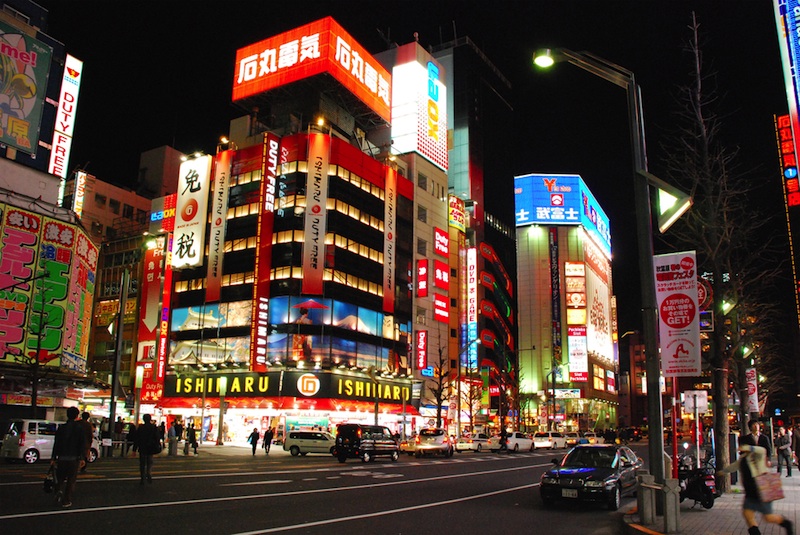
japan consumer electronics akihabara (shutterstock bluehand)

Three of Japan's consumer electronics giants are on the ropes - how have the mighty fallen, and what does it mean for your next tech buys?

Japanese manufacturers used to dominate consumer electronics, with brands like Sony, Sharp, Panasonic, Sanyo, JVC, and Toshiba practically cornering the global marketplace for desirable tech goods in the 80s and 90s. But times have changed, as evidenced by recent reports of massive losses and considerable layoffs at Sony, Panasonic, and Sharp – three of Japan’s largest manufacturers and some of the most recognizable brands in the world. Perhaps even more troubling for a nation once synonymous with technological innovation, Japan’s entire electronics industry has fallen increasingly behind rivals like Samsung, Apple, LG Electronics, and numerous Chinese manufacturers. These rivals aren’t just developing hardware innovations to match – or exceed – the Japanese giants; they’re bringing them to market faster and cheaper. 

What happened? And what does it mean for the future of gadgets in your home, pocket, and life?

Japan’s economic turmoil

Japese factory worker (shutterstock/tororo reaction)

Japan is still a powerhouse: It has the third largest national economy on the planet, surpassed only by the United States and China. But it’s had an uneven path in recent years. Japan’s stock market crashed in slow motion during the early 1990s due to over-valued stock and real-estate prices, something that will be familiar to anyone who survived the dot-com and real estate bubbles in North America. The result was the “Lost Decade” or “The Lost Two Decades,” depending who you ask and how they count. In very broad terms, after the crash, Japanese firms chose to pay down debts and build up their savings rather than take advantage of near-zero interest rates to invest in new businesses and technology. That’s a solid, conservative approach to maintaining solvency, which prevented permanent employees from being laid off, but it gave rivals in other countries (particularly in South Korea and China) an opportunity to invest in their own R&D and electronics manufacturing capabilities. The Lost Decade let rivals find ways to out-produce and under-sell Japanese electronics makers.

Japanese electronics makers were not oblivious to what their overseas rivals were doing. They largely chose to bet on their traditional, historical strengths: advanced technology and high-precision goods.

Part of that effort was an emphasis on monozukuri, a uniquely Japanese concept that loosely means the “art, science, and craft of making things,” according to the University of Tokyo’s Takahiro Fujimoto. It’s been said that monozukuri cannot be fully translated from Japanese, but the concept encompasses both the process of developing, designing, and producing a product, as well as qualities of dedication, continuous refinement, and superior craftsmanship. In other words, Japan’s electronics industry might have aggressive competitors, but Japanese products would focus on the high end: quality, valued products that would hopefully generate high profits.

Japanese electronics did see a resurgence in the mid-2000s, fueled in part by a weak yen that made Japanese products more affordable around the world, as well as a North American consumer market flush with cash from a housing bubble that hadn’t yet burst. The resurgence also coincided with the consumer launch of flat-panel, high-definition televisions, a market dominated by companies like Sony, Sharp, Pioneer, and Panasonic. Sony and Nintendo built gaming empires; Toshiba and (particularly) Sony pushed notebook computers forward; firms like Kenwood and JVC saw solid success with consumer and professional audio-video products. As participants in a protectionist economy, Japanese firms prefer to keep their manufacturing on-shore, and the companies invested heavily in pricey new facilities to make things like high-quality flat panel displays and products that embodied monozukuri.

But in 2008, the global recession took hold: The U.S. housing bubble burst, financial crisis rocked the Eurozone, and demand for consumer electronics dropped worldwide; much of the remaining demand leaned towards goods with the lowest prices, and many of those were not Japanese. Suddenly Japan’s electronics giants found themselves saddled with expensive manufacturing plants that made a high volume of products that few people were buying.

So who’s in the most trouble?

Sharp
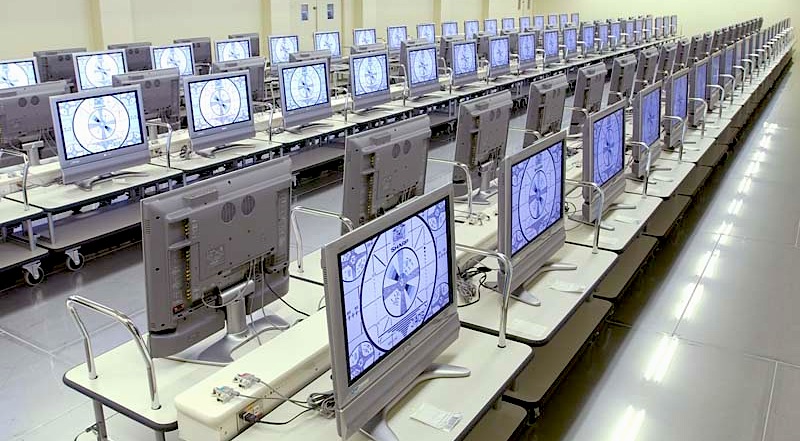
Sharp Kameyama LCD facility

Of Japan’s largest consumer electronics manufacturers, Sharp is perhaps in the tightest spot. In it’s most recent financial results (PDF), Sharp increased its forecast loss for the fiscal year ending March 31, 2013 to a whopping ¥450 billion, or  more than US$5.6 billion. This followed Standard & Poors downgrading Sharp stock to junk status back in August, making it more costly for the company to borrow money. Sharp is currently being viewed as having a 94.9 percent chance of defaulting on its debt in the next five years. Companies are known for putting the boldest face possible on their financial reports, but even Sharp doubts its own future. The original version of the release said there was “material doubt” about the company’s ability to survive, although it has since edited the release to say there are “uncertainties about Sharp being an assumed going concern.” Tomato, tomahto.

Sharp’s decline exemplifies the challenges facing Japanese electronics makers. From 2000 to about 2007 Sharp was riding high: Its profits jumped about 150 percent as it created a premium brand in its Aquos line of high-end flat screen television. (Sharp was also wildly successful in Japan with Aquos phones.) Sharp built cutting-edge facilities in Kameyama to make LCD flat-panel displays. Its success seemed to validate monozukuri and Japanese’ companies’ predisposition to do their own manufacturing. However, even as industry watchers were warning the bottom would soon drop out of flat-panel displays – and the storm clouds of the global financial crisis were gathering – Sharp doubled down, building a new factory in Sakai that could produce 6 million TV-sized LCD panels a year. Then the LCD market collapsed, and Sharp’s Aquos phone business in Japan was cut in half by the consumer smartphone revolution, led by the Apple iPhone. Sharp had also seen success in a solar panel and battery business; however, just as with LCD panels, its high-end products got undercut by competitors in China and other markets in 2011.

What to do? Sharp’s Kameyama factories have now been repurposed to make small LCD displays used in things like the iPad and the iPhone. The company has mortgaged the facilities, along with most of its other factories and offices, and got a fresh round of financing from Japanese banks on promises it would cut jobs, sell off assets, and regain profitability. Sharp thinks it’ll be able to bring in an operating profit in the second half of 2013 and begin paying back debt, but industry watchers and the company itself aren’t sure that’ll work.

Panasonic
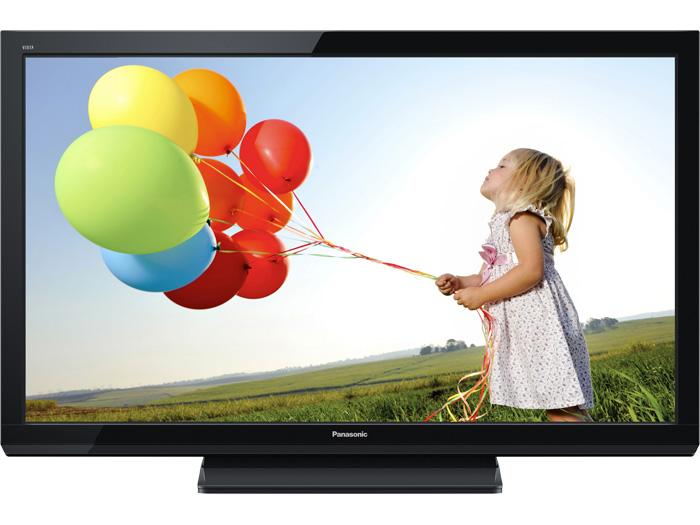
Panasonic Viera TC-P42X5 (front)

Think Sharp’s projected ¥450 billion loss for the fiscal year is steep? Try Panasonic: It’s forecasting a loss of ¥765 billion (about US$9.6 billion) for the same period, based on writedowns in its mobile handset, battery manufacturing, and solar power businesses. That’s a 30-fold increase on the company’s previous estimates, and will be the second-largest shortfall in the company’s history – and that’s saying something for a company founded in 1918. Panasonic will also skip a dividend to investors for the first time since 1950, citing an “urgent need” to shore up its finances.

Some of Panasonic’s woes are tied up in the same solar and battery businesses that have hit Sharp – augmented by the company’s decision to buy up Sanyo back in 2009-2010, which primarily centered around Sanyo’s battery and solar businesses. But where Sharp bet on LCDs, Panasonic bet on plasma, sinking ¥600 billion into factories in Amagasaki. Plasma display technology, of course, has been surpassed in popularity by LCD displays, but unlike Sharp, Panasonic couldn’t repurpose its plants to meet the needs of mobile devices.

“We are among the losers in consumer electronics,” newly-installed Panasonic president Kazuhiro Tsuga told a news conference on November 1. However, Tsuga’s writedowns of Panasonic’s businesses are moves to scale back the company’s operations and move it away from its money-losing businesses in televisions and consumer electronics. Tsuga is repositioning the company – still Japan’s largest employer with over 330,000 workers after laying off 36,000 people last year – to function as a series of small- to medium-sized operations, each of which generate positive revenue.

Sony

Sony CEO Kazuo Hirai

Although Sony is as deep into televisions and consumer electronics as rivals Sharp and Panasonic, its path has been a bit different, and as a result it isn’t in quite as much trouble. Sony posted a ¥15.5 billion loss for its July-September quarter (PDF) – it’s seventh straight quarterly loss – although the company still says it believes this year will mark its first annual profit in five years. New CEO Kazuo Hirai is working to refocus Sony on mobile, gaming, and digital imaging (including medical imaging augmented by the stake in Olympus), although it still clings to a television business that has been losing money for eight years. Sony is now getting its LCD panels from manufacturers like Sharp, LG, and Samsung rather than making them itself; the company is hopeful that getting panels on the open market will reduce its costs and allow the the television unit to return to profitability. Sony has also sold off its chemical products businesses that made materials used in LCD panels and optical discs. And Sony is cutting jobs: 10,000 workers last spring, another 1,000 from its mobile division this summer, and another 2,000 layoffs due by the end of 2012.

Unlike Sharp and Panasonic, Sony has long had a hand not just in consumer electronics, but in content businesses. It wants to make money selling movies, books, music, and games – not just devices. Consider Sony Pictures, the PlayStation network, and the company’s movie and music services. In a way, Sony pioneered aspects of the business models being pursued by Apple (and extended by Amazon and Google) by offering content that brings people to their devices. Between more diversified offerings and a demonstrated willingness to jettison money-losing businesses (except, so far, televisions), Sony may be able to stage a turnaround. That said, Sony cut its estimates of how many televisions, PSPs, Vitas, and digital cameras it expected to sell for the year by 6 to 16 percent; only its PlayStation forecast was unchanged at 16 million units.

What it means

Foxconn factory

The financial turmoil of some of Japan’s largest consumer electronics companies is partly indicative of the broader global economies. Consumers around the world have been tightening their belts, and that limits how many of them will buy luxury items – and monozukuri produces luxury items. Instead, the consumer electronics market has shifted towards manufacturers that can deliver new products fast and cheap, and for the last several years, that hasn’t been happening in Japan.

Fewer Japanese TVs — Sharp, Panasonic, and Sony are Japan’s first, second, and third-largest television makers, and while none are currently shutting down their television businesses, they are all looking to reduce their losses. Unless one or more of the companies decide they want to try to take on the likes of Samsung, LG, and Foxconn directly on a price basis, that means Japanese TV makers will probably have to cede the mainstream television market to competitors and focus on high-end, luxury products. However, this is a very chancy proposition; although Japanese manufacturers were pioneers in OLED television development (remember Sony’s astronomically expensive 11-inch OLED TV?) rivals like Samsung and LG are now driving OLED innovation. Panasonic and Sony have announced plans to partner up on OLED production, but Japanese companies remain behind the curve.

Selling off brands? — If Japanese consumer electronics makers do fail, some of their brands might hold some value… for a while. Sharp’s Aquos brand still has major recognition around the world, and might be something the company would consider selling off to help fuel its survival. Panasonic’s Viera brand could potentially do the same. Sony has similar opportunities with brands like Bravia and Walkman. Given the financial situations at all these companies, it’s possible that icons of Japan’s past dominance could be bought by their more-nimble overseas rivals.

Lessons for Apple? — If there’s a leading electronics company that exemplifies monozukuri, it’s probably Apple. The Cupertino company is world-famous for its attention to detail, craftsmanship, and dedication to design, both in its hardware products and onscreen. Even its product line revisions reflect that: Updated products are rarely revolutionary departures from what came before. They’re consistent, continued refinements and improvements. Apple also targets the high end of the market, focusing on profit margin rather than market share. The company would seem to be vulnerable to many of the same market forces that are rocking Japan’s largest consumer electronics makers.

There are some key differences, however. Apple does outsource its manufacturing, most famously to China’s Foxconn. Apple also outsources most of its components: it buys memory and processors from Samsung, Gorilla glass from Corning, and still more components from Toshiba, Panasonic, Intel, Nvidia, and more than 150 other companies (PDF). Apple isn’t on the hook for manufacturing facilities that cost it billions of dollars: It leaves the risk of owning those kinds of facilities to the likes of Samsung.

[Akihabara image via Shutterstock / tororo reaction
Japanese factory worker image via Shutterstock / bluehand]


Source : http://www.digitaltrends.com/mobile/what-japans-consumer-electronics-meltdown-means-for-you/

Wednesday, November 7, 2012

1080p Droid DNA tipped for launch at Verizon and HTC’s November 13 event

Droid DNA Leak

HTC and Verizon have sent out invitations to a press event on November 13, where it's rumored to be announcing the Droid DNA, the US version of Japan's J Butterfly smartphone that's equipped with a 5-inch, 1080p display.

Phone fans could be in for a treat next week, as HTC and Verizon have sent out invitations to a press event to be held in New York on November 13, where we could get the first 1080p smartphone/tablet hybrid launched outside Japan.

The invite doesn’t appear to contain any hidden messages, showing nothing more than a lens-flared light on a dark background, but a few leaked press pictures could give us a better idea what these long-time partners are preparing for us.

The images popped up on @evleaks’ Twitter account this week, and show a big-screen, Verizon-branded HTC smartphone that bears a striking resemblance to the HTC J Butterfly.

Quite how such a bizarrely named phone could slip you memory, we’re not sure; but just in case it has, here’s what it’s all about. Announced last month in Japan, the J Butterfly has a 5-inch display with a headline-grabbing 1080p resolution. It seemed inevitable that HTC would let the Butterfly spread its wings at some point, and the Verizon event seems like the ideal launchpad.

Five-inch, full HD touchscreens are set to be the next big thing in the world of the smartphone display, with Sharp’s 1080p IGZO screen making its debut this week, and LG confirming recently that it’s also working on a similar panel.

It’s highly unlikely the J Butterfly name will remain on the US version though, and instead it’s likely to be another “Droid” device, this time the Droid DNA. That name has appeared on both the FCC’s website and a leaked Verizon price list, and has superseded other possible names including the HTC DLX and the HTC X5. Neither of those names are dead though, and could be used for a GSM version of the phone.

If the 5-inch, 1080p screen isn’t enough to get your pulse racing, then should the Droid DNA share the J Butterfly’s other features, it will also have Qualcomm’s high performance, 1.5GHz, quad-core Snapdragon S4 Pro processor, plus Android 4.1 Jelly Bean as its operating system.

Previous leaks have suggested a December 6 release date for the phone, but we’ll have to wait for the November 13 event to confirm this, and all the other details concerning HTC and Verizon’s new device.


Source : http://www.digitaltrends.com/mobile/verizon-and-htc-call-november-13-press-event/

Sunday, November 4, 2012

HTC DROID DNA photo leaks, brings HTC J's screen to the US

Remember the HTC J butterfly and it's 5-inch 1080p, 440ppi display? Well, the device isn't going to stay exclusive to Japan much longer, as evleaks has posted an image of the device's US brethren dubbed HTC DROID DNA.

As the DROID part of the name suggests, the device will hit Verizon's 4G LTE network. While a little late to the phablet party, HTC is entering it with a bang with its 5-inch 1080p HD Super LCD 3 display. In addition, the device will be powered by the Qualcomm Snapdragon S4 Pro quad-core processor bundled with 2GB of RAM.

This lethal combination is further enhanced with 16GB of on-board memory and a microSD card slot. The battery is reprotedly going to be 2,020mAh. Accordin to the leak, the HTC DROID DNA will run Android 4.1 Jelly Bean.

Source | Via


Source : http://www.gsmarena.com/htc_droid_dna_photo_leaks_brings_htc_js_screen_to_the_us-news-5041.php

Wednesday, October 17, 2012

HTC J Butterfly has our hearts aflutter with it’s high-res screen

HTC rolls out a new version of the HTC J -- the J Butterfly. The handset will be exclusive to Japan, but comes with a screen that will make the world envious. It's 5-inch display comes packed to the brim with 440ppi resolution.

HTC brought its latest creation to Tokyo today, and now we’re wondering how long it takes a butterfly to fly over the Pacific Ocean. The HTC J Butterfly is the new flagship handset from the Taiwanese phone maker and it comes fully equipped with a screen that you just can’t help but to stare at. There’s plenty to see with the 5-inch HD Super LCD 3 display that is ready to run at 1080p — the highest resolution yet for a phone.

The screen isn’t the only attraction on the J Butterfly, the successor to the HTC J. The black-and-red skinned phone will come running Android 4.1 (Jelly Bean). It’s powered by a 1.5GHz Snapdragon quad-core processor and 2GB of RAM and is equipped with a 2020mAh battery that will have its work cut out for it. It’s also loaded with an 8-megapixel camera with a f/2.0 lens. All of this is housed within a thickness of 9.1mm. A quick comparison of the specs makes the J Butterfly most comparable to the One X, the crowd-pleasing offering from HTC released earlier this year.

It’s that screen that puts the J Butterfly in the league of its own, though. The HTC One X came with an impressive Super LCD screen that was worthy of comparison with the best displays on the market. The J Butterfly aims to float above the competition, and may well do so. It’s promising a resolution that reaches 440-pixels per inch (ppi). For comparison purposes, the iPhone 5 sits at 326ppi. I’d hate to be the guy that has to try to pack all those pixels in. That’s how those things work, right?

The J Butterfly will be exclusive to the Japanese market, but that doesn’t mean the Super LCD 3 screen won’t find its way on the front of some U.S.-bound handsets. Until then, we’ll just have to look forward to the day we can wipe the drool off our screen.


Source : http://www.digitaltrends.com/mobile/htc-j-butterfly-has-our-hearts-aflutter-with-its-high-res-screen/

Sony Xperia VL is Xperia V for Japanese carrier KDDI

The Sony Xperia AX was announced at the beginning of this month as a version of the Xperia V for Japan. Now there's the Xperia VL, also for Japan. The difference here is that the AX is going to NTT DoCoMo and the VL is for KDDI.

Other than that, the Sony Xperia VL packs the same features as the Xperia V - a super sharp 720p 4.3" display, 13MP camera, dual-core Krait processor and LTE connectivity. And it's dust and water-proof too.

One feature not on the international version is the 1seg mobile TV support. Also not part of the international package is the bundled desk stand.

Anyway, the Sony Xperia VL will launch by the end of the year with Android 4.0 Ice Cream Sandwich and Sony's Walkman and multimedia apps. For colors, you can choose between Pink, White, Black and Blue.

Source


Source : http://www.gsmarena.com/sony_xperia_vl_is_xperia_v_for_japanese_carrier_kddi-news-4961.php

HTC J Butterfly unveiled with full HD, 5-inch display

HTC J Butterfly unveiled with full HD, 5-inch display
Floats like a Butterfly, stings like a mildly agitated caterpillar

The slightly oddly named HTC J Butterfly has been announced in Japan, sporting a deliciously high-res 5-inch display.

The original HTC J launched in Japan earlier this year, sporting a 4.3-inch qHD display, and the J Butterfly builds on this substantially, boasting an impressive Super LCD 3, 5-inch display with a staggering 1080 x 1920 resolution.

That display, with its 440ppi density, puts the Retina Display on the iPhone 5 to shame, as it can only muster 640 x 1136 at 326ppi, while its big screened rival, the Samsung Galaxy Note 2, may want to go into hiding with its 5.5-inch display at 720 x 1280.

Power

It's not all about the big screen though, the HTC J Butterfly also has impressive specs under the hood, with a 1.5GHz quad-core processor backed up by 2GB of RAM, which will make mincemeat of the Android 4.1 Jelly Bean OS which has been slapped onto the phone.

HTC J Butterfly

Round the back there's an 8MP camera capable of recording 1080p video, while the front facing snapper offers up a 2.1MP sensor, and Wi-Fi, Bluetooth 4.0, 4G support and a microSD slot will keep you connected.

The real issue with the J Butterfly is bound to be battery life. HTC has plonked a 2,200mAh juice pack into the handset, which is larger than most of its rivals, but we can still see that huge screen eating through it before the day is out.

The UK and US HTC J Butterfly release date and price are currently unknown, as the Taiwanese firm hasn't mentioned which regions it will be shipping the flagship handset to, other than Japan.

We've contacted HTC about the J Butterfly and possible other territory releases, and we'll update this article once we hear back.


Source : http://www.techradar.com/news/phone-and-communications/mobile-phones/htc-j-butterfly-unveiled-with-full-hd-5-inch-display-1104984

Monday, October 15, 2012

Softbank’s $20 bln Sprint takeover: Everything you need to know

new sprint softbank wireless carrier

Japan's Softbank, a telecom and Internet giant, is taking a 70 percent stake in Sprint for $20.1 billion. What is it thinking? Can Sprint customers expect anything from the deal?

In a surprise move, Japanese mobile operator Softbank has made a deal to acquire a 70 percent stake in Sprint, the United States’ number-three mobile operator. At $20 billion, the takeover represents Softbank’s largest overseas acquisition to date — and the biggest deal inked by a Japanese company in the United States in something like three decades. Acquiring Sprint gives Softbank a major entry point into the still-growing U.S. mobile market — perhaps a welcome move, since Japan’s mobile market is mostly stagnant.

However, for Sprint customers the takeover brings uncertainty. What will change at Sprint once Softbank is holding the reigns? Given that Sprint has lost money in its last 19 quarters (nearly 5 years) — with a 20th on the way — is Softbank out of its mind to sink $20 billion in cash into the company? And, most importantly, can Sprint customers — and potential customers — expect any benefits from the deal?

How the Softbank takeover will work

Sprint CEO Dan Hesse (July 2010)

Like many other high-profile deals, Softbank’s takeover of Sprint is complicated, but it’s also an example of one of the fundamental axioms of business: cash talks. Softbank is putting a total of $20 billion in cold hard cash into Sprint. Softbank will be spending a total of $12.1 billion on Sprint stock: the bulk will go toward buying up about 55 percent of current Sprint shares for $7.30 each, with some $3.1 billion of that money earmarked for buying shares in a new publicly-traded company dubbed “New Sprint,” for the time being. On top of that, Softbank will be pouring another $8 billion in cash into the new company, providing it with substantial operating capital.

Taken at face value, Softbank putting $20.1 billion into Sprint means it valued Sprint at about $28.6 billion — some two-thirds higher than Sprint’s total market capitalization as of the markets’ close last week.

Softbank Sprint structure

That operating capital will likely be all about fueling Sprint’s 4G LTE expansion. Right now, Sprint has LTE service up and running in a couple dozen markets, but that pales in comparison to the hundreds of markets where Verizon Wireless currently offers LTE service. The new Sprint will most likely use that $8 billion in cash to not only accelerate its planned rollout of LTE services, but quite possibly to make additional acquisitions to bolster its spectrum holdings and reach. The most likely candidate there is Clearwire, where Sprint already has a 48 percent stake, but MetroPCS may not be out of reach either, even through it’s agreed to a reverse merger with T-Mobile.

Softbank’s cash is coming from its own bank accounts, plus financing from three Japanese banks (Mizuho Corporate Bank, Sumitomo Mitsui Banking, the Bank of Tokyo-Mitsubishi UFJ), along with Deutsche Bank. The $7.30 in cash Softbank is offering for Sprint shares represents a 27 percent premium over the company’s stock price when the deal was announced. Softbank expects the stock purchases to be completed by mid-2013. Once the deal is complete, Softbank will hold 70 percent of “New Sprint,” while Sprint’s existing shareholders will retain about 30 percent of the new company.

For all these changes, there will be some continuity. Sprint’s current CEO Dan Hesse will stay on as the CEO of the new company, and Sprint’s headquarters will stay in Overland Park, Kansas. “New Sprint” will have a ten-member board of directors, with at least three of those members coming from Sprint’s existing board (and that includes Hesse himself on the board).

What is Softbank thinking?

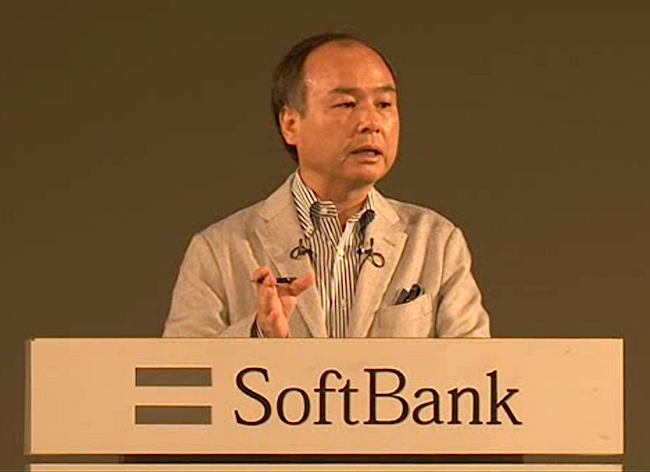
Masayoshi Son Softbank

Softbank’s decision to put $20 billion into Sprint may seem like folly. After all, Sprint has been a money-losing proposition since 2007 and it’s far behind competitors Verizon Wireless and AT&T in rolling out 4G LTE. What’s more, Sprint has been losing subscribers, it’s saddled with $15 billion in debt, and the company is still trying to crawl out from under a near-disastrous merger with Nextel in 2005. Sprint doesn’t seem like a good takeover target.

But that’s not the way Softbank sees it. Softbank’s CEO Masayoshi Son isn’t cut from the risk-averse, conservative cloth of many other Japanese business magnates: he’s a risk-taker who isn’t afraid to do something seemingly crazy he believes will pay off in the long run. And he’s done it before. Back in 2006, Softbank sunk $15.5 billion into acquiring Vodafone’s Japanese unit—and, as with the Sprint deal, most industry watchers thought Softbank overpaid and was utterly out of its head. And, at first, the deal did not seem to go well, costing Softbank a billion a year for the next four years. The 2008 financial crisis also hit Softbank hard: the company had poured ¥75 billion into an investment based on credit-default swaps, some of which defaulted in the financial meltdown. Softbank incurred tremendous debt, but the bet in acquiring Vodafone was sound, and Softbank bolstered its core business by (for a while) being the exclusive Japanese carrier of the Apple iPhone. Son had pledged to retire Softbank’s debt by early 2014, but had recently backpedalled a bit on that, saying that the company only needed to get its debt to manageable levels before looking at new acquisitions.

In Japan, Softbank has been very aggressive about deploying LTE service — and, moreover, Softbank’s flavor of LTE is Time-Division Long-Term Evolution (TD-LTE), which is similar to the LTE technology currently being rolled out by Sprint partner Clearwire. Although some of Softbank’s experience building out LTE in Japan is not directly applicable to the United States — the geographies are radically different, after all — the company’s experience with both network management and offering differentiated services that capture subscribers from other carriers are well-established. In many ways, Softbank’s bet on Sprint is very similar to its bet on Vodafone six years ago. And, on average, Japan’s mobile networks have long offered far more bandwidth than those in the United States. U.S. mobile operators are still learning what it means to offer high-bandwidth services to consumers: Softbank has been doing it for years.

But the Japanese mobile phone market is almost stagnant, and has almost no growth prospects, particularly with Japan’s population growth near zero. That means Softbank’s only way to grow in Japan is through acquisitions. Softbank has just announced a $2.3 billion effort to acquire Japanese mobile provider eAccess in a bid to become Japan’s number-two mobile operator, but Sprint is far more tempting. The United States’ mobile market is still growing, and only about half of the United States’ 320+ million mobile users are carrying a smartphone. That means half are still using feature phones; Softbank sees this as a tremendous growth opportunity.

Moreover, the time is right for Softbank to move. Japanese interest rates are at record low levels and the yen is near all-time highs against other world currencies. There may never be a cheaper time for a Japanese company to make a major play in the U.S. market.

How could things go wrong?

Sprint

Softbank’s bet on Sprint is not without significant risks. The new company is not going to be able sit back and watch the dollars roll in.

Market experience: Softbank has zero experience in the U.S. market. None. Although Softbank is determined to keep Sprint CEO Dan Hesse on board along with (it seems) a portion of Sprint’s existing management, there’s no telling if Softbank will be able to develop working strategies to differentiate Sprint’s service to consumers and grow its business.

Overextended management: Softbank just bought eAccess in Japan in a bid to become Japan’s second-largest mobile operator: that was ambitious in itself. Taking over the much-larger Sprint may be more than Softbank’s management can handle. Moreover, Sprint already had its hands full: Sprint is in the middle of a $15 billion+ commitment to Apple to carry the iPhone and spending billions to bring LTE to its network as part of its Network Vision plan. The good news is that the $8 billion in cash from Softbank should help Sprint carry through on both those initiatives; the bad news is that Sprint is now adding a corporate restructuring to its already daunting to-do list.

“There’s a huge risk that the deal will not go to plan and could weaken both companies at critical times,” noted Informa Telecoms & Media principal analyst Mike Roberts.

Debt: Softbank’s takeover of Sprint will have Softbank once again swimming in debt: Sprint already has $15 billion in outstanding debt, and Softbank is still carrying about $10 billion in debt. Those numbers push Softbank’s debt-to-capital ratio into dangerous territory, and could place significant pressure on Softbank’s operating cash in the next few years as it’s forced to work on retiring debt rather than growing its business. Softbank may wind up owning Sprint but unable to do much with it — particular if the world economy takes another downturn.

Who could win?

clear clearwire logo

All that said, Softbank’s bet on Sprint may be risky, but many parts of it make sense.

Clearwire: Sprint and Softbank emphasized that their deal does not require Sprint to take any actions with Clearwire. However, the deal could leave Clearwire sitting in a very nice spot. Clearwire has been moving its network away from WiMax 4G service it debuted in 2009 to LTE. (Sprint and other investors had bet that getting out the door first with WiMax 4G services in 2008 or 2009 was a better bet than waiting until 2012 or 2013 for LTE to become a reality, though it doesn’t seem to have helped much.) Clearwire has a substantial portfolio of spectrum licenses in the 2.5GHz range — that’s well above the building-penetrating 700GHz range preferred by AT&T and Verizon Wireless, but would still add significant coverage to Sprint’s LTE efforts. However, Clearwire hasn’t been able to capitalize effectively on those licenses due to a lack of money to invest in its network. The bulk of its users are actually from Sprint, thanks to a wholesale agreement, so the tighter Clearwire becomes with Sprint, the better.

The $8 billion in operating capital Sprint is receiving from Softbank would go a long way toward building out LTE services in Clearwire’s spectrum. Moreover, Softbank’s LTE services in Japan are also built in the similar 2.5GHz spectrum blocks, and use the same TD-LTE service that Clearwire is deploying on its network. Some industry watchers expect Sprint to invest even more heavily in Clearwire, or move to purchase it outright.

Clearwire had no comment on Softbank’s acquisition of Sprint.

Sprint: Being acquired by Softbank makes Sprint more directly competitive with AT&T and Verizon Wireless in one important way: subscriber numbers. In the second quarter of 2012, Verizon and AT&T sported 105 and 102 million subscribers, respectively, accounting for 33 percent and 31 percent of the U.S. mobile market. Sprint is in a distant third place with 56 million subscribers. However, Softbank boasts some 34 million subscribers in Japan, meaning once Softbank acquires Sprint it will have an effective customer base of about 90 million people. That’s not far behind Verizon and AT&T, and should help the new Sprint negotiate more advantageous deals with equipment and handset providers. Softbank ought to be able to pay less for networking gear than Sprint, and have access to a better deals and a broader range of gear and handsets from equipment manufacturers. That may include Apple, since Softbank probably wants to keep Japan’s NTT Docomo from getting the iPhone.

The upshot could be a wider range of handsets, tablets, and other mobile gear available on Sprint at the same time they launch on other major U.S. carriers.

Upshot

Bringing the iPhone on board has helped Sprint gain subscribers and revenue. (Just ask T-Mobile how it feels to not have the iPhone.) Unfortunately, it hasn’t swung the company back to profitability. After 19 straight quarters of losses, Sprint needs a turnaround.

Sprint’s kind of turnaround seems to be Masayoshi Son’s specialty. The Japanese mobile market is dominated by KDDI and NTT Docomo, and Son was able to buy Vodafone, revamp it, and make it a solid competitor against a duopoly. In the United States, the mobile market is dominated by the duopoly of Verizon Wireless and AT&T. With Sprint, Son sees an opportunity to bring his successful turnaround model to the United States.

“I think we can provide much better competitive technology and services that U.S. citizens have never experienced,” Softbank’s Masayoshi Son said in a conference call with analysts today.

Sprint customers certainly hope he’s right. But changes won’t come overnight: Softbank’s acquisition of Sprint won’t be complete until the middle of next year, and still needs regulatory approval. In the meantime, AT&T and Verizon won’t be sitting on their hands. Verizon Wireless plans to light up its 400th LTE market this week.


Source : http://www.digitaltrends.com/mobile/softbank-sprint-takeover-explained/

Thursday, October 11, 2012

Japanese mobile carrier SoftBank may buy Sprint

SoftBank of Japan could potentially have a new market to try to conquer. Reports say the Japanese provider is looking to take control of Sprint and enter the U.S. market.

Apparently bored by its meteoric rise through the ranks of Japan’s telecom market, SoftBank is now ready to make a major play for a piece of the American pie. According to the New York Times, Japan’s second largest wireless service provider is close to taking controlling interest in Sprint, America’s third largest mobile carrier.

SoftBank is no stranger to growth through acquisition, as it has made its way toward the top of the Japanese market by buying up other competition. This includes the purchase of eAccess, which occurred earlier this month and bumped SoftBank into the second slot for service providers in Japan. It has yet to make a move as sizable as the proposed Sprint purchase, though. While details are still hazy, a report from Reuters set the cost for controlling stake at 1 trillion Yen, or about $15.9 billion. Other sources the cost to be as high as $30 billion. It’s a sizable price tag, but it also introduces one of the shrewdest of companies to the huge American market that is ripe for competition.

For Sprint, the would deal finally give it the deep pocket backing it so desperately needs. The carrier has struggled to gain its footing after royally screwing up its Nextel merger years back. It has since attempted to expand its infrastructure in hopes of offering a competitive LTE network, but the $21 billion debt and consistent money loss since 2007 has hindered any chance at growth. A recent attempt to buy MetroPCS and block the merger between the regional provider and the Deutsche Telekom owned T-Mobile is the latest in Sprint’s seemingly futile attempts to retain its share of the U.S. market. SoftBank could be the boost it needs to get back in the fight.

While most reports claim the deal to be nearing its final stages and are expecting an announcement soon, Sprint and SoftBank appear to be completely shocked by the news leaking out. Sprint has declined any comment and SoftBank issued a statement that staunchly said, “The story about SoftBank and Sprint Nextel Corporation being reported is based on speculation. We have not announced anything. We do not comment on speculation.”


Source : http://www.digitaltrends.com/mobile/japanese-mobile-carrier-softbank-may-be-buying-sprint/

Thursday, October 4, 2012

Panasonic launches world's thinnest laser projector module

Panasonic launches world's thinnest laser projector module
The future of projectors?

A prototype of the world's slimmest 100-lumen laser projector module has been spotted in Japan.

The laser projector module (or OIU, as Panasonic prefers to call it) throws out a picture at 800x480-pixels. That's not too impressive, but considering the device is just 75mm thin, it's a wonder Panasonic could fit any processing power in there at all.

Also on display was a scan-type OIU, which manages a resolution of just 400x300-pixels. Again, it's far from finished, especially considering Panasonic wants to shrink it down and install it in mobile phones.

But this tech is quite interesting. It's different from normal projectors in that it doesn't need focussing. The light doesn't travel through an LCD filter like regular projectors, and instead is just one single laser beam producing the image.

Early days

It's still early days with this tech. And as ever with a new technology, the devices are too bulky at the moment (relative to when they'll be on sale, anyway) and crazily expensive.

But if the resolution improves and the price comes down, we could see a whole new era of pico projectors hit the shelves.

Samsung is the only company to have launched a mobile with a built-in projector in the UK. The Samsung Galaxy Beam is a neat piece of kit, with great battery life and a decent camera. But it's too expensive, and the projector really struggles in daylight.

Will projectors one day be as common as cameras in phones? We'll have to wait and see.

Via Engadget


Source : http://www.techradar.com/news/home-cinema/projectors/panasonic-launches-worlds-thinnest-laser-projector-module-1101839

Tuesday, September 25, 2012

Google boss Eric Schmidt launches Nexus 7 tablet in Japan

Google continued with its roll out of its Nexus 7 tablet on Tuesday, launching it in Japan, one of the world's most lucrative markets.

Google boss Eric Schmidt was in Japan on Tuesday to launch the company’s Nexus 7 tablet.

At a special event in Tokyo, Schmidt said the 7-inch device would be available on its website from today and from retail stores starting October 2. The Android-powered tablet is priced at 19,800 yen ($250) for the 16GB version, Reuters said.

Stores in Japan set to stock the device include Edion, K’s Denki, Kojima Denki, Joshin Denki, Bic Camera, Best Denki, and Yodobashi Camera. As an added incentive, buyers will bag 2,000 yen ($26) of credit to spend in the Google Play store.

Schmidt told the gathered audience that adoption of Google’s Android operating system is rising rapidly in the Asian country, with the number of devices powered by the mobile OS almost tripling in the last 12 months. As a result of the take-up, the Japanese Google Play store is now the third most popular in the world in terms of the number of app downloads.

The tablet, now available in the US, Canada, the UK, France, Germany, Spain and Australia, was well received by critics when it launched in July. Outside of Australia, Japan is the first country in Asia to start selling the Nexus 7, though earlier this month it became available for pre-order in Taiwan, which is, incidentally, where Asus, the tablet’s manufacturer, is based.

The launch in Japan gives Google a head start over one of its main rivals in the tablet market, Amazon. Its Kindle Fire range of tablets are yet to launch in the country, one of the most lucrative markets in the world.

Whether the Nexus 7 – with its 1.3GHz quad-core Nvidia Tegra 3 processor, 1GB of RAM, a front-facing camera for video chat, and the latest Android 4.1 Jelly Bean OS – will have any effect on sales in Japan of the popular iPad remains to be seen. It may also have to contend with another tablet expected to be unveiled next month, the iPad Mini.

[via Reuters, TNW]


Source : http://www.digitaltrends.com/mobile/googles-nexus-7-tablet-launches-in-japan/