Showing posts with label marketing. Show all posts

Thursday, November 8, 2012

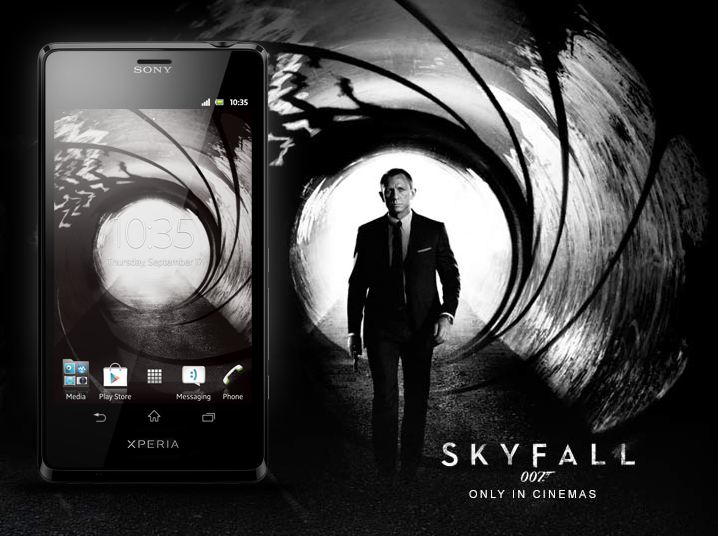
Is Sony’s Xperia TL the perfect phone for Bond?

Sony Xperia TL James Bond

Marketing gimmick or not, Sony's Xperia TL actually has a few spy-worthy features that make it fit 007 like a Tom Ford suit. Just don't take it any more seriously than the films.

Back in Connery’s days, Bond was lucky to have a giant phone in his car, but these days, he’s using a different kind of mobile phone. In the new film, Skyfall, Bond will again be touting a Sony smartphone: the Xperia TL. However, for the first time, the things he does with it might not appear so out of character. The TL is as fast and capable as almost any spy could hope for these days, and with a nearly limitless number of crazy apps that can be installed, Bond’s only limit is Q’s imagination … and programming skills. We haven’t yet written a full review of the Xperia TL, but we did get the chance to spend some time with it. Here’s how we think it might benefit Bond in his 23rd adventure.

Good thing Bond waited for Skyfall

Skyfall may have been released years ago if not for the troubles at MGM. But Bond benefits from the holdup. The Xperia TL solves a lot of the problems of its predecessors. Many had high hopes for the Xperia Ion when it came to AT&T earlier this year. It was the first handset to lose the “Sony Ericsson” branding and be released as a true Sony product, and one of Sony’s first to get a decent push from a major U.S. carrier in some time. Sony has struggled to get the attention of wireless carriers in the U.S. since the days of feature phones and Walkman-branded handsets. With a $100 price on AT&T, it appeared that the carrier was finally giving a top Sony smartphone a real push. Unfortunately, like some ions, it was ultimately unstable. The Ion was running an old version of Android (2.3 Gingerbread), had some construction issues, ran on an older processor, and didn’t produce the quality photos its 12-megapixel camera promised. Fortunately, Sony has addressed these issues with the Xperia TL. Good thing, too. I don’t think Bond would be happy if his phone had trouble focusing or locked up when he needed to call M.

Comfortable for Daniel Craig’s man hands
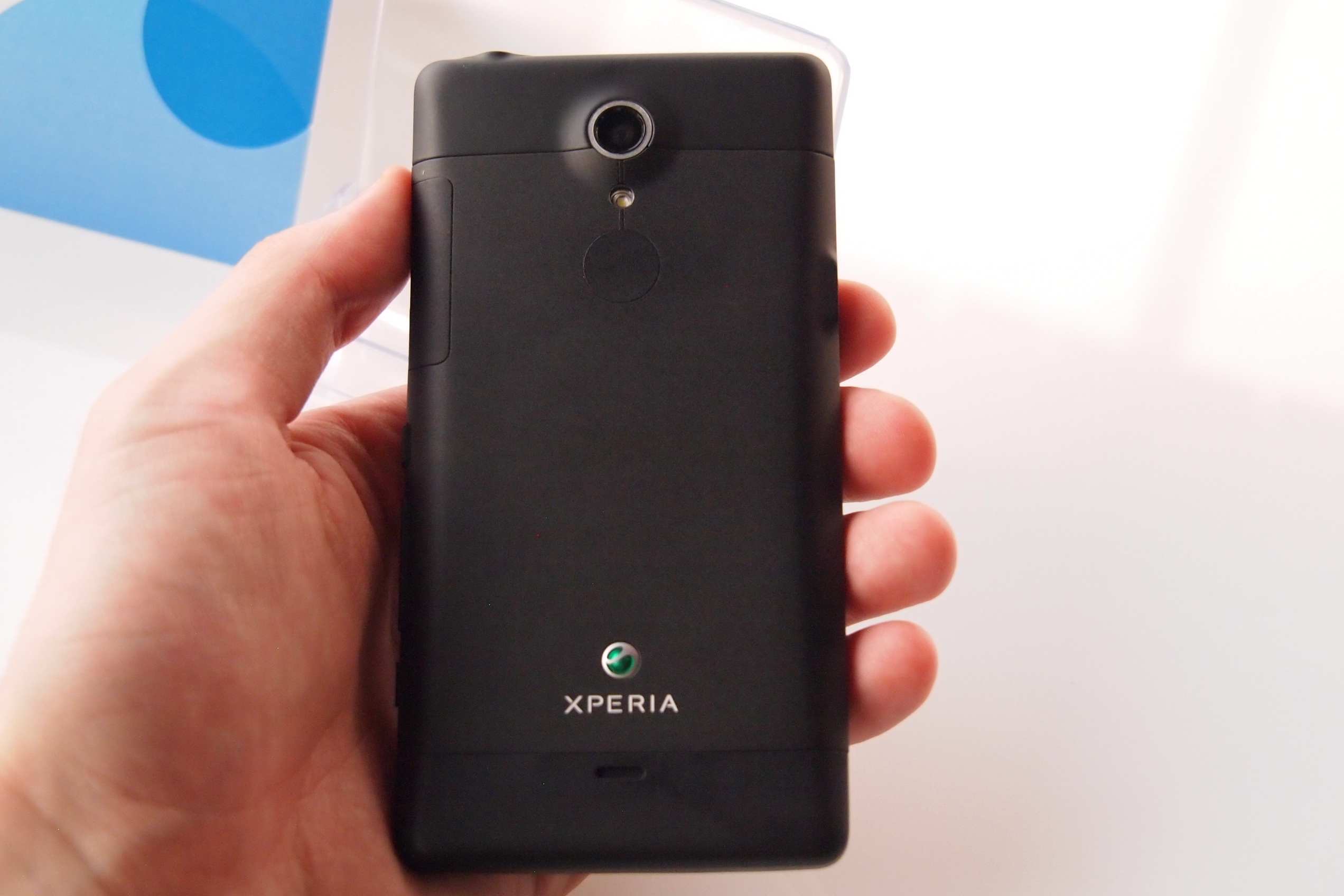
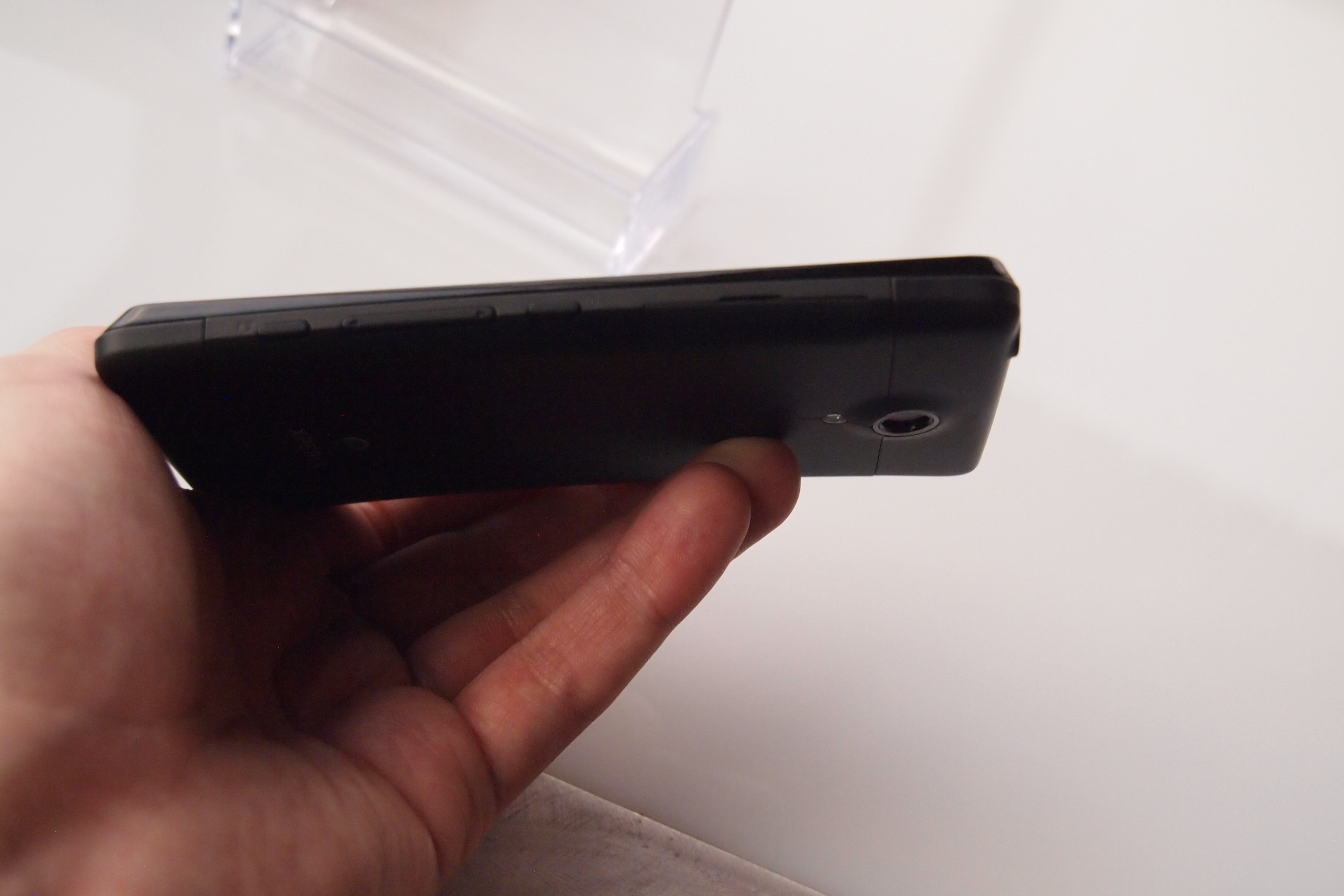
James Bond is all about business, but he’s also about style and comfort. Those fancy suits don’t press themselves. With the Xperia TL, he’s got a top-notch Android smartphone, but also one that’s pretty comfortable to hold. To me, the Xperia TL felt more comfortable than previous Sony handsets by a good margin. Sony has replaced the sharp edges on previous Xperia phones with a smooth, curved edge that just fits better in the hand. Whether you’re a secret agent or a twenty-something phone reviewer choking down a cocktail that’s shaken, not stirred, your hands will thank Sony for smoothing out its edges. The 4.55-inch screen is large, but still manageable for even the most petite of spy hands. Bond likes his phones big.

Instagram those super secret photos
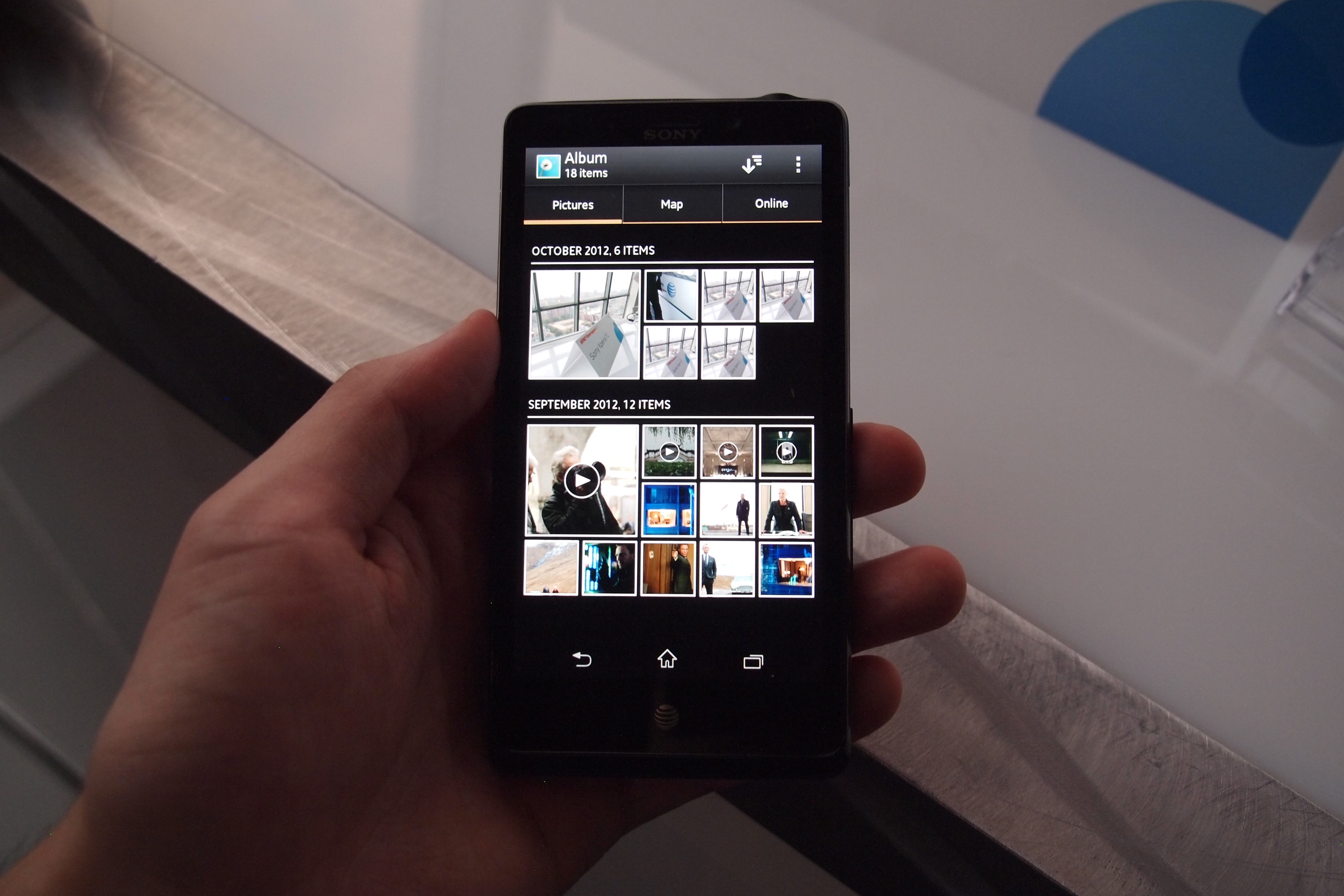
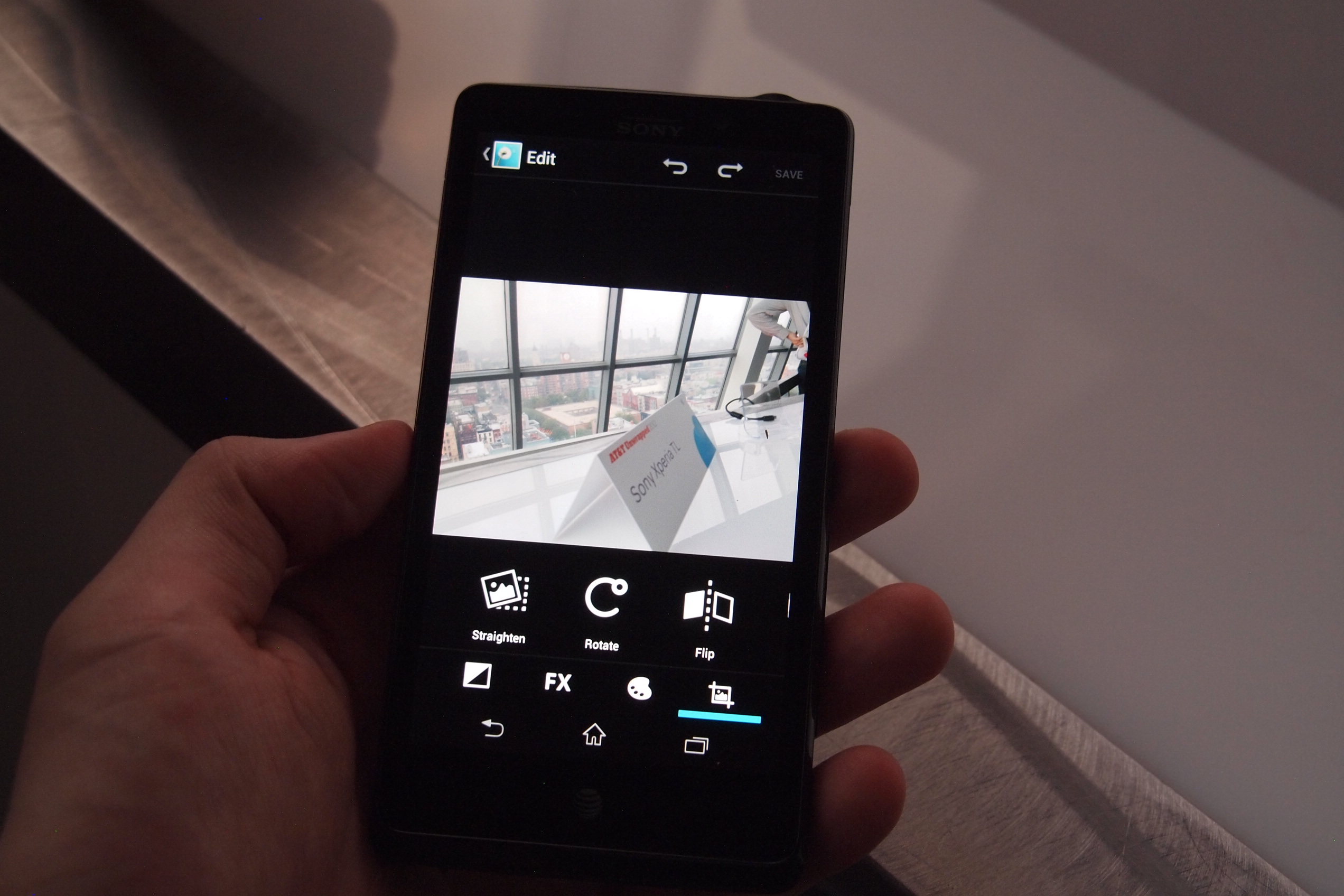
Thanks to the 13-megapixel camera on the TL, 007 can now take some detailed shots of all the ladies and locales in Skyfall. Though we imagine Bond already has Instagram (I mean, why not?), he doesn’t really need it. The Xperia TL’s built-in photo app has a myriad of crazy filters, letting you ruin all of your favorite photos in more ways than ever. If James Bond is feeling a little Connery,  he could make all his photos black and white, like the Cold War days. Or he could get modern and turn his shots of evil Javier Bardem into hipster gold, with washed-out, Polaroid-style filters abound. He could even take a picture of Goldfinger and color it yellow. Snap a picture of each Bond girl on his Facebook page and remove red eye? Easy to do on a TL.

Calculate while you spy
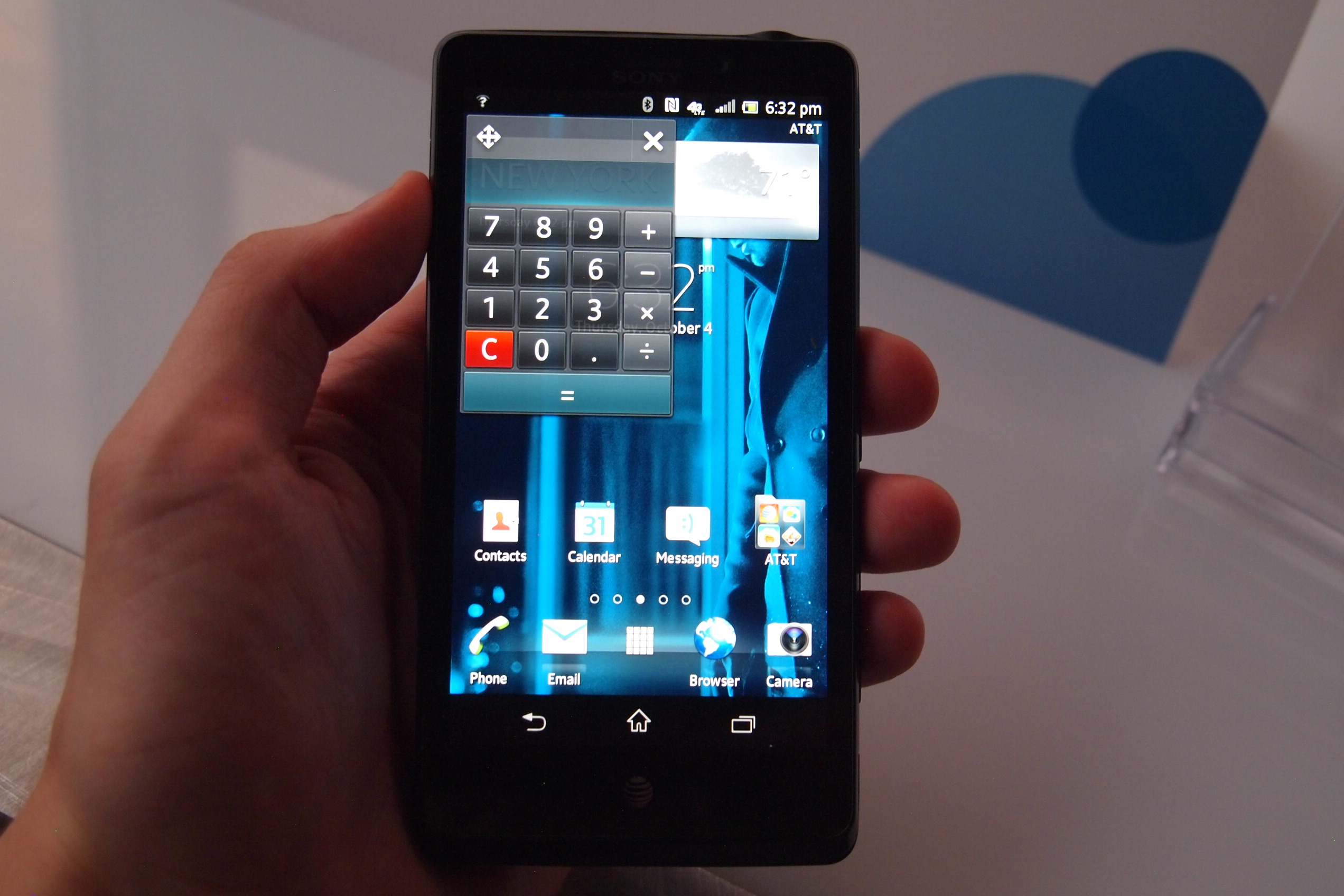
If you’re an international secret agent, you don’t have the luxury of performing just one task at a time. That’s why Bond was likely super stoked when Q told him that the Xperia TL has a modified Recent Apps menu. Like all Android 4.0 and higher handsets, you can quickly re-enter recently used apps, but Sony has now added the concept of mini apps. Now, you or Mr. Bond can open up something like a miniature calculator and drag it around the screen, crunching numbers while you furiously browse Google News for signs of international peril. Maybe Bond needs to calculate a tip for one of his expensive lunches? It can now be done while he checks his Twitter feed. This is the freedom he’s always fought to defend. Any widget installed on the TL can also be used as a mini app.

Snappy specs

With the TL, James Bond isn’t using the most powerful phone on the market, which is a shame, but it’s up there. A 1.5GHz dual-core Qualcomm Snapdragon S4 processor puts his phone on par with most top-notch phones like the Galaxy S3, as does the 1GB of RAM, 16GB of internal storage, expandable microSD slot, and 1280 x 720 pixel LCD screen. But I hope Bond has a secret Micro USB cable hidden in his watch, because the 1,850mAh battery on the TL may leave him needing a recharge before a heavy day of spying is up, especially if he downloads or streams a lot of his own theme songs.

Fit for a secret agent?

Tomorrow Never Dies - Sony Ericsson JB988

We’re looking forward to spending more time with the Xperia TL. Is it fit for a secret agent? We can imagine some cooler phones, but the Xperia TL is one of the best Android phones available on AT&T this holiday season. And the $100 price probably helps with government budget cuts around the world. At the very least, it’s a lot nicer than the Sony Ericsson JB988 flip phone that Pierce Brosnan used in Tomorrow Never Dies or even Daniel Craig’s Sony Ericsson K800i from Casino Royale. For the first time, Bond is on Android. Hopefully Q labs has some cool apps in development.


Source : http://www.digitaltrends.com/mobile/sony-xperia-tl-perfect-phone-for-a-bond/

Friday, September 28, 2012

BlackBerry 10 L and N Series Phones leaked, prove it’s business as usual at RIM

BlackBerry N Series

A video showing the BlackBerry 10 L Series and N Series handsets has been leaked, giving us our first proper look at RIM's 2013 range.

A marketing video showing what’s believed to be the BlackBerry N Series and L Series phones was discovered yesterday, giving us our first, good look at the devices that are charged with bringing RIM back from obscurity next year.

Originally posted to Vimeo, the video has subsequently been removed, a move that more often than not proves its legitimacy. Crackberry.com managed to grab some interesting screenshots prior to this point, as did Pocket-Lint.com.

The touchscreen L Series phone, codename London, has been spotted several times before, and is similar to the Dev Alpha phones currently doing the rounds with developers. Previous leaks have pointed to the phone having a dual-core processor and a 1280 x 768 pixel resolution, 4-inch screen.

Far more interesting is the N Series, or Nevada, as it’s our first proper look at the BB10 QWERTY keyboard phone. Phones with keyboards are a BlackBerry trademark, and this one looks, well, it looks like all the others. Except that is, for one big difference — the disappearance of the optical trackpad.

The N Series will have a touchscreen of course — possibly with a 720 x 720 pixel resolution — but previous BlackBerry phones with touchscreens kept the handy optical trackpad too. It made single-handed use surprisingly easy, particularly when navigating the endless menus. The call send and end buttons have gone too, presumably to be replaced by touchscreen buttons.

BlackBerry L Series N Series

The image you see above puts the pair together, giving us a preview of the early 2013 BlackBerry range, and it’s a little uninspired. Yes, there are BlackBerry fans who want keyboards, yes it’s harder to make phones standout these days, and no, the answer to BlackBerry’s problems isn’t flashing lights and a 3D display. But is a Palm Pixi-alike and yet another monolithic touchscreen handset the best it can do?

Research in Motion is certainly focusing on BlackBerry 10 software rather than the hardware, with CEO Thorsten Heins enthusiastically talking it up during BlackBerry 10 Jam Americas earlier this week, and perhaps this is why; it’s business as usual in the BlackBerry design studios.

But, we’ll reserve judgment until the L Series and N Series are firmly in our hands, as like the iPhone, high-end BlackBerrys often feel better than they picture. When will this be? We’re still waiting for an exact date, with RIM only committing to the first quarter of 2013, although some are taking the January 21, 2013 deadline for entries into RIM’s developer contest as a distinct possibility.


Source : http://www.digitaltrends.com/mobile/blackberry-10-n-series-l-series-phones-leaked-on-video/

Saturday, September 22, 2012

Has 4G become meaningless?

4G meaningless smartphones data carriers lte

A cesspool of acronyms, overoptimistic marketing claims and incompatible technologies has made 4G incomprehensible to the average consumer. Now carriers will suffer for the mess they’ve created.

Recently, the investment firm Piper Jaffray conducted a study that found a full 47 percent of U.S. consumers don’t feel the need for 4G. This isn’t good news for the carriers, which have been fiercely touting their 4G networks for a few years now. Almost all new smartphones have some kind of 4G connectivity, including the new iPhone, at long last.

Part of consumers’ apathy over 4G might come from their inability to understand the difference between different flavors of it. The same survey found that 51 percent of consumers said that all 4G networks are the same. Not only can’t they name which is best,

That’s bad news for an industry as competitive as wireless communication, with recent marketing campaigns based upon name calling as a means of brand differentiation. With carriers betting ever more heavily upon data tiers as a main revenue stream, what can carriers do about consumers who don’t seem to understand their services?

How to be 4G

Confusion is the name of the game, and the carriers haven’t helped explain to consumers the benefits of 4G. Commercial mobile technologies are standardized by a complex number of bodies such as the ITU (International Telecommunication Union), the 3GGP (3rd Generation Partnership Project), and the IEEE (Institute of Electrical and Electronics Engineers). Still reading? Good. They are tasked with bickering until they set a strict, definite standard for each iteration.

These powers that be hold conferences, conduct studies, and perform secret ritual sacrifices in order to define what it each G – or generation – actually means. 4G is, of course the next numerical step, but the powers stumbled when it came to defining what that actually meant.

Strange encounters of the fourth generation

The 4G war got off to a specular fail from a marketing standpoint. There were many, vastly different technologies all vying for subscribers.

Sprint tried to get the ball rolling with WiMAX in 2008, a technology descended from the same tech in your Wi-Fi router. It was branded 4G, though real-life speeds were often more equivalent to a particularly fast 3G device. This was promising, but Sprint eventually declared the technology dead and migrated to LTE (Long Term Evolution, if you were curious). One down.

T-Mobile further muddied the waters with an upgrade to HSPA+, which is technically more like 3.5G, but which has been branded 4G.

AT&T had a wide, but much decried 3G network (partly blamed on iPhone exclusivity for years). While AT&T deploys its 4G LTE network nationwide, it’s also making things needlessly confusing by offering HSPA+ alongside, and branding it 4G just like T-Mobile. If you have an AT&T iPhone 4S, you might see a 4G logo appear sometimes, but it’s not the “true” 4G LTE you would get by upgrading to an iPhone 5.

Verizon launched a 4G LTE network in late 2010 – in its truest sense – it fulfilled the 4G guidelines.

Simple, right?

Setting low bars

No. Not simple, at all. Once the carriers got to building their new networks, the powers that be decided to change the definition of 4G. They lowered the minimum speed guidelines, so that carriers wouldn’t have to do too much heavy lifting, meaning that 4G networks would not be as revolutionary as they had first planned. Hence the bickering over “true” 4G. On top of that, building 4G networks gave carriers a chance to improve their existing networks with beefier backhaul – the connections that tie cell towers back to the backbone of the Internet. This greatly improved 3G speeds and availability, closing the gap between 3G and 4G.

cell tower 4g data speedsIt’s not surprising that the average consumer doesn’t care about 4G when they don’t get it, and 3G networks are progressively getting better. Coverage matters more than speed to many people — a souped-up network means squat if there isn’t a tower in your area.

The consumers don’t care

With so many different carrier definitions of 4G, and even an official designation that’s a moving target, it’s hardly surprising that people are confused. So what can the carriers do?

Agree on a standard speed definition. This is probably impossible, because the telecom industry is notorious for talking at, rather than with each other. But setting a baseline speed for 4G would at least let customers know what they’re being promised.

Stop slapping 4G on everything. This is really aimed at AT&T and T-Mobile, which are allowed to brand older HSPA+ 3G tech as 4G due to a magical shift in definitions back in 2010. While this is legal, it confuses people to a point where they don’t care.

Stop lying about speeds. Advertised speeds are not the same as real world speeds. T-Mobile might advertise 42mbps, but that’s the theoretical limit. That doesn’t look so rosy when you’re getting 45kbps downloads. Averages work much better, and leave less room for error.

Change phone branding conventions. While some handset-makers are responsible for this, it isn’t in a carrier’s best interest to have a phone named after wireless services. For example: The HTC EVO 4G LTE. Not the easiest name to understand. This particular model caused a friend to ask “What is a 4G?” as if it were some kind of new device. Apple keeps it simple with 3, 4s, 5 and so on. Heck, even Samsung does with its flagship line of Galaxy phones (S2, S3). I wonder where that inspiration came from?

Conclusion

The carriers have themselves to blame for the consumer confusion they’re currently stewing in. Unexplained acronyms, incompatible networks, technologies that vanish as soon as they’ve appeared – it’s as if they’re running Area 51, not voice and data networks. Carriers have the leverage to make the average consumer more interested in 4G, but it’s all up to them.

More speed is nice, but most of us would just settle for better reception. After all, if a guy with a mohawk can put a robot on Mars with less cash than it took to put on the Olympics, why can’t I have cell reception in an elevator?


Source : http://www.digitaltrends.com/mobile/has-4g-become-meaningless/