Showing posts with label percent. Show all posts

Wednesday, November 14, 2012

Samsung, Nokia dominate third quarter mobile phone sales

Samsung, Nokia dominate third quarter mobile phone sales
Samsung and Android continue to outpace Apple and iOS

A look inside the quarterly sales numbers showed smartphones are up 46.9 percent over the same period in 2011, and revealed Android phones outpaced Apple's iOS phones by 5:1 during the third quarter.

The sales figures, as reported by the analysts at Gartner, show mobile phone sales have decreased by 3 percent overall, continuing a trend started earlierthis year.

Despite the overall sales dipping, smartphone sales bolstered by Samsung, Nokia, and Apple have continued to escalate, and are now responsible for almost 40 percent of all mobile phone sales.

Samsung holds lead

During the third quarter, Samsung was able to maintain its lead over Apple in smartphone sales, largely due to the Galaxy lineup, including the Galaxy SIII.

With a 32.5 percent share of the smartphone market, Samsung was able to hold off second-place Apple, which earned 14 percent of the sales.

Research in Motion was able to slip into third place, with HTC following closely behind, as Nokia's smartphone sales slipped to seventh.

Samsung still found itself in the overall lead with 97.9 million phones sold (22.9 percent), a narrow margin of victory over Nokia's 82 million total mobile phones sold (19.2 percent).

Apple was able to solidify third place by selling 23.5 million iPhones (3.9 percent), which was a 36.3 percent jump from 2011, and accounted for the largest increase in year-over-year sales.

Gartner expects Apple to have another traditionally strong fourth quarter due to the expanding availability of the iPhone 5, but doesn't think holiday sales will impact the overall market all that much.

Android still king of the hill

Even though iPhone sales increased tremendously during the third quarter, Apple's iOS still had trouble catching up to Android.

With 122 million Android phones sold during the third quarter, Google's OS increased it's share to 72.4 percent of the market.

Despite Android earning 20 percent more users during the third quarter, iOS was still able to garner 13.9 percent of all users, a drop of just one percent from Q2.

Apple was able to maintain second place largely due to the decreasing numbers of Symbian and Microsoft's Windows Phone 7, as both OS were being phased out for Windows Phone 8.

iOS is expected to increase its numbers during the fourth quarter according to Gartner analysts, but all that depends on how strong Apple's final quarter turns out from a sales perspective.


Source : http://www.techradar.com/news/phone-and-communications/mobile-phones/samsung-nokia-dominate-third-quarter-mobile-phone-sales-1112629

Tuesday, October 23, 2012

Samsung says it will continue supplying displays to Apple, despite rumors to the contrary

apple iphone 5 4G

A rumor has suggested Samsung is preparing to stop supplying Apple with touchscreens, however this has since been called "100-percent false" by a Samsung spokesperson. It's the latest in an escalating component supply war between the two companies.

Yesterday, the Korea Times reported that Samsung was to cease suppling screens to Apple next year, due to falling profits and presumably, the continuing animosity between the two companies. Today, Samsung has spoken to CNET to refute the rumor, calling it “100-percent false.”

Sources at Samsung were quoted in the original article as saying “we are unable to supply our flat screens to Apple with huge price discounts. Samsung has already cut our portion of shipments to Apple and next year we will stop shipping displays.” Another source said Samsung sent 3 million displays to Apple over the summer, but that number would halve between October and the end of the year.

Apple is known for driving a hard bargain with its component suppliers, and Samsung is said to feel that the company is “no longer a cash-generator” due to the deeply discounted prices and increased competition.

In response to the claims made by the Korea Times, a Samsung spokesperson made a statement to CNET, calling the post “100-percent false,” and that it was asking the publication to alter the story. Of course, this doesn’t mean it’s not true, just that Samsung would prefer it not to be public knowledge just yet.

Samsung has supplied a wide-range of components to Apple for several years, including the processor, RAM, memory and of course, the screen. However, in the iPhone 5, the flash memory, RAM and the battery are all produced by other companies, indicating Apple also wants to distance itself from its longtime partner. It has also started to rely more on LG and Sharp to produce its touchscreens too.

Even if profits are as tight as Samsung makes out, it’s still going to miss Apple should it eventually decide to stop making components for them. Its hands may be full with its own range of smartphones and tablets, along with a burgeoning relationship with Amazon, but any contract loss always hurts.

Samsung’s denial comes soon after it was revealed Apple intended to cut back on its services for processors too. Even outside the courtroom, the war between Samsung and Apple continues to escalate.


Source : http://www.digitaltrends.com/mobile/samsung-denies-it-will-stop-supplying-touchscreens-to-apple/

Thursday, October 18, 2012

Google's shares fall after quarterly financials accidentally revealed

Google's shares fall after quarterly financials accidentally revealed
Google stock drops as company fails to meet expectations

Google's shares took a 9 percent hit, dropping to $687.30 on Thursday as news the company wouldn't make revenue or earnings expectations hit the market.

The bad news came a bit earlier than expected, as Google's quarterly financial report was released ahead of schedule and without proper authorization by the company's financial printer RR Donnelley.

In response, all trading on NASDAQ pertaining to Google's stock was halted.

"Earlier this morning RR Donnelley, the financial printer, informed us that they had filed our draft 8K earnings statement without authorization," said a statement from Google.

"We have ceased trading on NASDAQ while we work to finalize the document. Once it's finalized we will release our earnings, resume trading on NASDAQ and hold our earnings call as normal at 1:30 PM PT."

Analysts not surprised

Though the early peek at Google's financials came as a bit of a surprise, analysts weren't shocked by the quarterly results.

Speaking to Reuters, BCG analyst Colin Gillis shared his perspective on why Google took such a hit Thursday afternoon, and pointed the blame at the mobile market.

"Click prices declined for the fourth consecutive quarter after rising for eight consecutive quarters before then. That's a negative. This is the mobile problem."

"The other bit is the Motorola millstone had been ignored by the market, and - boom - now you've got weak revenue from Motorola. When you acquire a business and you're about to whack all kinds of people and close offices, you know what happens to the employees? They take their eye off the ball. Sales are down."

Google was expected to close the quarter with shares improving at $10.65 each, but instead the final numbers showed only a $9.03 increase.

Wall Street expected Google's overall revenue earnings were to approach $11.9 billion, but the third-quarter results showed only $11.3 billion in earnings.

What's next?

Google is scheduled to host an event in New York on Oct. 29, where it's expected the company will announce new Android devices.

With Apple potentially unveiling the Nexus 7 competitor, the iPad Mini, on Oct. 23, Google will have its work cut out for it if the company hopes to bounce back from a disappointing third quarter.

Releasing a slate of new phones like the rumored LG Nexus 4 and HTC Nexus 5 might help, as could a 32GB Nexus 7 or the 10-inch Nexus 10 tablet.

Google isn't going anywhere any time soon. However, it will be worth monitoring the company's progress during the fourth quarter to see if it can turn things around headed into 2013.


Source : http://www.techradar.com/news/computing/googles-shares-fall-after-quarterly-financials-accidentally-revealed-1105399

Wednesday, October 17, 2012

Losing your memory? Average size of iOS game apps increases by whopping 42% in last 6 months

iOS and Android apps are taking up more memory on mobile devices, with the average size of game apps for iOS devices increasing by a hefty 42 percent in the last six months.

Apps for Apple’s iOS devices have grown in size significantly in the last six months, according to the results of a survey released Tuesday.

Of course, those with iPhones, iPads or iPod touches holding 64GB of storage won’t be particularly concerned at the news, but anyone with an 8GB or 16GB device will have already noticed it really isn’t much memory at all by today’s standards.

The survey, conducted by ABI Research, showed that over the last six months the average app size has grown by 16 percent. Looking at specific genres, it’s the games category – the most popular category of all – where apps have really beefed up, with the average game app now standing at 60MB, an increase of 42 percent since March.

ABI points to two main reasons in its report. First, Apple decided in March to up the limit for 3G/4G-downloadable apps from 20MB to 50MB which, as senior analyst Aapo Markkanen says in ABI’s report, “clearly had an unleashing effect on developers,” allowing them to develop more complex games with improved graphics.

The other factor is linked to the new iPad’s Retina display, with developers launching new graphically rich apps, as well as pushing out updates for old apps to take advantage of the new high-resolution display. This must be a bit of a drag for owners of the first and second-generation iPads (without Retina displays), who have to take on the extra load without seeing any benefit.

Owners of older devices like the 8GB iPhone 3G and iPhone 4 probably filled their handsets to bursting point long ago, but even those with more recent 16GB devices are likely having to be more careful about what they choose to download.

Markkanen points out that this creates more of a challenge for developers: “The consumers with 16GB devices are likely to become more conscious about what apps to keep and what to uninstall, so the developers’ bar to impress will be getting even higher than it is now,” he said, adding, ”This could also speed up the adoption of the mobile cloud as a storage remedy quite significantly.”

As for Android apps in the Google Play store, the report said these have also seen a size increase in the last six months, in this case of 10 percent. Again, when you look at apps in the games category, the change really stands out, with Android apps almost quadrupling in size in the last six months to an average of just over 40MB.

Are you finding the amount of available memory on your mobile device disappearing fast recently? Found a way of getting around it?

[via MacRumors]  [Image: iQoncept / Shutterstock]


Source : http://www.digitaltrends.com/mobile/average-size-of-ios-game-apps-increases-by-whopping-42-in-last-6-months/

Monday, October 15, 2012

Softbank’s $20 bln Sprint takeover: Everything you need to know

new sprint softbank wireless carrier

Japan's Softbank, a telecom and Internet giant, is taking a 70 percent stake in Sprint for $20.1 billion. What is it thinking? Can Sprint customers expect anything from the deal?

In a surprise move, Japanese mobile operator Softbank has made a deal to acquire a 70 percent stake in Sprint, the United States’ number-three mobile operator. At $20 billion, the takeover represents Softbank’s largest overseas acquisition to date — and the biggest deal inked by a Japanese company in the United States in something like three decades. Acquiring Sprint gives Softbank a major entry point into the still-growing U.S. mobile market — perhaps a welcome move, since Japan’s mobile market is mostly stagnant.

However, for Sprint customers the takeover brings uncertainty. What will change at Sprint once Softbank is holding the reigns? Given that Sprint has lost money in its last 19 quarters (nearly 5 years) — with a 20th on the way — is Softbank out of its mind to sink $20 billion in cash into the company? And, most importantly, can Sprint customers — and potential customers — expect any benefits from the deal?

How the Softbank takeover will work

Sprint CEO Dan Hesse (July 2010)

Like many other high-profile deals, Softbank’s takeover of Sprint is complicated, but it’s also an example of one of the fundamental axioms of business: cash talks. Softbank is putting a total of $20 billion in cold hard cash into Sprint. Softbank will be spending a total of $12.1 billion on Sprint stock: the bulk will go toward buying up about 55 percent of current Sprint shares for $7.30 each, with some $3.1 billion of that money earmarked for buying shares in a new publicly-traded company dubbed “New Sprint,” for the time being. On top of that, Softbank will be pouring another $8 billion in cash into the new company, providing it with substantial operating capital.

Taken at face value, Softbank putting $20.1 billion into Sprint means it valued Sprint at about $28.6 billion — some two-thirds higher than Sprint’s total market capitalization as of the markets’ close last week.

Softbank Sprint structure

That operating capital will likely be all about fueling Sprint’s 4G LTE expansion. Right now, Sprint has LTE service up and running in a couple dozen markets, but that pales in comparison to the hundreds of markets where Verizon Wireless currently offers LTE service. The new Sprint will most likely use that $8 billion in cash to not only accelerate its planned rollout of LTE services, but quite possibly to make additional acquisitions to bolster its spectrum holdings and reach. The most likely candidate there is Clearwire, where Sprint already has a 48 percent stake, but MetroPCS may not be out of reach either, even through it’s agreed to a reverse merger with T-Mobile.

Softbank’s cash is coming from its own bank accounts, plus financing from three Japanese banks (Mizuho Corporate Bank, Sumitomo Mitsui Banking, the Bank of Tokyo-Mitsubishi UFJ), along with Deutsche Bank. The $7.30 in cash Softbank is offering for Sprint shares represents a 27 percent premium over the company’s stock price when the deal was announced. Softbank expects the stock purchases to be completed by mid-2013. Once the deal is complete, Softbank will hold 70 percent of “New Sprint,” while Sprint’s existing shareholders will retain about 30 percent of the new company.

For all these changes, there will be some continuity. Sprint’s current CEO Dan Hesse will stay on as the CEO of the new company, and Sprint’s headquarters will stay in Overland Park, Kansas. “New Sprint” will have a ten-member board of directors, with at least three of those members coming from Sprint’s existing board (and that includes Hesse himself on the board).

What is Softbank thinking?

Masayoshi Son Softbank

Softbank’s decision to put $20 billion into Sprint may seem like folly. After all, Sprint has been a money-losing proposition since 2007 and it’s far behind competitors Verizon Wireless and AT&T in rolling out 4G LTE. What’s more, Sprint has been losing subscribers, it’s saddled with $15 billion in debt, and the company is still trying to crawl out from under a near-disastrous merger with Nextel in 2005. Sprint doesn’t seem like a good takeover target.

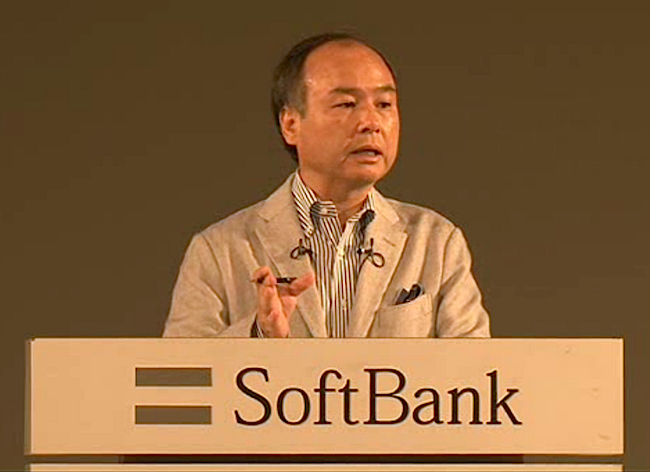
But that’s not the way Softbank sees it. Softbank’s CEO Masayoshi Son isn’t cut from the risk-averse, conservative cloth of many other Japanese business magnates: he’s a risk-taker who isn’t afraid to do something seemingly crazy he believes will pay off in the long run. And he’s done it before. Back in 2006, Softbank sunk $15.5 billion into acquiring Vodafone’s Japanese unit—and, as with the Sprint deal, most industry watchers thought Softbank overpaid and was utterly out of its head. And, at first, the deal did not seem to go well, costing Softbank a billion a year for the next four years. The 2008 financial crisis also hit Softbank hard: the company had poured ¥75 billion into an investment based on credit-default swaps, some of which defaulted in the financial meltdown. Softbank incurred tremendous debt, but the bet in acquiring Vodafone was sound, and Softbank bolstered its core business by (for a while) being the exclusive Japanese carrier of the Apple iPhone. Son had pledged to retire Softbank’s debt by early 2014, but had recently backpedalled a bit on that, saying that the company only needed to get its debt to manageable levels before looking at new acquisitions.

In Japan, Softbank has been very aggressive about deploying LTE service — and, moreover, Softbank’s flavor of LTE is Time-Division Long-Term Evolution (TD-LTE), which is similar to the LTE technology currently being rolled out by Sprint partner Clearwire. Although some of Softbank’s experience building out LTE in Japan is not directly applicable to the United States — the geographies are radically different, after all — the company’s experience with both network management and offering differentiated services that capture subscribers from other carriers are well-established. In many ways, Softbank’s bet on Sprint is very similar to its bet on Vodafone six years ago. And, on average, Japan’s mobile networks have long offered far more bandwidth than those in the United States. U.S. mobile operators are still learning what it means to offer high-bandwidth services to consumers: Softbank has been doing it for years.

But the Japanese mobile phone market is almost stagnant, and has almost no growth prospects, particularly with Japan’s population growth near zero. That means Softbank’s only way to grow in Japan is through acquisitions. Softbank has just announced a $2.3 billion effort to acquire Japanese mobile provider eAccess in a bid to become Japan’s number-two mobile operator, but Sprint is far more tempting. The United States’ mobile market is still growing, and only about half of the United States’ 320+ million mobile users are carrying a smartphone. That means half are still using feature phones; Softbank sees this as a tremendous growth opportunity.

Moreover, the time is right for Softbank to move. Japanese interest rates are at record low levels and the yen is near all-time highs against other world currencies. There may never be a cheaper time for a Japanese company to make a major play in the U.S. market.

How could things go wrong?

Sprint

Softbank’s bet on Sprint is not without significant risks. The new company is not going to be able sit back and watch the dollars roll in.

Market experience: Softbank has zero experience in the U.S. market. None. Although Softbank is determined to keep Sprint CEO Dan Hesse on board along with (it seems) a portion of Sprint’s existing management, there’s no telling if Softbank will be able to develop working strategies to differentiate Sprint’s service to consumers and grow its business.

Overextended management: Softbank just bought eAccess in Japan in a bid to become Japan’s second-largest mobile operator: that was ambitious in itself. Taking over the much-larger Sprint may be more than Softbank’s management can handle. Moreover, Sprint already had its hands full: Sprint is in the middle of a $15 billion+ commitment to Apple to carry the iPhone and spending billions to bring LTE to its network as part of its Network Vision plan. The good news is that the $8 billion in cash from Softbank should help Sprint carry through on both those initiatives; the bad news is that Sprint is now adding a corporate restructuring to its already daunting to-do list.

“There’s a huge risk that the deal will not go to plan and could weaken both companies at critical times,” noted Informa Telecoms & Media principal analyst Mike Roberts.

Debt: Softbank’s takeover of Sprint will have Softbank once again swimming in debt: Sprint already has $15 billion in outstanding debt, and Softbank is still carrying about $10 billion in debt. Those numbers push Softbank’s debt-to-capital ratio into dangerous territory, and could place significant pressure on Softbank’s operating cash in the next few years as it’s forced to work on retiring debt rather than growing its business. Softbank may wind up owning Sprint but unable to do much with it — particular if the world economy takes another downturn.

Who could win?

clear clearwire logo

All that said, Softbank’s bet on Sprint may be risky, but many parts of it make sense.

Clearwire: Sprint and Softbank emphasized that their deal does not require Sprint to take any actions with Clearwire. However, the deal could leave Clearwire sitting in a very nice spot. Clearwire has been moving its network away from WiMax 4G service it debuted in 2009 to LTE. (Sprint and other investors had bet that getting out the door first with WiMax 4G services in 2008 or 2009 was a better bet than waiting until 2012 or 2013 for LTE to become a reality, though it doesn’t seem to have helped much.) Clearwire has a substantial portfolio of spectrum licenses in the 2.5GHz range — that’s well above the building-penetrating 700GHz range preferred by AT&T and Verizon Wireless, but would still add significant coverage to Sprint’s LTE efforts. However, Clearwire hasn’t been able to capitalize effectively on those licenses due to a lack of money to invest in its network. The bulk of its users are actually from Sprint, thanks to a wholesale agreement, so the tighter Clearwire becomes with Sprint, the better.

The $8 billion in operating capital Sprint is receiving from Softbank would go a long way toward building out LTE services in Clearwire’s spectrum. Moreover, Softbank’s LTE services in Japan are also built in the similar 2.5GHz spectrum blocks, and use the same TD-LTE service that Clearwire is deploying on its network. Some industry watchers expect Sprint to invest even more heavily in Clearwire, or move to purchase it outright.

Clearwire had no comment on Softbank’s acquisition of Sprint.

Sprint: Being acquired by Softbank makes Sprint more directly competitive with AT&T and Verizon Wireless in one important way: subscriber numbers. In the second quarter of 2012, Verizon and AT&T sported 105 and 102 million subscribers, respectively, accounting for 33 percent and 31 percent of the U.S. mobile market. Sprint is in a distant third place with 56 million subscribers. However, Softbank boasts some 34 million subscribers in Japan, meaning once Softbank acquires Sprint it will have an effective customer base of about 90 million people. That’s not far behind Verizon and AT&T, and should help the new Sprint negotiate more advantageous deals with equipment and handset providers. Softbank ought to be able to pay less for networking gear than Sprint, and have access to a better deals and a broader range of gear and handsets from equipment manufacturers. That may include Apple, since Softbank probably wants to keep Japan’s NTT Docomo from getting the iPhone.

The upshot could be a wider range of handsets, tablets, and other mobile gear available on Sprint at the same time they launch on other major U.S. carriers.

Upshot

Bringing the iPhone on board has helped Sprint gain subscribers and revenue. (Just ask T-Mobile how it feels to not have the iPhone.) Unfortunately, it hasn’t swung the company back to profitability. After 19 straight quarters of losses, Sprint needs a turnaround.

Sprint’s kind of turnaround seems to be Masayoshi Son’s specialty. The Japanese mobile market is dominated by KDDI and NTT Docomo, and Son was able to buy Vodafone, revamp it, and make it a solid competitor against a duopoly. In the United States, the mobile market is dominated by the duopoly of Verizon Wireless and AT&T. With Sprint, Son sees an opportunity to bring his successful turnaround model to the United States.

“I think we can provide much better competitive technology and services that U.S. citizens have never experienced,” Softbank’s Masayoshi Son said in a conference call with analysts today.

Sprint customers certainly hope he’s right. But changes won’t come overnight: Softbank’s acquisition of Sprint won’t be complete until the middle of next year, and still needs regulatory approval. In the meantime, AT&T and Verizon won’t be sitting on their hands. Verizon Wireless plans to light up its 400th LTE market this week.


Source : http://www.digitaltrends.com/mobile/softbank-sprint-takeover-explained/

Monday, September 24, 2012

As if all things iOS weren’t expensive enough, Apple jacks up iPhone 5 replacement charger price by $9

iPhone 5 Lightning Connector

A replacement charger setup for the iPhone 5, which uses the new Lightning dock connector, will cost you 24 percent more than a 30-pin charger setup.

The iPhone 5 may cost the same as the iPhone 4S did when it was first released last year, but as for a replacement charger for the hot new Apple handset, well, you’re going to have to cough up some more cash.

The USB power adapter plus a 30-pin USB cable — the full charger setup for an iPhone 4S or older, iPad, or iPod — costs $29 through Apple’s website, just as it always has. However, Apple does not sell the USB power adapter and the new Lightning dock connector cable for the iPhone 5 together — you have to buy those separately, at a cost of $19 apiece.

That means iPhone 5 customers are forced to pay $9 more — an increase of roughly 24 percent — for a replacement or spare charger setup than customers with the iPhone 4S or older.

This does not make much sense, at least on the surface. Like the standard 30-pin to USB cable, a new Lightning cable will cost you $19. So theoretically, Apple should offer iPhone 5 customers the package deal (USB adapter plus Lightning cable) at a cost of $29.

iPhone 5 chargers

We’ve reached out to Apple to see if they have a $29 Lightning charger package in the works, but have not yet heard back. We will update this space as soon as we do.

The 24 percent price hike follows complaints about the new Lightning-to-30-pin adapter, which comes with every iPhone 5, due to its relatively high cost: A replacement for that will cost you $29 (or $39) through Apple.

All said, we would be highly surprised if this jump in price is permanent; the company didn’t officially raise the price of the full charger setup, after all. It simply failed to offer that option, meaning we have to piece it together ourselves, at a cost. Further, we doubt the $9 difference will have much impact on sales of the iPhone 5, which have already topped 5 million in just a matter of days. Still, forcing iPhone 5 customers to lay out an extra nine bucks for a replacement charger seems to us an unhelpful oversight, at best. 


Source : http://www.digitaltrends.com/mobile/apple-jacks-up-iphone-5-replacement-charger-price/

Wednesday, September 12, 2012

Apple debuts the iPhone 5′s smaller, harder, faster camera

iphone 5 camera specs

With the iPhone 5, Apple shows off a capable, improved - yet 25 percent smaller - camera.

Without a doubt, one of the iPhone 4S’s most lauded features has been its double duty as point-and-shoot camera. It quickly rose to the top of Flickr’s most popular cameras and has become a major threat to digital pocket cam manufacturers. So it’s only fitting that Apple carry on the tradition with the iPhone 5.

How does the latest iteration improve on its predecessor? Allow us to quickly break it down for you, starting with what’s exactly the same.

Been there, done that

  • The iPhone 5 has an 8 megapixel sensor – same as the iPhone 4S
  • The new camera will capture images at a 3264 x 2448 resolution – same as the iPhone 4S
  • Backside illuminated sensor – same as the iPhone 4S
  • Five-element lens with F2.4 aperture – same as the iPhone 4S
  • Like the 4S, the 5 will shoot video using the rear-facing camera at 1080p…

New territory

  • …But the front-facing camera will also now be able to shoot video (for Facetime purposes) at 720p.
  • There’s a new dynamic low light mode.
  • Better processing power thanks to the A6 chip, which should translate to improved noise reduction, image stabilization, face detection, faster shooting (40 percent faster), and, as mentioned above, better low light shooting capabilities. You can also now take pictures while shooting video.
  • The sapphire crystal lens: Apple says the material is renowned for being “hard and crystal clear.” It’s an attention-getting phrase, for sure, but for the record this really just means better protection for the lens. It’s a really resistant material, so you shouldn’t have to worry about damaging your iPhone 5’s camera very easily.
  • There’s a built-in panoramic stitch capability — which can shoot images up to 28 megapixels in size) — with an auto-stabilizer for those with shaky hands.
  • As expected, shareable Photo Streams are also now available (this is an iCloud and iOS 6 feature).
iphone 5 camera panorama

Obviously, the iPhone 5 is smaller and thinner than the last iteration, which is generally bad news for shooting capabilities. The iPhone 5’s camera is smaller, 25 percent smaller in fact, and there’s plenty here that’s similar to what we currently have in the 4S… but Apple’s still doing what it can to remain on top of the smartphone-as-pocket-cam game. 

[Images via GDGT]


Source : http://www.digitaltrends.com/mobile/apple-debuts-iphone-5-camera/