Friday, October 19, 2012

Sony announces which Xperia phones will get Jelly Bean

The cards are on the table - Sony just announced the update plan of its Xperia line. Here's the list of models that will get updated to Android 4.1 Jelly Bean and also the ones that will remain stuck with 4.0 Ice Cream Sandwich.

Sony's latest high-end Xperia phones - the Xperia T, TX and V - will be updated to 4.1 Jelly Bean in mid-Q1 next year.

Next up are the global versions of Xperia S, Xperia acro S, Xperia ion, Xperia P, Xperia go and Xperia J. The release date for the update will be announced later. It's still unclear what will happen to the localized versions.

And now, the ones left behind - the whole 2011 Xperia lineup (which got updated to ICS) will not be getting Jelly Bean because Sony "would not be able to guarantee owners of these smartphones the user experience you expect and we demand".

It's a bit disappointing that the Xperia J, which has a cut-down version of the Qualcomm chipset that powers the 2011 Xperias, is getting JB but the older models are not.

Source


Source : http://www.gsmarena.com/sony_announces_which_xperia_phones_will_get_jelly_bean-news-4970.php

Why I won’t be buying a Windows RT tablet (And why Microsoft doesn’t mind)

surface rt tablet microsoft

Windows RT tablets will be crippled out of the gate by a lack of applications, making holding off a wise choice for smart consumers.

Microsoft yanked back the veil obscuring its Surface RT tablet earlier this week, and if you ask me, it’s the finest example of tablet hardware that we’ve seen to date. Microsoft poured a ton of mental and engineering resources into the Surface, and it shows; the Surface tablet and its oh-so-attractive Touch Cover keyboard is one of just three tablets to ever make me drool with desire. It even has Office 2013! And the new-look Windows is actually kind of awesome on mobile devices once you make a few tweaks.

Even still, I won’t be buying a Surface RT tablet on October 26th. The same goes for any Windows RT tablet. There’s no chance. Nada, nil, zero.

My reluctance doesn’t have anything to do with pricing concerns. Some people think the Surface RT is overpriced at $500 to start, but not me. The Surface RT is a top-tier piece of hardware worthy of a top-tier price point. My concerns lie in Windows RT’s crippled nature, and before you grab your pitchforks, they have nothing to do with the Modern-style overhaul.

Here’s the kicker, though: Microsoft doesn’t need me or you or anybody to buy Windows RT tablets on October 26th. They can be a complete flop in the short term and still be a massive success in the long run.

Let me explain.

Why I won’t buy a Windows RT tablet

In a word: apps.

Windows RT and Windows 8 may look the same on the surface (get it?), but they’re two totally different beasts under the hood. Windows 8 runs on x86-based processors, which means it can run both the new Modern-style Windows apps as well as the programs currently available for Windows 7 PCs.

Windows RT, on the other hand, runs on the ARM-based processors — such as the Qualcomm Snapdragon and Nvidia’s Tegra 3 — that thoroughly dominate the mobile gadget world. That makes Windows RT tablets incompatible with the legion of programs written for past generations of Windows-based operating systems. Basically, Windows RT can only run the new Modern-style apps.

Modern-style apps can only be purchased through the Windows Store, and as it stands today, there simply aren’t enough Windows apps — either in quality or quantity — to make purchasing a Windows RT tablet worthwhile. Not even the breathtaking Microsoft Surface RT with its baked-in Office app.

windows app store microsoft surface tabletThe vast majority of 4,326 current Windows Store apps are tablet-style games or instantly forgettable novelties. (Fart Soundboard, anyone?) Aside from standout apps by Netflix, Evernote and Slacker, most of the must-have essentials aren’t there. I’ve spoken to several developers about the situation; it seems as though quite a few apps are waiting in the wings, set to appear in the Windows Store when it officially launches on October 26, but I don’t expect the Windows Store selection to skyrocket out of the gate.

That’s a big problem

Windows 8 devices can lean on the current Windows programs we know and love until the Modern-style apps hit full speed. Windows RT tablets don’t have that luxury.

Knowing that, the little flaws in Windows’ new Modern-style apps take on a whole new light. Intel CEO Paul Otellini was recently reported as saying that Microsoft is releasing Windows 8 before it’s ready — a statement that Intel didn’t exactly deny — and I’m inclined to agree with him. As a whole, Windows 8 is a joy on a tablet, but odd little quirks occasionally prove frustrating.

Those rough edges could be a whole post in and of themselves — tune in next week! — but let’s talk about a particular frustration that highlights Windows RT’s issues: The native Mail app’s complete lack of POP3 support. A recent update to the Mail app fleshed out support for the vastly superior IMAP protocol, but if your email provider only provides POP3 remote access (as is the case with many Internet Service Providers, including Comcast and Fairpoint) you’re in trouble.

Windows 8 users can just switch to desktop mode, download Thunderbird or one of the dozens of other freely available POP-compatible classic Windows programs, and start slinging messages in no time. Windows RT users are just screwed unless they switch to a webmail service or perform complex workarounds that Everyday Joe would never figure out for himself.

Nope, Windows RT just isn’t worth the hassle. Gimme a Nexus 7 for half the price instead.

Getting Over the Hump

Manufacturers aren’t stupid. They know Windows RT tablets will be limited at the outset. That’s why we’re seeing an overload of x86-based Windows 8 devices, but only a handful of Windows RT tablets. And that’s totally fine; Windows RT tablets will have their day in the sun. Microsoft’s very future depends on becoming as mobile-friendly as possible — and the company knows it.

Even if Windows tablets fizzle from the get-go, Windows 8 will still be installed on damn near every PC and laptop sold after October 26. Even if traditional computer sales are somewhat lagging, hundreds of millions of them are sold year in and year out.

win8 metro microsoft surfaceNothing attracts developers faster than a massive user base; Windows’ tremendous desktop presence will eventually draw them like flies, and Microsoft is doing everything it can to make developing Windows apps as painless as possible. Modern-style apps and their associated Live Tiles are the heart of the new Windows experience, and those apps will come. There’s no way the major software and service providers will leave the world’s most popular desktop operating system by the wayside.

Sure, those Modern-style Windows apps might be developed to satisfy the hordes of PC users clamoring for Modern-ized versions of classic Windows programs, but they’ll work just as well on mobile devices — regardless of whether those devices run on ARM or Intel processors. Microsoft and its partners don’t need to sell a single Windows RT tablet; a year or two down the line the Windows Store will be packed with Metro apps even if Microsoft’s initial mobile ambitions flop.

It’s genius.

So no, I won’t be buying a Surface RT tablet on October 26, even though the thought of holding it makes my fingers twitch with excitement. Microsoft’s mobile future — its entire future — hinges more on what I will be doing that day, anyway: Taking advantage of the dirt-cheap upgrade offers to upgrade some of my secondary PCs to Windows 8.


Source : http://www.digitaltrends.com/mobile/why-i-wont-be-buying-a-windows-rt-tablet-and-why-microsoft-doesnt-mind/

Prototype E Ink Android phone puts your AMOLED screen to shame (but only in direct sunlight)

Onyx E Ink Smartphone

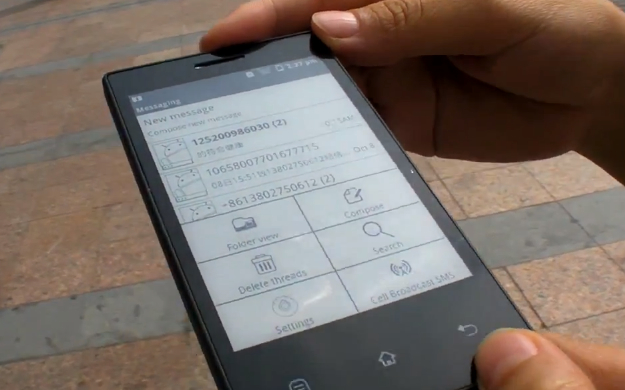
Onyx International, a company known for its range of e-readers, has shown off a prototype Android smartphone with an E Ink display. While the outdoor legibility and battery life are both excellent, the screen does let it down in other areas.

As every owner knows only too well, smartphone screens are difficult to view in direct sunlight, and while pushing the brightness up to maximum can help, it doesn’t do wonders for the battery life.

Here’s an interesting solution to the problem from a company named Onyx International, a smartphone with an E Ink screen. Onyx has plenty of experience in the world of E Ink screens, as it produces the Boox series of e-readers. The handset is only a prototype at the moment, but you can see a working version in the video below, where its screen is compared to a Galaxy Nexus.

The result is spectacular, as the Nexus device just looks like it’s turned off the entire time, while the Onyx phone’s display is crisp and sharp, despite being viewed outdoors. This probably won’t come as a surprise to anyone who has used an e-reader over the past few years, and the superior performance of an E Ink screen in sunlight formed the basis of a recent Amazon Kindle ad campaign.

Surprisingly, the Onyx phone runs Google Android, which has been extensively modified to run on a monochrome screen, but as you can see, the core functionality is still there. Because E Ink screens only take little sips of battery power, the standby time on the prototype is a week. Try that on any other smartphone.

There are, however, one or two little drawbacks. E Ink displays aren’t known for their speed, and sure enough the refresh rate is terribly slow, meaning any multimedia or gaming would be impossible. Viewing text webpages is good though.

While it’s an impressive technical feat and the use of an E Ink screen on a phone certainly has its benefits, the thought of enduring those long refresh times and not being able to do the things that almost all other smartphones can do, would probably make ownership too frustrating. After all, If I wanted a long standby time, a monochrome screen and little else, I’d buy a basic feature phone.

Take a look at the video showing the phone in action and see what you think.


Source : http://www.digitaltrends.com/mobile/prototype-e-ink-android-phone-demonstrated-on-video/

iPlayer for Android gets Jelly Bean support

iPlayer for Android gets Jelly Bean support
iPlayer for Android - flashy

As promised, a new version of iPlayer for Android has hit Google Play making the mobile catch-up TV service compatible with Jelly Bean, now known as BBC Media Player.

The app has had a behind-the-scenes overhaul to make sure it can work with both older, Flash-based Android iterations and the brave new Flash-less world that is Android 4.1.

To do this, the BBC has created the BBC Media Player app, which allows handsets to play the Flash-based video content on BBC websites through a spot of clever redirection.

Misdirection

Not all the videos across the BBC websites and iPlayer are compatible with the app just yet, although the BBC has started rolling out updates so the error messages should lessen over time.

The BBC's way of getting around Android ditching Flash is to use the Adobe Air-based Media Player app.

Unfortunately there's still no sign of iPlayer downloads coming to the Android app yet, something that iOS users have smugly been enjoying for some time now.

Android users can download the app from Google Play now.


Source : http://www.techradar.com/news/phone-and-communications/mobile-phones/iplayer-for-android-gets-jelly-bean-support-1105533

Google has its first $14B quarter but net income decreases

Google's Q3 results came out earlier than planned and since they didn’t meet Wall Street's expectations, the company's shares dipped and trading of the stock had to be suspended temporarily. Google's shares ended the day 8% down.

While not what analysts expected, Google's third quarter wasn’t that bad. The search giant had its first $14 billion revenue quarter (a 45% increase year over year), helped by revenue from Motorola.

Net income was $2.18 billion, down from the $2.73 billion of last year's third quarter. Google's ads saw a 33% increase in paid clicks, but the price of those clicks was 15% lower than in Q3 2011. The reason behind the drop is the increasing share of mobile ads, which are cheaper.

Anyway, Motorola had a rough quarter. Its revenue was $2.58 billion, but it posted an operating loss of $527 million ($505 million of which was lost by the mobile phone department).

You can get more details on Google's financial performance from their full press release.

Source


Source : http://www.gsmarena.com/google_has_its_first_14b_quarter_but_net_income_decreases-news-4969.php

Huawei Ascend Mate could be 6.1-inch giant

Huawei Ascend Mate could be 6.1-inch giant
Do you want to be friends?

A mammoth 6.1-inch smartphone could be in the works over in China, as details of the Huawei Ascend Mate get their first airing.

According to a report from MyDrivers, the super sized device was apparently spotted on Huawei's Chinese website, sporting a huge 6.1-inch, 1080p display which would put the 5.5-inch Samsung Galaxy Note 2 to shame.

As well as the screen size, other details of the monster phone were also leaked, including a 1.8GHz quad-core processor, 2GB of RAM and 4,000mAh battery.

World's most powerful smartphone

If these specs are to be believed then the Ascend Mate is set up to be the world's most powerful smartphone, an accolade currently held by its closest rival, the Galaxy Note 2.

The Ascend Mate will apparently measure a relatively slender 9.9mm in depth, and while there's no official word from Huawei about the device, it wouldn't be a surprise to see other manufacturers take on Samsung's mega-super-phone.

There are no details surrounding a potential Huawei Ascend Mate release date or price, so we've contacted the Chinese firm to see if it can shed any light on the news.


Source : http://www.techradar.com/news/phone-and-communications/mobile-phones/huawei-ascend-mate-could-be-6-1-inch-giant-1105522

O2 rolling out Android 4.1 to Samsung Galaxy S3 today

O2 rolling out Android 4.1 to Samsung Galaxy S3 today
Buttery smooth experience with Android 4.1

O2 has confirmed that it will start rolling out the Android 4.1 update to its Samsung Galaxy S3 customers today.

Three was the first network in the UK to push the Jelly Bean update out to Galaxy S3 owners yesterday, and it has now been joined by O2.

The news was revealed yesterday on O2's community forum, with Abs from the O2 Social Media Team saying:

"From tomorrow, 19th October '12, you'll be able to upgrade to the much awaited 4.1 Jelly Bean update over Wi-Fi or via Kies."

Auto-update alert

In our Samsung Galaxy S3 review the handset received high praise and sits proudly at the top of our 20 best mobile phones in the world today – which goes some way to explaining why it's been so popular.

We're yet to hear from Orange, T-Mobile or Vodafone on Jelly Bean, but all three are expected to push the update to customers in the coming weeks.

Update: A T-Mobile spokesperson has told TechRadar: "T-Mobile is working closely with its device manufacturing partner Samsung to roll-out a Jelly Bean update for as soon as possible. As soon as we have an exact timeline in place we will confirm."

Update: Samsung has told us: "Samsung UK can confirm that the roll out of Android 4.1 (Jelly Bean) has begun for our Galaxy S III customers and will be available across all networks over the coming weeks, pending software testing and approvals."


Source : http://www.techradar.com/news/phone-and-communications/mobile-phones/o2-rolling-out-android-4-1-to-samsung-galaxy-s3-today-1105501