Who thought flinging birds would be worth so much?
Apple has been crowing about its app download figures again, with a record-breaking December seeing two billion downloads.
Cook's Crew has been hitting a lot of milestones recently, according to its release, claiming 40 billion app downloads since the App Store opened its virtual doors in mid-2008.
It's stating that it has paid out $7bn (£4.3bn, AUS$ 6.66bn) to developers over that period, making it easy to work out that Apple has nabbed itself $3bn (£1.85bn, AUS$ 2.85bn)
On top of that, Apple is shouting that it has over 500 million active accounts worldwide, with people downloading apps by the bucketload, given there are only around 775,000 titles approved on the App Store.
Only the good stuff
That 40 billion mark apparently doesn't even take into account those apps re-downloaded or updated, making it a really impressive number in just four years.
So the rate of 5 billion every three months has continued, and with rumours that Google has actually surpassed the amount of apps it has available (quality notwithstanding) it seems that there are finally two dominant app portals for users to choose from.
The first big electronics show of the year is about to kick off and as usual many of the big names in the mobile business will be holding a press conference a day early. Our team is on site and we're ready to bring you detailed coverage of all the action.
As usual the place is Las Vegas, Nevada and there is a lot to come in the next few days - from smartphones to tablets, laptops to cameras, etc.
So let's take a look at some of highlights of the show.
Huawei is going all in with the Windows Phone 8-powered Ascend W1 budget smartphone, the Ascend D2 with a 5" 1080p screen, quad-core 1.5 GHz K3V3 CPU and Android Jelly Bean and finally the 6.1" Ascend Mate with a Full HD screen and quad-core K3V3 CPU, clocked at 1.8 GHz.
Then comes Sony with the Xperia Z and Xperia ZL. Both are touted to bring IP57 certification and we already saw the Xperia Z at the CES floor. It sports a 5" 1080 x 1920 display, 13 MP snapper, Android Jelly Bean and a quad-core 1.5 GHz Krait processor with 2 GB worth of RAM.
Then comes another 5" 1080p smartphone - the ZTE Grand S.
It's safe to say that this year's CES will be mostly about 5" (and above) displays of 1080p resolution. Stay tuned!
"An iPod. A phone. And an internet communicator," Steve Jobs said. "These are not three separate devices."
"Oh, shit," said the consumer electronics industry.
It became the talk of CES, even though Apple wasn't at CES. "I remember being sat in the CES press room alongside several other sweaty, exhausted journalists surviving on nasty coffee," TechRadar's deputy editor Dan Grabham recalls. "There was a bit of a hush over the room, although as I was working on something I didn't notice it until one of my colleagues turned to me and asked if I had seen what Apple had announced. I couldn't believe my eyes."
Grabham liked Macs, but "I'm not an Apple fan as a rule - but we knew this was big. The huge, whopping, massive deal was that it was a touchscreen, and what appeared to be an unbelievably good touchscreen with gestures."
The iPhone launch raised as many questions as it answered, Grabham says. "How had Apple done it - in cahoots with AT&T - without anybody finding out the details? How could it succeed in phones? What would it be like to use? Of course, we now know the answer to these questions, but at the time it seemed like there was a lot of stuff still to be worked out."
While Grabham sat in a room full of shell-shocked tech journalists, your correspondent blogged: "If this is as good as it looks, it could be more important than the Mac."
That turned out to be something of an understatement.
What the world is waiting for
"That was unbelievable," Grabham wrote in November 2007: he had "never experienced anything like the atmosphere". Was he at a secret U2 gig? A football match? The Victoria's Secret Lingerie Show? Nope. Grabham was in a shop - the Apple Store in London's Regent Street, as the iPhone hit the UK (the US launch had already taken place in June). The launch was "absolute pandemonium" involving headbutts, pratfalls and lots of cameramen and women.
Unlike more recent Apple product launches, where the queues consist largely of social media-advertising attention seekers and shifty types trying to buy 100 iPhones to sell at a profit overseas, the original queuers were normal people who really, really wanted to get their hands on the phone.
So what were they queuing for? On paper, the first iPhone wasn't that great: in our first review we noted its "considerable shortcomings". It didn't do 3G - we were stuck with the woeful EDGE network - or MMS, it didn't offer third party apps, it had an annoying recessed headphone socket, the camera was rotten and it didn't even do cut and paste. It wasn't cheap, either.
You'd have been much better off with a Sony Ericsson W960i or a BlackBerry Pearl 8120, we suggested at the time - wrongly, as it turned out. The W960i and Pearl were phones with some extra features. The iPhone was a handheld computer, and the phone bit was just another application.
It wasn't universally admired, of course. It was argued in these pages that the iPhone was "simply a repackaged version of what Palm, Sony Ericsson and Nokia have been doing for a long time... let's chat for a second about Apple's chances of making a dent in the mobile phone market." Today, of course, Palm and Sony Ericsson are no more, Nokia's barely hanging on and Apple is the most valuable technology company in the world, largely because of its mobile phone sales.
What made the iPhone special
As Techradar's Dean Evans explained in late 2007, Apple's greatest hits "have all been powered by superior interfaces: the Mac's desktop metaphor, the iPod's genius click wheel, and now the iPhone's feely-touch number." Multitouch wasn't new, but "it's finally been applied to the right sort of gear: complicated convergence devices aimed at consumers."
"Apple has shown it has a real solution here - a solution that sells - and now it is applying it to its other gear," Evans wrote. The iPhone's interface was coming to "the iPod touch, and if you believe the slosh of internet rumours, a possible MacTablet." As it turned out, the iPhone was a spin-off of the iPad project rather than vice-versa, but we did indeed get an Apple tablet - and Evans was right when he said that rival phone firms were often "aping the eye candy rather than rethinking their designs... who can blame them, when they have so much money tied up in the status quo?"
It took a while for the iPhone's impact to be felt in the industry. Steve Ballmer openly scoffed at it - "there's no chance that the iPhone is going to get any significant market share. No chance" - while Shacknews reported that RIM though the whole thing was an elaborate stunt. The iPhone "couldn't do what [Apple was] demonstrating without an insanely power hungry processor, it must have terrible battery life." Both Microsoft and RIM have been playing catch-up ever since.
It's easy to mock dunderheaded rivals, but even die-hard Mac fans weren't entirely convinced. Discussing the launch on MacRumors, some commenters said that it was "a waste of a keynote", "too expensive for most people" and that it had a "tacky" exterior.
What the iPhone did
The iPhone changed Apple's fortunes: the week before it announced the iPhone, its shares were trading at just under $85. In July 2012, they cracked $600, making Apple the most valuable company of all time. In 2007 it had zero market share; in December 2012, the iPhone accounted for 53.3% of all US smartphone purchases. The iPhone is responsible for roughly half of all Apple's sales, two-thirds of Apple's profits, and 97% of all internet linkbait headlines.
If that were all the iPhone did, it would be amazing. But there's more. The reversal of the no-native-apps policy and the creation of the App Store has transformed the way we buy software, a transformation that's even visible in Windows 8. It's replaced all kinds of stand-alone devices, from handheld consoles to sat-navs and cameras. The UI, ahem, inspired an awful lot of mobile phone UIs, and encouraged Google to make Android more iOS-y and less BlackBerry-y. It loosened network operators' iron grip on phone design and features, came up with a better way of doing voicemail, and forced the operators to offer better data plans. It brought proper web browsing to mobile devices and casual gaming to millions. It paved the way for the iPad and today's Windows 8 and Android tablets, ushering in what Steve Jobs would later call the post-PC era.
It's still pretty crap at making calls, mind you. But maybe we're just holding it wrong.
Alcatel thinks it can mix with the big boys by rivalling Apple and Samsung's smartphone headliners.
The new range launched at CES 2013, from the brand known mostly for its budget handsets, comprises of three models: the One Touch Idol Ultra, the One Touch Idol and the One Touch Scribe HD.
The first is the headliner: the Idol Ultra promises a thickness of just 6.45mm, making it the 'thinnest smartphone in the world', although looking at that protruding 8MP camera, we'd be inclined to think it's probably only at its thinnest point.
It's also running Android Jelly Bean on top of a 1.2GHz dual core processor; not the most powerful out there, but you do get a 4.7-inch HD OLED screen to look at it with, so it's one for those that value form over power.
BY THE POWER OF FOUR CORES
If you're more about the raw grunt (and covet the Samsung Galaxy Note 2 but can't afford it) then the One Touch Scribe HD may be more your cup of tea, especially if you like crayon-like styluses.
Coming with a 5-inch HD screen (presumably LCD, as Alcatel has furnished us with very little in the way of specifications) and the quad core MediaTek MT6589, which comes with lower power than rival quad core chips and should push the price down accordingly.
It, too, has an 8MP camera and comes with a 4G connection as well, meaning the likes of EE in the UK may be looking to get their speedy mitts on it.
False Idol
And finally: the Alcatel One Touch Idol. It's a phone that is apparently another record breaker, coming in at 110g to make it the "lightest smartphone in its category"… although we've no idea what category that might be, as there are plenty of lighter smartphones out there.
Like its Ultra brother, it has a 4.7-inch screen but this time only uses IPS LCD technology, meaning less rich contrast ratios. It's also go an 8MP camera, runs Jelly Bean and is offered in 'premium brushed metallic finishes'.
There's no specific territorial information on offer here about these phones, other than they'll be released in 2013 (wow) globally. We're pressing for more info… namely how much these 'record breakers' will cost.
HTC released its unaudited Q4 results, which met the company's dim prediction but missed on what analysts expected.
Operating income was NT$600 million (around $21 million) while net income before taxes was NT$1 billion (around $35 million).
Analysts had predicted revenue of NT$60.5 billion while HTC's prediction of NT$60 billion (around $2 billion) turned out the right one.
HTC wasn't able to capitalize on devices like the One X+ and DROID DNA, which affected negatively the results this past quarter. The increased competition from Samsung and Apple's top smartphones also reduced the market share and in turn revenue away from HTC.
According to Bloomberg HTC’s share of the global smartphone market dropped to 4.6 percent in the third quarter from 10.3 percent a year earlier.
Things are expected to take a turn for the better in Q1, when the increased availability of the HTC Butterfly and production rates of the DROID DNA will help boost HTC's net income to NT$2.16 billion (around $74 million) and revenue to NT$61.8 billion (around $2.13 billion).
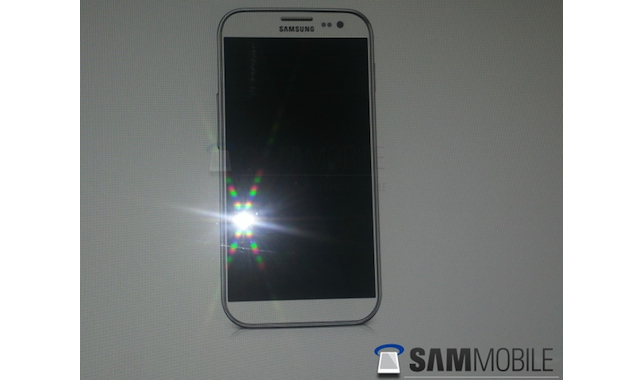
A leaked image supposedly showing the forthcoming Samsung Galaxy S4 indicates the phone could have a larger screen and do away with the home button.
The release of the Samsung Galaxy S4 is as inevitable as the release of another iPhone, it’s just a question of when it will happen. We may not know exactly when it’ll arrive, but as the leak of a picture supposedly showing the phone reminds us, that time is getting ever closer.
You can see the image above, and at first glance it looks a lot like the Galaxy S3, except for one major alteration – the home button beneath the screen has disappeared. It’s not the first Android phone to do away with physical keys, nor is it the first Samsung produced phone to do so either; but it is a considerable departure from the S3. Home button aside, eagle-eyed Samsung fans will notice the bezel around the screen looks much thinner than it does on the S3, while the top and the bottom of the frame are flatter than the S3 too. This could be seen as a risky design move, given it deviates from the curvy, lawsuit-avoiding shape of the previous model.
One of the most enduring rumors regarding the Galaxy S4’s specification is an increase in screen size, possibly to 4.99-inches, plus the introduction of a 1080p resolution. The smaller bezel adds weight to this, as it negates the need for Samsung to make the chassis much larger to compensate. The rumored spec continues with a 2GHz processor, 2GB of RAM, a 13-megapixel camera and Android 4.2.
The leaked picture has been published by Samsung blog SamMobile, and due to the anonymous nature of the leak, it’s impossible to confirm whether the image is genuine or not. On the plus side, the picture isn’t ridiculously over-the-top – it doesn’t have a very bendy screen or lasers for example – but it does look an awful lot like the Galaxy Premier and the Galaxy Grand.
The Samsung Galaxy S III mini tries to follow in the footsteps of its big brother and now its in the "getting new color versions" phase that the S III went through a while back.
The Galaxy S III mini launched with the standard White and Blue color options but a brochure shows that three new color options will be added next month in Taiwan.
The new colors are Red, Black and Grey, almost matching the color choices for the big Galaxy S III (which also has a Brown version and a special La Fleur paint job).
The Galaxy S III mini is priced at 9,900 Taiwanese dollars ($340) and will become available in Taiwan starting in February. There's a promotion too - people who buy an S III mini before the end of March will get a matching leather Flip Cover.
There's no info on when the new colors for the S III mini will become available outside of Taiwan, but it probably won't be long.