Huawei introduced a new quad-core Android phone to the German market, the Huawei Ascend G615. It’s very similar to the Ascend D quad in terms of specs – 4.5” IPS LCD screen with 720p resolution (326ppi), Android 4.0 with an incoming Jelly Bean update, HiSilicon K3V2 chipset (4x Cortex-A9 at 1.4GHz, 1GB RAM and HiSilicon GPU) along with an 8MP / 1080p camera.
The G615 is cheaper than the Ascend D quad XL – it will be sold at €300, while the older model goes for around €380. The battery is not quite as big though (2,150mAh vs. 2,600mAh) and it’s slightly thicker and heavier, the Ascend G615 measures 134 x 67.5 x 10.5mm and weighs 145g.
The rest of the specs include 8GB of built-in memory, microSD card slot (take that, Nexus 4), Dolby Digital Plus audio tech, 3G with 21Mbps HSDPA, Wi-Fi b/g/n and Bluetooth 3.0. The G615 will be available in Black and White and uses old fashioned miniSIMs.
If you’re interested, the Huawei Ascend G615 will be available in Germany starting early next month for €300. Initially you’ll be able to get it from Amazon, Conrad or Cyberport, but in March other stores will start offering it too.
A report published in China suggests Apple is to produce three new iPhone models this year, including the iPhone 5S and a device named the iPhone Math, which is said to have a 4.8-inch screen. No, we don’t believe it either.
Everyone loves a good Apple rumor, so here’s a particularly juicy one to enjoy over your morning coffee. According to the China Times, Apple will release not one, not two, but three new iPhone models this year, based on information received from sources working with Apple’s suppliers. The report continues to say the first two new phones will arrive in June, followed by another around October.
So far, not all that juicy. However, here’s the fun part: The already rumored iPhone 5S will arrive in June and will be accompanied by another model named the iPhone Math, and it’ll have a 4.8-inch screen. Yes, despite only just increasing the size of the iPhone’s screen to 4-inches, Apple has apparently seen the light and will join arch-rival Samsung by offering a device with a 4.8-inch display. Except, of course, it almost certainly won’t.
If, in some bizarre twist, Apple does have a phone with a nigh-on 5-inch screen in the works, it makes sense to give it a striking name. But would anyone – let alone Apple, a company which takes an incredibly conservative approach with its nomenclature – call a phone the Math? Quite apart from the word sounding completely wrong to everyone outside of the U.S. and Canada, it makes absolutely no sense whatsoever. Calling it out as either an odd, lost-in-translation error or a weirdly creative ruse seems almost redundant.
Production to begin in April
Towards the end of the year Apple will supposedly launch another iPhone, which hasn’t been named in the report, so in keeping with the theme we’ll call it the iPhone Geography, and its claim to fame is a 12-megapixel camera. A future iPhone being given a higher megapixel camera is quite logical, and the rumor is certainly more credible than the iPhone Math. No mention was made of a cheaper iPhone, which has been rumored by several other sources over the past month, however the similarly mythical Apple iTV was discussed by the China Times’ sources, and it’s said to arrive before the end of the year.
The report goes on to provide some surprisingly precise information on the companies building the components for the three new iPhone models. For example, Foxconn and Coxon will produce the chassis, Hon Hai Precision will take care of the manufacturing, Largan Precision the camera modules (as it does with the iPhone 5) and the circuit boards will come from Flexium, Zhen Ding and Fujikura. Components will start coming together in March and production is rumored to begin in April.
For a rumor, the talk of an iPhone 5S built by these companies for release in June doesn’t sound too crazy, but all the while it’s accompanied by the iPhone Math, we just can’t take any of it seriously.
We already lost count of all the rumors, confirmations and denials of the Windows Phone 7.8 update. The update itself got so overhyped that we are sure some users we'll be left disappointed, when it arrives.
Anyway, according to Windows phone Columbia official Facebook page, the Windows Phone 7.8 rollout will begin on January 31.
The date coincides with Microsoft's promised Q1 launch, as well as the fact that there are already updated Lumia smartphones with it, ones that are sold updated and even Samsung fans recently learned that the Omnia updates are complete.
We already got our hands on the Lumia 510 officially running on Windows Phone 7.8 and we've extracted the new features we found so far for you.
Resizable Live Tiles
Bluetooth File transfer
Bing Picture for Lockscreen wallpaper
New theme colors
Wi-Fi tethering
You can set Google as default search provider in Internet Explorer
New boot screen
Office 14.5
Updated system and Nokia exclusive apps
Ringtone maker (also available in the Marketplace)
Counters app (also available in the Marketplace)
The full review is already in the works, while you should expect your phone to get the update itself in 10 days.
A massive 45 out of the top 50 network operators in the world rely on telecommunication services from Chinese mobile giant Huawei.
Then stat was mentioned during the Chinese firm's annual financial results, where it also announced that it's doing pretty well for itself.
In fact 70 per cent of Huawei's profits came from its work with network operators, while its consumer smartphone business accounted for just 22 per cent.
Are you Apple in disguise?
Several firms have been battling to balance the books recently including the likes of HTC, LG and Nokia, but Huawei is on the up with net profits raising 33 per cent year on year – the sort of performance we've come to expect from Apple.
Huawei wants to become one of the top three smartphone manufacturers in the world and while handsets such as the recently announced Ascend D2 and Ascend Mate show the firm's drive, it still has a way to go before it can properly challenge Samsung and Apple.
Looking to the future Huawei predicts that data traffic will be the big sticking point, so it's focussing efforts on improving the system by creating pipes with larger bandwidth allowing for "massive date flow."
Google's showing no signs of slowing its pace of Android development, with Android 4.0 appearing on the Galaxy Nexus late in 2011, followed in July of 2012 by the Android 4.1 Jelly Bean release that arrived powering the super Nexus 7.
But, forward-looking, update-obsessed people that we are, we can't help but imagine how Google's going to maintain the pace of innovation in its next version of its mobile OS, Android 5.0.
All we know so far is that Google's working away on the K release of Android, which it's developing under the dessert-related codename of Key Lime Pie. Regarding the version number, it's likely that the Key Lime Pie moniker will be given to Android 5.0. We thought we might find out on 29 October but as yet there is no official word from Google.
Rumours of a new Nexus handset started trickling in during the third quarter of 2012, as we reported on 1 October 2012. There was speculation that this phone would be sporting Key Lime Pie, but sources who spoke to AndroidAndMe correctly claimed that the handset, which turned out to be the Google Nexus 4 would be running Android Jelly Bean.
So now as we wait on official news of the Android 5.0 release date and features, we can start to pull together the Key Lime Pie rumours from around the web, with the first sighting of Android 5.0 on a benchmarking website, apparently running on a Sony smartphone. There has previously been speculation that Sony is in line to produce the next Nexus phone, which may lend some credence to this rumour.
While the Nexus 4 didn't appear with a helping of Key Lime Pie, speculation that we reported on 21 January 2013 suggests that the Motorola X Phone is the Android 5.0-toting handset that will break cover at Google IO. According to a post on the DroidForums website, the phone will also feature a virtually bezel-free, edge-to-edge, 5-inch display.
Android 5.0 features
Key Lime Pie features are yet to revealed, but as we scour the web for more Android 5.0 news, we've been thinking about what we want to see in Android 5.0 Key Lime Pie. Hopefully the new mobile OS will feature some of these things...
1. Performance Profiles
It's bit of a fuss managing your mobile before bed time. Switching off the sound, turning off data, activating airplane mode and so on, so what Android 5.0 really needs is a simple way of managing performance, and therefore power use, automatically.
We've been given a taste of this with Blocking Mode in Samsung's Jelly Bean update on the Samsung Galaxy S3 and the Note 2 but we'd like to see the functionality expanded.
Something like a Gaming mode for max power delivery, an Overnight low-power state for slumbering on minimal power and maybe a Reading mode for no bothersome data connections and a super-low backlight.
Some hardware makers put their own little automated tools in, such as the excellent Smart Actions found within Motorola's RAZR interface, but it'd be great to see Google give us a simple way to manage states.
Another little power strip style widget for phone performance profiles would be an easy way to do it.
Set telephone to BEDTIME SLEEPY MODE
2. Better multiple device support
Google already does quite a good job of supporting serious Android nerds who own several phones and tablets, but there are some holes in its coverage that are rather frustrating.
Take the Videos app which manages your film downloads through the Play Store. Start watching a film on one Android device and you're limited to resuming your film session on that same unit, making it impossible to switch from phone to tablet mid-film.
You can switch between phone and web site players to resume watching, but surely Google ought to understand its fans often have a couple of phones and tabs on the go and fix this for Android Key Lime Pie?
3. Enhanced social network support
Android doesn't really do much for social network users out of the box, with most of the fancy social widgets and features coming from the hardware makers through their own custom skins.
Sony integrates Facebook brilliantly in its phones, and even LG makes a great social network aggregator widget that incorporates Facebook and Twitter - so why are there no cool aggregator apps as part of the standard Android setup?
Yes, Google does a great job of pushing Google+, but, no offence, there are many other more widely used networks that ought to be a little better "baked in" to Android.
4. Line-drawing keyboard options
Another area where the manufacturers have taken a big leap ahead of Google is in integrating clever alternate text entry options in their keyboards. HTC and Sony both offer their own takes on the Swype style of line-drawing text input, which is a nice option to have for getting your words onto a telephone. Get it into Android 5.0 and give us the choice.
UPDATE: Google heard us and this feature appeared in Android 4.2.
P-U-T T-H-I-S I-N A-N-D-R-O-I-D 5-.-0
5. A video chat app
How odd is it that Google's put a front-facing camera on the Nexus 7 and most hardware manufacturers do the same on their phones and tablets, yet most ship without any form of common video chat app?
You have to download Skype and hope it works, or find some other downloadable app solution. Why isn't there a Google Live See My Face Chat app of some sort as part of Android? Is it because we're too ugly? Is that what you're saying, Google?
6. Multi-select in the contacts
The Android contacts section is pretty useful, but it could be managed a little better. What if you have the idea of emailing or texting a handful of your friends? The way that's currently done is by emailing one, then adding the rest individually. Some sort of checkbox system that let users scroll through names and create a mailing list on the fly through the contacts listing in Android Key Lime Pie would make this much easier.
Make this a destination, rather than a never-used list
7. Cross-device SMS sync
If you're a constant SIM swapper with more than one phone on the go, chances are you've lost track of your text messages at some point. Google stores these on the phone rather than the SIM card, so it'd be nice if our texts could be either backed up to the SIM, the SD card, or beamed up to the magical invisible cloud of data, for easy and consistent access across multiple devices.
8. A "Never Update" option
This would annoy developers so is unlikely to happen, but it'd be nice if we could refuse app updates permanently in Android 5.0, just in case we'd rather stick with a current version of a tool than be forced to upgrade.
Sure, you can set apps to manual update and then just ignore the update prompt forever, but it'd be nice to know we can keep a favoured version of an app without accidentally updating it. Some of us are still using the beta Times app, for example, which has given free access for a year.
Let us keep older versions. Many people fear change
9. App preview/freebie codes
Something Apple's been doing for ages and ages is using a promo code system to distribute free or review versions of apps. It even makes doing little competitions to drum up publicity for apps much easier, so why's there no similar scheme for Android?
It might encourage developers to stop going down the ad-covered/freemium route if they could charge for an app but still give it away to friends and fans through a promo code system.
10. Final whinges and requests...
It's be nice to be able to sort the Settings screen by alphabetical order, too, or by most commonly used or personal preference, as Android's so packed with a huge list of options these days it's a big old list to scroll through and pick out what you need.
Plus could we have a percentage count for the battery in the Notifications bar for Android 5.0? Just so we know a bit more info than the vague emptying battery icon.
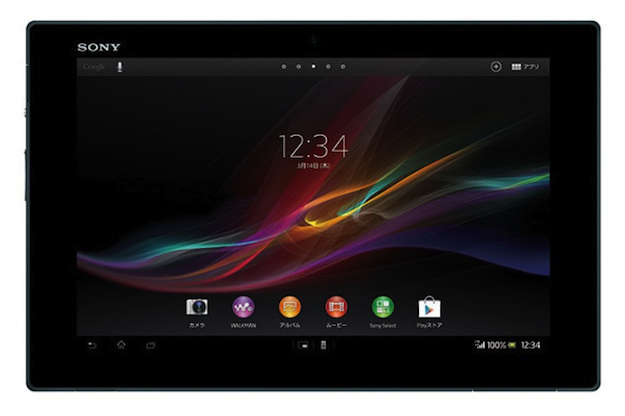
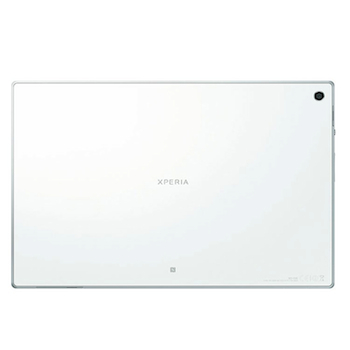
Sony has announced the Xperia Tablet Z, a very slim 10.1-inch tablet with a quad-core processor, which is currently headed only for Japan. However, this could change when Mobile World Congress begins next month.
The rumors surrounding a new Sony Android tablet were on the money, as the company has announced the Xperia Tablet Z, a device to which we were only recently introduced and few expected to be made official before Mobile World Congress. Sony has a good reason not to save the Xperia Tablet Z for MWC though, as so far it only lined up a Japanese release.
Sony has abandoned the unusual, folded paper-style design seen on the Xperia Tablet S, deciding instead to make the Xperia Tablet Z a more traditional slate with an extremely thin profile. It measures just 6.9mm thick, which is noticeably slimmer than the 9.4mm thick iPad and 8.9mm Samsung Galaxy Note 10.1; plus at 495 grams, it’s at least 100 grams lighter than both its primary rivals.
The screen measures 10.1-inches and has an impressive resolution of 1920 x 1200. Billed as a Reality Display it uses Sony’s Mobile Bravia Engine 2, a feature introduced on the new Xperia Z, Xperia ZL and Xperia V smartphones. which enhances contrast, sharpness, colors and brightness while reducing noise on still photos and video.
A quad-core, 1.5GHz processor powers the Xperia Tablet Z and although it’s not stated in the brief press release, it’s most likely the same Qualcomm Snapdragon S4 Pro used in the Xperia Z phone. Previous Sony tablets have used Nvidia’s Tegra chip. The tablet is water and dust proof, plus it’s also equipped with an 8.1-megapixel camera, NFC, LTE connectivity, S-Force surround sound and Android 4.1 Jelly Bean as its operating system.
Sony will release the Xperia Tablet Z in Japan in the spring, but no exact date has been provided, and the price remains unknown too. Despite announcing it before MWC, the tablet should still be at the show, when Sony may pleasantly surprise us all by providing an international release date. Sony’s announcement of the Xperia Tablet Z follows the unveiling of the Xperia Z smartphone at CES 2013.
We have been hearing about HTC's upcoming flagship, known only as the M7 for now, for quite some time now. We have seen the leaked specifications as well as an early render. Now we have what are allegedly the actual pictures of the device.
One look at these pictures and you'll notice this particular phone looks nothing like the render we saw in the past, which looked more like the BlackBerry L-series device. This one has more in common with current HTC devices, such as the DROID DNA.
In the front we can see that HTC has once again opted to go with physical keys below the display. The display itself doesn't seem particularly large, which falls in line with the rumors of it being 4.7-inches in size. Above that lie the earpiece and the front facing camera.
The back looks similar once again to the DROID DNA, but the flash has moved over to the left of the camera lens and there doesn't seem to be an additional LED notification light, although a hole for the secondary microphone is clearly visible near the top right.
Android Police has managed to score some screenshots of the interface as well, which is now running the HTC Sense 5.0 skin. Compared to the previous iterations of this UI, 5.0 has a distinct flat look to it, which can be seem from the icons.
Of course, considering the amount of time and effort people pour these days in making fake images, you should take everything you see on this page with a pinch of salt. We will be finding out for sure how much truth there is in these pictures at MWC this year.