Showing posts with label generation. Show all posts

Wednesday, October 31, 2012

BlackBerry 10 phones being tested by carriers as Pentagon says it will keep using RIM handsets

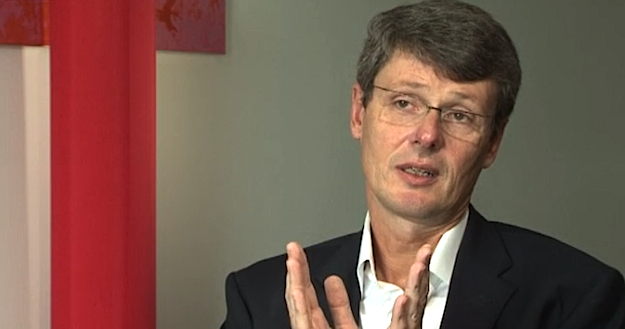
Research In Motion boss Thorsten Heins has announced that devices running the firm's next-generation OS, BlackBerry 10, are now being tested by carriers around the world, keeping it on course for release early next year. Meanwhile, the Pentagon has said it will continue to use BlackBerry devices in its work.

It’s encouraging. It’s a step in the right direction. It might mean Research In Motion (RIM) really will fulfill its promise of a first-quarter 2013 launch of its next-generation BlackBerry 10 OS and handsets.

RIM CEO Thorsten Heins announced in a statement on Wednesday that handsets running the new OS were now being tested by more than 50 carriers worldwide.

Heins said reaching the testing phase meant the company had “passed a critical milestone” in the development of its new mobile computing platform.

“The hard work will not stop here as we build towards launch,” Heins said in the statement, adding, “Our developer teams are continuing to generate momentum to bring a wealth of applications to BlackBerry 10, our enterprise teams have started to present BlackBerry 10 devices and services to our business customers, and our engineers are fully mobilized to ensure that BlackBerry 10 launches flawlessly in the first quarter of 2013.”

In an interview with the BBC last week, Heins urged consumers not to underestimate “the dynamic [BlackBerry 10] is going to create in the market.”

In other news involving the mobile company, the Pentagon made clear this week that it would carry on supporting “large numbers” of BlackBerry handsets despite going ahead with plans to allow the US military to use other devices such as the iPhone.

“The Defense Information Systems Agency is managing an enterprise email capability that continues to support large numbers of RIM devices,” a spokesman told Reuters this week. A number of government agencies and businesses have said in the last year they would be issuing staff with iOS or Android devices, ending long-standing contracts with BlackBerry. While the Pentagon also appears to be relaxing its association with RIM, things are so serious at the Canadian company that the defense agency’s announcement that it’s not switching entirely to rival devices will actually be perceived as good news by many.

The BlackBerry was once the phone of choice for many agencies and firms thanks largely to its strong security features. However, security on rival handsets such as Apple’s iPhone and a number of Android-powered devices has improved over time, offering an alternative to the BlackBerry.

The launch of RIM’s next-generation OS and handsets is its make-or-break moment. Perhaps the Canadian mobile maker – once the country’s most valuable company – can still turn things around, remain a viable player in the mobile game and consequently help to keep competitors on their toes.


Source : http://www.digitaltrends.com/mobile/blackberry-10-phones-being-tested-by-carriers-as-pentagon-says-it-will-keep-using-rim-handsets/

Tuesday, October 23, 2012

Apple announces iPad 4th generation with an A6X chipset

Everyone expected today’s Apple event to be all about the iPad mini, but it turned out that the Cupertino-based company had a surprise for us. Apple unveiled the fourth generation of its iPad iOS-running tablet.

The Apple iPad 4 comes with a new A6X chipset, which promises twice the CPU and GPU power of the A5X that the iPad 3 used. It also packs the new Lightning connector and its LTE version has now been updated to support the Sprint network in the US, among others.


Apple iPad 4th Gen

Other than those that the Apple iPad 4 is identical to its predecessor, which was announced at the start of the year. Sporting the same 10 hour battery life and 1536 x 2048 pixel display as the iPad 3, the iPad 4 base version will cost the same $499. The LTE-enabled units start at $629.

The iPad 2 will also stick around - it will retail, starting at $399 now. Shipping of the Apple iPad 4 Wi-Fi units starts on November 2, with the LTE-packing ones coming two weeks later.


Source : http://www.gsmarena.com/apple_announces_ipad_4th_generation_with_an_a6x_chipset-news-4988.php

Samsung reportedly working on a 1080p Super AMOLED screen

The first 1080p smartphones are a reality and regardless of whether a 400+ ppi pixel density is great or overkill, the next generation of Android flagships will most probably feature FullHD screens.

The HTC J Butterfly is already official and it packs a 5" Super LCD3 screen with 1080p resolution (440ppi). There's also the Oppo Finder 5, which also promises 1080p resolution on a 5" screen.

Those seem to be the specs of choice as both LG and Sharp are making 5" 1080p displays. The Sony C660X 'Yuga' might have a 5" 1080p screen too, made by Japan Display (a merger between Sony, Hitachi and Toshiba).


MK News is reporting that Samsung is also working on a FullHD display, which will use the company's trademark Super AMOLED technology. It's too early to tell what kind of matrix they'll use (PenTile like on the Galaxy S III or full RGB like on the Note II) and how big the display will be (though it should have a pixel density of at least 400ppi, meaning 5" or bigger).

Pantech will also be joining on the 5" 1080p smartphone action, with both theirs and Samsung's and LG's expected some time in the first half of next year. It will be an interesting, tack-sharp battle next year it seems.

Source | Via


Source : http://www.gsmarena.com/samsung_reportedly_working_on_a_1080p_super_amoled_screen-news-4984.php

Tuesday, October 16, 2012

Asus Padfone 2: what you need to know

Asus Padfone 2: what you need to know
What do you want to know? It's here.

Asus has announced its second generation Padfone – the Padfone 2. The original Padfone was a fine concept – a tablet powered by a phone which you could slot in and out - but it had several launches and false starts.

So Asus has decided to return to the drawing board and produce the all-new Padfone 2. However the new Padfone doesn't totally replace the original, but is a second product that sits alongside it in the range.

The biggest change between the original Padfone and its successor is the design. Gone is the cover for the docking bay, now replaced by a slide-in slot for the phone part; the tablet is referred to as "the Padfone station".

The slide motion is undoubtedly impressive and whatever is on your phone screen is transferred to the tablet when you slot in the phone, even if you're playing video or music.

Asus Padfone 2 display

The phone part of the new Padfone has a 4.7-inchSharp Igzo Super IPS+720p HD display with an impressive brightness of up to 550nits and a strong covering of Corning Fit Glass. The tablet has the same 10.1-inch IPS screen as the Padfone 1.

The phone/tablet combo will ship with Android 4.0 Ice Cream Sandwich, although Asus has promised an upgrade to Android Jelly Bean sooner rather than later.

Asus Padfone 2 processor

The new Padfone sports a powerful 1.5GHz quad-core Qualcomm Snapdragon processor inside based on ARM's latest-gen Cortex A15 design with Adreno graphics.

Asus claims a 30 per cent processor performance improvement over the original Padfone with double the graphics power.

Asus Padfone 2

Asus Padfone 2 cameras

The Padfone has a whopping 13MP camera on the rear, and a 1.2MP one on the front for video calls and conferencing.

The rear camera also boasts some other impressive specs; it can shoot 30fps 1080p video, 60fps 720p video (twice that of the HTC One X and Samsung Galaxy S3) or up to 100 continuous still shots at full resolution.

That means it'll shoot 6 per second, twice as many as the HTC One X and one more than the Samsung Galaxy S3.

Asus Padfone 2

Asus Padfone 2 sound

Asus says it has worked hard to improve its proprietary SonicMaster technology for better bass and volume whether you're using the phone or the tablet; and for different apps such as games or music.

There's an Audio Wizard app on the device so you can adjust the audio for different environments.

Asus Padfone 2 memory and storage

The Padfone 2 features 2GB of RAM on board, while the device is available in 16GB, 32GB and 64GB versions globally – it appears that European countries will only get the 32 and 64GB models.

You also get 50GB of cloud storage thrown in for two years with Asus WebStorage which supports instant upload of images.

Asus Padfone 2

Asus Padfone 2 apps

Asus has also produced several proprietary apps. There's a SuperNote app that features character recognition and handwriting support rather like the Samsung Galaxy Note 10.1. A so-called SmartKit includes dual-language input as well as instant translation.

Asus Cloud also supports native Microsoft Office in the cloud, so you can edit in real time when connected to the net.

Asus Padfone 2 battery

The phone is powered by a 2,140mAh battery that can support up to 13 hours of use on Wi-Fi, 16 hours of talk time and up to two weeks on standby.

When you plug it into the Padfone station (the tablet part), there's extra battery, so you can get up to 48 hours of continuous use. Asus says it has also included a number of power saving technologies inside the device for different usage scenarios.

Asus Padfone 2 dimensions

The phone is 9mm thick and weighs 135g. Combined the phone and tablet weighs 649g – lighter than the new iPad, as Asus chairman Jonny Shih was pleased to tell us at the press conference. The original Padfone was 854g.

Shih said that Asus had worked hard on the components, the result being that it was now 40 per cent lighter thanks to "space-grade aluminium".

Asus Padfone 2

Asus Padfone 2 connectivity

As you'd expect from any new high-end mobile device, there's 100Mbps LTE support as well as NFC for mobile payments.

The unit announced in Taipei offers support for the 900/2100MHz WCDMA frequencies and the 800/1800/2600MHz LTE frequencies, though there is also GSM compatibility for Europe and elswehere. Data connectivity for both parts of the device comes from the phone's SIM.

Asus Padfone 2 release date

The Padfone 2 is hitting Taiwan next week, and will be available with or without the tablet station.

We are told that both Padfone 1 and 2 will be available in Europe, including the UK, from early 2013... which still feels like ages to wait. It's available in both black and white colours.

Asus Padfone 2 pricing

In Europe, pricing is 799 EUR and 899 EUR for the 32 and 64GB versions respectively.

In Asia, pricing starts at NT$17,990 (about $US620/£383/AUD$599) for the 16GB phone only, and ranges up to $NT 21,901 ($US749/£466/AUD$729) for the 64GB version.

The tablet dock can be purchased by itself for NT$8990 ($US310/£191/AUD$299), or bundled with the phone for NT$6000 ($US210/£127/AUD$199).

Asus Padfone 2 review

Want to know all about the new phone/tablet mixup? Well, we're awaiting our final sample to properly put through its paces, but for now you can check out our hands on: Asus Padfone 2 review for all your preview needs.

Is it a phone? Is it a tablet? It's both.


Source : http://www.techradar.com/news/phone-and-communications/mobile-phones/asus-padfone-2-what-you-need-to-know-1104766

ASUS Padfone 2 event is underway, watch it live here

Just as planned, ASUS is holding its special event in Milan Italy, where the company is lifting the curtains off its second-generation Padfone device.

The ASUS Padfone was already announced earlier today in Tawian, but the official international launch event may still be worth it.

The event is broadcasted live and we've handily embedded it here for your viewing pleasure.

The show should start any moment now.

We are also live at the event and hopefully, we'll try first hand what ASUS has to offer with the Padfone 2. Stay tuned!


Source : http://www.gsmarena.com/asus_padfone_2_event_is_underway_watch_it_live_here-news-4950.php

Wednesday, September 12, 2012

iPhone 5 name leaked by… Apple!

iPhone 5 name leaked by… Apple!
Oh dear Apple, #facepalm

The iPhone 5 is all but confirmed after the name of the next generation handset showed up in search results on Apple's own website.

Type in "iPhone 5", "iPhone-5" or even "iPhone LTE" and the Apple website will return some interesting results – URLs containing the iPhone 5 name, currently not linked to a content page.

It looks like Apple's content managers may have got a little ahead of themselves, setting up pages and site map ready for the announcement later today and have inadvertently let slip on the firm's biggest secret.

iPhone 5 name leaked

I spy with my little eye…

There's been a lot of talk surrounding the name for the sixth generation of iPhone, with "iPhone 5" and "new iPhone" being the two most likely candidates, and after Apple's invite to today's event displayed a giant number five as a shadow it was all but confirmed.

This latest occurrence has put the final nail in the naming conundrum coffin and we're now 99.9% certain that we will be seeing the iPhone 5 today – unless, of course Apple pulls off the biggest "one more thing" in history.


Source : http://www.techradar.com/news/phone-and-communications/mobile-phones/iphone-5-name-leaked-by-apple-1096614

iPhone 5 'Lightning' dock connector leaked

iPhone 5 'Lightning' dock connector leaked
Just hours to go - who's excited?

Just hours before Tim Cook takes the stage in San Francisco to unveil the iPhone 5, more information on the sixth generation handset has made it on to the web, with new headphones on the cards.

According to 9to5Mac sources the new iPhone will come bundled with new "Earpod" headphones, as we witness Apple ditch its famous, but leaky and uncomfortable, design which has partnered previous iPhones and iPods.

A leaked image claiming to show off the "Earpods" appeared online last week, and the latest report suggests you'll be able to pick up a set for $29 (around £18) – that's if they actually exist.

iPhone 5 Earpod LEAK

Lightning fast

There's been a lot of talk regarding the dock connector on the iPhone 5, with rumours suggesting the Cupertino firm will do away with the iconic 30-pin port, in favour of a smaller 9-pin offering – something 9to5Mac sources claim will be dubbed 'Lightning'.

Apple already offers a Thunderbolt port on its Macs, so the mooted name does fit into this fruit-shaped puzzle, plus it suggests the new connection will allow for faster transfer speeds to and from the new iPhone.

The iPhone 5 release date is still currently unknown, but with the announcement of the new handset coming later today, we expect it to hit stores before the end of the month, meaning you'll be able to check out the new features for yourself very soon.


Source : http://www.techradar.com/news/phone-and-communications/mobile-phones/iphone-5-lightning-dock-connector-leaked-1096544

Thursday, September 6, 2012

Spec showdown: Amazon Kindle Fire HD 8.9-inch vs. Apple iPad (Retina)

We put Amazon's new Kindle Fire HD 8.9-inch up against Apple's third-generation iPad with Retina Display in this spec showdown.

Amazon announced today two versions of its new 8.9-inch Kindle Fire HD. The first is a $300 Wi-Fi only version that comes with either 16 GB or 32 GB of storage. The second version includes 4G LTE connectivity, and costs $500 plus $50 per year for 250MB/month of data usage, as well as 20GB of cloud storage. But the real selling point for the both versions of the 8.9-inch Kindle Fire HD is its high-resolution display, which has nearly the pixel density as the third-generation iPad with Retina Display. Another perk is the Kindle Fire HD’s MIMO (multi-input/output) functionality, which Amazon claims will give the Kindle Fire HD 40 percent faster Wi-Fi than the iPad. Below, we’ve put all the specs of the Kindle Fire HD 8.9 and the third-generation iPad head-to-head. Which one do you think is the better deal?

Amazon Kindle Fire HD 8.9-inch vs Apple iPad (Retina)

  Kindle Fire HD (8.9-inch) iPad (Retina)
Price  $300/$500 $500-$830
Thickness 8.8 mm 9.4 mm
Weight 567g 652g
OS  Android 4.0.3 (heavily modified) iOS 5
System Chip TI OMAP 4470 (with 1.5GHz ARM Cortex-9 (dual-core) CPU) Apple A5X (dual-core) SoC w/ quad-core graphics
RAM  1GB 1GB (unofficial)
Storage  16/32/64 GB 16/32/64 GB
Cloud storage  20GB free (4G only) 5GB free (all models)
Microphone  Yes Yes
Camera  ”HD” (front); no rear 5MP + 1080p video (rear), VGA (front)
Max. battery Unknown 10 hrs, 9 hrs with 4G on
4G Yes ($500 model) 4G ($630 and up)
Data plan AT&T; $50/year = 250MB/month AT&T ($15/month = 250MB/month); Verizon ($20/month = 1GB/month)*
Wi-Fi 2.4 and 5 GHz dual-band (with MIMIO) 802.11a/b/g/n
Screen size  8.9 inches 9.7 inches
Resolution  1920 x 1200 2048 x 1536
Pixel density  254 PPI 264 PPI
HDMI  Yes No
Bluetooth  Yes Yes
Speakers Dolby Stereo Mono
App market Amazon iTunes App Store

*Cheapest plan options reflected


Source : http://www.digitaltrends.com/mobile/amazon-kindle-fire-10-vs-apple-ipad/

Wednesday, September 5, 2012

Motorola Droid RAZR HD goes official, MAXX version in tow

Motorola is pushing forward with the second generation of its Droid RAZR family brand and just announced the Motorola Droid RAZR HD. The trademark slender body of the handset has been changed up a big, but it's still more compact than a Samsung Galaxy S III or HTC One X.

The RAZR HD measures 131.9 x 67.9 x 8.4mm and weighs 146g, so it's thicker than the previous one, but the thickmness is more uniform.

As the name suggests, the Droid RAZR HD has a larger 4.7" edge-to-edge Super AMOLED display of 720p resolution.

The back of the device is again made of Kevlar, but this time it wraps around the edges of the headset too. The camera here is an 8MP snapper with 1080p video recording and LED flash.

The RAZR HD is powered by a Qualcomm chipset with a dual-core Krait CPU, 1GB RAM and Adreno 225 GPU. It will be running Android 4.0 Ice Cream Sandwich out of the box. It will be upgraded to Jelly Bean later on - of course, Motorola is a Google company and we expected nothing less.

Chrome will come pre-installed on the new DROID RAZRs, and Motorola was keen to point out how fast it is.

The battery on the Motorola Droid RAZR HD is 2,530mAh, so battery life should still be good with the power-efficient 28nm Qualcomm cores. For example, it offers 16 hours of talk time, nearly as much as the DROID RAZR.

There will be a Motorola RAZR HD MAXX too, with the same 3,300mAh battery as the previous version. It measures 131.9 x 67.9 x 9.3mm and weighs 157g. Battery life is listed as up to 21 hours of talk time, 27 hours of music streaming and 10 hours of video streaming. Impressive indeed.

Other interesting features on the HD include NFC connectivity, dual-band Wi-Fi, Bluetooth 4.0 and an HDMI port. The RAZR HD will have 16GB of built-in memory, while the RAZR MAXX HD will have double that. Both have microSD card slots.

The LTE-touting Motorola Droid RAZR HD and RAZR MAXX HD will launch on Verizon before the holidays. There will be a GSM version of the RAZR HD too, but not the RAZR MAXX HD for now.

Developing...


Source : http://www.gsmarena.com/motorola_razr_hd_goes_official-news-4763.php

4G is 'really important' to UK superphone market, says ARM

4G is 'really important' to UK superphone market, says ARM
Cutting edge features involve better connections

ARM has told TechRadar that the impending arrival of 4G networks in the UK is "really important" to getting the next generation of mobile tech into the British market.

ARM's director of mobile solutions, Laurence Bryant, explained that the next generation of smartphones need access to data faster, and also how that throws up new challenges.

"I think it's going to be really important," Bryant told TechRadar. "Clearly today the handsets have got to the point where you are doing more and more on the devices.

"What's going very quickly in this market in terms of what you can do in terms of features and what you get [in terms of data] is increasing what you want to do on your mobile device.

"You can go a long way on 3G and you can go a long way with Wi-Fi but clearly LTE brings benefits.

"You 'chat' more frequently on the network… and when you have large amounts of data you want to be able to process that information quickly.

"Having a diverse range of processing support is vital as you are doing more and more on your devices.

"We are packing all the computing performance you need into a handset. I think that's why LTE 4G is a fundamental part of how the mobile experience will evolve and OEMS are putting this together in a more seamless smart device."

Super or smart?

ARM's CEO Warren East has suggested in the past that 4G combined with more capable handsets meant he arrival of a new category of 'superphones', and Bryant highlighted the Samsung Galaxy S3 as a good example.

"A whole combination of things make a smartphone a superphone for me," said Bryan.

"It's a short-lived thing and it's what defines the latest and greatest in smartphones. If you want an example of a superphone today then it's the Samsung Galaxy S3."


Source : http://www.techradar.com/news/phone-and-communications/mobile-phones/4g-is-really-important-to-uk-superphone-market-says-arm-1094822