Nokia can't (or more likely doesn’t want to) keep Windows Phone 7.8 info under wraps - new info coming from the "head of Nokia Asia Pacific Developer" suggests we will see the update much sooner than the previously rumored Q1 2013 timeframe.
Microsoft never really announced a solid launch date for the update, which caused all this guessing.
Anyway, the WP7.8 update was reportedly RTMed and it should start rolling out in a few days to weeks. This comes soon after the leaked Nokia materials that detailed what changes the update will bring (Microsoft was vague on this one too).
Windows Phone 7.8 will not be the end of it though - another rumor (this one coming from Nokia Germany) suggests there will be another update for the first generation of Windows Phone handsets (the ones not getting WP8).
The rumor doesn’t offer any more info, but that there might be an update at all is quite interesting in itself. Microsoft made a commitment of supporting WP8 devices for at least 18 months after they're released, but it would be nice to see it hasn’t forgotten about the users it attracted with WP7.
Amazon US just put up some great deals for three of the new Windows Phone 8-powered smartphones in the states. You can get the AT&T’s Nokia Lumia 920, Nokia Lumia 820 or HTC Windows Phone 8X at half their original asking price.
AT&T is charging $99.99 for the Lumia 920 on a 2-year contract, while Amazon is giving you the flagship smartphone for $69.99 (previously $49.99). The Lumia 820 goes for $49.99 in the AT&T stores, while Amazon wants just $0.01 for it.
Unfortunately Amazon offers discounts only on the 8GB version of the HTX 8X. Instead of charging you $99.99, Amazon sells the smartphone for $39.99.
So, if you live in the US and want to switch to Windows Phone 8, now seems to be a good moment to do it.
Nokia has let slip that Windows Phone 7.8 could be landing on users' handsets in just weeks, if not days, as the updated software has now been released to manufacturers.
The news comes from a developer seminar in Singapore, where the head of Nokia Asia Pacific Developer division let slip that the RTM had happened.
Reportedly, he told devs that the consumer roll-out would definitely happen before 2013, and added that WP7.8 won't be getting the swish new IE10 browser because the aging hardware can't support it.
Nearly but not quite
The not-quite-Windows Phone 8 software update will see Windows Phone 7 devices get some almost-WP8 updates like a revamped Start screen and Xbox Music, among other consolatory prizes.
We'd previously heard tell of a Windows Phone 7.8 release date following shortly after the Windows Phone 8 launch date (which was October 29), thanks to a post on the Italian Windows Phone Facebook page.
This was also backed up by a leak on a Chinese blog last week; so although nothing's for sure, all signs point to an imminent software treat for WP7 users.
Chinese carrier China Mobile reportedly released two new images of China's version of the Nokia Lumia 920, the Lumia 920T, on Friday.
Along with the images came a host of new details on the Lumia 920T's specs , including a claim that the Lumia 920T will have a faster processor than the Lumia 920.
According to the report, the Lumia 920T runs on a Snapdragon S4 Pro MSM8960T with an Adreno 320.
In comparison, the standard MSM8960 (minus the "T") found in the Lumia 920 packs an Adreno 225, making the Chinese Lumia 920T superior, said mobile news site GSM Insider.
Some inside specs (Credit: GSM Insider)
Lumia 920 vs. Lumia 920T
Everything else that's known about China's Lumia 920T suggests that, besides the processor, it's identical to the Lumia 920.
That includes a 4.5-inch display with a resolution of 1280x768, according to Friday's report.
The Nokia Lumia 920T launch is expected to take place at a Windows Phone 8 event in China on Dec. 5.
The Lumia 920, Nokia's flagship Windows Phone 8 handset, is coming to China Mobile (model number 920T). As it turns out the Lumia 920T has a Snapdragon MSM8960T S4 Pro chipset, unlike its international version, which has an MSM8960 S4 Plus chipset. The news comes from the carrier's Sina Weibo page.
The difference is that the MSM8960T chipset features the Adreno 320 GPU and not the Adreno 225 like in the international and US Lumia 920 units. It still has two Krait CPU cores though, this isn't the S4 Pro chipset that's used in the Google Nexus 4.
Still, getting an upgrade on the GPU is great even if you don't get double the CPU cores. The only problem is that most devs will be targeting Adreno 225 as that's what most WP8 phones out there have (Windows Phone handsets don't really have much of a variation in chipsets). It might have a lower power consumption as it won't be as burdened as the 225 using the same graphics.
Could this Nokia Lumia 920T deal mean we'll start seeing Windows Phone 8 handsets with Adreno 320 or is it a one-off? If we do, WP8 will be able to put up a fight in the graphics department against the Android flagships and the iPhone.
The Nokia Lumia 830 has appeared in leaked pictures online, but reports it'll be a budget WIndows Phone 8 handset are rather unlikely.
Images appeared on Chinese website WPDang showing the Lumia 830 in five different hues, but precious little information accompanied them (and WPDang has a hit and miss reputation with leaks).
Some have suggested the Lumia 830 could be the Windows Phone 8 successor to the Nokia Lumia 710, however that seems pretty unlikely – our money is on a region specific version of the 820.
The evidence? Nokia has already said it's naming process would be more transparent: lower numbers at the start would mean cheaper handsets, so beginning with an '8' wouldn't make it any lower-priced than the current 820.
Is that an HTC?
If the handsets in the photos are Lumia 830, then it looks like Nokia will be moving slightly away from the design is used for the Lumia 820, as it looks more like the HTC 8X for the Chinese market.
There hasn't been any word from Nokia about its future Windows Phone 8 devices, but we can be pretty sure more models will be entering the market early next year.
TechRadar will be in attendance at CES and MWC in the first couple of months of 2013 to bring you all the latest mobile news live as it happens.
Leaked images of what is allegedly another upcoming WP smartphone from Nokia, namely the Lumia 830, surfaced.
Before you get too excited, the Lumia 830 will not be a beefier variant of the upcoming Lumia 820, but rather a successor to the Lumia 710. Given that no spec sheet was given, we're holding off on putting too much validity to that peculiar naming convention.
For now, what we do known about the Lumia 830 is that it will come in five colors, and run on Windows Phone 8.
Yesterday, AT&T announced the on-contract pricing of three of its incoming Windows Phone 8 handsets, including the Nokia Lumia 920 (they have exclusivity on this one in the US) and the Lumia 820.
Today they put those two up for pre-order and revealed the off-contract prices of these phones. The Lumia 920 will set you back $450 (or $100 with a 2-year contract), while the Nokia Lumia 820 is a bit cheaper at $400 ($50 with a 2-year contract).
The HTC Windows Phone 8X is not available for pre-order for now, so we don't know its off-contract pricing just yet.
Here's a quick comparison table of other AT&T prices:
Phone
with 2-year contract
Off contract
Google Nexus 4 (16GB)
-
$350
Nokia Lumia 900 (16GB)
$1
$400
Nokia Lumia 820 (8GB, microSD)
$50
$400
Nokia Lumia 920 (32GB)
$100
$450
Sony Xperia TL (16GB, microSD)
$100
$450
HTC One X (32GB)
$100
$500
HTC WP 8X (16GB)
$200
TBA
LG Optimus G (32GB)
$200
$550
Samsung Galaxy S III (16GB, microSD)
$200
$550
Apple iPhone 5 (16GB)
$200
$650
If you pre-order now, the Nokia Lumia duo can be at your doorstep in two days' time.
The Nokia Lumua 920 is the flagship handset from the Finnish firm, but it's no longer Microsoft's darling device, with the HTC 8X selected as the signature Windows Phone 8 handset.
That said the Lumia 920 is the most featured packed of the initial Windows Phone 8 line up, as Nokia looks to regain its dominance in the WP market and ride the new OS wave to success.
With its impressive spec sheet it's no surprise the Lumia 920 comes at a price, available exclusively for now on EE in the UK from £36 per month and £129.99 upfront, but you'll only get 500MB of data, SIM-free prices are expected to be around £450.
In the US AT&T is the exclusive carrier, offering the Lumia 920 for £149.99 upfront on a two year contract, while SIM-only prices are expected to settle around the $600 mark.
The handset itself follows on from the design of the Nokia Lumia 800 and Lumia 900, the latter of which is the natural predecessor of the Lumia 920, offering up the Finn's big-screen Windows Phone experience.
Front on you'll be hard pushed to tell the difference between the Lumia 920 and Lumia 900, however the newer handset has a smaller bezel above the screen, but a larger one below it.
It's a strange decision and if we're honest the additional space below the three touch buttons; back, Windows and search, seems a little unnecessary - reminiscent of the Motorola Razr.
The Lumia 920 is pretty big as far a smartphones go these days measuring 130.3 x 70.8 x 10.7 mm, with the unibodied polycarbonate chassis providing a sturdy, premium finish – however its weight is noticeable.
Tipping the scales at 185g the Nokia Lumia 920 is unmistakably heavy, especially if you're coming from the 112g iPhone 5 or 133g Samsung Galaxy S3.
And while the weight may be a shock to start with we did become accustomed to it, and after a few days use it was honestly no longer a real issue – however those with smaller palms may still find it a bit of a struggle.
The rounded sides of the Lumia 920 make for a smooth, comfortable hold, as long as your hand is big enough to wrap round the handset, and with the physical keys all located on the right hand side, they're relatively easy to hit.
On the right there's the volume rocker switch, followed by the power/lock in the centre and a physical camera shutter button towards the base – a rarity among smartphones these days, but something Windows Phone handsets tend to stick with.
The main feature on the front of the Nokia Lumia 920 is the 4.5-inch IPS TFT screen, which provides a crisp, bright display offering up an HD resolution of 768x1280.
It's not quite as large as the 4.7-inch display on the HTC One X+ or the 4.8-inch Galaxy S3, but it is the biggest Windows Phone 8 handset currently on offer, with the Windows Phone 8X clocking in at 4.3-inches.
On top there's a centralised 3.5mm jack, which Nokia claims makes it easier to slide into your pocket when you have headphones plugged in, next to a microSIM tray which requires a little tool included in the box to pop open.
The presence of the SIM slot reveals there's no access to the 2,000mAh battery housed inside the Lumia 920, plus there's no SD slot to expand on the 32GB of internal storage.
The left side of the Lumia 920 is an uninterrupted slice of polycarbonate allowing you to marvel and the beautifully curved edge.
On the bottom you have a microUSB port flanked by a couple of speaker grills and two exposed rivets, similar to the ones on the base of the Google Nexus 4 and down the sides of the Motorola Razr i.
Place the Lumia 920 face down and it becomes even more difficult to differentiate it from the Lumia 900, with the centralised 8MP camera lens, sliver plate surround and dual LED flash the only features on the back.
The only clue that this is a different handset is the word Nokia in large text on the sliver plate, instead of Carl Ziess on the previous model, which has now been relegated to a smaller font next to the firm's name.
The matte black finish on our review model completes the minimalist industrial design, however the Lumia 920 is also available in grey, white, red and yellow which sport a glossy finish which we reckon looks a bit cheap.
As long as you can get over the size and weight of the Nokia Lumia 920 - we did after a few days - you'll find it's a robust device which certainly feels premium in the hand, with possibly only the iPhone 5 feeling classier.
Two Windows Phone 8 handsets have officially gone on sale in the UK today, with the Nokia Lumia 920 and HTC 8X hitting the shelves.
The Lumia 920 is exclusively available on the new 4G EE network for now, while the Windows Phone 8X can be picked up on tariffs from a number of networks.
You'll need to shell out some serious money if you want to lay your hands on the Nokia Lumia 920, with EE's two-year tariffs starting at £36 per month and the cheapest option giving you just 500MB of data and requiring you to shell out £129.99 up front.
Pricey
If you want more data a month, 1GB will set you back £41 with an outlay of £49.99, while EE's recommend tariff gives you 3GB for an upfront cost of just £19.99, but it's £46 per month.
Meanwhile the HTC Windows Phone 8X can be picked up at O2 for free on a £32 per month two year deal, giving you 600 minutes, unlimited texts and 500MB of data.
If you fancy getting your mitts on the HTC 8S, Nokia Lumia 820 or Samsung Ativ S then you'll need to hold on for a week or two, as these handsets will be available later this month.
Nokia has just announced the Nokia 109 entry-level phone. It packs a 1.8-inch TFT screen with 128x160 pixels resolution, dual-band GSM/EDGE connectivity, FM radio and microSD card.
Nokia 109 runs on S40 platform and comes with Nokia’s Xpress Browser, which compresses the web pages up to 90% and saves you data traffic. Some handy social apps will come pre-installed as well.
The phone spreads at 110x46x14.8 mm and it weighs just 77 grams. According to Nokia the battery will last 33 days in stand-by.
Cyan and Black versions of Nokia 109 will hit the shelves in Europe, Asia Pacific and China very soon for $42 before taxes.
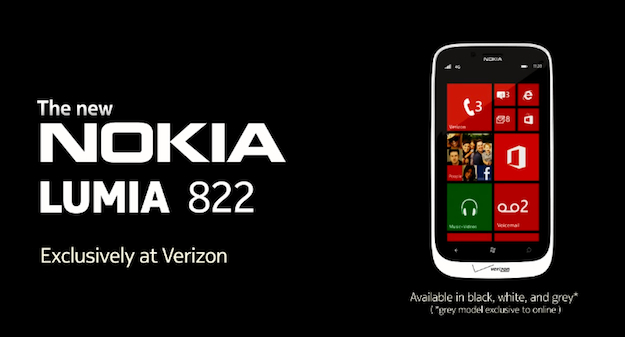
Verizon has welcomed Windows Phone back into the family with the announcement of the Nokia Lumia 822, an exclusive Windows Phone 8 device set to be released soon.
Verizon has announced the Nokia Lumia 822, a Windows Phone 8 handset exclusive to the network. The news comes a few hours ahead of Microsoft’s big Windows Phone 8 event, which will be held in San Francisco, where the last pieces of information regarding the new OS will be shared.
In the meantime, lets look at the Lumia 822. The screen measures 4.3-inches and hides behind a sheet of protective Gorilla Glass, and although no resolution is mentioned in the press release, it’s likely to be the same as the GSM Lumia 820, which stands at 480 x 800 pixels.
An 8-megapixel camera sits on the rear of the curvy device, complete with Carl Zeiss lens and 1080p video recording, while a 1.2-megapixel video call lens can be found above the screen around the front.
Nokia makes a point to emphasize all the applications it bundles with its Lumia phones, including Nokia Maps, Nokia Drive, City Lens and the recently launched Nokia Music. This music streaming service has been out in Europe for a while, and is particularly interesting due to there being no subscription charge and no streamed advertising either.
Other features include NFC, Bluetooth and a choice of black, white or an online exclusive grey color scheme, plus the chance to swap the rear cover for one that enables wireless charging.
The Lumia 822 will connect to Verizon’s 4G LTE network, but aside from all this there is a lack of information on the device’s finer technical points. That won’t stop us hazarding a guess though, as the 822 will probably share the same dual-core, 1.5GHz Snapdragon processor, 1GB of RAM and 8GB of internal memory as the Lumia 820.
All this is identical to the Lumia 810 too, which is exclusive to T-Mobile USA, while the Lumia 820 can only be found with AT&T. As they share the same spec sheet, the 810, 822 and 820 should really be considered network-exclusive designs, as the differences are all cosmetic.
The Lumia 822 is the first Windows Phone to hit Verizon since last year, when it carried the affordable Lumia 710, and confirms rumors dating back to August of the network’s plans to once again carry handsets running Microsoft’s mobile operating system. Verizon and Nokia have so far committed only to the Lumia 822’s “upcoming availability,” so we’d expect to hear more following Microsoft’s final big reveal later today.
Nokia's flagship Windows Phone 8 handset may be exclusive to AT&T for the first half year, but its Lumia 820 sibling is not - Nokia just announced the Lumia 822, Verizon's version of the device.
The phone comes fully loaded - it has the Nokia Drive+ offline navigation with US maps pre-installed, the City Lens and Transit apps and several camera apps (Smart Shoot, Cinemagraph, Panorama and Creative Studio).
The free, no-ads, no-log-in Nokia Music streaming service will be available on the phone too, to make use of that fast 4G LTE connectivity.
CDMA and LTE with Verizon bands aside, the Nokia Lumia 822 features the same specs as its GSM twin, including an 8MP camera with Carl Zeiss lens, 4.3" WVGA ClearBlack AMOLED display and dual-core Krait processor.
Different shells can be put on the back of the Lumia 822 to enhance its looks and functionality, including a shell that enables wireless charging.
Nokia considers Windows Phone 7 to be ideal for entry-level smartphones, bridging the gap between Symbian and Windows Phone 8, and has announced the competitively priced Lumia 510 to prove it.
Next month, phones running Windows Phone 8 should finally hit store shelves, following the official release of Microsoft’s new smartphone OS on October 29. Some may think this means the end of Windows Phone 7, the OS that preceded it, however Nokia thinks it still has legs and has announced a new phone to prove it.
The Lumia 510 is an entry-level phone using Windows Phone 7.5 as its operating system, and although its model number suggests it slips into Nokia’s range below the Lumia 610, the 510’s spec trumps it in one key area — the screen size.
Nokia has given the 510 a 4-inch display with the same 480 x 800 pixel resolution as the 610, although that device has a smaller 3.7-inch screen. The processor is listed as a Snapdragon S1, which could be the same MSM7227A chip found in the 610, where it runs at 800Mhz. Phonearena.com’s spec list indicates that this is indeed the case.
There’s 256MB of RAM, which will mean some apps won’t operate on the phone, 4GB of internal storage memory and 7GB of free cloud space with Microsoft’s SkyDrive. Mounted in the center of the colorful rear panel is a 5-megapixel camera, which can also shoot VGA video.
The spec list continues with GPS along with Nokia Maps and Nokia Drive, an FM radio, Bluetooth 2.1, Wi-Fi, a 3.5mm headphone socket and a 1300mAh battery.
Designed to sit in-between its Symbian smartphones and the latest Lumia 820 and Lumia 920 Windows Phone 8 handsets, the Lumia 510 is an affordable introduction to Microsoft’s still-growing OS.
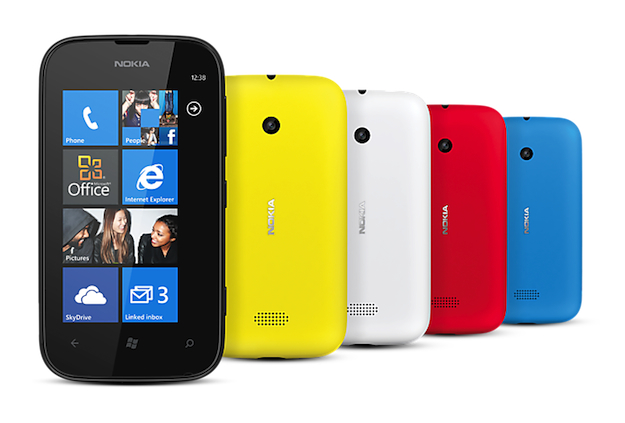
Nokia will initially release the phone in India and China during November, then bring it to South America and other countries soon afterwards. Available in white, black, red, yellow and cyan, Nokia has priced the Lumia 510 at $199.
It's time for the Nokia Lumia 510 to get out of hiding and step into the light - it's an entry-level Windows Phone smartphone, which has some pretty decent specs. Starting with a 4" WVGA TFT screen, the Lumia 510 takes the lead on the Lumia 610, which has a 3.7" screen.
The Lumia 510 also features a 5MP autofocus camera with VGA video recording (matching the 610). Camera geeks might also want to know that the camera has an f/2.4 aperture and wide angle 28mm focal length (in 35mm equiv.).
So far, so good. The Lumia 510 is powered by a Snapdragon S1 processor, though we still don't know the exact specs (it's more than likely it uses the same Cortex-A5 CPU as the 610).
The phone has only 256MB of RAM, which will probably limit app compatibility as we've seen with the Lumia 610. The internal storage is also limited - 4GB, non-expandable - which is another limitation to consider. Every Windows Phone comes with 7GB of free cloud storage on SkyDrive though this can be of little help when your internal storage fills up.
The Nokia Lumia 510 comes with Nokia's proprietary GPS-navigation apps Nokia Maps and Nokia Drive.
On the connectivity side, there's 2G and 3G with HSDPA, Wi-Fi b/g/n and Bluetooth 2.1.
There's no NFC on the Lumia 510, at least not on this model. The original 610 didn't have it at first too, but then Nokia launched the Orange-exclusive Lumia 610 NFC.
The Lumia 510 will run Windows Phone 7.5 at launch and will be updated to 7.8 as soon as it's ready.
Speaking of launch, the Nokia Lumia 510 will first go on sale in China and India in November, then move to the Asia-Pacific and South America. Nokia estimates the phone will cost $200 before taxes and subsidies.
At this price point, current Android smartphones will have a really hard time competing with the Lumia 510's winning combo of a 4-inch screen, 1GHz CPU, 5MP wide angle camera plus offline SatNav.
Nokia CEO Stephen Elop seems to be tempting fate, encouraging Microsoft to make a Surface phone of its own.
While Microsoft is launching the Surface tablet with Windows 8, the company has not announced any plans to make its own Windows Phone 8 handset.
Elop thinks it would be a good idea, not just for Microsoft, but for the whole Windows Phone 8 ecosystem.
"It's certainly a stimulant to the ecosystem," Elop told investors in a conference call.
"We're encouraging of HTC and Samsung and Microsoft or whomever to have devices in the market and to be making whatever investments that helps spur the ecosystem on," he continued.
Surface phone for 2013?
Microsoft may not have announced a Windows 8 smartphone, but recent rumors suggest a Surface-branded handset could still be on the way.
Such a move would fit the company's lead-by-example approach to hardware that it's taking by launching the Windows RT Surface tablet alongside competing OEMs.
However, if a Microsoft-made Windows 8 handset is coming, it will not arrive before the end of the year.
That leaves Nokia in a comfortable position with its own Lumia line of smartphones having a healthy head start over any potential Microsoft offering.
Nokia should not be too comfortable though, as it will still launch against the Huawei Ascend W1, Samsung Ativ S, and the flagship Windows Phone 8 HTC 8X.
But as Elop says, more competition is good for the Windows Phone 8 ecosystem as a whole, and with the launch coming soon the competition is about to ramp up.
Nokia's financial results for Q3 2012 are out and things are still looking grim for the Finns, which have reported an operating loss of $754 million.
If you recall, for each of the last three quarters Nokia had to report north of a $1 billion loss. That's why the company had to undertake some unpleasant jobcuts and we guess the results are starting to show up.
There's more bad news for Nokia, too, as the company only managed to push 76.6 million featurephones, from which the Asha lineup accounted for 6.5 million units. The really bad news is that Lumia sales have dropped to 2.9 million (from a total of 6.3 million smartphones shipped) compared to last quarter's 4 million. The Windows Phone 8 launch just couldn't come soon enough for the Finns, which are now facing a do or die situation.
The report also shows that Nokia Siemens Networks managed to make a profit of $238.5 million, managing to helping the company in these hard times of transition to Windows Phone. Speaking of that, Microsoft also chimed in with their $250 million cheque for the quarter.
Lastly, Nokia reports cash reserves of $4.66 billion, which doesn't compare particularly favorably to the $6.64 billion the company had in its pockets at the same point of last year. In the report, the company issued a warning towards investors that the upcoming Q4 quarter will still be bumpy. The reason, as Stephen Elop puts it is "product transitions and our ramp up plan for our new devices."
Nokia has announced another steep loss of €969 million (£786 million, US$1.2 billion, AU$1.2 billion) for the third quarter of 2012.
Revenue was down 19 per cent after the July to September period, thanks in part to a 22 per cent drop in sales of Symbian handsets, Nokia's traditional cash-cow.
Sales of its Lumia line-up for the three months, including the Nokia Lumia 900, came in at 2.9 million devices – that's quite a dip compared to the previous quarter during which it sold four million handsets.
Lumia line-up
This may be less dramatic than it sounds, though, as eager Nokia-loving beavers hold out for the Nokia Lumia 820 and Nokia Lumia 920 handsets that form the company's Windows Phone 8 line-up.
Both handsets were announced during the disastrous quarter, but won't go on sale until November 2012.
Stephen Elop remained his usual bullish self when announcing the results, commenting that, "Next year is going to be a very interesting year."
He sees the Lumia line as a "credible third alternative" to Android and iOS, which is a little harsh on its previous BFF Microsoft and the other Windows Phone manufacturers.
Nokia is no doubt still smarting after Microsoft chose HTC to produce its flagship Windows Phone 8 device in the shape of the HTC 8X.
Training videos meant for AT&T staff show us that the exclusivity rights to the Nokia's latest and greats - the Lumia 920 - will only go on for 6 months.
Exclusivity to certain hot smartphones can be a big thing for carriers, potentially driving sales through the roof. However, you won't see any of this year's flagships messing with carrier exclusivity, simply because no carrier can afford that.
Well, obviously Nokia wasn't expecting hot sales on the US market even for its Lumia 920, since they succumbed to another exclusive deal with US carrier AT&T.
Of course, we're merely guessing here. It might as well be that Nokia just didn't want to bother with making a CDMA version to fit Sprint's or Verizon's networks (though it already has a TD-SCDMA version for China).
Whatever the reason, Nokia has again bet on the same single US carrier to carry them on their second serious attempt at conquering the US market. If you remember, the Lumia 900 was an AT&T exclusive too. Unfortunately, reports show it didn't do too good, despite the major advertising campaign.
And back to today's news, this time around Nokia went for only a 6-month exclusivity period. This sounds like a nice step forward, but when we think about it... In 6 month's time, the Lumia 920 won't be anywhere as hot as today. These phones go out of fashion really quickly, with the product cycle being around a year now. So even if Nokia comes up with a CDMA version in six months, this would still leave the other carriers only with scrapes. So we doubt any of those would pick up the phone at all.
Essentially, in this case even a 6-month exclusivity deal means Americans are not much likely to enjoy the 920 on another carrier.
This is according to the (admittedly erratic) Digitimes, which cites 'industry sources' claiming HTC and Samsung will implement aggressive pricing strategies for their Windows Phone 8 devices as they look to undercut the Finnish firm - something that would at least give the platform a decent boost.
Currently Nokia is the manufacturer of choice when it comes to Windows Phone, thanks to its partnership with Microsoft, however that could be about to change as the software giant has selected the HTC Windows Phone 8X as its flagship device for the latest version of its mobile platform.
Good for Windows Phone
With prices set to be competitive in the Windows Phone 8 arena, this can only be a good thing for the new operating system, hopefully making it a more attractive option to consumers.
Apparently the HTC 8X will fall into the $500-600 (£310-370/AU$485-580) SIM-free bracket, while the sources say the Samsung Ativ S is likely to push closer to $700 (£430/AU$680), and Nokia's Lumia handsets are said to range from $600-800 (£370-495/AU$580-775).
A separate source suggests than the Huawei Ascend W1, the Chinese firm's first Windows Phone 8 device, could come in as low as $300-$350 (£185-215/AU$290-340), which may be perfect for people looking for a cheap Windows thrill.