Showing posts with label users. Show all posts

Monday, November 19, 2012

Windows Phone 7.8 could hit devices in a matter of days

Windows Phone 7.8 could hit devices in a matter of days
Soon, WP7 fans. Soon.

Nokia has let slip that Windows Phone 7.8 could be landing on users' handsets in just weeks, if not days, as the updated software has now been released to manufacturers.

The news comes from a developer seminar in Singapore, where the head of Nokia Asia Pacific Developer division let slip that the RTM had happened.

Reportedly, he told devs that the consumer roll-out would definitely happen before 2013, and added that WP7.8 won't be getting the swish new IE10 browser because the aging hardware can't support it.

Nearly but not quite

The not-quite-Windows Phone 8 software update will see Windows Phone 7 devices get some almost-WP8 updates like a revamped Start screen and Xbox Music, among other consolatory prizes.

We'd previously heard tell of a Windows Phone 7.8 release date following shortly after the Windows Phone 8 launch date (which was October 29), thanks to a post on the Italian Windows Phone Facebook page.

This was also backed up by a leak on a Chinese blog last week; so although nothing's for sure, all signs point to an imminent software treat for WP7 users.


Source : http://www.techradar.com/news/phone-and-communications/mobile-phones/windows-phone-7-8-could-hit-devices-in-a-matter-of-days-1113570

Wednesday, November 14, 2012

Facebook rolls out the share button to mobile users

Designed to encourage mobile users to share more types of content with their friends, Facebook is rolling out a new share button for the mobile interface.

Detailed by Techcrunch earlier today, Facebook has launched a share button on the mobile version of the social network and is planning to add sharing capabilities to both the iOS and Android applications at a later date. While the ability to share a particular article, video or picture is commonplace on the Web version of Facebook, mobile users can simply tap on the new share link in order to pass along an interesting piece of content to their friends. When a user brings up the mobile version of the social network, they will notice a new Share button to the right of the Like and Comment buttons. 

Tapping the new share button brings up an interface that allows the user to write a comment that goes along with the shared content. In addition, the user can isolate the post to a specific subset of their friends through groups or post it publicly in order to reach all subscribers.

Once the user is satisfied with the post, they confirm the sharing action by tapping the Share button in the top right corner of the screen. Alternatively, cancelling the post returns the user to the news feed. The new share button is only appearing within the News feed at this point. When visiting a personal page of a friend or a brand, the share button hasn’t been incorporated within the design yet.

The launch of the new sharing feature marks a trend in Facebook’s strategic approach to mobile. While the inclusion of the sharing button isn’t a technical achievement by any means, the priority of improving Facebook’s mobile interface is evident. According to Facebook’s third quarter results, the social network has approximately 600 million active mobile users each month. In addition, about 120 million of those active users check Facebook exclusively through a mobile device. The addition of the share button on the mobile version of the site could result in a spike in the amount of articles, videos and pictures that are shared each day. 

With the addition of the share button for mobile users, this brings Facebook more in line with social network competitor Twitter. On the web version of Twitter, users are encouraged to retweet posts and share them with friends. It will be interesting to see if mobile users on Facebook transition from the Like action to the Share action. Potentially,  it could significantly increase the amount of shared content people find in their News feeds each day and possibly drown out other status updates from friends and family.

However, it could be extremely helpful to brands and advertisers since the share action is more valuable when attempting to spread a particular piece of content. In a related story noted by The Next Web, Facebook is also rolling out a new feed that allows a user to view posts from brands and other pages into a completely separate feed. While posts from those pages will still appear within the News feed, users can visit this page in order to view recent updates only from liked pages.


Source : http://www.digitaltrends.com/mobile/facebook-share-button-on-mobile/

Google+ update lets users instantly install Android apps

Google has introduced a new feature that allows users to install Android apps shared via Google+ with a single click.

In an increasingly competitive social media ecosystem, Google has made a new addition to Google+ that could separate its social network from the rest. Google has integrated its online store and its social networking platform even more closely with a recently introduced feature. Google+ users can now post direct links to Android apps from the Google Play store on to a user’s timeline, making it easier to share games and applications.

Once the link has been posted, the recipient will be redirected to the app’s Google Play page. An install prompt will also appear to demonstrate how to download the app with a single click. Google+ automatically embeds an image and description of the app alongside the link. Similarly, When Google Play patrons +1 an app within the store, the app is automatically shared on Google+ but without the Install/Buy buttons.

This isn’t the first time the search engine giant has attempted to connect its Google Play store with Google+. The company previously added a function that allowed users to share their favorite music tracks and albums on another user’s profile, complete with 30-second previews. However, there has yet to be a feature that lets users instantly share movies via Google+.

As Google introduces new sharing features, it’s becoming clear that the company is attempting to facilitate the way users access media content through the Google Play store. Last week, Google announced that music and movies from its online store would be available on Google TV in Germany, France and the UK.

While the addition of instant app sharing may be a subtle update for Google+ it will undoubtedly streamline the way Android users recommend and share apps. It could also shape the way businesses and brands promote their mobile presence, giving Google+ a unique edge against competitors Facebook and Twitter.

Each social media platform has its own flavor when it comes to fulfilling business needs: Facebook gives brands the chance to showcase their product through a dedicated page and flashy cover photo, while Twitter lets businesses spark a conversation about their product among the Internet community. With Google+, users can now instantly download a company’s product. This could be particularly crucial for start-up businesses relying on social media to circulate their application.


Source : http://www.digitaltrends.com/mobile/google-update-lets-users-instantly-install-android-apps/

Barnes & Noble announces free Nook app for Windows 8

Microsoft and Barnes & Noble have teamed up to offer Windows 8 users a free Nook app for books, magazines, newspapers, and comics.

Readers with Windows 8 PCs have a new free option for enjoying their literature. Barnes & Noble’s subsidiary Nook Media announced the release of a Nook app for the Microsoft operating system. The free app holds all of your books, magazines, newspapers, and comics within an easy-to-use new interface specifically for PCs or tablets running Windows 8.

Like most of the programs available through the official Windows Store, the Nook app capitalizes on the distinguishing features of the OS for a unique new experience. The Live Tiles allow you to jump right back to your spot or see when a new issue of a subscription is available. You also have the option to pin a specific title to your start screen, making it faster to hop back and forth between books. The app contains a Nook Store, so you can purchase additional books without needing to navigate in and out of the program. Between the 3 million titles in the store and the tailored recommendations of the Nook Channels service, you should never be hurting for reading material. 

Another handy feature of the app is the new “paper” user interface, which is meant to offer an uncluttered, easy reading experience. The Nook app interface is also designed to make browsing among your titles easy with the touch capabilities of Windows 8 tablets. And of course, the Windows 8 app will sync with the Nook app across your other mobile devices through the Nook Cloud. That makes it easy to access your books from any computer at any time without missing a page. 

It’s been a busy month for Barnes & Noble, which recently dropped prices on two Nook models as it rolls out the new Nook HD. The Windows 8 Nook app is the first digital property to emerge from the partnership between the bookseller and Microsoft. It shows an understanding of how developers will likely take advantage of the Windows 8 start page, especially in terms of Live Tiles and pinning apps. These types of extra perks will probably become commonplace among the companies that are able to collaborate with Microsoft to create special Windows 8 versions of their programs.  


Source : http://www.digitaltrends.com/mobile/barnes-noble-announces-nook-app-for-windows-8/

RIM introduces BBM Voice to help convince you and your friends to come back to BlackBerry

BlackBerry BBM Voice

Research in Motion has added an interesting new feature to BlackBerry Messenger named BBM Voice, which lets you call fellow BBM users for free provided your phone is connected to a Wi-Fi network. It's a great idea, provided your friends also use BlackBerry phones.

Research in Motion knows it needs to win back the general public’s support, and it also knows that one way to do so is by coming up with a feature that will save someone money. BlackBerry Messenger was that feature several years ago, as it made use of the BlackBerry network plan you had to pay for anyway, and provided “free” text message conversation with fellow BlackBerry owners.

Now though, a high percentage of the dedicated BlackBerry owner’s friends use iPhones and Androids, rendering BBM a relic from better days past. Now RIM has come up with BBM Voice, which it claims is “for the times when you want to hear a friend’s laughter instead of reading LOL.”

That’s right, BBM has become Skype, as it now offers the chance to call your BBM friends through version 7 of the software, using only a Wi-Fi connection. There are no geographical borders and no time limits, and as it doesn’t count towards your monthly bill, no extra charges either.

RIM makes no mention of whether BBM Voice will break free from a Wi-Fi connection and use a 3G/4G data connection in the future. It’s hardly a surprise, as networks – particularly in the U.S. – are rarely enamored by features that lose them money.

BlackBerry Messenger will show who in your contact list is available to call using BBM Voice, and a split screen display lets you send text messages or files at the same time, plus the service is compatible with Bluetooth headsets too; setting it up perfectly as a way to work collaboratively while away from the office. Those not using a BlackBerry for business will appreciate the chance to avoid massive international roaming bills too.

So, free messages and free calls, all through a single app. Sounds great, right? It is, but – and here’s the problem – to take advantage of BBM Voice, your friends and colleagues all have to have BlackBerry phones too, and as we’ve established already, they’re now using iPhones and Androids.

BBM Voice is a beta program at the moment, but you can bet it will have been perfected by the time BlackBerry 10 arrives after January 30 next year, as being able to say “free calls and messages with BlackBerry 10” should help people take notice of the new OS. All RIM needs is for those people to convince their friends/family/acquaintances/dog it’s a good idea too.


Source : http://www.digitaltrends.com/mobile/rim-adds-free-calls-to-blackberry-messenger-with-bbm-voice/

Friday, November 9, 2012

Google now considers itself a 'mobile first' company as YouTube soars

Google now considers itself a 'mobile first' company as YouTube soars
You don't need to be at your desktop to need an answer

Google is officially labeling itself a "mobile first" company, predicting that most of its users will access its products via smartphones and tablets in 2013.

This shift away from being a desktop search engine was revealed by Google executives at the 2012 Open Mobile Summit in San Francisco, and picked up by Business Insider.

The idea is actually nothing new.

A Google spokesperson told TechRadar that "the mobile first strategy was actually first laid out by Eric Schmidt years ago."

It's only now that the former Google CEO and current chairman's strategy is coming to fruition on the users' end.

In 2012, Google users' mobile searches have increased 200 percent to-date, paving the way to a mobile majority by next year.

YouTube's strong mobile growth

The Google executives' belief that mobile will be the primary way people access the site by next year is only one interesting mobile-focused statistic publicized at the event.

YouTube, it turns out, received 25 percent of traffic and 40 percent of views from mobile devices in 2012. That's a 300 percent increase for this year.

A Google executive also predicted that YouTube's mobile traffic could surpass 50 percent soon, as it has already in Korea. Too much Gangnam Style?

Mobile software via Android hardware

Google's mobile focus isn't a surprise considering the company's business model is heavily invested in its Android operating system.

A separate prediction for 2013, this one by Schmidt, pegged Android's lifetime activations surpassing one one billion.

Google's dominance is expected to continue according to technology research firm Gartner.

By 2016, Android smartphones are estimated to account for 56 percent of the market in North America and Europe.

Having pre-loaded Google software in Android devices doesn't hurt your "mobile first" strategy when you're the market leader.


Source : http://www.techradar.com/news/internet/web/google-now-considers-itself-a-mobile-first-company-as-youtube-soars-1111545

Google now considers itself a 'mobile first' company

Google now considers itself a 'mobile first' company
You don't need to be at your desktop to need an answer

Google is officially labeling itself a "mobile first" company, predicting that most of its users will access its products via smartphones and tablets in 2013.

This shift away from being a desktop search engine was revealed by Google executives at the 2012 Open Mobile Summit in San Francisco, and picked up by Business Insider.

The idea is actually nothing new.

A Google spokesperson told TechRadar that "the mobile first strategy was actually first laid out by Eric Schmidt years ago."

It's only now that the former Google CEO and current chairman's strategy is coming to fruition on the users' end.

In 2012, Google users' mobile searches have increased 200 percent to-date, paving the way to a mobile majority by next year.

YouTube's strong mobile growth

The Google executives' belief that mobile will be the primary way people access the site by next year is only one interesting mobile-focused statistic publicized at the event.

YouTube, it turns out, received 25 percent of traffic and 40 percent of views from mobile devices in 2012. That's a 300 percent increase for this year.

A Google executive also predicted that YouTube's mobile traffic could surpass 50 percent soon, as it has already in Korea. Too much Gangnam Style?

Mobile software via Android hardware

Google's mobile focus isn't a surprise considering the company's business model is heavily invested in its Android operating system.

A separate prediction for 2013, this one by Schmidt, pegged Android's lifetime activations surpassing one one billion.

Google's dominance is expected to continue according to technology research firm Gartner.

By 2016, Android smartphones are estimated to account for 56 percent of the market in North America and Europe.

Having pre-loaded Google software in Android devices doesn't hurt your "mobile first" strategy when you're the market leader.


Source : http://www.techradar.com/news/internet/web/google-considers-itself-a-mobile-first-company-as-youtube-soars-1111545

Google now considers itself a 'mobile first' company

Google now considers itself a 'mobile first' company
You don't need to be at your desktop to need an answer

Google is officially labeling itself a “mobile first” company, predicting that most of its users will access its products via smartphones and tablets in 2013.

This shift away from being a desktop search engine was revealed by Google executives at the 2012 Open Mobile Summit in San Francisco, and picked up by Business Insider.

A Google spokesperson told TechRadar that “the mobile first strategy was actually first laid out by Eric Schmidt years ago.”

It’s only now that the former Google CEO and current chairman’s strategy is coming to fruition on the users’ end.

In 2012, Google users’ mobile searches have increased 200 percent to-date, paving the way to a mobile majority by next year.

YouTube’s strong mobile growth

The Google executives’ belief that mobile will be the primary way people access the site by next year is only one interesting mobile-focused statistic publicized at the event.

YouTube was revealed to have received 25 percent of traffic and 40 percent of views from mobile devices in 2012. That’s a 300 percent increase for this year.

A Google executive also predicted that YouTube’s mobile traffic could surpass 50 percent soon, as it has already in Korea. Too much Gangnam Style?

Mobile software via Android hardware

Google’s mobile focus isn’t a surprise considering the company’s business model is heavily invested in its Android operating system.

A separate prediction for 2013, this one by Schmidt, pegged Android’s lifetime activations surpassing 1 billion.

Google’s dominance is expected to continue according to technology research firm Gartner.

By 2016, Android smartphones are estimated to account for 56 percent of the market in North America and Europe.

Having pre-loaded Google software in Android devices doesn’t hurt your “mobile first” strategy when you’re the market leader.


Source : http://www.techradar.com/news/internet/web/google-now-considers-itself-a-mobile-first-company-1111545

Wednesday, November 7, 2012

Black HTC One S finally lands on T-Mobile US’s shelves

HTC One S has been on sale on T-Mobile for months now, but (unfortunately) the black colored version hasn't been available across the Atlantic until today. Potential users will finally be able to pick up the device in black with red accents.

In order to please the overly patient, the Big Magenta currently offers the black version of the HTC One S for free after a mail-in rebate. In case you order it today, the carrier will also throw in a free case for you.

The HTC One S is powered by a dual-core Qualcomm Snapdragon S4 chipset, so it is quite snappy by today’s standards. With the device currently being offered for free, we do believe it makes for quite a sweet an upgrade for both first-time and experienced users.

Source | Via


Source : http://www.gsmarena.com/black_htc_one_s_finally_lands_on_tmobile_uss_shelves-news-5054.php

Monday, November 5, 2012

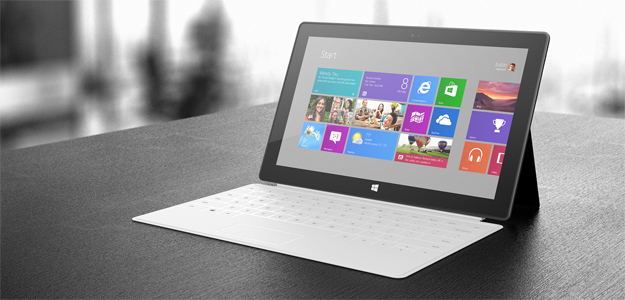
What! Windows RT hogs 16GB of Microsoft’s 32GB Surface tablet

surface rt tablet microsoft

We originally thought Microsoft was being generous with 32GB storage standard for the Surface RT, but it turns out only 16GB of that is available to users. The rest of the storage is taken up by Windows RT and Microsoft Office.

If you thought a $500 Microsoft Surface RT with 32GB of storage was too good to be true (compared to the iPad’s 16GB for the same price) then we’re here to say you’re right. If that was your dream then you may want to start amassing memory cards because Microsoft had to use half of that 32GB for Windows RT, Microsoft Office, and other software.

Microsoft broke the news in a new post titled, “Surface disk space FAQ”, outlining exactly how much space on the Surface RT is available for apps, music, videos, and photos. According to the FAQ, the 32GB version has 16GB of free space and the 64GB version will have 46GB free. We are hoping this isn’t a universal issue for all Windows RT devices, but keep it in mind next time you read about a Windows RT device with an attractive storage size.

Another part of the FAQ explains that 32GB is actually 29GB when using it in the real world. Silly us for trusting the quoted storage sizes. Here’s the official explanation:

The advertised local disk size is shown using the decimal system, while Windows displays the disk size using the binary system. As a result, 1 GB (in decimal) appears as about 0.93 GB (in binary). The storage capacity is the same, it’s just shown differently depending on the how you measure a GB (decimal or binary).

At least Microsoft was kind enough to feature expandable memory through microSD cards that can hold up to 64GB of extra data. There’s also a standard USB port if you are in need of something in the terabyte range for a massive media collection.

Still, Microsoft routinely boasts that the Surface has double 16GB of storage when only 16GB is available to users. Windows RT has enough uncertainty surrounding it with its basically useless classic desktop and nearly empty app store. It doesn’t need this storage drama added to the mix. The Microsoft engineer quoted last month saying Surface RT users would have 20GB of space available only makes things more uneasy.

With iOS and Android optimized for mobile storage sizes, we kind of expected Windows RT to be relatively svelte in terms of gigabytes. It wouldn’t be surprising if Microsoft addressed the size of Windows RT in a future update. Perhaps it will prune it down as time passes and eventually — fingers crossed — phase out the legacy features and classic desktop altogether.

What do you think of Microsoft’s misstep? Is expandable memory enough to make up for less internal storage?


Source : http://www.digitaltrends.com/mobile/windows-rt-hogs-16gb-of-32gb-microsoft-surface/

Friday, November 2, 2012

Hands On: Amazon wants you to trust it with your photos

Amazon's cloud storage service for photos isn't just for Kindle HD users anymore. The company made its Cloud Drive Photos app available for most Android devices today. Signing in with your Amazon account will net you 5GB of free space for your pictures.

Android phone and tablet users have yet another option for cloud-based storage, though this time it’s specifically for photos. Amazon has made its Cloud Drive Photos app, which is already integrated into the Kindle Fire HD, available on most Android devices. This app looks like a service that will serve constant photo-snappers quite well.

The app initially asks for users to sign in using an Amazon account. You’re going to want to sign up for an account if you don’t already have one, because this app is completely useless if you don’t. The point of a cloud drive service is to save space, not take it up. Once you’re signed in, you’ll be greeted with the app’s home screen, or the “Cloud” tab. This simply explains to you how to access your drive online and add content from your computer that can then be viewed on your phone or tablet.

There is a second tab atop the display in this app called “Photos.” This is where you will actually be able to see the photo content that is currently saved on your device. Your camera roll, screen captures, Draw Something drawings, Instagram images, and all other photographic data is displayed. These are displayed by category, which can then be explored to see what each album holds. Pressing and holding on an album or an individual picture will allow you to manage the selection, prompting you to either remove it from the device or upload it to the cloud. These are very contrary choices, so make sure you select the one you want. The app also doesn’t appear to automatically sync and there is no option to do so in the settings, so you’ll have to manually update your sync after every snapshot, making this app annoyingly out of date compared to options from Google+ and others. 

All users of Amazon’s Cloud Drive Photos get 5GB of free storage. That can be upgraded to 20GB of space for $10 a year. Everything you upload is accessible right from your Amazon account, making it easy to manage from your phone or your computer. The app isn’t exactly feature rich, but it does the job it claims. An auto-sync feature would be nice, but it looks like we’ll have to wait until the next update to see if it’s there.

you can download the Amazon Cloud Drive Photos app on the Google Play store or Amazon’s Appstore.


Source : http://www.digitaltrends.com/mobile/hands-on-amazon-wants-you-to-trust-it-with-your-photos/

Thursday, November 1, 2012

Apple issues iOS 6.0.1 update, fixes mainly iPhone 5 issues

Today Apple released a minor update for its iOS 6 mobile platform. This is the first OTA update to come since iOS 6 was seeded to users and it comes to fix an issue with horizontal lines over the keyboard of the iPhone 5, camera flash issues, Wi-Fi reliability and more.

The update is available over the air and through iTunes as we speak. We installed it, but we are yet to sport any major differences in the user experience. Drop us a line in the comments section if you've noticed anything worth mentioning.


Here is the full changelog from Apple:

  • Fixes a bug that prevents iPhone 5 from installing software updates wirelessly over the air.
  • Fixes a bug where horizontal lines may be displayed across the keyboard.
  • Fixes an issue that could cause camera flash to not go off.
  • Improves reliability of iPhone 5 and iPod touch (5th generation) when connected to encrypted WPA2 Wi-Fi networks.
  • Resolves an issue that prevents iPhone from using the cellular network in some instances.
  • Consolidated the Use Cellular Data switch for iTunes Match.
  • Fixes a Passcode Lock bug which sometimes allowed access to Passbook pass details from lock screen.
  • Fixes a bug affecting Exchange meetings.

Apple is said to be working on a larger-scale update of iOS 6, which should arrive some time after the holiday season.

Via


Source : http://www.gsmarena.com/apple_issues_ios_601_update_fixes_mainly_iphone_5_issues-news-5032.php

How future phone screens will be viewable in the brightest sunlight

How future phone screens will be viewable in the brightest sunlight
Assertive Display technology ensures brighter screens outdoors

In an era of increasingly sophisticated mobile technology, it's tempting to assume that smartphones and tablets provide users with a wealth of content wherever they want it.

But achieving a great multimedia viewing experience in bright light, particularly in sunlight, has been an ongoing problem for the consumer electronics industry.

As anyone who has ever tried to play an immersive game or watch a movie on a phone in bright sunlight knows, the subsequent glare and lack of highlight and shadow makes for a fairly dismal viewing experience.

Assertive Display technology explained

But all this could be about to change. At IFA 2013 in Berlin, London-based company Apical unveiled an intelligent digital processing technology called Assertive Display, which offers radically improved resolution in bright light, and a dramatically reduced power consumption.

Watch movies in bright light

The technology has already been rolled out in Japan, where it features in devices such as Sharp's new smartphone, the Aquos SH-01D. According to Apical CEO Michael Tusch, Assertive Display will transform the mobile viewing experience of gamers and movie viewers alike.

"The whole point of these mobile devices is that we should be able to use them wherever we are," he says. "But unless you're in a dark room, your experience is heavily compromised. If you were a first person shooter game addict, for example, nobody would play that on anything other than a bright screen in a fairly dark room.

"It's the same story with movies. Ideally, you need the 5000-to-1 contrast ratio of a TV to show a movie. An iPad can do 1000-to-1, but if you went outside that would diminish severely, to 20-to1.

"And it's not just in sunlight, it's the same if you're just sitting in a room with windows or with bright lighting. Your multimedia experience is being degraded, and we can avoid that."

YouTube : http://youtu.be/caEPq4KvTTA?t=35m8s

How it works

Most mobile device manufacturers rely on adjusting screen brightness to improve viewing experience. But this is ineffective and the biggest drain on battery power.

Instead, Assertive Display works by adapting the contrast ratio, adjusting each pixel of the video stream in real-time, with very short latency so that you don't notice.

The technology is based on a model of how the human eye works, tuning the pixels so that you can view a movie or play an immersive game in bright light without killing the battery.

Assertive Display technology explained
Assertive Display off
Assertive Display technology explained
Assertive Display on

The result is a radically improved viewing experience with dramatically reduced power consumption (up to 50%) due to the fact that you no longer require maximum brightness of the backlight to view content.

"The thing to remember is we're not changing the brightness or the power of this display at all," stresses Tusch, "we're just tuning the pixels to adjust the contrast ratio."

Of course, mobile device manufacturers have tried to solve this problem themselves, spending colossal amounts of money on achieving strong blacks on displays, putting anti-reflection coatings on screens, making them brighter and more power efficient.

Assertive Display technology explained
Assertive Display off
Assertive Display technology explained
Assertive Display on

"But actually, that's pretty much working in the margins," says Tusch. "What we're simulating here is a display that has 100 times higher contrast than we really have. And we're doing it via video processing, as opposed to controlling the display power.

The whole aim of Assertive Display is to adjust the contrast ratio without you ever noticing. Viewing conditions are monitored via the tiny light sensors on mobile devices and the pixels are tuned accordingly.

There is no slider or button to control Assertive Display. It's always on, continuously reading the viewing conditions and controlling the contrast ratio automatically.

When can we buy it?

Smartphones and tablets featuring Assertive Display technology will be available in the UK by autumn 2013, according to Tusch. While he refuses to divulge which manufacturers will ship products with this technology, it seems clear that it will encompass Apple and Android devices.

One of the major challenges for Apical is overcoming the slow cycle from the design stage through to market. This is due to the complexities of having numerous parties licensing their technologies on the same 'real estate' of the processing chip.

To overcome this hurdle, Apical is seeking to run Assertive Display as software, so that each successive generation of the technology can be delivered as a firmware update or a software upgrade.

Assertive Display technology explained
Assertive Display off
Assertive Display technology explained
Assertive Display on

To help achieve this, Apical recently joined the HSA Foundation, an increasingly powerful alliance of manufacturers whose membership includes Samsung.

The industry response to Assertive Display so far has been unanimously positive, says Michael Tusch. Most of the major smartphone and tablet makers have seen the technology.

"Just about every company that has seen it has liked it and wanted it," he says. "It's had that real 'wow factor'."

Unique to Apical

This is not that surprising, considering that Apical appears to be the first company in the world to have cracked the problem of viewing multimedia content in bright light on mobile devices.

This was a point highlighted at the conclusion of Tusch's IFA presentation in Berlin, by Phil Rogers, president of the HSA Foundation.

"I know you're a fairly modest chap," he told Tusch on the keynote stage. "But I just hope people realise that for any colour display today to be viewable in bright light, it has Apical technology. And no one else has solved this have they?"

"Well it's a problem that can't be solved by display alone," replied Tusch. "We've got a solution and it works. So yes, I think you're right."


Source : http://www.techradar.com/news/phone-and-communications/mobile-phones/how-future-phone-screens-will-be-viewable-in-the-brightest-sunlight-1105655

Monday, October 29, 2012

Google Play Music unveiled with iTunes beating Scan and Match feature

Google Play Music unveiled with iTunes beating Scan and Match feature
Google Play Music enables sharing with friends via Google Plus

Google has beaten its cloud rivals to the music punch by allowing users to store all their tunes digitally…and for free.

The new Google Play Music service, which comes to Europe on 13 November, will feature a Scan and Match option that will scan your library and save it to the cloud – making them all accessible from any Google device.

While the likes of Amazon and Apple will charge you £21.99 a year (or only let you upload 250 songs for free) Google Play Music will allow up to 20,000 songs stored online, and can be played back on any internet-connected device at up to 320Kbps quality.

Play, collaborate and listen

The new Google Play Music platform will allow users in Europe to purchase and download music for the first time, and will also enable sharing to your friends via Google Plus.

These 'social recommendations' will allow you to share the song with unlimited people and they'll be able to listen to it once before being given the option to buy it, too.

And the big news for unsigned artists is they'll also be able to get their wares up on Google Play Music, as well - joining the other big names like iTunes and Amazon in being able to share their sounds.

The Google Play Music release date has been set for 13 November, when the likes of the Google Nexus 4 and Google Nexus 10 go on sale, freshly baked with Android 4.2 from the outset. There's no work on the cost per track as yet, but it's unlikely to be overly expensive given how much the average cost of each song is for the US version of the portal.


Source : http://www.techradar.com/news/mobile-phones/phone-and-communications/web/internet/google-play-music-unveiled-with-itunes-beating-scan-and-match-feature-1108451

Wednesday, October 24, 2012

How can the EU accuse Microsoft of stifling competition, but Apple gets a pass?

How can the EU accuse Microsoft of stifling competition, but Apple gets a pass?

Microsoft may be on the hook for up to $7.4 billion thanks to a glitch that stopped offering users a choice over which browser to use, but how come an increasingly dominant Apple has escaped antitrust allegations?

Guess what? Microsoft is the baddie again.

The European Commission has accused Microsoft of ignoring its legal obligations under a 2009 antitrust settlement agreement by failing to offer European users a “browser ballot.” The ballot is supposed to inform European computer users of multiple Web browsers available for the Windows platform and enable them to set a default browser that’s not Internet Explorer. But from February 2011 to July 2012, millions of European users probably did not see the required ballot, meaning Microsoft could potentially be on the hook for many billions of dollars.

What’s the big deal here? Surely most computer users are aware they can download and install any browser they like on their PC? And why is Microsoft required to present a browser ballot and un-bundle Internet Explorer, but Apple can bake its Safari browser (and WebKit) deep into both iOS and OS X without any government scrutiny? What does any of this mean for Microsoft’s tablet-centric Windows RT?

EU browser ballot

EU Browser Ballot

Windows users in Europe have been confronted with a browser choice ballot since 2009 as part of the Microsoft broader antitrust settlement with the European Union. Among other things, Microsoft was accused of abusing Window’s dominant status in the desktop operating system market to give Internet Explorer a major advantage in the browser wars. Microsoft argued bundling IE with Windows was just innovation, and it was no longer meaningful to think of Internet Explorer and Windows as separate things, but European authorities disagreed. Microsoft was required to let PC makers pre-install and ship any browser they liked with Windows (although most stuck with IE), let users uninstall IE if they liked, and offer Windows users a ballot with a choice between a wide variety of other browsers they can download and install. The browser ballot does include IE, but presents browsers randomly to avoid fights over placement. The settlement agreement requires the ballot to be offered through 2014.

Just one problem: When Microsoft released Windows 7 Service Pack 1 in February 2011, Windows stopped showing the browser ballot to many European users. Microsoft has admitted that the browser choice ballot was not displayed, blaming the trouble on a technical error that it corrected within a single business day of hearing about the problem. (However, Microsoft somehow avoided hearing about the problem for almost 18 months.) Microsoft estimated some 28 million Windows 7 PCs that should have seen the browser ballot did not, but the glitch also impacted an unstated number of systems running versions of Windows XP and Vista.

The browser ballot wasn’t the full scope of Microsoft’s settlement with the European Union, and has generally been derided as a weak solution to the larger issue of Microsoft stifling browser competition by bundling Internet Explorer with Windows. However, it is the most public example of changes Microsoft has had to make to avoid antitrust scrutiny, and it may have had an impact: according to StatCounter, Internet Explorer has been eclipsed by both Firefox and Google Chrome in Europe since the browser ballot went into effect.

Microsoft’s settlement with the EU is legally binding. If Microsoft is found to have violated the terms of that settlement, the company could be on the hook for as much as 10 percent of its global annual revenue. For Microsoft’s 2012 fiscal year, that would total up to almost $7.4 billion. The EU could also decide to impose additional requirements on how Microsoft operates within the European Union. For Microsoft, the stakes are high. Microsoft has four weeks to respond and can request an oral hearing. However, the EU will almost certainly see calls to give Microsoft more than a slap on the wrist.

“If companies enter into commitments, they must do what they have committed to do or face the consequences,” noted European Commission President Joaquín Almunia, in a statement. “Companies should be deterred from any temptation to renege on their promises or even to neglect their duties.”

What about Apple?

Whenever we cover news about Microsoft’s legal obligations and what regulatory agencies like the Justice Department and the European Commission have to say about Windows, Internet Explorer, Windows Media Player, and other products, we always get questions about Apple. Why doesn’t Apple have to serve up a browser ballot in OS X? How can Apple bake its Safari browser into iOS (and make it perform better than any third-party browser) without antitrust authorities crying foul? Basically: Why does Microsoft get a hard time while Apple gets a free ride?

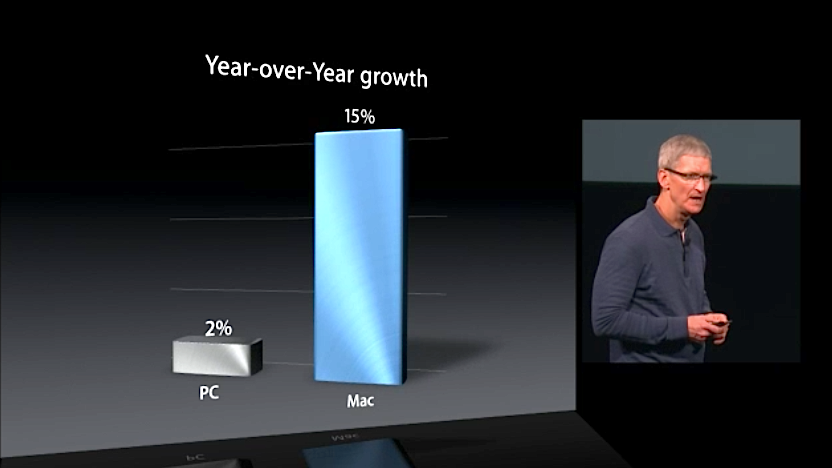
Apple CEO Tim Cook Mac Market Growth Oct 2012

It’s easy to understand why folks ask these questions. After all, at Apple’s high-profile media event yesterday, Apple CEO Tim Cook lauded Apple’s performance in the PC market, noting that Apple not only makes the number one desktop and notebook computers in the U.S. market, but also is seeing its computer business grow about seven times faster than the rest of the PC industry — where the PC world will be lucky to see 2 percent growth for 2012, Apple is looking at 15 percent.

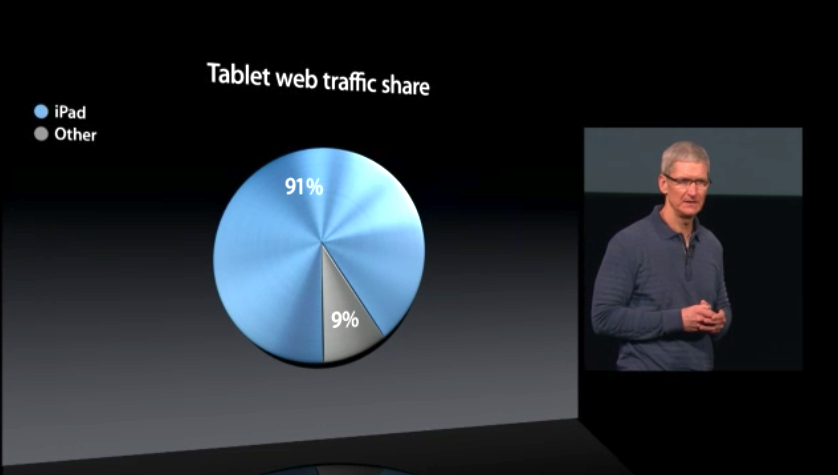
Apple CEO Tim Cook Tablet Web Traffic Oct 2012

And what about Apple’s dominance in other markets? Firms like ABI Research and IHS iSuppli put the iPad’s share of the tablet market at nearly 70 percent for the second quarter of 2012. And since the EU is so concerned about Web browsers, Apple’s CEO Tim Cook trumpeted that iPads are responsible for more than 90 percent of Web browsing traffic from tablets. Why aren’t regulators crying foul over Apple baking Safari so deeply into iOS? Apple even makes it more difficult for third-party iOS browser to compete by consistently rating competing browsers 17+ in the App Store and barring them from using the souped-up Nitro JavaScript engine Safari relies on.

Isn’t Apple’s curated approach to Macs and the iOS ecosystem just another way of saying Apple locks out competition?

Why Apple isn’t getting scrutiny

The reasons Apple skates clear of antitrust scrutiny for its Mac and iOS lines have to do with market share and how the company conducts business.

On the desktop and notebook computer side, Apple may be seeing its computer business grow at a faster rate than the overall PC market, but Apple is not a dominant player. Recent figures from IDC and Gartner don’t even put Apple in the top five PC makers worldwide, and Gartner places Apple third in the U.S. market with a 13.6 percent share. Apple may have the number one desktop and notebook computers in the U.S. market, but it shipped fewer than half the number of computers as HP. What’s more, these figures represent near-historic highs for Apple; it’s tough to argue Apple has somehow been abusing a dominant position in the PC market and needs to be reined in by governments. Moreover, since Apple doesn’t license its operating system, Apple’s computer sales are also representative of OS X’s share of the desktop market. The vast majority of all computers sold from other manufacturers are running Windows — so Microsoft remains the dominant player in the operating systems market.

On the mobile side, the success of the iPhone and the iPad means Apple has a much stronger presence…but guess what? Apple isn’t the market leader in mobile either — that’s Android. According to IDC, in the second quarter of 2012 Android accounted for 68.1 percent of the worldwide smartphone market; Kantar Worldpanel Comtech recently found Android accounted for more than 60 percent of the global smartphone market, and two-thirds of the European mobile market. The iPad does currently account for 70 percent of the tablet market, but remember the iPad got there first, and the market is new enough that being first still carries weight. Amazon, Google, and Samsung are all aggressively marketing Android-based tablets, and Microsoft is about to enter the market with its Surface products.

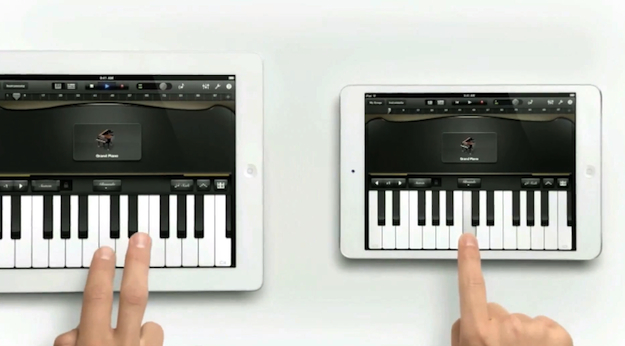
iPad mini ad

But even if the iPad continues to be the dominant tablet line for years to come — and regulators eventually decide smartphones and tablets are separate markets — Apple likely will still not be subject to the kind of antitrust scrutiny visited on Microsoft over the years. Microsoft drew the ire of regulators not just for having a dominant position in the desktop operating system market (that’s not illegal, and neither is a monopoly), but for abusing that position. Among other things, Microsoft cut deals with computer makers to dictate what software could and could not be included on new systems, fiddled with its APIs so Internet Explorer and other Microsoft applications would have an inherent advantage over competitors, and used its Windows monopoly as a distribution channel for Internet Explorer with the intention of wiping out competitors like Netscape.

With one possible exception, Apple isn’t capable of committing these abuses. Apple doesn’t license its operating system, so it can’t strong arm partners who make iOS devices — there aren’t any. Similarly, with Android the dominant mobile operating system, it’s difficult to argue Apple deciding to bundle capabilities into iOS — like Photo Stream and iCloud, for instance — constitutes an abuse. Competitors can (and are) offering similar services for iOS (Dropbox, Instagram, anyone?) and are free to develop for Android, Windows Phone, Windows RT, or even BlackBerry or Symbian if they like.

The one antitrust concern in iOS might be the built-in Safari Web browser. Apple does permit third-party browsers for iOS — Google Chrome Opera Mini, Atomic, Dolphin, and (heck!) iCab are available for iPhone and iPad, although Mozilla recently “retired” Firefox Home. But Safari outperforms the competition by being able to tap into the high-performance just-in-time (JIT) compiler in the Nitro Javascript engine. Although Web apps got the same capability in iOS 5, third-party Web browsers have to rely on a slower JavaScript engine or (in Opera’s case) outsource Javascript to a remote service. Apple also won’t approve a browser that includes a JIT compiler of its own. Apple claims these restrictions are all about security — iOS is more secure than Windows, OS X, and Android in this regard — and Apple gives Safari a pass because Apple can perform rigorous QA on it as part of iOS. However, is does mean that Safari has an inherent advantage on iOS that competitors can’t match. That’s eerily reminiscent of the API adjustments Microsoft made to favor Internet Explorer on Windows.

What might happen to Microsoft?

Steve Ballmer Microsoft

Although Microsoft is undoubtedly in hot water for breaking the browser ballots (and thus the terms of its settlement with the European Commission), few expect the company will be on the hook for billions of dollars over the issue.

Microsoft doesn’t seem to be slithering out of its mistake. “Although this was the result of a technical error, we take responsibility for what happened, and we are strengthening our internal procedures to help ensure something like this cannot happen again,” the company said in a statement. Microsoft has suggested it be required to display the browser choice ballot for an additional 15 months, which would mean European Windows users would see a browser choice screen through at least 2015. The European Commission hasn’t commented on that suggestion, or any possible sanctions against Microsoft.

Looking forward, Microsoft might face difficulties with Windows RT. When Microsoft ships its ARM operating system this week, it will support one and only one Web browser: Internet Explorer 10. Microsoft is denying third-party developers access to components that would be necessary to create a competitive browser on the platform: not just a JIT Javascript compiler, but lots of other internals that just aren’t accessible to Windows RT apps. Microsoft’s reasons for this decision are very similar to Apple’s reasons for denying access to the Nitro engine: stability and security.

However, Microsoft is also unlikely to see any antitrust action over browsers in Windows RT — at least, not anytime soon. Right now, Windows RT accounts for essentially zero percent of the mobile or tablet market, so Microsoft can’t possibly be abusing a dominant position. Competitors might argue Microsoft’s existing antitrust settlements in the United States and the European Union should be extended to Windows RT, but that’s also difficult. In the United States, federal oversight of Microsoft formally concluded in mid-2011. Oversight in the EU is still ongoing — hence the scuffle over the browser ballot — and terms of the settlement could conceivably be applied to ARM-based devices running Windows RT. However, regulators will probably wait to see if Windows RT goes anywhere. After all, Windows Phone has been out for two years, and nobody is worried about Microsoft abusing its monopoly power there.


Source : http://www.digitaltrends.com/mobile/how-can-the-eu-come-after-microsoft-for-anticompetiveness-but-apple-gets-a-pass/

Friday, October 19, 2012

Facebook to host Nov. 1 Gifts event at FAO Schwarz in New York City

Facebook to host Nov. 1 Gifts event at FAO Schwarz in New York City
Zucks probably won't wear the outfit (credit: FAO Shwarz)

Facebook new and improved Gifts has rolled out to a small number of users so far, but that's likely to change at the top of next month, when the social network site holds a Gift-focused event in New York City.

Facebook's press event is scheduled to take place on Nov. 1 in the home of high-end toys, FAO Schwarz.

Yes, that's the same Fifth Avenue retailer at which Tom Hanks danced to songs on a giant floor piano.

While there's no word as to whether or not Mark Zuckerberg will perform "Heart & Soul" and "Chopsticks" on the famous keyboard, the Facebook CEO should go into great detail about the new physical gift-giving program.

Ho-ho-ho

Facebook Gifts is expected to get a big push ahead of the holidays, as it's seen as a new way for the company to make money on mobile platforms (we've never written that sentence before).

More than half of its traffic accesses the site from mobile's hard-to-advertise-on screens.

Partners like Starbucks, Happy Socks, The Honest Company and Cheryl's Cookies by 1800 Flowers are also hoping to benefit from the new giving-and-receiving initiative and the now-one billion users who populate Facebook.

Facebook 'Questions' will go unanswered

With the advent of one new product comes with the demise of another: Facebook Questions for users.

A Facebook representative confirmed to TechRadar that the company is retiring its user-based questions-and-answers feature to "focus efforts elsewhere."

"Pages and Groups will still be able to ask Questions," noted the Facebook representative. "People will also still have access to their old questions via timeline."

This comes at a time when there are more than a dozen question and answer competitors out there.

The most notable rival is Quora, which, interestingly, was started by two former Facebook employees, Adam D'Angelo and Charlie Cheever.


Source : http://www.techradar.com/news/internet/web/facebook-to-host-nov-1-gifts-event-at-fao-schwarz-in-new-york-city-1105791

Wednesday, October 17, 2012

Report claims iPhone 5 already accounts for 3% of web traffic

Report claims iPhone 5 already accounts for 3% of web traffic
The iPhone 5 already accounts for 3% of mobile web traffic

A recent report from ad network Chitika indicates iPhone 5 users are connecting to the web more than any other smartphone.

The Chitika study found that since it launched on September 24, the iPhone 5 has rapidly risen through the ranks, and now singlehandedly accounts for three per cent of web traffic from mobile phones.

When combined with previous iOS devices, Apple's ecosystem contributes to 46 per cent of all mobile web traffic. That's a significant lead over its nearest rivals, Samsung, which accounts for a total of just 17 per cent.

Samsung vs Apple continues

It's not just the iPhone 5 performing well though. Chitika claims that the Galaxy S3 from Samsung, launched back in May this year, currently accounts for two per cent of mobile web traffic.

While there's a huge difference between Apple and Samsung, it has also become obvious that the Korean giant has become the leading Android handset maker, with all other mobile devices accounting for just 37 per cent of traffic combined.

Chitika conducted the study by conducting a user agent analysis on "millions of mobile ad impressions, spanning a 7-day time frame from October 3rd through October 9th, 2012".

While there is debate about how reliable information garnered through ad impressions is as a tool for measuring web traffic, it does reinforce the idea that the current smartphone marketplace is becoming a two horse race.

Via: TechCrunch


Source : http://www.techradar.com/news/mobile-phones/phone-and-communications/report-claims-iphone-5-already-accounts-for-3-of-web-traffic-1105219

Ads to invade Facebook mobile app News Feed

Ads to invade Facebook mobile app News Feed
The pressure's on

Users might notice new ads pop up on their smartphones' Facebook News Feed as the social network has opened up its latest strategy to make money through its mobile app.

In August, Facebook began testing a new "mobile app install ads" program that wasn't connected to users' social ties.

The test was apparently a success as Facebook announced Wednesday via its developer blog that it's opening the service up to all developers.

The test program allows an undisclosed amount of third-party developers purchase ad space on the mobile News Feed to help drive buyers to their apps.

Those advertisements then lead users to the developer's app store purchase page either through the Android or Apple app store.

It all ads up

"For years, many apps and games on Facebook.com have used ads as an important part of their growth strategy," Facebook's Vijaye Raji wrote on Facebook's developer's blog.

"Now we are bringing these opportunities to mobile apps," Raji continued.

"With these new ads, mobile apps and games of all sizes across any category can reach the right audience, at scale."

In the post, Raji touted the new program's ability to help developers reach more relevant audiences and drive up install rates.

He pointed to game creator TinyCo, which saw a 50 percent higher click-through rate when it participated.

Other advertisers reached 8-10 times the audience and Ad Parlor clients saw consistent 1-2 percent increases in click-through rate from the home feed, according to Facebook.

This is a bit of a break from the Facebook ad norm. Traditionally, ads pop up on users' pages because they or a friend liked the brand.

But with this program, dev advertisers will be able to target the audience they want to sell to, instead of who likes them. Facebook is banking on the hope that those two groups will have a large cross-section.

Since the ad program is new, Facebook will still need to work out a few kinks to smooth out the user experience.
The company will also improve the program's ad targeting abilities, as well as make sure developer ads aren't targeting users on the wrong platform.
Facebook in free fall

The program comes as Facebook tries to monetize its mobile space.

The social network as a whole has felt the pressure to become more profitable after its failed IPO in May. In September, the stock hit a new low at $17.55 (UK£11.14, AU$17.33) from its starting price of $38 (UK£23, AU$36).

We'll see if the new mobile app install ad program wows investors next Tuesday, when Facebook calls to share its third-quarter earnings.


Source : http://www.techradar.com/news/phone-and-communications/mobile-phones/ads-to-invade-facebook-mobile-app-news-feed-1105154

O2 pledges £10m to fix network faults, restore customer confidence

O2 pledges £10m to fix network faults, restore customer confidence
Sorry seems to be the hardest word for O2

Mobile network O2 has vowed to rebuild customer faith following two significant service outages in recent months.

An estimated 2 million users were left without cellular and data services on Friday last week due to another failure of O2's Central User Database, which the network says is provided by one of its suppliers.

Now the company says it will spend an £10m on moving to a "proven alternative solution" rather than "risk this happening to our customers for a third time."

In a blog post entitled 'Removing your trust in our leading network' COO Derek McManus said O2 will continue to spend £1.5m a day on improving the network and also "up-weighting and re-focussing our Service Experience Team" in the build up to next year's 4G LTE launch.

Dented the confidence

McManus added: "While we recognise that we have dented the confidence and trust of some of our customers, I hope this plan will demonstrate our commitment to rebuilding that trust.

"We will not rest until we have cemented the stability of our network and can deliver the level of service customers have come to expect of us over the last ten years."

O2's network woes couldn't have come at a worse time for the company, with the launch of Everything Everywhere's 4G LTE service coming before the end of the month.

The Orange and T-Mobile 4G alliance already offers a decent sized incentive to jump ship without O2's recent problems, so it's little surprise that it is looking to reassure its customers.

However, humble O2's admission of fault appears to be, wavering customers may note the absence of two words from McManus' blog post: The first is 'sorry' and the second is 'compensation.'


Source : http://www.techradar.com/news/phone-and-communications/mobile-phones/o2-pledges-10m-to-fix-network-faults-restore-customer-confidence-1105121

Tuesday, October 16, 2012

Path update lets existing users fill their page with Facebook, Foursquare, Instagram data

facebook path

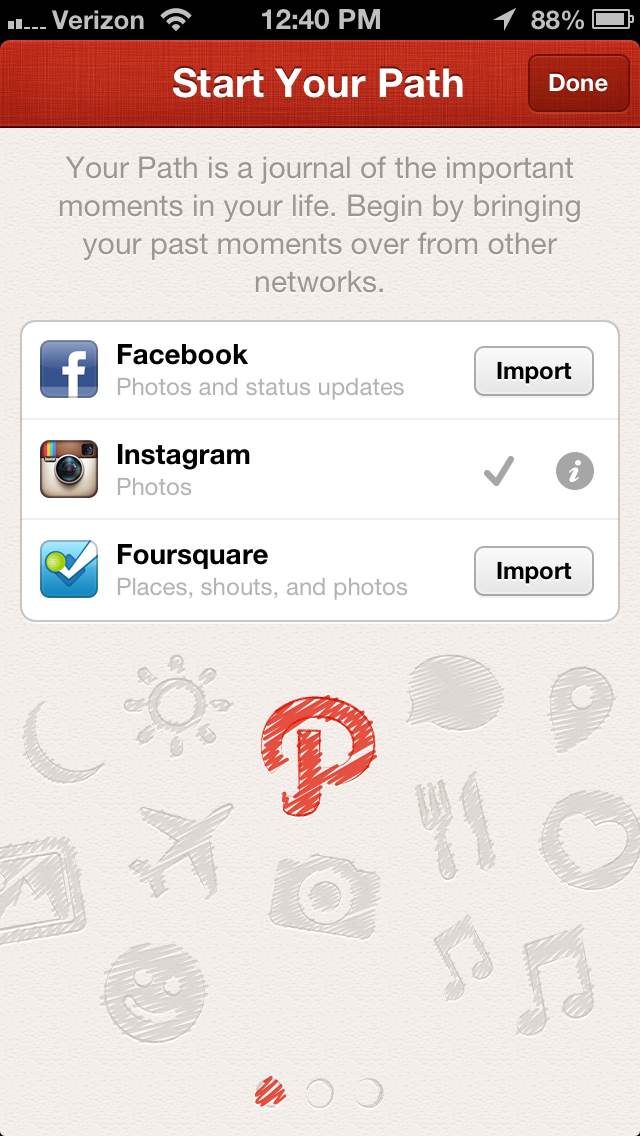
Path's iOS 6 update will allow existing users to add their Facebook, Instagram, and Foursquare activities to their log.

Up until now, Path users who wanted to fill their accounts with Facebook, Instagram, and Foursquare data could only do so when they signed up for a new account. The most recent update now allows existing users to import data from the three major social networks so you don’t have to start over if you really want to link all the accounts together.

What the iOS 6 update does is essentially allow you to pretend to make a new account, giving you the option to “Start Your Path” all over again and access the Import button for the three services under the Settings page. After the import, depending on the size of the data which you are syncing over to Path, it could take several minutes for your account to list all the moments from the three services you just hooked up.

While the update is helpful to Path users, this sync will inevitably clutter most users’ home feed, logging in every single action from the three big social networks. Luckily, if you’re like most people and only have a limited amount of friends left on Path, this journal won’t look too bad. But if you have plenty of friends who are constantly updating the Path logs, prepare to scroll an incredible amount just to get through a day’s worth of activities. Each log for an Instagram photo already takes up a good amount of display real estate, fitting about a photo and a half per screen. And yes, this is on the iPhone 5′s enlarged screen. 

Either way, it’s to Path’s credit to allow users the option to make that choice if they want to, and the import integration will be useful to existing users who want to remain on the app and make it as content-filled as humanly possible.


Source : http://www.digitaltrends.com/mobile/path-update-lets-existing-users-fill-their-page-with-facebook-foursquare-instagram-data/