Motorola’s frameless screen sporting DROID RAZR M for Verizon Wireless has begun receiving Android 4.1 Jelly Bean over-the-air. The update has hit the baby RAZR right in line with Motorola’s promise at its launch for a timeline before the end of the year.
The Android 4.1 Jelly Bean update brings a number of software improvements to the DROID RAZR M. They include Google Now, Android Beam and NFC, and improved notifications to go with the buttery smooth menu transitions. Unsurprisingly, the new OS is dressed in Motorola’s custom UI, which adds only a few extra touches to the Pure Google Experience.
Sharp is obviously keen to join the 1080p screen fun on as the company just announced its first smartphone with a 5" FullHD screen for Russia. The Aquos Phone SH930W uses a Sharp IGZO display, which offers improved image quality over regular LCDs along with better power efficiency. The pixel density stands at the retina-busting 440ppi.
The other specs of the phone aren’t quite that impressive with a Qualcomm 8260A chipset (2x Krait @ 1.5GHz, Adreno 225) powering the package. According to GLBenchmark 2.5, the GPU isn't powerful enough to run heavy 3D games at native resolution as it only manages 13.6fps.
On the upside, the SH930W runs Android 4.1 Jelly Bean and offers a microSD card slot. It comes with 2G/3G connectivity, but no LTE.
The Sharp Aquos Phone SH930W will launch in Russia on November 8 (though there's no info on the price just yet). Unlike most of Sharp's phones (and the HTC J Butterfly), this one has a good chance of getting a wider availability.
But Sharp isn't in a good financial position at the moment and HTC is already working on the DLX (or is it DROID DNA?), so Sharp better move fast if it wants to capitalize on its advantage.
Looking for accessories to go with your brand new iPad mini? Moshi's VersaCover origami case doubles as a screen protector and an iPad stand.
Congratulations! You’ve braved the Apple line once again and got your hands on the new iPad mini. Now you want to know how to keep the Retina display safe from scratches and dust. Consider Moshi’s VersaCover origami case, an architecturally inspired cover that builds upon Apple’s Smart Cover design. Like its predecessor for the original iPad, you’ll be able to flip, fold, and tuck the VersaCover into various shapes so while it’s not protecting your iPad’s screen, it can function as an iPad stand.
The secret is between the edges of the cover, which contain little magnets to help the ridges connect and stay sturdy when folded. You can use the folds to position your iPad to stand upright or landscape are various angles. The cover itself is also made of microfibers and will support the iPad mini’s auto-wake/sleep feature for a swift access to the menu. Unfortunately, pricing is pretty steep in comparison to the original iPad version. The VersaCover for iPad mini will retail for $55 with a shipment date scheduled by the end of the year, while the original version retails for $60. Moshi’s VersaCover will be available in four color options: Aloe Green, Denim Blue, Sakura Pink, and Velvet Grey. We’re digging the pastel color scheme which makes for a soft introduction to the holiday season.
Nokia has just announced the Nokia 109 entry-level phone. It packs a 1.8-inch TFT screen with 128x160 pixels resolution, dual-band GSM/EDGE connectivity, FM radio and microSD card.
Nokia 109 runs on S40 platform and comes with Nokia’s Xpress Browser, which compresses the web pages up to 90% and saves you data traffic. Some handy social apps will come pre-installed as well.
The phone spreads at 110x46x14.8 mm and it weighs just 77 grams. According to Nokia the battery will last 33 days in stand-by.
Cyan and Black versions of Nokia 109 will hit the shelves in Europe, Asia Pacific and China very soon for $42 before taxes.
The home screen is about all that changes with 7.8
While Windows Phone 8 early adopters eagerly await for the first handsets to arrive in the next few days, current Windows Phone users may have to hold out a bit longer for their OS update.
Chinese tech blog WPDang cited unspecified sources that claim that Windows Phone 7.8 will make its debut pre-installed on a new line of low-end WP7 handsets four to six weeks after the Windows Phone 8 launch.
Only after the new handsets hit the market will carriers start pushing the 7.8 update to subscribers.
Microsoft may not be looking for any news to distract from the new Windows Phone 8 smartphones, so it is difficult to be skeptical about rumors of a delayed 7.8 launch.
Windows Phone 8 stealing the spotlight
While the Windows Phone 7.8 update will miss out on most of the new features for Windows Phone 8, it will bring Wi-Fi tethering to legacy smartphones.
Also look for WP7.8 to include an updated home screen with live tiles that take advantage of the entire screen space.
A Nokia document hinted that the camera software on its WP7 smartphones will also see an upgrade, though other OEMs have not made similar announcements.
WP7 users will still miss out on new Windows Phone 8 features, like true multi-tasking, NFC support, over-the-air updates, multi-core processor support and IE 10.
Live updates without unlocking your screen coming to WP8?
Microsoft could incorporate a new kind of live wallpaper when it reveals the Windows Phone 8 operating system in full next week.
The as-yet-unannounced Live Wallpapers feature would, according to a leaked snap, bring updates from the likes of ESPN and USA today to the handset's lock screen.
The Nokia Innovation site has posted an image (see above) with WP8 handsets showcasing updates from an NFL game and another showing thumbnail images from news stories.
A third handset within the image seemingly promises live updates from Bing.
Live Tile extension
The functionality would be a handy extension of the Live Tiles feature Microsoft pioneered with Windows Phone.
These tiles offer access to sports scores, breaking news and social networking notifications autonomously, without having to enter the app. Live Wallpapers could make that even easier.
Nokia Innovation is reporting that Live Wallpapers will be one of three new features explained by Microsoft on Monday when it reveals Windows Phone 8 in full.
Among the handsets flying the flag for the new-and-improved mobile OS are the Nokia Lumia 920 and the HTC 8X, both of which will go on sale in the second week of November
Sony's flagship handset for 2013 is rumoured to pack a 5-inch display and new reports suggest it will also sport WhiteMagic technology.
We heard about a super-sized screen earlier this month after Japanese display manufacturer JDI revealed it was producing 5-inch, 1080p screens with an impressive 443ppi pixel density.
The screen has been linked with the Sony Odin, which is expected to be the Japanese firm's flagship handset for 2013, and new reports suggest it could be packing some seriously clever tech.
It's a kind of magic
Earlier this year Sony explained to TechRadar that the WhiteMagic tech was stuck at 4-inches, which pours a certain amount of cold water on the possibility of this rumour coming true.
According to a recent press release from JDI, the firm is readying prototypes of a 5-inch WhiteMagic display which boasts a 438ppi pixel density – slightly lower than the initial reports we saw from the firm, but never the less still very impressive.
One of the big selling points of the WhiteMagic screen is that it conserves power much more effectively and JDI claims it will have "low power consumption that is approximately 50% less by utilizing an RGBW pixel structure".
This will be a massive bonus for smartphone manufactures, as bigger screens and more powerful innards currently drain batteries quicker than you can say "where's my charger?"
As well as saving battery, the WhiteMagic technology also has another trick up its sleeve: instead of keeping you going for longer, it can be switched to double the brightness of the display, ensuring that your face is illuminated like a Christmas tree.
We can't be sure if the 5-inch, WhiteMagic display will make it into Sony's flagship smartphone next year, but we wouldn't be surprised if it did.
Flinders University has published findings that suggest playing video games before bed can cause significant sleep problems, but the study doesn't distinguish whether it's the games or the screen that's causing trouble.
For those Madden NFL and Call of Duty: Black Ops 2 players sinking hours into their consoles this fall, the best time to play is in the evening. Whether it’s down time post school or at the end of the work day, it’s the scant hours before bed that are ideal for gaming with other people. Unfortunately, according to one medical study, that’s the absolute worst time for you to be playing video games.
A report at MedicalXpress (via MCV) detailed a study that found “prolonged video gaming immediately before bed caused significant sleep disruptions in a group of teenage boys, even when they fell asleep at their usual bedtime.”
Australia’s Flinders University Sleep Lab used a test group of 17 people who played a “newly released, fast-paced, violent video game” for between 1 and 2.5 hours over two nights. Those that only played for 1 hour didn’t see their sleep disrupted significantly, but those that played for up to 2.5 hours lost about 27 minutes of sleep, and a 39 minute delay in actually falling asleep. The worst impact is the loss of quality REM sleep, though.
“While they went to bed at their regular bedtime, the adolescents’ still experienced significant sleep disruptions caused by frequent awakenings throughout the night,” said Sleep Lab’s Dr. Michael Gradisar, “Sleep is made up of many different stages and the REM sleep, also known as the dreaming sleep, was reduced by 12 minutes among the teens who played for over two hours. This may not seem like a significant reduction but REM plays an important part in helping us remember content we learnt that day so for adolescents in their final years of school who are revising for exams, winding down at night with a video game might not be the best idea.”
Any parents reading this shouldn’t rush off to tell their kids that Xbox rules are about to change, though. It’s difficult to say whether it’s the games or the actual screen technology that’s causing the problems reported in the Flinders study. A National Sleep Foundation survey conducted in 2011 found that there is a significant correlation between sleep disruption and using any electronic device with a backlit screen—including gaming machines, smartphones, televisions, and computers—before bed. Those findings weren’t new either. A study conducted at Osaka University in 2007 found that “media use before sleep can trigger (self-perceived) insufficient sleep.”
Maybe the solution is to take the classic old codger advice before bed: Read a book. A paper one.
HTC rolls out a new version of the HTC J -- the J Butterfly. The handset will be exclusive to Japan, but comes with a screen that will make the world envious. It's 5-inch display comes packed to the brim with 440ppi resolution.
HTC brought its latest creation to Tokyo today, and now we’re wondering how long it takes a butterfly to fly over the Pacific Ocean. The HTC J Butterfly is the new flagship handset from the Taiwanese phone maker and it comes fully equipped with a screen that you just can’t help but to stare at. There’s plenty to see with the 5-inch HD Super LCD 3 display that is ready to run at 1080p — the highest resolution yet for a phone.
The screen isn’t the only attraction on the J Butterfly, the successor to the HTC J. The black-and-red skinned phone will come running Android 4.1 (Jelly Bean). It’s powered by a 1.5GHz Snapdragon quad-core processor and 2GB of RAM and is equipped with a 2020mAh battery that will have its work cut out for it. It’s also loaded with an 8-megapixel camera with a f/2.0 lens. All of this is housed within a thickness of 9.1mm. A quick comparison of the specs makes the J Butterfly most comparable to the One X, the crowd-pleasing offering from HTC released earlier this year.
It’s that screen that puts the J Butterfly in the league of its own, though. The HTC One X came with an impressive Super LCD screen that was worthy of comparison with the best displays on the market. The J Butterfly aims to float above the competition, and may well do so. It’s promising a resolution that reaches 440-pixels per inch (ppi). For comparison purposes, the iPhone 5 sits at 326ppi. I’d hate to be the guy that has to try to pack all those pixels in. That’s how those things work, right?
The J Butterfly will be exclusive to the Japanese market, but that doesn’t mean the Super LCD 3 screen won’t find its way on the front of some U.S.-bound handsets. Until then, we’ll just have to look forward to the day we can wipe the drool off our screen.
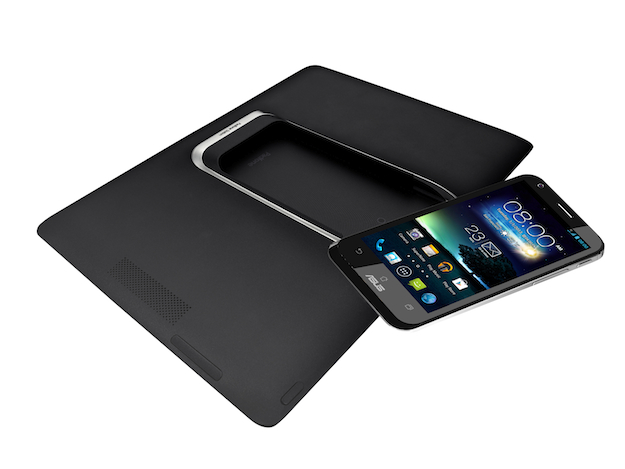
Asus has launched the PadFone 2, a revised version of its quirky original, but still featuring a smartphone that docks with a tablet screen.
Asus has announced the PadFone 2, the follow-up device to its quirky PadFone, which first appeared in 2011. The launch event was an international affair, with two almost simultaneous conferences taking place in Milan and Taipei, which were also streamed to audiences online. It’s fair to say that Asus really wants you to know there’s a new PadFone in town.
Asus is focusing on the PadFone’s intuitive design to sell it this time around, and promoting it to people who may not want the bother of purchasing two separate devices, with two network agreements, but still want the convenience of a smartphone and a tablet at all times.
While the original PadFone had a door on the rear of its tablet dock, in which to hold the smartphone, Asus has replaced this with a slot for the PadFone 2. It’s not only more attractive, but far simpler to quickly connect and disconnect the phone. This is important, as the sharing of content from phone to pad is a big thing on the PadFone 2.
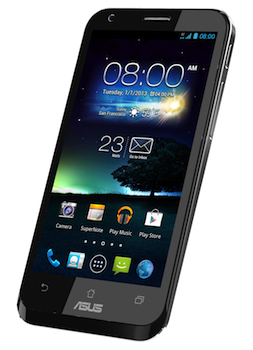
We’re getting ahead of ourselves though, so let’s talk about the hardware. The smartphone has a 4.7-inch Super IPS+ touchscreen, covered with scratch-resistant Gorilla Glass, with a 1280 x 720 pixel resolution and a pixel density of 312ppi. The tablet’s 10.1-inch screen is almost identical, with a 1280 x 800 pixel resolution, but the pixel density is considerably less at 149ppi.
As the tablet is a brainless dock — or Station as Asus calls it — it relies on the smartphone’s processor and power to make it work, so it’s a good thing Asus decided to use Qualcomm’s 1.5GHz, quad-core APQ8064 Snapdragon S4 Pro chip. The phone comes with either 16GB, 32GB or 64GB of internal memory, plus a hefty 2GB of RAM, and a black or white finish.
The PadFone 2 has a 13-megapixel camera with 1080p video recording, a 100-shot burst mode that takes six shots per second and an f2.4 aperture. Because the PadFone 2 sits screen-forward in the back of the tablet, the camera can be used when it’s docked. There’s a separate video call lens above each screen too.
Strong battery, high price
Keeping the PadFone 2 up and running is a 2140mAh battery inside the phone, plus a 5000mAh battery inside the tablet. When docked, the tablet recharges the phone, and can do so three times before the battery expires. Asus quoted the phone as providing 16 hours of 3G talktime, but 48 hours when docked along with 27 hours of video playback.
Despite all this technology, Asus has made sure the overall weight hasn’t spiraled out of control, as the phone weighs 135 grams on its own, or 649 grams when mated with the tablet dock. As a comparison, the new iPad weighs 652 grams and the Galaxy Note 10.1 600 grams.
Back to the sharing for a moment. Slotting the phone into the tablet will see certain tasks and apps instantly transfer over to the big screen, with no input needed from the user. This was demonstrated with the gallery, browser and streaming video.
Other features include NFC, LTE connectivity, Wi-Fi Direct, Bluetooth 4.0, plus a speaker system with Asus’ own SonicMaster enhancements, handwriting recognition, dual-language support and an instant translator too.
Asus says the PadFone 2 perfectly embodies what it calls Customer Experience 2.0, as it combines beauty inside and out, plus a great display, audio and performance.
So, you probably want to know how much and when you can get one? If you’re in the USA, it’s almost certainly not going to be this year, as according to Asus, it’s still in discussions with networks. In Europe, release is likely to come between January and March 2013, but there’s hope for a last-minute launch before Christmas too. Asus will release the PadFone 2 in Taiwan at the end of October.
The price? It’s 799 euros for the 32GB model and 899 euros for the 64GB PadFone 2. That’s $1040 and $1175. Those are very big numbers, but take a moment to consider how much a Galaxy S3 and a Galaxy Note 10.1, or an iPhone 5 and new iPad cost together. Do this, and it doesn’t sound so bad.
The first, fully touch-screen BlackBerry 10 device may just have been caught in the wild thanks to a cheeky Mexican video.
Spotted by the guys over at SlashGear, the video comes courtesy of holatelcel, and features a well suited chap running through some of the key features we witnessed in our recent hands on BlackBerry 10 review.
The handset itself, thought to belong to the new "L-Series" range, looks similar to the Dev Alpha B device we got our mitts on earlier this week, however the corners are more rounded, and the bezel above and below the screen may have shrunk a little.
It also seems to follow the design of the handset which we saw in a video a few weeks ago, which claimed to be an internal promo video for RIM.
Little is known
RIM has stayed pretty quiet on details of its BlackBerry 10 devices, telling us that it plans to launch two BB10 handsets in the first quarter of 2013.
The first will be a fully touchscreen device, which is expected fall into the "L-Series" category, and the second, sporting the firm's well known QWERTY keyboard, could be the first in a range called the "N-series".
We've contacted RIM about this video and we'll update this article once we hear back.
SportStream continues its mission to connect fans with socially-sourced sports data with its new iPhone app.
If there’s any market that’s primed for the social, second screen experience, it’s sports. What with the stats, player news, fantasy teams, and of course, heavy dose of trash talking, the two are made for each other. That’s not to say there isn’t still plenty of friction in this space, but developers are doing their damndest to figure out how we want to use social platforms and mobile devices to enhance the experience of watching sports.
And today, one of the biggest names in this market, SportStream, is taking another step into the thick of it with the debut of its iPhone app. At the moment, SportStream is available via Web or iPad app, but the team has wisely noticed that plenty of users are content to multitask during TV watching from the palm of their hands as well: A recent Pew report found that more than 50 percent of adults use their phones while watching television.
“People watch sports in real-time: The don’t DVR,” says co-founder and CEO of SportStream Bob Morgan. “They want to see outcomes, share their comments and trash talk in real-time, too. This creates a very interesting opportunity for second screen experience. Our primary goal is to provide fans with the best content for every game, while connecting them with each other.”
The SportStream iPhone app brings with it everything available in the iPad and Web versions — commentary, sideline reports, and game stats. Except these aren’t sourced from what you’re already seeing on TV; it’s all aggregated from sports personalities’ and experts’ social media accounts. If that makes you raise a skeptical eyebrow, consider that Packers guard TJ Lang’s Twitter slam against the replacement NFL refs quickly became the most retweeted post of all time. There’s an inarguable connection between fans and sports figureheads, be they players or pundits, and it’s being made using social platforms.
In addition to features like Twitter and Facebook sharing (with some slick focus on trending hashtags focused on your content and improved technology to filter out any irrelevant social noise), SportStream’s recent integration with Are You Watching This?! (RUWT?!) also shows up in the new iPhone app. RUWT?! is an algorithm-based system that alerts users when games get exciting — it’s supposed to keep you from beating yourself up for turning the TV off during that assumed blowout only to hear the next day that your team made an epic comeback (points at self).
SportStream, which launched in June, has been building fast. The iPhone is an interesting next iteration, given the startup’s early tablet focus. “We’ve seen tablet and Web browser use as fairly similar — it appears users have one or the other open during games,” Morgan tells me. “This isn’t too surprising given the research in this area. With the launch of the iPhone app, we’re very interested to see how people interact with the app on their phones, while on the go. One of the most interesting things we’ve seen is how low latency game information and commentary is on Twitter. This makes for a really rich, 360-degree view of a game.”
The new screen is a lovely thing, but its extra height isn't ideal for smaller hands
It seems that for many people, the iPhone 5 is a disappointment - so what's missing? We asked for your suggestions and scoured the online reviews, and the results are below: it's your ultimate iPhone 6 wish list.
iPhone 6: design
Many of you weren't sold on the iPhone 5's design. For some of you the taller screen was odd - it "looks strange at best," said nebulaoperator - and for others it simply wasn't big enough.
Lions87a reckons even 4.5 inches would be too little: "popular phones like the Galaxy S2 and S3 have shown that people are pretty happy nowadays to accept bigger than what the iPhone 5 is currently offering."
Writing in the Chicago Sun-Times, influential tech journalist Andy Ihnatko suggests that taller isn't necessarily better. "The benefit of bigger screens is almost entirely in their increased width, not their length," he writes. "A wider keyboard is easier to type on. Books, web pages, and emails will have wider margins and they'll be more comfortable to read."
John Gruber of Daring Fireball agrees that bigger isn't always better, but he's not a fan of wider, either: while he says that "navigating the full screen while holding the iPhone in one hand is worse," rivals' wider screens mean it "really is far more difficult to do anything on them one-handed, including typing."
iPhone 6: processor
No surprises here: we had plenty of people telling us that rival firms' processors have more cores. However, as Lions87a pointed out, "If the iPhone 5 or Nokia 920 can run their OS without any lag or delay, and delivers a flawless experience, and the Galaxy S3 does the same with a quad-core, then the number of cores, and the speed of the cores is irrelevant. The argument turns into 'which operating system is best?'"
Did someone say operating system?
iPhone 6: operating system
iOS has been around for a while, and for many it's getting stale. "I don't think anyone can deny that the
UI needs a refresh when you see widgets and live tiles on competitors' phones," says Vincennes, while Tubemonkey2000 says that "the current [UI] is so tired and old it makes it seem really basic, sort of like a kids' toy."
Our own Gareth Beavis agrees, arguing that "there are so many tweaks Apple could make to its OS to turn it into more of a powerhouse – icons that update with information, or extending the widgets in the notification bar beyond weather and stocks... Apple is taking things very slowly on this front."
iPhone 6: price
iPhones have never been cheap, but in a world of credible - and cheaper - competition they look pricier than ever. Or maybe it's because the iPhone's price has gone up. Saltire is "surprised no-one has mentioned the price increase for the 16GB model", while Gareth Beavis says that "we simply cannot see how a 16GB model can cost £529 / $199, but to double the memory will cost an extra £70/ $100 with no other changes to the design."
There's no doubt that you pay more for the materials, fit and finish of an iPhone than you do for, say, a plasticky Android handset, and not everyone thinks that's worth it.
"£529 for a phone that is no better than my six month old Android shows the arrogance of Apple," Alastairmack says, while Beavis points out that when you consider contracts, "it's far and away the most expensive in the shop, and most of the time you don't even get unlimited data."
iPhone 6: features
NFC has, possibly unfairly, been dubbed "Not For Commerce" (or more saltily, "No Effing Customers"), but for many it's the most obvious omission from the iPhone 5 - "not because of the technology itself," says Fmartins, "but to really give the critical mass contactless payments need. Plus, I would love to use the phone as my Oyster card."
For Fmartins, that would be good for everyone: while s/he isn't an iPhone fan, "it would have been nice seeing Apple push the envelope again so that I could benefit on [a] Lumia down the line." Gareth Beavis agrees. "It's not quite there yet in terms of market penetration for payments, but the world's largest network of accessories could definitely have made use of it for making ever cooler docks and cases," he says.
Other suggestions included more LTE bands, which we're sure we'll get next year when other UK 4G networks launch; expandable storage - not something we imagine Apple doing when it can flog you iTunes Match and/or get you to pay a small fortune for the 32GB model over the 16GB - and brighter, more saturated screens, although given the improvements to the iPhone 5's screen that one's largely a personal preference. Oh, and of course you'd like Apple to fix Maps too.
Maps has the potential to be a superb and very useful app, but it needs some work
iPhone 6: reception
No, not antennas - they seem fine this time - but the critical reception. As Lusky79 says, even without cock-ups such as Maps, any new iPhone is going to be disappointing: "Even if Apple had all the suggestions [here], it would still seem mediocre because the revolution was the original iPhone and the other, similar, smartphones that followed." As Nenslo put it: "What the iPhone really needs is Steve Jobs."
Anything else?
Hit the comments to add your wishes for the next iPhone.
Screen production at Sharp could be causing supply shortages
Apple reportedly moved five million iPhone 5 units in the device's first weekend on sale, but that seemingly impressive number actually falls below some analysts' low-end predictions, according to a recent report.
That may be due in part to an iPhone 5 shortage at some U.S. retailers like Best Buy, RadioShack, and Target, with some locations of which received less than a dozen iPhone 5's to sell on the handset's street date last Friday.
Now a possible explanation for that shortage has come to light, and it seems Sharp's display production line could be to blame.
New display, new problems
Apple turned to manufacturers LG and Sharp for the task of supplying iPhone 5 screens, but it seems delays at Sharp resulted in the apparent iPhone 5 stock shortage.
Sharp reportedly didn't begin producing iPhone 5 displays until the smartphone's debut earlier this month, which could certainly explain why it's in short supply at some retailer stores.
The iPhone 5's display is a half inch longer diagonally than that on previous iPhones, and reportedly costs $7 (UK£3, AU$6) extra to produce because of its larger size and in-cell touch screen technology.
That tech integrates the display and touch panel into one layer, making for superior colors but apparently also producing new production headaches.
iPhone 5 issues continue to stack up
This report comes primarily from an IHS iSuppli analyst cited by Bloomberg, but TechRadar has also reached out to Apple for comment.
The iPhone 5 is a huge launch not just for Apple but the entire consumer mobile market, which makes it a major target for critics.
However, it seems like Apple's latest money maker suffers from an unusual number of defects, even by Apple's standards (let's not forget the iPhone 4 reception debacle).
Apple may be gearing up to deal with these complaints while simultaneously battling against the iOS 6 "maptastrophe" and day-one iPhone 5 jailbreakers. Yep, that's right - it took less than a day for hackers to have their way with the iPhone 5.
Despite these issues, the iPhone 5 sales in the first weekend totaled a full million more than iPhone 4S sales in its first weekend last year.
Samsung Galaxy Note II and LG Optimus Vu beware, the newly announced Pantech Vega R3 is gunning for your head. The phoneblet features a 5.3" Natural IPS Pro LCD screen of 720p resolution and Qualcomm's monster Snapdragon S4 Pro chipset.
Pantech is the latest company to develop a dislike for bezels and the Vega R3 features "Zero Bezel Tech". It keeps the phone compact and "provides optimum grip for a typical Korean hand." The phoneblet is 9.95mm thick and weighs 169g.
Pantech Vega R3
The Snapdragon S4 Pro chipset is one of the headline-grabbing features of the Pantech Vega R3. It packs four Krait CPU cores clocked at 1.5GHz, 2GB of RAM and Adreno 320 GPU. It should readily tackle Samsung Galaxy Note II and LG Optimus Vu.
There are only two other mobile devices that use the S4 Pro chipset - the LG Optimus G and the Xiaomi Mi-Two.
The battery that powers the chipset and the big screen is a 2,600mAh "super battery pack", which promises 14 hours and 30 minutes of talk time. Charging the battery back up will be pretty quick too, with the 2A charger - it takes about 100 minutes according to Pantech. It's a 2 port charger too, so you can plug in the phone along with a spare battery.
The camera on the back of the Vega R3 does 13MP stills and features "Best Face" functionality - the now familiar Scalado-like approach of taking multiple shots and combining the best facial expression for each person into a single photo.
The phoneblet also packs extensive connectivity features - LTE, NFC, Wi-Fi a/b/g/n and Bluetooth 4.0. There's a microSD card to expand the built-in memory.
The Pantech Vega R3 is available through the three South Korean carriers starting today. It's launching with Android 4.0.4 Ice Cream Sandwich but a Jelly Bean update is in the cards too.
AirPlay and WiDi made big promises of screen mirroring made easy, but both were too closed to succeed. New Miracast technology could finally give consumers an easy, wireless way to stream content from a laptop or smartphone to a TV.
Few things make me feel like I’m living in the future as much as wirelessly beaming movies and music from a mobile device to a big-screen TV or home audio component. Oh, you haven’t heard that song yet? Let me stream it right through your speakers! Missed the latest episode of Top Chef Masters? I have it here on my laptop, let’s pop the high-definition video up on your TV — no wires necessary. That’s right up there with hoverboards and robot butlers in my book, folks.
One problem: It’s not that easy yet. The two major wireless media streaming technology options available today — Apple’s excellent AirPlay and Intel’s, um, improving WiDi — struggle with major flaws that majorly limit their usefulness.
The best hope for a wire-free mobile future rode in this week in the form of Miracast, a new standard backed by the same organization that watches over Wi-Fi itself. It’s an innovative technology that’s backed by a bunch of big-name players and breaks many of the chains holding WiDi and AirPlay back, but Miracast has some hurdles to leap before it becomes a household name.
The problems with WiDi and AirPlay
The biggest issue with WiDi and AirPlay is that they’re proprietary and available on very limited hardware. Only Apple devices broadcast AirPlay signals, and only the Apple TV set-top box or select home theater equipment can receive that signal. WiDi’s restricted to select laptops and notebooks with Intel Core processors inside, plus you have to pay about $100 for a WiDi adapter for your TV. Bleh.
On the positive side, that adapter allows WiDi broadcasters and receivers to talk to each other directly; AirPlay has to piggyback on an external Wi-Fi network. If you don’t have a Wi-Fi network set up, you can’t use AirPlay. (Apple’s rumored to be working on “AirPlay Direct” to ditch the reliance on outside Wi-Fi, however.)
Another issue lies in actually using the wireless streaming technologies. AirPlay’s a model of clean engineering and pretty much works like a charm every time you use it, but WiDi is another matter completely. Intel’s technology frequently suffers from horrible lag, and it didn’t support 1080p video or Blu-ray streaming until earlier this year. A scheduled October update could help things, but we won’t know until we see it.
Finally, WiDi and AirPlay are only kinda wireless. Both require the use of a box that connects to your TV via an HDMI cable, if you want to stream video from your phone or tablet.
Miracast basics
Miracast, on the other hand, requires no additional hardware or external Wi-Fi networks. It uses the Wi-Fi Direct standard to create a direct wireless network between the sending device and the receiving device. In other words, just pair your mobile device with your TV or stereo and you’re good to go. Both devices need to be Miracast certified for the technology to work, but if you want to stream music and movies to a non-certified device, there will be Miracast adapters available that plug into HDMI or USB ports.
Even better, the Wi-Fi Alliance has ensured that the protected content woes that plagued WiDi’s launch won’t happen to Miracast; anything you can see or hear on your mobile device can be streamed to your television. That includes full 1080p HD video and yep, even DRM-protected media like DVDs or Blu-rays.
Everyone can join this wireless party
Like Wi-Fi itself — and unlike WiDi and AirPlay — Miracast is an open, optional certification that any manufacturer can apply for if their products meet the standard. That alone gives it a big potential leg-up over already-established technologies.
In fact, a number of big-name technology manufacturers are already onboard the Miracast bandwagon. Samsung — the world’s most prolific smartphone maker — is signed up, and Nvidia has pledged to certify its Tegra mobile processors — found in scores of smartphones and tablets — to the Miracast standard. Sony, LG, Texas Instruments and Qualcomm have all publicly issued statements of support.
Even Intel wants in on the action: All WiDi products have already been Miracast certified, as have LG’s Optimus G smartphone, the Samsung Galaxy S III, the Samsung Echo-P Series TV, and a number of various chips and adapters.
The sending and receiving gadgets don’t have to be from the same manufacturer, either. A Samsung phone should stream content to a Sony TV just fine, provided both are Miracast certified. Spiffy.
An AirPlay rival at last?
Things look pretty good for Miracast. Many would-be technologies die on the vine due to a sheer lack of adoption, but with the Wi-Fi Alliance and its assorted manufacturer partners on board, that doesn’t seem likely to happen to Miracast.
The biggest potential pitfall, as I see it, lies in customer confusion; it’s great that Intel certified its WiDi devices, but some of WiDi’s more advanced features won’t work if one of the two devices is “only” Miracast certified. That could confuse some people, but I don’t foresee it becoming a major issue because frankly, Intel’s WiDi isn’t in the hearts, minds or laptops of most people yet. A successful Miracast very well could kill it off in short order.
WiDi-esque lag could slow Miracast adoption as well; we’ll have to see how well the first wave of devices play together.
Will Miracast be successful? That’s the million-dollar question, but all signs point to yes. It’s more flexible and more universal than current wireless display technologies, and even better, you don’t need to pay extra for additional adapters or wires unless you want to stream content to a non-certified TV. With the big names backing the standard, Miracast should theoretically pop up in a large number of TVs, smartphones, tablets and laptops in short order.
If you ask me, Miracast is here to stay. Folks who haven’t bitten into Apple will be able to get a taste of mobile display mirroring that’s hopefully as easy-to-use as AirPlay. Who knows? If Miracast takes off, maybe Macs and iDevices will one day ditch the proprietary AirPlay and embrace the open-standard goodness. (Hey, it could happen.)
Now, someone needs to start working on those robot butlers.
Rumors of the Samsung Galaxy S4 suggest an increase to a 5-inch screen size and an MWC 2013 release date.
There’s nothing like a good rumor to get the week started and this time it’s a big one, as it concerns the follow-up to the current darling of the Android world, the Samsung Galaxy S3.
According to a report in the Korea Times, Samsung is readying the Galaxy S4 for launch during Mobile World Congress next year, before going on sale in March.
The quote comes from an unnamed Samsung official, who adds that the next Galaxy flagship will have a similar design to the S3 — keeping its “popular rectangular shape with rounded corners,” but potentially increasing the screen size again, this time to 5-inches.
A quad-core Exynos processor will power the device, Android will be the operating system, and it will support 4G LTE networks all over the world. The article makes particular mention of Europe here, where 4G is beginning to become more widespread, plus the UK will hold its 4G spectrum auction early next year too.
The report continues to say that Samsung is still considering using its flexible screen technology for the S4, but hasn’t made a final decision, although talk of production problems make it sound unlikely.
Samsung is almost certainly working on a follow-up to the Galaxy S3, and it could well be named the Galaxy S4, but what about the rest of the report’s speculation? It’s equally as likely to use another Exynos processor in the S4, but whether this will be another quad-core chip, or the Exynos 5 Dual with its high resolution screen support, isn’t quite so clear cut.
Android and 4G LTE are also obvious features, while a push to a 5-inch screen isn’t that unlikely either. Remember, the S3 and the Galaxy Note 2 aren’t that much larger than their predecessors, despite the respective increase in screen size.
A March 2013 release would also see the S4 go on sale less than a year into the S3’s life, which seems very early for such a capable device.
But then, accuracy isn’t the point of this leak, it’s about letting everybody know that Samsung is hard at work on the next big thing, and not to be distracted by shiny offerings from the competition.
The Apple iPhone 5 is finally here, with the latest arrival boasting a 16:9, 4-inch screen, new smaller port, thinner, lighter design and 4G LTE.
Last year's iPhone 4S always felt like an incremental upgrade rather than a true step change, and although it sold wonderfully for Apple and brought some interesting additions, few would argue against the suggestion that it opened the door for competitors.
As a result, this year's launch was perhaps most important for Apple since the very first iPhone arrived back in 2007.
For anyone following the iPhone 5 rumours over the past year, the iPhone 5 will not bring any major surprises, with many of the new features expected – including the new dimensions and the improved A6 chip.
The iPhone 5's camera is smaller, hardier and enhanced by the more powerful chip, and the front-facing camera is bumped up to a 720p version. Wi-Fi is improved and the inclusion of 4G is a must have in the current phone world.
But it is the size, design and shape that will win the most admiring glances. The all glass and aluminium chassis can claim to be the thinnest smartphone, at 7.6mm 'thin'.
iPhone 5 pre-orders TechRadar has joined forces with uSwitch to bring all the latest iPhone 5 pre-order deals from all the UK networks right to your inbox. Sign up here.
The 4-inch screen keeps the retina resolution despite the added length, which Apple has brought in to make the iPhone 5 more movie-friendly.
The added real-estate is welcome, especially given the growth of its rivals, and apps will apparently be easy to move onto the new screen size for developers.
In the hand the Apple iPhone 5 certainly feels comfortable. You can see why Apple decided to keep the width the same, since it fits the hand nicely – just as its predecessors have.
iPhone 5 vs iPhone 4S
The most relevant comparison for many is with its predecessor the iPhone 4S and, for those on the now common two year contracts, the iPhone 4.
The new phone certainly feels different – and although there will be the odd naysayer, the overwhelming majority will feel that the iPhone 5's design is a good step on from the now ageing chassis of both the 4S and 4.
The move away from glass is a welcome one, and the aluminium manages to bring a premium feel in a notable lighter device.
A new chip definitely brings a snappier feel. Many people with an iPhone 4 will be all too used to the lagginess when trying to do anything even slightly complex with the devices, and the Apple iPhone 5 manages to take things on as far as you would expect in more than two years.
What is perhaps more suprising is just how much snappier this feels than the iPhone 4S. The A6 chip clearly has a significant amount more grunt under its smaller hood – but what is surprising is that you can immediately tell when you use the device alongside its predecessor.
Practically speaking, this probably isn't enough to make you want to leave a 4S unless you are a hardcore fan, but it will convince many iPhone 4 users to stick with the Apple ecosystem for another generation – and you get the impression that this is goal number one for the company.
The added length could have made the phone unwieldy, but the loss of thickness ensures that it maintains its balance and premium feel.
Those people who have got used to the iPhone 4 and 4S will certainly notice the difference that the new iPhone 5 design brings. It served to make the device feel more modern, and the materials used keep that premium feel that Apple has put so much stock in.
Thinner, lighter and more screen were always on the cards, and the fans' desires are understandable.
The aluminium backplate feels lovely – just textured enough to feel very different from its predecessors and, to our taste, preferable to the glass.
The iPhone 5 screen is bright and colourful, although it's difficult to truly appreciate the small upgrade that Apple has made in the bright lights of the show room.
The camera is also more difficult to test properly, but it certainly seemed faster to take a photo, something that can be a frustration on older iPhones.
From a software perspective, iOS 6 brings with it a wealth of new features that will certainly make a major difference to not only the way the iPhone 5 feels, but also its predecessors the iPhone 4 and iPhone 4S when they get the updated software.
Maps, for instance, is significantly altered after Apple ended its longstanding agreement to use Google Maps and pushed forward with its own offering, in conjunction with sat nav giant TomTom.
The new maps certainly look the part, with some beautiful 3D renders and snazzy looking new vector graphics. We really want to take some time to tell you just how well the new offering performs in the wild, when we get a handset in for our full iPhone 5 review, coming soon.
The showcased flyover mode was great for the riverside of London, but as you would expect fell flat pretty quickly once you left the tourist districts and got to residential areas.
Early indications elsewhere are good, however, as the 'Apple designed' tag is pushed to the fore. The tilt and rotate view functionality looks gorgeous, and the turn-by-turn navigation is likely to attract plaudits with a simple and intuitive interface.
Siri has been given a major, and frankly much-needed, overhaul with the voice 'companion' functionality extended into new languages and new territories in an attempt to turn the iPhone 4S's overhyped and under-featured personal assistant up to a useful level.
It coped better with the noise of the press room than its predecessor – presumably due to the new microphone set up in the new iPhone 5, and could answer the two or three stock questions we asked it.
Given the obsession with Facebook, the need for better integration was a key addition for Apple in its latest operating system, and the iPhone 5 and its older brothers will benefit from a major overhaul of the way in which the social network links up with your handset.
The Facebook (and Twitter) functionality feels much more central to the experience this time around, and having the ability to post from the notifications screen feels like an obvious inclusion that works well.
Early verdict
Given the level of hype around the Apple iPhone 5, it's almost inevitable that phone itself ends up feeling a little underwhelming when it is launched, but Apple is a past master at ticking the boxes, and giving its growing legion of fans enough to justify an upgrade.
Is it going to sell like hot-cakes? Of course. Will it send shockwaves shuddering through the tech world and turn competitors back to their drawing boards? No.
Not having NFC is a real misstep, as it would have made the Passbook application in iOS 6 much better (and in keeping with its Android and Windows Phone rivals) and it certainly would have been nice to see something remarkable in addition to some nice, but not startling, upgrades.
But, in truth, Apple will be well aware that it doesn't need to reinvent the wheel to succeed and, in this case, it has yet again provided a fine phone that will keep it battling at the top of the charts for another year.