Showing posts with label launch. Show all posts

Monday, November 5, 2012

Samsung Galaxy Camera goes on sale in the UK in two days

The Samsung Galaxy Camera drew a lot of attention when it was announced though launch date and pricing details were a bit slim. Samsung put out a press release today, saying the camera will be in the UK stores in a couple of days.

The Samsung Brand Store will get in on November 7, while other stores will get it the next day. The other stores are Carphone Warehouse, Phones4U and Jessops. Both brick-and-mortar and online stores will be selling the camera.


Jessops already have the Galaxy Camera on pre-order (in black and white) and are asking £400 for it ($640, €500) with a free 8GB SanDisk microSD to complement the 8GB of built-in storage.

Carphone Warehouse and Phones4U still haven’t put up the Camera up on their sites and Jessops only offers it through their online site (no in-store pickups yet).

By the way, a Samsung NX1000 EVIL camera with 20-50mm lens goes for £380 in the same store, so you should consider how important it is for you to have an Android powered camera.

Just so we're clear, it's an Android 4.1 Jelly Bean-powered camera with the internals of the Galaxy S III (including the quad-core CPU at 1.4GHz and 4.8" Super Clear LCD with 720p resolution) packed inside a point-and-shoot camera body (1/2.3 sensor" 16MP BSI sensor, 23mm wide-angle lens and 21x optical zoom).

By the way, the Samsung Galaxy Camera has 3G and 4G LTE connectivity, though that's for data only.

Source | Via


Source : http://www.gsmarena.com/samsung_galaxy_camera_goes_on_sale_in_the_uk_in_two_days-news-5043.php

Thursday, November 1, 2012

Microsoft ran out of time to add notifications to WP8

Microsoft ran out of time to add notifications to WP8

One feature of the Windows Phone 8 platform that Microsoft failed to mention at the launch this week was a central hub for notifications. That's because it doesn't exist, with Microsoft's Thomas Fennel admitting it wasn't included because the developers ran out of time.

While Microsoft's platform allows for notifications delivered through its Live Tiles system, there isn't a central hub to deliver notifications of all a user's important information.

For some applications that don't take advantage of Live Tiles, this leaves developers without a way to send users notifications.

A notification centre also helps users track older notifications that may be lost in among the more popular apps.

Giving notice

But it's also something that Microsoft is aware of and could potentially implement in future updates.

"It's very, very important to me… we get tons of feedback from developers that they want something like that as well. I promise we're thinking very, very hard on that one," Fennel admitted when questioned about the lack of a notification centre in WP8 at the Microsoft Build event.

It's obviously a long way from an official announcement, but it does seem likely Microsoft will push to incorporate the feature in future builds of the mobile operating system.

Via: The Verge


Source : http://www.techradar.com/news/phone-and-communications/mobile-phones/microsoft-ran-out-of-time-to-add-notifications-to-wp8-1109488

Here it comes: iPad Mini sales start in New Zealand

With Apple's global launch of the iPad Mini set for 8am, November 2, plenty of consumers in New Zealand, where it's already Friday, will be busy testing out the new device.

When Apple announced that sales of the new iPad Mini would begin at 8am on November 2, residents of New Zealand hoping to get their hands on the new device knew they’d be the first to have the opportunity to do so, beating their San Francisco counterparts by 20 hours thanks to the beauty of time zones.

And so, as the sun goes down on the US on November 1, plenty of customers in the South Pacific country have already unboxed their diminutive iPad and have likely made up their mind as to whether it lives up to the hype.

As the Wall Street Journal points out, New Zealand doesn’t have an official Apple store, leaving resellers to deal with expectant Apple fans.

“I don’t know who will have what (products) where in New Zealand but the retailers will certainly be able to open their doors so people can come in and touch and play straight away,” Apple spokeswoman Fiona Martin told the WSJ.

Kiwi James Griffin tweeted a photo of himself holding aloft his new 7.9-inch iPad Mini, delivering his verdict a couple of hours later: “Love it! It’s the perfect size.”

The device marks Apple’s entry into the smaller-tablet market, taking on the likes of Google with its Nexus 7 tablet and Amazon with its range of Kindle Fire devices.

The Mini, however, is a pricier proposition than its rivals, with, for example, the $329 16GB model going for $130 more than the 16GB Nexus 7.

The latest addition to Apple’s range of gadgets is 53 percent thinner than the full-size iPad, and just 7.2mm thick. Apple decided to leave out its high-definition Retina display with the Mini’s 7.9-inch screen, going instead for a 1024 x 768 resolution with a pixel density of 163ppi.

Many industry watchers are interested to see to what extent sales of the Mini affect those of its big brother, and how that might impact Apple’s overall financial performance.

[via MacRumors]


Source : http://www.digitaltrends.com/mobile/here-it-comes-ipad-mini-sales-start-in-new-zealand/

Thursday, October 25, 2012

Windows Phone Store reaches 125,000 apps, but report shows growth has slowed

Windows Phone Store

A new report indicates that Microsoft's Windows Phone Store has reached 125,000 apps, just ahead of Windows Phone 8's launch. However, despite incoming new hardware, growth has slowed over recent months.

A report published by AllAboutWindowsPhone.com shows Microsoft’s Windows Phone Store now contains more than 125,000 applications, up from 100,000 at the beginning of May.

The exact, official figure may be slightly lower, as according to the report, the amount of apps available depends on how you count them, as not all are live or available in all locations.

Regardless, 125,000 is a respectable figure, but it’s a long way short of the 675,000 apps in its Google Play store and Apple’s 700,000 available in the iTunes App Store, a figure it confirmed during the iPad Mini event this week. Apparently, the Windows Phone Store is growing at the rate of around 215 apps per day, and there are 30,000 currently active developers too.

Microsoft hasn’t confirmed these figures, but has the ideal opportunity to do so on October 29, when it will officially launch Windows Phone 8. While a growing app store is essential for the success of a mobile platform today, the rate of new apps being added has slowed over the past few months, which as the report points out, will be due to Windows Phone 8’s impending release.

Looking at the “Items Added” chart, the difference is startling. In December last year — the store’s high point, just after the release of Windows Phone 7.5 Mango — more than 12,000 apps were added, but fast forward to July 2012 and less than 5,000 made their debut. August was much the same, as is October so far, but a spike to around 6,500 came in September.

We know what you’re thinking, with just weeks to go before sparkly new Windows Phone 8 hardware goes on sale, why aren’t developers busily submitting new apps to capitalize on the rush? Microsoft has made things difficult in this area, as it still hasn’t released the Windows Phone 8 SDK to all developers, an essential piece of software to create and test new apps.

It should make an appearance on October 29, right after Microsoft reveals everything it has held back about Windows Phone 8, so November and December should see a big increase in apps being submitted and released. At least, Microsoft better hope it does.


Source : http://www.digitaltrends.com/mobile/windows-phone-store-has-reached-125000-apps/

Tuesday, October 23, 2012

Apple rolls out not one, not two, but three iPad Mini ads

With any new product comes a new advertising campaign, and the iPad Mini is no different. Apple wasted no time in getting the show on the road, with the launch of three ads featuring its new, smaller iPad.

Apple’s new iPad may be small but there’s nothing mini about its advertising campaign, with the tech company rolling out not one, not even two, but three ads featuring the new device.

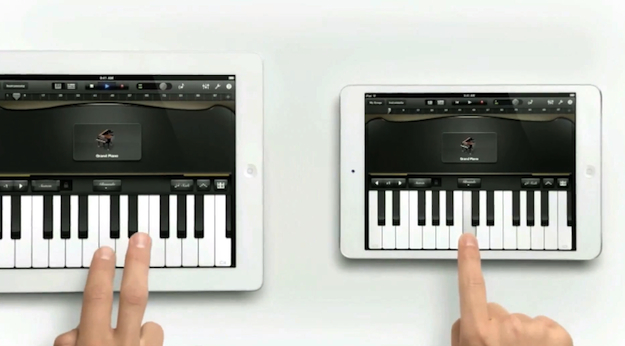
The first is short and sweet, running for just 30 seconds. It starts out with someone playing the opening notes to Hoagy Carmichael’s Heart and Soul with two fingers using a piano app on a full-size iPad. The new Mini then slides into view with the same piano keyboard displayed on the screen, whereupon a duet commences, with the iPad Mini pianist using one finger to play along. And that’s it. The short skit gives consumers a clear idea of how much smaller the new iPad is, while planting the idea that anything you can do on the big one, you can also do on the small one.

The second ad also runs for about half a minute and focuses on the iPad Mini’s new Smart Cover, protecting the screen from damage while adding a splash of color to the device. Incidentally, this Smart Cover is without the aluminum hinge found on with the iPad’s Smart Cover. Again, the ad is simple and slick, with a piano-based soundtrack, lots of iPad Minis and Smart Covers, and no voiceover.

Finally, there’s the full-on, look-what-we-have-here, meat-and-bones ad, coming in at just under five minutes. It’s in Apple’s familiar style, you know the type – white, brightly lit sets, talking heads, and a number of inserts showing the new product in everyday use. Now Tim Cook and his team just have to wait and see if anyone buys it….


Source : http://www.digitaltrends.com/mobile/apple-rolls-out-not-one-not-two-but-three-ipad-mini-ads/

Wednesday, October 17, 2012

Reports suggest controversial startup Color may finally be throwing in the towel

color app

Color has had a spotty history as an over-hyped up app that has floundered since launch, and a report indicates that the startup may soon be closing its doors for good.

According to VentureBeat, Color, the startup with more unsustainable hype than the the world has possibly ever seen, is preparing to go dark. Shareholders and the board have voted to close the company’s doors for good. 

Color has had a spotty history, and was a disappointment after raising $40 million last year from Sequoia Capital and Bain Capital, enjoying what was obviously now a serious overvaluation. Many saw Color’s inevitable demise, despite having received more money from Sequoia Capital than the early-stage venture capital allotted even Google.

At launch, the app jumped on the photo-sharing bandwagon while also introducing us to the idea of the elastic, location-aware social network. Users could share photos with others in their current location, giving them a real-time photo album of strangers near and around them. But even without location features, Instagram was still dominating the photo-sharing space, and we all know how that’s gone (hint: very, very well). Color’s intial idea floundered, and its founders went back to the drawing board.

Its pivot then transformed the photo-sharing app into a live video broadcasting service integrated with Facebook (and then Verizon). The concept had some potential thanks to the “Instagram for video” trend, and according to AppData was used by 460,000 users per month, but Color Labs’ investors and shareholders purportedly have finally come to the conclusion that it’s not enough.

Venturebeat got a hold of an email that was sent out to its employees that indicates the bleak future for the startup:

“I hope is all well with you. As you may or may not have heard, Color is going through a number of changes. Last week, the board and major shareholders voted to wind down the company.

We ask that you politely cancel any existing commitments stating we are closing our [redacted] program.”

The internal turmoil within Color Labs has been well-documented, and it should come to no one’s surprise that the startup has been on shaky ground for awhile. Color Labs was burning quickly through the $40 million to sustain its first app but had no significant user traction to show for the investment. To the tech world, Color has been the quintessential disappointment.

Color’s co-founder Bill Nguyen was rumored to have retreated from his role as CEO and in his stead, investor and Color Labs board member Geoff Raiston took over the reins. Boardmembers were torn between letting a new CEO officially replace Nguyen, while others have been loyal to its current CEO. Nguyen confirmed with TechCrunch that he had ceased his day-to-day activities with Color, but assured them that everything was in order back at Color Labs headquarters and that he was simply taking a breather. Of course if these most recent reports are valid, his words were simply meant to brush off the uncertain state of the company.

We’ve reached out to Color Labs and will update this space with any new developments.


Source : http://www.digitaltrends.com/mobile/color-app-is-shutting-down/

Tuesday, October 16, 2012

Hands on: Asus Padfone 2 review

Hands on: Asus Padfone 2 review

At a special Padfone 2 launch in Taipei today we managed to get some hands on time with Asus' second attempt at a smartphone/tablet pairing.

As was made clear during Asus CEO Jerry Shen's presentation, the company listened intently to the customer feedback on the original Padfone and has made some significant improvements for the device's second generation.

The phone itself is considerably lighter and sleeker than its older brother, measuring in at 9mm at it's thickest point and tapering to just 3mm at its tip.

Asus Padfone 2 review

Retaining the concentric circle patterned back of the original it feels elegant yet sturdy despite the lack of weight. The 4.7-inch screen is certainly a step up from it's predecessor, but somehow feels considerably smaller than the Galaxy S3's 4.8-inch offering than you might expect.

Slide to connect

Asus Padfone 2 review

The phone and the station combined weigh 649g, which is perfectly comfortable for a tablet, despite the additional weight of the phone.

Inserting the phone into the tablet is one of the places where Asus has made a considerable improvement.

Gone is the fold-back hatch that required the phone to be inserted sideways. Now the phone is inserted straight down into the top of the tablet, sliding in comfortably and providing a small vibration to indicate it has been inserted properly. It just as easily slides back out.

Those who remember almost snapping off the original Padfone station's hatch will recognise what an improvement this is.

The tablet dock is styled in a similar fashion to the phone, but when held side by side it lacks a little of the phone's refinement.

The concentric circles on the phone running out from the centered camera look fantastic, but this leaves the tablet wanting by comparison.

Battery life is a big feature for Asus, with Shen boasting that when the phone is docked in the tablet it has a 3G standby time of six weeks.

Asus Padfone 2 review

Without the tablet, Asus claims 3G talk time of 16 hours, browsing of 13 hours, video of nine hours and 3G standby of two weeks. And the Padfone's camera is impressive, offering 6fps for 100 continuous shots and 720p video recording at 60fps.

Asus Padfone 2 review

Early verdict

With the Padfone 2 Asus has presented a product that delivers on much of the unfulfilled promise of the original Padfone.

With pricing that is comparable to the entry level iPhone 5, consumers could well be tempted to pick up this alternative smartphone that is both handsome and can be converted into a tablet.

It's unlikely Padfone 2 will be a truly dominant force and it probably won't see Asus taking Apple and Samsung head on just yet, but the Padfone 2 does see Asus offering something unique and doing it with a good deal of style.


Source : http://www.techradar.com/reviews/phones/mobile-phones/asus-padfone-2-1104089/review

Monday, October 15, 2012

ASUS unviels the Padfone 2 in Taiwan ahead of official launch

Although the official launch of the Padfone 2 will take place later today in Milan, ASUS has already gone ahead and showcased the device(s) in Taiwan.


The new Padfone 2 has a 4.7-inch, 720p Super IPS+ display, Qualcomm APQ8064 quad-core processor, 2GB RAM, 13 megapixel camera with f/2.4 BSI sensor and 1080p30 or 720p60 video recording, NFC and a fixed 2,140mAh battery. The device runs on Android 4.0 Ice Cream Sandwich but a Jelly Bean update is promised in the near future.

On the tablet side, you get a 10.1-inch IPS HD display with a built-in internal battery that has gone down in size from 6,600mAh on the previous model to 5,000mAh on the new model. Because of this, the Padfone 2 weighs 649g with the phone docked in, compared to the 854g of the previous model.

The Padfone 2 will go on sale next week in Taiwan, with prices starting from NT$17,990 for the 16GB model to NT$21,901 for the 64GB model, which includes just the phone. The tablet bundle will cost you back NT$6,000 extra over each model's price. We will have more details once the device gets a proper launch.

Source


Source : http://www.gsmarena.com/asus_unviels_the_padfone_2_in_taiwan_ahead_of_official_launch-news-4957.php

Friday, October 12, 2012

Outdated apps may rain on Windows Phone 8′s parade

windows-8-app-store

Microsoft has yet to release its software development kit for Windows Phone 8 despite the OS's impending launch, raising concerns that developers won't have time to update their apps.

On October 29, Microsoft will finally tell us everything there is to know about Windows Phone 8, its new mobile operating system. But surely we know everything already, right? After all, we’ve seen the software and all the major manufacturers have announced their hardware too.

Microsoft says it has kept some facts back about WP8 to help maintain anticipation, and revealing those will be part of the October event. Unfortunately, this secrecy has caused Microsoft to delay the release of its Software Development Kit, or SDK, presumably to help avoid thunder-stealing leaks; but the final version is expected to arrive at the end of this month.

However, the wait has angered many Windows Phone developers, as did a decision to allow certain developers limited access to the SDK in return for signing a non-disclosure agreement.

Angry developers without access to the right software could mean problems in the new Windows Phone Store, which will be a worry for anyone wanting to buy one of the new handsets. Windows Phone already lags behind Android and iPhone when it comes to quality apps. Should we be concerned by this delay?

Will app availability be a problem?

A delayed SDK means developers won’t be able to fine-tune, test, or add in additional features to get their apps ready for Windows Phone 8. They also can’t create new apps that take advantage of the new platform. The good news is Microsoft has said Windows Phone 7 apps will be compatible with Windows Phone 8, so every app that’s already in the store will still be available — they just won’t be optimized.

More good news is that those developers with early access are likely to be the big studios, as Microsoft will want to ensure high profile apps have been enhanced to show off the OS’s abilities. Don’t forget, Windows Phone 8 hardware has faster processors and higher resolution screens, so there’s plenty of scope to improve existing apps.

We asked Microsoft representatives if the lack of an SDK would be a problem. Predictably, we were assured that it’s all part of the plan:

“We’ve been quietly previewing the SDK with hundreds of top developers and on September 5 announced a broader SDK Preview Program for registered developers with apps in Marketplace. As usual we aren’t going to release the SDK to the general public until the full OS is revealed, but we feel this Preview Program delivers on the commitment we made in June and allows developers to test and update their apps for Windows Phone 8.”

Regardless of why Microsoft is being secretive, this delay brings us on to the bad news: older apps may not look all that great until they’ve been updated. It looks like some developers have been given the information needed to update, but not all of them. Remember the switch from a 320 x 480 pixel screen on an iPhone 3G/3GS to the iPhone 4’s Retina Display? While it won’t be quite that pronounced, this situation is very similar. The bottom line here is that yes, there will be apps, but most will not be enhanced for Windows Phone 8 in time for release.

Atic S LaunchThere is one more thing to remember, and that’s the October 29 date isn’t the date Windows Phone 8 hardware goes on sale. Due to Microsoft holding back, manufacturers have stayed quiet on when phones will hit stores, with sometime in November being the only word.

Provided the SDK comes out on October 29, then developers will still have a few weeks to play with their apps before you get your hands on a WP8 phone. Let’s hope they work fast.

Microsoft has upgraded it developer portal, promising improvements in the app certification process and overall site performance. Another 13 countries have been added to this list too, bringing the total to 191, and more developers able to sing up means more apps for us.

Is all this normal?

Apple releases different versions of its iOS SDK between the date of its announcement and the date of final release. Not all the versions have every new feature, but they at least allow developers to start work on new apps, or update existing ones. For example, according to this chart, the first iOS 5 beta appeared on June 6 2011, and four subsequent beta versions were released before the final October street date. iOS 6 was similarly released a few months prior to the iPhone 5 going on sale.

Historically, Google has released its SDK a short while after it announces the new version of Android, with 4.1 Jelly Bean’s SDK coming out in July this year following Jelly Bean’s announcement at Google I/O.

The real star at the moment, surprisingly, is RIM (Research in Motion). Despite BlackBerry 10 not appearing until next year (current guestimates hint at March 2013), Beta versions of its SDK are already available to developers, and this week it began accepting app submissions too. It’s even offering an incentive to early bird devs, promising selected apps a prominent position in BlackBerry App World. It looks like it really is lovin’ its developers.

Microsoft’s approach is unorthodox, and does exactly the opposite of RIM’s, as it alienates developers and could potentially annoy buyers when the app selection is sparse. There’s still time to fix this, but Microsoft needs to start soon.

Will it all be OK come release day?

Maybe. Microsoft has dug itself a hole with the handling of Windows Phone 7. No one running a WP7 device will be able to upgrade to Windows Phone 8, making the old OS and hardware completely obsolete. Developers want to turn their attention to the new version, but are being hampered by Microsoft’s desire to keep things “secret.” RIM is often ridiculed, but it knows how important it is to keep developers working on its platform.

The first thing any new Windows Phone 8 owner will do is check out the available apps in Microsoft’s Windows Phone app store. If the selection is poor, or the version available is for outdated hardware, that negative experience will spread — fast. Worse, experienced smartphone buyers are already used to Google Play and/or the iTunes App Store, which are full of good apps.

Microsoft needs Windows Phone 8 to have a more successful launch that Windows Phone 7, and is playing with fire by denying developers access to the WP8 SDK right now. Or, for all we know, the software has problems and isn’t finished, requiring last minute adjustments. If it’s the former, the reasoning is bizarre but not unforgivable provided the secrets are truly exciting; but if it’s the latter, then Microsoft has got bigger problems to worry about than a software developer kit.


Source : http://www.digitaltrends.com/mobile/windows-phone-8-hampered-by-outdated-apps/

Wednesday, October 10, 2012

Samsung Galaxy S3 Mini launching tomorrow

Samsung Galaxy S3 Mini launching tomorrow
I will call him... Mini Galaxy S3

The Samsung Galaxy S3 Mini launch event has been confirmed as tomorrow, when the 4-inch handset will take to the stage in Germany.

We first reported that we may see a slimmed down version of the popular, but rather large Samsung Galaxy S3 last week after an invite to the German event showed up online.

JK Shin, Samsung's head of communications has now confirmed that the Korean firm will indeed release the Galaxy S3 Mini on October 11.

Expect big power in a smaller package

Shin also said that Samsung fans shouldn't be concerned about the specifications of the Galaxy S3 Mini, as the handset won't be found wanting in that department, and would have a "full form factor".

It's unclear if the Samsung Galaxy S3 Mini will sport exactly the same quad-core processor and 8MP camera as found in the S3 - although that would be pretty fantastic, we also reckon it's highly unlikely.

Our money is on a punchy dual-core chip and potentially toned-down camera – however this would mean the Galaxy S3 Mini would be similar, if not slightly less featured packed than the still excellent, but now reasonably priced Samsung Galaxy S2.

The 4-inch display means the Galaxy S3 Mini could turn out to be a direct rival to the new iPhone 5, which sports, for the first time on an Apple smartphone, a bigger display.

The Galaxy S3 Mini could also come running Android 4.1, which would be the first handset in Samsung's core range (ignoring the Galaxy Nexus) to sport the Jelly Bean software.

Luckily we've not got long to wait, with all our questions being answered tomorrow. We spoke to Samsung, and a spokeperson for the company said: "The Galaxy S III Mini will come with a 4" display and we are going to unveil the product tomorrow (Oct 11th)."


Source : http://www.techradar.com/news/phone-and-communications/mobile-phones/samsung-galaxy-s3-mini-launching-tomorrow-1103366

Thursday, October 4, 2012

Microsoft to hold a Windows Phone 8 event on October 29

With its Windows 8 and Surface tablet launch event detailed, Microsoft has spilled the beans on its Windows Phone 8 launch event as well.

Taking place in San Francisco on October 29 at 10:00 AM, the event will give us the long-awaited details on Windows Phone 8. Microsoft has been very secretive of the latest iteration of its mobile OS, so it's going to be quite an event.

Be sure we'll cover the Windows Phone 8 launch event and give you as much detail on what Microsoft has been cooking for the smartphone users as possible.

Via


Source : http://www.gsmarena.com/microsoft_to_hold_a_windows_phone_8_launch_event_on_october_29-news-4901.php

HTC One X+ goes on pre-order in the UK, to arrive in late October

The HTC One X+ went official a couple of days ago and the first pricing and launch info for the UK is in - Clove announced it is taking pre-orders for the flagship smartphone and that they expect to have it in stock near the end of October.

Their pre-order price is set at £474 ($764, €600) for the 64GB version (no info on the 32GB version yet). This is pretty much what the leaked O2 UK brochure showed, though the HTC One X+ is not available on O2 website yet.

Expansys UK is the only other etailer that's offering the One X+ at the moment - the price there is a bit higher at £490 and there's no estimated availability date.

In case you missed it, the HTC One X+ brings a faster quad-core processor - Cortex-A9 at 1.7GHz instead of 1.5GHz - with its updated Tegra 3 chipset, a version with 64GB of storage (in addition to the standard 32GB option) and a bigger 2100mAh battery (up from 1800mAh). It also got red accents a la Sensation XE.

The One X+ will be travelling across the pond too, with AT&T already talking it up.


Source : http://www.gsmarena.com/htc_one_x_plus_goes_on_pre_order_in_the_uk_to_arrive_in_late_october-news-4898.php

Wednesday, October 3, 2012

EE 4G launch date confirmed as October 30

EE 4G launch date confirmed as October 30
4G - harder better faster stronger

Things are about to get a bit speedier in the UK with the announcement of EE's 4G network launch date as 30 October 2012.

The date sees the new EE brand "go live" alongside the super-fast mobile network, which will go live in ten cities around the country (London, Leeds, Liverpool, Manchester, Sheffield, Glasgow, Edinburgh, Cardiff, Bristol, Birmingham).

EE says that Belfast, Derby, Hull, Nottingham, Newcastle and Southampton will also join the 4G line-up by the end of the year.

Earlier today, EE announced the phones that will first be able to handle the 4G network, with the HTC One XL, Huawei Ascend P1 LTE and Samsung Galaxy S3 LTE joining the iPhone 5 in the launch line-up.

27 days

You don't have to wait until October 30 to upgrade though; EE will let you buy the phones now then upgrade to 4G plans once they're available.

Speaking of which, there's still no word on tariffs and pricing for the UK's first 4G network; we'll be pestering EE every day until it tells us though, rest assured.

Of course there was time for a bit of smug gloating about being first to 4G, with Olaf Swantee, CEO of EE, saying, "We are very proud to be pioneering, innovating and leading our industry in launching 4G for our nation through our new EE brand."

Three, O2 and Vodafone will also be launching 4G services by the end of summer 2013.


Source : http://www.techradar.com/news/phone-and-communications/mobile-phones/ee-4g-launch-date-confirmed-as-october-30-1101560

Sunday, September 30, 2012

Acer CloudMobile smartphone goes on sale in UK

Acer CloudMobile smartphone goes on sale in UK
Nine months after launch, the CloudMobile goes on sale

Acer's CloudMobile S500 smartphone, unveiled way back at MWC in February, has finally gone on sale in the UK.

The 4.3-inch Android Ice Cream Sandwich handset is now in stock at online retailer Expansys for the rather modest SIM-free price of £290.

The device, initially slated for launch by the store on September 5, features a 1280 x 720 HD IPS display, a 1.5GHz dual-core processor, 1GB RAM, and 8GB of on-board storage.

There's also an 8-megapixel camera on board, capable of shooting full HD video.

Take it to the Cloud

The device is somewhat skewed towards business users as the AcerCloud app makes it easier to sync-up their data with other Acer devices, like a laptop or tablet.

The 9mm thick device seemed like a solid mid-range player when it was announced over 7 months ago in Barcelona. Does it still have what it takes to match up with the competition?


Source : http://www.techradar.com/news/phone-and-communications/mobile-phones/acer-cloudmobile-smartphone-goes-on-sale-in-uk-1100844

Tuesday, September 25, 2012

How is selling 5 million iPhones not enough for Wall Street?

new iphone 5 ads

Apple's iPhone 5 launch is the biggest in the company's history, but it's being chalked up as a "disappointment." Why?

Apple’s iPhone 5 is thinner, lighter, and packs a high-performance Apple-designed processor, a taller display, and 4G LTE connectivity. Unsurprisingly, it’s also racking up monstrous sales. After tallying 2 million pre-orders in 24 hours, Apple managed to sell 5 million iPhone 5′s in its first weekend of sales.

The figures represent Apple’s strongest iPhone launch to date. And yet the technology and financial press are painting these initial sales figures as a disappointment and a sign that the shine may be wearing off Apple’s stellar growth and profitability. How can selling more phones in its first weekend than ever before — and more phones in the first weekend than any of its competitors have dreamed — be a sign Apple is in trouble?

The launch numbers

Apple is well-known for reporting sales figures for its iPhone and iPad product lines during its financial results each quarter, along with sales figures from it’s iPod and Mac lines. Apple only calls out extraordinary sales milestones separately, such as when the iTunes App Store hits a sales milestone (like 25 billion) — and, before that, when the iTunes Music Store hit a major figure.

Since the launch of the iPhone 3G, Apple has devoted special announcements to iPhone sales — and the iPhone 5 was no exception. CEO Tim Cook announced that the company had sold 5 million iPhone 5s during the first weekend of sales in nine countries — internationally, that’s the broadest iPhone launch Apple has ever attempted.

How does that compare to previous iPhones? The iPhone 4S sold 4 million units during its first weekend, while back in 2010 the iPhone 4 sold 1.7 million units during its first weekend. Previously, the iPhone 3GS sold more than 1 million units its first weekend, and the iPhone 3G sold a million its first weekend before that.

Apple iPhone sales (first weekends)

What’s really remarkable about these first-weekend sales figures is the leap between the initial sales of the iPhone 4 and the iPhone 4S. The difference between selling 1.7 million units in an opening weekend and 4 million is 135 percent. In comparison, the opening weekends for the iPhone 3G and 3GS were relatively flat, and the iPhone 4 was 70 percent higher than the iPhone 3GS. In contrast, Apple’s 5 million-unit weekend for the iPhone 5 represents only a 25 percent increase over the iPhone 4.

Apple CEO Tim Cook essentially apologized for not having enough iPhone 5s for everyone who wanted one at launch, noting the company is working as quickly as it can to make more and stores continue to receive iPhone 5 shipments. Nonetheless, current iPhone 5 orders now carry shipping estimates in October as Apple tries to work through the backlog. The company will be facing more waves of launch demand as it brings the iPhone 5 to 22 more markets this week, and 100 additional countries by the end of the year.

The analyst numbers

iPhone 5

Researchers working for market analysis firms had generally estimated first-weekend sales for the iPhone 5 at substantially higher levels. Many estimates were in the 6- to 6.5 million-unit range, with Piper Jaffray’s Gene Munster leading the pack with a range of 6 to 10 million units for the first weekend, characterizing 6 million units as a “worst-case scenario.”

Looking at the chart above, it’s easy to see where these analysts came up with their figures. If you take the iPhone 4 as an infection point and the iPhone 4S as representative of Apple’s market trend, then in a perfect linear universe, Apple’s iPhone 5 sales ought to have about 200 percent higher than the iPhone 4S, or about 12 million units sold during the first weekend. However, most analysts will admit there are many factors in play, including Apple’s ability to manufacture and source components for the new devices, as well as logistical hurdles getting the devices to retailers, carrier partners, and customers. So no analysts actually thought Apple would be able to sell 12 million iPhones the first weekend. That’s a feat that (to my knowledge) has never been achieved in the history of consumer electronics, let alone mobile phones. So analysts did some curve-fitting and came up with figures between 6 and 7 million units.

How Apple counts sales

Apple CEO Tim Cook D10

So here’s the funny part: The analysts looking for between 6 and 7 million iPhone 5′s sold during the first weekend might not have been that far off. Apple differs from almost all of the technology and consumer electronics industry in that it only considers a unit to be “sold” when it’s in a customer’s hands.

Apple’s definition of “sold” seems pretty straightforward, but most of the rest of the electronics industry considers a unit “sold” when it leaves the factory. This is the source of the distinction between units sold and units shipped that have gotten many companies — including Samsung — into trouble over the years.

In business circles, units shipped from a factory are sometimes described as a product’s “sell-in” — units into the retail channel — where products in consumers’ hands represent “sell-out” — out of the retail channel. Both numbers are valuable in looking at a product’s success. For a new product, sell-in figures often represent retailers’ and partners’ confidence in a product. The more units they’re willing to commit to carrying up front, the more potential they think the product has. So sell-in can be an early indicator of a product’s potential success. Sell-in units also represent a bit of a risk to a manufacturer: In many industries, they have to agree to buy back any unsold inventory.

Of course, sell-out is the better arbiter of a product’s sales success, especially when combined with product returns. That figure loosely represents how many consumers bought the product and actually kept it.

Ideally, the ratio of a product’s sell-in to sell-out should one one to one. Companies want to sell as many units of a product as they can make, have no unsold products sitting in retailers’ inventories, and (of course) have no products returned due to defects or customer dissatisfaction. A product with a sell-in disproportionate to its sell-out — like, say, the Logitech Revue — can represent a significant misstep.

In Apple’s case, nearly every analyst forecasting iPhone 5 sales was forecasting sell-in figures — including online orders that have not yet been fulfilled. Conversely, Apple’s reported figure of 5 million iPhone 5′s sold represents a sell-out figure: Devices that are actually in customers’ hands.

Although Apple admits demand for the iPhone 5 exceeded the initial supply of the device, more iPhone 5′s have left the factory than Apple considers sold. Apple indicates retailers will continue to receive shipments “regularly” and the company is gearing up to launch the iPhone 5 in 22 more markets this week. Apple has made far more than 5 million iPhone 5′s — although we don’t know how many more. But the company is only counting 5 million as “sold” on the first weekend.

Demand is still unknown

iphone 5 line in new york

What do these figure mean for the launch of the iPhone 5?

At a basic level, just as with the iPhone 4 and iPhone 4S, Apple was essentially able to sell every iPhone 5 it had available on launch day. On some levels, this is an almost ideal situation: there’s no inventory sitting around waiting to be sold, and Apple generates revenue from every product it builds very quickly. With the launch of the iPhone 5, those initial sales will do nice things for the company’s bottom line. Apple’s current fiscal quarter ends on September 30, and all those 5 million iPhone 5′s — and all the iPhone 5′s it sells between now and the end of the month — will go directly into the company’s next financial results.

On the other hand, it does mean Apple is failing to meet demand for the iPhone 5 — and business common-sense is that frustrated customers will take their business elsewhere. It’s possible that some customers who want an iPhone 5 are simply unwilling to jump through hoops — like immediately jumping on online ordering or waiting in line outside an Apple Store — to get one quickly, so they’re opting for devices like the Samsung Galaxy S III because, frankly, they’re really easy to get.

What would Apple have to do to meet initial demand for a new iPhone? Nobody knows. Apple has radically increased its capacity to build and deliver new iPhones to customers — nobody does mobile phone launches that compare in scale to the iPhone 5 launch. And yet Apple was still unable to meet initial demand. The true market demand for new iPhone is still unknown: it might be just a smidgen larger than what Apple can handle…or it might be double the current demand. That means Apple still has room to grow its iPhone business — and there’s still no ceiling in sight.

Leaving money on the table

iphone cash money subsidy

The market’s disappointment with Apple selling a mere 5 million iPhone 5′s during its first weekend boils down to two factors.

First, it represents only a 25 percent increase over first-weekend sales of the iPhone 4S, which strongly suggests Apple is reaching the peak of how many iPhones it can sell at launch. That’s not because consumers don’t want more iPhones, but because Apple isn’t currently able to deliver them the first weekend. Despite Apple’s famous logistical and supply-chain efficiency, the company may be starting to hit the limits of what’s possible with a mobile-device launch. That, in turn, will constrain the revenue Apple can generate with a new device launch — and investors hate any restraint on revenue, since it means lower short-term gains. Apple may pull a rabbit out of its hat, but it’s possible most of the gains Cook and company can wring from the iPhone supply and manufacturing process were realized between the iPhone 4 and 4S.

Second, investors are upset that failing to meet initial demand for the iPhone 5 — or any iPhone, for that matter — means Apple is leaving money on the table. Consumers are literally camping out overnight with money in their pockets to set hands on Apple’s latest and greatest, and Apple is not able to meet that demand. Although the iPhone generates massive profits for Apple, investors see that it could be making even more money for Apple — and hence, more money for them. So, in a way, they feel ripped off.

What’s next?

Apple is going to stick to its guns: The company will continue to report on the number of units sold (not shipped), and in October will report substantial revenues boosted by the launch of the iPhone 5. Apple’s forecast for the final quarter of the calendar year will be a little conservative, but given the end-of-year holidays, Apple can be expected to post record sales numbers in January.

In the meantime, Apple is almost certainly looking at ways to have a huge supply of new products on hand when it announces a new device — like the rumored iPad mini.


Source : http://www.digitaltrends.com/mobile/when-selling-five-million-iphone-5s-is-not-enough/

Monday, September 24, 2012

Camera samples shot with Galaxy Nexus 2 I9260 leak on Picasa

It's been nearly a full year since the last Google Nexus phone was announced (though we witnessed the launch of the Nexus 7 tablet in the meantime). We've already seen some leaked specs of an update for the Galaxy Nexus but now we have photos uploaded to Picasa to back those up as well.

The EXIF info in the photos labels the device "GT-I9260" - the expected model number of the successor of the current Galaxy Nexus (I9250). Unfortunately, the photos were not shot at full resolution, so they can't confirm the upgrade to 8MP that the camera of the next Galaxy Nexus is rumored to receive.


What the photos do reveal however, is a F/2.65 aperture and a 4mm focal length. The Galaxy S III has an aperture of F/2.6 and a focal length of 3.6mm, while the Galaxy S II has an aperture F/2.65 and a focal length of 3.97mm, so it might be theoretically possible that the new Nexus phone may have the same camera as the Galaxy SII.

The firmware versions listed in the EXIF info in the two photos is I9260XXALI5 and I9260XXALI6.

In one of the photos, there's a portion of an Excel window with a table listing Bluetooth specs for something, but there's nothing interesting that can be made out.

Besides the camera, the Samsung I9260 Galaxy Nexus "Premiere" is supposed to have a better CPU (Cortex-A9 dual-core at 1.5GHz instead of 1.2GHz), a microSD card slot and the same 4.65" Super AMOLED HD screen.

Would it be okay if the next Galaxy Nexus really isn't based on the Galaxy S III? The OS it will run is still not clear - typically, a Nexus device would come with the latest available iteration of Android, but Jelly Bean is still very fresh (barely powering a percent of all Androids), so it might be too early for Key Lime Pie.

Source | Via (in Chinese)


Source : http://www.gsmarena.com/camera_samples_shot_with_galaxy_nexus_2_i9260_leak_on_picasa-news-4848.php

Motorola Razr i price: networks announce tariffs

Motorola Razr i price: networks announce tariffs
Are you eyeing up an i?

The Motorola Razr i was announced last week and several networks have now released pricing details for the phone.

From launch the Razr i will be available on T-Mobile, Orange and Virgin Media from October, with Motorola still in talks with the likes of O2, Three and Vodafone about the possibility of ranging the handset. A Moto spokesperson told us, "Further partners will be announced in due course".

Both T-Mobile and Orange are offering the Motorola Razr i for free on two year contracts starting at £31 per month, while Virgin contracts start at £23 per month – but you'll probably need to pay some money up front for the handset.

More to come

High-street retailer Phones4U has an info page on its website for customers to register their interest for the Razr i, however pricing is yet to be announced, while Tesco is also a confirmed reseller but is yet to release any details.

The Motorola Razr i is the first smartphone to pack a single-core 2GHz processor, and its maker Intel reckons it matches and even surpasses other dual-core phones.

As well as that nippy chip, you also get a 4.3-inch, 540 x 960 edge-to-edge display, 1GB of RAM, 8GB internal storage, Android 4.0.4 Ice Cream Sandwich (with a Jelly Bean update coming in the near future), 8MP rear camera with LED flash and HD video recording, plus a beefy 2,000mAh battery.

Check out our hands on Motorola Razr i review to find out what we think of the phone, and keep an eye out for our full review, coming soon.


Source : http://www.techradar.com/news/phone-and-communications/mobile-phones/motorola-razr-i-price-networks-announce-tariffs-1099225

Sunday, September 23, 2012

Google-owned Motorola mocks Apple Maps app in new ad

Google-owned Motorola mocks Apple Maps app in new ad
Apple's misfiring Maps app has overshadowed the iPhone 5 launch

Google has used its Motorola smartphone brand to poke fun at the ongoing Apple Maps debacle.

A new advertisement for the Motorola Droid Razr M depicts the smartphone next to the iPhone 5. The Android device shows Google Maps while the Apple smartphone features the new Maps app on screen.

While the Razr M displays a detailed satellite image of 315 E 15th Street in downtown Manhattan in Google Maps, the iPhone 5 with Maps shows the same street, appearing as an almost barren stretch of road.

The ad's caption reads: "The real world that's fit for your hands," while the wording underneath the iPhone 5, simply reads "#iLost'

Overshadowed

The Motorola Mobility Twitter account posted the posted the ad late on Friday, while the Maps mess was busy overshadowing iPhone 5 launch day. Moto has continued to push the #iLost hashtag in tweets since.

Google, of course, will probably be feeling pretty smug right now; like a jilted lover who's just seen their ex arm-in-arm with a dramatically less desirable new partner.

Google Maps was shelved by Apple for a homegrown solution for iOS 6. Apple has pleaded for patience as as it seeks to improve the new tech with the addition of user data.


Source : http://www.techradar.com/news/phone-and-communications/mobile-phones/google-owned-motorola-mocks-apple-maps-app-in-new-ad-1099157

Friday, September 21, 2012

Apple iPhone 5 jacked up to $3,000 on eBay

Apple iPhone 5 costs up to $3000 on eBay

Even on launch day, Apple's iPhone 5 costs as much as $3,000 on eBay.

Standing in line for Apple’s new iPhone 5 may have been worth the wait: The device is currently going for as much as $3,000 on eBay — approximately 15 times what you’d pay for a 16GB version with a wireless contract.

Of course, $3,000 for an iPhone 5 is an anomaly, even in the super-inflated eBay market. A quick search shows many in the $700 to $950 range (for the 16GB, carrier-locked version). An “unlocked” iPhone 5 will generally cost you between $1,000 and $1,500 on eBay today, which could be worth it to people who are want the device now, and plan to do some international traveling in the next month.

The iPhone 5, which sports a 4-inch display, 4G LTE connectivity, a faster processor, iOS 6, and (for better or worse) a new “Lightning” dock connector, typically starts at $200 for the 16GB, up to $400 for the 64GB version, with a two-year contract from AT&T, Verizon, or Sprint. But considering that many stores have reportedly sold out of the device, and shipping time for an online order is up to a month away, the jacked up eBay prices may well be worth it.

Fully unlocked versions of the iPhone 5 are not officially available, though Apple will eventually sell the device for $650 and up. However – this is a big however — iDownloadBlog has confirmed that the Verzion (CDMA) version of the iPhone 5 is GSM unlocked, meaning you can pop in an AT&T Micro SIM card, and use it on AT&T’s network.

If you ask us, it’s best to just take a deep breath, and wait for the excitement to calm down and the kinks to work themselves out. But if you’re the impatient (and rich) type, then hit up eBay. There are plenty of iPhone 5s over there.

Check out our full iPhone 5 preview here.


Source : http://www.digitaltrends.com/mobile/apple-iphone-5-jumps-past-1000-on-ebay/

LG readies itself for next level of patent wars

LG readies itself for next level of patent wars
LG just LOVES 4G

Like its Korean compatriot, LG has stated it believes it is best-placed to defend itself should 4G technology become a legal battleground.

Speaking at the launch of the LG Optimus G, the head of the mobile division took pains to point out how well-stocked the company is for 4G (LTE) technology:

"We have a very strong patent portfolio: basically, LG is the number one in LTE patents globally," said Jong-Seok Park, CEO of LG Mobile Communications.

"We've also got a strong portfolio of patents [relating to the UI], and I'm confident we're strong in this regard - we are aware of ongoing patent wars."

You can't patent the truth

Ram-Chan Woo, head of LG's mobile planning division, also stated that the company has 23% of LTE patents, which are worth $7.9billion (£4.8billion).

LG

The company also confirmed it applied for the most patents in the US during 2012, ahead of Samsung and Nokia.

The location of these filings is as key as their volume and value, as it's believed the next round of smartphone litigation will centre around 4G technology in phones, and which firms should be paid for the privilege of using it.


Source : http://www.techradar.com/news/phone-and-communications/mobile-phones/lg-readies-itself-for-next-level-of-patent-wars-1098916