Nokia has let slip that Windows Phone 7.8 could be landing on users' handsets in just weeks, if not days, as the updated software has now been released to manufacturers.
The news comes from a developer seminar in Singapore, where the head of Nokia Asia Pacific Developer division let slip that the RTM had happened.
Reportedly, he told devs that the consumer roll-out would definitely happen before 2013, and added that WP7.8 won't be getting the swish new IE10 browser because the aging hardware can't support it.
Nearly but not quite
The not-quite-Windows Phone 8 software update will see Windows Phone 7 devices get some almost-WP8 updates like a revamped Start screen and Xbox Music, among other consolatory prizes.
We'd previously heard tell of a Windows Phone 7.8 release date following shortly after the Windows Phone 8 launch date (which was October 29), thanks to a post on the Italian Windows Phone Facebook page.
This was also backed up by a leak on a Chinese blog last week; so although nothing's for sure, all signs point to an imminent software treat for WP7 users.
If you're wondering why the iPhone 5 won't be dispatched for three to four weeks, here's your reason. Manufacturer Foxconn can't make them fast enough, according to its chairman Terry Gou.
"It's not easy to make the iPhones," Gou told reporters. "We are falling short of meeting the huge demand."
He didn't specify which model is proving particularly tricky, but it's thought he was referring to the latest incarnation.
Last month, an unidentified Foxconn worker said that making the iPhone 5 was "very complicated", hence the supply issues. They described the handset as "the most difficult device that Foxconn has ever assembled."
Tricky design
The iPhone 5 is taller and slimmer than the iPhone 4S, with a larger 4-inch screen. It also has a smaller dock connector.
"It takes time to learn how to make this new device," the unnamed worker told the Wall Street Journal. "Practice makes perfect. Our productivity has been improving day by day."
Between 3,000 and 4,000 Foxconn workers were also reported to have gone on strike last month, though the company denied it. The workers said unfair demands were being placed on them. The company also allegedly provided inadequate training for those putting together the new device.
It was also claimed workers were made to work over a national holiday, though Foxconn said any who did were paid extra, in line with national labour laws.
The iPhone 4S and 4 are in stock at Apple's online store, so should be dispatched as soon as you order.
A couple of weeks ago we saw the first Android 4.1 Jelly Bean ROM for the Samsung Galaxy Note leak, version N7000XXLS2, but now SamMobile claim that they have the real deal straight from Samsung's servers and that the previos ROM was a system dump.
The update brings the original Galaxy Note to Android 4.1.1 and gives it the latest TouchWiz with all the bells and whistles. The ROM also has basic support for Air View (detecting the S Pen from a distance and triggering previews), but that isn't ready just yet.
Before you flash N7000XXLS2 on your Note, have a look at this video N7000XXLS7, which some lucky guy in France who got the update early. It updates the phablet to Android 4.1.2 and enables Multi-View just like on the new Note II.
The video is quite long (and in French), but here are the juicy bits - flashing the ROM at 4:00, you can see the Jelly Bean version at 7:30 and 16:50, Multi-View is shown off at 9:00 and texting works too (13:00), suggesting it's a fully featured ROM.
You can't flash this ROM has yet as it still hasn’t made its way to XDA. On the upside, LS2 is from October 9 (nearly a month ago), so Samsung should be testing a newer version internally (possibly the LS7) and the update should be nearly ready (the Galaxy S II update should arrive at the same time too).
Granted, the Android 4.1 Jelly Bean update to the oh-so-popular Galaxy S III has been seeding at some places for more than two weeks now. But the UK owners (and those in a list of other European countries) were not lucky enough to make it in the first wave.
Starting this week though, users in UK, Ireland, France, Italy, Austria, Spain, Switzerland, and Romania are finally able to enjoy all the improvements brought by the latest Android release.
The Galaxy S III owners in the US however, are not as lucky, as there's still no certain Jelly Bean US release schedule for the Galaxy S III. All we have as a promised release date is the vague "in the coming months".
In case you're still pondering on whether the update is worth the fuss of backing up your data and reinstalling all your apps and tuning their settings, check out our Galaxy S III Jelly Bean review.
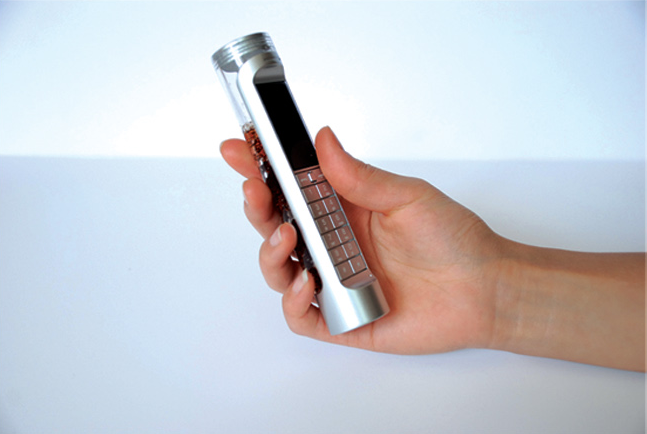
A concept phone utilizes sugary drinks as the power source for a cellphone, making the battery biodegradable.
I’ve been trying to quit soda for the past few weeks thanks to too many hours on Reddit and constant streams of photos that displayed how much sugar was in a can of Coke. As a result, there are untouched cans of soda sitting my fridge with no one to claim them, but it felt irresponsible if I just gave them to the kids next door. If only this eco-friendly concept cellphone existed. The design, by China-based Daizi Zheng, claims that a Nokia phone could be powered solely on sugary drinks. Now there’s an interesting use of leftover Coke that’s much more excitable than cleaning the rust off my pennies.
According to Zheng’s thesis, the phone would contain a chemical board that can form a reaction to utilize sugar enzymes and carbohydrates and convert them into electric power. The phone would work with most sugary drinks; in fact, more sugar means longer battery life. When the sugar and carbs are all used up as battery, you’re left over with a liquid that’s biodegradable, and the phone can be cleaned, refilled, and reused once again.
“Bio-batteries are fully biodegradable and have, on a single charge, a potential life-span three to four times longer than conventional lithium batteries,” Zheng writes on his website. Keep in mind, however, this design would be used with a basic, barebone phone, so no sticky touchscreen and apps here.
Since the design aims to be environmentally-friendly, it’s probably better to use straight sugar water than Coke or other packaged sodas, considering how they tend come in plastic bottles or cans — both of which are already pretty expensive to recycle. Still, it would be cool if the phone doubled as a drink bottle so you can choose to either gulp your soda or conserve it for more phone battery. This rationale would force the user to pick between drinking an unhealthy beverage or forgo it for the sake of your gadget’s usability. However, since the sugar disappears as the phone uses up the battery, it is unlikely that the soda you do end up drinking from the phone would taste any good. We also have to wonder if the fizzy noise would interfere with your sugar high calls.
It’s an interesting approach at multi-purposing a notorious food item, and such a gadget would make a neat science experiment for kids to learn about the wonders (and potential harms) of what sugary drinks means to them, and the chemical world.
The world of tech is hugely competitive and ridiculously fast-moving, and that's why we like it so much: today's hero can quickly become tomorrow's zero as something more interesting, elegant or exciting comes along.
That's definitely the case in the ultra-competitive smartphone market, where we've discovered the very best thing money can buy: it has "every kind of feature we could ask for and more, and [it] raises the bar once again in terms of what consumers should be expecting in terms of battery life, processor speed and media management." We'd recommend you buy one "without hesitation".
Is it the iPhone 5? Nope! It's the Samsung Galaxy S3, which we've spent some more time living with to see how it compares to Apple's latest. As nice as the iPhone is, we still think the S3 is better - even though it "doesn't have the same wow factor" as its predecessor.
As we explained in our hands on review, "the fifth-gen iPod touch is a big step forward. Its battery life and low cost of ownership (since it has no cellular contract) beat the iPhone, and it can do just as much, in a thinner, lighter package."
The late Steve Jobs was seen by many as the king of the technology industry, and our Gary Marshall makes a strong argument that Amazon's Jeff Bezos is his successor: "In a world of dull tech CEOs – ten points for anyone who can say three interesting things about Samsung's CEO; hell, ten points for anyone who knows his name without Googling it – Jeff Bezos stands out," he writes, arguing that "like Jobs, Bezos thinks big and plays for keeps."
Something bad
According to the US House Intelligence Committee, the Chinese mobile makers Huawei and ZTE are kings too: kings of EVIL! After an 11-month investigation, the Committee said that the companies are an espionage threat to western firms and governments, and accused them of bribery, corruption, discriminatory behaviour and copyright infringement.
As you might expect, the companies angrily denied the allegations - in Huawei's case, over 81 no doubt riveting pages - but the news sparked "dozens and dozens" of fresh complaints to the Committee, so the story isn't going away any time soon; meanwhile the Committee is urging US firms to buy kit from other companies and TechRadar news writer Matt Swider's pun generator is set to max: he describes the growing international consensus against Huawei as "The Coalition of the Un-Huaweilling." Zing!
Could we have a new king of small tablets this time next week? It's certainly looking that way as the world greets the imminent arrival of a new Apple product with the traditional rumour-mongering, leaked product images and wish lists. You know it's coming. We know it's coming.
Pretty much the only thing we don't know is whether it'll be called the iPad mini, iPad Air, or Sharon - although it's unclear whether we'll see a 3G/4G version or, as The Guardian reports, just a Wi-Fi one to keep the small iPad distinct from its bigger sibling. Yet more allegedly leaked pictures are doing the rounds, showing the expected Lightning connector and a more squared-off case. Unless Apple really messes up or charges too much, it's clearly going to sell squillions.
Something bright
Are you planning to buy an iPad mini or similar device for your kids? Some experts say you shouldn't, and that "your gadgets will eat your children's brains and turn them into something even more horrible than George Osborne," Gary Marshall warns, agreeing that too much screen time and not enough exercise is unlikely to have a happy ending.
"As a geek parent I'm a paid-up member of the Gadgets Are Great club, and I think tech can be great for teenagers and tots alike," he says. "The trick, as with most things, is to get the balance right. If your kids are trying to pinch and zoom their picture books, you should probably give the screens a break."
"We have to ultimately offer a smartphone because in many countries of the world [the smartphone] would be your first computing device," Whitman said as she claimed smartphones are quickly becoming the new computers.
Those with a financial interest in HP's plans were immediately intrigued by Whitman's proclamations, but she quickly dialed back the hype.
Though HP will probably field a new entry in the smartphone market, the company won't have much to show for at least a few years.
That said, Whitman doesn't expect HP to have a smartphone ready any time soon.
"We don't have any plans to introduce a smartphone in 2013, but we've got to start thinking about what is our unique play," Whitman said during HP's financial analyst day Thursday.
Whitman knows there's a growing consumer base out there HP is currently missing out on, and the time to capture a share is shrinking.
"I believe that five years from now, if we don't have a smartphone or whatever the next generation of that device is, we'll be locked out of a huge segment of the population in many countries of the world," she continued.
Smartphones, tablets, and more
During her time with analysts, Whitman went on to discuss the rest of HP's future plans, including where the company stood in the tablet battle.
Despite not being in charge of the rumored Slate 8, Torres said his goal was to "accelerate [HP's] tablet strategy and begin to execute products."
Even with those moves, Whitman told attendees she felt Apple fulfilled the consumer market for tablets quite well already.
Still, HP will be among the first manufacturers offering a Windows 8 tablet, complete with an Intel x86 chip.
Hopefully the tablet does well enough to help turn things around for HP financially, as the company's outlook for the year isn't as impressive as originally estimated.
As a result, HP plans to cut a quarter of its PC platforms and 30 percent of its printer models over the next two years.
What this means for the development of a smartphone and proprietary tablet remains to be seen, but we will be watching HP's progress in both markets very closely.
Apple might be breathing down Pandora's neck before long (credit: iTunes)
Rumors have been flying in recent weeks that Apple has been planning to take on Pandora with a music streaming service of its own - but those plans may have been scrubbed temporarily by a single music publisher.
According to reports published Friday, Sony/ATV Music Publishing has been named as the major holdout in moving the service forward.
Jointly owned by Sony and Michael Jackson's estate, industry sources claim Sony/ATV asked Apple to pay a higher per-song rate than competitors like Pandora.
The company recently bought EMI Music Publishing, granting it power over 2 million music copyrights for artists ranging from One Direction to The Beatles - rights Apple needs to offer a competitive playlist and a leverage point for Sony/ATV.
Opening Pandora's box
Generally, it looks as though Apple's music service, created in partnership with music labels, aims to be a more flexible alternative to Pandora, one that allows it to take users directly to the iTunes store while letting labels promote an artist, band, or brand at any given time.
Services like Pandora have traditionally paid music publishers a statutory rate for streaming web radio, rather than having to negotiate with each individual publishing company.
Apple's rumored service apparently goes a step further than Pandora, enabling users to play a selected artist more times than Pandora-like services are allowed.
Part of its plan requires Apple to negotiate with each individual rights holder and not just with the major copyright holders - and that's where trouble came into Cupertino's planned paradise.
Turning down the volume
Music label honchos are reportedly none too keen on Pandora's business model themselves as sources claim the service doesn't provide them with much revenue and takes away from sales.
While the music industry has its issues with Apple, particularly over the legal scramble created when Apple first attempted to announce 90-second song samples in 2010, the industry also doesn't want to see Pandora become too big to topple nor have Apple create an identical service.
Apple, it seems, offers an attractive alternative to the dominate Pandora.
The new service was supposedly set to debut alongside the iPhone 5 earlier this month.
As talks continue, iOS 6's iTunes Match offers songs that are fully streamable for now - eliminating the need to download to a device first.
TechRadar has reached out to Sony/ATV for comment and will update this story if and when additional information becomes available.
Apple might be breathing down Pandora's neck before long (credit: iTunes)
Rumors have been flying in recent weeks that Apple has been planning to take on Pandora with a music streaming service of its own - but those plans may have been scrubbed temporarily by a single music publisher.
According to reports published Friday, Sony/ATV Music Publishing has been named as the major holdout in moving the service forward.
Jointly owned by Sony and Michael Jackson's estate, industry sources claim Sony/ATV asked Apple to pay a higher per-song rate than competitors like Pandora.
The company recently bought EMI Music Publishing, granting it power over two million music copyrights for artists from One Direction to The Beatles, rights Apple needs to offer a competitive playlist and a leverage point for Sony/ATV.
Opening Pandora's box
Generally, it looks as though Apple's music service, created in partnership with music labels, aims to be a more flexible alternative to Pandora, one that allows it to take users directly to the iTunes store while letting labels promote an artist, band, or brand at any given time.
Services like Pandora have traditionally paid music publishers a statutory rate for streaming web radio, rather than having to negotiate with each individual publishing company.
Apple's rumored service apparently goes a step further than Pandora, enabling users to play a selected artist more times than Pandora-like services are allowed.
Part of its plan requires Apple to negotiate with each individual rights holder and not just with the major copyright holders - and that's where trouble came into Cupertino's planned paradise.
Turning down the volume
Music label honchos are reportedly none too keen on Pandora's business model themselves as sources claim the service doesn't provide them with much revenue and takes away from sales.
While the music industry has its issues with Apple, particularly over the legal scramble created when Apple first attempted to announce 90-second song samples in 2010, the industry also doesn't want to see Pandora become too big to topple nor have Apple create an identical service.
Apple, it seems, offers an attractive alternative to the dominate Pandora.
The new service was supposedly set to debut alongside the iPhone 5 earlier this month.
Though talks continue, for now, iOS 6's iTunes Match offers songs that are fully streamable, eliminating the need to download to a device first.
TechRadar has reached out to Sony/ATV for comment and will update this story if and when additional information becomes available.
If you're really missing Street View on your iPhone since you upgraded to iOS 6, you may be pleased to know that in a couple of weeks Google's Maps mobile Web app will include the feature.
When Apple launched Maps as part of iOS 6 recently, users were largely pleased with the look but disappointed with its usability – which is kind of important when it comes to finding your way somewhere. Stories surfaced of absurd inaccuracies, you know, cities in the sea, farms labeled as airports, that sort of thing.
Apple has said the more that people use its Maps app, the better it will get. Meanwhile, Google is reportedly working on a new Maps app for iOS, but it could be a couple of months before it sees the light of day. This has left many iPhone users who’ve upgraded to iOS 6 and who used Google’s Maps app on a regular basis scratching around for a solution.
Of course, alternatives are available, but the whole Maps mess may have left a few iOS 6 users wishing they’d held off upgrading until either Apple sorts Maps or Google releases its own Maps app.
However, there’s some good news for those who’ve switched to using Google’s Maps mobile Web app – Street View functionality, which gives users a ground-level view of the immediate area, should be on its way in a couple of weeks. Apple’s Maps app offers no such feature.
The information comes courtesy of New York Times’ columnist David Pogue who, in a piece about Apple’s Maps misstep, tells how he used the Cupertino company’s new app to guide him to a speaking engagement, explaining that while both the GPS navigation screen and spoken directions were clear, they took him to the wrong location. He was late for his talk.
Apple’s Maps “may be the most embarrassing, least usable piece of software Apple has ever unleashed,” Pogue wrote.
He laments the loss of Street View on his handset, but says that “in two weeks” Google will be including it as part of its Maps mobile Web app. His information comes directly from the Mountain View company, he said.
It was reported on Wednesday that in its forthcoming iOS Maps app, Google intends to combine Google Earth with Maps, though there’s no clear indication as to when it might be ready.
Samsung has been quite busy expanding the palette of available colors for its Galaxy S III flagship. Only three weeks ago it announced four new versions of the quad-core smartphone will be making their ways to the shelves and now we learn of a new fifth one.
The Samsung Galaxy S III will be hitting Korean shelves in pink next week. This brings the total number of choices for the color of the smartphone to seven, after the initially available Marble White and Pebble Blue and the four new versions from the end of last month (Amber Brown, Garnet Red, Sapphire Black and Titanium Grey).
Samsung Galaxy S III in pink
Naturally, availability of the individual colors will vary by region, and we haven't received confirmation yet that the Pink units will be leaving Korea at all, but chances are you'll be able to get whatever color you prefer all around the globe in time for Christmas.
So are the ladies out there tempted to go for the Pink Galaxy S III, or have you already set your heart on one of the other versions?
The UK's first 4G LTE network has been switched on by EE, the new name for Everything Everywhere, and will launch in the coming weeks.
After many months of planning and negotiation, today Everything Everywhere has announced that the UK’s first 4G LTE mobile network has been switched on, and that engineers are busily preparing it for the public, promising the launch will happen “in the coming weeks.”
Everything Everywhere is the joint venture created by the merger of mobile networks Orange and T-Mobile, but from now on it will now be known simply as EE, a re-branding of the company designed to stand alongside the pre-existing Orange and T-Mobile names.
Although customers of these networks will gain access to the 4G LTE network, EE will be the primary brand name behind it, and there are plans to open 700 EE stores through which to sell the service.
Initially, customers in London, Birmingham, Bristol and Cardiff will receive a 4G signal, with EE planning to expand to Edinburgh, Belfast, Derby, Glasgow, Hull, Leeds, Liverpool, Manchester, Newcastle, Nottingham, Sheffield and Southampton by the end of the year. This will represent a third of the UK’s population and around 20 million people.
In 2013, coverage will reach 70-percent of the population and cover towns and rural areas, and EE has a goal of reaching 98-percent coverage by 2014.
Speeds and Phones.
EE’s press pack says its 4G network will offer download speeds of 8-12Mbps, with a claimed maximum of 40Mbps, while upload speeds will be 5-6Mbps and a maximum of 15Mbps.
As a comparison, a recent PCMag.com test of the USA’s 4G network saw Verizon come out on top, with an average download speed of 8.89Mbps and an upload of 6.46Mbps. Maximum speeds attained were 49.22Mbps and 17.24Mbps respectively.
EE’s 4G network has caused considerable controversy in the industry since the company announced its intentions back in February. Through the Orange/T-Mobile merger, the company amassed a large stock of the 1800Mhz spectrum — previously used for 2G connections — on which it decided to launch a 4G network.
Despite outrage from its competitors, the UK’s communication regulator, Ofcom, approved Everything Everywhere’s plan during the summer.
The complaints revolved around an inability for competing networks to counter the move, due to a lack of bandwidth in the required 1800Mhz spectrum, and the potential for customer confusion ahead of Ofcom’s own 4G spectrum auction. Fear over masses of lost revenue was, of course, the elephant in the room.
Despite this 12-month head start, Everything Everywhere will still be bidding for spectrum in Ofcom’s auction next year, but its plans regarding the operation of two 4G networks aren’t clear.
iPhone 5
The timing of EE’s announcement may indicate a desire to cash-in on tomorrow’s expected iPhone 5 launch. It’s almost certain the new iPhone will support various 4G LTE bands, and if it includes 1800Mhz, then EE will have the distinct advantage of being able to offer an incredibly desirable phone on its new network.
It’s not just the UK and EE that would benefit from an 1800Mhz-compatible iPhone 5 either, as a report by WirelessIntelligence.com says there are 27 other LTE networks in the world also using that bandwidth, and that “re-farming” of 2G bandwidth for 4G use will only become more popular.
Does EE know something we don’t about the iPhone 5’s radio, or is it a strategic gamble? If it pays off, EE will not only have the makings of an amazing advertising campaign with which to launch “4GEE” in the UK, but a potential winner on its hands too.
The long-awaited Nokia and Microsoft event is finally upon us. The huge number of leaks over the past few weeks indicate that everyone is eager to see what Nokia's first WP8-powered smartphones look like.
The latest version of the Microsoft's Windows Phone platform seems ready to challenge the smartphone duopoly and the troubled Nokia will seek to make best use of it.
The Finnish company has great record in hardware design and now that it will finally get a chance to stick a powerful chipset inside, it might finally start to regain some of the lost ground.
We shouldn't also forget that the Nokia navigation services are now available to all WP8 smartphone vendors, so Nokia will need to teach its smartphones some new tricks if it is to remain the dominant force in that market.
The event is starting now and you can follow it live right here. Just keep in mind that you need to have the Silverlight plug-in installed for it to work.
Note: Nokia seems to have some trouble with its stream, so you might need to refresh the page a few times until it loads.