Showing posts with label technology. Show all posts

Friday, November 9, 2012

CES 2013: what to expect

CES 2013: what to expect
CES 2013

The Consumer Electronics Show, or CES, is one of the largest showcases of new technology in the world. Hosted by the Consumer Electronics Association in Las Vegas, CES 2013 will open to press and exhibitors from every facet of the electronics industry, and TechRadar will be there. We'll descend upon the gambling capital of the world for four days of basking in the glow of the latest computers, televisions, cameras, phones and more.

With plenty of winners and losers, last year's CES 2012 was big news for many reasons. Firstly, the show floor opened on January 9th, a week later than usual. LG and Sony unveiled 55-inch Ultra High-Definition TVs, then the largest in the world. Intel gave us a glimpse of the touch enabled Ultrabooks we've been seeing everywhere lately. Lastly, and most notably, Microsoft CEO Steve Ballmer gave the company's last CES keynote, introducing the world to Windows 8's Metro interface, and announcing Xbox 360 apps for Fox, IGN and more.

To follow that, CES 2013 will be a mix of keynote razzle dazzle, sneak peeks at the latest tech, and introductions to products that will go from patently unaffordable to a given in every living room, a lot faster than you'd believe.

Before TechRadar hits the CES 2013 show floor from January 8-11, we thought we'd put together a preview of the gadget glory you can expect from our on the ground coverage.

Samsung rebrands itself

Despite having the best selling smartphone in the world and running an operating system on clip to eclipse all others, Samsung is reportedly preparing quite the rebranding at CES 2013.

CES 2013


While we don't necessarily anticipate a "radical" image reimagining, we do expect Samsung will take advantage of the stage (and a keynote speech) to introduce a new facet to its business identity – a refresh, as it were.

One of CES's exhibit categories is "Digital Health and Fitness," so Samsung will likely tack onto that theme with the introduction of products (or the retooling of current devices) that fit into the health and wellness category.

Samsung has reportedly hired a design team that's worked with Nike on some of that company's branding initiatives, so we'll likely see some dynamic stuff from South Korea in Vegas.

As Samsung continues to grow from an Asian powerhouse to a global one, how it sells itself to a broad international audience will be key to its future.

We expect Stephen Woo, president of Samsung Electronics' device solutions division, to set the tone of the company's refreshed self during his keynote address Jan. 9.

The debut of Ultra High-Definition television

It took a while but CRT televisions have finally become the stuff of garage sales and trips to grandma's house, and 3D screens have just started to crack the home market. Now everyone's lovely flatscreen is about to become a little bit obsolete, thanks Ultra High-Definition.

After a brief flirtation with 4K high-definition, the CEA settled on the name Ultra HD. However, Sony, always one to buck a naming trend (remember Blu-Ray vs. HD-DVD?) has said it will stick with numbered moniker, calling its pixel-dense displays 4K Ultra High-Definition (4K UHD).

CES 2013
LG's 55-incher, we've its since topped

Still, everyone seems to be in agreement over the spec requirements set by the CEA, defining what it takes to be called Ultra HD. According to the group, Ultra means at least 8 million pixels, with a minimum resolution of 3840 x 2160, and an aspect ratio of at least 16 X 9.

Now the question is how big will the screens at CES 2013 be? There's debate between engineers as to whether anyone can even tell the difference between UHD and regular HD on a display that's less than 100-inches. And when will these TVs become affordable? Right now they're around $20,000 (UK£12,515, AUD $19,210), keeping them firmly in Donald Trump and Richard Branson territory.

Intel introduces a new mobile processor, stakes its claim

Intel is probably one of the most recognizable names coming to CES 2013, though it's not the only chipmaker making a stand on the Vegas exhibit floor.

We expect Intel to show up big at the event, schooling the competition on how it's done, and very likely announcing a new mobile processor or two as well as some destined for PCs.

CES 2013

Intel is in an interesting position in terms of its mobile future: although it claims to have 20 Windows 8 tablets sporting its new Z2760 processor coming to market soon, the firm's chips are currently only found in six smartphones.

ARM and its licensees (Nvidia and Qualcomm) are making a killing in the mobile space and all are heading down to Nevada for the show, creating a perfect storm for one-up-man ship on the Strip.

ARM-based chips, while found in major money makers like the iPad and various Android tablets, aren't terribly up to snuff when it comes to processing prowess.

Yet Intel hasn't even breached the realm of relevancy smartphone space, making CES the time where it needs to stake that claim.

There's been talk that Apple may chuck Intel as its CPU provider in the coming years. Cupertino recently developed a poppy processor for its iPad 4 – the A6X – a chip that's reportedly twice as fast as those found in older iPads.

For that reason alone, Intel has got to show why it's relevant in mobile and why it deserves to be considered the top chipmaker in the world now and for years to come.

We'd love to see Intel not only announce a new mobile processor, but unveil a new partnership. It's got to prove it can work well with others (and capture consumer imagination) if it hopes to move deeper into smartphones and tablets.

Nvidia trumps out Tegra 4

Nvidia's Tegra 3 has done quite for itself this year, jumping into phones like HTC's One X+ and tablets such as Google's Nexus 7 and Microsoft's Surface.

That doesn't mean Nvidia doesn't have its eyes to the horizon, and we believe the company will introduce its Tegra 4 processor come CES.

CES 2013
We might see the Tegra 3's successor at CES 2013

Word of the T40 (the new Tegra's model number) got going in April, with a report pointing to early 2013 as the time the Tegra 3's successor would ascend the throne.

At the time, it sounded like the Tegra 4 would fit four new Cortex A15 ARM chips, taking it way past the A9 Cortex chip summit.

Speeds of 1.8GHz are probably going to be average for the new processor, while by the middle/end of the year, 2.0 should be its cruising GHz.

If we're lucky, we might even see an Android or Windows 8 tablet poke about with the Tegra 4 inside.

Microsoft's show no more

The Consumer Electronics Show has long been Microsoft's chance to shine. The software giant has always given flashy presentations, usually involving celebrities. Shaq, Conan O'Brien, Ryan Seacrest, Dwayne "The Rock" Johnson and more have all appeared to help co-founder Bill Gates and current CEO Steve Ballmer show of the company's latest tech.

Sadly, CES 2013 will be the first year where Microsoft won't be giving one of its signature keynote presentations. It gave the world plenty of notice, saying in December 2011 that CES 2012 would be its last. Steve Ballmer's last presentation at the Las Vegas trade show focused on Metro, the new Live Tile-based interface for Windows 8.

CES 2013
Ballmer and Seacrest present at CES 2012

Companies have moved quickly to fill the space left by Microsoft's exodus. Qualcomm has nabbed the open keynote slot. The telecommunications mogul will be giving its Born Mobile keynote on Monday, January 7th. Meanwhile, satellite provider Dish and appliance manufacturer Hisense snapped up Microsoft's booth space in under an hour.

However, Venturebeat has quoted CEA president Gary Shapiro as saying, "Microsoft will have something" at CES 2013. While it's unknown what that something will be, there are plenty of possibilities. More Windows Phone 8 devices? A Microsoft Surface Pro running Windows 8? Its all in the realm of possibility.

Via Venturebeat

LG unveils Smart TV platform underpinned by HP's webOS

While we expect LG to march out a bevvy of phones and TVs, including some we haven't seen before, what's really piquing our interest heading into January is word that it may launch a Smart TV service based on webOS.

CES 2013

webOS, the open source system developed by HP, could take the reigns from LG's antiquated NetCast Smart TV interface during the show, a move that wouldn't leave our jaws dropped.

HP delivered on its promise to walk out webOS to the public by September, a vow it made in January, and now it needs a big product and solid partner to get its face out there.

The marriage between the two should be equal – reports have HP providing the OS while LG will plug in its dual-core L9-powered motherboards.

If our expectations pan out, we'll likely see the death of LG's small screen partnership with the struggling Google TV service, a relationship LG championed at CES 2012 yet has since cooled.

Automotive electronics

The CEA estimates that factory-installed automotive technology will generate $8.7 billion dollars in 2013, so it's no wonder seven major car companies will be on the show floor.

Audi, Chrysler, Ford, General Motors, Hyundai, Kia and Subaru will be joined more than 100 auto tech companies displaying the latest in-car tech. This is a record setting presence for the automotive industry at CES.

Displays and presentations will include electric drive technology. GoElectricDrive TechZone will demonstrate electric vehicles paired with their respective charging stations, ones that can be used at homes and in public facilities. The Safe Driver presentation will show more than the typical hands-free devices, highlighting technologies that can help drivers park, watch their speed and avoid collisions.

However, not everything between automakers and car tech designers is completely sunny. With so much hardware being put into cars before they even leave the factory, will the aftermarket industry be facing an all-time low? A presentation titled "Are Automakers Running the Aftermarket Off the Road?" will address the issue.


Source : http://www.techradar.com/news/computing/ces-2013-what-to-expect-1111489

Tuesday, November 6, 2012

Google and Microsoft showing 'extreme' interest in UK airwaves

Google and Microsoft showing 'extreme' interest in UK airwaves
Look at all the wasted space! (credit: Ofcom)

The technology heavyweights could be looking to nab spectrum to start offering new services.

Google and Motorola have expressed 'extreme interest' in acquiring currently unused UK airwaves, possibly in a bid to offer broadband in the UK or begin to connect remote devices together, according to The Telegraph.

The unused spectrum – known as 'White Space' by Ofcom, which is looking to license out the frequencies – is currently used to make sure high power TV signals don't interfere with one another.

No worries – we'll have it

However, this means that lower-power devices operating in a short range would be able to make use of the space, enabling Wi-Fi routers with wider ranges or allowing things like appliances or utility meters to be better-connected within the home and through thicker walls.

The Telegraph's senior government sources have claimed that the two companies see this technology as a chance to offer something very different to Apple, with the possibility being that Wi-Fi would be available as part of the bundle when buying a top-end smartphone, thus saving consumers money and increasing speeds.

The technology, which exists in the sub 1GHz frequencies rather than the faster but shorter range 2.4GHz and 5GHz bands Wi-FI traditionally operates in, may not be able to carry data as quickly as the home router but would be able to extend the range of the signal to benefit more users.

Ofcom is also looking to extend the scheme to do the same with the white spaces in between the FM frequencies which act as buffers for the UK's radio stations, although it will likely be looking into that scheme after the TV signal repurposing is complete in 2013.


Source : http://www.techradar.com/news/internet/broadband/google-and-microsoft-showing-extreme-interest-in-uk-airwaves-1110404

Thursday, November 1, 2012

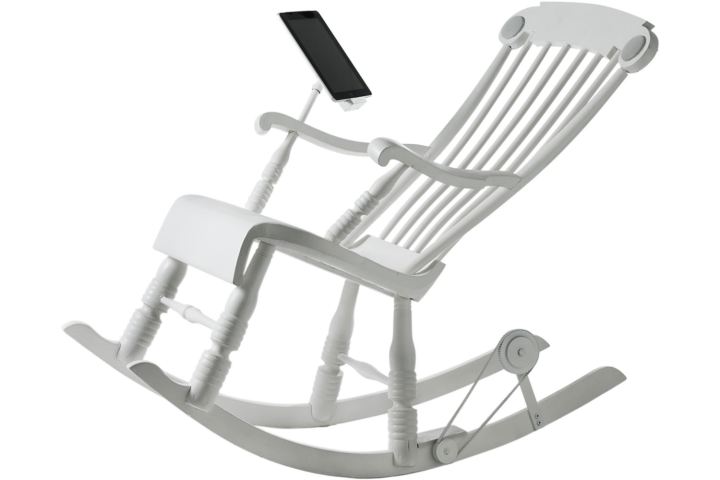
Put grandma to work with this iPad power-generating rocking chair

Motion-powered generators are becoming a trend in tech-infused clothing, furniture, and accessories ... but none have targeted an older audience quite like this iRock rocking chair.

Who says technology is only made for the new generation? While my grandmother may not be cool enough to answer emails and text messages, she does know how to work an iPad. So if you’re visiting sweet old grams and realize your tablet is low on battery, just ask her to hang out in her rocking chair to generate extra juice in that iPad.

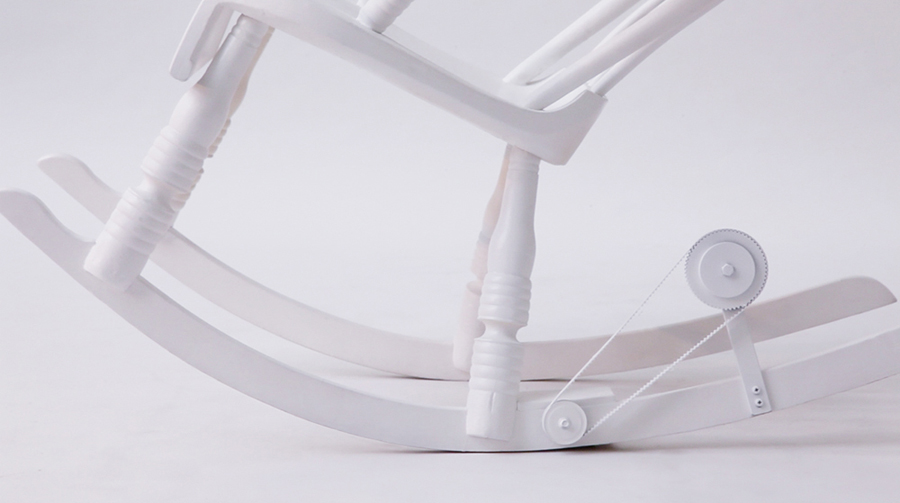
Yep, you really can play out that scenario. The iRock chair is built to not only dock an iPad or iPhone for your viewing pleasure, it will also generate battery power as the chair swings back and forth. Built-in 25-watt speakers align the sides of the headrest so grandma to rock out to her classic jams. And yes, adapters for the iPhone 5 Lightning connector will be included if you’re that caught up on the latest gadgets on the market.

“The iRock is an product that explores how furniture can interact with technology and actually support the power for this technology,” the iRock product page reads. “If you use iRock for 60 minutes you can recharge an iPad 3 to 35%.”

Not sure how fast granny would have to swing to get such power back onto your mobile devices, but any charge at all is better than leaving the tablet out to drain. Micasa Lab, the creator of the iRock, says Android compatibility is not yet available but it is something the company aims to add in the near future. Theoretically, one would only need to buy the chair along with various adapters to fit whichever mobile device you want to rock and charge.

The iRock is crafted with Swedish pine wood and will be available in five color options: Black, White, Pink, Green, and Blue. How much will you have to spend for some technological porch accessory? The iRock is available now for a pretty price of €1,300 (or approximately US$1,680), with an estimated shipment date of late 2013. But for a happy grandma, perhaps that sticker tag is priceless.


Source : http://www.digitaltrends.com/mobile/put-grandma-to-work-with-this-ipad-power-generating-rocking-chair/

How future phone screens will be viewable in the brightest sunlight

How future phone screens will be viewable in the brightest sunlight
Assertive Display technology ensures brighter screens outdoors

In an era of increasingly sophisticated mobile technology, it's tempting to assume that smartphones and tablets provide users with a wealth of content wherever they want it.

But achieving a great multimedia viewing experience in bright light, particularly in sunlight, has been an ongoing problem for the consumer electronics industry.

As anyone who has ever tried to play an immersive game or watch a movie on a phone in bright sunlight knows, the subsequent glare and lack of highlight and shadow makes for a fairly dismal viewing experience.

Assertive Display technology explained

But all this could be about to change. At IFA 2013 in Berlin, London-based company Apical unveiled an intelligent digital processing technology called Assertive Display, which offers radically improved resolution in bright light, and a dramatically reduced power consumption.

Watch movies in bright light

The technology has already been rolled out in Japan, where it features in devices such as Sharp's new smartphone, the Aquos SH-01D. According to Apical CEO Michael Tusch, Assertive Display will transform the mobile viewing experience of gamers and movie viewers alike.

"The whole point of these mobile devices is that we should be able to use them wherever we are," he says. "But unless you're in a dark room, your experience is heavily compromised. If you were a first person shooter game addict, for example, nobody would play that on anything other than a bright screen in a fairly dark room.

"It's the same story with movies. Ideally, you need the 5000-to-1 contrast ratio of a TV to show a movie. An iPad can do 1000-to-1, but if you went outside that would diminish severely, to 20-to1.

"And it's not just in sunlight, it's the same if you're just sitting in a room with windows or with bright lighting. Your multimedia experience is being degraded, and we can avoid that."

YouTube : http://youtu.be/caEPq4KvTTA?t=35m8s

How it works

Most mobile device manufacturers rely on adjusting screen brightness to improve viewing experience. But this is ineffective and the biggest drain on battery power.

Instead, Assertive Display works by adapting the contrast ratio, adjusting each pixel of the video stream in real-time, with very short latency so that you don't notice.

The technology is based on a model of how the human eye works, tuning the pixels so that you can view a movie or play an immersive game in bright light without killing the battery.

Assertive Display technology explained
Assertive Display off
Assertive Display technology explained
Assertive Display on

The result is a radically improved viewing experience with dramatically reduced power consumption (up to 50%) due to the fact that you no longer require maximum brightness of the backlight to view content.

"The thing to remember is we're not changing the brightness or the power of this display at all," stresses Tusch, "we're just tuning the pixels to adjust the contrast ratio."

Of course, mobile device manufacturers have tried to solve this problem themselves, spending colossal amounts of money on achieving strong blacks on displays, putting anti-reflection coatings on screens, making them brighter and more power efficient.

Assertive Display technology explained
Assertive Display off
Assertive Display technology explained
Assertive Display on

"But actually, that's pretty much working in the margins," says Tusch. "What we're simulating here is a display that has 100 times higher contrast than we really have. And we're doing it via video processing, as opposed to controlling the display power.

The whole aim of Assertive Display is to adjust the contrast ratio without you ever noticing. Viewing conditions are monitored via the tiny light sensors on mobile devices and the pixels are tuned accordingly.

There is no slider or button to control Assertive Display. It's always on, continuously reading the viewing conditions and controlling the contrast ratio automatically.

When can we buy it?

Smartphones and tablets featuring Assertive Display technology will be available in the UK by autumn 2013, according to Tusch. While he refuses to divulge which manufacturers will ship products with this technology, it seems clear that it will encompass Apple and Android devices.

One of the major challenges for Apical is overcoming the slow cycle from the design stage through to market. This is due to the complexities of having numerous parties licensing their technologies on the same 'real estate' of the processing chip.

To overcome this hurdle, Apical is seeking to run Assertive Display as software, so that each successive generation of the technology can be delivered as a firmware update or a software upgrade.

Assertive Display technology explained
Assertive Display off
Assertive Display technology explained
Assertive Display on

To help achieve this, Apical recently joined the HSA Foundation, an increasingly powerful alliance of manufacturers whose membership includes Samsung.

The industry response to Assertive Display so far has been unanimously positive, says Michael Tusch. Most of the major smartphone and tablet makers have seen the technology.

"Just about every company that has seen it has liked it and wanted it," he says. "It's had that real 'wow factor'."

Unique to Apical

This is not that surprising, considering that Apical appears to be the first company in the world to have cracked the problem of viewing multimedia content in bright light on mobile devices.

This was a point highlighted at the conclusion of Tusch's IFA presentation in Berlin, by Phil Rogers, president of the HSA Foundation.

"I know you're a fairly modest chap," he told Tusch on the keynote stage. "But I just hope people realise that for any colour display today to be viewable in bright light, it has Apical technology. And no one else has solved this have they?"

"Well it's a problem that can't be solved by display alone," replied Tusch. "We've got a solution and it works. So yes, I think you're right."


Source : http://www.techradar.com/news/phone-and-communications/mobile-phones/how-future-phone-screens-will-be-viewable-in-the-brightest-sunlight-1105655

Thursday, October 25, 2012

Sony Odin handset may sport WhiteMagic screen technology

Sony Odin handset may sport WhiteMagic screen technology
Longer lasting battery and a big screen?

Sony's flagship handset for 2013 is rumoured to pack a 5-inch display and new reports suggest it will also sport WhiteMagic technology.

We heard about a super-sized screen earlier this month after Japanese display manufacturer JDI revealed it was producing 5-inch, 1080p screens with an impressive 443ppi pixel density.

The screen has been linked with the Sony Odin, which is expected to be the Japanese firm's flagship handset for 2013, and new reports suggest it could be packing some seriously clever tech.

It's a kind of magic

Earlier this year Sony explained to TechRadar that the WhiteMagic tech was stuck at 4-inches, which pours a certain amount of cold water on the possibility of this rumour coming true.

According to a recent press release from JDI, the firm is readying prototypes of a 5-inch WhiteMagic display which boasts a 438ppi pixel density – slightly lower than the initial reports we saw from the firm, but never the less still very impressive.

One of the big selling points of the WhiteMagic screen is that it conserves power much more effectively and JDI claims it will have "low power consumption that is approximately 50% less by utilizing an RGBW pixel structure".

This will be a massive bonus for smartphone manufactures, as bigger screens and more powerful innards currently drain batteries quicker than you can say "where's my charger?"

As well as saving battery, the WhiteMagic technology also has another trick up its sleeve: instead of keeping you going for longer, it can be switched to double the brightness of the display, ensuring that your face is illuminated like a Christmas tree.

We can't be sure if the 5-inch, WhiteMagic display will make it into Sony's flagship smartphone next year, but we wouldn't be surprised if it did.


Source : http://www.techradar.com/news/phone-and-communications/mobile-phones/sony-odin-handset-may-sport-whitemagic-screen-technology-1107204

Thursday, October 18, 2012

Apple filings for AirPlay Mirroring, Siri land in U.S. patent office

Apple filings for AirPlay Mirroring, Siri land in U.S. patent office
Siri's understanding of context is the subject of a new Apple patent

Even as Apple works to defend existing technology patents in court, the iPhone maker continues to shore up its arsenal with a pair of new applications protecting AirPlay Mirroring and Siri.

CNET reported on Thursday that Apple filed new patent applications with the U.S. Patent and Trademark Office (USPTO) aimed at keeping two of the company's key iOS technologies safe from copycats.

AirPlay Mirroring is covered in the first new patent titled, "Gesture Visualization and Sharing Between Electronic Devices and Remote Displays," with a focus on how one touchscreen-enabled device - in this case, an iPhone, iPod touch or iPad - can replicate its picture and sound to a second display, such as an Apple TV.

The patent appears to cover only the implementation of AirPlay Mirroring on iOS devices, although OS X Mountain Lion now allows the feature to also be used from a Mac, but that use does not appear to be covered with this filing.

Siri in context

The second patent offers additional protection for Siri, the virtual assistant feature first introduced a year ago with the iPhone 4S and finally brought to the third-generation iPad with iOS 6.

Although the primary technology behind Siri was filed with the USPTO several weeks ago, the new application titled, "Using Context Information to Facilitate Processing of Commands In A Virtual Assistant," adds additional protection for how Siri understands what the user is trying to request.

According to Patently Apple, Siri processes context clues, which "helps to clarify the user's intent and to reduce the number of candidate interpretations of the user's input, and reduces the need for the user to provide excessive clarification input."

The additional patent offers further detail into how Siri uses available search, database, dialog history and more to put a user's request into context.

Although Apple files many patent applications that never see the light of day, the latest pair cover technology already in use with iOS devices.


Source : http://www.techradar.com/news/phone-and-communications/mobile-phones/apple-filings-for-airplay-mirroring-siri-land-in-u-s-patent-office-1105370

Tuesday, October 2, 2012

Google edges ahead of Microsoft, becomes world’s second most valuable tech company

Google has passed Microsoft to become the world's second most valuable technology company.

It’s all-change at the top of the financial market charts, as old-hand Microsoft has been toppled from its lofty position as the second most-valuable technology company in the world, by young upstart Google.

At the close of trading on Monday, Google narrowly topped Microsoft’s total value, with reports showing Google hitting a valuation of $249.1 billion (Bloomberg.com puts the figure at $249.9 billion) compared to Microsoft’s $247.2 billion. The New York Post shows that the trend was evident when trading opened too, although the gap was much smaller at $248.8 billion for Google and $248.1 billion for Microsoft.

On the surface it appears that Microsoft’s stock has been falling, but it’s the opposite, as its share price has stayed fairly steady over the past few months, with a positive upturn occurring recently. But Google’s stock has been steadily rising, and a sudden drop-off for Microsoft provided the catalyst for the position swap.

Google is fresh from its astonishing performance during the second quarter of 2012, where IDC reported that 85-percent of all smartphones shipped between April and June this year had Android installed, giving the OS a massive 68-percent market share.

Microsoft on the other hand, should be in a similar position, with plenty of attention focused on Windows 8 and Windows Phone 8. Both are due for release very soon — October 26 for Windows 8 and potentially, November for Windows Phone 8 — and hardware manufacturers have been busy announcing products for both. It’s surprising then, to see Microsoft slip at this stage.

So, with Google moving into second position, you may be thinking that it’s only a short leap before it become the world’s number one most valuable tech firm. While this is always possible, the leap is far from being short, as Apple holds the number one spot at the moment, and is worth more than Google and Microsoft combined at $618.1 billion.


Source : http://www.digitaltrends.com/mobile/google-edges-ahead-of-microsoft-becomes-worlds-second-most-valuable-tech-company/

Wednesday, September 26, 2012

Report: Samsung, Google execs to meet in Seoul Thursday

Report: Samsung, Google execs to meet in Seoul Thursday
Is Samsung calling in the big guns?

Two of the technology world's top executives are meeting in Seoul for a high-level meeting Thursday, according to the Korea Times.

Though those people could be just about anybody we read about daily, this pair happens to be Shin Jong-kyun, Samsung's president of mobile communications business, and Eric Schmidt, executive chairman of Google.

"I will meet Google Executive Chairman Eric Schmidt on Thursday in Seoul," Jong-kyun reportedly said earlier this week.

What the two will talk about Jong-kyun wouldn't divulge, however he revealed that strategic meetings with major U.S. carriers are also scheduled for next week.

While Samsung's mobile chief and the Google honcho could discuss just about anything Android related, they won't be stretching for conversation thanks to at least one common enemy: Apple.

Sharing slices

The two companies are intimately tied as many Samsung handsets run Google's Android operating system. Samsung, the paper wrote, is the "representative of Google's Android community" in a legal fray with Apple.

Apple was not only awarded nearly $1.05 billion (UK£665, AU$1.01) in damages from Samsung after a San Jose, Calif. jury ruled the latter violated several design and technology patents tied to iPhones and iPads, it recently requested that hundreds of millions more be added to the total sum, plus a sales ban on additional Samsung products.

From its end, Samsung has filed for a new trial, a move that could potentially reverse the damages ruling.

Google also has a legal dispute brewing with Apple, as Motorola Mobility, owned by the Mountain View, Calif. company, is seeking a U.S. sales ban on iPhone, iPad, and Mac computer imports.

The bad blood between Google and Apple is nothing new as have competed for operating system dominance for many years.

When asked about the meeting, a Google representative said the company had no comment.

TechRadar reached out to Samsung for comment and will update this story if and when details become available.


Source : http://www.techradar.com/news/world-of-tech/report-samsung-google-execs-to-meet-in-seoul-thursday-1099992

Friday, September 21, 2012

LG readies itself for next level of patent wars

LG readies itself for next level of patent wars
LG just LOVES 4G

Like its Korean compatriot, LG has stated it believes it is best-placed to defend itself should 4G technology become a legal battleground.

Speaking at the launch of the LG Optimus G, the head of the mobile division took pains to point out how well-stocked the company is for 4G (LTE) technology:

"We have a very strong patent portfolio: basically, LG is the number one in LTE patents globally," said Jong-Seok Park, CEO of LG Mobile Communications.

"We've also got a strong portfolio of patents [relating to the UI], and I'm confident we're strong in this regard - we are aware of ongoing patent wars."

You can't patent the truth

Ram-Chan Woo, head of LG's mobile planning division, also stated that the company has 23% of LTE patents, which are worth $7.9billion (£4.8billion).

LG

The company also confirmed it applied for the most patents in the US during 2012, ahead of Samsung and Nokia.

The location of these filings is as key as their volume and value, as it's believed the next round of smartphone litigation will centre around 4G technology in phones, and which firms should be paid for the privilege of using it.


Source : http://www.techradar.com/news/phone-and-communications/mobile-phones/lg-readies-itself-for-next-level-of-patent-wars-1098916

How Miracast could finally make your smartphone run your home theater

miracast streaming header wifi alliance tv streaming

AirPlay and WiDi made big promises of screen mirroring made easy, but both were too closed to succeed. New Miracast technology could finally give consumers an easy, wireless way to stream content from a laptop or smartphone to a TV.

Few things make me feel like I’m living in the future as much as wirelessly beaming movies and music from a mobile device to a big-screen TV or home audio component. Oh, you haven’t heard that song yet? Let me stream it right through your speakers! Missed the latest episode of Top Chef Masters? I have it here on my laptop, let’s pop the high-definition video up on your TV — no wires necessary. That’s right up there with hoverboards and robot butlers in my book, folks.

One problem: It’s not that easy yet. The two major wireless media streaming technology options available today — Apple’s excellent AirPlay and Intel’s, um, improving WiDi — struggle with major flaws that majorly limit their usefulness.

The best hope for a wire-free mobile future rode in this week in the form of Miracast, a new standard backed by the same organization that watches over Wi-Fi itself. It’s an innovative technology that’s backed by a bunch of big-name players and breaks many of the chains holding WiDi and AirPlay back, but Miracast has some hurdles to leap before it becomes a household name.

The problems with WiDi and AirPlay

The biggest issue with WiDi and AirPlay is that they’re proprietary and available on very limited hardware. Only Apple devices broadcast AirPlay signals, and only the Apple TV set-top box or select home theater equipment can receive that signal. WiDi’s restricted to select laptops and notebooks with Intel Core processors inside, plus you have to pay about $100 for a WiDi adapter for your TV. Bleh.

On the positive side, that adapter allows WiDi broadcasters and receivers to talk to each other directly; AirPlay has to piggyback on an external Wi-Fi network. If you don’t have a Wi-Fi network set up, you can’t use AirPlay. (Apple’s rumored to be working on “AirPlay Direct” to ditch the reliance on outside Wi-Fi, however.)

Another issue lies in actually using the wireless streaming technologies. AirPlay’s a model of clean engineering and pretty much works like a charm every time you use it, but WiDi is another matter completely. Intel’s technology frequently suffers from horrible lag, and it didn’t support 1080p video or Blu-ray streaming until earlier this year. A scheduled October update could help things, but we won’t know until we see it.

Finally, WiDi and AirPlay are only kinda wireless. Both require the use of a box that connects to your TV via an HDMI cable, if you want to stream video from your phone or tablet.

Miracast basics

Miracast, on the other hand, requires no additional hardware or external Wi-Fi networks. It uses the Wi-Fi Direct standard to create a direct wireless network between the sending device and the receiving device. In other words, just pair your mobile device with your TV or stereo and you’re good to go. Both devices need to be Miracast certified for the technology to work, but if you want to stream music and movies to a non-certified device, there will be Miracast adapters available that plug into HDMI or USB ports.

miracast nvidia wireless streaming mobile to tvEven better, the Wi-Fi Alliance has ensured that the protected content woes that plagued WiDi’s launch won’t happen to Miracast; anything you can see or hear on your mobile device can be streamed to your television. That includes full 1080p HD video and yep, even DRM-protected media like DVDs or Blu-rays.

Everyone can join this wireless party

Like Wi-Fi itself — and unlike WiDi and AirPlay — Miracast is an open, optional certification that any manufacturer can apply for if their products meet the standard. That alone gives it a big potential leg-up over already-established technologies.

In fact, a number of big-name technology manufacturers are already onboard the Miracast bandwagon. Samsung — the world’s most prolific smartphone maker — is signed up, and Nvidia has pledged to certify its Tegra mobile processors — found in scores of smartphones and tablets — to the Miracast standard. Sony, LG, Texas Instruments and Qualcomm have all publicly issued statements of support.

Even Intel wants in on the action: All WiDi products have already been Miracast certified, as have LG’s Optimus G smartphone, the Samsung Galaxy S III, the Samsung Echo-P Series TV, and a number of various chips and adapters.

The sending and receiving gadgets don’t have to be from the same manufacturer, either. A Samsung phone should stream content to a Sony TV just fine, provided both are Miracast certified. Spiffy.

An AirPlay rival at last?

Things look pretty good for Miracast. Many would-be technologies die on the vine due to a sheer lack of adoption, but with the Wi-Fi Alliance and its assorted manufacturer partners on board, that doesn’t seem likely to happen to Miracast.

The biggest potential pitfall, as I see it, lies in customer confusion; it’s great that Intel certified its WiDi devices, but some of WiDi’s more advanced features won’t work if one of the two devices is “only” Miracast certified. That could confuse some people, but I don’t foresee it becoming a major issue because frankly, Intel’s WiDi isn’t in the hearts, minds or laptops of most people yet. A successful Miracast very well could kill it off in short order.

WiDi-esque lag could slow Miracast adoption as well; we’ll have to see how well the first wave of devices play together.

miracast gaming wireless streaming wifi mobile to tvWill Miracast be successful? That’s the million-dollar question, but all signs point to yes. It’s more flexible and more universal than current wireless display technologies, and even better, you don’t need to pay extra for additional adapters or wires unless you want to stream content to a non-certified TV. With the big names backing the standard, Miracast should theoretically pop up in a large number of TVs, smartphones, tablets and laptops in short order.

If you ask me, Miracast is here to stay. Folks who haven’t bitten into Apple will be able to get a taste of mobile display mirroring that’s hopefully as easy-to-use as AirPlay. Who knows? If Miracast takes off, maybe Macs and iDevices will one day ditch the proprietary AirPlay and embrace the open-standard goodness. (Hey, it could happen.)

Now, someone needs to start working on those robot butlers.


Source : http://www.digitaltrends.com/mobile/how-miracast-could-finally-make-your-smartphone-run-your-home-theater/

Friday, September 14, 2012

The next-generation tech powering your Sony Xperia T

The next-generation tech powering your Sony Xperia T
Taking the smartphone to the next level with powerful features

With the Xperia T, Sony has created its best ever smarpthone for the ultimate HD experience - but what about the technology powering these innovations?

Let's begin with the Mobile BRAVIA engine: using similar technology to that found in Sony's top end BRAVIA TVs, the technology gives your photos and videos a boost to make them look more sparkling than ever.

Be it boosting contrast to bring a more vivid picture or adding sharpness and detail to your favourite movies, the Sony Xperia T's picture quality is without equal on a smartphone.

Worried about the slightly noisy photo you just captured? That's no problem for the Mobile BRAVIA Engine, bringing the best of your snaps our thanks to intelligent image rendering on the large 4.6-inch HD screen of the Sony Xperia T.

Everyone knows that a smarpthone can be a decent alternative to the compact camera, but when it comes to the Sony Xperia T you're getting the best of Sony's photography prowess in a super slim smartphone.

Sony Xperia T

Using its Exmor R sensor, the Xperia T brings your photos to life in a way never before experienced.

The Exmor R CMOS sensor helps you capture the amazing moments you don't want to miss, record in perfect 1080p HD video and offers up still images that are packed full of contrast, rich colours and less picture noise than ever before.

Even if your favourite time for photography is later in the evening, the Xperia T's Exmor R sensor is on hand to help out, with industry-leading low-light sensitivity bringing out the best in your snaps even if the light is fading.

And if you're too busy to worry about constantly changing your smartphone settings then the one-touch sharing via NFC on the Sony Xperia T will help cut the hassle of every day life.

Team it up with Xperia SmartTags and you're only ever a tap away from jumping into the car and starting up Bluetooth, GPS and online radio. Or place a tag in the kitchen to swiftly open your favourite recipe app or the calendar to see what the day holds.

The NFC chip inside the Sony Xperia T can do so much more than simplify your life – it can eradicate the more mundane tasks too. If you've got a compatible Bluetooth speaker dock, you won't have to mess around with pairing the Xperia T; one tap and you'll be set to hear your tunes in jaw-dropping bass and perfect clarity.

So there you have it: the technology powering your next smartphone, bringing the best in photography, screen quality and contactless technology in your pocket.


Source : http://www.techradar.com/news/phone-and-communications/mobile-phones/the-next-generation-tech-powering-your-sony-xperia-t-1097474

Friday, September 7, 2012

Nokia Lumia 920 to start selling in only 10 weeks time

The Nokia Lumia 920 is a marvelous piece of technology. Nokia has really put its back into making the smartphone standout in several respects such as the extraordinary display and the innovative camera.


Among the last pieces of info that we didn't know about it was its availability schedule. We heard Steve Ballmer saying we are going to see a lot more of Windows Phone 8 in the next month or two, but here's some insider info on the availability of the Lumia 920.

An anonymous source from an Eastern European carrier has whispered to Reuters that they will start selling the Lumia 920 in mid-November, while Western European countries should be getting it even sooner, in the first half of November. When you think about it, November 1 is only 8 weeks from now. Wow, this summer's end is really closing in fast. But we digress.

The release of the Lumia 920 cannot come fast enough. We can't wait to put it through its paces in our obstacle reviewing course.

Source | Via
Source : http://www.gsmarena.com/nokia_lumia_920_to_start_selling_in_10_weeks-news-4774.php

Wednesday, September 5, 2012

Nokia issues apology for faked PureView video ad

Lumia 920 OIS fake advertisement

Busted within 24 hours of posting the promotional ad online, Nokia backpedals regarding a misleading video featuring PureView technology.

Detailed on the Conversation by Nokia blog, editor-in-chief Heidi Lemmetyinen released an apology for misleading consumers with a video that was meant to show off how optical image stabilization helps when shooting high definition video on smartphones like the Lumia 920. The concept of the video in question was designed to show the difference between shooting with OIS turned on compared to shooting when it’s unavailable. In the video, the side-by-side-comparison video stream shows a couple riding bicycles and the twenty-something man is filming a young girl with a Nokia smartphone using PureView and OIS as they speed down the street. 

Noted by many people on YouTube and other news organizations, a van can be seen filming the girl with a high-end dSLR or video camera in a reflection off the window of a nearby trailer around the 27 second mark of the video. Not only was the video taken while someone rode in a stable car compared to a less stable bicycle, the type of camera used was completely different from the PureView camera in the Lumia 920.

In the apology, Lemmetyinen stated “In an effort to demonstrate the benefits of optical image stabilization (which eliminates blurry images and improves pictures shot in low light conditions), we produced a video that simulates what we will be able to deliver with OIS. Of course, hindsight is 20/20, but we should have posted a disclaimer stating this was a representation of OIS only. This was not shot with a Lumia 920. At least, not yet. We apologize for the confusion we created.”

In addition to the written apology, Lemmetyinen posted a video shown at the press conference that displayed the difference between shooting with a smartphone without OIS and a Lumia 920 prototype with OIS turned on. While Nokia didn’t identify the other smartphone in the video, the side displaying the OIS feature clearly shows a significantly smoother video stream while someone is walking and filming toward a fixed spot.


Source : http://www.digitaltrends.com/mobile/nokia-apologizes-for-fake-pureview-ad/

Nokia reveals the Lumia 920, with Windows Phone 8 and PureView camera

Nokia has revealed the Lumia 920, complete with Windows Phone 8 and PureView camera technology, at a special event in New York.

Nokia has announced the Lumia 920, its first Windows Phone 8 smartphones, and the second set to be revealed following the Samsung Ativ S last week.

CEO Stephen Elop took to the stage at 10am, blissfully unaware that the livestream webcast had broken, and talked about Windows Phone. He said Nokia shared a vision with Microsoft, and that together they would create “a new smartphone experience,” and something “very unique in the market.”

With several Lumia devices already on sale, he introduced Jo Harlow to tell us all about the latest additions to the family — first, the Lumia 920.

The Lumia 920 was described as the “most innovative smartphone in the world,” and boasts a camera with PureView technology, just like the Symbian-based PureView 808. It also uses Nokia’s City Lens to provide an improved mapping experience and built-in wireless charging.

Nokia’s event is ongoing, and more details will be added as they come through.


Source : http://www.digitaltrends.com/mobile/nokia-reveals-the-lumia-920-with-windows-phone-8-and-pureview-camera/