Showing posts with label apple. Show all posts

Wednesday, November 14, 2012

Samsung, Nokia dominate third quarter mobile phone sales

Samsung, Nokia dominate third quarter mobile phone sales
Samsung and Android continue to outpace Apple and iOS

A look inside the quarterly sales numbers showed smartphones are up 46.9 percent over the same period in 2011, and revealed Android phones outpaced Apple's iOS phones by 5:1 during the third quarter.

The sales figures, as reported by the analysts at Gartner, show mobile phone sales have decreased by 3 percent overall, continuing a trend started earlierthis year.

Despite the overall sales dipping, smartphone sales bolstered by Samsung, Nokia, and Apple have continued to escalate, and are now responsible for almost 40 percent of all mobile phone sales.

Samsung holds lead

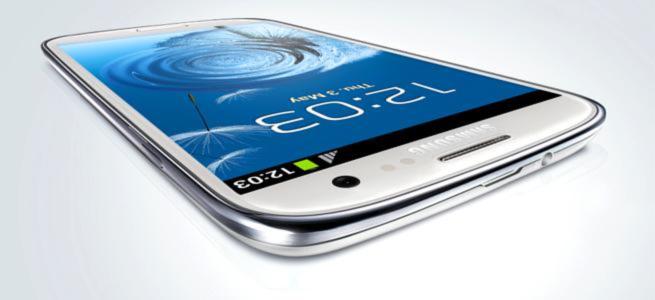
During the third quarter, Samsung was able to maintain its lead over Apple in smartphone sales, largely due to the Galaxy lineup, including the Galaxy SIII.

With a 32.5 percent share of the smartphone market, Samsung was able to hold off second-place Apple, which earned 14 percent of the sales.

Research in Motion was able to slip into third place, with HTC following closely behind, as Nokia's smartphone sales slipped to seventh.

Samsung still found itself in the overall lead with 97.9 million phones sold (22.9 percent), a narrow margin of victory over Nokia's 82 million total mobile phones sold (19.2 percent).

Apple was able to solidify third place by selling 23.5 million iPhones (3.9 percent), which was a 36.3 percent jump from 2011, and accounted for the largest increase in year-over-year sales.

Gartner expects Apple to have another traditionally strong fourth quarter due to the expanding availability of the iPhone 5, but doesn't think holiday sales will impact the overall market all that much.

Android still king of the hill

Even though iPhone sales increased tremendously during the third quarter, Apple's iOS still had trouble catching up to Android.

With 122 million Android phones sold during the third quarter, Google's OS increased it's share to 72.4 percent of the market.

Despite Android earning 20 percent more users during the third quarter, iOS was still able to garner 13.9 percent of all users, a drop of just one percent from Q2.

Apple was able to maintain second place largely due to the decreasing numbers of Symbian and Microsoft's Windows Phone 7, as both OS were being phased out for Windows Phone 8.

iOS is expected to increase its numbers during the fourth quarter according to Gartner analysts, but all that depends on how strong Apple's final quarter turns out from a sales perspective.


Source : http://www.techradar.com/news/phone-and-communications/mobile-phones/samsung-nokia-dominate-third-quarter-mobile-phone-sales-1112629

Android and Samsung build on their market shares in Q3 2012

Android's market share increased significantly during the third quarter of 2012, with the Google OS powering 72.4% of all smartphones sold in the three months' period. Apple's iOS came a very distant second with a market share of 13.9%.


This is an impressive accomplishment for Google's mobile OS, considering Android's market share was 52.5% in Q3 of 2011.

Samsung saw its position as the leading mobile manufacturer increase to 22.9% after selling almost 100 million phones in the three month period ending in September. This was mostly at the expense of Nokia, which saw its market share slide almost 5 percent points year-over-year.


The holiday season should see Apple take back some of both of those pies, as many iOS-faithfuls held off on replacing their smartphones until the iPhone 5 came around. Apple's new smartphone top dog is expanding its availability to many new markets in Q4, which should help Apple arrest the fall in iOS market share.

Source | Via


Source : http://www.gsmarena.com/android_and_samsung_build_on_their_market_shares_in_q3_2012-news-5082.php

Samsung remains steadfast as it vows to continue legal battle with Apple

Samsung will not follow HTC's lead and come to a peaceful conclusion to its ongoing legal battle with Apple, vowing not to negotiate with the firm.

HTC and Apple shook hands earlier this week, having decided to put all their patent disputes behind them, and get on with building smartphones instead. This was good news for us, as it’s one less lawsuit to hear about, good news for HTC, as it avoids any costly court judgements and finally, good news for Apple as it will make money from each HTC Android phone sold.

Samsung however, will not be following HTC’s lead, and will instead continue to battle it out with Apple both in stores and in the courtroom. In an interview with Yonhap News in Korea, Samsung’s President of Telecoms and IT, Jong-Kyun Shin said “we don’t intend to negotiate at all” when asked if Samsung would settle any dispute in a similar way to HTC.

The various legal battles between Apple and Samsung have captured headlines throughout the year, particularly regarding Apple’s $1 billion win against the company, and Samsung’s controversial win in the UK. Shin’s comments indicate we’ll be seeing more of the same in the future.

HTC has signed a 10-year licensing contract with Apple, believed to include a payment of around $6 to $8 per HTC handset sold, which could total up to a figure of approximately $275 million per year, based on HTC’s current smartphone sales performance.

It’s an interesting turn of events too, as Apple has long been viewed as the aggressive one when it comes to litigation, but this shows Samsung is equally committed to continuing the patent war in a courtroom setting.

Samsung has filed an appeal against its $1 billion judgement, which is currently being assessed by the courts, while Apple has asked for more damages, saying Samsung has harmed the iPhone’s “distinctive product identity.” As Samsung won’t be signing an agreement with Apple anytime soon, expect more legal fireworks from the pair over the coming months.


Source : http://www.digitaltrends.com/mobile/samsung-vows-to-continue-legal-battle-with-apple/

Samsung defiant: 'We don't intend to negotiate with Apple'

Samsung defiant: 'We don't intend to negotiate with Apple'
Settle? Oh hell no.

Samsung has said that it is not looking to negotiate with its fierce rival Apple, with an HTC-style settlement looking increasingly unlikely.

Speaking to the Korean media, Samsung's mobile president Shin Jong-kyun revealed the firm was sticking to its guns in its continuing battle with its Cupertino-based rival.

Jong-kyun was quoted by Yonhap News saying: "It may be true that HTC may have agreed to pay 300 billion won (£173 million/$276 million) to Apple, but we don't intend to [negotiate] at all."

Say no to negotiation

At the start of the week Taiwanese manufacturer HTC announced that it had resolved its patent disputes with Apple, agreeing a 10 year licensing deal with the iPhone maker.

The ongoing game of one-up-manship between Apple and Samsung in the courts is well documented, and becoming ever more tedious, and this latest revelation will not help a resolution arrive any quicker.

We now lay in wait for Apple's sarcastic response, possibly in a similar fashion to the way it "apologised" for accusing Samsung of copying its products.


Source : http://www.techradar.com/news/phone-and-communications/mobile-phones/samsung-defiant-we-dont-intend-to-negotiate-with-apple-1112504

Friday, November 9, 2012

Judge to consider Samsung's juror misconduct claim in Apple suit

Judge to consider Samsung's juror misconduct claim in Apple suit
Apple and Samsung's 1,000 year war continues

It all comes down to this (maybe): during a Dec. 6 hearing, Calif. Judge Lucy Koh will examine Samsung's claim that the jury foreman in the ongoing patent suit with Apple "concealed information."

After Apple's $1.05 billion victory in August, Samsung appealed the decision with a slew of new arguments, chief among them one of jury misconduct.

Samsung alleged that Vel Hogan, the jury foreman in the case, failed to disclose that he was sued by Seagate, his former employer, and driven to bankruptcy in 1993.

Seagate and Samsung have a "substantial strategic relationship," according to Samsung, and it seems Samsung believes that could have swayed Hogan to influence the jury against it.

That's the idea at least

Samsung also claimed that Apple knew about Hogan's connection to Seagate, and failed to disclose it.

Judge Koh wrote, "At the December 6, 2012 hearing, the Court will consider the questions of whether the jury foreperson concealed information during voir dire, whether any concealed information was material, and whether any concealment constituted misconduct.

"An assessment of such issues is intertwined with the question of whether and when Apple had a duty to disclose the circumstances and timing of its discovery of information about the foreperson."

Here's the kicker

CNET reported on Thursday that "legal experts" maintain that it's difficult to get a trial thrown out based on jury misconduct alone.

Further (and here's the kicker): Hogan did disclose that he had been involved in litigation "with a former partner."

He did not disclose who that partner was, but as Hogan reportedly noted, he was not asked to.

Even if this juror misconduct claim won't stick, Samsung will surely have half a dozen more up its sleeves, so don't expect an end to this case any time soon (especially since Apple still wants another $707 million from Samsung).


Source : http://www.techradar.com/news/world-of-tech/judge-to-consider-samsungs-juror-misconduct-claim-in-apple-suit-1111478

Cellular versions of the iPad Mini could start to ship next week

Although Apple hasn't provided an exact, single date on when the iPad Mini Wi-Fi + Cellular model will ship, buyers who have pre-ordered the tablet are seeing their accounts updated with various shipping dates, some as soon as five days time.

Ever since the iPad Mini was announced, there was a question mark over when the model with 3G/4G LTE connectivity would appear. Apple’s press release stated the cellular models would ship “a couple of weeks” after the Wi-Fi only Mini, putting the date somewhere around the middle of November.

It looks like Apple will keep its promise too, as reports are coming in that customers who pre-ordered the cellular Mini tablet have started to receive notices that it’ll ship “in the next five business days.” That could be on or slightly before November 16, two weeks after the iPad Mini went on sale.

This won’t be the same for everyone, of course, and Apple has already flip-flopped on iPad Mini LTE release dates once, with some buyers finding a November 21 and November 23 shipping date added to their account soon after launch, but this was quickly replaced with “mid-November” instead. Subsequently, these dates have been re-applied to some accounts.

So, if you’ve ordered an iPad Mini LTE, there’s a chance it will arrive sometime between November 16 and November 23, depending on when you placed your order, and your chosen delivery method.

Apple has been experiencing some delays with getting the iPad Mini into its customer’s hands, with the Wi-Fi-only tablet selling out as an online pre-order, and then again when it hit retail stores last weekend. Despite this, Apple shifted three million iPad Mini and fourth generation iPad tablets over those three days.

While still a considerable amount of iPad tablets sold, this was a little lower than some analysts hoped for, and this could have been due to the cellular model not being available on launch day. An analyst for Merrill Lynch called the 4G LTE iPad Mini “more important than people think,” reminding us that the cellular versions of the full-size iPad make up 45-percent of sales.

If you’ve pre-ordered an iPad Mini, has its delivery date been updated yet?


Source : http://www.digitaltrends.com/mobile/cellular-versions-of-the-ipad-mini-could-start-to-ship-next-week/

Thursday, November 8, 2012

Analyst: Apple to sell 46.5 million iPhones this quarter

Analyst: Apple to sell 46.5 million iPhones this quarter
Supply woes are easing, says analyst

Apple could sell as many as 46.5 million iPhones in the quarter ending Dec. 31, according to one analyst.

Sterne Agee analyst Shaw Wu brings word from supply chain sources that the Foxconn plant has been able to up its manufacturing capacity for the new iPhone 5 handset.

The Chinese factory had experienced difficulties in the large scale manufacture of the new 4-inch handset, due to component shortages and assembly troubles, leaving Apple less able to fulfil demand.

Earlier this week Foxconn chairman Terry Gou reportedly admitted: "It's not easy to make the iPhones. We are falling short of meeting the huge demand."

Issues resolved

However, the easing of these issues, Wu told investors, will clear the way for Apple to quickly replenish stocks and sell an ungodly amount of iPhones in the run up to, and immediate aftermath of, Christmas.

If Apple achieves the lofty 46.5m prediction, it would represent a gigantic leap of well over 50 per cent year-on-year, compared with the 26.9m sales it racked up during the final quarter 2011.

With Apple's share price taking a beating after missing sales expectations during the last quarterly financial report, a solid Christmas season could be the key to stocks crashing through the roof once again.


Source : http://www.techradar.com/news/phone-and-communications/mobile-phones/computing/apple/analyst-apple-to-sell-46-5-million-iphones-this-quarter-1111210

Analyst: Apple to sell 46.5 million iPhones before end of year

Analyst: Apple to sell 46.5 million iPhones before end of year
Supply woes are easing, says analyst

Apple could sell as many as 46.5 million iPhones in the quarter ending December 31, according to one analyst.

Sterne Agee analyst Shaw Wu brings word from supply chain sources that the Foxconn plant has been able to up its manufacturing capacity for the new iPhone 5 handset.

The Chinese factory had experienced difficulties in the large scale manufacture of the new 4-inch handset, due to component shortages and assembly troubles, leaving Apple less able to fulfil demand.

Earlier this week Foxconn chairman Terry Gou reportedly admitted: "It's not easy to make the iPhones. We are falling short of meeting the huge demand."

Issues resolved

However, the easing of these issues, Wu told investors, will clear the way for Apple to quickly replenish stocks and sell an ungodly amount of iPhones in the run up to, and immediate aftermath of, Christmas.

If Apple achieves the lofty 46.5m prediction, it would represent a gigantic leap of well over 50 per cent year-on-year, compared with the 26.9m sales it racked up during the final quarter 2011.

With Apple's share price taking a beating after missing sales expectations during the last quarterly financial report, a solid Christmas season could be the key to stocks crashing through the roof once again.


Source : http://www.techradar.com/news/phone-and-communications/mobile-phones/computing/apple/analyst-apple-to-sell-46-5-million-iphones-before-end-of-year-1111210

iOS 7: 12 things we want to see

iOS 7: 12 things we want to see
What will Apple introduce in iOS 7?

The latest major update for Apple's mobile devices, the iPad, iPhone and iPod touch, was mostly hit, but with a Maps-shaped miss.

Lots of people were rightly angry about Apple ditching Google data, but beyond that mis-step there were things to like: a more useful Siri (App launching plus the recognition that a world exists outside of the USA), shared Photo Streams, handy Phone app controls such as 'send to voicemail', and major improvements to Mail, Safari, accessibility and the Camera app.

But regardless of what Apple achieves, it's never really enough. As soon as you've sat there playing with the latest iOS, ideas pop into your head regarding what you'd like to see next. This article explores a dozen of the features we're clamouring to see in iOS 7. (And by 'clamouring', we of course mean 'asking really nicely'. C'mon, Mr Cook - pretty please?)

1. Hide Apple apps

Pretty much everyone we know with an Apple device has a folder entitled 'Apple'. This isn't filled with must-have apps from the geniuses at Cupertino, but all the junk Apple installs that you can't get rid off. To be fair, what each individual considers junk is different, and these apps—Compass, Stocks, Voice Memos, Passbook, and so on—have their fans; but is it too much to ask for a switch in Settings that will hide those we don't use?

Hide Apple apps

2. Better app management

Change for change's sake is rarely a good thing. Recognition is key to satisfying experiences with technology. That's why we're not yelling at Apple to change how iOS home screens work. What we would like to see is improvements to app management: more screens; by default saving app data on delete; and an alphabetical list of installed apps, perhaps accessible from Spotlight.

3. Change app defaults

We're pretty certain this request would be met with wide-eyes from Apple CEO Tim Cook, swiftly followed by a full twenty minutes of belly laughing, but we want the ability to use non-default apps for important things like email and calendaring. Apple's own apps would remain the defaults, but you should also be able to pick your own in Settings.

Want a browser other than Safari as your default? Maybe in iOS 7

4. Provide a guest account

It's extremely unlikely that Apple's ever going to enable multiple user accounts on iOS devices—they are, after all, designed as extremely personal computers. What is perhaps more realistic is some kind of guest account you could switch to when handing your device over to someone for a short while; something similar already exists on the Mac in OS X.

5. Change Siri's voice

OS X is blessed with dozens of high-quality voices that witter away to you in various dulcet tones. By contrast, Siri is Siri. In the US, you get a slightly robotic woman; in the UK, Siri's that bloke who did The Weakest Link for a decade. It'd be great if you could choose the voice your device uses to speak. (Possible exception: Yoda voice.)

6. Provide App Store demos

Apps and games might be cheap, but that doesn't figure cheapskates into the equation. Too often, people are unwilling to risk 69p on the latest release, forcing devs into irritating freemium models or making them clutter up the App Store with 'lite' versions of their output. Apple should just allow demos: 24 hours from first launch and then you buy or the app won't run. Boom.

7. Power up 'Do Not Disturb'

Fed up of getting woken up in the middle of the night by the marketing efforts of [redacted, but quite possibly a well-known mobile network] or Game Center fanfares? Do Not Disturb is a great feature that enables you to time when your phone will quit bugging you. But you can define only a single schedule, and we want to see alternative options for weekends.

Do Not Disturb: a great start, but it needs separate settings for weekends

8. Make locking location-aware

Locking is a great thing on iOS devices, making it at least a little harder for some scallywag to get at your data if they pinch your shiny Apple joy. But it could be more intelligent, locking on a location-aware basis, and not when you're, say, happily sitting at home on the sofa.

9. Improve the lock screen

There's something to be said for Apple's minimalism regarding the iOS lock screen, and it's mostly that it's too minimal. We're not sure we want to see Android-style widgets sprayed everywhere, but a little more functionality wouldn't go amiss. For example, artwork from a currently playing song is displayed on the lock screen, but there are no controls for pausing or skipping to the next track, until you double-press Home, which isn't hugely discoverable. And beyond notifications, nothing else shows up there at all.

The lock screen, showing currently playing audio which we can't pause

10 Cut all iTunes ties

In recent years, Apple's made great leaps away from iTunes, and you can technically get away with never using the monstrous jukebox. However, there's still no way to easily get your existing music collection nor your photographs on to your device, and there should be. (Alas, with Apple wanting to push iTunes Match and the iTunes Store, there almost certainly never will be for the first of those.)

11. Make more icons dynamic

We're hesitant at arguing Apple's home screen icons should be more like Windows 8 tiles, but there's something to be said for dynamic updates when such things work well. With iOS, you get update badges and a live calendar. It'd be nice at the least if Apple made its own Clock and Weather icons dynamic.

The calendar shows the date, but why can't other icons be this useful?

12. Enable cross-platform installs

On a device, you now often see iOS-style banners on websites that when tapped take you right to the equivalent App Store app. But if you're browsing elsewhere, you have to email yourself a reminder and then install later. How good would it be if you were surfing on your PC, saw a great app and could install it across your devices without going near them, nor even to iTunes?


Source : http://www.techradar.com/news/computing/apple/ios-7-12-things-we-want-to-see-1111123

Apple drops out of Top 5 in China, Galaxy S III tops iPhone 4S in Q3

The iPhone is the most common smartphone almost everywhere in the world... almost. According to analysts at Canalys, in the third quarter this year Apple dropped out of the Top 5 smartphone makers in the Chinese market.

And it's an important market - according to Canalys again, China became a bigger market than the US earlier this year.

Samsung maintains a tentative lead in China holding 14% of the market, with local maker Lenovo breathing down its neck with 13%.

To rub salt in the wound, Samsung's Galaxy S III took the title of "World's best-selling smartphone in Q3 2012," according to Strategy Analytics. There were 18 million Galaxy S III units sold and "only" 16.2 million iPhone 4S phones. Of course, iPhone 4S sales were down in Q3 because everyone was waiting for the iPhone 5 to launch.

Anyway, back to China. The third place there is surprising - it's held by Yulong, who are not known outside of China, but managed to score partnerships with the country's to major carriers - China Telecom and China Mobile.

Two better known brands round up the Top 5 - ZTE and Huawei. The last three companies have around 10% market share each. Apple is currently sixth with 8% (it had 9% in Q2).

In Q3 this year, there were around 50 million smartphones shipped in China, which is over a third of all smartphones shipped in the whole world for the three month period.

The growth in China comes primarily from cheap models ($70-$120) and the iPhone 4S can't compete with its price of $713 (the iPhone 5 is yet to launch in China, probably in December).

Source 1Source 2


Source : http://www.gsmarena.com/apple_drops_out_of_top_5_in_china_galaxy_s_iii_tops_iphone_4s_in_q3-news-5058.php

The Galaxy S3 is the world’s best selling smartphone, but for how long?

According to the latest research, the Samsung Galaxy S3 has become the world's most popular smartphone, after it outsold the Apple iPhone 4S and the iPhone 5 between July and September 2012.

Research into global smartphone sales for the July to September period of 2012 has revealed that the world’s number one smartphone was the Samsung Galaxy S3, knocking the Apple iPhone 4S into second position.

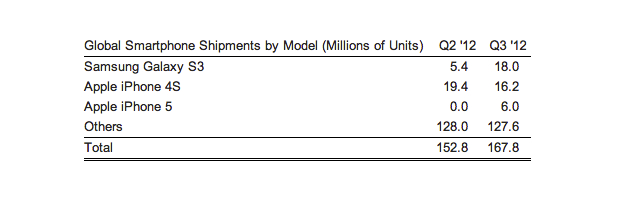
The report comes from research firm Strategy Analytics, and it puts the Galaxy S3 in first place with 18 million devices sold globally, and the iPhone 4S trailing with 16.2 million sold. In third place it’s the iPhone 5 with 6 million sales.

So, its a fanfare for Samsung, a company well on its way to beating Apple in the battle for smartphone supremacy. But is it? Well, as a headline, it is indeed good news for Samsung, but the sales from the third quarter of 2012 tell only a percentage of the story.

Samsung released the Galaxy S3 at the beginning of May 2012, spreading it to as many networks and countries as possible. In the slightly truncated second quarter results, it shifted 5.4 million phones.

But take a look at the iPhone 4S’s performance. The 4S went on sale in October 2011, and still sold 19.4 million in the second quarter, and then 16.2 this quarter. Not bad for a phone that was a fairly unremarkable evolution of the previous model, that has been on sale for, now at least, more than a year.

Strategy Analytics Global Smartphone Sales

These past couple of months have also been filled with anticipation over the iPhone 5, which then arrived at the tail end of September, and it still managed to sell more than the Galaxy S3 did in its opening weeks, and in a shorter time too.

Many potential iPhone 4S buyers decided to wait for the iPhone 5 in the run up to its release, which explains the drop off in 4S sales, and in effect, allowed Samsung to swoop in and grab the “world’s best selling smartphone” crown.

The question is, can it retain its crown in the all-important Christmas period between October and December? Strategy Analytics doesn’t think so, and expects Apple to “soon reclaim the title.”

The Galaxy S3 unquestionably deserves to top the charts, but the figures also highlight the struggle it faces to maintain that position over a longer period of time.


Source : http://www.digitaltrends.com/mobile/samsung-galaxy-s3-becomes-the-worlds-most-popular-smartphone/

Wednesday, November 7, 2012

Samsung expecting to lose Apple chip orders, says report

Samsung expecting to lose Apple chip orders, says report
Taylor Swift lyrics now inspire corporate policy

Samsung is reportedly preparing to scale back its chip production in anticipation of losing a good chunk of business from Apple as a CPU customer.

According to Digitimes, which cites unspecified industry sources, Samsung is considering a delay in the construction of a new Line-17 semiconductor plant.

The facility is officially scheduled to begin mass production in early 2014, but may get pushed back as Apple shifts its CPU orders away from Samsung to Taiwanese Semiconductor Manufacturing Company (TSMC).

Digitimes has not always proven to be the most reliable source when quoting anonymous informants, but this is hardly the first time that the future of Samsung and Apple's chip distribution partnership has been brought into question.

Let's call the whole thing off

The bad blood between Samsung and Apple has been boiling for quite some time through constant patent disputes, the latest of which was just filed this week against the Galaxy Tab 10.1 and Android 4.1 operating system.

As a result the relationship between the two firms has reportedly deteriorated, and the companies may part ways after existing contracts expire.

Until recently, Samsung has been the sole supplier of the CPUs Apple uses in all of its iPhones and iPads, along with various other chips and components.

Apple has since scaled back its reliance on Samsung, and expectations throughout the industry suggest TSMC will produce chips to power the next iOS device using its advanced 20-nanometer manufacturing process.

Samsung is soldiering on despite rumblings of losing Apple's patronage, claiming top marketshare among smartphone manufacturers and hinting at a radical new redesign to unveil at the Consumer Electronics Show in January.


Source : http://www.techradar.com/news/phone-and-communications/mobile-phones/samsung-expecting-to-lose-apple-chip-orders-says-report-1110931

Apple adds Android 4.1 Jelly Bean, Galaxy Note 10.1 to Samsung lawsuit

Apple is trying to add Android 4.1, Jelly Bean, and the Galaxy Note 10.1 to yet another patent infringement court case against Samsung in California.

Apple argued yesterday that Samsung’s Galaxy Note 10.1 tablet and the Android 4.1 Jelly Bean operating system infringe on its patents and should be added to an existing California lawsuit against Samsung.

Appearing in a federal court in San Jose, before U.S. Magistrate Judge Paul S. Grewal, Apple’s lawyers sought to expand the lawsuit against Samsung with additional patent infringement claims. This follows Samsung’s attempt to add patent infringement claims against the new iPhone 5 back on October 1.

The judge has not issued a ruling yet.

Most notable among Apple’s claims is the inclusion of Google’s Android 4.1 operating system, also known as Jelly Bean. Apple insisted that the Galaxy Nexus is the only phone with Jelly Bean that it is seeking to add to the patent complaint, for now. The implications of this are serious for Google and it’s the first time that Apple has included the Android platform specifically in its cases against Samsung.

It seems the Cupertino-based company is also now looking to add devices with a stylus, such as the Galaxy Note 10.1, and Apple’s attorney mentioned adding a further 17 devices that could use a stylus, but don’t ship with one.

This case is not scheduled for trial until 2014.

We will find a resolution to the highest profile case so far sooner than that. The jury verdict saw Apple awarded $1.05 billion in damages. As we reported before, Apple is seeking more money while Samsung is claiming juror misconduct. Those arguments will be heard in December and there will also be a decision on Apple’s attempt to get eight Samsung smartphones banned from sale in the U.S.

We’ll keep you posted on all the news about Judge Grewal’s decision and the December hearing as it breaks.


Source : http://www.digitaltrends.com/mobile/apple-adds-galaxy-note-10-1-and-android-4-1-jelly-bean-to-samsung-lawsuit/

Tuesday, November 6, 2012

Apple's FRAND lawsuit against Motorola dismissed in US

The federal judge Barbara Crabb, of the Western District of Wisconsin, has dismissed with prejudice the Apple’s FRAND lawsuit against Motorola. This means Apple cannot fill a similar lawsuit in another US court, unless it successfully appeals against the decision first.

Last year Motorola Mobility sought to receive 2.25% of all iOS products net sales as a licensing fee for some of the Motorola-owned patents they use. Apple refused to pay this amount and counter-sued Motorola for unfair licensing taxes.

A more recent turn of event saw Motorola ask Apple to agree to whatever fee the court declares fair, but once again Apple wasn't quite happy with the offer and said it will only adhere to the court fee if it isn't higher than $1 per iPhone.

So, now that Apple has just lost against Motorola it will either have to win in the appeal (which will almost certainly follow) or it will have to pay what the court orders. We are yet to see how this one develops, but Motorola seems to have won an important battle here.

Source | Via


Source : http://www.gsmarena.com/apples_patent_lawsuit_against_motorola_dismissed_with_prejudice-news-5046.php

Apple’s patent abuse lawsuit against Motorola has been dismissed

A case in which Apple accused Motorola of an abuse of the patent system, where it was charging Apple more for key patents than it was to other companies, has been dismissed. Apple has the chance to appeal, but Motorola wants to come to an agreement.

A lawsuit brought against Motorola by Apple has been dismissed by a court in Wisconsin, even before the trial had the chance to get underway. Instead, it took a week of pre-trial motions and a two-hour hearing on Monday morning, for Judge Barbara Crabb to cancel proceedings with prejudice. This gives Apple the chance to appeal, but only in the same court.

Apple was claiming that Motorola was abusing the patent system (oh, the irony) by asking unreasonably high license fees, and more than it charged other companies, for some key Wi-Fi and cellular patents used in the iPhone, iPod Touch and iPad.

Motorola’s fee is 2.25-percent of the price of each Apple device sold that uses the technology. Apple, however, only wanted to pay a fraction of that amount, stating $1 per future device was its magic number.

Following the dismissal, Motorola issued a statement saying “We’re pleased that the court has dismissed Apple’s lawsuit with prejudice. Motorola has long offered licensing to our extensive patent portfolio at a reasonable and non-discriminatory rate in line with industry standards.” It also adds that it’s “interested in reaching an agreement with Apple.”

Google-owned Motorola needs to be careful though, as it’s parent company is in-line for an antitrust lawsuit, should be it discovered withholding patents to stifle competition. Apple, on the other hand, is back to square one, with an appeal likely on the way.

This is the second Apple vs. Motorola lawsuit to be thrown out this year. Last time out, Apple accused Motorola of copying the design of the iPhone for its Android handsets, however Judge Richard Posner dismissed it in June after deciding neither company adequately made its case. At the time, Motorola tried to get this dispute with Apple enjoined, but the Judge refused.


Source : http://www.digitaltrends.com/mobile/apple-loses-patent-abuse-lawsuit-against-motorola/

Apple – Motorola lawsuit dismissed by US judge

Apple – Motorola lawsuit dismissed by US judge

Apple's ongoing battle with Motorola over patent licensing has been thrown out of court.

Apple has been maintaining that the rate requested for Motorola (and therefore now Google's since the search giant bought out the handset developer) is too high and wanted a court to order a lower rate.

But District Judge Barbara Crabb of the Wisconsin federal court ruled that she does not have the legal authority to make the claims.

That said, Apple is still pursuing the case against Googorola in other US regions, with court dates set for next year to make sure it isn't liable to pay damages on devices with featuring Qualcomm technology, which uses Motorola patents in its designs.

No Crabb-Apples this Christmas

The case being dismissed in Wisconsin is a blow to Apple however, as it was looking to force down the price Motorola is asking to use its essential technology – the company previously said it wouldn't pay more than $1 per handset.

Google, unsurprisingly, issued a statement filled with understated legal glee at the dismissal, claiming that it has always offered what it considers to be a fair price to Apple for the patents.

The bad news for the consumer is that there's no notion of these constant patent wars being settled as the battles continue to play out over many territories and over a number of issues.

The upshot could be higher handset prices, especially in the Android camp, as the likes of Microsoft and Apple attack the OS – hence the reason Google is so intent on leveraging the core assets it has, many of which live within the newly-acquired Motorola stable.


Source : http://www.techradar.com/news/phone-and-communications/mobile-phones/apple-motorola-lawsuit-dismissed-by-us-judge-1110381

Monday, November 5, 2012

US pricing of unlocked iPhone 5 shows up on Apple's website

Pricing of the factory unlocked Apple iPhone 5 in the US has surfaced on the company's website.

While not officially announced, AppleInsider has discovered that entering the search query "iPhone 5 factory unlocked" reveals the pricing of the device. Contract-free the 16 GB iPhone 5 will set you back $649, while the 32 GB and 64 GB will retail for $749 and $849, respectively.

Prices haven't changed at all compared to the way Apple priced the iPhone 4 and iPhone 4S in the US.

In Europe, however, it's a different story. In the UK in particular, a factory unlocked 16 GB iPhone 5 retails for £529, whereas the 16GB version of the iPhone 4S started at £499. Prices for the 32 GB and 64 GB variants remain the same as last year.

Source | Via


Source : http://www.gsmarena.com/us_pricing_of_factory_unlocked_iphone_5_shows_up_on_apples_website-news-5044.php

Apple sells 3 million iPads over the weekend, remains coy on how many were Mini

iPad mini price not too expensive

Apple has announced that it has sold three million iPads over the opening weekend, but fails to break down that figure into how many were iPad Mini tablets and how many were fourth generation full-size model.

Apple has sent forth its traditional, post-opening weekend press release trumpeting how many new iPads it has sold. We say iPads — plural — because it wasn’t only the iPad mini that went on sale, but the fourth generation iPad too, despite it being almost completely ignored by the press.

From November 2 to November 5, Apple sold 3 million iPads, which it says “doubles the previous first weekend milestone of 1.5 million Wi-Fi only models sold for the third generation in March.” Neither of the two new iPads have cellular connectivity yet, but 4G models will ship in the next few weeks.

Just in case you didn’t quite catch it, Apple CEO Tim Cook chimed in to confirm that the company “set a new launch weekend record,” and adds that it had “practically sold out of iPad minis.”

So, a resounding success? Well, possibly, but there’s no breakdown of exactly how many units of that 3 million magic number were iPad minis. Reports from around the world on Friday didn’t contain the same degree of excitement over the iPad Mini as they have for previous Apple products, and described shorter lines at stores.

This didn’t stop it from selling out, a fact that anyone could gather from a cursory glance at Twitter late in the launch day, as frustrated buyers found the shelves empty at their local stores. Apple’s statement closes with reference to online pre-orders selling-out too, confirming that “demand for the iPad mini exceeded the initial supply.”

Three million sales needed for success

Prior to the weekend, an analyst from BTIG said Apple needed to shift at least 3 million iPad Mini tablets for it to be hailed a success. For some context, the iPhone 5 sold 5 million over its opening weekend and as we reported last week, the Samsung Galaxy Note 2 has taken nearly 40 days to reach 3 million sales.

Apple analyst Gene Munster warned the company may fall short of this figure, estimating between 1 million and 1.5 million iPad mini devices would be sold. He noted that this lower than expected figure is because the iPad mini will be a “grower,” and that once people see and try it, demand will increase.

Without the aforementioned sales breakdown, it’s impossible to know how close Munster came to the truth, but he’s probably not far off. At least we assume he’s not, as for all we know, the fourth generation iPad could have been responsible for 75 percent of the total.

With the iPad mini selling out online and in stores, it certainly looks like another successful launch for Apple. But it’s difficult to say just how much of this was true demand, and how much was lack of supply. Among the endless iPad Mini rumors, you may recall an analyst warning that there would only be “acceptable” iPad mini stock levels for the first month, due to problems with the supply chain. This rumor may have come true, and comes soon after the iPhone 5’s similar problems.

The iPad mini came out in 34 countries on Friday and according to the Apple Store, is currently limited to two per customer with a two-week wait before it ships.


Source : http://www.digitaltrends.com/mobile/apple-sells-3-million-ipads-over-opening-weekend/

Apple paid just 2% corporation tax outside the US last year

Apple paid just 2% corporation tax outside the US last year
Taxing times

Apple's financial results reveal that it managed to pay just 2% corporation tax in overseas countries last year.

The Cupertino company paid foreign (e.g. outside the US) taxes of $713 million (£445m/ AU$689m) last year, despite making $36.8 billion overseas (£23bn / AU$35.5bn).

It's not clear how much of that was paid in each specific country over the course of the year.

Only death is certain now

Tech companies are coming under increasing scrutiny in the UK, at least, where it's possible to side-step British corporation taxes by routing payments through other countries that charge a lower rate – like Ireland.

Ireland is Apple's tax haven of choice and in 2011, the company paid £10 million in tax on £6 billion-worth of UK sales by opting for the Irish route.

This is perfectly legal, although it leaves Brits somewhat short-changed in the tax department despite Apple's significant contributions to the unavoidable national insurance and VAT coffers.

Other tech giants that have been accused of avoiding paying their fair share of tax include Amazon and Google, both of whom have been invited to discuss the matter with the Public Accounts Committee at Parliament later this month.


Source : http://www.techradar.com/news/computing/apple/apple-paid-just-2-corporation-tax-outside-the-us-last-year-1110091

Sunday, November 4, 2012

Report: Rift with Jony Ive led to Scott Forstall Apple departure

Report: Rift with Jony Ive led to Scott Forstall Apple departure

Apple CEO Tim Cook was forced to choose between feuding executives Jony Ive and Scott Forstall, a Bloomberg report has claimed.

According to a Bloomberg Businessweek article, outgoing Senior VP of iOS Software Forstall had refused to attend meetings chaired by Sir Jony, Apple's design guru, amid tensions between the two.

Bloomberg said the meetings related to discussions over iPhone hardware designs, which Forstall skipped despite being in charge of the software that would be present on the device.

The report read: "Even as Forstall oversaw the group responsible for the software that would run the iPhone, he didn't participate in the meetings, according to people with knowledge of the matter who requested anonymity because the meetings were private. Ive and Forstall were rarely in the same room, the people said."

Divisive

Bloomberg also claimed that, while Steve Jobs was able to keep a lid on the simmering tensions between Forstall and other executives at Apple, the iOS chief had become the most 'divisive' member of the team.

Reportedly, the final straw came this week when Forstall refused to sign an apology over the incomplete Apple Maps app, causing Cook to wield the axe.

Briton Ive, will now assume some of Forstall's duties, putting him in charge of the software and hardware design of future iOS devices.


Source : http://www.techradar.com/news/computing/apple/report-rift-with-jony-ive-led-to-scott-forstall-apple-departure-1109958