Showing posts with label platform. Show all posts

Wednesday, November 7, 2012

BlackBerry 10 gets important US security clearance ahead of launch

Research In Motion's upcoming BlackBerry 10 platform has received US security clearance that will allow it to be used by goverment agencies – provided they don't all desert the Canadian company before the new platform launches.

As Research In Motion (RIM) executives count down the days to the launch of its next-generation BlackBerry 10 platform (though one wonders if they really know precisely how many days are left), the company has been pushing out a number of positive press releases recently in an effort to create a silver lining on the gray cloud that has been hanging over the firm for some time.

Last week it announced that development of BB10 had passed what it described as a “critical milestone” with news that it had entered lab testing with more than 50 carriers worldwide.

And on Wednesday evening it issued a statement saying its new BB10 smartphones and its Enterprise Service 10 management console had both received important Federal Information Processing Standard (FIPS) 140-2 security certification from the National Institute of Standards and Technology. This is the first time BlackBerry products have been FIPS certified ahead of launch, the Ontario-based company said, and paves the way for US and Canadian government agencies to use the devices in their work.

Commenting on the news, Michael K. Brown, vice president of security product management and research at RIM, said, “Achieving FIPS 140-2 certification means that BlackBerry 10 is ready to meet the strict security requirements of government agencies and enterprises at launch.”

Talking up the security features of BB10, he added, “What differentiates BlackBerry is that it integrates end-to-end security, and includes certified encryption algorithms for data at rest and data in transit. No other mobile solution has achieved the level of security accreditation that the BlackBerry solution has.”

The certification is undoubtedly good news for the mobile company, though with several agencies in recent months announcing their intention to turn away from BlackBerry handsets in favor of iOS and Android-powered devices, RIM will have its work cut out to get them back on board. It must also work to hold on to those who have so far stuck with its devices.

Happily for RIM, last week the Pentagon said it would continue to support “large numbers” of BlackBerry smartphones even though it’ll also be allowing many of its employees to use the iPhone and other devices.

BlackBerry’s reputation for strong security was what until recently made RIM’s handsets stand out for those who required such features. But for many IT administrators working today, iOS and Android phones now offer more secure and manageable platforms.

RIM has been able to offer a few bits of positive news of late, but the real test will of course come when its new, long-awaited BB10 OS and handsets finally make an appearance.


Source : http://www.digitaltrends.com/mobile/blackberry-10-gets-important-us-security-clearance-ahead-of-launch/

Friday, November 2, 2012

HTC Windows Phone 8X review

HTC Windows Phone 8X review

A splash of colour, Microsoft's latest mobile platform and a sleek new body are combined with more powerful hardware - is the 8X the phone to bring Windows Phone 8 to the masses?

HTC's been in a bit of a weird position these last few years. From the days of anonymity when it made Windows phones for others, it rode the crest of the Android wave when Google's platform launched becoming, pretty much, the Android handset OEM of choice.

And then Samsung happened. HTC's offerings appeared to dip and even the pretty fantastic One X – struggled to make inroads against the seemingly unstoppable Galaxy line, currently led by the superb Galaxy S3.

HTC Windows Phone 8 review

HTC was up there at the starting block when Microsoft launched Windows Phone a couple of years back, and although it's competing with Samsung in this arena too – and its offerings haven't been what one would call "amazing" – HTC is clearly trying to make its voice heard.

And what better way to do that with some pretty bright colours and a newer version of Windows Phone that the world's been waiting for for months?

HTC 8X review

The HTC 8X comes in a range of colours - from muted black, to respectable red, to an elegant purple and a, quite frankly, hideous lollipop-lady yellow hue.

We were sent the purple model and it's a beauty. There had been rumours that the red would be reserved for Verizon users in the US – but it looks like the rest of world is now getting it too.

HTC 8X review

First thing we noticed is how thin the HTC 8X is. Not so much an amazing feat of engineering, but a clever trick.

With dimensions of 132.4 x 66.2 x 10.1mm, the HTC 8X is fairly average in size. But it's thinner round the edges to give the impression it's more svelte than it actually is. Not that this matters because it looks and feels thin most of the time and the slight curve around the back means it sits well, both on a surface and in the hand.

HTC 8X review

In fact, in the hand, it looks the same size as the HTC One X, despite the appearance given in our picture above.

Add to that the material the HTC 8X is made of – polycarbonate, like the One X – and you instantly have in your mitts a handset that feels like a real premium device. It's a unibody design so it's all nice and neat (win) but at the expense of a memory slot and replaceable battery (fail).

HTC 8X review

The front of the HTC 8X is taken up by the display. If you like what Nokia did with the Lumia 800, or indeed what HTC did with the One X, you'll be a fan of this too.

The screen just looks like it's been stuck on top of the phone and adds to that premium feel. There's also a splash of colour around the earpiece to remind you that the two are linked.

HTC 8X review

Next to this, you'll find the front-facing wide-angled camera, and the three Windows Phone softkeys at the bottom – back, search and menu.

That screen is an HD display at 720x1280. Spread over 4.3 inches, it's easily as sharp as Apple's retina display, which no longer appears to be anything special by modern standards.

HTC 8X review

The top of the HTC 8X is fairly minimalist with nothing other than the 3.5mm headphone jack and the lock button. Although we're not necessarily fans of lock buttons on top of larger phones due to the awkwardness they present, here, we weren't too fussed.

Due to the shape of the handset and the way it sits, it's easy enough to press with the index finger whether you're a left or right hander. Our only complaint is it is quite subtle and a few times, we had to feel around to find it if we were looking elsewhere. It doesn't stick out much.

The left hand side of the HTC 8X is completely bare, whilst all you'll find down at the bottom is the micro USB charging and syncing port.

HTC 8X review

The volume rocker is on the right and below it is a camera shutter key. We are always pleased to see these because it makes the art of launching the camera and taking a photo so much easier than messing about with software, no matter how good said software is.

There's also a tray for getting that micro SIM in – but you'll need to use a special tool to open it so make sure you keep it in a safe place.

The rear of the HTC 8X is a thing of beauty. That polycarbonate body really sets it off – as does the colour which sits beneath a silver HTC logo and another displaying the Beats Audio heritage. And of course, there's that main snapper with LED light which HTC promises will deliver amazing results.

HTC 8X review

The 8X will be pitching itself right against Nokia's latest Lumia range – and with the Lumia 920 also coming in a number of colourful iterations, telling them apart may be harder for those who aren't as used to Windows Phone products.

But there is a difference in that the HTC 8X doesn't come with 4G LTE connectivity in the UK, whilst the Lumia 920 does. Which means it'll likely be cheaper – and that may be its saving grace for late adopters.

HTC 8X review

Expect the HTC 8X to launch at the start of November. With this in mind, there are no real deals to be had yet, but preorder prices are sitting a shade under the £400 mark (USD: $640 / AU: £620) for a 16GB sim-free unit.

This will be HTC's flagship Windows Phone handset, so don't expect it to be in the bargain bucket. Prepare to pay at least £30 a month for two years.


Source : http://www.techradar.com/reviews/phones/mobile-phones/htc-windows-phone-8x-1098439/review

Thursday, November 1, 2012

Microsoft ran out of time to add notifications to WP8

Microsoft ran out of time to add notifications to WP8

One feature of the Windows Phone 8 platform that Microsoft failed to mention at the launch this week was a central hub for notifications. That's because it doesn't exist, with Microsoft's Thomas Fennel admitting it wasn't included because the developers ran out of time.

While Microsoft's platform allows for notifications delivered through its Live Tiles system, there isn't a central hub to deliver notifications of all a user's important information.

For some applications that don't take advantage of Live Tiles, this leaves developers without a way to send users notifications.

A notification centre also helps users track older notifications that may be lost in among the more popular apps.

Giving notice

But it's also something that Microsoft is aware of and could potentially implement in future updates.

"It's very, very important to me… we get tons of feedback from developers that they want something like that as well. I promise we're thinking very, very hard on that one," Fennel admitted when questioned about the lack of a notification centre in WP8 at the Microsoft Build event.

It's obviously a long way from an official announcement, but it does seem likely Microsoft will push to incorporate the feature in future builds of the mobile operating system.

Via: The Verge


Source : http://www.techradar.com/news/phone-and-communications/mobile-phones/microsoft-ran-out-of-time-to-add-notifications-to-wp8-1109488

Apple issues iOS 6.0.1 update, fixes mainly iPhone 5 issues

Today Apple released a minor update for its iOS 6 mobile platform. This is the first OTA update to come since iOS 6 was seeded to users and it comes to fix an issue with horizontal lines over the keyboard of the iPhone 5, camera flash issues, Wi-Fi reliability and more.

The update is available over the air and through iTunes as we speak. We installed it, but we are yet to sport any major differences in the user experience. Drop us a line in the comments section if you've noticed anything worth mentioning.


Here is the full changelog from Apple:

  • Fixes a bug that prevents iPhone 5 from installing software updates wirelessly over the air.
  • Fixes a bug where horizontal lines may be displayed across the keyboard.
  • Fixes an issue that could cause camera flash to not go off.
  • Improves reliability of iPhone 5 and iPod touch (5th generation) when connected to encrypted WPA2 Wi-Fi networks.
  • Resolves an issue that prevents iPhone from using the cellular network in some instances.
  • Consolidated the Use Cellular Data switch for iTunes Match.
  • Fixes a Passcode Lock bug which sometimes allowed access to Passbook pass details from lock screen.
  • Fixes a bug affecting Exchange meetings.

Apple is said to be working on a larger-scale update of iOS 6, which should arrive some time after the holiday season.

Via


Source : http://www.gsmarena.com/apple_issues_ios_601_update_fixes_mainly_iphone_5_issues-news-5032.php

Thursday, October 18, 2012

Will Lightt fade in Instagram’s shadow or could its future make it more than just another image app?

lightt web site

Lightt is a new take on content sharing, producing animated GIF-like video clips of the world as you're seeing it. Will the platform prosper thanks to a future integration or is it doomed to fall on Instagram's sword?

You can’t launch a new photo-sharing app without being called an Instagram challenger, and the unfortunate label has not escaped Lightt. The new app launched yesterday, revealing a new take on the photo feed. Instead of creating a network based on stills and filters, Lightt takes 10-second videos and plays them back fast-forwarded with no sound. Will Lightt face the same fate as the amibitious yet ill-fated Color, or will its future integration with Google’s Project Glass keep it safe from being buried in the underbelly of the App Store?

How Lightt works

Your Lightt sign-up experience is nothing new: Download the app, create your account, idly flip through the initial instructions pointing out icons and what they do, and you’re off. Perhaps the strangest part of the whole thing is your profile picture: Instead of letting you pull a still from your gallery or even take a photo, you create a short video that Lightt speeds up and turns into your avatar. It’s disorienting… and honestly, the result is a little strange – it’s like one of those haunted house paintings where the eyes follow you.

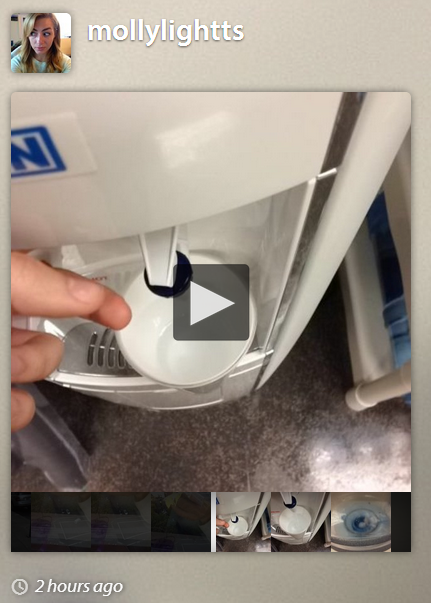
light web viewerAfter that, you should just jump in and start using Lightt. You hit the center camera icon to take quick videos. You can take one (10 seconds), or keep hitting the icon in order to continue to capture the scene – or what Lightt calls a highlight (“A highlight is a burst of pictures that captures about 10 seconds of time in one tap. Your highlights upload immediately and play back faster than real life, like the speed of our memories,” per the Lightt blog).

You can share photos to Facebook or Twitter – thought realize that they aren’t grouped together and you’ll just be posting continuous blocks of this content. From there, you’re sent to a Web viewer, but this is the only way to see your media via desktop, to share it out, and then hit the link. There aren’t any embed options right now, either, so you can’t host your Lightt content on your Tumblr, WordPress, or any other blog yet. 

The app has a home page, which is segmented by your feed, a “happening now” feed, and a “featured” feed. You can also navigate to your own page, your friends list, and an activity bar. Users are able to leave comments or like highlights – and you can strangely share other users’ highlights to your own social networks.

mobile screenshots

The Color connection

If you immediately started playing with Lightt or looking through the available feed and thought things seemed familiar, you’re not the only one: My first thought is that this is  exactly what Color tried to do. When the beleaguered startup first launched, it had a rather simple photo-sharing mechanism (no filters, no editing, no video, no captions, just point and capture) but did introduce what was a rather revolutionary location-aware social network.

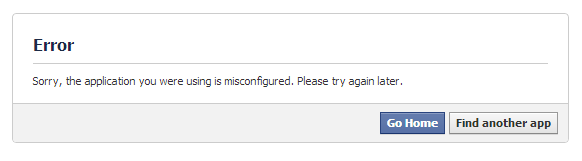
Eventually Color pivoted into a video streaming application and became a Facebook Timeline app. The idea was to “show the world what you’re up to,” and users with the app would get an invitation to “visit” the recorded moment in real-time via Facebook. However, when I tried to use the Color app, I recieved this notification from Facebook.

facebook color misconfigured

This, on top of the mountain of rumors that Color is not long for this world (which, honestly, could end up meaning very little if the company is indeed acquired by Apple, not to mention the money it stands to make off patents), all points to the fact that the app wasn’t a hit with users.

And there are some similarities between Color and Lightt. There’s the fact that they are both image, media-focused apps. But that’s not exactly a novelty anymore (you could create a daily newsletter full of these app launches). Then there’s the location element; Color bet heavy on this and ended up scaring the crap out of users. Lightt is using location as well, but it’s not nearly as important to the app (you can choose to have location settings turned on or off, though Lightt will prompt you to give up the data so it can auto tag the vicinity of your content).

The big difference between the two apps is the fact that Lightt has a much more user-friendly, explanatory interface. Color was without words, without explanation, without guidance; you were thrown into this entirely new and unfamiliar territory with no gentle hand to lead you through it. Lightt didn’t make this mistake. And in Color’s defense, the team never thought they’d get the type of early fundraising or attention that they did – the startup has been honest about that fact that mistakes were made.

Don’t look a GIF horse in the mouth

While Lightt falls squarely into the photo-sharing genre, the media it creates is actually far more similar to apps like Cinemagram or Gifture, which take your short-form videos and turn them into animated GIFs.

[Via cinemagr.am]

Lightt sees the result as more of a visual timeline of your activity, but the rest of us are surely going to see the sped-up, stop-motion effect as an animated GIF. This medium has at once become the pride and joy as well as the scourge of the Internet. Twitter has fiercely fought animated GIF avatars (you’re no longer able to upload them to the site), and there’s a quiet but budding movement supporting cleaner Web design that eschews the ostentatious, attention-demanding art form. Despite any of this, they are assuredly the Web’s bread and butter, and it’s hardly an exaggeration to say Tumblr is bursting at the seams with the stuff.

Animated GIFs are the Internet’s comeback kid: After a brief love affair with them in the 90s, they died down for whatever reason. And now, they’re back with a vengeance.

However, while there are a handful of apps tapping into this popularity, they aren’t able to produce as high quality of results. The limitations of working on a small screen with nothing but your hands and the video you can capture with a smartphone means your creations probably won’t enjoy to the viral success many Web animated GIFs do.

While Lightt makes the process far easier (anyone who’s tried Cinemagram, Kinotopic, or Gifture knows the inaccuracy and frustration of coloring in the desired moving segment of media with your finger), the effect isn’t quite an animated GIF. Not that Lightt wants it to be – but maybe we want it to be.  The jury is still out on how well we’ll ever be able to make these with mobile devices, or whether we even want to, but what you’re able to make with Lightt right now sort of feels like a half-hearted effort. 

Instagram, you’re safe 

Instagram killer, Lightt is not – but the most interesting part about the app is where it’s going, which is to Google Glasses. This is where Lightt could make sense; walking around, holding my iPhone up while I record a scene still just feels awkward. That’s the beauty of Instagram: It’s instant. It’s a quickly captured moment. Lightt is still a little too much work, but the minute you implement it into something I’m wearing, the results could be stunning.

For the time being, the actual quality of what you create using Lightt isn’t up to par – Instagrams, and photo apps for stills in general – are still much prettier to look at. Video is a trickier beast, it’s a much more complicated process under-the-hood. Which is why time will only tell if Lightt can bring something compelling to the table when it hits Google Glasses. 


Source : http://www.digitaltrends.com/mobile/lightt-launch/

Wednesday, October 10, 2012

Groupon’s turning its Breadcrumb acquisition into an iPad point-of-sale system

breadcrumb

Groupon unveiled its latest play in assert the company as a commerce platform with the iPad-based point-of-sale system for merchants.

Groupon acquired iPad point-of-sale solution Breadcrumb just a few months ago and today the daily deals giant has accordingly unveiled its own POS system for local businesses to use on the iPad. While Groupon has offered a Square-like card reader to its clients, the new service is a fully-featured cash register replacement. Given Groupon’s recent launch of its payment system, Groupon Payments, the physical POS system is a natural next step. 

With Groupon Payments, Groupon hopes to reassure shareholders that have been disappointment by the company’s performance since its initial IPO price at $20 per share tanked and settled into single digits. At the moment, based on Yahoo Finance, Groupon’s stock is priced at $5.31. Still, that number is up since September, when it was at its lowest at $4.15 per share.

According to Groupon’s blog post, Breadcrumb’s General Manager Seth Harris explains that the company will be purposed with the hospitality industry in mind. “We started Breadcrumb to provide the hospitality industry with the best POS experience it has ever had,” says Harris. Breadcrumb is a fairly robust point-of-sale system: Servers can search for menu items and rearrange tables within the iPad-based software, take and place orders, split checks, process payments, and access analytics to track sales and performance.

breadcrumb pricing

Breadcrumb for Groupon will run strictly on iPads for a recurring monthly rental fee of $99, and this cost includes 24/7 support from Groupon’s hospitality focused customer service representatives. Breadcrumb will likely have multiple payment plans depending on the number of terminals that a business is interested in renting. All plans include the iPad compatible Breadcrumb software for rent, unlimited users, and free updates. But for $399 per month, merchants can use Breadcrumb on as many as 10 iPads, according to Breadcrumb’s site. Although, for that cost, the hardware (iPads, printers, and cash drawers) isn’t included.

Groupon Payments will likely serve as the payment system running on top of Breadcrumb’s platform. We’ve reached out to Groupon to clarify this.

When we last talked to Groupon, we learned exclusively that the company is working on developing a brick-and-mortar point-of-sale terminal for local mom-and-pop type shops, which should be introduced within the next month. According to a Groupon rep, not all small retail owners are tech savvy and interested in evolving into iPad POS services. 

With Groupon’s stock price slowly climbing, the company may have found a way to crawl out of the daily deals black hole.


Source : http://www.digitaltrends.com/mobile/groupon-post-acquisition-of-breadcrumb-serves-up-ipad-point-of-sale-system/

Thursday, October 4, 2012

Wozniak: Apple should bring iTunes to Android

Wozniak: Apple should bring iTunes to Android
iTunes on Android? Fanciful thinking from Apple's co-founder

Apple would be wise to bring iTunes to the rival Android mobile platform, according to the company's co-founder Steve Wozniak.

In a Q&A session with Apple fans on the Slashdot website, Wozniak recalled Apple opening iTunes up to Windows PCs not too long after the iPod launched - kickstarting the era of iDevice dominance.

The beardy tech legend, who has never been afraid of voicing controversial opinions, asked why Apple can't do the same by bringing iTunes to the open source Android OS.

Wozniak's not too far off the mark: his postulations would allow the company he started back in the 1970s to start raking in cash from the 50-plus per cent of smartphone users currently rocking Android handsets as well as iPhone, iPad and iPod users.

Wishful thinking?

"Apple's real rise from the small market-share Macintosh company to the iProducts of today began with iTunes and the iPod," the Woz said.

"This turned out to be a second huge business which roughly doubled Apple's 'size,'" he continued.

"If you remember, we ported iTunes to Windows. We now addressed 100 per cent of the world's market with this integrated system (iPod/iTunes) and it began the era of Apple that we are now in.

"So why don't we port iTunes to Android?" Wozniak posed. "I love Apple products and iTunes and wish it were on my Android products too."

Unlikely

Although highly improbable, if Apple decided to bring the iTunes software to Google's mobile OS, it would surely be welcomed by Android users that have traditionally bought and stored their digital files using iTunes.

Adding one's iTunes files to an Android phone and keeping it up to date is, and has always been, a royal pain in the you-know-what and Wozniak's idea would solve that.

Apple, of course, is very keen on keeping customers locked into its all-encompassing ecosystem, which is underpinned by the iTunes store for music, apps, games, movies, books and magazines.

So, regardless of the huge wads of cash it'd make from iTunes downloads on Android, it'd be loathe to miss out on lucrative sales of iPhones, iPads and iPods.


Source : http://www.techradar.com/news/computing/apple/wozniak-apple-should-bring-itunes-to-android-1102051

Wednesday, October 3, 2012

PlayStation Mobile platform is one more confused corner of Sony’s fractured brand

Sony's PlayStation Mobile opened for business on Wednesday, but the platform is representative of the company's problems with clarity.

 playstation vita

After a year of beta testing and a particularly wise name change, Sony’s PlayStation Mobile platform is now available for the PlayStation Vita, Sony’s Xperia smartphones, and a number of other portable devices that fall under Sony’s PlayStation Certified classification, including tablets from ASUS, HTC phones, and the WikiPad gaming tablet. Much is riding on PlayStation Mobile. Sony needs it to act as a thread binding together its struggling portable gaming business, its faded Xperia brand, and its nascent PlayStation presence in the broader Android market. Sony needs PlayStation Mobile to be Apple’s App Store, and it needs to achieve that goal without the benefit of being identified with specific devices. Will it work?

There are factors working in Sony’s favor. PlayStation Mobile and its games are tied with the Sony Entertainment Network, the home of its entertainment services like Qriocity, and its subgroup, the PlayStation Network. As of March, Sony claimed it had 90 million registered PlayStation Network accounts. While that figure by no means represents individual paying customers—many of those accounts are duplicates or inactive—that’s still a huge audience of users that can seamlessly use PlayStation Mobile without having to set up an entirely new account. A PlayStation 3 owner with an HTC One that wants to play the original Crash Bandicoot only needs to download the app to get going.

Or at least they would have been able to. A huge factor working against PlayStation Mobile is Sony’s decision to bar classic PlayStation games on the platform. The potential to bring games from old Sony consoles to mobile devices could have helped get people interested in the platform. It previously offered a selection of PSOne classics on Xperia phones, and it wasn’t unlikely that it would at some point offer PlayStation 2 games through PlayStation Mobile as well. (It already offers them as PlayStation 3 downloads through the PlayStation Network.) It announced at Gamescom that classic games would only be available on its devoted gaming machines.

Original games, however, are also a problem for the PlayStation Mobile network. A presence on moderately popular Android phones from HTC isn’t enough to make up for the low consumer penetration of PlayStation Vita and the Xperia line. What incentive to developers have to bring their games to PlayStation Mobile? Without decent original games, how will Sony get people interested in buying games from the service?

PlayStation Mobile is out in the wild now, but Sony doesn’t have the software to make it a success. It’s one more example of Sony’s fractious structure. If PlayStation Mobile is to be a success, it needs parity across all platforms.


Source : http://www.digitaltrends.com/mobile/playstation-mobile-platform-is-one-more-confused-corner-of-sonys-fractured-brand/

Thursday, September 27, 2012

Android 4.1 Jelly Bean release date: when will you get it?

Android 4.1 Jelly Bean release date: when will you get it?
Are we going to have to wait months again?

Google has announced the latest version of its mobile platform, Android 4.1 Jelly Bean, at its annual I/O event in San Francisco, with it appearing alongside the first device to run it, the Google Nexus 7 tablet.

However the Nexus 7 won't be the only device which will end up running the sugary named update, with a host of phones and tablets set to receive the upgrade. Google has also announced that it plans to have Jelly Bean running on the Nexus S, Galaxy Nexus and Motorola Xoom in mid-July.

Update: the Nexus S started receiving updates to Android Jelly Bean in Asia on 19 July, with more markets set to follow soon after.

The Motorola Xoom is an unusual choice, as it's already been usurped by the Xoom 2, and in the UK Carphone Warehouse claims that the Nexus 7 will be the only tablet running Android 4.1 for four months.

If the Ice Cream Sandwich roll out is anything to go by, then manufacturers are likely to take their sweet time about getting Android 4.1 out to consumers, and some devices may miss out.

We've contacted all the major players in the Android market, to find out what their plans are for the Android Jelly Bean upgrade, here's what we've heard so far;

Android Jelly Bean: Samsung

Update: The official Android 4.1 Jelly Bean update for theSamsung Galaxy S3 has begun rolling out to handsets in Eastern Europe.

Samsung says Android 4.1 is "gradually being introduced to other markets" - although there's no exact dates for the UK or US at this time.

The Korean firm has also confirmed it will be bringing Jelly Bean to the following devices in due course: Galaxy Tab 2 7.0 & Tab 2 10.1, Galaxy Note 10.1, Galaxy SII,Galaxy Note, Galaxy Tab 7.0 Plus, Galaxy S Advance, Galaxy SII LTE, Galaxy Music, Galaxy Chat, Galaxy Ace 2, Galaxy Beam, Galaxy Ace Plus, Galaxy Mini II and Galaxy S Duos.

Android Jelly Bean: HTC

HTC has announced it will be bringing Jelly Bean to at least three of its models, which is good news for those that like newer handsets:

"We know HTC fans are excited to get their hands on Google's latest version of Android. At this point in time, we can confirm that we have plans to upgrade our HTC One X, HTC One XL and HTC One S to Jelly Bean," a HTC spokesperson told us.

"Please stay tuned for more updates regarding device upgrades, timing and other details about HTC and Jelly Bean."

Update: The latest reports suggest the One X will see Android 4.1 pop up in October, although HTC are yet to officially confirm anything.

Android Jelly Bean: Motorola

Motorola has confirmed that it has not released its plans regarding the Jelly Bean update yet.

However Google said it was planning on getting Jelly Bean onto the Xoom tablet in July.

Android Jelly Bean: LG

Back in February at MWC 2012, we spoke to LG regarding the Jelly Bean update and the manufacturer confirmed it would guarantee an upgrade to Android Jelly Bean for all compatible 2012 handsets.

We will have to wait and see if it delivers on that promise.

Update: A spokesperson for the firm has told TechRadar: "LG will continue to support the latest android platforms, across LG devices however at present an exact date is not yet confirmed."

Update 2: Sources at LG tell us the relevant phones in the range will be updated to Jelly Bean by Q1 2013, with the roll out beginning in Q4.

Android Jelly Bean: Asus

During MWC 2012, Benson Lin, Asus' Corporate Vice President told TechRadar: "Asus is very close to Google, so once they have Android 4.1 I think there will be a high possibility that we will be the first wave to offer the Jelly Bean update."

The Transformer Pad 300 has now been given the Jelly Bean treatment - so make sure you hit software update check if you're still on Ice Cream Sandwich.

Update: A post on the Asus Facebook page has confirmed that it will be bringing the Android 4.1 update to the Transformer Pad Infinity and Transformer Prime "soon".

TechRadar spoke to Asus, and a spokesperson said "the Jelly Bean rollout to the Infinity and Prime will happen in days rather than weeks."

Some lucky soles in Sweden have already started to get Android 4.1 on their Transformer Prime tablets.

Android Jelly Bean: Sony

Sony has confirmed that a host of Sony Ericsson Xperia handsets from 2011 will not be getting an update to Android 4.1, which means the likes of the Sony Xperia Arc Sand the Xperia Mini Pro will miss out.

As far as Sony's plans for Jelly Bean go Sony Mobile's UK product manager, John Cooper said: "We currently don't have anything to announce regarding Jelly Bean for the Xperia S."

Update: However fear not, as Sony has now retracted this comment, posting the following response on the official Sony Xperia blog.

"A quick note – during a Q&A session last week on our Sony Mobile GB Facebook page, a local spokesperson gave information out in error on our Android 4.1 Jelly Bean software development and rollout for 2011 Xperia smartphones.

"We are actively investigating Android OS upgrades for all devices, but in the meantime, our Ice Cream Sandwich rollout for Xperia S and 2011 Xperia smartphones continues as planned."

Android Jelly Bean: Acer

According to Dutch site Tablet Guide, Acer will be updating some of its Android tablets to Android 4.1, although it was unable to say which models would be lucky enough to get it and when it would start rolling it out.

Android Jelly Bean: Toshiba

Toshiba has confirmed that it will be providing Android Jelly Bean to its AT200 and AT300 tablets, although no time frame was given for the roll out.

We spoken to Toshiba, who said it was unable to comment on the Jelly Bean update at this time.

Android Jelly Bean: ZTE

A ZTE spokesperson has told TechRadar: "Although Google has released information about Jelly Bean, Google is yet to publish the source code release date.

"Therefore it is currently impossible to estimate a date for the ZTE Jelly Bean upgrade at this point in time. Based on historical forecasts, Google requires 1-2 months to complete the source code release before manufacturers can begin to develop Jelly Bean based versions of devices."

Not wanting to be left behind, ZTE has launched the first Android Jelly Bean handset in China, and third in the world, in the form of the ZTE N880E. It's unlikely to make it to other territories, but it shows manufacturers can get Jelly Bean out the door quickly.

Android Jelly Bean: Intel

Intel has confirmed that it is working with Google on a Jelly Bean port for its Atom processors, which will allow the latest version of Android to run on handsets and tablets with Intel inside, such as the Orange San Diego.

There's currently no sign of a release date, so we're going to have to wait for more information on the progress of this project.

And the rest

We're stilling waiting to hear from other Android device manufacturers including Huawei and Panasonic.

Make sure you bookmark this page, as we'll be updating this article as and when we hear back from manufacturers regarding their plans for the Android 4.1 update.

In the meantime, take a look at our hands on Android 4.1 review to see what the jelly Bean update will be bringing.


Source : http://www.techradar.com/news/phone-and-communications/mobile-phones/android-4-1-jelly-bean-release-date-when-will-you-get-it-1087344

Wednesday, September 5, 2012

Verizon: We'll carry Windows Phone 8 devices later this year

Verizon: We'll carry Windows Phone 8 devices later this year
Verizon won't play around with Windows Phone 8 devices

Get ready for "multiple" handsets equipped with Microsoft's Windows Phone 8 platform to come to Verizon before 2012 is up.

Verizon executives confirmed the U.S.'s largest carrier will sell more Windows Phones during the fourth quarter, though just when that will be they didn't say.

Reports pointed to this being the case for some time, though it wasn't until Wednesday that Verizon higher ups gave official confirmation.

Tami Erwin, Verizon's chief marketing officer, was quoted in a published report as saying the company will "sell multiple Windows Phones in the fourth quarter."

A new chapter

Currently, the only Windows Phone the Big Red stores on its shelves is the HTC Trophy.

Verizon added a trio of new phones to its lineup Wednesday too as Motorola announced the advent of its new Droid Razr family.

Comprised of the Razr HD, Razr Maxx HD and Razr M, the phones, when available, will hook up to Verizon's 4G LTE network.

According to Marni Walden, Verizon's chief operating officer, the company has engaged in "healthy conversations with Nokia" though that company has a long way to go in terms of rebuilding a relationship with American consumers.

A rumor surfaced Wednesday Verizon will sell Nokia's Lumia 920 - a Windows Phone 8 device - beginning in early November, but neither the date nor the deal have been confirmed.

Another Nokia Windows Phone 8 handset, the Lumia 820, was also released. The same source who said Verizon will carry the 920 said T-Mobile plans to pick up the lower-spec 820.

Whether Verizon's interest is peaked by Nokia's first Windows Phone 8 offerings remains to be seen.

In keeping with comments made by Fran Shammo, Verizon's chief financial officer, in April, Erwin said the company would like to nurture a third OS ecosystem, one beyond Apple's iOS and Google's Android.

To that end, Erwin said that when Research In Motion launches the BlackBerry 10 early next year, Verizon plans to carry a smartphone running the new OS.


Source : http://www.techradar.com/news/phone-and-communications/mobile-phones/verizon-well-carry-windows-phone-8-devices-later-this-year-1095016

This new startup wants to inject some Ooomf into the App Store

Ooomf launches its app discovery and creation platform, a place to participate and curate app products and collections. Take that, App Store.

home page Ooomf

The app market has become a very important one, and it comes down to numbers: As of May, 50.4 percent of Americans used smartphones, according to a Nielson report; we’re seeing new statistics on how they invade our personal lives; both the Google Play Marketplace and iOS App Store are well beyond the 20 billion download mark at this point; and, perhaps most telling, using a smartphone to make a call comes in as the fifth most popular function — most of it is spent using apps.

Suffice it to say that apps are big business.

Singular app developers aren’t the only ones who’ve noticed the trend, and a new wave of app creation and management platforms are hitting the scene to help with monetization as well. And that includes newly launched Canadian import, Ooomf.

The Montreal-based Ooomf began as a Startup Weekend pitch that pivoted during the team’s time in an accelerator program. “We had two major evolutions,” founder Mikael Cho tells me. “The first idea was to help people market their products online with influencers, and we saw that what we were doing with that was incremental, and not a big change. We had feedback from our users and we started thinking about our backgrounds in user experience and design and marketing, and thinking about the problems we could really solve there. So we started thinking about mobile and we saw that our expertise really aligned with mobile.”

The other piece of Ooomf’s evolution was nailing down the specifics of how it would help app developers. So for starters, the service creates a Website for its users. “One of the things they had to do in getting their app out there was make a site, because Apple requires it,” says Cho. “And we were like “oh, okay, right away, we’ll do that for you.’” He describes the process as incredibly simple — we’re talking Tumblr simple, people — and says it takes less than a minute to have your app’s Web landing page up and running. Sure, it’s a little thing, but it’s an effective one; the caliber of an app’s proprietary page is sort of like a book cover — we’re not supposed to judge it, but lots of us most certainly do.

As the team has refined the product, it’s added a community element to Ooomf. “We allow people to participate in the creation of an app,” says Cho. “So if you have an idea or a prototype or a design, you can put it on Ooomf and let the community vote on features and participate in it.” Crowdsourcing leaves no stone untouched, and that’s quickly including app creation. There are a handful of companies pre and post-launch who are doing this exact thing, though using a variety of mechanisms to encourage audience participation. But the idea remains the same: Everyone has an app idea, and this is a place to put them.

The other beast of a problem Ooomf is tackling is app discovery. If you haven’t noticed, the consumer and developer world largely hates the App Store’s feeble attempts at showcasing apps and helping us find new ones. In addition to supporting and participating in app creation, users can also make their own curated app catalogs. “You identify as a creative, or a traveling nomad, or a hustling innovator, and we have different apps in each category,” Cho tells me. “But the entire idea is to be a part of the whole life cycle of an app, from idea to creation.” Ooomf also offers a “Coming Soon” category to help with discovery of upcoming apps — something that developers fear in the App Store: If you don’t crack the top on your debut day, you can sink fast and furiously.

Ooomf collections viewApple’s lack of App Store discovery upgrades has been a boon to teams like Ooomf: It’s basically ceded an entire platform to outsiders. Of course, we now have word that Apple is about to flip a switch and turn Genius on for the App Store, and that some of that Chomp acquisition will finally be making its debut. I asked Cho if there’s any fear on Ooomf’s part about this, and he seems to feel the way that I do about it: Too little, too late. He also mentions that Apple’s App Store algorithms still allow the Ooomf team to offer something useful.

At the moment, everything on Ooomf is free, and will remain so for pure users. Cho says that within the year, paid-for features will be introduced on the developer-side and it will either be based on the number of apps someone is making or the numbers of things they use Ooomf to help them do. He also talks about working with developers on incentivizing user participation — like offering people early beta testing or future discounts on in-app purchases if they were there from day one.

Clearly, Ooomf’s strategy is to give developers a stage — which is surprisingly becoming tricky territory these days. “I definitely think it’s important to really cater to developers. You’ve seen with Twitter the massive growth that occurred because, yes, there were users, but because every developer was building a Twitter client or something for the application,” Cho says. “There was so much open data and Twitter was able to grow massively because of that.”
“Eventually, we’ll have our own data and open our own API, and we’ll use the App.net approach.”

Today, Ooomf is available via Web and also has optimized its site for mobile. The iOS app will launch this November. 


Source : http://www.digitaltrends.com/mobile/this-new-startup-wants-to-inject-some-ooomf-into-the-app-store/

Tuesday, September 4, 2012

Vivogig brings its concert photo-sharing app out of beta: Location, song preview, hashtags, and more

Originally introduced at SXSW, Vivogig brings its concert-focused photo app to the massive in a much more complete package.

Last year at SXSW, Vivogig released its concert photo-sharing platform just before the beginning of the festival’s Music Week. Admittedly, the launch was pushed out the door in order to make the show, and founders Tanner Moehle and Daniel Senyard both explained to be what I was seeing was a very surface version of what they hoped to do with it.

Now, the team is ready to push a big update that will enable a whole new host of functionality and features that the currently dead-simple beta version of Vivogig hasn’t had up to this point. Now the app will include a find your friends tool, location stamping, an upgraded interface, big, screen-filling photos in the stream, song previews via iTunes integration, hashtags, and the ability to follow other users as well as featured artists and a VIP section with behind-the-scenes content from performers.

Other improvements include a streamlined shooting experience, making it faster to shoot and share, “So you’re spending as little time as possible looking down at your phone,” the team tells me, something they also emphasized back in March. The fun and fancy of Instagram is the filter-choosing process, but that also means you’re stuck staring at a screen instead of, say, a concert. This is what Vivogig wants to prevent, while still creating a concert-focused photo experience.

Niche? Absolutely – but any good Instagram addict knows that concerts and events are some of the most popular photos shared on the application.

Given its position, I had to ask Vivogig if there we’re Instagram-like filter plans in the pipeline. Last time I asked this question, the duo spoke about getting eyes off screens and on the stage, but Moehle says that if they do choose to introduce filters, they’ll do it differently. “Something that shows off the lighting,” he says.

And what about video? Given that Vivogig is focused on social, live performances, and media, you’d imagine that the undeniably hot (and confusing) social video market might hold some intrigue for the startup. But you’d be wrong – for all the reasons critics keep bringing up: That even powerful smartphones can’t compete when it comes to A/V. “We didn’t find one band that like the idea of crowd-sourced video,” veteran music industry exec and chief strategy officer for Vivogig Raymond McGlamery tells me. “Labels will want their performance rights the minute we start uploading videos – they will pull stuff like that down.” Clearly, video and audio quality suffer when taken from a smartphone and bands and their management don’t want anything less than the best circulating out there. “Even as video gets better and better, audio won’t ever be able to get there from a stationary source that you can still make phone calls from,” McGlamery points out.

Since Vivogig’s initial launch in Austin, the startup has managed to raise 300,000 and is closing its angel round now. The partnerships Moehle and Senyard talked to me about at the time are still in the works, and together with McGlamery (formerly of Ticketmaster and Warner Bros), to talk with venues, media companies, labels, and managers about using Vivogig as a means to promotion. Specifically, McGlamery mentions concert hall holding contests for best user-taken photos, and getting bands to directly promote using Vivogig and weaving their into their branding. Of course, before this next phase is fully launched, the team wants to solidify the app itself.

“The original is great and it works, but it doesn’t have the functionality that will benefit people we’re talking to and we’ll have some big announcements in that department soon,” McGlamery says. 


Source : http://www.digitaltrends.com/mobile/vivogig-launches-out-of-beta/