Showing posts with label carriers. Show all posts

Wednesday, October 31, 2012

BlackBerry 10 phones being tested by carriers as Pentagon says it will keep using RIM handsets

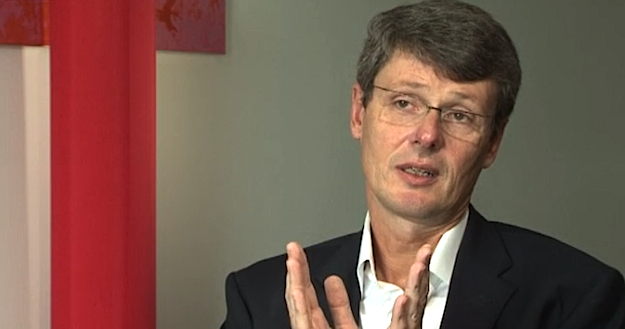
Research In Motion boss Thorsten Heins has announced that devices running the firm's next-generation OS, BlackBerry 10, are now being tested by carriers around the world, keeping it on course for release early next year. Meanwhile, the Pentagon has said it will continue to use BlackBerry devices in its work.

It’s encouraging. It’s a step in the right direction. It might mean Research In Motion (RIM) really will fulfill its promise of a first-quarter 2013 launch of its next-generation BlackBerry 10 OS and handsets.

RIM CEO Thorsten Heins announced in a statement on Wednesday that handsets running the new OS were now being tested by more than 50 carriers worldwide.

Heins said reaching the testing phase meant the company had “passed a critical milestone” in the development of its new mobile computing platform.

“The hard work will not stop here as we build towards launch,” Heins said in the statement, adding, “Our developer teams are continuing to generate momentum to bring a wealth of applications to BlackBerry 10, our enterprise teams have started to present BlackBerry 10 devices and services to our business customers, and our engineers are fully mobilized to ensure that BlackBerry 10 launches flawlessly in the first quarter of 2013.”

In an interview with the BBC last week, Heins urged consumers not to underestimate “the dynamic [BlackBerry 10] is going to create in the market.”

In other news involving the mobile company, the Pentagon made clear this week that it would carry on supporting “large numbers” of BlackBerry handsets despite going ahead with plans to allow the US military to use other devices such as the iPhone.

“The Defense Information Systems Agency is managing an enterprise email capability that continues to support large numbers of RIM devices,” a spokesman told Reuters this week. A number of government agencies and businesses have said in the last year they would be issuing staff with iOS or Android devices, ending long-standing contracts with BlackBerry. While the Pentagon also appears to be relaxing its association with RIM, things are so serious at the Canadian company that the defense agency’s announcement that it’s not switching entirely to rival devices will actually be perceived as good news by many.

The BlackBerry was once the phone of choice for many agencies and firms thanks largely to its strong security features. However, security on rival handsets such as Apple’s iPhone and a number of Android-powered devices has improved over time, offering an alternative to the BlackBerry.

The launch of RIM’s next-generation OS and handsets is its make-or-break moment. Perhaps the Canadian mobile maker – once the country’s most valuable company – can still turn things around, remain a viable player in the mobile game and consequently help to keep competitors on their toes.


Source : http://www.digitaltrends.com/mobile/blackberry-10-phones-being-tested-by-carriers-as-pentagon-says-it-will-keep-using-rim-handsets/

Thursday, October 25, 2012

Verizon Galaxy Note II to have the carrier's logo on its home button

It's not unusual for US carriers to put their branding on the backs of the smartphones they offer. We've even seen them above the displays on the backs, on wallpapers and what not. However, Verizon has just reached a new level of tackiness and put its logo on the home button of the latest Android flagship it will offer - the Samsung Galaxy Note II.

The device is currently available for pre-order for $300 with a 2-year plan and can be ordered in black or white flavors. However, the extra color choice Verizon is offering would likely be enough to make up for the extra branding both on the front and the back.

According to our humble opinion, the carrier logos on various smartphones aren't anything out of the ordinary. They sure don't help looks, but they aren't too bad and, given that the US carriers invest quite in subsidizing the smartphones they offer it's normal to try and improve the return by using them as ad space. In this case however the result is quite ugly and we really hope the trend doesn't pick up.

Source | Via


Source : http://www.gsmarena.com/note_ii_on_verizon_sports_the_carriers_logo_on_the_home_button-news-4996.php

Friday, October 12, 2012

UK carriers start taking Galaxy S III mini pre-orders

The Galaxy S III mini was announced just yesterday, but it’s already available for pre-order from three of Britain's major carriers.

This means that you can get the Samsung smartphone for free as long as you are willing to sign a two-year contract. The cheapest Vodafone contract that gets you a shinny new Galaxy S III mini for zilch costs £25/month. If Orange or O2 are your carrier of choice, you need £26/month or £27/month contract, respectively, to get a free mini.

There are cheaper plans, too, starting from £15.50/month, but you'll have to pay £199.99 to have the Samsung Galaxy S III mini on them. You can always opt for the SIM-free device, but it will set you back £300.

To sweeten up the deal, Phones 4U is throwing free Pebble MP3 players for the first 350 pre-orders.

The Samsung Galaxy S III mini is expected to start shipping in the beginning of November.

Via


Source : http://www.gsmarena.com/the_galaxy_s_iii_mini_goes_on_preorder_in_uk_its_free_on_contract-news-4937.php

Thursday, October 4, 2012

UK’s first 4G network goes live October 30 courtesy of EE, other carriers to wait until 2013

EE 4G Banner

UK network EE will launch its 4G LTE network on October 30, while other carriers wait patiently for the 2013 spectrum auction.

The UK is poised to join the USA and many other countries around the world in offering 4G LTE high speed data to its citizens. This week has seen some important developments, not only because its first 4G LTE network has been given a launch date, but also due to the long-awaited 4G spectrum auction being brought forward to January 2013.

It’s EE, the parent company of Orange and T-Mobile, that has the honor of being the first to switch on a 4G signal. After months of legal wrangling, the network has confirmed it’ll provide a 4G connection in 10 cities from October 30.

CEO Olaf Swantee said in a statement that he was “delighted” to announce the launch of both EE as a brand — a network of EE stores will be opening around the country, through which EE’s 4G LTE phones will be sold — and “the UK’s first super fast mobile 4G and fibre broadband service.”

Initially expected to launch only in London, Birmingham, Cardiff and Bristol, delays have clearly allowed EE to boost its coverage, as 10 cities will now see the benefit of 4G from day one. A press event will be held soon, where those 10 cities and the final six expected to join them by the end of the year, will be revealed.

Early adopters of EE’s 4G service will need a compatible phone, a selection of which can be purchased through the company. The choice may be slim, but it’s eclectic, with the iPhone 5, the Samsung Galaxy S3 LTE, the HTC One XL and the Huawei P1 LTE all available now. The Galaxy Note 2 will also be joining them from October 15, and the Lumia 920 and Lumia 820 Windows Phone 8 devices will be added later in the year. Eligible Orange and T-Mobile subscribers will be offered the chance to upgrade too.

Tariff prices haven’t been announced yet, and will probably be discussed at the aforementioned press event, but it’s speculated that monthly costs will increase by around £10.

Spectrum auction brought forward

To enable it to be first out the gate with 4G, EE has refarmed its plentiful reserves of 1800MHz spectrum for 4G use. Its competitors, who don’t have anywhere near enough 1800MHz spectrum to compete, are understandably upset with both EE and the UK’s communications regulator, Ofcom, who approved the deal back in March.

Since then it has been one long round of complaints and threats from rivals, along with hastily formed partnerships — Vodafone and O2 have joined forces to jointly maintain its nationwide network infrastructure, for example — culminating this week in a meeting between them, Ofcom, EE and the UK government to sort it all out.

Competing firms Vodafone, O2 and Three have been considering legal action against EE, a move that would have delayed both EE’s 4G network launch, and Ofcom’s spectrum auction, which is essential to getting everyone else up and running for 4G.

The meeting not only saw the end of the legal threat, but also the date of the spectrum auction being brought forward to January 2013, which minimizes the period of exclusivity EE has over 4G in the UK. Everybody’s happy, then.

At the auction, all UK networks have the chance to bid on a slice of the 800MHz and 2.6GHz spectrum, which is currently being cleared in preparation for use with 4G. Once the auction concludes, it’s estimated that it will take five or six months to get everything ready.

These positive developments mean Vodafone, O2 and Three will join the 4G party six months earlier than previously thought, with a limited launch being touted for summer 2013. Until then, EE gets to enjoy its moment in the sun as the UK’s only purveyor of high speed 4G data.


Source : http://www.digitaltrends.com/mobile/uks-first-4g-network-goes-live-october-30-other-carriers-to-wait-until-january-2013/

Tuesday, September 25, 2012

Nokia reportedly considering lawsuit over HTC 8X design

Nokia reportedly considering lawsuit over HTC 8X design
Another lawsuit between carriers could be brewing

Nokia may be ready to set its legal dogs on HTC over the design of the new company's newly announced Windows Phone 8X smartphone.

According to a Phone Arena source, the feeling emanating from Espoo, Finland is that the Taiwanese manufacturer has copied the look and feel of the recently-announced Nokia Lumia 820 handset.

Nokia "feels strongly" that the front panel and the curved sides of the Lumia 820 have been unfairly emulated by the HTC offering - unveiled just two weeks after Nokia's Sept. 5 reveal - according to the tipster.

The report suggests that Nokia will seek a sales ban on the HTC 8X in some territories.

Seeing double?

The Lumia 820, the smaller sibling of the flagship Lumia 920, offers a 4.3-inch Clear Black LCD screen and a polycarbonate body, which comes in an array of bright colours.

The HTC 8X is the HTC's top-of-the-line Windows Phone 8 offering and also features a 4.3-inch screen, a top-notch spec list and an equally bright array of colours.

Chris Weber, Nokia's head of marketing, also publicly called out HTC's new phones - which includes the lower-spectrum Windows Phone 8S - as "rebranded products," though he didn't say either design copied his company's products at the time.

It's the physical similarities listed above as well as HTC's status as the main threat to Nokia's Windows Phone-led comeback, that is likely to have irked Nokia, if the reports are to be believed.


Source : http://www.techradar.com/news/phone-and-communications/mobile-phones/nokia-reportedly-considering-lawsuit-over-htc-8x-design-1099697

Saturday, September 22, 2012

Has 4G become meaningless?

4G meaningless smartphones data carriers lte

A cesspool of acronyms, overoptimistic marketing claims and incompatible technologies has made 4G incomprehensible to the average consumer. Now carriers will suffer for the mess they’ve created.

Recently, the investment firm Piper Jaffray conducted a study that found a full 47 percent of U.S. consumers don’t feel the need for 4G. This isn’t good news for the carriers, which have been fiercely touting their 4G networks for a few years now. Almost all new smartphones have some kind of 4G connectivity, including the new iPhone, at long last.

Part of consumers’ apathy over 4G might come from their inability to understand the difference between different flavors of it. The same survey found that 51 percent of consumers said that all 4G networks are the same. Not only can’t they name which is best,

That’s bad news for an industry as competitive as wireless communication, with recent marketing campaigns based upon name calling as a means of brand differentiation. With carriers betting ever more heavily upon data tiers as a main revenue stream, what can carriers do about consumers who don’t seem to understand their services?

How to be 4G

Confusion is the name of the game, and the carriers haven’t helped explain to consumers the benefits of 4G. Commercial mobile technologies are standardized by a complex number of bodies such as the ITU (International Telecommunication Union), the 3GGP (3rd Generation Partnership Project), and the IEEE (Institute of Electrical and Electronics Engineers). Still reading? Good. They are tasked with bickering until they set a strict, definite standard for each iteration.

These powers that be hold conferences, conduct studies, and perform secret ritual sacrifices in order to define what it each G – or generation – actually means. 4G is, of course the next numerical step, but the powers stumbled when it came to defining what that actually meant.

Strange encounters of the fourth generation

The 4G war got off to a specular fail from a marketing standpoint. There were many, vastly different technologies all vying for subscribers.

Sprint tried to get the ball rolling with WiMAX in 2008, a technology descended from the same tech in your Wi-Fi router. It was branded 4G, though real-life speeds were often more equivalent to a particularly fast 3G device. This was promising, but Sprint eventually declared the technology dead and migrated to LTE (Long Term Evolution, if you were curious). One down.

T-Mobile further muddied the waters with an upgrade to HSPA+, which is technically more like 3.5G, but which has been branded 4G.

AT&T had a wide, but much decried 3G network (partly blamed on iPhone exclusivity for years). While AT&T deploys its 4G LTE network nationwide, it’s also making things needlessly confusing by offering HSPA+ alongside, and branding it 4G just like T-Mobile. If you have an AT&T iPhone 4S, you might see a 4G logo appear sometimes, but it’s not the “true” 4G LTE you would get by upgrading to an iPhone 5.

Verizon launched a 4G LTE network in late 2010 – in its truest sense – it fulfilled the 4G guidelines.

Simple, right?

Setting low bars

No. Not simple, at all. Once the carriers got to building their new networks, the powers that be decided to change the definition of 4G. They lowered the minimum speed guidelines, so that carriers wouldn’t have to do too much heavy lifting, meaning that 4G networks would not be as revolutionary as they had first planned. Hence the bickering over “true” 4G. On top of that, building 4G networks gave carriers a chance to improve their existing networks with beefier backhaul – the connections that tie cell towers back to the backbone of the Internet. This greatly improved 3G speeds and availability, closing the gap between 3G and 4G.

cell tower 4g data speedsIt’s not surprising that the average consumer doesn’t care about 4G when they don’t get it, and 3G networks are progressively getting better. Coverage matters more than speed to many people — a souped-up network means squat if there isn’t a tower in your area.

The consumers don’t care

With so many different carrier definitions of 4G, and even an official designation that’s a moving target, it’s hardly surprising that people are confused. So what can the carriers do?

Agree on a standard speed definition. This is probably impossible, because the telecom industry is notorious for talking at, rather than with each other. But setting a baseline speed for 4G would at least let customers know what they’re being promised.

Stop slapping 4G on everything. This is really aimed at AT&T and T-Mobile, which are allowed to brand older HSPA+ 3G tech as 4G due to a magical shift in definitions back in 2010. While this is legal, it confuses people to a point where they don’t care.

Stop lying about speeds. Advertised speeds are not the same as real world speeds. T-Mobile might advertise 42mbps, but that’s the theoretical limit. That doesn’t look so rosy when you’re getting 45kbps downloads. Averages work much better, and leave less room for error.

Change phone branding conventions. While some handset-makers are responsible for this, it isn’t in a carrier’s best interest to have a phone named after wireless services. For example: The HTC EVO 4G LTE. Not the easiest name to understand. This particular model caused a friend to ask “What is a 4G?” as if it were some kind of new device. Apple keeps it simple with 3, 4s, 5 and so on. Heck, even Samsung does with its flagship line of Galaxy phones (S2, S3). I wonder where that inspiration came from?

Conclusion

The carriers have themselves to blame for the consumer confusion they’re currently stewing in. Unexplained acronyms, incompatible networks, technologies that vanish as soon as they’ve appeared – it’s as if they’re running Area 51, not voice and data networks. Carriers have the leverage to make the average consumer more interested in 4G, but it’s all up to them.

More speed is nice, but most of us would just settle for better reception. After all, if a guy with a mohawk can put a robot on Mars with less cash than it took to put on the Olympics, why can’t I have cell reception in an elevator?


Source : http://www.digitaltrends.com/mobile/has-4g-become-meaningless/

Tuesday, September 11, 2012

RIM's shelf space shrinks, BlackBerry sales at zero in some stores, analyst finds

RIM's shelf space shrinks, BlackBerry sales at zero in some stores, analyst finds
Some carriers' stores are unable to sell BlackBerry devices

RIM's BlackBerry line isn't seeing the same shelf space that it used to in carriers' retail stores, according to an analyst.

Worse, some of these locations are unable to sell a single Blackberry in a 30-day stretch.

"In terms of sell-through, we believe that current run rates are roughly one-fifth of those we saw in the United States just eight months ago," Pacific Crest analyst James Faucette told AllThingsD.

"Further, we found a meaningful number of carrier retail locations which had not sold a single BlackBerry in over a month."

This trend stands in contrast to what both RIM and carriers have recently said about 2013-bound BlackBerry 10 devices.

RIM is quoted as saying that networks are "visibly enthusiastic" about BB10 and Verizon's CEO Lowell McAdam said he wouldn't count BlackBerry out.

The vote of confidence from McAdam is a good sign, as is the commitment from another Verizon executive who said that the company will launch BlackBerry 10 devices next year.

RIM's rocky holiday without BB 10

However, none of this helps get RIM through the holiday season. Its older phones and tablets like the Playbook will likely be sitting next to the iPhone 5, the iPad Mini and a host of Android phone running the Jelly Bean OS.

TechRadar reached out to a RIM spokesperson who remained optimistic about next year's BB10 launch:

"We remain focused on the successful launch of BlackBerry 10, scheduled for the first quarter of calendar 2013, and believe the delivery of high quality, fully-featured BlackBerry 10 smartphones will be an attractive offering to our customers."

But with studies that indicate current BlackBerry devices account for just 1% of mobile traffic (down 25% over a year), RIM may have a difficult time recapturing that shelf space in retail locations.


Source : http://www.techradar.com/news/phone-and-communications/mobile-phones/rims-shelf-space-shrinks-blackberry-sales-at-zero-in-some-stores-analyst-finds-1096479

EE will bring first 4G LTE network in the UK by the end of the year

Carriers over at the US are tripping over themselves to brag about their 4G LTE networks, but adoption across the pond has been limited. Things are changing though - Everything Everywhere is rebranding itself EE and will be rolling out the first 4G LTE in the UK.


The service, called "4GEE", will cover a third of the population by the end of this year. As you would expect, that means covering the big cities - Belfast, Birmingham, Bristol, Cardiff, Derby, Edinburgh, Glasgow, Hull, Leeds, Liverpool, London, Manchester, Nottingham, Newcastle, Sheffield and Southampton.

4GEE will be available to phones and laptops. Five LTE-enabled phones will be available initially - the Samsung Galaxy S III LTE, the new Nokia Lumia 920 and Lumia 820, the HTC One XL and the Huawei Ascend P1 LTE.

Huawei will also be providing a mobile Wi-Fi hotspot and a USB stick.


EE has plans to roll out fiber broadband to homes and promises lower prices if you get both fiber broadband and 4GEE.

The T-Mobile and Orange brands won't disappear - their stores will remain intact, but you'll have to go with EE if you want 4G.

Source


Source : http://www.gsmarena.com/ee_will_bring_first_4g_lte_network_in_the_uk_by_the_end_of_the_year_-news-4784.php

Thursday, September 6, 2012

Lumia 822 and HTC 6435 pop up in Verizon's catalogue

The carriers' internal documents have always been a good source for various leaks and so is today's case. Two interesting phones were found in the Verizon's device management system.

The first one is Nokia Lumia 822 (in Gray and White), which might be the Verizon's version of the newly announced Lumia 820. There is nothing really in the entry, just a 4G indications and the database insertion date.

It's the same case with the HTC 6435 – an LTE phone added recently into the carrier's database. HTC is holding a press conference in New York on September 19 and perhaps this would be company's new flagship. According to another leak today, it might be a 5-inch Galaxy Note II competitor.

Source 1 • Source 2


Source : http://www.gsmarena.com/lumia_822_and_htc_6435_pop_up_in_verizon_catalogue-news-4770.php