Showing posts with label internet. Show all posts

Thursday, November 8, 2012

Running a country? There’s an app for that

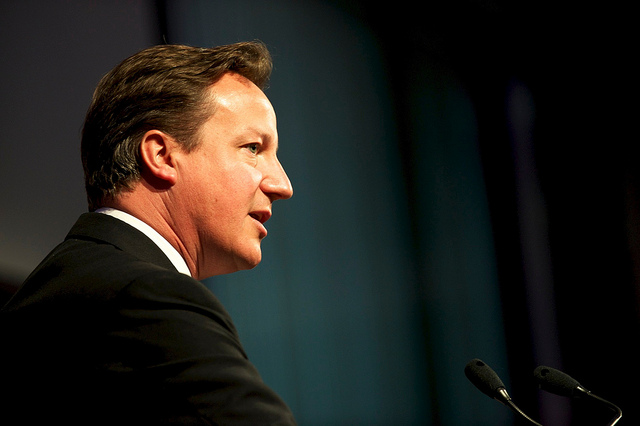
David Cameron app

Civl Servant developers in the U.K. have created a Web app that incorporates government data with trending topics from around the Internet and social media to help elected leaders make better decisions.

Believe it or not, governing a nation is tough work. There’s special interests to consider, tax plans to wrestle, budgets to contemplate, wars to run, opponents to blackmail. It’s almost too much for the human mind to handle. Or, in the case of British Prime Minister David Cameron, it is too much to handle. Which is why he did what any computer programmer would do when faced with a pesky problem: He got a computer to do the work for him.

The BBC reports that Cameron has begun testing a mobile Web app “to aid in decision-making and day-to-day government affairs.” The app, dubbed simply “Number 10 Dashboard,” was developed by British civil servants in the “Technology in Business Fast Stream” program. According to the app’s developers, Number 10 was designed to give government leaders “an at-a-glance overview of everything that’s happening in government and elsewhere.”

“With a few taps or swipes of his fingers, [Cameron] can see very quickly what important new information has come to light, how certain government services are performing, and a selection of relevant and important news reports,” according to those involved with the project.

According to the BBC, Number 10 will also keep its high-powered users informed about trending topics around the Web, and on social media outlets in order stay on top of events that might require government action, like “markets crash” or “bomb threat.”

Alice Newton, one of Number 10′s developers, says that Cameron likes the app, which he uses on his iPad, so much that he plans to give U.S. President Barack Obama a demo at the 39th annual G8 summit, which will take place in the U.K. next year.

“He in particular liked the statistical side, where we could give him quotable facts about what was going on,” said Newton. “He found it useful to have a hard evidence base.

“He liked it so much, he was looking forward to showing it to President Obama at the G8 summit.”

Chances are, Obama will be receptive to the app. His administration has been one of the most technology-focused in U.S. history, with initiatives concerning everything from increasing access to high-speed Internet to cyberwarfare and robotics.

Unfortunately, there’s no indication that the rest of us will have a chance to peep Number 10 anytime soon. But we imagine it working something like Apple’s Siri, but the answers take 20 times longer to appear thanks to stifling bureaucracy.

Image via DFID/Flickr


Source : http://www.digitaltrends.com/mobile/running-a-country-theres-an-app-for-that/

Monday, October 15, 2012

Softbank’s $20 bln Sprint takeover: Everything you need to know

new sprint softbank wireless carrier

Japan's Softbank, a telecom and Internet giant, is taking a 70 percent stake in Sprint for $20.1 billion. What is it thinking? Can Sprint customers expect anything from the deal?

In a surprise move, Japanese mobile operator Softbank has made a deal to acquire a 70 percent stake in Sprint, the United States’ number-three mobile operator. At $20 billion, the takeover represents Softbank’s largest overseas acquisition to date — and the biggest deal inked by a Japanese company in the United States in something like three decades. Acquiring Sprint gives Softbank a major entry point into the still-growing U.S. mobile market — perhaps a welcome move, since Japan’s mobile market is mostly stagnant.

However, for Sprint customers the takeover brings uncertainty. What will change at Sprint once Softbank is holding the reigns? Given that Sprint has lost money in its last 19 quarters (nearly 5 years) — with a 20th on the way — is Softbank out of its mind to sink $20 billion in cash into the company? And, most importantly, can Sprint customers — and potential customers — expect any benefits from the deal?

How the Softbank takeover will work

Sprint CEO Dan Hesse (July 2010)

Like many other high-profile deals, Softbank’s takeover of Sprint is complicated, but it’s also an example of one of the fundamental axioms of business: cash talks. Softbank is putting a total of $20 billion in cold hard cash into Sprint. Softbank will be spending a total of $12.1 billion on Sprint stock: the bulk will go toward buying up about 55 percent of current Sprint shares for $7.30 each, with some $3.1 billion of that money earmarked for buying shares in a new publicly-traded company dubbed “New Sprint,” for the time being. On top of that, Softbank will be pouring another $8 billion in cash into the new company, providing it with substantial operating capital.

Taken at face value, Softbank putting $20.1 billion into Sprint means it valued Sprint at about $28.6 billion — some two-thirds higher than Sprint’s total market capitalization as of the markets’ close last week.

Softbank Sprint structure

That operating capital will likely be all about fueling Sprint’s 4G LTE expansion. Right now, Sprint has LTE service up and running in a couple dozen markets, but that pales in comparison to the hundreds of markets where Verizon Wireless currently offers LTE service. The new Sprint will most likely use that $8 billion in cash to not only accelerate its planned rollout of LTE services, but quite possibly to make additional acquisitions to bolster its spectrum holdings and reach. The most likely candidate there is Clearwire, where Sprint already has a 48 percent stake, but MetroPCS may not be out of reach either, even through it’s agreed to a reverse merger with T-Mobile.

Softbank’s cash is coming from its own bank accounts, plus financing from three Japanese banks (Mizuho Corporate Bank, Sumitomo Mitsui Banking, the Bank of Tokyo-Mitsubishi UFJ), along with Deutsche Bank. The $7.30 in cash Softbank is offering for Sprint shares represents a 27 percent premium over the company’s stock price when the deal was announced. Softbank expects the stock purchases to be completed by mid-2013. Once the deal is complete, Softbank will hold 70 percent of “New Sprint,” while Sprint’s existing shareholders will retain about 30 percent of the new company.

For all these changes, there will be some continuity. Sprint’s current CEO Dan Hesse will stay on as the CEO of the new company, and Sprint’s headquarters will stay in Overland Park, Kansas. “New Sprint” will have a ten-member board of directors, with at least three of those members coming from Sprint’s existing board (and that includes Hesse himself on the board).

What is Softbank thinking?

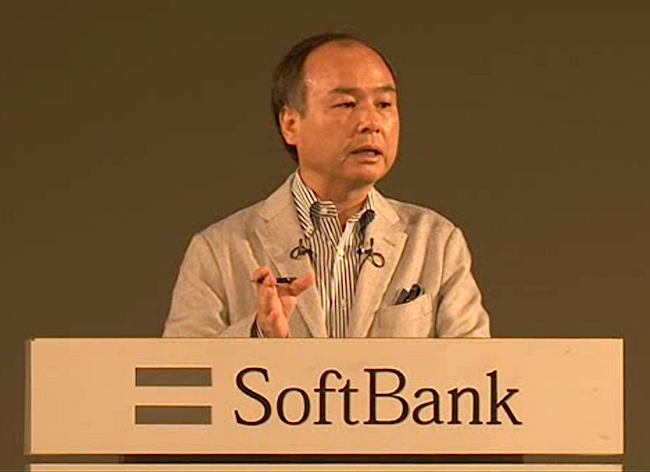
Masayoshi Son Softbank

Softbank’s decision to put $20 billion into Sprint may seem like folly. After all, Sprint has been a money-losing proposition since 2007 and it’s far behind competitors Verizon Wireless and AT&T in rolling out 4G LTE. What’s more, Sprint has been losing subscribers, it’s saddled with $15 billion in debt, and the company is still trying to crawl out from under a near-disastrous merger with Nextel in 2005. Sprint doesn’t seem like a good takeover target.

But that’s not the way Softbank sees it. Softbank’s CEO Masayoshi Son isn’t cut from the risk-averse, conservative cloth of many other Japanese business magnates: he’s a risk-taker who isn’t afraid to do something seemingly crazy he believes will pay off in the long run. And he’s done it before. Back in 2006, Softbank sunk $15.5 billion into acquiring Vodafone’s Japanese unit—and, as with the Sprint deal, most industry watchers thought Softbank overpaid and was utterly out of its head. And, at first, the deal did not seem to go well, costing Softbank a billion a year for the next four years. The 2008 financial crisis also hit Softbank hard: the company had poured ¥75 billion into an investment based on credit-default swaps, some of which defaulted in the financial meltdown. Softbank incurred tremendous debt, but the bet in acquiring Vodafone was sound, and Softbank bolstered its core business by (for a while) being the exclusive Japanese carrier of the Apple iPhone. Son had pledged to retire Softbank’s debt by early 2014, but had recently backpedalled a bit on that, saying that the company only needed to get its debt to manageable levels before looking at new acquisitions.

In Japan, Softbank has been very aggressive about deploying LTE service — and, moreover, Softbank’s flavor of LTE is Time-Division Long-Term Evolution (TD-LTE), which is similar to the LTE technology currently being rolled out by Sprint partner Clearwire. Although some of Softbank’s experience building out LTE in Japan is not directly applicable to the United States — the geographies are radically different, after all — the company’s experience with both network management and offering differentiated services that capture subscribers from other carriers are well-established. In many ways, Softbank’s bet on Sprint is very similar to its bet on Vodafone six years ago. And, on average, Japan’s mobile networks have long offered far more bandwidth than those in the United States. U.S. mobile operators are still learning what it means to offer high-bandwidth services to consumers: Softbank has been doing it for years.

But the Japanese mobile phone market is almost stagnant, and has almost no growth prospects, particularly with Japan’s population growth near zero. That means Softbank’s only way to grow in Japan is through acquisitions. Softbank has just announced a $2.3 billion effort to acquire Japanese mobile provider eAccess in a bid to become Japan’s number-two mobile operator, but Sprint is far more tempting. The United States’ mobile market is still growing, and only about half of the United States’ 320+ million mobile users are carrying a smartphone. That means half are still using feature phones; Softbank sees this as a tremendous growth opportunity.

Moreover, the time is right for Softbank to move. Japanese interest rates are at record low levels and the yen is near all-time highs against other world currencies. There may never be a cheaper time for a Japanese company to make a major play in the U.S. market.

How could things go wrong?

Sprint

Softbank’s bet on Sprint is not without significant risks. The new company is not going to be able sit back and watch the dollars roll in.

Market experience: Softbank has zero experience in the U.S. market. None. Although Softbank is determined to keep Sprint CEO Dan Hesse on board along with (it seems) a portion of Sprint’s existing management, there’s no telling if Softbank will be able to develop working strategies to differentiate Sprint’s service to consumers and grow its business.

Overextended management: Softbank just bought eAccess in Japan in a bid to become Japan’s second-largest mobile operator: that was ambitious in itself. Taking over the much-larger Sprint may be more than Softbank’s management can handle. Moreover, Sprint already had its hands full: Sprint is in the middle of a $15 billion+ commitment to Apple to carry the iPhone and spending billions to bring LTE to its network as part of its Network Vision plan. The good news is that the $8 billion in cash from Softbank should help Sprint carry through on both those initiatives; the bad news is that Sprint is now adding a corporate restructuring to its already daunting to-do list.

“There’s a huge risk that the deal will not go to plan and could weaken both companies at critical times,” noted Informa Telecoms & Media principal analyst Mike Roberts.

Debt: Softbank’s takeover of Sprint will have Softbank once again swimming in debt: Sprint already has $15 billion in outstanding debt, and Softbank is still carrying about $10 billion in debt. Those numbers push Softbank’s debt-to-capital ratio into dangerous territory, and could place significant pressure on Softbank’s operating cash in the next few years as it’s forced to work on retiring debt rather than growing its business. Softbank may wind up owning Sprint but unable to do much with it — particular if the world economy takes another downturn.

Who could win?

clear clearwire logo

All that said, Softbank’s bet on Sprint may be risky, but many parts of it make sense.

Clearwire: Sprint and Softbank emphasized that their deal does not require Sprint to take any actions with Clearwire. However, the deal could leave Clearwire sitting in a very nice spot. Clearwire has been moving its network away from WiMax 4G service it debuted in 2009 to LTE. (Sprint and other investors had bet that getting out the door first with WiMax 4G services in 2008 or 2009 was a better bet than waiting until 2012 or 2013 for LTE to become a reality, though it doesn’t seem to have helped much.) Clearwire has a substantial portfolio of spectrum licenses in the 2.5GHz range — that’s well above the building-penetrating 700GHz range preferred by AT&T and Verizon Wireless, but would still add significant coverage to Sprint’s LTE efforts. However, Clearwire hasn’t been able to capitalize effectively on those licenses due to a lack of money to invest in its network. The bulk of its users are actually from Sprint, thanks to a wholesale agreement, so the tighter Clearwire becomes with Sprint, the better.

The $8 billion in operating capital Sprint is receiving from Softbank would go a long way toward building out LTE services in Clearwire’s spectrum. Moreover, Softbank’s LTE services in Japan are also built in the similar 2.5GHz spectrum blocks, and use the same TD-LTE service that Clearwire is deploying on its network. Some industry watchers expect Sprint to invest even more heavily in Clearwire, or move to purchase it outright.

Clearwire had no comment on Softbank’s acquisition of Sprint.

Sprint: Being acquired by Softbank makes Sprint more directly competitive with AT&T and Verizon Wireless in one important way: subscriber numbers. In the second quarter of 2012, Verizon and AT&T sported 105 and 102 million subscribers, respectively, accounting for 33 percent and 31 percent of the U.S. mobile market. Sprint is in a distant third place with 56 million subscribers. However, Softbank boasts some 34 million subscribers in Japan, meaning once Softbank acquires Sprint it will have an effective customer base of about 90 million people. That’s not far behind Verizon and AT&T, and should help the new Sprint negotiate more advantageous deals with equipment and handset providers. Softbank ought to be able to pay less for networking gear than Sprint, and have access to a better deals and a broader range of gear and handsets from equipment manufacturers. That may include Apple, since Softbank probably wants to keep Japan’s NTT Docomo from getting the iPhone.

The upshot could be a wider range of handsets, tablets, and other mobile gear available on Sprint at the same time they launch on other major U.S. carriers.

Upshot

Bringing the iPhone on board has helped Sprint gain subscribers and revenue. (Just ask T-Mobile how it feels to not have the iPhone.) Unfortunately, it hasn’t swung the company back to profitability. After 19 straight quarters of losses, Sprint needs a turnaround.

Sprint’s kind of turnaround seems to be Masayoshi Son’s specialty. The Japanese mobile market is dominated by KDDI and NTT Docomo, and Son was able to buy Vodafone, revamp it, and make it a solid competitor against a duopoly. In the United States, the mobile market is dominated by the duopoly of Verizon Wireless and AT&T. With Sprint, Son sees an opportunity to bring his successful turnaround model to the United States.

“I think we can provide much better competitive technology and services that U.S. citizens have never experienced,” Softbank’s Masayoshi Son said in a conference call with analysts today.

Sprint customers certainly hope he’s right. But changes won’t come overnight: Softbank’s acquisition of Sprint won’t be complete until the middle of next year, and still needs regulatory approval. In the meantime, AT&T and Verizon won’t be sitting on their hands. Verizon Wireless plans to light up its 400th LTE market this week.


Source : http://www.digitaltrends.com/mobile/softbank-sprint-takeover-explained/

Japanese telecom giant Softbank buys 70 percent of Sprint

Softbank buys 70 percent of Sprint (Image courtesy of AP)

It's confirmed. Rumors last week that hinted that Japanese telecom and Internet provider Softbank would purchase Sprint were true, mostly. Softbank and Sprint have announced that the company will soon own 70 percent of the third largest U.S. mobile carrier.

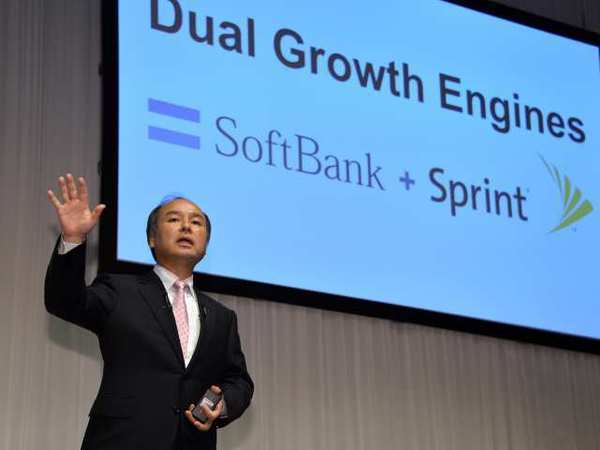
Japanese based SoftBank is officially entering the global market. It was announced earlier today that the third largest carrier in Japan is acquiring 70 percent of Sprint, the third largest carrier in the United States, for $20.1 billion (1.57 trillion Yen). The two companies had been rumored to have been in serious discussions late last week. With all the i’s dotted and t’s crossed today, Softbank President Masayoshi Son and Sprint Chief Executive Dan Hesse announced that the deal was completed.

The breakdown of the deal, as announced by both Sprint and SoftBank, will send $12.1 billion to the current Sprint shareholders. The remaining $8 billion of new capital will be used to “strengthen Sprint’s balance sheet.” SoftBank is offering $7.30 a share for existing shares, though Sprint’s stock had closed at $5.73 a share on Friday. Current Sprint stockholders will also receive 30 percent ownership in New Sprint. That’s right, a group of extremely intelligent and wealthy businessmen and investors hashed out a multibillion dollar transaction and the best name they could come up with is “New Sprint.”

The name appears to be the only negative in this deal, though, as both Sprint (old Sprint?) and SoftBank are looking at this acquisition as a win. For Sprint, it provides a sizable influx of cash that allows it to be competitive against Verizon and AT&T. It also gives the company the backing of an extremely successful entity that has built a network in the same way Sprint hopes to. It’s also a win for current Sprint CEO Dan Hesse, who will become CEO of New Sprint and sit as a board member.

For SoftBank, this move is a bit of global market consolidation that plants it firmly in a top spot on the worldwide playing field. Now sitting as the third-largest mobile provider in Japan and in the United States, SoftBank has more than 90 million subscribers. This marks the largest overseas acquisition by a Japanese firm to date. However, any transaction of this size comes with its potential pitfalls. Sprint may be a risky point of entry for SoftBank, taking control of a sputtering company in a market that is dominated by two seemingly immovable giants. The agreed upon merger between Deutsche Telekom’s T-Mobile and MetroPCS makes the market even more competitive toward the top. The deal has also placed SoftBank as “credit watch negative” by Standard & Poor’s, meaning it could see its credit rating downgraded. Of course, S&P made the same threat to the United States and that sure didn’t stop us.

SoftBank’s rise through Japan’s mobile market came on the back of being the first company in the country that carried the iPhone. It’s growth was only bolstered with acquisition after acquisition that put SoftBank in a position to make its biggest purchase yet with Sprint. Masayoshi Son will likely have to continue his aggressive ways to compete in the U.S. market. That doesn’t seem to be something he’s afraid to do. Leveraging SoftBank’s LTE knowledge will be a major key to the success of this transaction, as Sprint has been attempting to build out its network for some time to little avail thanks mostly to money issues. Sprint hopes to have LTE in 100 markets by the end of the year.


Source : http://www.digitaltrends.com/mobile/softbank-is-buying-70-percent-of-sprint-its-official/

Monday, September 10, 2012

Apple ID leak traced back to app developer BlueToad, not FBI

Apple ID leak traced back to app developer BlueToad, not FBI
Looks like the FBI may be off the hook

The two-week old mystery of where AntiSec obtained the 1million Apple device IDs it leaked to the Internet has been solved and it appears as if the FBI is off the hook. The real source of the unique device IDs, or UDIDs, is a Florida-based app company called BlueToad.

The hacker group claimed to have lifted the unique iOS device identifiers from an FBI laptop. However, the FBI quickly denied even possessing UDIDs, never mind being the target of a hack via a known Java vulnerability.

Still, this sparked conspiracy fears that made it seem as if the FBI was collecting and storing millions of Apple UDIDs for tracking purposes. AntiSec published more than 1 million of these device identifiers and said that it had 12 million more of them from the same FBI source.

When the FBI strongly rebuffed reports of its involvement, AntiSec said: "The fact that the FBI has no 'evidence' of a data breach on one of their notebooks, does not allow the conclusion that it never happened."

BlueToad, now speaking out, backs up the FBI's account, however.

Leak Source: BlueToad

BlueToad CEO Paul DeHart came forward, telling NBC News that his app publishing company's database was the source of the leaked UDIDs. Forensic analysis by the company shows that a breach occurred "in the past two weeks."

"That's 100 percent confidence level, it's our data," DeHart said after running tests that proved a near-perfect match. "As soon as we found out we were involved and victimized, we approached the appropriate law enforcement officials, and we began to take steps to come forward, clear the record and take responsibility for this."

On its website, BlueToad describes itself as a technology provider in the digital publishing industry and has more than 5,000 publisher with more than 10,000 titles. Specific clients were not revealed by DeHart, according to NBC News, but the apologetic CEO did say his business partners do include household names.

We may never know the names of BlueToad's clients. DeHart said that this company won't be informing its app downloaders of the UDID data breach. It's up to the individual clients to inform their readers.

How important are UDIDs?

The only mystery that remains is how important UDIDs are to privacy. DeHart downplayed the potential risk of exposing this information, yet it's enough of a privacy concern that the newest versions of BlueToad's software do not collect this personal information and has been rejecting apps that collect UDIDs since March.

Oddly enough, rallying against UDIDs appears to be AntiSec's objective in all of this. It said in an earlier statement: "We never liked the concept of UDIDs since the beginning indeed. Really bad decision from Apple. Fishy thingie."


Source : http://www.techradar.com/news/phone-and-communications/mobile-phones/apple-id-leak-traced-back-to-app-developer-bluetoad-not-fbi-1096163

Thursday, September 6, 2012

Facebook officially welcomes Instagram into its fold – what now?

instagram and facebook deal

Now that the social deal heard 'round the Internet has filed all the necessary papers, how will the partnership play out?

This past spring, we were thrown for a bit of a loop when Facebook scooped up app darling Instagram for $1 billion. Since then, the FTC has approved the deal and Facebook has integrated the photo-sharing platform exclusively into its network. And now, officially, the two are combining their efforts.

“As we said from the beginning, we are committed to building and growing Instagram independently,” VP of engineering with Facebook Mike Schroepfer wrote this morning. “Instagram will continue to service its community, and we will help Instagram continue to grow by using Facebook’s strong engineering team and infrastructure. We also can’t wait to work with the talented Instagram team to improve the mobile experience.”

Instagram had similarly glowing words to say about the partnership, also mentioning the app has just surpassed five billion photos shared. “What makes this even more exciting is that our deal with Facebook has closed, which means we can now work together to evolve and build a better Instagram for everyone. While our term is making the short move to the Facebook offices, Instagram isn’t going anywhere.”

Despite both companies’ positive outlooks, it’s more than fair for users to be skeptical in the wake of an acquisition likes this. Facebook has a made a name for itself as an acqui-hirer, scooping up companies and folding their teams into its own products, slowly extinguishing theirs in the process. But since the very beginning of this deal, and really since the startup’s origins, we’ve all known that Instagram is an exception to the rule. To say it’s user growth and content shared has passed all expectations is a huge understatement, and a significant part of Facebook’s need to acquire it.

The particulars of the deal saw Instagram net $735 million, and its worth will now depend on Facebook’s – which at the moment, is a bit in flux. News about Facebook shares has nearly become synonymous with “all-time low.” Last week, they dropped to $17.55 – you guessed it, another all-time low since peaking at $45 on day one of trading. CEO Mark Zuckerberg announced he doesn’t plan to sell his shares for the next year in order to promote some confidence in his eyebrow-raising company’s value.

Still, Instagram’s fate seems safe. While the deal has been in the process of being finalized, Instagram has continued to issue big iterations and grow its user base. There are a few questions worth asking – like how or even if Instagram will ever make its way to the Web and how that would look and integrate with Facebook. Other questions remain as well, like just what it’s  roadmap for a Windows Phone app is, how will its own photo development line up with that of its new acquisition, and whether Facebook will try to take Instagram’s mobile success and introduce any sort of marketing or advertising structure?

For now, news of the deal’s official status will have to suffice. The rest remains to be seen.  


Source : http://www.digitaltrends.com/mobile/facebook-officially-welcomes-instagram-into-its-fold-what-now/