


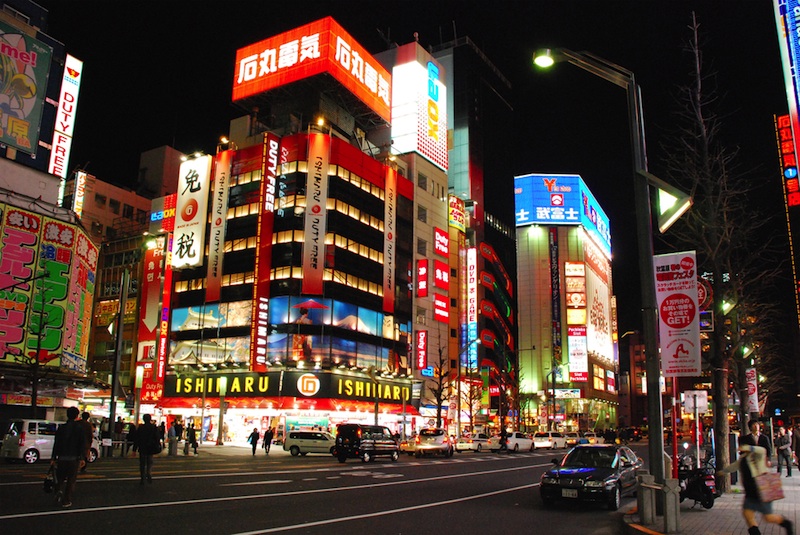
Three of Japan's consumer electronics giants are on the ropes - how have the mighty fallen, and what does it mean for your next tech buys?
Japanese manufacturers used to dominate consumer electronics, with brands like Sony, Sharp, Panasonic, Sanyo, JVC, and Toshiba practically cornering the global marketplace for desirable tech goods in the 80s and 90s. But times have changed, as evidenced by recent reports of massive losses and considerable layoffs at Sony, Panasonic, and Sharp – three of Japan’s largest manufacturers and some of the most recognizable brands in the world. Perhaps even more troubling for a nation once synonymous with technological innovation, Japan’s entire electronics industry has fallen increasingly behind rivals like Samsung, Apple, LG Electronics, and numerous Chinese manufacturers. These rivals aren’t just developing hardware innovations to match – or exceed – the Japanese giants; they’re bringing them to market faster and cheaper.
What happened? And what does it mean for the future of gadgets in your home, pocket, and life?
Japan’s economic turmoil

Japan is still a powerhouse: It has the third largest national economy on the planet, surpassed only by the United States and China. But it’s had an uneven path in recent years. Japan’s stock market crashed in slow motion during the early 1990s due to over-valued stock and real-estate prices, something that will be familiar to anyone who survived the dot-com and real estate bubbles in North America. The result was the “Lost Decade” or “The Lost Two Decades,” depending who you ask and how they count. In very broad terms, after the crash, Japanese firms chose to pay down debts and build up their savings rather than take advantage of near-zero interest rates to invest in new businesses and technology. That’s a solid, conservative approach to maintaining solvency, which prevented permanent employees from being laid off, but it gave rivals in other countries (particularly in South Korea and China) an opportunity to invest in their own R&D and electronics manufacturing capabilities. The Lost Decade let rivals find ways to out-produce and under-sell Japanese electronics makers.
Japanese electronics makers were not oblivious to what their overseas rivals were doing. They largely chose to bet on their traditional, historical strengths: advanced technology and high-precision goods.
Part of that effort was an emphasis on monozukuri, a uniquely Japanese concept that loosely means the “art, science, and craft of making things,” according to the University of Tokyo’s Takahiro Fujimoto. It’s been said that monozukuri cannot be fully translated from Japanese, but the concept encompasses both the process of developing, designing, and producing a product, as well as qualities of dedication, continuous refinement, and superior craftsmanship. In other words, Japan’s electronics industry might have aggressive competitors, but Japanese products would focus on the high end: quality, valued products that would hopefully generate high profits.
Japanese electronics did see a resurgence in the mid-2000s, fueled in part by a weak yen that made Japanese products more affordable around the world, as well as a North American consumer market flush with cash from a housing bubble that hadn’t yet burst. The resurgence also coincided with the consumer launch of flat-panel, high-definition televisions, a market dominated by companies like Sony, Sharp, Pioneer, and Panasonic. Sony and Nintendo built gaming empires; Toshiba and (particularly) Sony pushed notebook computers forward; firms like Kenwood and JVC saw solid success with consumer and professional audio-video products. As participants in a protectionist economy, Japanese firms prefer to keep their manufacturing on-shore, and the companies invested heavily in pricey new facilities to make things like high-quality flat panel displays and products that embodied monozukuri.
But in 2008, the global recession took hold: The U.S. housing bubble burst, financial crisis rocked the Eurozone, and demand for consumer electronics dropped worldwide; much of the remaining demand leaned towards goods with the lowest prices, and many of those were not Japanese. Suddenly Japan’s electronics giants found themselves saddled with expensive manufacturing plants that made a high volume of products that few people were buying.
So who’s in the most trouble?
Sharp
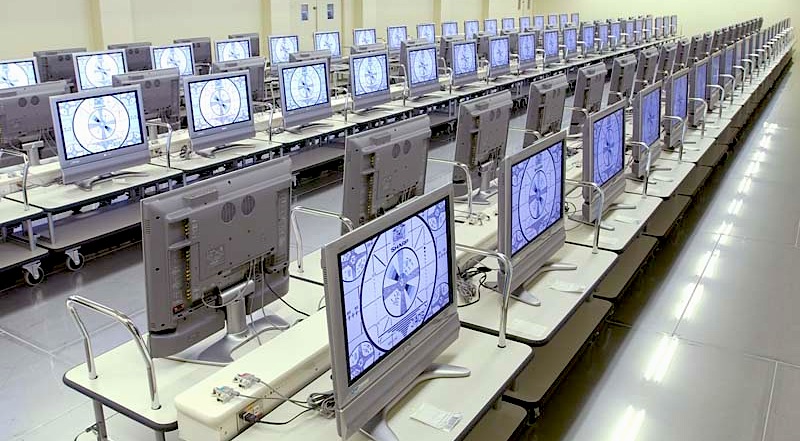
Of Japan’s largest consumer electronics manufacturers, Sharp is perhaps in the tightest spot. In it’s most recent financial results (PDF), Sharp increased its forecast loss for the fiscal year ending March 31, 2013 to a whopping ¥450 billion, or more than US$5.6 billion. This followed Standard & Poors downgrading Sharp stock to junk status back in August, making it more costly for the company to borrow money. Sharp is currently being viewed as having a 94.9 percent chance of defaulting on its debt in the next five years. Companies are known for putting the boldest face possible on their financial reports, but even Sharp doubts its own future. The original version of the release said there was “material doubt” about the company’s ability to survive, although it has since edited the release to say there are “uncertainties about Sharp being an assumed going concern.” Tomato, tomahto.
Sharp’s decline exemplifies the challenges facing Japanese electronics makers. From 2000 to about 2007 Sharp was riding high: Its profits jumped about 150 percent as it created a premium brand in its Aquos line of high-end flat screen television. (Sharp was also wildly successful in Japan with Aquos phones.) Sharp built cutting-edge facilities in Kameyama to make LCD flat-panel displays. Its success seemed to validate monozukuri and Japanese’ companies’ predisposition to do their own manufacturing. However, even as industry watchers were warning the bottom would soon drop out of flat-panel displays – and the storm clouds of the global financial crisis were gathering – Sharp doubled down, building a new factory in Sakai that could produce 6 million TV-sized LCD panels a year. Then the LCD market collapsed, and Sharp’s Aquos phone business in Japan was cut in half by the consumer smartphone revolution, led by the Apple iPhone. Sharp had also seen success in a solar panel and battery business; however, just as with LCD panels, its high-end products got undercut by competitors in China and other markets in 2011.
What to do? Sharp’s Kameyama factories have now been repurposed to make small LCD displays used in things like the iPad and the iPhone. The company has mortgaged the facilities, along with most of its other factories and offices, and got a fresh round of financing from Japanese banks on promises it would cut jobs, sell off assets, and regain profitability. Sharp thinks it’ll be able to bring in an operating profit in the second half of 2013 and begin paying back debt, but industry watchers and the company itself aren’t sure that’ll work.
Panasonic
Think Sharp’s projected ¥450 billion loss for the fiscal year is steep? Try Panasonic: It’s forecasting a loss of ¥765 billion (about US$9.6 billion) for the same period, based on writedowns in its mobile handset, battery manufacturing, and solar power businesses. That’s a 30-fold increase on the company’s previous estimates, and will be the second-largest shortfall in the company’s history – and that’s saying something for a company founded in 1918. Panasonic will also skip a dividend to investors for the first time since 1950, citing an “urgent need” to shore up its finances.
Some of Panasonic’s woes are tied up in the same solar and battery businesses that have hit Sharp – augmented by the company’s decision to buy up Sanyo back in 2009-2010, which primarily centered around Sanyo’s battery and solar businesses. But where Sharp bet on LCDs, Panasonic bet on plasma, sinking ¥600 billion into factories in Amagasaki. Plasma display technology, of course, has been surpassed in popularity by LCD displays, but unlike Sharp, Panasonic couldn’t repurpose its plants to meet the needs of mobile devices.
“We are among the losers in consumer electronics,” newly-installed Panasonic president Kazuhiro Tsuga told a news conference on November 1. However, Tsuga’s writedowns of Panasonic’s businesses are moves to scale back the company’s operations and move it away from its money-losing businesses in televisions and consumer electronics. Tsuga is repositioning the company – still Japan’s largest employer with over 330,000 workers after laying off 36,000 people last year – to function as a series of small- to medium-sized operations, each of which generate positive revenue.
Sony

Although Sony is as deep into televisions and consumer electronics as rivals Sharp and Panasonic, its path has been a bit different, and as a result it isn’t in quite as much trouble. Sony posted a ¥15.5 billion loss for its July-September quarter (PDF) – it’s seventh straight quarterly loss – although the company still says it believes this year will mark its first annual profit in five years. New CEO Kazuo Hirai is working to refocus Sony on mobile, gaming, and digital imaging (including medical imaging augmented by the stake in Olympus), although it still clings to a television business that has been losing money for eight years. Sony is now getting its LCD panels from manufacturers like Sharp, LG, and Samsung rather than making them itself; the company is hopeful that getting panels on the open market will reduce its costs and allow the the television unit to return to profitability. Sony has also sold off its chemical products businesses that made materials used in LCD panels and optical discs. And Sony is cutting jobs: 10,000 workers last spring, another 1,000 from its mobile division this summer, and another 2,000 layoffs due by the end of 2012.
Unlike Sharp and Panasonic, Sony has long had a hand not just in consumer electronics, but in content businesses. It wants to make money selling movies, books, music, and games – not just devices. Consider Sony Pictures, the PlayStation network, and the company’s movie and music services. In a way, Sony pioneered aspects of the business models being pursued by Apple (and extended by Amazon and Google) by offering content that brings people to their devices. Between more diversified offerings and a demonstrated willingness to jettison money-losing businesses (except, so far, televisions), Sony may be able to stage a turnaround. That said, Sony cut its estimates of how many televisions, PSPs, Vitas, and digital cameras it expected to sell for the year by 6 to 16 percent; only its PlayStation forecast was unchanged at 16 million units.
What it means

The financial turmoil of some of Japan’s largest consumer electronics companies is partly indicative of the broader global economies. Consumers around the world have been tightening their belts, and that limits how many of them will buy luxury items – and monozukuri produces luxury items. Instead, the consumer electronics market has shifted towards manufacturers that can deliver new products fast and cheap, and for the last several years, that hasn’t been happening in Japan.
Fewer Japanese TVs — Sharp, Panasonic, and Sony are Japan’s first, second, and third-largest television makers, and while none are currently shutting down their television businesses, they are all looking to reduce their losses. Unless one or more of the companies decide they want to try to take on the likes of Samsung, LG, and Foxconn directly on a price basis, that means Japanese TV makers will probably have to cede the mainstream television market to competitors and focus on high-end, luxury products. However, this is a very chancy proposition; although Japanese manufacturers were pioneers in OLED television development (remember Sony’s astronomically expensive 11-inch OLED TV?) rivals like Samsung and LG are now driving OLED innovation. Panasonic and Sony have announced plans to partner up on OLED production, but Japanese companies remain behind the curve.
Selling off brands? — If Japanese consumer electronics makers do fail, some of their brands might hold some value… for a while. Sharp’s Aquos brand still has major recognition around the world, and might be something the company would consider selling off to help fuel its survival. Panasonic’s Viera brand could potentially do the same. Sony has similar opportunities with brands like Bravia and Walkman. Given the financial situations at all these companies, it’s possible that icons of Japan’s past dominance could be bought by their more-nimble overseas rivals.
Lessons for Apple? — If there’s a leading electronics company that exemplifies monozukuri, it’s probably Apple. The Cupertino company is world-famous for its attention to detail, craftsmanship, and dedication to design, both in its hardware products and onscreen. Even its product line revisions reflect that: Updated products are rarely revolutionary departures from what came before. They’re consistent, continued refinements and improvements. Apple also targets the high end of the market, focusing on profit margin rather than market share. The company would seem to be vulnerable to many of the same market forces that are rocking Japan’s largest consumer electronics makers.
There are some key differences, however. Apple does outsource its manufacturing, most famously to China’s Foxconn. Apple also outsources most of its components: it buys memory and processors from Samsung, Gorilla glass from Corning, and still more components from Toshiba, Panasonic, Intel, Nvidia, and more than 150 other companies (PDF). Apple isn’t on the hook for manufacturing facilities that cost it billions of dollars: It leaves the risk of owning those kinds of facilities to the likes of Samsung.
[Akihabara image via Shutterstock / tororo reaction
Japanese factory worker image via Shutterstock / bluehand]
Source : http://www.digitaltrends.com/mobile/what-japans-consumer-electronics-meltdown-means-for-you/


