Showing posts with label network. Show all posts

Friday, November 9, 2012

EE admits cheaper 4G deals delay

EE admits cheaper 4G deals delay
EE's SIM-only rollout isn't as fast as its network

EE, the UK's first 4G network has confirmed that it will be delaying its SIM-only plans "by a few weeks".

The network tweeted the news earlier today, with the message on the social networking site reading: "Sorry folks – there's been a date change for our SIM-only plans.

"We expect to bring them in the next 2 weeks. Stay tuned for the new date."

We contacted EE to find out how the delay came about, with the network citing overrunning testing for the longer wait time.

Superfast, but you'll have to wait

An EE spokesperson told TechRadar: "The launch of SIM only plans (due Nov 9) will be delayed by a few days as a result of our comprehensive testing process over-running slightly.

"We know many customers are anticipating these plans and apologise for this short hold up. However they will be reassured that we are determined to offer the very best service possible."

EE hasn't fully announced the pricing structure for its SIM-only plans, but we do know that they will all have unlimited calls and texts, with the cheapest costing you £21 per month.


Source : http://www.techradar.com/news/phone-and-communications/mobile-phones/ee-admits-cheaper-4g-deals-delay-1111394

Thursday, November 8, 2012

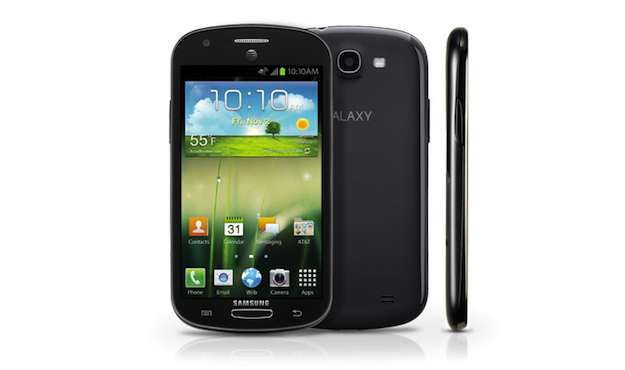
Samsung Galaxy Express steams into your local AT&T store, where it’s yours for $100

Samsung Galaxy Express

AT&T has provided more details about the Samsung Galaxy Express, set to be released onto the network next week. Aimed at first-time smartphone owners, it has 4G LTE connectivity and a sensible price tag.

Previously announced in September, AT&T has now provided some more details about the Samsung Galaxy Express, it’s latest mid-range Android smartphone. The network is pushing the Galaxy Express as being suitable for first-time smartphone owners, or those who’re planning to upgrade from a basic device.

It’s making it an attractive proposition too, as it has slapped a $100 price tag on the front, provided you scrawl your signature on the bottom of a two-year contract. For that, you’ll get a curvy, Galaxy Ace 2-alike device that will happily connect to AT&T’s 4G LTE network.

The specification, while not quite up to the standard of the current crop of superphones, is still intriguing, particularly the screen. It measures 4.5-inches, a fairly unusual size, and one that’s shared by devices such as the Nokia Lumia 920, the Motorola Atrix HD and the Huawei Honor 2. It’s a Super AMOLED Plus panel too, meaning it’s the same as that seen on the Galaxy S2, and not the often unfairly maligned PenTile display used on the Galaxy S3.

Inside is a 1.5GHz, dual-core processor of currently unknown parentage, which should see the Android 4.0 Ice Cream Sandwich operating system perform well. There’s no information on the amount of RAM, nor any clues on how much internal memory will be found inside the Galaxy Express, although a microSD card slot is present.

A 5-megapixel camera sits on the real panel, and other features include GPS, Bluetooth and a 2,000mAh battery.

Anyone interested in the Galaxy Express will be pleased to know it’s going to be available from AT&T on November 16. It’s also part of an AT&T offer where you’ll get $100 off a second Samsung smartphone when you buy a Galaxy-branded device with a new contract.


Source : http://www.digitaltrends.com/mobile/samsung-galaxy-express-steams-onto-att/

Wednesday, November 7, 2012

AT&T lays out plans to cover 300 million with 4G LTE by end of 2014

AT&T lays out plans to cover 300 million with 4G LTE by end of 2014
AT&T commits to $14 billion in network improvements over the next 3 years

AT&T has announced significant expansion and infrastructure investments to support future growth, including a scheme to extend 4G LTE coverage to 300 million Americans over the next two years.

The carrier announced plans Wednesday to invest $14 billion in the next three years to augment its wireless and wireline IP broadband networks, which promises to offer high-speed data access to 99 percent of its customers in wireline service areas.

The investment plan is called Project Velocity IP (VIP), an initiative aimed at supporting growing customer demand for high-speed internet access across the country.

AT&T plans to expand its 4G LTE network dramatically between now and the end of 2014, when it expects to service 300 million customers.

Eye to the future

Not just focused on wireless, AT&T's will also expand its wired IP broadband network to 75 percent of customer locations by the end of 2015 across 22 states, where the services are offered.

"This is a major commitment to invest in 21st century communications infrastructure for the United States and bring high-speed Internet connectivity - 4G LTE mobile and wireline IP broadband - to millions more Americans," said Randall Stephenson, AT&T chairman and chief executive officer.

"Revenues in our key growth areas - wireless data, U-verse and strategic business services - are all growing at a strong double-digit rate.

"Project VIP expands our potential in these key platforms and makes them available to many more customers."

Stephenson noted that such a significant capital investment would is only possible because of AT&T's "strong balance sheet," and considers the plan to be "logical extensions" of the company's proven technologies.


Source : http://www.techradar.com/news/internet/broadband/at-t-lays-out-plans-to-cover-300-million-with-4g-lte-by-end-of-2014-1110855

AT&T 4G LTE to cover 300 million people by end of 2014

AT&T 4G LTE to cover 300 million people by end of 2014
AT&T commits to $14 billion in network improvements over the next 3 years

AT&T has announced significant expansion and infrastructure investments to support future growth, including LTE coverage for 300 million Americans over the next two years.

On Wednesday, AT&T announced plans to invest $14 billion over the next three years to augment its wireless and wireline IP broadband networks, which promises to offer 99 percent of its customers in wireline service areas high-speed data access.

The investment plan is called Project Velocity IP (VIP), an initiative aimed at supporting growing customer demand for high-speed internet access across the country.

AT&T plans to expand its 4G LTE network dramatically between now and the end of 2014, when it expects to service 300 million customers.

Eye to the future

Not just about wireless, AT&T's wired IP broadband network will also be expanded to 75 percent of customer locations by the end of 2015 across 22 states where the services are offered.

"This is a major commitment to invest in 21st Century communications infrastructure for the United States and bring high-speed Internet connectivity - 4G LTE mobile and wireline IP broadband - to millions more Americans," said Randall Stephenson, AT&T chairman and chief executive officer.

"Revenues in our key growth areas - wireless data, U-verse and strategic business services - are all growing at a strong double-digit rate. Project VIP expands our potential in these key platforms and makes them available to many more customers."

Stephenson noted that such a significant capital investment would is only possible because of AT&T's "strong balance sheet," and considers the plan to be "logical extensions" of the company's proven technologies.


Source : http://www.techradar.com/news/internet/broadband/at-t-4g-lte-to-cover-300-million-people-by-end-of-2014-1110855

Friday, October 26, 2012

Tips and tricks to insta-turn you into a better Instagrammer

better instagrammer header tips and tricks for instagram

While most of us love Instagram, we don't always know how to use it best. Use these tips and tricks to perfect the images you're sharing on the network, as well as improve how you're interacting within the extremely loyal Instagram community.


Instagram: For some of us, it’s an addiction. For others, it’s a marketing tool. Either way, we can all agree that the service has revolutionized photo-sharing by giving us something that’s incredibly simple, fun to use, nostalgic, and most of all social, all wrapped up in one beloved platform. Being a photo-based platform, there are ways to get better photos with your device in your quest to gain more comments and likes. Here are a couple of tips to start off.

instagram advanced cameraAdvanced isn’t everything

Straight out of the box, Instagram for Android provides you with its Advanced Camera setting. Head over to the menu/profile settings and turn it off. Your device’s standard capabilities are much better and also provide you with more versatility when it comes to getting a better photo.

The Advanced Instagram Camera can make composition easier for you. It can also eliminate the need for cropping your image afterward if you know exactly what you want. But just like in real photography, there is no reason to limit yourself if you want to change your creative vision later.

Android Users: Experiment with exposure

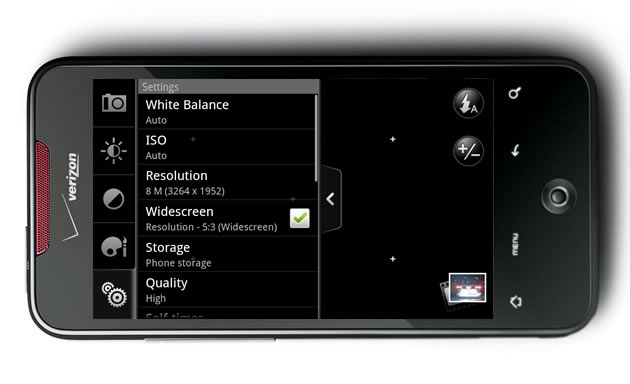
Most Android devices have exposure control settings. Users can control variables like contrast, exposure compensation, ISO, white balance, and more. Playing with these settings can help you to get better results before you apply Instagram’s filters. Let’s run through this quickly:

  • Contrast: How much of a difference there is between the bright and dark areas. The more contrast, the greater a difference. It also greatly affects colors.
  • Exposure compensation: Telling the camera to make the overall exposure brighter or darker.
  • ISO: How sensitive the camera will be to light. It’s a good idea to usually just leave this in the Auto setting. However, if you’re taking photos of your dog, baby, or another squirmy subject that just won’t stay still, feel free to raise this up to ISO 800 or 1600.
  • White balance: This changes the overall color rendition of the image without making it look monochrome or Sepia. 

android camera settings
Getting a better image to begin with will mean that Instagram’s filters will also do a potentially better job and you’ll get a higher quality final result.

iPhone Users: Lock it up

iphone camera ae af lockThis is a popular technique many iOS power users love:

  • Touch the screen to focus on a subject; you’ll see the blue box show up when you tap, and then hold for a second. This will lock the focus and exposure.
  • Recompose the image, if need be.
  • If needed, also provide a bit of fill flash.

Sometimes, a flash can provide light that is too harsh. Try putting a tissue over the light so you don’t blow out all of the lovely natural colors on your sushi plate (just a hunch).

Get creative with Instagram’s arsenal

Photography, for artists, casual users, and just about everyone in-between is all about falling in love just a little bit every day with each picture we take. With that said, you can make your images better by experimenting with all that Instagram gives you. For example, some filters are more versatile than others, but there are certain ones that were meant for specific shades of light or that look best with their included borders.
filter options
Want to make your images look like they weren’t taken with a phone? Compose your scene so that it can possibly have some sense of depth, and then apply the tilt/shift filter accordingly.

instagram tilt shift

Sayonara, screenshots

instragram screenshotIt happens to the best of us: Sometimes, we can’t help but share those hilarious text or Twitter exchanges with our dear Instagram followers. But adding that Walden filter to it is a bit unnecessary – meaning, don’t do it. This just isn’t the place to share those text-moments, head over to Twitter, Facebook, or Tumblr for that. And the moment is too good not to post to Instagram, it is also well worth #nofilter.

The personal touch

Go ahead and use some hashtags, just don’t make a habit out of listing every possible topic for a photo.  No more than two or three are ever really necessary – you don’t want to be that person (see if you can spot which of the examples below completely overuses hashtags while also failing to add a caption that sounds even remotely human). Also, be sure to act like a real person; interact with other users genuinely, like you would in real life, and don’t pretend to be something you’re not (it’s okay to just take pictures of your cat or your food, just don’t wax philosophically in the comments about your artistic eye). 

hashtag examples


Source : http://www.digitaltrends.com/mobile/tips-for-better-instagrams/

Tuesday, October 23, 2012

EE launching its LTE network in UK on Oct. 30, pricing revealed

EE is calling its new service 4GEE and it will launch commercially stating next Tuesday (October 30). 4GEE stands for the services offered by EE's LTE network, which will allow the usual calls and texts, with the addition of mobile data speeds of about 8-12Mbps.

The 4GEE service will be initially available in only 10 UK cities (London, Manchester, Bristol, Birmingham, Cardiff, Edinburgh, Leeds, Liverpool, Sheffield and Glasgow), but you would be able to buy it throughout the country nonetheless.

Six new cities will be added before Christmas (Southhampton, Belfast, Derby, Hull, Nottingham, Newcastle) with plans to cover 98% of the population by the end of 2014.

All LTE smartphone plans include unlimited calls and texts, user simply pick a data allowance of their choosing. The prices of the new plans start from £36/pm (offering up to 500MB traffic) and going north to up to £56/pm (which gets you up to 8GB of traffic). So, yes, there are no unlimited plans just yet, but the offered plans are expensive enough as they are.


To make use of the 4GEE service, you would need an LTE-enabled handset purchased directly from Orange or T-Mobile or any of their partner retail stores. The only exception is the iPhone 5, which (if unlocked) would operate on 4GEE no matter where you got it from.


EE is not only launching its 4G LTE service next week but it will also be rolling out its new corporate identity. Starting on October 30, all existing Everything Everywhere, Orange and T-Mobile stores will be re-branded as EE stores.


Existing customers will keep their plans and will continue to use the combined 3G network of T-Mobile and Orange without any change (though the network identifiers on their phones will start showing EE).

However, to become a new EE subscriber, you would need to pick one of the 4GEE plans. This is a quite odd move as not that many people have the phones to utilize the LTE network. In the same time there are no EE plans without LTE connectivity and LTE coverage is pretty limited for now.

Source 1 | Source 2


Source : http://www.gsmarena.com/ee_uk_lte_network_launchin_on_oct_30th_pricing_revealed-news-4986.php

EE shows us the cost of 4G LTE in the UK

EE Tariff Data

With a week to go until EE turns on the UK's first 4G LTE network, the operator has finally revealed its tariffs, all of which include unlimited calls and SMS and are differentiated by the amount of data included.

EE is almost ready to launch the UK’s first 4G network, having already revealed the phones and the switch-on date, leaving citizens waiting for the most important details of all — how much it would all cost.

Today, EE has published its 4G LTE tariffs, so for the first time we can judge whether it’s affordable or prohibitively expensive. The good news is that it’s all very easy to understand, as EE have made the tariffs all about the data that’s included each month, instead of complicating things with calls and SMS.

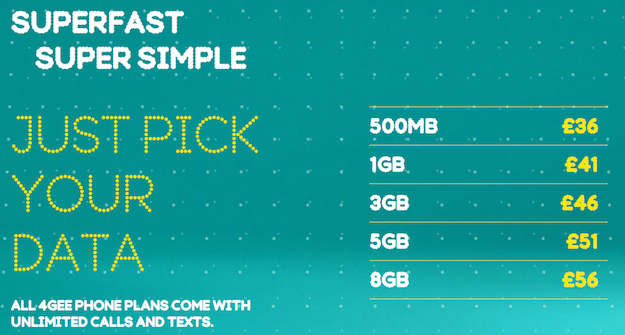
It has achieved this by giving each contract unlimited calls and texts, so the only difference between them is the amount of data provided. Here’s the breakdown:

  • 500MB per month will cost £36.
  • 1GB costs £41.
  • 3GB costs £46.
  • 5GB costs £51.
  • 8GB costs £56.

These are all for 24-month contracts, although if you only want to sign-up for 12-months, you can add another £10 per month to the above costs. The 500MB plan obviously gives EE a good base figure to advertise, but sensible users will want to look at 1GB or more if they’re going to grab an EE 4G plan, as high speed data tends to disappear quite quickly.

Once you’ve chosen your tariff, you’ve got to add the price of a compatible phone. EE offers the Apple iPhone 5, the Samsung Galaxy S3 LTE and the Note 2 LTE, the HTC One XL and the Huawei Ascend P1 LTE. Nokia’s Lumia 820 and 920 will soon be available too.

The cheapest option will be the Huawei P1 Ascend, which is free on all but the 500MB package, where it’s £19.99. A 16GB iPhone 5 is £179 on the same plan, but only £19.99 if you go for the 8GB per month tariff.

Choosing the 1GB per month tariff at £41 means the 16GB iPhone 5 will be £109, the Galaxy S3 and the One XL £49, and the Galaxy Note 2 a hefty £139. Buyers wanting to grab a 4G iPhone 5 will be pleased to know it works out at £5 extra per month over Orange’s standard 3G tariff.

Bonuses and a comparison with AT&T

Here’s a comparison with an equivalent US 4G contract. According to AT&T’s website, a 1GB data plan with unlimited calls and texts gives a monthly charge of $85 and a $199 (plus tax) charge for the phone. EE charges £41/$65 per month and £109/$174 (no tax) for the iPhone, and doesn’t have an activation fee either.

For all tariffs above the 1GB plan, EE will provide either 19 live streaming TV channels, a music streaming service or two free game downloads each month, plus on all tariffs, there will be a free film download each week until February next year too.

Finally, EE offers a SIM-only plan that starts at £21 per month, and gives Orange and T-Mobile subscribers the chance to swap their 3G phone for its 4G equivalent, and move to a 4G plan, all for £99.

EE will turn on its 4G LTE network on October 30, when it will be available in Birmingham, Leeds, Bristol, Liverpool, Cardiff, London, Edinburgh, Manchester, Glasgow and Sheffield.


Source : http://www.digitaltrends.com/mobile/ee-shows-us-the-cost-of-4g-lte-in-the-uk/

Thursday, October 18, 2012

Jelly Bean arrives on Samsung Galaxy S3 in the UK

Jelly Bean arrives on Samsung Galaxy S3 in the UK
Three gets there first with Jelly Bean

The Samsung Galaxy S3 is finally getting the Android 4.1 update in the UK, as network Three starts pushing Jelly Bean out to customers.

The data-championing network took to Twitter to announce the news, tweeting: "#ThreeSoftwareUpdate Jelly Bean has arrived for #GalaxySIII users :-)".

By the looks of it the update is available over the air, meaning you won't need to dig out your USB cable and tackle the somewhat disappointing Kies desktop software.

Update time

You'll need to head over to Settings > About device > Software update on your Galaxy S3 to check if Android 4.1 has made it to you.

It won't necessarily appear today as these updates sometimes take a few days to filter through to every handset, but you should be enjoying Jelly Bean on your S3 very soon.

We've contacted the other networks about their Galaxy S3 updates, but we're still waiting to hear back from O2, Vodafone, Orange and T-Mobile.


Source : http://www.techradar.com/news/phone-and-communications/mobile-phones/jelly-bean-arrives-on-samsung-galaxy-s3-in-the-uk-1105330

UK networks come together to accelerate 4G rollout

UK networks come together to accelerate 4G rollout
Zoom, zoom, zoom

EE, O2, Three and Vodafone have joined forces to form a joint company focused on accelerating the 4G network rollout on the frequency freed up by the analogue TV switch off.

The company is called Digital Mobile Spectrum Limited and is responsible for ensuring Freeview customers continue to receive clear TV signal, while the 4G network is rolled out on the 800MHz spectrum – which is scheduled to start in spring next year.

The creation of this joint venture means 4G services can be accelerated, with the UK's competitive 4G network becoming available as soon as possible in 2013.

Ofcom and Government

This has all come about after Ofcom and the Government met with mobile operators to discuss how the UK's 4G network rollout could be accelerated – allowing all carriers to get in on the super-fast network, after EE was allowed to launch its service early.

There's still the small matter of the spectrum auction for the networks to fight over, but apparently everything is now in place to allow it to be processed as quickly as possible.

There's still no exact date for when the likes of O2, Three and Vodafone will be able to join EE in offering 4G to customers, but it could now be in the first half of next year with this major stumbling block out of the way.


Source : http://www.techradar.com/news/phone-and-communications/mobile-phones/uk-networks-come-together-to-accelerate-4g-rollout-1105260

Wednesday, October 17, 2012

Report claims iPhone 5 already accounts for 3% of web traffic

Report claims iPhone 5 already accounts for 3% of web traffic
The iPhone 5 already accounts for 3% of mobile web traffic

A recent report from ad network Chitika indicates iPhone 5 users are connecting to the web more than any other smartphone.

The Chitika study found that since it launched on September 24, the iPhone 5 has rapidly risen through the ranks, and now singlehandedly accounts for three per cent of web traffic from mobile phones.

When combined with previous iOS devices, Apple's ecosystem contributes to 46 per cent of all mobile web traffic. That's a significant lead over its nearest rivals, Samsung, which accounts for a total of just 17 per cent.

Samsung vs Apple continues

It's not just the iPhone 5 performing well though. Chitika claims that the Galaxy S3 from Samsung, launched back in May this year, currently accounts for two per cent of mobile web traffic.

While there's a huge difference between Apple and Samsung, it has also become obvious that the Korean giant has become the leading Android handset maker, with all other mobile devices accounting for just 37 per cent of traffic combined.

Chitika conducted the study by conducting a user agent analysis on "millions of mobile ad impressions, spanning a 7-day time frame from October 3rd through October 9th, 2012".

While there is debate about how reliable information garnered through ad impressions is as a tool for measuring web traffic, it does reinforce the idea that the current smartphone marketplace is becoming a two horse race.

Via: TechCrunch


Source : http://www.techradar.com/news/mobile-phones/phone-and-communications/report-claims-iphone-5-already-accounts-for-3-of-web-traffic-1105219

Ads to invade Facebook mobile app News Feed

Ads to invade Facebook mobile app News Feed
The pressure's on

Users might notice new ads pop up on their smartphones' Facebook News Feed as the social network has opened up its latest strategy to make money through its mobile app.

In August, Facebook began testing a new "mobile app install ads" program that wasn't connected to users' social ties.

The test was apparently a success as Facebook announced Wednesday via its developer blog that it's opening the service up to all developers.

The test program allows an undisclosed amount of third-party developers purchase ad space on the mobile News Feed to help drive buyers to their apps.

Those advertisements then lead users to the developer's app store purchase page either through the Android or Apple app store.

It all ads up

"For years, many apps and games on Facebook.com have used ads as an important part of their growth strategy," Facebook's Vijaye Raji wrote on Facebook's developer's blog.

"Now we are bringing these opportunities to mobile apps," Raji continued.

"With these new ads, mobile apps and games of all sizes across any category can reach the right audience, at scale."

In the post, Raji touted the new program's ability to help developers reach more relevant audiences and drive up install rates.

He pointed to game creator TinyCo, which saw a 50 percent higher click-through rate when it participated.

Other advertisers reached 8-10 times the audience and Ad Parlor clients saw consistent 1-2 percent increases in click-through rate from the home feed, according to Facebook.

This is a bit of a break from the Facebook ad norm. Traditionally, ads pop up on users' pages because they or a friend liked the brand.

But with this program, dev advertisers will be able to target the audience they want to sell to, instead of who likes them. Facebook is banking on the hope that those two groups will have a large cross-section.

Since the ad program is new, Facebook will still need to work out a few kinks to smooth out the user experience.

The company will also improve the program's ad targeting abilities, as well as make sure developer ads aren't targeting users on the wrong platform.

Facebook in free fall

The program comes as Facebook tries to monetize its mobile space.

The social network as a whole has felt the pressure to become more profitable after its failed IPO in May. In September, the stock hit a new low at $17.55 (UK£11.14, AU$17.33) from its starting price of $38 (UK£23, AU$36).

We'll see if the new mobile app install ad program wows investors next Tuesday, when Facebook calls to share its third-quarter earnings.


Source : http://www.techradar.com/news/phone-and-communications/mobile-phones/ads-to-invade-facebook-mobile-app-news-feed-1105154

O2 pledges £10m to fix network faults, restore customer confidence

O2 pledges £10m to fix network faults, restore customer confidence
Sorry seems to be the hardest word for O2

Mobile network O2 has vowed to rebuild customer faith following two significant service outages in recent months.

An estimated 2 million users were left without cellular and data services on Friday last week due to another failure of O2's Central User Database, which the network says is provided by one of its suppliers.

Now the company says it will spend an £10m on moving to a "proven alternative solution" rather than "risk this happening to our customers for a third time."

In a blog post entitled 'Removing your trust in our leading network' COO Derek McManus said O2 will continue to spend £1.5m a day on improving the network and also "up-weighting and re-focussing our Service Experience Team" in the build up to next year's 4G LTE launch.

Dented the confidence

McManus added: "While we recognise that we have dented the confidence and trust of some of our customers, I hope this plan will demonstrate our commitment to rebuilding that trust.

"We will not rest until we have cemented the stability of our network and can deliver the level of service customers have come to expect of us over the last ten years."

O2's network woes couldn't have come at a worse time for the company, with the launch of Everything Everywhere's 4G LTE service coming before the end of the month.

The Orange and T-Mobile 4G alliance already offers a decent sized incentive to jump ship without O2's recent problems, so it's little surprise that it is looking to reassure its customers.

However, humble O2's admission of fault appears to be, wavering customers may note the absence of two words from McManus' blog post: The first is 'sorry' and the second is 'compensation.'


Source : http://www.techradar.com/news/phone-and-communications/mobile-phones/o2-pledges-10m-to-fix-network-faults-restore-customer-confidence-1105121

Tuesday, October 16, 2012

U.S. smartphone owners pay 3-10 times more for 4G LTE data, says study

4G LTE

According to a recent study, Americans pay three times as much for their LTE network service than most Europeans -- and nearly ten times more than what Swedish citizens pay.

We can now add 4G LTE service to the list of things Americans pay significantly more to have than the rest of the world — right next to education and health care. According to a GSM Association study reported by the New York Times, Americans pay three times more per gigabyte of data than the average European consumers — and ten times more than Sweden. But at least we can get a large pizza for just $5, right America?

The study revealed that America’s leading LTE provider, Verizon Wireless, charges its subscribers $7.50 for every gigabyte of data downloaded over its network. In comparison, the average cost of a gig in Europe is $2.50. Sweden leads the way in inexpensive service, with data only ringing up at $0.63 per gigabyte.

Verizon spokeswomen Brenda Raney did counter this information by pointing out the Verizon plan that is being compared is from its Share Everything plan, which includes unlimited call and text minutes and allows data to be shared among ten devices. If a person was to purchase a data only plan, similar to how the European providers offer service, they would only pay over twice the European average with a cost of $5.50 per gigabyte. Of course, Europeans separate talk and data plans, though. Verizon, on the other hand, is forcing all new users to sign up for Share Everything plans. And though you can connect up to 10 devices to an account, there is a monthly fee per device, which ranges from $10 to $40. 

Verizon was the first company to roll out 4G LTE in the United States, followed by AT&T. Verizon still owns the market with 11.6 million LTE subscribers (AT&T reports just short of a million), or about 43 percent of the world’s 27 million LTE users. The lone country to beat Verizon to market just happens to be the cheapest: Sweden. The cost gap seems to have everything to do with competition, though. Europe has 38 of the world’s 88 LTE providers fighting for subscribers. Austria and Finland have three within their borders alone. Meanwhile, the world’s largest market for mobile, the United States, is still playing catch up in this regard.

This has actually been a trend with phone service in the United States. The average cost of a 3G contract runs an American citizen $115 a month. In comparison, citizens of the Netherlands pay $51 and those in Britain pay $59. The higher costs keep the adoption rate at a slow climb, which in turn keeps the cost up on those that have jumped on board because the provider has to recoup costs from building  the network. It’s a self-perpetuating cycle that is very American: Pay more, consume more, and get less.


Source : http://www.digitaltrends.com/mobile/us-phone-owners-pay-too-much-for-lte-study/

Wednesday, October 10, 2012

The QWERTY is back with the LG Mach

LG Mach

Sprint has announced the LG Mach, a new QWERTY slider Android smartphone that sits just below the Motorola Photon Q in the network's range.

The QWERTY slider form factor still has its fans, and Sprint wants to make sure they’re well catered for on its network, so it has introduced the new LG Mach. Now, with a name like that, you’re probably expecting incredible performance, but while the Mach isn’t a basic phone, it’s not quite up there with the range-toppers of today.

What we’ve got is a 4-inch touchscreen with an 800 x 480 pixel resolution, which slides to the side to reveal a big QWERTY keyboard, providing users with the best of both worlds. You’ll have to be prepared to compromise on size and weight when comparing it to its touch-only peers though, as the LG Mach is a chunky beast at 12mm thick and 168 grams.

Deep inside the phone is a 1.2GHz, dual-core processor and 1GB of RAM, while the operating system is Android 4.0 Ice Cream Sandwich. Although LG doesn’t talk about it in the press release, CNet.com says the Mach will be upgradeable to Android 4.1 Jelly Bean, but doesn’t offer any timescale.

There is a 5-megapixel camera on the rear of the phone, which can also shoot 1080p video, plus a basic 0.3 megapixel forward-facing video call lens above the screen. LG makes a point of highlighting the Mach’s eco-friendliness, saying it’s 56-percent recyclable, and has been given the seal of approval by a couple of environmental foundations too.

The Mach will connect to Sprint’s 4G LTE network and other features include Bluetooth 4.0, a 1700mAh battery, 8GB of internal storage memory, GPS, a microSD card slot and NFC.

As unusual as the LG Mach’s form factor may be these days, it’s not alone on the market, and one of its closest rivals is also offered through Sprint. The Motorola Photon Q has a slightly larger screen at 4.3-inches, an 8-megapixel camera and a 1.5GHz, dual-core processor, so the LG Mach will likely come in at a slightly lower price. It does win over in one key area though, as the Mach is ever-so slightly lighter and slimmer than the Photon Q.

Sprint hasn’t provided any release information or pricing structure at all, so if you’re interested in the phone, you’ll need a little patience.


Source : http://www.digitaltrends.com/mobile/sprint-announces-the-qwerty-lg-mach/

Thursday, October 4, 2012

UK’s first 4G network goes live October 30 courtesy of EE, other carriers to wait until 2013

EE 4G Banner

UK network EE will launch its 4G LTE network on October 30, while other carriers wait patiently for the 2013 spectrum auction.

The UK is poised to join the USA and many other countries around the world in offering 4G LTE high speed data to its citizens. This week has seen some important developments, not only because its first 4G LTE network has been given a launch date, but also due to the long-awaited 4G spectrum auction being brought forward to January 2013.

It’s EE, the parent company of Orange and T-Mobile, that has the honor of being the first to switch on a 4G signal. After months of legal wrangling, the network has confirmed it’ll provide a 4G connection in 10 cities from October 30.

CEO Olaf Swantee said in a statement that he was “delighted” to announce the launch of both EE as a brand — a network of EE stores will be opening around the country, through which EE’s 4G LTE phones will be sold — and “the UK’s first super fast mobile 4G and fibre broadband service.”

Initially expected to launch only in London, Birmingham, Cardiff and Bristol, delays have clearly allowed EE to boost its coverage, as 10 cities will now see the benefit of 4G from day one. A press event will be held soon, where those 10 cities and the final six expected to join them by the end of the year, will be revealed.

Early adopters of EE’s 4G service will need a compatible phone, a selection of which can be purchased through the company. The choice may be slim, but it’s eclectic, with the iPhone 5, the Samsung Galaxy S3 LTE, the HTC One XL and the Huawei P1 LTE all available now. The Galaxy Note 2 will also be joining them from October 15, and the Lumia 920 and Lumia 820 Windows Phone 8 devices will be added later in the year. Eligible Orange and T-Mobile subscribers will be offered the chance to upgrade too.

Tariff prices haven’t been announced yet, and will probably be discussed at the aforementioned press event, but it’s speculated that monthly costs will increase by around £10.

Spectrum auction brought forward

To enable it to be first out the gate with 4G, EE has refarmed its plentiful reserves of 1800MHz spectrum for 4G use. Its competitors, who don’t have anywhere near enough 1800MHz spectrum to compete, are understandably upset with both EE and the UK’s communications regulator, Ofcom, who approved the deal back in March.

Since then it has been one long round of complaints and threats from rivals, along with hastily formed partnerships — Vodafone and O2 have joined forces to jointly maintain its nationwide network infrastructure, for example — culminating this week in a meeting between them, Ofcom, EE and the UK government to sort it all out.

Competing firms Vodafone, O2 and Three have been considering legal action against EE, a move that would have delayed both EE’s 4G network launch, and Ofcom’s spectrum auction, which is essential to getting everyone else up and running for 4G.

The meeting not only saw the end of the legal threat, but also the date of the spectrum auction being brought forward to January 2013, which minimizes the period of exclusivity EE has over 4G in the UK. Everybody’s happy, then.

At the auction, all UK networks have the chance to bid on a slice of the 800MHz and 2.6GHz spectrum, which is currently being cleared in preparation for use with 4G. Once the auction concludes, it’s estimated that it will take five or six months to get everything ready.

These positive developments mean Vodafone, O2 and Three will join the 4G party six months earlier than previously thought, with a limited launch being touted for summer 2013. Until then, EE gets to enjoy its moment in the sun as the UK’s only purveyor of high speed 4G data.


Source : http://www.digitaltrends.com/mobile/uks-first-4g-network-goes-live-october-30-other-carriers-to-wait-until-january-2013/

Wednesday, October 3, 2012

What the T-Mobile and MetroPCS merger means for you

T-mobile metropcs carrier merger

T-Mobile and MetroPCS are merging to expand spectrum holdings and network coverage. What do current (and future!) customers get out of it?

T-Mobile parent company Deutsche Telekom has announced that it’s struck a deal to merge with regional pre-paid mobile operator MetroPCS. For MetroPCS, the merger represents a tremendous growth opportunity: instead of being a regional operator limited to a few markets, its customers will get nationwide service. For T-Mobile, the merger significantly deepens the company’s spectrum holdings in key cities and regions, enabling it to make a serious play as a value-conscious LTE operator. And for Deutsche Telekom, the merger finally represents a way to one day get out of the business of being a U.S. mobile operator, following its failed effort to sell T-Mobile to AT&T last year.

But what does the merger mean for consumers and customers of both T-Mobile and MetroPCS? Can customers expect better service and wider LTE coverage? Or, like so many mergers, will the new company just be bigger and more expensive?

The merger’s basic idea

T-Mobile MetroPCS merger execs

The T-Mobile and MetroPCS merger is designed to give number-four T-Mobile more scale and deeper spectrum holdings in several major metropolitan areas, meaning it will more wiggle room to offer 4G LTE services and compete aggressively against the likes of Sprint, AT&T, and Verizon. The combined company will still be the number-four U.S. mobile carrier (behind number three Sprint), but will bump up to about 42 million subscribers. Although MetroPCS uses CDMA phone technology and T-Mobile is based on GSM, MetroPCS is already in the process of phasing out CDMA, and its spectrum holdings are broadly complementary: both companies live and breathe in the 1,700 MHz and 1,900 MHz spectrum bands.

The combined company will do business under the T-Mobile name, although MetroPCS and T-Mobile will continue to operate as distinct customer units. Contract-based mobile service (along with services for businesses) will be under the T-Mobile name, and pre-paid and no-contract service will be available under both T-Mobile and MetroPCS brands.

The pre-paid market — or, as Deutsche Telekom likes to refer to it, “value-focused” market — is one area where the combined company gets interesting. MetroPCS is exclusively a no-contract and pre-paid provider — also one of T-Mobile’s strong points. According to T-Mobile, the two companies will have about 14.6 million no-contract subscribers (9.3 million from MetroPCS), putting it nearly neck-and-neck with Sprint’s no-contract operation, which currently has about 15.4 million customers. The combined T-Mobile/MetroPCS no-contract business looks poised to earn more money than Sprint’s: in the second quarter of 2012, Sprint pulled in $1.2 billion from no-contract subscribers, where the combined T-Mobile/MetroPCS pulled in $1.6 billion. Basically, the combined T-Mobile and MetroPCS will likely become the biggest no-contract mobile operator after AT&T and Verizon — we only say “likely” because those companies don’t break out revenue from their prepaid/no-contract businesses.

The terms of the merger are unusual: technically, MetroPCS is acquiring T-Mobile in a reverse acquisition. MetroPCS will declare a 2-for-1 reverse stock split, pay $1.5 billion to its existing shareholders (a bit over $4 per share), and then buy all of T-Mobile’s capital stock by giving Deutsche Telekom 74 percent of MetroPCS. In the end, Deutsche Telekom winds up the majority owner of MetroPCS, and the new company will have nearly $25 billion in revenue and about $2.1 billion in free cash flow for the year. T-Mobile’s current CEO, John Legere, will be the CEO of the new company; MetroPCS CFO J. Braxton Carter will be the new company’s CFO. MetroPCS’s CEO, Roger Linquist, will apparently retire — he is 74 years old. Regulators have to approve the deal, and that will take a while: the companies expect the deal to be formally closed by June 2013. The new company will operate out of T-Mobile’s Bellevue, Washington HQ, but will maintain a “significant presence” in the Dallas area.

One of the consequences of the reverse merger is that the new T-Mobile will be a public company: before, it was a private company owned by Deutsche Telekom. Although Deutsche Telekom has agreed to provide a $5.5 billion commitment to support some existing MetroPCS transactions, write down the value of some of its investment in T-mobile, and offer the new company a $500 million unsecured credit facility, setting up T-Mobile as a public company gives Deutsche Telekom something it’s always wanted: a way out of the slow-growing U.S. mobile market. That’s why it tried to sell T-Mobile lock, stock, and barrel to AT&T in one giant transaction. Taking T-Mobile public doesn’t give Deutsche Telekom a swift and sudden exit from the American market, but it does put the company in a position to sell off its shares of the new company in the future.

If you’re a T-Mobile customer…

T-Mobile MetroPCS merger combined LTE spectrum (major markets)

In the short term, the merger probably won’t affect T-Mobile customers: the company is continuing its $4 billion built-out of LTE services using AWS (Advanced Wireless Services) spectrum on its network. However, looking ahead, the merger means T-Mobile’s LTE offerings should be much stronger in the areas where MetroPCS currently offers service. Assuming all of MetroPCS’s AWS spectrum gets converted over to LTE — which should happen over time — T-Mobile will have an average of 50 MHz of LTE bandwidth in major areas like New York, Los Angeles, Boston, San Francisco, Detroit, and Las Vegas — and 60 MHz in MetroPCS’s hometown of Dallas — and that includes a full 2×20 MHz in many areas, meaning T-Mobile’s LTE network should be able to keep up with competitors in terms of raw bandwidth. T-Mobile’s current GSM and HSPA+ handsets will continue working, too.

Going forward, T-Mobile’s move toward LTE also means T-Mobile customers can expect to have a greater selection of handsets. Instead of having to rely on phone makers to create special devices for T-Mobile’s own flavor of HSPA+ connectivity, T-Mobile should be able to offer customers mainstream LTE handsets. T-Mobile is hoping that, one day soon, that will include the iPhone, but the company will also be happy to offer customers the latest LTE devices running Android and Windows Phone, as well as accept iPhone migrants from other carriers.

MetroPCS has also been noted for its highly automated self-service capabilities, making it easier for customers to add minutes, pay bills, switch plans, and get a new phone without incurring a ton of customer support costs. On an investor call today about the merger, T-Mobile executives said they expect to be able to leverage that to improve its customer service levels — which would be welcome. T-Mobile’s customer service used to be lauded; recently J.D. Power and Associates has been rating it lowest in customer service among all carriers.

If you’re a MetroPCS customer…

T-Mobile MetroPCS merger combined coverage map

If you’re a MetroPCS customer (and familiar with wireless technology), this merger is putting four letters in your mind: CDMA. MetroPCS’s voice network runs on CDMA, which is incompatible with T-Mobile’s GSM network. How can these incompatible technologies work together?

Short answer: they won’t. MetroPCS customers will be stuck on MetroPCS coverage and limitations until they migrate to new, future, handsets that will incorporate service for both networks. We also learned on the call today (and this long document) that the combined company anticipates keeping some of MetroPCS’s existing CDMA service operating through the first half of 2015, so customers have almost three years to transition to a new handset. MetroPCS’s all-contract business has an exceptionally high handset turnover: each year, between 60 and 65 percent of MetroPCS’s customers get new handsets, so transitioning away from CDMA in a span of nearly three years isn’t expected to be a major problem for most MetroPCS customers.

And MetroPCS customers should get some significant benefits from the deal once they transition, including substantially expanded mobile coverage, without being forced into roaming deals (including international roaming options). That expanded coverage area also makes it more likely MetroPCS customers can keep their service if they move to a more rural area. Although MetroPCS has already been rolling out LTE service, with T-Mobile it will have access to a much broader LTE network (once it’s built out), along with a wider choice of handsets — perhaps one day including the iPhone.

MetroPCS customers also get some stability: MetroPCS is the fifth largest mobile operator in the U.S., but it was still a regional provider going it along with limited growth opportunities. The combined company is larger, more stable, and backed by the considerable financial resources of Deutsche Telekom — which is still an investment-grade stock.

When life hands you lemons…

T-Mobile merging with MetroPCS is the latest move in the company’s gotta-stay-alive strategy in the wake of AT&T’s failed takeover attempt. When the AT&T merger failed, T-Mobile was left with comparatively few options, and none of them were great. The company has settled on a “challenger” strategy that isn’t aiming to unseat AT&T or Verizon, but instead to offer a fourth stable, national competitor in the U.S. market.

Since it became single again, T-Mobile has made four major moves to position itself as a viable alternative to AT&T and Verizon:

  • It picked up AWS spectrum holdings (as well as a roaming deal) from AT&T as part of its break-up fee when acquisition fell through
  • It announced a $4 billion upgrade plan to offer LTE services on its AWS network — that involves upgrading 37,000 sites over three years
  • It picked up still more AWS spectrum from Verizon as a condition of Verizon’s deal with cable operators
  • It sold rights on 7,200 towers to Crown Castle for $2.4 billion in cash to fuel its LTE transition

T-Mobile MetroPCS merger top 100 markets spectrum

For T-Mobile, merging with MetroPCS is about making the best play it can to build competitive 4G LTE services. The company has no spectrum holdings in the attractive 700 MHz bands recently vacated by broadcast television: those bands are particularly appealing for LTE and mobile services because they’re good at penetrating structures. With the MetroPCS merger, T-Mobile is still left out of 700 MHz LTE service, but it will be able to significantly increase the density of LTE services it can offer in higher-frequency AWS bands: they don’t penetrate buildings as well, but T-Mobile is hoping to make up some of the difference by widening the amount of spectrum it uses in many metropolitan areas, as well as by being particular about how it upgrades its towers — it’s been hoping to improve in-building coverage by about 20 percent just through its network modernization, which includes new antennas with integrated radios.

Those efforts probably won’t be enough to compete head to head with the likes of AT&T and Verizon Wireless, but T-Mobile and MetroPCS are a good fit in another way: no-contract customers. The U.S. mobile market is mostly saturated. Very few new mobile customers are being created: some estimates have the U.S. mobile market growing by about 3 to 5 percent a year through 2017. However, tough economic times and the high cost of smartphone voice and data plans means the no-contract and pre-paid segment of the U.S. mobile phone market could grow by 9 to 10 percent in that same period. The combined T-Mobile and MetroPCS should be a major player in that faster-growing market segment — particularly if the combined company can keep to its strategy of unlimited mobile data plans.

The next move is probably Sprint

Sprint Logo

What will be the next move in the mobile industry? Look to number-three Sprint. MetroPCS’s deal with Deutsche Telekom to merge with T-Mobile was actually MetroPCS’s second choice: earlier this year, MetroPCS nearly closed a deal to be acquired by Sprint. That deal was rejected by Sprint’s board, and MetroPCS had to go looking elsewhere for a buyer.

Sprint has indicated it intends to be a leader in consolidation in the mobile industry — and its most likely targets are LEAP Wireless or working out a deal with Dish Network. Dish, in particular, might be tempting: the satellite TV operator holds a number of licenses in the 2000 to 2200 MHz band that it intended to use to build out its own satellite-assisted LTE network. However, the FCC is on the verge of action that could make some of Dish’s licenses relatively useless to Dish…but useful as an add-on to Sprint’s built-out of LTE service in the 1900 MHz range. Sprint is already building out its LTE service, where Dish hasn’t really started.


Source : http://www.digitaltrends.com/mobile/t-mobile-metropcs-merger-explanation/

EE 4G launch date confirmed as October 30

EE 4G launch date confirmed as October 30
4G - harder better faster stronger

Things are about to get a bit speedier in the UK with the announcement of EE's 4G network launch date as 30 October 2012.

The date sees the new EE brand "go live" alongside the super-fast mobile network, which will go live in ten cities around the country (London, Leeds, Liverpool, Manchester, Sheffield, Glasgow, Edinburgh, Cardiff, Bristol, Birmingham).

EE says that Belfast, Derby, Hull, Nottingham, Newcastle and Southampton will also join the 4G line-up by the end of the year.

Earlier today, EE announced the phones that will first be able to handle the 4G network, with the HTC One XL, Huawei Ascend P1 LTE and Samsung Galaxy S3 LTE joining the iPhone 5 in the launch line-up.

27 days

You don't have to wait until October 30 to upgrade though; EE will let you buy the phones now then upgrade to 4G plans once they're available.

Speaking of which, there's still no word on tariffs and pricing for the UK's first 4G network; we'll be pestering EE every day until it tells us though, rest assured.

Of course there was time for a bit of smug gloating about being first to 4G, with Olaf Swantee, CEO of EE, saying, "We are very proud to be pioneering, innovating and leading our industry in launching 4G for our nation through our new EE brand."

Three, O2 and Vodafone will also be launching 4G services by the end of summer 2013.


Source : http://www.techradar.com/news/phone-and-communications/mobile-phones/ee-4g-launch-date-confirmed-as-october-30-1101560

Friday, September 28, 2012

Four Samsung LTE devices coming to AT&T, including the Galaxy Note 2

AT&T today detailed four new LTE-equipped Samsung devices will be available on its network including the Galaxy Note 2 and Galaxy Tab 2 10.1.

The list of 4G LTE devices that AT&T offers just got longer. Thanks to the equally exponentially expanding Samsung’s Galaxy line, AT&T is adding four new Android devices to its portfolio. The three new handsets and one tablet will be available over the coming months and will give consumers that many more decisions to have to make when trying to pick out their new Android device. Here’s a quick look at all four new AT&T devices.

Samsung Galaxy Express

The Samsung Galaxy Express fills the void on the middle-to-upper tier offerings in the AT&T line up. That’s right, they have so many phones that there are now tiers between tiers. The 4.5-inch Super AMOLED Plus display will give users a great view of Android 4.0 Ice Cream Sandwich and images captured on the 5-megapixel rear-facing camera. The 1.5GHz dual-core processor have the phone running fast and the 2000mAh battery will keep it going.

Samsung Galaxy Rugby Pro

Designed for people with a more rugged outer shell while maintaining its smarts, the Samsung Galaxy Rugby Pro is designed to take a beating. It’s probably best for people with a rough-and-tumble jobs. So on-site engineers or tax auditors or something along those lines, we’d imagine. We’re not really sure as we spend our days typing on keyboards. What we do know, is that it comes with a 4-inch WVGA Super AMOLED display, a 5-megapixel rear-facing camera, and enhanced Push-to-Talk capabilities. No word on operating system (what version of Android), processor, battery, RAM, or any of the other details one would expect from a phone announcement. It will have full phone data encryption though, so add secret agents to the list of professions that would use this handset.

Samsung Galaxy Tab 2 10.1

If you’ve been looking for an Android tablet, you’re no doubt familiar with the Samsung Galaxy Tab 2 10.1 by this point. AT&T will be bringing the device onto their 4G LTE network soon. To recap what this tablet offers, it operates on Android 4.0 (Ice Cream Sandwich), features a 10.1-inch screen, and is run by a 1GHz dual-core processor with 1GB of RAM. Check out our full review of the Galaxy Tab 2 10.1 for our overall impressions of the tablet.

Samsung Galaxy Note II

While we’ve known that the Galaxy Note 2 is coming to major carriers, AT&T confirmed it’s presence in their upcoming lineup. The phone-tablet hybrid features a 5.5-inch HD Super AMOLED display powered by 2GB of RAM and a 1.6GHz quad-core processor. It’s the only device announced that will come running Android 4.1 (Jelly Bean). Take a look at our hands-on with the Galaxy Note 2 for more information.


Source : http://www.digitaltrends.com/mobile/samsung4g-lte-devices-att-galaxy-note-2/

Monday, September 17, 2012

AT&T says iPhone 5 is its fastest selling phone, gives no numbers

AT&T issued a Press Release concerning the new iPhone 5's selling pace. The carrier declared the iPhone 5 the fastest selling iPhone on its network to date, but chose not to provide specific numbers.

The early statement is very impressive and in tow with what analysts have projected so far. The Apple iPhone 5 is expected to sell 10 million units in September alone. And it should come as no surprise as this is Apple's fastest roll-out of an iPhone device to date so numbers were expected to be higher.

Here's the Press Release itself. We hope to hear actual numbers soon from Apple itself.

AT&T SETS SALES RECORD FOR IPHONE 5

Most Successful iPhone Launch Ever

DALLAS, Sept. 17, 2012 – AT&T* set a sales record with iPhone 5 over the weekend, making it the fastest-selling iPhone the company has ever offered. Customers ordered more iPhones from AT&T than any previous modelboth on its first day of preorders and over the weekend.

iPhone 5 is still available for preorder at www.att.com/iphone and will be available in AT&T retail stores beginning at 8 am local time on Friday,September 21.

AT&T offers a number of advantages for iPhone 5 customers. · AT&T's network lets you talk and surf the web at the same time.

· Largest 4G Network. Customers get blazing-fast speeds on the nation’s largest 4G network, covering 275 million people. · FlexibleRate Plans. AT&T doesn't force customers to switch data plans to get the best device price when they upgrade to a new device and new AT&T customers aren't forced into a certain plan; they have the flexibility to choose from one of several individual or Mobile Share plans.

More customers choose AT&T for iPhone than any other U.S. carrier.

Via


Source : http://www.gsmarena.com/at_t_slaims_iphone_5_is_fastest_selling_iphone_doesnt_share_numbers-news-4813.php

Thursday, September 13, 2012

Sprint’s HD Voice won’t work with iPhone 5

Sprint Logo

The iPhone 5 will support HD Voice, but not on Sprint's network, we've learned.

Full Coverage From Apple's 9/12 iPhone 5 Launch EventApple’s faster, lighter, and thinner, new iPhone 5 was unveiled yesterday. We learned that it supports 4G LTE and it will be released on Sprint, Verizon, and AT&T in the US.

We’re now hearing that there’s bad news for Sprint customers. Despite the fact that Sprint is the first U.S. carrier to embrace HD Voice, a new technology that enables much clearer phone calls over a cellular network, the iPhone 5 will not work with the carrier’s HD Voice service. Sprint spokesperson Michelle Leff Mermelstein told Phone Scoop that the iPhone 5 will not support Sprint’s version of the wideband audio technology. The reason is, of course, quite technical. A majority of carriers use WCDMA networks to improve the quality of speech audio on phones, but Sprint uses CDMA 1x Advanced technology, which isn’t compatible with Apple’s new flagship smartphone. Ever the stickler to streamline its manufacturing processes, Apple is not making a custom version of the iPhone 5 specifically for Sprint.

Out of the 240 carriers that will sell the iPhone 5 worldwide, only 20 of them currently support HD Voice and none of them are in the United States. AT&T and Verizon have no support for wideband audio right now, but it is expected soon.

HD Voice should take off alongside LTE networks and it will drastically increase the quality of call audio, but it’s likely to be 2013 before it sees widespread adoption stateside.


Source : http://www.digitaltrends.com/mobile/sprints-hd-voice-wont-work-with-iphone-5/