Showing posts with label sales. Show all posts

Wednesday, November 14, 2012

Samsung, Nokia dominate third quarter mobile phone sales

Samsung, Nokia dominate third quarter mobile phone sales
Samsung and Android continue to outpace Apple and iOS

A look inside the quarterly sales numbers showed smartphones are up 46.9 percent over the same period in 2011, and revealed Android phones outpaced Apple's iOS phones by 5:1 during the third quarter.

The sales figures, as reported by the analysts at Gartner, show mobile phone sales have decreased by 3 percent overall, continuing a trend started earlierthis year.

Despite the overall sales dipping, smartphone sales bolstered by Samsung, Nokia, and Apple have continued to escalate, and are now responsible for almost 40 percent of all mobile phone sales.

Samsung holds lead

During the third quarter, Samsung was able to maintain its lead over Apple in smartphone sales, largely due to the Galaxy lineup, including the Galaxy SIII.

With a 32.5 percent share of the smartphone market, Samsung was able to hold off second-place Apple, which earned 14 percent of the sales.

Research in Motion was able to slip into third place, with HTC following closely behind, as Nokia's smartphone sales slipped to seventh.

Samsung still found itself in the overall lead with 97.9 million phones sold (22.9 percent), a narrow margin of victory over Nokia's 82 million total mobile phones sold (19.2 percent).

Apple was able to solidify third place by selling 23.5 million iPhones (3.9 percent), which was a 36.3 percent jump from 2011, and accounted for the largest increase in year-over-year sales.

Gartner expects Apple to have another traditionally strong fourth quarter due to the expanding availability of the iPhone 5, but doesn't think holiday sales will impact the overall market all that much.

Android still king of the hill

Even though iPhone sales increased tremendously during the third quarter, Apple's iOS still had trouble catching up to Android.

With 122 million Android phones sold during the third quarter, Google's OS increased it's share to 72.4 percent of the market.

Despite Android earning 20 percent more users during the third quarter, iOS was still able to garner 13.9 percent of all users, a drop of just one percent from Q2.

Apple was able to maintain second place largely due to the decreasing numbers of Symbian and Microsoft's Windows Phone 7, as both OS were being phased out for Windows Phone 8.

iOS is expected to increase its numbers during the fourth quarter according to Gartner analysts, but all that depends on how strong Apple's final quarter turns out from a sales perspective.


Source : http://www.techradar.com/news/phone-and-communications/mobile-phones/samsung-nokia-dominate-third-quarter-mobile-phone-sales-1112629

Monday, November 5, 2012

Android tablet sales explode, but iPad holds firm

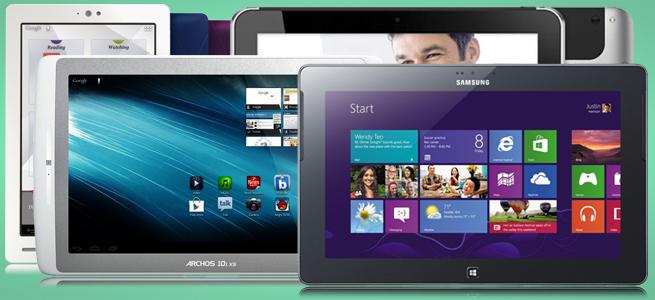
best upcoming tablets

A new report by research firm IDC says that tablet sales are growing immensely, but most of that growth is by devices running Google's Android operating system.

The market research firm International Data Group (IDC) today announced its latest findings in the market trends and performance for worldwide tablet sales, and while it’s looking good for all of the top manufacturers, Apple’s beginning to show some slip in its market share control.

The firm released data showing, after a strong Q2 performance in the tablet realm, that the iPad manufacturer was beginning to slip in market share, falling to about 50 percent of all tablet sales for Q3, down from an impressive nearly 66 percent market share in Q2. Despite this apparent loss in market share, Apple still sold 14 million tablets in Q3, while its nearest competition (Samsung) sold just 5 million. In the bigger picture, Apple is actually selling more tablets, the problem is that it’s selling these tablets up against a roaring amount of competition composed of Samsung, Amazon, HTC, and now Microsoft — which spells trouble for its Q4 market share.

The IDC also drew a comparison in Q3 performance this year with that of 2011, and that’s where the numbers get startling. While Apple’s sales have grown by about 26 percent, Samsung’s have grown by an impressive 325 percent, and Asus by 242 percent. Apple’s top dog position won’t remain if it can’t slow down competitors’ momentum. In one such attempt to stop this momentum, Apple launched the iPad Mini and iPad 4, which sold 3 million in their first weekend alone.

Despite the momentum of the Apple iPad Mini, it seems that Apple cannot change the fact it’s competing against dozens of other companies who continue to refine and build upon their own mobile user experiences. They will do everything in their power to nibble away at the iPad market share. While lawsuits have been one route to settle this, the fact remains that Apple couldn’t have certainly expected its huge, 60-70 percent market share to last much longer.

At the end of the day, we’ve seen this coming. The introduction of two more tablets today alone only confirms it. The tablet market is exploding. That means that there will be plenty of competitors coming over the next few years, and they’ll all be doing whatever they can to have a piece of the multi-billion dollar pie. While Apple is far from hurting now, the IDC’s reports are just a taste of what’s to come.


Source : http://www.digitaltrends.com/mobile/idc-reports-android-market-share-growing-apples-dwindling/

Friday, November 2, 2012

Samsung sells 3 million Galaxy Note 2 devices while it waits for the competition to catch up,

samsung galaxy note 2 hardware screen

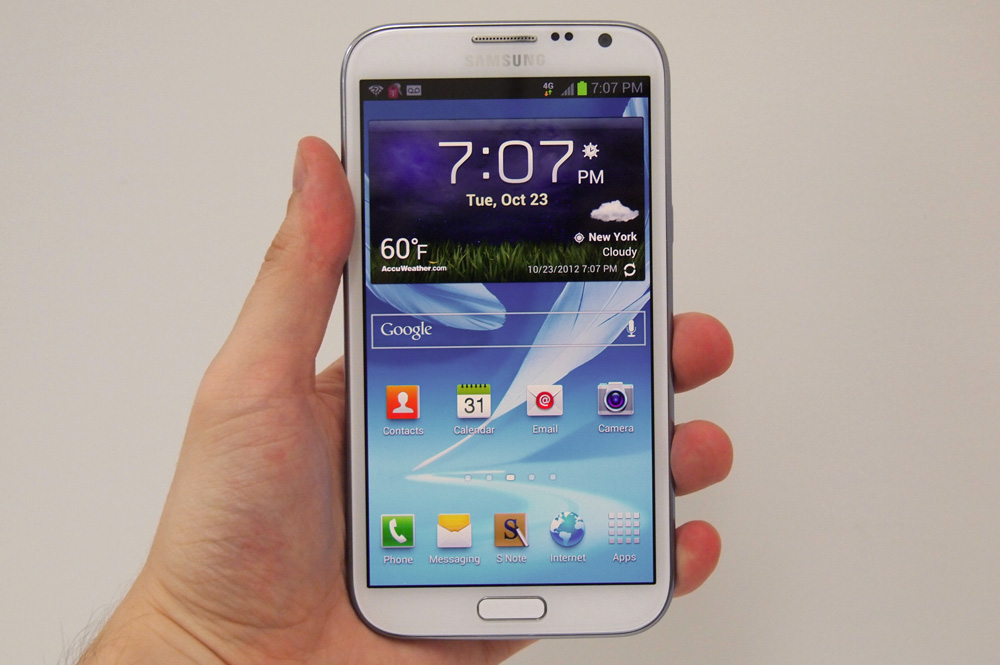
Samsung has announced that it has sold 3 million Galaxy Note 2 tablet/smartphone hybrid devices, despite it only have been on sale since September. That's a lot of sales for a niche product, so where is its competition?

Samsung must be looking at the latest sales figures for the Galaxy Note 2, which it has just made public, shaking its head and then having a good laugh. It has released a device nobody thought they wanted and critics instantly took against, then went on to sell millions of them. So why is it laughing? Because there still isn’t any competition.

The Galaxy Note 2 went on sale during September in Korea, reached the UK on October 1, and has steadily made its way to the US and other regions around the world since. According to Samsung, in 37 days it has racked up more than 3 million sales.

The original Galaxy Note arrived in September 2011, but didn’t reach 1 million sales until the end of December, so the Note 2‘s performance is impressive going, particularly when you take into account the Note 2 is still a niche device.

But is it so niche that it doesn’t need some competition? Who does Samsung think it is? Apple? Has it really produced an initially derided product that in reality, just caught other manufacturers napping?

Rumors and half-releases

It seems so, as viable alternatives to the Note 2 are few and far between, despite the product line having been on sale for more than a year. There’s the LG Optimus Vu, or the LG Intuition if you buy it from Verizon; but in its infinite wisdom, LG hasn’t bothered to give it a wide release, so its sales are unlikely to impress.

HTC’s bizarrely named J Butterfly phone has a 5-inch, 1080p screen, but it’s only available in Japan, while Panasonic has picked up its 5-inch Eluga Power and taken it home, after it failed to gain any traction in the European market. At least these have seen a release, as phones such as the LG Optimus Vu II, the Oppo Find 5, Lenovo’s S880 and the Thomson X-View 2 are all seemingly in some kind of release date limbo.

Huawei and ZTE have woken up and started talking about their own tablet/smartphone hybrid machines. For Huawei, it will be the Ascend D2 and the rumor is it will be equipped with a quad-core chip and a 720p 5-inch display. ZTE’s Nubia Z5 will have the same specification, but will add a 13-megapixel camera too. Neither are confirmed though, and both are likely to do the rounds in China before possibly going international sometime next year.

There are also a few other rumored devices with 5-inch-plus sized screens coming soon. HTC may adapt the J Butterfly for international release — possibly to be named the Droid DNA and launched on the Verizon network — while the Sony C650X, codename Odin, may arrive next year too, along with a 6-inch screen version codename Yuga. Both of these and the Droid DNA are said to have 5-inch, 1080p screens.

All this gives the Galaxy Note 2 an almost entirely open playing field until well into 2013. How many Note 2 handsets will it have gone on to sell before a true alternative finally goes on sale?


Source : http://www.digitaltrends.com/mobile/samsung-sells-3-million-galaxy-note-2-tabletsmartphone-hybrids/

Saturday, October 27, 2012

How Microsoft’s Surface just might kill the iPad

Surface killing ipad header

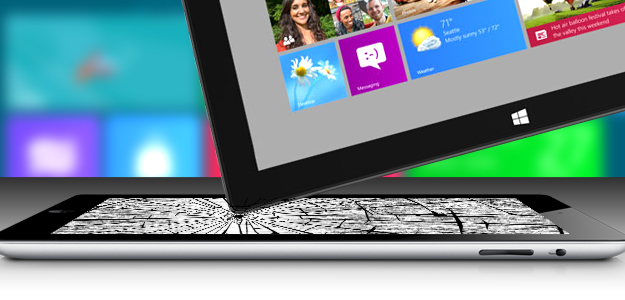
With real productivity apps, a clever keyboard cover and a well-engineered design, the Surface tablet stands a real chance of cutting into iPad sales… if Microsoft will throw enough money at the marketing.

All these “killer this” and “killer that” comparisons get out of control. Every new challenger is hyped as the killer of what came before. But sometimes, it’s true. The iPad really turned out to be a PC killer; folks bought iPads instead of buying new PCs, and that market took a pretty big hit. Apple pulled this off by building something that changed the rules for a PC, and we saw it differently.

Where the PC was about performance, the iPad was about portability. Where the PC was about mice and keyboards, the iPad opted for touch, and where the PC was generally about productivity, the iPad was about entertainment.

But it forced a hard choice that most of us didn’t really want to make: tablet or laptop? This was because the iPad was really a netbook that swapped the keyboard and mouse for a touchscreen, and the iPad’s shortcomings made it a very difficult product to live on exclusively. Most iPad buyers had to keep their PCs or buy MacBooks, and that took what was already an expensive solution and increased it.

With the Surface, Microsoft is trying to reverse the deck and do to Apple what Apple did to it.

Productivity

The Surface comes with Microsoft Office, the unchallenged, dominant desktop productivity product in the market. In fact, the ARM-based Surface actually bundles in Office, so you get productivity capability out of the box, putting it ahead of most PCs. But let’s not stop there, because unlike Apple, Microsoft isn’t being as restrictive of apps that fall into their turf. For instance, the apps can share data, so you can be looking up restaurants on one screen, and then simply click to bring up navigation, or some other app that can use the information from that initial screen. Microsoft also designed in a high degree of accuracy, so you can use a stylus, a tool typically preferred over a finger for creating art or editing pictures. These aren’t netbooks with touchscreens instead of keyboards, they are full PCs. That generally means you should be able to leave the laptop at home or in the office more often.

Designed from the inside out

Apple designs from the outside in. While this does result in beautiful products, it also results in painful problems like Antennagate, or cost problems, which may explain why the iPad mini is priced a whopping 60 percent above the rest of the market. This is also why the first iPhone, when it was presented, was pretty much a pretty brick that took months to get working. When car companies take this approach, you get rolling art that costs a fortune to maintain and isn’t very reliable.

Surface tablet microsoft windows 8Microsoft made big point of designing from the inside out. Engineers got the product properly equipped, adequately reinforced, and balanced before designers wrapped the result in a pretty case. The end result is a tablet with a screen optimized for movies and video, a balance that makes it feel lighter than it is, and a full set of features. (It’s missing a 4G radio, but because only about 10 percent of tablets have WAN radios turned on.) Microsoft even put in a fast-charge battery, so you can go from dead to near full charge in around two hours. Oh, and another in-your-face move is that while Apple uses magnetic plugs to charge for their laptops (which uniquely saves the laptop if you trip over the cord), it doesn’t appear on the iPad. The Surface does have this magnetic design. When Apple and Microsoft signed the last cross licensing agreement, Microsoft agreed not to copy the iPad. Instead, it ripped a part off the MacBook to improve its own tablet. Now that really is getting in Apple’s face.

The necessity of a keyboard

A few years back, before the iPad, Bill Gates and Steve Jobs were on stage, and Bill said something to the effect that tablets were the future for mobile PCs. Steve pretty much said that only idiots would buy a tablet, because a keyboard was simply too irreplaceable.

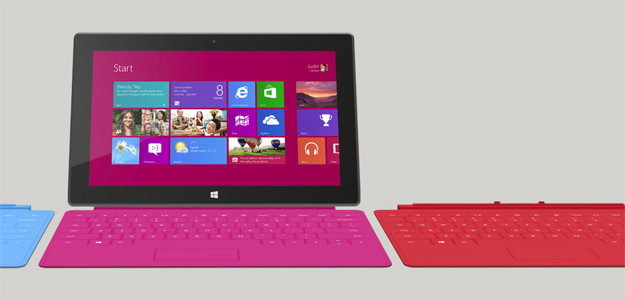
Now, both the iPad and Surface tablets have optional magnetic covers, but only Microsoft’s comes with a built-in keyboard. This makes it look like the Surface Tablet is a better presentation of Jobs’ vision than the iPad, and that is about as “in your face” as we can get.

I think it would be fun to run the clip of Steve Jobs calling tablets without keyboards stupid right after a clip of Tim Cook talking about tablets with keyboards as the ugly result of refrigerators and toasters mating, and then follow it with the number of iPad keyboards sold (the market for this has turned out to be impressively large).

Marketing is key

After seeing the cringe-worthy Olympics ads that Apple did, I’m convinced that a lot of talented people left the company after Steve Jobs passed. This gives Microsoft the potential to out-market Apple this round. Kathleen Hall’s advertising team at Microsoft is considered one of the best in the business, but Microsoft traditionally underfunds advertising. If it does that here, this potential Apple killer will follow the Zune into the dustbin of history. The initial TV ads are good, but they’ll need Apple-like seeding and sustained marketing programs (read: loads of cash) to assure this “killer” product reaches its potential. If it opens its wallet wide enough for that, Microsoft may do to Apple what Apple did to it with the iPod, iPhone and iPad, and find that revenge can be oh so sweet.


Source : http://www.digitaltrends.com/mobile/how-microsofts-surface-just-might-kill-the-ipad/

Friday, October 26, 2012

Panasonic planning European smartphone market exit, less than a year after its return

Panasonic Eluga

Panasonic could be planning to withdraw from the European smartphone market, despite only having rejoined at the beginning of the year. Poor sales are cited as the reason, but a lack of effort and financial problems could be closer to the mark.

A new report indicates Panasonic is considering withdrawing its range of phones from Europe, despite only having re-entered the market at the beginning of the year.

Having previously left Europe in 2005, so it could concentrate on sales at home, Panasonic announced its return in February, and showed off its new handsets during Mobile World Congress. A Reuters report says it wanted to sell 1.5 million phones this year, but it’s unlikely to reach this figure, prompting talk of a withdrawal.

It placed its hopes on two phones, the Eluga and the Eluga Power. The former is an Android 2.3 Gingerbread phone with a 4.3-inch touchscreen, and a 1.2GHz, dual-core Texas Instruments processor. Despite boasting a slim, 7.8mm chassis and an attractive, waterproof body, this specification barely provided the phone with the power to compete with devices from Samsung, Apple and HTC.

The Eluga Power could have been a bigger success, as it has a 5-inch, high definition touchscreen, a dual-core Snapdragon S4 chip, Android 4.0 and IP57 water and dust proofing. A true competitor to the Galaxy Note, then.

Both phones could be purchased through online retailers, but Panasonic never appeared to sign any deals with UK networks. While this isn’t quite as important as it is in the US, it would have been essential for Panasonic to re-connect with buyers and promote its new phones.

Evidence of trouble brewing came when the firm told TechRadar.com in August that it was selling its two phones “to consumers in Germany and Italy and currently does not have any plans to change this.” A report in The Times around the same time said Panasonic had put its European smartphone plans on hold, and “looked likely to abandon its mass market ambitions.”

The smartphone market is tough, but Panasonic’s potential exit could be directly related to the $7.6 billion bailout given to it by Japanese banks this month after record losses, rather than any failure to perform following its half-hearted attempt to break back into Europe.


Source : http://www.digitaltrends.com/mobile/panasonic-could-be-about-to-leave-the-european-smartphone-market/

Thursday, October 18, 2012

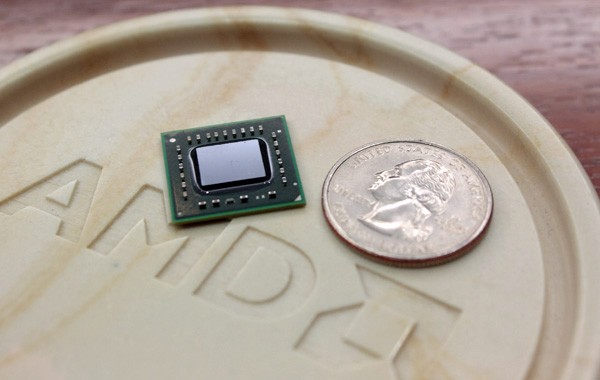
Chipmaker AMD to cut workforce by 15 percent after weak 3Q

AMD Fusion APU

Chipmaker AMD continues to struggle in the wake of a global downturn in PC sales, with the company on Thursday announcing further restructuring plans.

These are evidently troubled times for PC chipmaker Advanced Micro Devices (AMD). With revenue down in the its third quarter, and the outlook for the fourth equally grim, the Sunnyvale, California company has announced a second round of restructuring slated for the coming months that will see its workforce of 12,000 slashed by 15 percent.

Job cuts, site consolidations and other measures will see the world’s second biggest chipmaker make operational savings of some $190 million, Reuters reported on Thursday.

The chipmaker has been struggling for a number of reasons – PC sales have slumped due to a sluggish world economy where people are spending less, while those that do have the buy money for electronics are turning in ever greater numbers to tablet computers and smartphones, an area AMD has up to now failed to exploit. AMD has also been losing market share to the world’s leading chipmaker, Intel.

“The trends we knew would re-shape the industry are happening at a much faster pace than we anticipated,” AMD CEO Rory Read told analysts during a conference call following the release of the third quarter figures.

Read joined AMD in August last year and quickly set to work trying to turn the company around, saving $200 million in operating costs by shedding 10 percent of the workforce. But as this week’s news indicates, the chipmaker still has a mountain to climb to get the company back in shape.

One way would be to build an effective strategy for mobile, and quick. With PC sales not expected to see any significant growth in the coming years, and the tablet market booming, there seems only one way to go. This month AMD made a positive move with the launch of its Z-60 chip for Windows 8 tablets. With a slew of tablets running Microsoft’s new operating system expected to launch in the coming months, this is a great opportunity for AMD, although with Intel going for the same market, it’s going to be no walk in the park for the struggling chip maker.


Source : http://www.digitaltrends.com/mobile/chipmaker-amd-announces-layoffs-as-pc-sales-stumble/

Wednesday, October 17, 2012

Ambitious 50M sales target for Sony Xperia reportedly revealed

Ambitious 50M sales target for Sony Xperia reportedly revealed
Does Sony have something huge up its sleeve?

Sony has set itself some sky-high sales targets for next year, according to reports, furthering speculation that the company has something big up its sleeve.

CENS.com has posted figures, unconfirmed by Sony, stating that the Japanese giant intends to sell 50 million smartphones during the 2014 financial year.

That's the twelve month period commencing in March 2013.

For the likes of Apple and Samsung, that figure would be no big deal, but for Sony it would represent 50 per cent year-on-year growth compared with the 33 million sales it expects to achieve in fiscal year 2013.

This prospective upturn in demand would be enough to catapult Sony Mobile from the manufacturer with the seventh biggest share into third place, behind the Apple and Samsung juggernaut.

Great Odin's haven?

So what could be the catalyst that propels Sony Mobile from a middle-of-the-pack manufacturer directly onto the smartphone podium?

Could it be the Sony Xperia Odin? During the last week it has emerged that that this rumoured - and ominously-codenamed - handset may be the successor to the Xperia S and Xperia T smartphones that impressed in 2012.

Rumoured specs for the Odin include a 5-inch Full HD 1080p display, a Qualcomm S4 quad-core processor, 2GB of RAM, Android Jelly Bean and 4G LTE connectivity.

While those features, combined with Sony's acclaimed design language, would certainly be enough to put Odin up there with other high-powered Android devices, could it inspire a mad dash for Xperia products?


Source : http://www.techradar.com/news/phone-and-communications/mobile-phones/ambitious-50m-sales-target-for-sony-xperia-reportedly-revealed-1105133

Friday, September 21, 2012

Apple iPhone 5 ships, 9 countries get it today

The Apple iPhone 5 is finally hitting the shelves. Sales begin in 9 countries today, which is the biggest number for an iPhone debut so far, with 22 more lined up to join the fun on September 28.


The lucky markets to get the iPhone 5 today are the United States, Australia, Canada, France, Germany, Hong Kong, Japan, Singapore, and the United Kingdom. Pre-orders made in these countries will also be delivered starting today.

Aussie Todd, who's working for Mobilephonefinder.com.au was the first man to purchase the Apple iPhone 5, having camped in front of the Apple’s flagship Sydney store since Tuesday. Here's a video from early this morning of him entering the store .

Having recorded 2 million pre-orders within the first 24 hours of its launch, the Apple iPhone 5 is expected to ship over 10 million units by the end of the month. And considering the level of interest it is enjoying, we'd be surprised if it fails to meet that target.

On a less serious note, we got yet another spoof video of the iPhone 5. If you are in a mood for a few laughs at Apple's expense, check it out here:

Thanks, NSgameGOD, for the tip!


Source : http://www.gsmarena.com/apple_iphone_5_rollout_starts_9_countries_get_it_today-news-4840.php

Wednesday, September 12, 2012

Samsung targeting 30m sales for Galaxy S3 before 2012 ends

Samsung targeting 30m sales for Galaxy S3 before 2012 ends
Lofty targets for Samsung's flagship mobile devices

Samsung Mobile boss JK Shin wants the company's flagship Galaxy S3 smartphone to reach 30 million sales in 2012 as it prepares to go head-to-head with the iPhone 5.

The Korean giant has already amassed a whopping 20 million sales since it became available at the end of May this year.

In a bullish claim told Korean news agency Yonshap that it can add another ten million devices in the final quarter of the year, despite solid competition from a new Apple device for the first time.

In the first four months of its existence, the S3 has only had to content with a dated iPhone 4S device. Many buyers have chosen the Samsung device rather than wait for the iPhone 5.

Doubling down on the Note 2

Shin also says he expects the new Galaxy Note 2, which goes on sale in mid-October, to rack up 20 million sales worldwide, over the course of its existence.

That would double the figure achieved by the original Galaxy Note 'phablet' which surpassed the expectations of most observers.

Samsung has set itself some big targets, but the company has specialised in surpassing expectations in the last couple of years.


Source : http://www.techradar.com/news/phone-and-communications/mobile-phones/samsung-targeting-30m-sales-for-galaxy-s3-before-2012-ends-1096793

Thursday, September 6, 2012

ARM planning for ultra low-cost smartphones

ARM planning for ultra low-cost smartphones
Low cost smartphones are growing fast

ARM believes the real explosion in the smartphone market will be at the lower-end of the spec spectrum.

The strength of sales of phones like the HTC Wildfire and Orange San Francisco have shown the desire for cheaper smartphones in the west, but emerging markets across the globe would benefit from even cheaper fully functioned handsets, according to ARM.

The British company is making sure that it covers all bases in terms of the chip designs that it licences, and it believes that there is a growing need for entry level smartphones for emerging markets.

"Superphone capability increasingly gets all the headlines for the right reasons," said ARM's Laurence Bryant.

"But that means that developing a mass market entry-level smartphone is often overlooked."

European cut-downs

"In the European environment, entry level phones are $200, have 4-inch displays and capacitive screens – they are basically cut-down versions of superphones.

"But when you go into the emerging markets, then there is a desire for low cost smartphones."

Obviously ARM's most high-profile wares end up in flagship superphones like the Samsung Galaxy S3, but the company has covered its bases in terms of what it offers.

"We are successful when our partners are successful," added Bryant. "The royalty business means that we are dependent on their success.

"We'll continue to evolve and engineer new and better processors to take advantage of the newer and better handsets, but remember that as this market gets bigger you end up with a bigger spectrum of price points.

"There is a greater opportunity with more processors for phones at different price points."


Source : http://www.techradar.com/news/phone-and-communications/mobile-phones/arm-planning-for-ultra-low-cost-smartphones-1095175

Galaxy S III crosses the 20 million sales mark in 100 days

Samsung has announced that the Galaxy S III smartphone has crossed the 20 million sales mark worldwide. This feat is made more impressive by the fact that the phone managed to do so in 100 days or around three months.


In comparison, Samsung's previous popular smartphone, the Galaxy S II, managed to cross the same milestone in around nine months, taking three times as long as the Galaxy S III.

The last 10 million sales came rather rapidly, as it was only in July that we reported that the phone crossed the 10 million sales mark.

It will be interesting to see if the Galaxy S III can keep up the impressive sales growth in the coming months in lieu of competition from Apple, Nokia, Motorola, HTC and Samsung's own Galaxy Note II.

Source


Source : http://www.gsmarena.com/galaxy_s_iii_crosses_the_20_million_sales_mark_in_100_days-news-4766.php