Showing posts with label thanks. Show all posts

Thursday, November 1, 2012

AT&T, T-Mobile partner up to share networks for affected Sandy customers

cell towers

Those having trouble finding signal in the wake of Hurricane Sandy will be glad to know their coverage is now temporary expanded thanks to a T-Mobile/AT&T partnership.

Those in New York and New Jersey may have experienced a shortage in network over the past few days in the wake of Hurricane Sandy, so cell providers T-Mobile and AT&T have decided to put their rivalry aside to offer customers extra coverage. The companies have just announced that they will be joining forces to share their networks for the affected NY and NJ areas to help those having difficulty in their search of a working signal.

AT&T and T-Mobile customers would not have to sign up for any extra features to enable the functionality. Instead, they can go about using their phones as they normally would, and hopefully the added coverage will help provide a wider range of network. The shared network agreement is possible since both companies rely on similar GSM-based networks, and data charges will still be billed to the provider that user is originally under regardless of which provider allotted the signal during the duration. Theoretically, if your phone receives both the signal from AT&T and T-Mobile networks, it will run on whichever signal is stronger.

No words on when the temporary arrangement will last, but this is a compassionate act by both AT&T and T-Mobile to offer a little bit of help while they can. As of today, there is still no power in areas below 34th street in New York City. Limited public transportation service has been reinstated, though buses are not running downtown after nightfall due to the lack of street lights, making it a “dangerous condition” for commuters and local residents. Although Con Edison recently announced that approximately 225,000 customers have had their powers restored,  the rest of Manhattan will have to wait until Friday or Saturday to be back up in lights.


Source : http://www.digitaltrends.com/mobile/att-t-mobile-partner-up-to-share-network-for-affected-sandy-customers/

Monday, October 29, 2012

Jelly Bean update for HTC One X boosts performance

The Android 4.1 Jelly Bean update for the HTC One X recently started rolling out and it brings a good performance boost with it. One of our readers (thanks, Safal) sent in screenshots of some benchmarks he ran on a JB-running One X.


SunSpider • Quadrant * AnTuTu

The web browser saw the biggest boost and it’s the area where the HTC One X most needed one. The old results just weren't fit of its quad-core flagship status. A slight boost in AnTuTu and Quadrant point to an overall performance increase too.

Here's how the updated phone stacks up against its ICS-running self and other high-enders.

AnTuTu

Higher is better

  • Samsung Galaxy Note II
    13562
  • HTC One X (Tegra 3, JB)
    12932
  • Samsung Galaxy S III (JB)
    12288
  • Meizu MX 4-core
    11820
  • LG Optimus 4X HD
    11735
  • HTC One X (Tegra 3)
    11633
  • LG Optimus G
    11226

Quadrant

Higher is better

  • LG Optimus G
    7439
  • HTC One X (Tegra 3, JB)
    6822
  • HTC One X (Tegra 3)
    5952
  • Samsung Galaxy Note II
    5916
  • Samsung Galaxy S III (JB)
    5375
  • Meizu MX 4-core
    5170
  • LG Optimus 4X HD
    4814

SunSpider

Lower is better

  • Apple iPhone 5
    915
  • Samsung Galaxy Note II
    972
  • Motorola RAZR i XT890
    1059
  • HTC One X (Tegra 3, JB)
    1117
  • Samsung Galaxy S III (JB)
    1192
  • Meizu MX 4-core
    1312
  • LG Optimus G
    1353
  • LG Optimus 4X HD
    1446
  • HTC One X (Tegra 3)
    1468

The Jelly Bean-running HTC One X gets ahead of a Jelly Bean-running Samsung Galaxy S III, at least in these benchmarks, and makes it very competitive with the LG Optimus G (which has a next-gen Snapdragon S4 Pro chipset but ICS is keeping it back).

Note that we're talking about the regular One X here, not the zippier One X+ and its overclocked Tegra 3 chipset (it will launch with JB out of the box too).


Source : http://www.gsmarena.com/jelly_bean_update_for_htc_one_x_boosts_performance-news-5010.php

Wednesday, October 24, 2012

How can the EU accuse Microsoft of stifling competition, but Apple gets a pass?

How can the EU accuse Microsoft of stifling competition, but Apple gets a pass?

Microsoft may be on the hook for up to $7.4 billion thanks to a glitch that stopped offering users a choice over which browser to use, but how come an increasingly dominant Apple has escaped antitrust allegations?

Guess what? Microsoft is the baddie again.

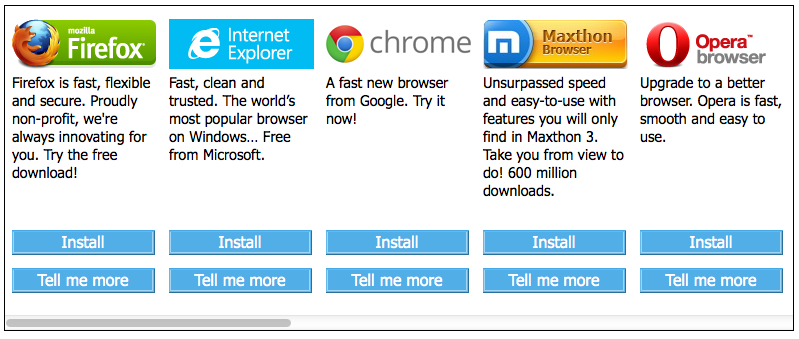
The European Commission has accused Microsoft of ignoring its legal obligations under a 2009 antitrust settlement agreement by failing to offer European users a “browser ballot.” The ballot is supposed to inform European computer users of multiple Web browsers available for the Windows platform and enable them to set a default browser that’s not Internet Explorer. But from February 2011 to July 2012, millions of European users probably did not see the required ballot, meaning Microsoft could potentially be on the hook for many billions of dollars.

What’s the big deal here? Surely most computer users are aware they can download and install any browser they like on their PC? And why is Microsoft required to present a browser ballot and un-bundle Internet Explorer, but Apple can bake its Safari browser (and WebKit) deep into both iOS and OS X without any government scrutiny? What does any of this mean for Microsoft’s tablet-centric Windows RT?

EU browser ballot

EU Browser Ballot

Windows users in Europe have been confronted with a browser choice ballot since 2009 as part of the Microsoft broader antitrust settlement with the European Union. Among other things, Microsoft was accused of abusing Window’s dominant status in the desktop operating system market to give Internet Explorer a major advantage in the browser wars. Microsoft argued bundling IE with Windows was just innovation, and it was no longer meaningful to think of Internet Explorer and Windows as separate things, but European authorities disagreed. Microsoft was required to let PC makers pre-install and ship any browser they liked with Windows (although most stuck with IE), let users uninstall IE if they liked, and offer Windows users a ballot with a choice between a wide variety of other browsers they can download and install. The browser ballot does include IE, but presents browsers randomly to avoid fights over placement. The settlement agreement requires the ballot to be offered through 2014.

Just one problem: When Microsoft released Windows 7 Service Pack 1 in February 2011, Windows stopped showing the browser ballot to many European users. Microsoft has admitted that the browser choice ballot was not displayed, blaming the trouble on a technical error that it corrected within a single business day of hearing about the problem. (However, Microsoft somehow avoided hearing about the problem for almost 18 months.) Microsoft estimated some 28 million Windows 7 PCs that should have seen the browser ballot did not, but the glitch also impacted an unstated number of systems running versions of Windows XP and Vista.

The browser ballot wasn’t the full scope of Microsoft’s settlement with the European Union, and has generally been derided as a weak solution to the larger issue of Microsoft stifling browser competition by bundling Internet Explorer with Windows. However, it is the most public example of changes Microsoft has had to make to avoid antitrust scrutiny, and it may have had an impact: according to StatCounter, Internet Explorer has been eclipsed by both Firefox and Google Chrome in Europe since the browser ballot went into effect.

Microsoft’s settlement with the EU is legally binding. If Microsoft is found to have violated the terms of that settlement, the company could be on the hook for as much as 10 percent of its global annual revenue. For Microsoft’s 2012 fiscal year, that would total up to almost $7.4 billion. The EU could also decide to impose additional requirements on how Microsoft operates within the European Union. For Microsoft, the stakes are high. Microsoft has four weeks to respond and can request an oral hearing. However, the EU will almost certainly see calls to give Microsoft more than a slap on the wrist.

“If companies enter into commitments, they must do what they have committed to do or face the consequences,” noted European Commission President Joaquín Almunia, in a statement. “Companies should be deterred from any temptation to renege on their promises or even to neglect their duties.”

What about Apple?

Whenever we cover news about Microsoft’s legal obligations and what regulatory agencies like the Justice Department and the European Commission have to say about Windows, Internet Explorer, Windows Media Player, and other products, we always get questions about Apple. Why doesn’t Apple have to serve up a browser ballot in OS X? How can Apple bake its Safari browser into iOS (and make it perform better than any third-party browser) without antitrust authorities crying foul? Basically: Why does Microsoft get a hard time while Apple gets a free ride?

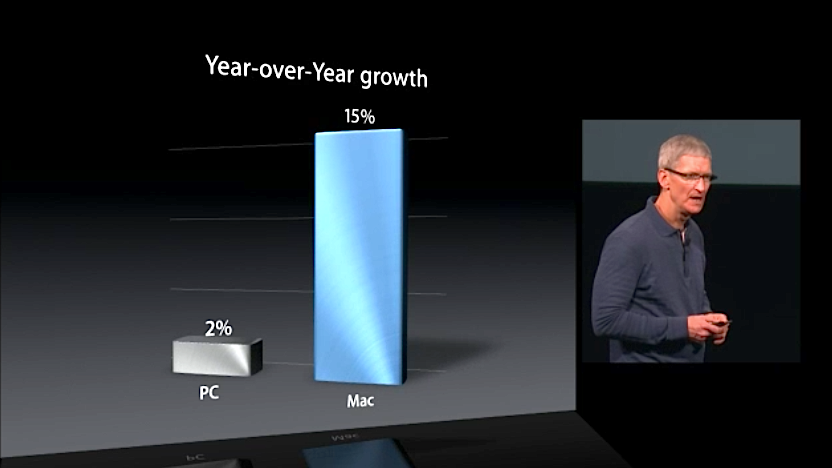
Apple CEO Tim Cook Mac Market Growth Oct 2012

It’s easy to understand why folks ask these questions. After all, at Apple’s high-profile media event yesterday, Apple CEO Tim Cook lauded Apple’s performance in the PC market, noting that Apple not only makes the number one desktop and notebook computers in the U.S. market, but also is seeing its computer business grow about seven times faster than the rest of the PC industry — where the PC world will be lucky to see 2 percent growth for 2012, Apple is looking at 15 percent.

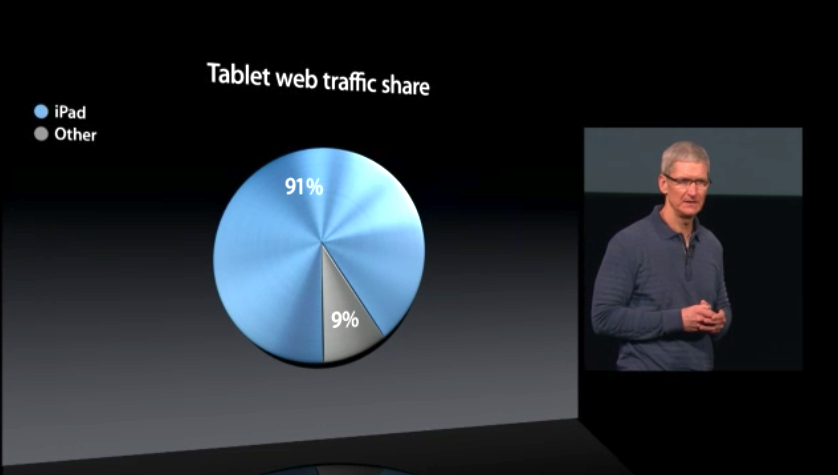
Apple CEO Tim Cook Tablet Web Traffic Oct 2012

And what about Apple’s dominance in other markets? Firms like ABI Research and IHS iSuppli put the iPad’s share of the tablet market at nearly 70 percent for the second quarter of 2012. And since the EU is so concerned about Web browsers, Apple’s CEO Tim Cook trumpeted that iPads are responsible for more than 90 percent of Web browsing traffic from tablets. Why aren’t regulators crying foul over Apple baking Safari so deeply into iOS? Apple even makes it more difficult for third-party iOS browser to compete by consistently rating competing browsers 17+ in the App Store and barring them from using the souped-up Nitro JavaScript engine Safari relies on.

Isn’t Apple’s curated approach to Macs and the iOS ecosystem just another way of saying Apple locks out competition?

Why Apple isn’t getting scrutiny

The reasons Apple skates clear of antitrust scrutiny for its Mac and iOS lines have to do with market share and how the company conducts business.

On the desktop and notebook computer side, Apple may be seeing its computer business grow at a faster rate than the overall PC market, but Apple is not a dominant player. Recent figures from IDC and Gartner don’t even put Apple in the top five PC makers worldwide, and Gartner places Apple third in the U.S. market with a 13.6 percent share. Apple may have the number one desktop and notebook computers in the U.S. market, but it shipped fewer than half the number of computers as HP. What’s more, these figures represent near-historic highs for Apple; it’s tough to argue Apple has somehow been abusing a dominant position in the PC market and needs to be reined in by governments. Moreover, since Apple doesn’t license its operating system, Apple’s computer sales are also representative of OS X’s share of the desktop market. The vast majority of all computers sold from other manufacturers are running Windows — so Microsoft remains the dominant player in the operating systems market.

On the mobile side, the success of the iPhone and the iPad means Apple has a much stronger presence…but guess what? Apple isn’t the market leader in mobile either — that’s Android. According to IDC, in the second quarter of 2012 Android accounted for 68.1 percent of the worldwide smartphone market; Kantar Worldpanel Comtech recently found Android accounted for more than 60 percent of the global smartphone market, and two-thirds of the European mobile market. The iPad does currently account for 70 percent of the tablet market, but remember the iPad got there first, and the market is new enough that being first still carries weight. Amazon, Google, and Samsung are all aggressively marketing Android-based tablets, and Microsoft is about to enter the market with its Surface products.

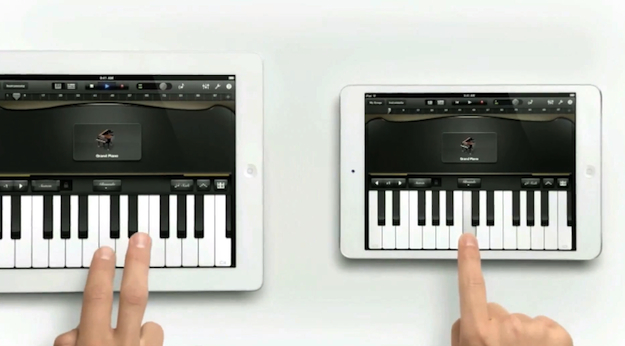
iPad mini ad

But even if the iPad continues to be the dominant tablet line for years to come — and regulators eventually decide smartphones and tablets are separate markets — Apple likely will still not be subject to the kind of antitrust scrutiny visited on Microsoft over the years. Microsoft drew the ire of regulators not just for having a dominant position in the desktop operating system market (that’s not illegal, and neither is a monopoly), but for abusing that position. Among other things, Microsoft cut deals with computer makers to dictate what software could and could not be included on new systems, fiddled with its APIs so Internet Explorer and other Microsoft applications would have an inherent advantage over competitors, and used its Windows monopoly as a distribution channel for Internet Explorer with the intention of wiping out competitors like Netscape.

With one possible exception, Apple isn’t capable of committing these abuses. Apple doesn’t license its operating system, so it can’t strong arm partners who make iOS devices — there aren’t any. Similarly, with Android the dominant mobile operating system, it’s difficult to argue Apple deciding to bundle capabilities into iOS — like Photo Stream and iCloud, for instance — constitutes an abuse. Competitors can (and are) offering similar services for iOS (Dropbox, Instagram, anyone?) and are free to develop for Android, Windows Phone, Windows RT, or even BlackBerry or Symbian if they like.

The one antitrust concern in iOS might be the built-in Safari Web browser. Apple does permit third-party browsers for iOS — Google Chrome Opera Mini, Atomic, Dolphin, and (heck!) iCab are available for iPhone and iPad, although Mozilla recently “retired” Firefox Home. But Safari outperforms the competition by being able to tap into the high-performance just-in-time (JIT) compiler in the Nitro Javascript engine. Although Web apps got the same capability in iOS 5, third-party Web browsers have to rely on a slower JavaScript engine or (in Opera’s case) outsource Javascript to a remote service. Apple also won’t approve a browser that includes a JIT compiler of its own. Apple claims these restrictions are all about security — iOS is more secure than Windows, OS X, and Android in this regard — and Apple gives Safari a pass because Apple can perform rigorous QA on it as part of iOS. However, is does mean that Safari has an inherent advantage on iOS that competitors can’t match. That’s eerily reminiscent of the API adjustments Microsoft made to favor Internet Explorer on Windows.

What might happen to Microsoft?

Steve Ballmer Microsoft

Although Microsoft is undoubtedly in hot water for breaking the browser ballots (and thus the terms of its settlement with the European Commission), few expect the company will be on the hook for billions of dollars over the issue.

Microsoft doesn’t seem to be slithering out of its mistake. “Although this was the result of a technical error, we take responsibility for what happened, and we are strengthening our internal procedures to help ensure something like this cannot happen again,” the company said in a statement. Microsoft has suggested it be required to display the browser choice ballot for an additional 15 months, which would mean European Windows users would see a browser choice screen through at least 2015. The European Commission hasn’t commented on that suggestion, or any possible sanctions against Microsoft.

Looking forward, Microsoft might face difficulties with Windows RT. When Microsoft ships its ARM operating system this week, it will support one and only one Web browser: Internet Explorer 10. Microsoft is denying third-party developers access to components that would be necessary to create a competitive browser on the platform: not just a JIT Javascript compiler, but lots of other internals that just aren’t accessible to Windows RT apps. Microsoft’s reasons for this decision are very similar to Apple’s reasons for denying access to the Nitro engine: stability and security.

However, Microsoft is also unlikely to see any antitrust action over browsers in Windows RT — at least, not anytime soon. Right now, Windows RT accounts for essentially zero percent of the mobile or tablet market, so Microsoft can’t possibly be abusing a dominant position. Competitors might argue Microsoft’s existing antitrust settlements in the United States and the European Union should be extended to Windows RT, but that’s also difficult. In the United States, federal oversight of Microsoft formally concluded in mid-2011. Oversight in the EU is still ongoing — hence the scuffle over the browser ballot — and terms of the settlement could conceivably be applied to ARM-based devices running Windows RT. However, regulators will probably wait to see if Windows RT goes anywhere. After all, Windows Phone has been out for two years, and nobody is worried about Microsoft abusing its monopoly power there.


Source : http://www.digitaltrends.com/mobile/how-can-the-eu-come-after-microsoft-for-anticompetiveness-but-apple-gets-a-pass/

Friday, October 19, 2012

Sony C6603 'Yuga' camera sample leaks, hints at a 13MP sensor

The Sony Yuga had its display and quad-core Krait internals leaked in the not so distant past, and now its camera draws our attention thanks to a leaked Picasa sample photo.

The EXIF data of the photo hints that Sony will be using a 13MP Exmor RS CMOS sensor with f/2.4 aperture. Also, the Android firmware is 10.1.A.0.270, which is said to represent Android 4.1.1 Jelly Bean.

Other than that, the photo doesn't tell us much about Sony's future flagship Android device. The Yuga and Odin are expected to be Sony's flagship models for 2013 and might be unveiled at the Mobile World Congress in Barcelona at the end of February 2013.

Source | Via


Source : http://www.gsmarena.com/sony_c6603_yuga_camera_sample_leaks_hints_at_a_13mp_exmor-news-4973.php

Thursday, October 18, 2012

Will Lightt fade in Instagram’s shadow or could its future make it more than just another image app?

lightt web site

Lightt is a new take on content sharing, producing animated GIF-like video clips of the world as you're seeing it. Will the platform prosper thanks to a future integration or is it doomed to fall on Instagram's sword?

You can’t launch a new photo-sharing app without being called an Instagram challenger, and the unfortunate label has not escaped Lightt. The new app launched yesterday, revealing a new take on the photo feed. Instead of creating a network based on stills and filters, Lightt takes 10-second videos and plays them back fast-forwarded with no sound. Will Lightt face the same fate as the amibitious yet ill-fated Color, or will its future integration with Google’s Project Glass keep it safe from being buried in the underbelly of the App Store?

How Lightt works

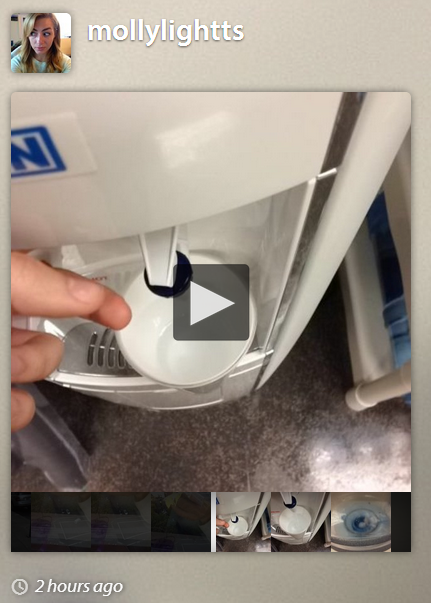
Your Lightt sign-up experience is nothing new: Download the app, create your account, idly flip through the initial instructions pointing out icons and what they do, and you’re off. Perhaps the strangest part of the whole thing is your profile picture: Instead of letting you pull a still from your gallery or even take a photo, you create a short video that Lightt speeds up and turns into your avatar. It’s disorienting… and honestly, the result is a little strange – it’s like one of those haunted house paintings where the eyes follow you.

light web viewerAfter that, you should just jump in and start using Lightt. You hit the center camera icon to take quick videos. You can take one (10 seconds), or keep hitting the icon in order to continue to capture the scene – or what Lightt calls a highlight (“A highlight is a burst of pictures that captures about 10 seconds of time in one tap. Your highlights upload immediately and play back faster than real life, like the speed of our memories,” per the Lightt blog).

You can share photos to Facebook or Twitter – thought realize that they aren’t grouped together and you’ll just be posting continuous blocks of this content. From there, you’re sent to a Web viewer, but this is the only way to see your media via desktop, to share it out, and then hit the link. There aren’t any embed options right now, either, so you can’t host your Lightt content on your Tumblr, WordPress, or any other blog yet. 

The app has a home page, which is segmented by your feed, a “happening now” feed, and a “featured” feed. You can also navigate to your own page, your friends list, and an activity bar. Users are able to leave comments or like highlights – and you can strangely share other users’ highlights to your own social networks.

mobile screenshots

The Color connection

If you immediately started playing with Lightt or looking through the available feed and thought things seemed familiar, you’re not the only one: My first thought is that this is  exactly what Color tried to do. When the beleaguered startup first launched, it had a rather simple photo-sharing mechanism (no filters, no editing, no video, no captions, just point and capture) but did introduce what was a rather revolutionary location-aware social network.

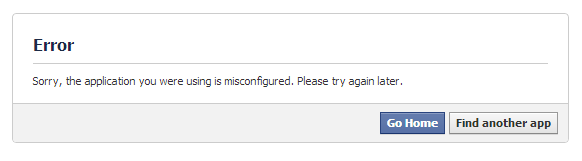
Eventually Color pivoted into a video streaming application and became a Facebook Timeline app. The idea was to “show the world what you’re up to,” and users with the app would get an invitation to “visit” the recorded moment in real-time via Facebook. However, when I tried to use the Color app, I recieved this notification from Facebook.

facebook color misconfigured

This, on top of the mountain of rumors that Color is not long for this world (which, honestly, could end up meaning very little if the company is indeed acquired by Apple, not to mention the money it stands to make off patents), all points to the fact that the app wasn’t a hit with users.

And there are some similarities between Color and Lightt. There’s the fact that they are both image, media-focused apps. But that’s not exactly a novelty anymore (you could create a daily newsletter full of these app launches). Then there’s the location element; Color bet heavy on this and ended up scaring the crap out of users. Lightt is using location as well, but it’s not nearly as important to the app (you can choose to have location settings turned on or off, though Lightt will prompt you to give up the data so it can auto tag the vicinity of your content).

The big difference between the two apps is the fact that Lightt has a much more user-friendly, explanatory interface. Color was without words, without explanation, without guidance; you were thrown into this entirely new and unfamiliar territory with no gentle hand to lead you through it. Lightt didn’t make this mistake. And in Color’s defense, the team never thought they’d get the type of early fundraising or attention that they did – the startup has been honest about that fact that mistakes were made.

Don’t look a GIF horse in the mouth

While Lightt falls squarely into the photo-sharing genre, the media it creates is actually far more similar to apps like Cinemagram or Gifture, which take your short-form videos and turn them into animated GIFs.

[Via cinemagr.am]

Lightt sees the result as more of a visual timeline of your activity, but the rest of us are surely going to see the sped-up, stop-motion effect as an animated GIF. This medium has at once become the pride and joy as well as the scourge of the Internet. Twitter has fiercely fought animated GIF avatars (you’re no longer able to upload them to the site), and there’s a quiet but budding movement supporting cleaner Web design that eschews the ostentatious, attention-demanding art form. Despite any of this, they are assuredly the Web’s bread and butter, and it’s hardly an exaggeration to say Tumblr is bursting at the seams with the stuff.

Animated GIFs are the Internet’s comeback kid: After a brief love affair with them in the 90s, they died down for whatever reason. And now, they’re back with a vengeance.

However, while there are a handful of apps tapping into this popularity, they aren’t able to produce as high quality of results. The limitations of working on a small screen with nothing but your hands and the video you can capture with a smartphone means your creations probably won’t enjoy to the viral success many Web animated GIFs do.

While Lightt makes the process far easier (anyone who’s tried Cinemagram, Kinotopic, or Gifture knows the inaccuracy and frustration of coloring in the desired moving segment of media with your finger), the effect isn’t quite an animated GIF. Not that Lightt wants it to be – but maybe we want it to be.  The jury is still out on how well we’ll ever be able to make these with mobile devices, or whether we even want to, but what you’re able to make with Lightt right now sort of feels like a half-hearted effort. 

Instagram, you’re safe 

Instagram killer, Lightt is not – but the most interesting part about the app is where it’s going, which is to Google Glasses. This is where Lightt could make sense; walking around, holding my iPhone up while I record a scene still just feels awkward. That’s the beauty of Instagram: It’s instant. It’s a quickly captured moment. Lightt is still a little too much work, but the minute you implement it into something I’m wearing, the results could be stunning.

For the time being, the actual quality of what you create using Lightt isn’t up to par – Instagrams, and photo apps for stills in general – are still much prettier to look at. Video is a trickier beast, it’s a much more complicated process under-the-hood. Which is why time will only tell if Lightt can bring something compelling to the table when it hits Google Glasses. 


Source : http://www.digitaltrends.com/mobile/lightt-launch/

Monday, October 15, 2012

This cellphone makes a better use of a sugar rush than you ever will

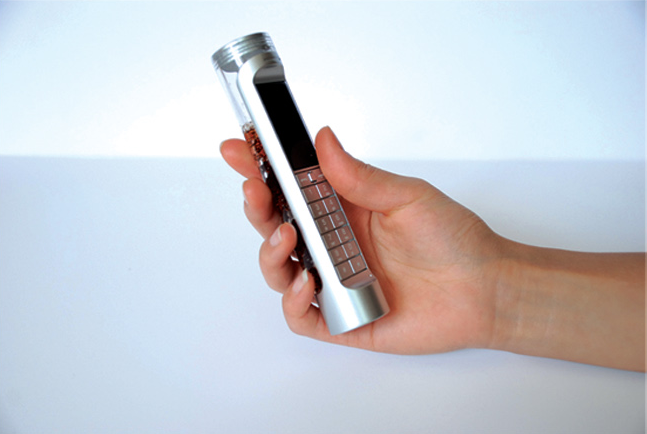
A concept phone utilizes sugary drinks as the power source for a cellphone, making the battery biodegradable.

I’ve been trying to quit soda for the past few weeks thanks to too many hours on Reddit and constant streams of photos that displayed how much sugar was in a can of Coke. As a result, there are untouched cans of soda sitting my fridge with no one to claim them, but it felt irresponsible if I just gave them to the kids next door. If only this eco-friendly concept cellphone existed. The design, by China-based Daizi Zheng, claims that a Nokia phone could be powered solely on sugary drinks. Now there’s an interesting use of leftover Coke that’s much more excitable than cleaning the rust off my pennies.

According to Zheng’s thesis, the phone would contain a chemical board that can form a reaction to utilize sugar enzymes and carbohydrates and convert them into electric power. The phone would work with most sugary drinks; in fact, more sugar means longer battery life. When the sugar and carbs are all used up as battery, you’re left over with a liquid that’s biodegradable, and the phone can be cleaned, refilled, and reused once again.

“Bio-batteries are fully biodegradable and have, on a single charge, a potential life-span three to four times longer than conventional lithium batteries,” Zheng writes on his website. Keep in mind, however, this design would be used with a basic, barebone phone, so no sticky touchscreen and apps here.

Coke powered nokia phone leftover liquidSince the design aims to be environmentally-friendly, it’s probably better to use straight sugar water than Coke or other packaged sodas, considering how they tend come in plastic bottles or cans — both of which are already pretty expensive to recycle. Still, it would be cool if the phone doubled as a drink bottle so you can choose to either gulp your soda or conserve it for more phone battery. This rationale would force the user to pick between drinking an unhealthy beverage or forgo it for the sake of your gadget’s usability. However, since the sugar disappears as the phone uses up the battery, it is unlikely that the soda you do end up drinking from the phone would taste any good. We also have to wonder if the fizzy noise would interfere with your sugar high calls.

It’s an interesting approach at multi-purposing a notorious food item, and such a gadget would make a neat science experiment for kids to learn about the wonders (and potential harms) of what sugary drinks means to them, and the chemical world.


Source : http://www.digitaltrends.com/mobile/coke-powered-cellphone-concept/

Friday, October 12, 2012

Has the first BB10 L-Series handset been leaked?

Has the first BB10 L-Series handset been leaked?
Is this the first, fully touchscreen BB10 device?

The first, fully touch-screen BlackBerry 10 device may just have been caught in the wild thanks to a cheeky Mexican video.

Spotted by the guys over at SlashGear, the video comes courtesy of holatelcel, and features a well suited chap running through some of the key features we witnessed in our recent hands on BlackBerry 10 review.

The handset itself, thought to belong to the new "L-Series" range, looks similar to the Dev Alpha B device we got our mitts on earlier this week, however the corners are more rounded, and the bezel above and below the screen may have shrunk a little.

It also seems to follow the design of the handset which we saw in a video a few weeks ago, which claimed to be an internal promo video for RIM.

Little is known

RIM has stayed pretty quiet on details of its BlackBerry 10 devices, telling us that it plans to launch two BB10 handsets in the first quarter of 2013.

The first will be a fully touchscreen device, which is expected fall into the "L-Series" category, and the second, sporting the firm's well known QWERTY keyboard, could be the first in a range called the "N-series".

We've contacted RIM about this video and we'll update this article once we hear back.

YouTube : http://player.vimeo.com/video/51254456
Source : http://www.techradar.com/news/phone-and-communications/mobile-phones/has-the-first-bb10-l-series-handset-been-leaked-1104046

Wednesday, October 10, 2012

Quality-control crackdown causing iPhone 5 supply issues, Apple shares knocked

iPhone 5 Front and Rear

There are no worries about consumer demand for the new iPhone 5 – Apple is selling millions of them. The problem, thanks to its popularity, is on the supply side. However, quality-control issues and component shortages are not helping the situation.

When the new iPhone 5 started landing in people’s hands last month, it didn’t take long before forums started to fill with comments from disgruntled customers complaining that their handset was delivered with scuffs and scratches on its anodized aluminum back.

Its predecessor, the 4S, had a glass back so didn’t suffer from the same problem. The new aluminum design has enabled Apple to make its popular smartphone thinner and lighter than any earlier iteration, but it seems the soft material also makes it more susceptible to damage.

Quality control

It appears the issue has caused something of a stir behind the scenes at Apple, with a Bloomberg report Wednesday suggesting the supply shortage of the new handset is in part down to a quality-control crackdown by the phone’s manufacturer, Foxconn.

Foxconn is reportedly working hard to limit the number of Apple smartphones leaving its plants with scuffs and scratches, with Bloomberg citing “a person familiar with the matter” as its source.

“Senior Apple managers told executives at Foxconn near the end of September to tighten production standards,” the report claims.

A shortage of iPhone 5 components is also proving to be a problem for the Cupertino company, contributing to manufacturing challenges. As a result, RBC Capital Markets analysts have reevaluated their iPhone 5 sales forecast for the December quarter, cutting it to 49 million units from 57 million.

Share price drop

Worries about supply appear to have been a contributory factor in Apple’s falling share price, with $60 billion wiped off the company’s market value since the handset’s launch. On Tuesday shares closed at $635.85, significantly down from the record $700+ value they reached only a couple of weeks ago.

Demand for the iPhone 5 has admittedly been incredibly strong, with Apple announcing a record five million orders in its first three days of sales. Although a wait is always expected if you order an iPhone online soon after launch (currently 3-4 weeks), it seems the supply problems are being compounded by the quality-control issue and component shortages.

Scuffs

Handsets turning up with scuffs and marks were reported right from the start with the iPhone 5. One unhappy owner fired off an email to Apple’s marketing chief, Phil Schiller, and received the following response:

“Any aluminum product may scratch or chip with use, exposing its natural silver color. That is normal,” Schiller wrote. Trouble is, some of the devices have been arriving damaged.

Until the initial rush to buy the new handset dies down and Apple gets on top of the current supply issues, a certain degree of patience is required if you’re thinking about ordering an iPhone 5 anytime soon. As for Apple’s share value, no doubt that’ll bounce back once (if) it unveils the iPad Mini later this month.


Source : http://www.digitaltrends.com/mobile/quality-control-crackdown-causing-iphone-5-supply-issues/

Wednesday, September 26, 2012

‘Secret’ update adds Netflix remote controls to your smartphone

Netflix PlayStation 3

Too lazy to use a PlayStation 3 controller? Now thanks to an unheralded update, you can control the console's Netflix app via your phone.

An update recently hit the iOS and Android iterations of the Netflix app that seemed to simply offer stability improvements and boosts to the program’s overall functionality. That’s always welcome, but this particular update also included a new feature for the app that, for whatever reason, the developers at Netflix completely failed to mention: Specifically, this update allows users to control the PlayStation 3′s Netflix app from the comfort of their mobile phone of choice.

Here’s how it works: Assuming you have all the necessary hardware (a PlayStation 3, iOS or Android phone, and a wireless, Internet-enabled network), you simply start the Netflix app on your mobile phone as well as the PS3 version of the app, select a video on your phone, then choose whether you’d rather watch the program on your handheld or on the PlayStation 3. Obviously this only works as long as the two devices are connected by the same wireless network, but assuming you can manage that it’s quite simple to use your iPhone or Android device as a makeshift remote control.

More crucially, it’s also far more practical than using the PlayStation 3′s Netflix app as it was originally designed. Though the home console iterations of Netflix are functional and allow you to watch the service’s many streaming programs on your local HDTV, they lack truly robust search and account management functions. The iOS/Android app however, is far more akin to the PC/Mac version of Netflix and makes searching through the company’s thousands of movies and TV shows as simple as swiping your finger or tapping out a few characters to prompt a text search.

The video embedded at the bottom of this post comes courtesy of Engadget, and since the developers of the Netflix app made no mention of this new feature in any of the update’s official documentation, it is the first anyone heard of the extra functionality. As you can see in the clip, it’s very simple, and seems like the kind of thing Netflix would want to promote, so we really can’t come up with any solid reason why it was such a stealthy addition. So far we’ve heard no reports of instability in this new feature causing massive issues with people attempting to watch their favorite shows, so while we enjoy the newly communicative relationship between our phones and PlayStation 3s, we’ll have to continue wondering why Netflix never mentioned this aspect of the update.


Source : http://www.digitaltrends.com/mobile/secret-update-adds-netflix-remote-controls-to-your-smartphone/

Tuesday, September 25, 2012

RIM execs serenade BlackBerry developers with ‘Keep on Loving You’ music video

Has Research In Motion finally lost the plot? Or is it merely showing everyone it has a sense of humor? A new music video starring company executives thanks BlackBerry developers for sticking with its mobile platform, promising better days ahead.

Research In Motion (RIM) may be experiencing the toughest time in its 28-year history, but it hasn’t forgotten how to have bit of fun.

At its BlackBerry Jam developer conference in San Jose on Tuesday, the mobile company decided to entertain its attendees – or possibly horrify a few of them – with a slickly-produced music video featuring three RIM executives singing a developer-focused version of the classic REO Speedwagon hit, Keep on Loving You.

The video is apparently RIM’s way of expressing its appreciation for developers that have stuck with the BlackBerry platform.

“This video is a thank you to all developers supporting the BlackBerry platform. Your Developer Relations, Alliance and Developer Tools teams appreciate your enthusiasm and loyalty! We’re Going To Keep On Loving You,” reads the accompanying blurb on YouTube.

The three-and-a-half-minute production kicks off with the lyrics:

We’ve all seen these are challenging times, baby,

‘Cuz we’re in transition.

A whole new mobile computing platform may be

one tough proposition.

So don’t be misled,

The launch is just ahead,

We’ll have BlackBerry 10 both in full touch and QWERTY editions.

In a message to BlackBerry developers, vocalist Alec Saunders – RIM’s VP of developer relations and ecosystem – sings, “We’re gonna keep on loving you,” at the same time reassuring them that “our updated SDK is really cool.”

Check it out at the end of this piece and let us know: epic fail or good laugh?

Besides serenading the developers, RIM is also hoping to hold on to existing ones, or even attract new ones, by offering $10,000 per BB10 app submitted to its app store, provided it meets certain quality requirements.

The video was screened on the same day that RIM boss Thorsten Heins announced some better news for the Ontario-based company. Against expectations, BlackBerry subscriber numbers rose to 80 million for the quarter ending September, an increase of two million from earlier this year.

RIM’s future rests heavily on its next mobile operating system, BB10, which is set to launch early next year, together with a number of new handsets. Hopefully the Keep On Loving You video released on Tuesday won’t have scared off too many developers, and the phones can come to market with plenty of BB10 apps to choose from.


Source : http://www.digitaltrends.com/mobile/rim-execs-serenade-blackberry-developers-with-music-video/

Friday, September 7, 2012

Report: Expect 6 iPhone 5s priced to match iPhone 4S

Report: Expect 6 iPhone 5s priced to match iPhone 4S
N42, aka iPhone 5, blasts off next week

Apple has all but officially confirmed the launch of its iPhone 5 Sept. 12, thanks largely to a "5" hiding in plain sight on its invites to an event that day.

While we can expect the next-gen iPhone to hold the quintuplet moniker, Apple has reportedly been referring to the iOS handset as "N42."

No one will call the iPhone 5 by its company codename, however it's important to note the reference when talking about how much the device is going to cost you at the register.

According to a published report, the iPhone N42's (aka the iPhone 5's) price points mirror those of the iPhone 4S.

Dollars, colors and GBs

Taken from a "well-known U.S. retail chain," the iPhone 5 should be priced in the U.S. as follows:

  • N42A-USA: $199
  • N42B-USA: $199
  • N42A-USA: $299
  • N42B-USA: $299
  • N42A-USA: $399
  • N42B-USA: $399

"A" and "B" indicate black and white. The price jumps are presumably related to 16GB, 32GB and 64GB variations, as is the case with the iPhone 4S on a two year deal.

TechRadar predicted this 4S-based pricing scheme, citing the likelihood the phone will probably be an evolutionary step in the iPhone line, a la the Siri-packing smartphone.

If we see some revolutionary technology next Wednesday, then perhaps these prices will be rendered completely bogus, but from the leaks we've seen, it's likely the phone is a retooled though not necessarily groundbreaking device.

Apple might offer a 128GB version, though you can expect to pay a load more for that capacity.

Order up

Sources speaking with 9to5Mac say pre-ordering should start soon after the iPhone 5's unveiling, though many international customers will have to wait to get them as shipping won't begin immediately.

New, iPhone 5-specific accessories like cables, cases and adapters (pluggable into an 8- or 9-pin dock, of course) are also reportedly set to ship with what will surely be a hot commodity.

Until next week, check out TechRadar's "New iPhone 5 release date, news and rumours" page and tune in Wednesday to see how close - or completely off the mark - we were in our predictions.


Source : http://www.techradar.com/news/phone-and-communications/mobile-phones/report-expect-6-iphone-5s-priced-to-match-iphone-4s-1095607