Wednesday, November 14, 2012

Square now processing $10 billion in payments annually

Square now processing $10 billion in payments annually
Jack Dorsey can do the Dr. Evil impression 10 times over

Square, the mobile payments startup founded by Jack Dorsey, is now processing $10 billion in payments annually.

Since Dorsey is also the co-founder of Twitter, the announcement of this milestone came not from a press release, but from a tweet.

"Today we're processing $10 billion in payments annually, an amazing and humbling milestone," said Square, Inc. on Twitter.

Rounding out the 140 character limit, the company credited its users, saying, "To the small businesses growing with Square, thank you."

Square talks

Square spokeswoman Faryl Ury added to that small business-focused sentiment.

"We've seen growth across the board," Ury told TechRadar, "from small food trucks and coffee shops, to retail stores and larger brick and mortar merchants."

A jolt expected from Starbucks

While Square may have a growing user base of small and medium-sized businesses, it's about to add a much larger client with 7,000 national stores: Starbucks.

Starbucks is scheduled to start accepting the Square Wallet this month following the coffeehouse chain's $25 million investment in the startup.

Square faces growing competition from PayPal Here, Intuit GoPayment and Groupon Payments, all of which offer slightly more affordable transaction fees.

However, the company remains the mobile payments leader.

Two months ago, Square reached $8 billion payments processed annually. With the impending addition of Starbucks, the "humbling milestone" tweets should keep on coming.


Source : http://www.techradar.com/news/mobile-computing/square-now-processing-10-billion-in-payments-annually-1112684

Square now processing $10 billion in payments annually

Square now processing $10 billion in payments annually
Jack Dorsey can do the Dr. Evil impression 10 times over

Square, the mobile payments startup founded by Jack Dorsey, is now processing $10 billion (UK£6.3 billion, AUD$965,158,000) in payments annually.

Since Dorsey is also the co-founder of Twitter, the announcement of this milestone came not from a press release, but from a tweet.

"Today we're processing $10B in payments annually, an amazing and humbling milestone," said Square, Inc. on Twitter.

Rounding out the 140 character limit, the company credited its users, saying, "To the small businesses growing with Square, thank you."

Square spokeswoman Faryl Ury added to that small business-focused sentiment.

"We've seen growth across the board," Ury told TechRadar, "from small food trucks and coffee shops, to retail stores and larger brick and mortar merchants."

A jolt expected from Starbucks

While Square may have a growing user base of small and medium-sized businesses, it's about to add a much larger client with 7,000 stores: Starbucks.

Starbucks is scheduled to start accepting the Square Wallet this month following the coffeehouse chain's $25 million (UK£15.7 million, AUD$24,128,950) investment in the startup.

Square faces growing competition from PayPal Here, Intuit GoPayment, and Groupon Payments, all of which offer slightly more affordable transaction fees.

However, the company remains the mobile payments leader.

Two months ago, Square reached $8 billion payments processed annually. With the impending addition of Starbucks, the "humbling milestone" tweets should keep on coming.


Source : http://www.techradar.com/news/phone-and-communications/mobile-phones/square-now-processing-10-billion-in-payments-annually-1112684

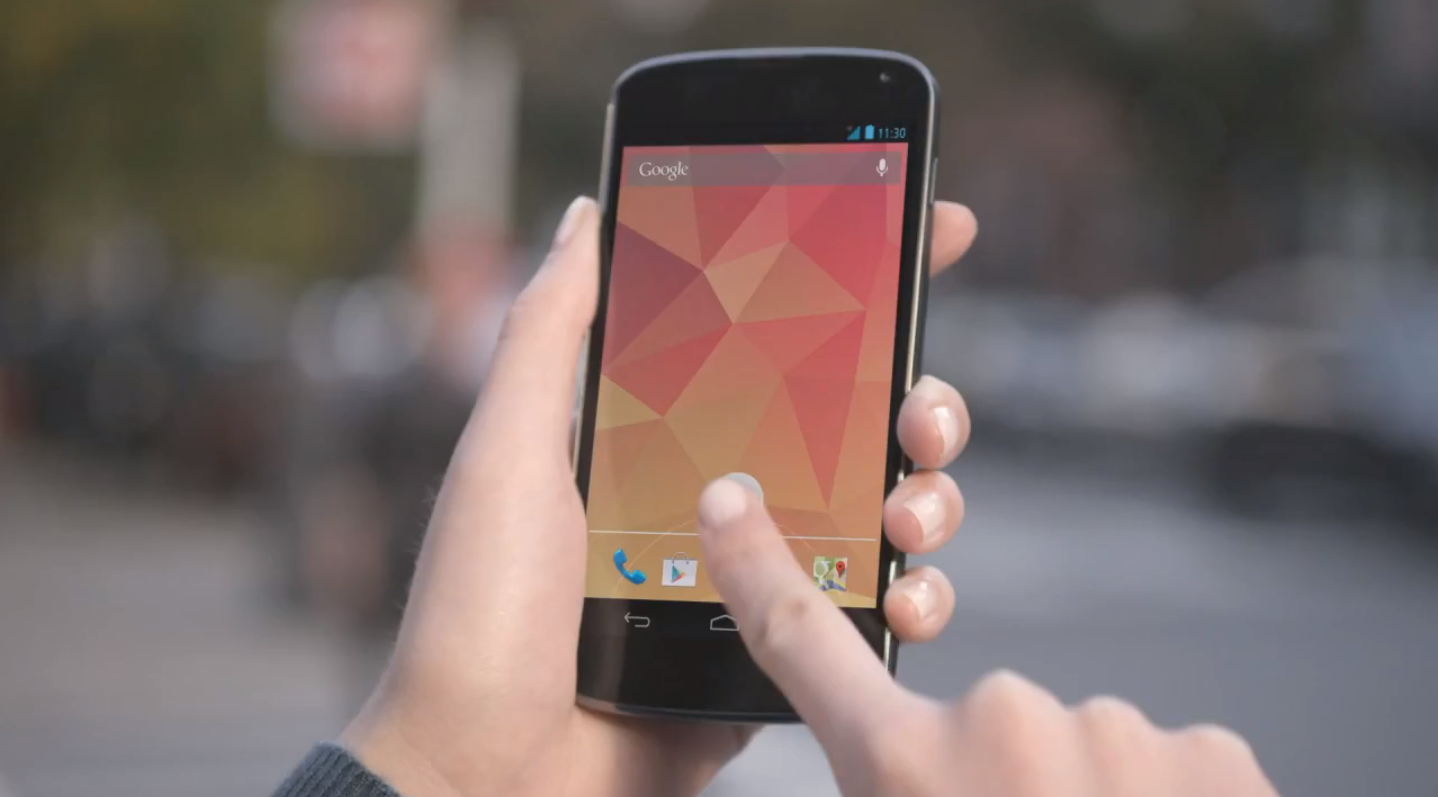
Google Nexus 4 vs. Samsung Galaxy S3: In-depth comparison

Google Nexus 4 vs samsung galaxy s3 android smartphones

If you're in the market for a new Android smartphone and you want something truly top of the line then the Samsung Galaxy S3 and the Google Nexus 4 are bound to be in your sights. The question is: which is better? We put the Galaxy S3 and Nexus 4 head-to-head in this detailed comparison and try to pick a winner.

The Samsung Galaxy S3 has been the relatively undisputed heavyweight champ on the Android scene for half a year now. It is, quite simply, an awesome smartphone. The new challenger emerging is the Google Nexus 4 and it’s looking lean, mean, and dangerous. Manufactured by underdog LG, the Nexus 4 combines impressive specs with an affordable price tag. The question is – does the Nexus 4 have what it takes to steal the title?

Warm up for the main event with an undercard including our Samsung Galaxy S3 review and a detailed Galaxy S3 vs Nexus 4 spec showdown.

The Galaxy S3 has been on the market for a while now and you can get it from various carriers, although there are some slight differences between versions. The Nexus 4 comes in two flavors – 8GB or 16GB – and it went on sale November 13.

Display quality

Let’s open the bout with the first thing that strikes you about both devices: the screen. The Galaxy S3 has been lauded and derided for having a huge display. At 4.8 inches, the screen size was criticized by some for making the phone too large to handle comfortably. Consumers clearly didn’t agree with the critics because sales have been impressive and there’s a clear trend towards bigger displays in the market generally now. The Nexus 4 has a slightly smaller display at 4.7 inches.

The fact the Nexus 4 has a slightly higher resolution and a smaller screen than the Galaxy S3, means that the pixel density is greater. The Nexus 4 should be sharper. The displays also use different technology. The Nexus 4 display is IPS LCD and the Galaxy S3 is Super AMOLED (if you want to know what that means check out AMOLED vs LCD). Both displays have great color reproduction and good viewing angles and they both have Gorilla Glass 2 protection. The Galaxy S3 might edge it on better viewability in sunlight and that extra size, but the Nexus 4 display is sharper.

Winner: Draw

Design and feel

Neither Samsung nor LG are famed for high quality construction when it comes to smartphones. The Nexus 4 has a rounded form factor and is made of plastic with glass front and back and a chrome style rim. When the light catches the back you’ll see an eye-catching hologram design. It’s a premium look and feel not generally associated with LG, but it is indicative of the company’s push towards the top end of the Android market.

The Galaxy S3 is also rounded with a slightly textured pattern on the border which carries round onto the plastic frame and polycarbonate back cover. There is a single Home button on the front, while the Nexus 4 has no physical buttons on the front. Despite claims that the plastic feels cheap it is very durable and it obviously helps to keep the weight down.

In terms of size the Galaxy S3 is slightly bigger in height and width, but it is also slightly slimmer and it weighs a touch less. Ports and buttons are virtually identical, including right side placement for the power button, which helps you reach it more easily on larger form factor smartphones.

Winner: Draw

User interface and platform

As a Google release the Nexus 4 is vanilla Android and it sports version 4.2 which offers a handful of slight improvements over 4.1, but is still classed as Jelly Bean. There’s a new Quick Settings screen, widget support on the lock screen, improved Google Now, and Voice Search, among a few other new bits and pieces in version 4.2.

The Galaxy S3 launched with Android 4.0 (Ice Cream Sandwich), but the Jelly Bean 4.1 update has rolled out to many devices already. It also has Samsung’s TouchWiz interface, which has already added some features such as a Quick Settings menu in the Notifications bar.

There isn’t a huge difference in usability, but the latest version of Android is always the best. The 4.1 update for the Galaxy S3 brought a very noticeable improvement in speed and performance, alongside great features like expanded Notifications and Google Now. An S3 with Android 4.0 and TouchWiz is definitely behind the Nexus 4 with vanilla Android 4.2.

Winner: Nexus 4

Processor and RAM

Both devices have quad-core processors. The Galaxy S3 has a 1.4GHz Exynos 4412 and the Nexus 4 is sporting a Qualcomm Snapdragon S4 Pro clocked at 1.5GHz. The Nexus 4 has 2GB of RAM, which outperforms the 1GB of RAM in the European and international versions of the S3. The U.S. version of the Galaxy S3 matches the Nexus 4′s 2GB of RAM but lags behind with a dual-core processor.

Winner: Nexus 4

Storage

The Nexus 4 comes in 8GB and 16GB versions and in typical Nexus-style there is no microSD slot. You’ll need a screwdriver if you want to open it. The Galaxy S3 comes in 16GB, 32GB, and 64GB varieties and you can expand by a further 64GB thanks to the microSD slot which you can get to by removing the back cover. There is no contest here.

Winner: Galaxy S3

Cameras

When it comes to the main camera, both devices have excellent 8-megapixel rear-facing cameras that can record 1080p video at 30 fps. They also both have the usual LED flash, face detection, and a host of other features. Android 4.2 brings a cool new Photo Sphere feature for panoramas to the Nexus 4, but the Galaxy S3 camera app has some nifty features, too.

It’s easier to separate the two phones on the front-facing camera because the Galaxy S3 has a 1.9-megapixel camera and the Nexus 4 has a 1.3-megapixel camera. Do many people really care about the front-facing camera? For those that do, the S3 wins out.

Samsung Galaxy S3 review screen taking photo horizontal recording

Winner: Galaxy S3

Battery

Both phones have batteries rated at 2,100mAh. The Galaxy S3 battery is removable while the Nexus 4 battery isn’t, but few people will carry around a second battery anyway. We’ll need to wait for more extensive hands-on testing to see if there’s any real difference in actual use, but . It’s probably worth mentioning that the Nexus 4 does support wireless charging and has a nifty Wireless Charging Orb accessory, although you do have to buy it separately.

Winner: Draw

Connectivity

You’ve got NFC, Wi-Fi, Bluetooth, DLNA, and everything else you would expect to find on both smartphones. The widely noted difference is that the Nexus 4 doesn’t support 4G LTE. It’s debatable how much that matters, because HSPA+ can be very fast, but if you live in the right area then LTE is the fastest mobile network connection you can have right now so it was a surprising omission.

Winner – Galaxy S3

Price

This is where some of the losses above for the Nexus 4 can be cancelled out because it is significantly cheaper than the Galaxy S3. It is basically $300 for the unlocked 8GB Nexus 4 or $350 for the 16GB version. That compares to around $600 for an unlocked 16GB Galaxy S3.

On contract you can get the Nexus 4 for $200 while the Galaxy S3 is closer to $300.

Winner – Nexus 4

Overall Winner: Nexus 4

Google Nexus 4, Nexus 10 announced

If we add up the scores it actually turns out to be a tie with 3 wins apiece and 3 draws, but hopping off the fence we’ll give this one to the Nexus 4 because it manages to offer more value for your money. The wins that the Nexus 4 racked up will probably be more important to most people – it’s faster, it has the latest version of Android, and it’s cheaper. However, if you’re on a carrier with a robust 4G LTE network, or you heavily value storage or the quality of your front-facing camera, the Galaxy S3 may be the phone for you.


Source : http://www.digitaltrends.com/mobile/in-depth-comparison-google-nexus-4-vs-galaxy-s3/

Texas Instruments to cut 1,700 jobs in cost reduction effort

Texas Instruments to cut 1,700 jobs in cost reduction effort
Cutting mobile, cutting jobs

Texas Instruments announced Wednesday it will be cutting its worldwide work force by 1,700 in an effort to cut costs.

The semiconductor company said that as it moves away from its historical focus on the mobile market and focuses on OMAP processors and wireless connectivity solutions, it requires fewer resources.

"We have a great opportunity to reshape our OMAP processor and wireless connectivity product lines to concentrate on embedded markets," Greg Delagi, senior vice president of Embedded Processing, said in a press release, noting that momentum is already building for these new efforts.

"These job reductions are something we do with a heavy heart because they impact people we care deeply about. We will work closely with all employees affected by these changes to provide a range of assistance related to compensation, benefits and job search."

Pennies saved

The cut jobs are expected to save TI about $450 million (UK£284, AUD$433) by the end of next year.

A hit of $325 million (UK£205, AUD$312) is expected as a result of the restructuring, dollars that will drop out of this quarter's earnings.

TI is almost an anomaly in a manufacturing world that, for the most part, is moving toward mobile and away from traditional markets.

In a report from September, Delagi sad that mobile is "less attractive" for Texas Instruments moving forward, marking the beginning of the end for the company's smartphone and tablet plans.

Its OMAP 4470 processor is found in the Kindle Fire HD, but that may be the last major mobile product to see a TI chip inside.


Source : http://www.techradar.com/news/computing-components/texas-instruments-to-cut-1700-jobs-in-cost-reduction-effort-1112649

Samsung said to be ramping up flexible AMOLED screen production

Samsung said to be ramping up flexible AMOLED screen production
Samsung's flexible AMOLED screens could arrive early next year

Though delays have seemingly slowed production of Samsung's flexible AMOLED screens, a new report points to production of the screens starting in early 2013.

An anonymous source told the Wall Street Journal the screens were in the final stage of development at Samsung Display, and that the manufacturer hoped to release the screens by the midpoint of next year.

Samsung debuted the first footage of the technology last December, and originally expected to deliver the first flexible screen products in 2012.

That hasn't been the case, though based on this new report, it appears as if Samsung is attempting to get the jump on competitors also working on similar screens.

OLED advantage

Made from plastic instead of glass, the prototype screens Samsung has shown off to this point reveal an incredibly flexible and durable display.

To this point, no company has been able to mass produce the displays, but Samsung has been pushing to move from the prototype to commercialization over the course of the past year.

The Wall Street Journal suggested Samsung's ability to invest heavily in the research and development of mass marketing the flexible screens comes from the recent profit windfalls Samsung Electronics has received.

With a 91 percent increase in net profits resulting in earnings totalling $6 billion (UK £3.78, AUD $5.78), Samsung clearly had the money to put behind the R&D.

Whether or not the manufacturer will be able to succeed remains to be seen, as Samsung had previously promised the OLED panels would be ready by now, and are still unavailable.

Just how Samsung plans on using the flexible screens is anyone's guess, but the applications could revolutionize both smartphones and tablets for the foreseeable future should they ever move beyond the concept stage.


Source : http://www.techradar.com/news/world-of-tech/future-tech/samsung-said-to-be-ramping-up-flexible-amoled-screen-production-1112640

Samsung, Nokia dominate third quarter mobile phone sales

Samsung, Nokia dominate third quarter mobile phone sales
Samsung and Android continue to outpace Apple and iOS

A look inside the quarterly sales numbers showed smartphones are up 46.9 percent over the same period in 2011, and revealed Android phones outpaced Apple's iOS phones by 5:1 during the third quarter.

The sales figures, as reported by the analysts at Gartner, show mobile phone sales have decreased by 3 percent overall, continuing a trend started earlierthis year.

Despite the overall sales dipping, smartphone sales bolstered by Samsung, Nokia, and Apple have continued to escalate, and are now responsible for almost 40 percent of all mobile phone sales.

Samsung holds lead

During the third quarter, Samsung was able to maintain its lead over Apple in smartphone sales, largely due to the Galaxy lineup, including the Galaxy SIII.

With a 32.5 percent share of the smartphone market, Samsung was able to hold off second-place Apple, which earned 14 percent of the sales.

Research in Motion was able to slip into third place, with HTC following closely behind, as Nokia's smartphone sales slipped to seventh.

Samsung still found itself in the overall lead with 97.9 million phones sold (22.9 percent), a narrow margin of victory over Nokia's 82 million total mobile phones sold (19.2 percent).

Apple was able to solidify third place by selling 23.5 million iPhones (3.9 percent), which was a 36.3 percent jump from 2011, and accounted for the largest increase in year-over-year sales.

Gartner expects Apple to have another traditionally strong fourth quarter due to the expanding availability of the iPhone 5, but doesn't think holiday sales will impact the overall market all that much.

Android still king of the hill

Even though iPhone sales increased tremendously during the third quarter, Apple's iOS still had trouble catching up to Android.

With 122 million Android phones sold during the third quarter, Google's OS increased it's share to 72.4 percent of the market.

Despite Android earning 20 percent more users during the third quarter, iOS was still able to garner 13.9 percent of all users, a drop of just one percent from Q2.

Apple was able to maintain second place largely due to the decreasing numbers of Symbian and Microsoft's Windows Phone 7, as both OS were being phased out for Windows Phone 8.

iOS is expected to increase its numbers during the fourth quarter according to Gartner analysts, but all that depends on how strong Apple's final quarter turns out from a sales perspective.


Source : http://www.techradar.com/news/phone-and-communications/mobile-phones/samsung-nokia-dominate-third-quarter-mobile-phone-sales-1112629

UpTo Calendar comes to Android: Hands on with the social calendar

The Mayan calendar ended on December 21, 2012, but if those guys had UpTo, the calendar would never end. UpTo is a social calendar app that made its mark on iOS and has now moved to Android. We go hands on with the app to see if it's worthy of celebration.

One of the more popular apps for iOS devices has made the transition over to Android, as UpTo popped up in the Google Play Store Monday. The social calendar promises to make your future more interesting by highlighting events you might be interested in and aggregating your friends’ schedule into your planner so you won’t miss anything they’re up to (get the name now?). It has a lot of potential to fill your calendar with awesome events, or turn you into the ultimate party crasher, depending on how you use it.

To hook with UpTo is that it always looks toward the future. Facebook is like a collection of things that have already happened; Twitter is like a stream of what’s happening at the moment; and UpTo tells you what’s going to happen. It does this by taking your existing calendars and placing all of the shows, parties, and special occasions into a Twitter-like stream. Linking your Facebook account will draw in all of the happenings from your Events page. Using a Gmail account will pull all of the Google Calendars’ events. It pulls events from all kinds of services together into one feed. To the app’s credit, the feed works well. Everything looks very unified even though the information is coming from multiple locations, and interaction with an individual event is easy. It’s a visually pleasing app. It makes something pretty plain – a calendar – look sleek and modern.

Of course, what fun are all these awesome occasions – or mundane tasks – if you can’t tell your friends all about it? That’s where the social aspect of UpTo kicks in. By adding friends from your email contacts or Facebook, you’ll be able to see what’s on their agenda as well. This makes sharing event information easy. Then again, if your friends are terrible people, they may use that information against you. As such, you don’t have to share every event you’re planning to take part in and neither do your friends, so information can be kept private. That way your business partners won’t know about the pedicure that you took a half-day off to get.

Social events don’t just stop at your friends as UpTo has amassed over 800 event streams that you can “Discover,” subscribe to, and include in your calendar. Fans of most professional and college sports can add the entire schedule of your team of choice; Movie and TV buffs can add lists of major release dates and premieres; and citizens of major cities can subscribe to see the biggest events that are coming through town. When the creators of the streams update their events, like if the team you follow makes the playoffs, the new happenings appear automatically on your calendar. You can then comment or like those events to make your thoughts known, allowing you to socialize with people all over that are interested in the same occurrences as you.

As solid in its execution as it is in appearance, UpTo lives up to everything you’d expect out of it. It’s quite the task to make a calendar interesting, but UpTo manages to do so in a way that doesn’t stray too far from the initial purpose of keeping track of events. The social aspect is sure to be great for party planners and those who are looking for some extra company for a show or concert. It strips away a lot of the unnecessary details of events on other platforms, keeps only the most pertinent of information, and makes it easy to manage in your personal schedule or send out for others to join in. UpTo is an app worth checking for the event planner in you.

You can download UpTo for free from the Google Play Store. It is also available for free on iPhone.


Source : http://www.digitaltrends.com/mobile/upto-calendar-comes-to-android-hands-on-with-the-social-calendar/