What does Steven Sinofsky's abrupt departure from Microsoft mean for Windows…and the way the company will compete with Apple and Google?
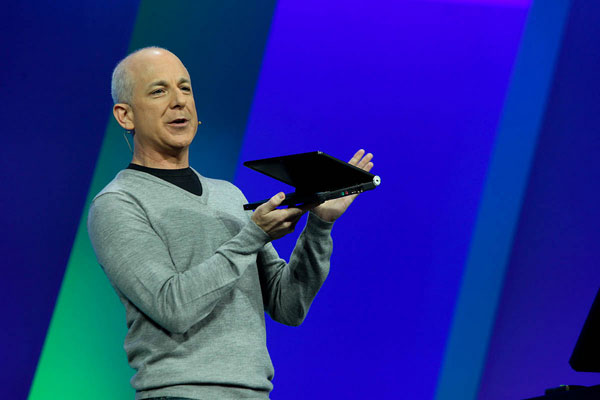
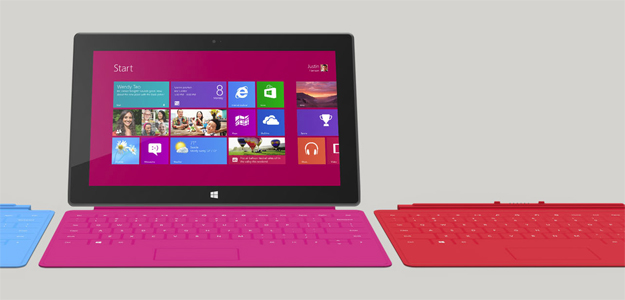
Shock and confusion enveloped the tech world on Monday with the news that Steven Sinofsky, head of Microsoft’s $18 billion Windows division, was leaving the company effective immediately. The move comes less than a month after the debut of Windows 8 and the launch of Microsoft’s first hardware computing product, Surface with Windows RT. Both products were Sinofsky’s direct responsibility, and his abrupt departure immediately caused people to speculate that the mixed critical response to Windows 8′s new interface and the company’s attempt to enter the tablet market had claimed its first victim. Perhaps more telling, Microsoft did not name a replacement for Sinofsky and, instead, split his role between two of Microsoft’s other talents.
The only two people who seem to know the truth about Sinofsky’s departure – Sinofsky and Microsoft CEO Steve Ballmer – aren’t saying much, and it’s too easy to point fingers at Windows 8. However, the truth seems much more nuanced and actually points to a new direction for Microsoft’s core operating system. We’ll give you a hint: it has a secret codename, and it could give Apple and Google a run for their money.
Below, we take a look back at Sinofsky’s impact on Microsoft, the hypotheses behind why he left, who’s replacing him, and what this all means for the future of Microsoft and its consumers.
Sinofsky’s legacy

Sinofsky joined Microsoft in 1989 when MS-DOS was still the company’s leading operating system. In 1994, Sinofsky landed a role as a program manager of Microsoft’s Office products, overseeing many shared technologies that first appeared in Office 95 (the release that cemented Office’s dominance of productivity apps) and Office 97. In addition to heading up Office 2000, Office XP, and Office 2003, Sinofsky also championed the new “ribbon” user interface in Office 2007, which ditched the traditional menu bar and button-cluttered toolbar for context sensitive tabs of related items.
After developing a reputation as an efficient manager who brought projects in on time, he became head of Microsoft’s Windows division in 2009 and immediately dove into Internet Explorer 8 and Windows Live services. He quickly began revamping Microsoft’s entire Windows development effort, streamlining processes and holding Microsoft’s cards a little closer to the vest until he was satisfied with the product’s form and quality.
Before Sinofsky, the gap between Windows XP and the (poorly received) Windows Vista was more than five years. However, Sinofsky ran a tight ship. He launched Windows 7 less than three years after Vista (and to nearly universal acclaim). His Windows division repeated the feat three years later with the recent launch of Windows 8, the most-radical shakeup for Microsoft’s desktop operating systems since Windows 95.
It’s no exaggeration to say that if you look at Microsoft’s latest, high-profile products, you’re looking at work headed up by Sinofsky. And now he’s gone.
Out of the blue?

Sinofsky’s departure from Microsoft is abrupt, which is very unusual for a high-profile company like Microsoft that aims for smooth leadership transitions. Comparing Sinofsky’s departure with that of former Windows chief Jim Allchin, Sinofsky left immediately with no direct successor named; Allchin’s departure was announced 15-months ahead of time, allowing a long transitional period to make sure the Windows business ran smoothly. The swiftness of Sinofsky’s departure points to a particular event or decision that Microsoft hadn’t been planning in advance, and since the company is obligated to promptly announce significant changes in leadership, Microsoft had no choice but to put it in the best light possible.
It’s tempting to chalk up the move to lukewarm reception to Surface and Windows 8 (particularly since CEO Steve Ballmer has described Surface’s initial sales as “modest”). However, in reality, it’s far too soon to assess whether Windows 8 or Surface will be a success in the marketplace. The first meaningful numbers on that won’t be available until the first quarter of 2013, and even those won’t make or break the case for either product.
In his letter to employees (published by Paul Thurrott), Sinofsky wrote: “[T]his was a personal and private choice that in no way reflects any speculation or theories one might read – about me, opportunity, the company, or its leadership.”
Nonetheless, the sudden announcement points to internal reorganization and politics. Part of this has to do with Microsoft’s corporate culture. Microsoft has traditionally operated as a set of relatively isolated business units. Sure, groups with common interests talk to each other, but they generally have a fair bit of latitude to manage their own products and technologies. It’s a holdover from Bill Gates’ days at the helm, where individual product groups were encouraged to operate as lean, mean, and nimble small businesses, rather than tiny cogs in a slow-moving corporate behemoth.
As Microsoft’s flagship product, however, Windows exerted a major influence over other product groups in part because so many of Microsoft’s core software products are designed for (and are dependent upon) Windows. But Windows isn’t particularly dependent on other products, and that put Sinofsky in the driver’s seat on any discussions with Microsoft’s other product groups and even with Microsoft’s OEM partners. And Sinofsky’s relationships with other executives in the company weren’t necessarily all that smooth.
Although praised for his intelligence and his efficiency, internal frictions with Sinofsky have been widely reported as contributing factors in the departure of several key Microsoft executives in the last two years, including chief software architect Ray Ozzie, Office/Business Division head Stephen Elop (now CEO of Nokia), and much-liked entertainment and devices heads Robbie Bach, and J Allard. More recently, Sinofsky saw his bonus dinged for the Windows teams’ failure to consistently offer a browser ballot to EU customers – an oversight failure that could potentially put the company on the hook for billions. Sinofsky has also been known to butt heads with CEO Steve Ballmer over Microsoft’s direction.
Into the Blue

Perhaps more than anything else, Sinofsky’s departure probably heralds a significant organization change at Microsoft. Although the company’s products have always been in more-or-less the same boat, Sinofsky ran the Windows division as the prow of the ship – everyone else either went the same direction as Windows, or could jump out and swim.
However, Microsoft is increasingly shifting from a collection of small fiefdoms that operate somewhat independently to an integrated ecosystem of software, services, and (more recently) hardware. It started with hardware platforms that Microsoft controls from the ground up, including the Xbox and the Zune. More recently, Microsoft has exerted its influence on mobile device makers with increasingly stringent specs on what can and cannot be a Windows Phone. The company embraced hardware maker Nokia as a preferred partner to bring its Windows Phone platform to market. With Microsoft Surface, Microsoft is, for the first time, making its own ARM- and Intel-based PCs – and the company does see them as PCs, despite Apple’s proclamations of a “post-PC” world.
The trend is clear: where Microsoft used to favor licensing its operating system to hardware partners and competing with other software developers as an application house, Microsoft is now far more interested in the type of vertical integration that has made Apple so successful in recent years. Microsoft does sell hundreds of millions of Windows licenses, but that volume doesn’t make PCs desirable devices like Macs, iPhones, or iPads. Instead, Windows is effectively the lowest common denominator in the market thanks in part to price competition between PC makers. In some ways, it doesn’t matter what innovations Microsoft rolls into Windows as long as PC makers insist on rolling out chintzy, plasticy, clunky, systems whose primary market appeal is being “affordable.” Windows gets cheapened right along with them.
To offer a tight, vertically integrated ecosystem that can compete with the likes of Apple and Google, Microsoft needs to break down the individual fiefdoms that isolate its business units and create a new culture of collaboration and integration.
That means Windows will no longer be the prow of the ship. Instead, Windows, Office, cloud offerings like Skydrive, enterprise systems, tools, Windows Phone, Skype, Bing, and entertainment services like Xbox will all be part of the broader Microsoft ecosystem and will be mutually supportive and mutually dependent upon each other. Cooperation and collaboration will be the order of the day; secretiveness, fractious relationships, and strong-headed (if efficient) management styles will be out.
The first fruit of this is currently growing within Microsoft under the codename “Windows Blue,” the first update to Windows to follow Windows 8. With Blue, Microsoft is hoping to break away from monolithic operating system releases – like Vista, Windows 7, and Windows 8 that land every few years – to incremental, regular releases that appear at least once a year. Few details are available about Windows Blue or how releases might differ from Microsoft’s current “Service Pack” model, but contacts within Microsoft have already noted an increasing emphasis on integrating tightly with Microsoft offerings like Office 365, Skype, Skydrive, and Xbox Music – steps Windows 8 is already taking with things like Bing Apps.
These factors may also point to why there’s no direct successor for Sinofsky. With no Windows division head, no one can step into his shoes and exert the same kind of force over other product teams. Microsoft chief marketing officer Tami Reller will now be head of Microsoft’s Windows business, and Windows software and hardware engineering will be taken over by Julie Larson-Green. Announcing Larson-Green’s appointment, Microsoft CEO Steve Ballmer emphasized her “great communication skills” and “a proven ability to work across product groups.” Ballmer’s choice of words doesn’t seem like an accident.
Larson-Green’s elevation to the head of Windows software and hardware design also emphasizes that Sinofsky’s departure is not related to disappointments or a lack of confidence in Windows 8. Larson-Green was in charge of user interface design and research for both Windows 7 and Windows 8. Before that, she headed up the team that created the ribbon UI that debuted in Office 2007 and now appears in Windows 8.
What will the future bring?

If Sinofsky’s departure is a signal of changes at Microsoft, these seem to be the most likely directions.
Leadership – Steve Ballmer’s willingness to bid goodbye to Sinofsky could be a sign of a broader reorganization and executive shuffle – something that Microsoft tends to do in the wake of shipping a major product like Windows 8. With the successful launch of Windows 7 and delivery of Windows 8, many observers felt Sinofsky was in line for Microsoft’s CEO chair. However, Microsoft’s CEO is appointed by the company board, which is still chaired by co-founder Bill Gates. Barring malfeasance or an outright disaster, the board is not going to over-rule Gates’ conviction that Ballmer is the man to run the company. In 2008, Ballmer indicated he thought he would stay in the CEO chair until his youngest child goes to college, which would be about 2018. Although Ballmer indicated last month to the Wall Street Journal (subscription required) that he would serve as long as he felt he was adding value or somebody better could take over, it’s clear that Ballmer doesn’t see himself leaving the CEO position anytime soon and thus has plenty of time to work with the board on a succession plan.
Deeper software integration – This will be more than Microsoft claiming Internet Explorer is inseparable from Windows (and raising antitrust flags). Expect Microsoft to work to deeply tie Bing, Skype, Skydrive, Xbox video and music into Windows. On Windows RT, expect Office to become so tightly integrated that it will be difficult to tell where Windows stops and Office begins. Microsoft would like these integrations to be as seamless and elegant as possible, reaching customers quickly in the form of regular updates.
More hardware – Microsoft irritated its OEM partners, particularly Acer, by launching its own hardware. But Microsoft believes that the best way to elevate its brand from lowest-common-denominator status is to push hardware design forward itself, forcing the rest of the industry to follow or fall behind. To that end, expect to see more Surface hardware designs from Microsoft, and perhaps Microsoft-made Windows Phone devices, especially if Nokia doesn’t show signs of a turnaround in the next six months. It’s worth noting that Microsoft issued over $2 billion in notes last week to raise cash, which is a typical strategy to fuel acquisitions. Nokia may not be on the menu at the moment, but rumors have been swirling about Microsoft and Nvidia for years.
What of Sinofsky?
Sinofsky hasn’t announced any plans for his immediate future. He’ll certainly be recruited by any number of other companies and be tempted to strike out with his own venture. His tenure at Microsoft certainly means he has the personal and professional resources to continue to exert a strong influence on the technology world if he chooses.
And if there’s one thing that holds true, it’s that many Microsoft execs go on to do interesting things after they leave the company. Jim Allchin, who headed up Windows before Sinofsky, decided to pursue music and has released two albums. You just never know.