The team behind Android originally made the OS for a range of smart digital cameras rather than mobile phones. And it wasn't the iPhone that had Android quaking in its boots - it was Symbian.
That's according to Android founder Andy Rubin, speaking at a forum in Tokyo.
"The exact same platform, the exact same operating system we built for cameras, that became Android for cellphones," he said.
"We decided digital cameras wasn't actually a big enough market."
Rubin went on to explain that the Android forefathers had 9 per cent market share in North America in their sights: we think they may just about have exceeded that.
And happily for those early versions of the OS, their destiny has been fulfilled - you can now get an Android snapper in the shape of the Samsung Galaxy Camera.
TechRadar's reckons this is what a Surface Phone might look like
While there's been talk of Microsoft considering a Surface Phone for some time, the chief of Windows Phone has stated that it's not currently in the pipeline. At least not right now.
Speaking at the second day of Dive Into Mobile in New York, head of Windows Phone Terry Myerson dismissed rumours that there would be a Microsoft-made Surface-branded version of the Windows Phone any time soon.
"It would have to be something where Nokia or HTC was not providing the consumer experience we think is possible with our platform," he said.
Even though a Surface Phone has never been a sure thing, it's certainly an idea that makes sense, and one that Nokia has been encouraged in the past.
Knives out
Myerson also had a few things to say about a certain couple of market competitors.
"Android is…kind of a mess," he said. "Look at Samsung – there's clearly mutiny going on. The only OEM making money off of Android is Samsung."
He then moved onto Apple, discussing the changes found in the iPhone 5: "With iPhone, I sense urgency. With iOS 5 [Apple] just added a fifth row of icons."
Of course, the rumoured Windows Smart watch was also raised during the discussion, though Myerson wouldn't confirm whether one was on the way. "It's an exciting space," he said. "There's no doubt that wearable computing has incredible potential."
Unlocking a phone can be a pain. We've all been there - your phone's locked to a network and you want to use it on a different one, or maybe just get it unlocked to increase the resale value.
Whatever the reason, with there being several different methods, different procedures on different phones and different policies on each network it can be a headache, so we're here to give you the knowledge to make it a little bit easier.
The first thing to realise is that unlocking a phone is perfectly legal in the UK. The main reason that networks are allowed to lock phones in the first place is because generally when a phone is sold locked it's at a subsidised price.
So essentially the network is paying part of the cost of the phone, and in order to make their money back they lock you in to their network. But that doesn't change the fact that you have the legal right to take your business elsewhere.
Before you look into unlocking your phone, it's always worth trying a different network's SIM card in it, just in case it's not actually locked at all. Sometimes phones are sold unlocked, even when bought from a specific network.
Ask your network
If your phone definitely is locked then you have several options at your disposal. Despite it being the network that locks your phone in the first place, they're also sometimes willing to unlock it for you (though they're not legally required to).
O2, for example, makes it incredibly easy. In fact if you're in a contract with the network then it will unlock your handset free of charge - though that won't get the contract cancelled.
Even if you're on Pay As You Go it will generally still unlock it for you as long as you've had the handset for at least 12 months, but there will be a one-off payment of £15, and depending on the handset it can take up to 14 days to do it. The only exception to all this is O2-exclusive handsets, which the network will refuse to unlock.
Vodafone will also unlock its handsets, though at a potentially higher cost. You can generally get a free unlock if you're on contract - or if you purchased your phone more than 12 months ago. Otherwise it will cost around £20. Sometimes the network will unlock your phone in just one day, but it can take up to two weeks.
EE is a little bit stricter with its unlocking terms. You need to have been a customer with the network for at least six months regardless of whether you're on a monthly contract or Pay As You Go, and either way there will be a fee of £20.42. It also takes up to 20 days to unlock a handset, which is slightly longer than most.
Three is in some ways quite lax in its unlocking terms, since it will allow Pay As You Go customers to unlock their handset any time, while if you're on a contract you can unlock it after the first 30 days.
It will also unlock the handset straight away where possible, and even when it can't it shouldn't take more than seven days. However it doesn't unlock it for free, instead charging a fee of £15.32 regardless of your circumstances.
It's also worth being aware that it's stated in its terms and conditions that it prohibits unlocking your phone "via any unauthorised manner (ie by anyone other than us or the device manufacturer)," so doing so may constitute a breach of contract.
Tesco Mobile will unlock Pay Monthly phones for free at the end of your contract period or for a £20 fee if you wish to unlock your phone before then. Pay As You Go phones can be unlocked for free after 12 months, otherwise again a £20 charge will apply. The exception to this is Pay As You Go iPhones, which Tesco won't unlock at all unless you've had one for at least 12 months.
Virgin Mobile will generally unlock any phone for a fee of £15.32, but like Three you can't get a free unlock from it, no matter what your circumstances are.
Your network should be able to unlock any handset for you - even the latest and greatest phones to hit the market. Most of the networks have an online form that you can fill in to get your handset unlocked or alternatively you can call them.
Either way you'll need your IMEI number, so it's worth having that handy. Generally you'll be able to find this on your phone's settings screen (for example on an Android handset you go into 'About phone' and then 'Status'), but if you're having trouble locating it you can also enter *#06# on your dial pad to bring it up.
Do it yourself
If your network isn't willing to unlock your phone (or charges too much for the privilege) then worry not, for there are other options. Before proceeding with any of the following methods though, be aware that getting anyone other than the network or manufacturer to unlock your phone may void your warranty.
In some cases it's entirely possible to unlock a handset yourself free of charge. All some phones need is an unlock code, and certain sites list these. However, generally you'll only find them for older, non-smartphone handsets, and even then the bulk of them are for Nokias. But if you've got an older phone, even something other than a Nokia, then it's worth a look.
Before you start you'll need to know your make, model and IMEI number. The make and model should be easy to find (hint: check the box, the manual or even the phone itself). With them in hand you can head to unlock.nokia.free.org if you've got a Nokia or do a Google search if you've got anything else, though obviously be careful to check that it's a legitimate site if you head elsewhere.
Occasionally do-it-yourself methods do pop up for smartphones. For example the Samsung Galaxy S3 can be unlocked with an app called 'GalaxSim Unlock', which can be downloaded free of charge from Google Play - though you need a rooted phone to use it.
Similarly, depending on what firmware you're on you may be able to unlock a jail-broken iPhone. However, Apple is more resistant to unlocking than most other manufacturers - so in many cases, particularly if you've got a newer model such as the iPhone 5, approaching your network directly will be your best bet.
Pay someone
If all else fails you can always pay someone independent to unlock your phone for you. This can be done both through websites and from high street stores and market stalls, though of course it's worth shopping around and where possible checking the legitimacy of the person or company before proceeding.
The terms, pricing, methods and time frames of these services can vary wildly. Generally if you're getting it unlocked online you simply provide the site with your phone's make, model, IMEI number and the network it's locked to, pay a fee and wait for them to send you an unlock code. This keeps it pretty simple, but you still want to make sure that the site is legit and that you're getting good value for money.
As a starting point, though, Mobile Unlocked uses this method and is a legitimate site with a 100% money back guarantee if for any reason it fails to unlock your phone. It will also unlock major handsets such as the iPhone 5 (albeit for a seriously hefty £74.99 upwards fee) and the Samsung Galaxy Note 2 (for a more reasonable £17.99 upwards).
Alternatively, giffgaff's site has a list of other companies that offer an unlocking service, along with some information on them and user reviews.
Some sites may ask you to post your phone to them, but this is generally best avoided because it adds time, risk and hassle to the process and shouldn't normally be necessary.
If you take your phone to the high street, methods sometimes vary, with unlockers potentially physically attaching a cable to your phone to get it unlocked. This can work, though it can also run the risk of damaging your phone.
It's always best to make sure the person or store offering the service is legitimate before handing your phone over, so a physical shop is a better bet than a market stall and you should read reviews or find feedback about them where possible.
One way or another you should now have the information you need to get your phone unlocked, so go out and enjoy the freedom to choose a new network, or go nuts and get SIM cards for them all. The world is your oyster.
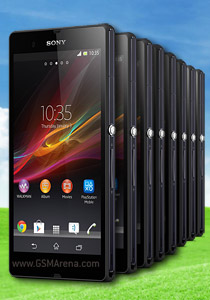
The Sony Xperia Z got the jump on other 1080p flagships and it’s paying off handsomely. The water-resistant phone was announced and went on sale before its chief competition and analysts are estimating Sony has sold 4.6 million units sold in 40 days.
The HTC One experienced delays and its launched got pushed back, while the LG Optimus G Pro launched this month and the Samsung Galaxy S4 launch is coming in a couple of weeks. That left the Xperia Z with very little competition on the 1080p / quad-core front.
The HTC Butterfly was the first 1080p phone to hit the market, but it didn’t get a wide launch or a lot of love from HTC before the One was announced.
Well, we’ll have to wait until the Q1 report is out to get concrete numbers from Sony.
The BlackBerry Q10 is the second handset to come running the new BlackBerry 10 operating system, but it's the first to offer a physical QWERTY keyboard alongside it.
The Q10 won't have the same appeal as the flagship Z10, but there are still people out there who swear by a physical keyboard on their smartphone, so we've searched far and wide to bring you the latest on where and when you'll be able to get it.
Carphone Warehouse
Carphone Warehouse has reduced the price of BlackBerry Q10, with it now listed at a still rather eye-watering £579.95 SIM-free (it was appearing at £600 originally), which is the same as the Samsung Galaxy S4.
You can also pick it up on contract for free from £36 per month - with all the major networks apart from Three represented - with stock expected to arrive "by the end of April".
Phones 4U
The Phones 4U site tells us it expects stock of the BlackBerry Q10 to arrive "in 4-5 weeks" and it's offering a free BlackBerry PlayBook to the first 300 who pre-order - we're not sure if that's an incentive or not.
Like Carphone Warehouse you can grab the Q10 for free on two year contracts starting at £36 per month, but there's no sign of Three or O2 here, nor does it appear to be offering the handset SIM-free.
EE
EE announced at the launch of the BlackBerry Z10 in January that it "also plans to range the forthcoming BlackBerry® Q10 smartphone. Details on pricing and availability will be announced at a later date".
And we're still waiting on those prices and release date.
O2
O2 reckons we might have a bit of a longer wait here in the UK for the BlackBerry Q10, with a coming soon date of May and the option to "keep me in the loop" on its info page.
Three
Three is yet to announce whether or not it will be ranging the BlackBerry Q10, but considering all its rivals will be selling the phone we'd expect the data-friendly network to follow suit.
Vodafone
Update: Vodafone now has its BlackBerry Q10 pre-order page live and is offering the handset for free on a two year, £37 per month contract which gives you unlimited calls and texts plus a distinctly average 1GB of data.
There's no word on the Q10's release date however, nor does there seem to be PAYG or SIM-only options on Vodafone.
Online retailers
Unlocked Mobiles has the handset listed for pre-order at £529.98 and a Blackberry Q10 release date of April 26.
The Q10 is slightly more on Clove's pre-order page, with a price of £534.99 for the SIM-free handset and a note saying "first stock due late April".
Update: You can pre-order the BlackBerry Q10 at Expansys, but it's a bit pricier at £579.99 for the QWERTY keyboard device.
The anticipated next iPhone, although itself still not fully emigrated from rumorland, is expected to feature an improved camera sensor compared to the one found on the current Apple flagship.
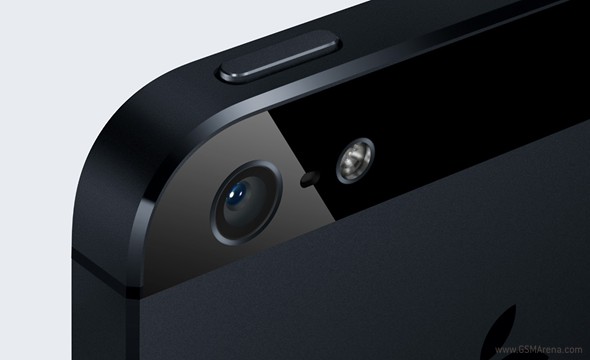
The iPhone 5 features an 8MP camera sensor with an f/2.4 aperture, hybrid IR filter, and backside illumination. A source working for Wonderful Saigon Electrics, the manufacturer that makes Apple's camera modules, alleges that the next iPhone (which is referred to as iPhone 5S) will come with an updated 12MP camera, complete with improved shooting under low-light conditions and HDR support.
Apple is under increased pressure as of late with recent Android flagships like the HTC One and Samsung Galaxy S4 expected to quickly steal marketshare from its iOS platform. The Cupertino giant needs to produce a device that will really raise some eyebrows, and an updated camera sensor may be one of the ingredients it needs.
Samsung seems to be in hot water again, this time over negative comments which appeared on HTC One reviews by people apparently paid to write them by the Korean firm.
Only last week did police raid Samsung's Seoul offices after LG accused the firm of stealing its OLED secrets and now the Galaxy S4 maker is being investigated by Taiwanese authorities over false advertising.
According to AFP, Samsung hired students in Taiwan to post negative comments about the HTC One online, while also promoting its own products in the process.
Not so fine
Apparently if these allegations are upheld Samsung could face a fine of around $835,000 (£545,680/AU$805,200), and there will be some red faces around its office too.
There may be some truth in the allegations though, after Samsung Taiwan posted a message on its Facebook page saying: " Samsung Taiwan has ceased all marketing activities that involve the posting of anonymous comments.
"We regret any inconvenience this incident may have caused. We will continue to reinforce education and training for our employees to prevent any future recurrence."
We have spoken to HTC and Samsung about these allegations and will update this article if we receive a comment from either party.