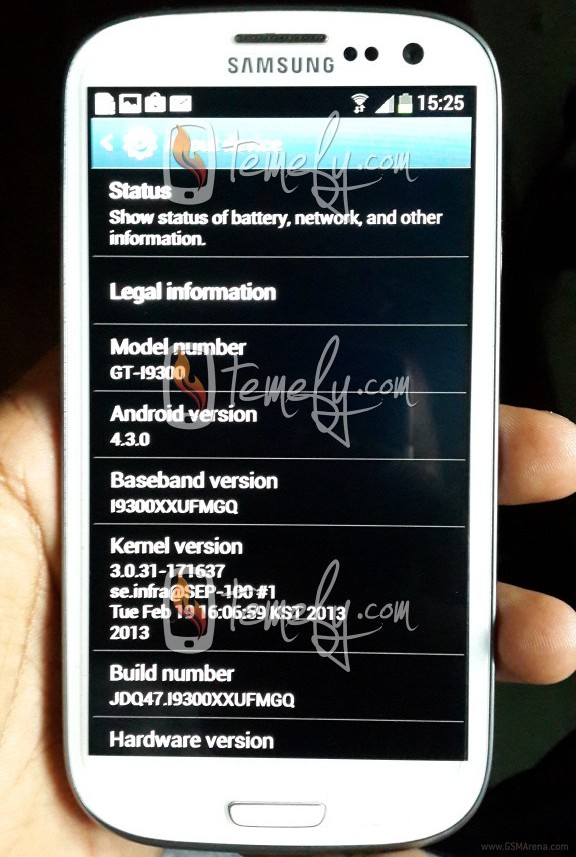
According to leaked information from Samsung R&D in India, Samsung is simultaneously developing Jelly Bean 4.2.2 and 4.3.0 updates, and the former could be dropped altogether if Jelly Bean 4.3 is officially announced this week by Google.
These rumors from last week garnered a whole lot more credibility thanks to the provided leaked image which allegedly shows a Galaxy S III running on a 4.3.0 Jelly Bean test build.
Word is that development of the 4.3.0 update is also underway for the Galaxy S4 flagship, as well as another yet unannounced device, possibly the Galaxy Note 3.
It's still unknown what kind of features the 4.3 Jelly Bean update will to bring - or when, for that matter - but if the above leak is any indication, the announcement is imminent!
The Firefox web browser is known for pushing out updates quickly and it looks like Firefox is committing to the same release schedule for its new mobile OS.
In outlining the company's strategy this weekend, Alex Keybl, Mozilla's Manager of Release Management promised significant quarterly updates to the Firefox mobile OS.
Now version 1.0 of the would-be iOS and Android contender is out of the gate, the company said it also plans security updates every six weeks.
In a post on the Mozilla blog Keybl said: "Now that we have our v1.0 behind us and we're moving forward with even more partners, we're going to do our best to bring Firefox OS back into our heartbeat and will make quarterly feature releases available to partners along with six-weekly security updates for the previous two feature releases."
Emerging
He added that the strategy will easily outstrip other OS-makers in the mobile space: "As far as I know, that's the most aggressive mobile OS release strategy out there (and may still require some tweaking).
"This sort of alignment across multiple browser products, and now an OS, is unprecedented at the pace we're moving. Keep it up, Mozillians."
Handsets running the Firefox OS are now rolling out in emerging markets, with 16 countries targeted for launch this year. It is unlikely to be available in the U.S. or the U.K. until 2014.
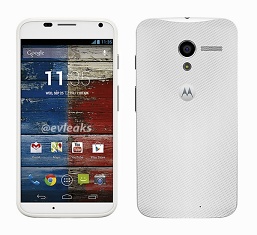
We already know that, Motorola X will be officially unveiled on August 1 in New York. The press image and specifications of the upcoming device from Motorola has already been leaked and we now have another press render, which shows the smartphone in a white paintjob.
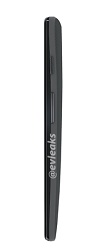
Additionally, a new image from evleaks shows the side profile of the Moto X and reveals the presence of power button and the volume rocker there.
Meanwhile, the Motorola Moto X is rumored to sport a 4.7-inch display with a resolution of 1280 x 720 pixels and the smartphone is said to feature a Qualcomm Snapdragon MSM8960DT chipset with a dual-core processor clocked at 1.7 GHz and 2 GB of RAM. There's going to be a 10.5 megapixel rear camera, 2.1 megapixel front camera and 16 GB of inbuilt memory.
The upcoming smartphone from Google owned company will run on Android 4.2.2 Jelly Bean and the juice for the device will be provided by a 2,200mAh non-removable battery.
We will be bringing you all the latest news from the Motorola event live, so do check back with us for more information on the Moto X.
The future of live events is digital, and soon, your ticket, the way you pay for drinks and even your ability to share the experience on social networks, could all be done with a tap of the wrist.
Radio-frequency identification (RFID) wristbands are set to feature at many festivals and events this summer as an alternative to the NFC smartphone.
Most RFID wristbands contain short-range - typically 3-5cm - passive tags and don't require batteries, but instead, are powered when placed near or 'tapped' against an RFID reader.
When detecting an RFID wristband, the reader 'agitates' a magnetic field created by a coiled antenna within the tag. The tag then uses this kinetic energy to 'power-up' and send data (held within the tags' memory), back to the reader.
The tags in RFID wristbands can either be personalised with someone's profile (e.g. data is held directly on the chip itself) or they can be used as an access 'key' to a secure database of personal data.
What else can RFID wristbands do?
ID&C is the UK company behind the wristbands at many major festivals including Isle of Wight. The company has also worked with brands such as Adidas.
More than 40 festivals around the world have used RFID wristband technology to offer fast-track entry, cashless payments and perhaps the most exciting bit - integration with social media.
Yes – after buying a ticket online, you'll have the option to link your RFID wristband to your Facebook or Twitter account, enabling you to post, Tweet, share and like all your favourite parts of the festival.
RFID bands are also being used for posting to social media
Footage from last year's Bonnaroo festival in Tennessee, show's how RFID wristbands helped generate 1.9 million Facebook likes.
In the UK, wristbands were used at some festivals last summer including the Isle of Wight, Wireless and Wakestock. An estimated 3.5 million festivalgoers around the word have now used them.
What about using NFC smartphones instead?
The problem with using NFC smartphones instead of wristbands is that not everyone has one. This alienates ticket-holders and brings contactless participation down from an achievable 100 per cent if you issue every attendee with an RFID wristband.
Then there's the fact phones run on batteries, and unlike RFID wristbands, will run out at some point during a multi-day festival. And, with limited (sometimes non-existent) ways to re-charge your phone in a field, your e-wallet, e-ticket and the ability to brag to your friends on Facebook, will vanish.
To say there's no place for NFC at festivals is wrong though. The Samsung Galaxy S4 for example, has been used as an RFID reading device and it's a perfect hand-held scanner for smaller events.
RFID bands are relatively low cost
It's not just the practical issues mentioned above that affect festival-goers though, but the data integrity and security of any RFID system at a festival crumbles when the contactless device isn't locked to your wrist, synced to your profile and made non-transferable.
You might not see RFID wristbands at every festival this year, but with a reported three million Facebook likes and a billion cashless transactions already made with them, it won't be long until they're everywhere.
Just a few hours after we marked our calendars for its launch on August 1, leak artists have celebrated the Moto X phone's impending 'coming out party' by slipping out an official-looking shot.
Just ten days from the official reveal, prolific Twitter leaker @EvLeaks (via The Unlockr) has gotten his or her mitts on another press render of a Motorola device, following recent Droid family leaks.
Although it's nice to see the phone in its official guise, rather than blurry-cam snapshots or videos, there isn't much new information to bring you beyond the photo.
The homescreen gives us a look at stock Android running on the device, but the transparent menu keys, as Engadget points out, suggests there'll be some minor UI modifications from the Motorola division.
Born in the USA
The 'designed by you' and build in the USA smartphone will be officially presented to the world on August 1, after the company requested RSVPs from the media for an event.
It is thought that smartphone fans will be presented with a host of customisation options, including build materials and personalised engraving.
The device is also expected to be the first to run Android 4.3 out of the box, which most observers expect to be the subject of Google's 'breakfast with Sundar Pichai' event on Wednesday.
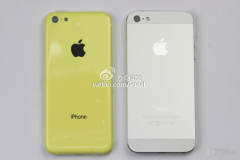
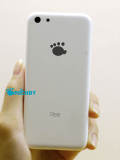
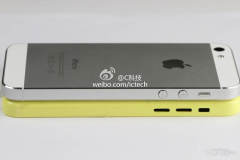
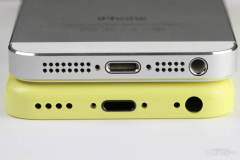
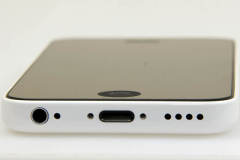
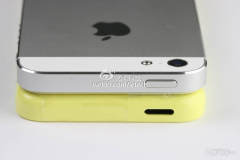
The rumor mill just won’t let it go - a brand new batch of “budget iPhone” photos has cropped up and it compare the (supposedly) upcoming device with the current iPhone 5. Many such photos have already been debunked.
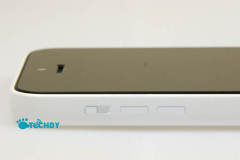
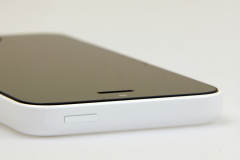
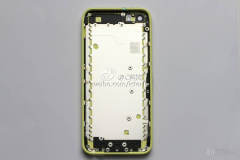
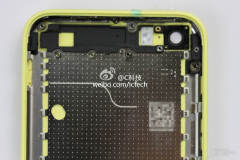
The budget iPhone is plastic, colorful plastic at that, and has the same exact arrangement of buttons, ports and other doodads as the iPhone 5. The size of the two pictured devices is virtually the same, so it’s not just a plastic back cover.
"Budget iPhone", next to iPhone 5 • Basic Bear, an Android-powered lookalike
Still, it’s quite telling that there isn’t a single photo of the front of the device. In all likelihood we’re talking yet another knockoff - namely an Apple-branded version of the Basic Bear (we‘ve arranged comparison images above).
A couple of shots of the budget iPhone's insides
Anyway, back to the rumor. There will allegedly be two versions of the budget iPhone - a cheaper Zenevo with dual-core H5P processor (what?), 1GB RAM, BT 4.0 and 4G connectivity and a Zagato/Bertone with H6P (again, what happened to Apple Ax?).
Just to be clear, we're not saying there won't be a budget iPhone, in fact it seems like the smart thing to do for Apple. But we're saying these images are "Big Foot and Nessy on a ride around town in a flying saucer" fake.
We are inching closer to the official launch of the Motorola X, slated to happen on August 1. Naturally, then, a few leaks are par for the course and we have not one but two today, in the form of a leaked press image as well as leaked specifications.
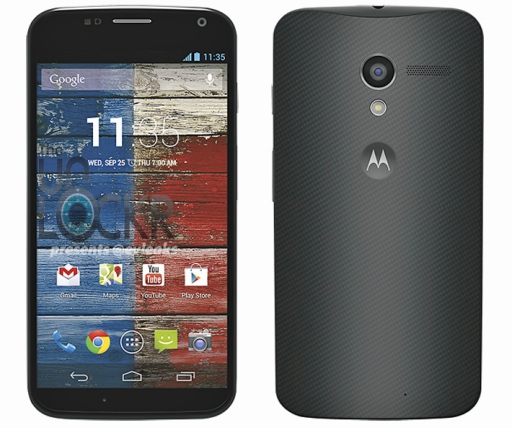
The first one comes courtesy TheUnlockr and gives us a first proper look at the device. The X is a bit of a departure from Motorola's recent designs, wherein it adopts a lot more curvaceous and understated design instead of sharp lines and more radical materials such as Kevlar for the back. The front looks very similar to the Galaxy Nexus or the Nexus 4 with it's focus on minimalism and display-centric design.
The back looks similarly sober, with a hump running vertically in the middle of the phone and a camera lens, flash and loudspeaker nestled together near the top above the Motorola logo. The back has a simple dotted pattern but from what we've heard so far you'd have the option to customize it.
Moving over to the specifications, this time courtesy Android Police, we have a Qualcomm Snapdragon MSM8960DT, with a 1.7GHz dual-core CPU and Adreno 320 GPU, 2GB of RAM, 4.7-inch, 1280 x 720 resolution display, 10.5 megapixel rear camera, 2.1 megapixel front camera, 16GB internal memory (12GB user accessible) and Android 4.2.2.
The device has been taken through a couple of benchmarks. The AnTuTu score stands at around 18-19k and 7100 in 3DMark Ice Storm Extreme tests. The scores are impressive, perhaps a bit too impressive. It's curious how the X manages to score higher than the Nexus 4 (approximately 14k and 5.8k, respectively) despite having two few CPU cores and identical GPU (Nexus 4 only has a slightly higher resolution display). Regardless of that, for what will supposedly be a mid-range device, the specs of the Motorola X are quite impressive.
This is all we know for now but with August 1 fast approaching, we wouldn't have to wait too long to find out more.