Thursday, November 1, 2012

Microsoft ran out of time to add notifications to WP8

Microsoft ran out of time to add notifications to WP8

One feature of the Windows Phone 8 platform that Microsoft failed to mention at the launch this week was a central hub for notifications. That's because it doesn't exist, with Microsoft's Thomas Fennel admitting it wasn't included because the developers ran out of time.

While Microsoft's platform allows for notifications delivered through its Live Tiles system, there isn't a central hub to deliver notifications of all a user's important information.

For some applications that don't take advantage of Live Tiles, this leaves developers without a way to send users notifications.

A notification centre also helps users track older notifications that may be lost in among the more popular apps.

Giving notice

But it's also something that Microsoft is aware of and could potentially implement in future updates.

"It's very, very important to me… we get tons of feedback from developers that they want something like that as well. I promise we're thinking very, very hard on that one," Fennel admitted when questioned about the lack of a notification centre in WP8 at the Microsoft Build event.

It's obviously a long way from an official announcement, but it does seem likely Microsoft will push to incorporate the feature in future builds of the mobile operating system.

Via: The Verge


Source : http://www.techradar.com/news/phone-and-communications/mobile-phones/microsoft-ran-out-of-time-to-add-notifications-to-wp8-1109488

Verizon rolls out mobile device charging stations for Sandy victims

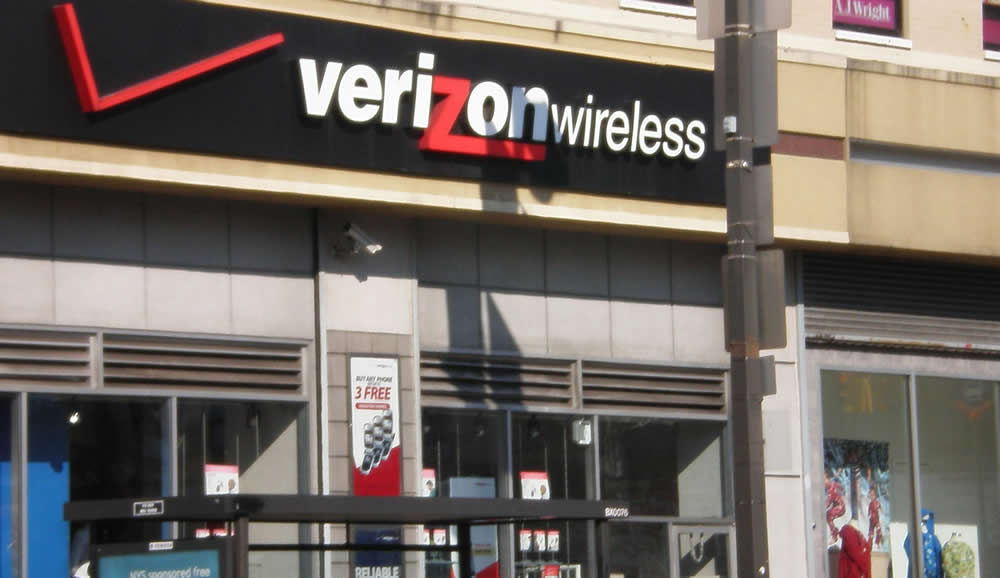
verizon storefront

Definitely helpful for anyone impacted by Hurricane Sandy, Verizon is providing assistance to the public in the form of emergency communication centers.

With locations detailed on Verizon’s site, the wireless company has positioned large, trailer-sized charging stations at locations within Ohio, New Jersey and West Virginia as well as Staten Island. Not limiting outreach to Verizon customers, the company is welcoming anyone that was impacted negatively by Hurricane Sandy. The public can visit the mobile trailers to recharge their mobile devices like smartphones, tablets or laptops. In addition, anyone without a computer can get online at a computer workstation. Verizon is also offering Sandy victims access to mobile phones in order to make domestic calls to friends and families. 

Verizon wireless charging stationBeyond the emergency communication centers, Verizon is opening retail locations up to the public for device charging and free domestic calls. Victims of Hurricane Sandy can also find prepaid phones as well as replacement chargers at Verizon stores if needed.

In order to reestablish wireless communication in areas devastated by Hurricane Sandy, Verizon technicians have been working around the clock to improve service. Regarding the progress of technicians, Verizon representatives stated the company has “seen continued improvement overnight with now more than 96 percent of our cell sites in service and serving our customers in the impacted area, including some of the hardest hit areas of the Northeast.” 

Similar to Verizon, AT&T and T-Mobile stores are opening up retail locations to offer device charging. In addition, AT&T has rolled our mobile charging stations at relief areas across the Northeast. Regarding any payment issues, T-Mobile is giving customers a grace period up until November 8 and plans to waive all late fees as well. Basically, customers that haven’t paid their T-Mobile bill will continue to receive service to their mobile phone. AT&T is also planning on waiving all late fees and will extend payment windows for Hurricane Sandy victims. AT&T representatives did not specifically mention an end date on that grace period. 


Source : http://www.digitaltrends.com/mobile/verizon-rolls-out-mobile-device-charging-stations-to/

Here it comes: iPad Mini sales start in New Zealand

With Apple's global launch of the iPad Mini set for 8am, November 2, plenty of consumers in New Zealand, where it's already Friday, will be busy testing out the new device.

When Apple announced that sales of the new iPad Mini would begin at 8am on November 2, residents of New Zealand hoping to get their hands on the new device knew they’d be the first to have the opportunity to do so, beating their San Francisco counterparts by 20 hours thanks to the beauty of time zones.

And so, as the sun goes down on the US on November 1, plenty of customers in the South Pacific country have already unboxed their diminutive iPad and have likely made up their mind as to whether it lives up to the hype.

As the Wall Street Journal points out, New Zealand doesn’t have an official Apple store, leaving resellers to deal with expectant Apple fans.

“I don’t know who will have what (products) where in New Zealand but the retailers will certainly be able to open their doors so people can come in and touch and play straight away,” Apple spokeswoman Fiona Martin told the WSJ.

Kiwi James Griffin tweeted a photo of himself holding aloft his new 7.9-inch iPad Mini, delivering his verdict a couple of hours later: “Love it! It’s the perfect size.”

The device marks Apple’s entry into the smaller-tablet market, taking on the likes of Google with its Nexus 7 tablet and Amazon with its range of Kindle Fire devices.

The Mini, however, is a pricier proposition than its rivals, with, for example, the $329 16GB model going for $130 more than the 16GB Nexus 7.

The latest addition to Apple’s range of gadgets is 53 percent thinner than the full-size iPad, and just 7.2mm thick. Apple decided to leave out its high-definition Retina display with the Mini’s 7.9-inch screen, going instead for a 1024 x 768 resolution with a pixel density of 163ppi.

Many industry watchers are interested to see to what extent sales of the Mini affect those of its big brother, and how that might impact Apple’s overall financial performance.

[via MacRumors]


Source : http://www.digitaltrends.com/mobile/here-it-comes-ipad-mini-sales-start-in-new-zealand/

Apple releases iOS 6.1 beta to devs, complete with new Map Kit framework

Apple releases iOS 6.1 beta to devs, complete with new Map Kit framework
iOS 6.1 is expected to arrive sometime after the holidays

Following its mini-update to iOS devices Thursday, Apple released iOS 6.1 beta and a Xcode 4.6 preview for developers to tinker with.

On Apple's developer website, engineers have identified a file named "Build 10B5095f" as the iOS 6.1's beta.

It's the first peek at the next version of iOS 6. Now programmers can play with the beta in the iPhone 5, 4S, 4 and 3GS environments as well as on the fifth and fourthiPod touches and the full versions of the iPad.

A version of iOS 6.1 that works with the new iPad mini has yet to pop up on the site. It it, however, expected to appear Friday.

New tools for making Maps

The most notable new tool is a class called "MKLocalSearch" for the Map Kit framework.

The kit lets programmers "search for map-based addresses and points of interest," plus lets developers enter placename information and portions of addresses and have search returns that match the info and provide additional data.

One example given by Apple was if a user searched for "coffee," the new tool would generate returns with the location of local coffeeshops and provide extra info on each java joint.

The new Xcode 4.6 per-release was released too. It's said to be identified as "Build 4H90b." It includes the software development kits for both iOS 6.1 and Mac OS X 10.8 for the desktop.

The beta version comes stocked with Xcode IDE, the iOS simulator and all the necessary tools and frameworks for building OS X and iOS apps.

Maps still lost with 6.0.1

The release of both betas comes the day Apple updated iOS to version 6.0.1, which was mainly aimed at fixing a host of bugs. Since iOS 6 is about a month old, Apple still had some kinks to work out.

Those hoping Apple Maps would be fixed during the incremental update should continue to hold their collective breath.

Many users have been upset with the inaccurate and missing data in the navigation app Apple launched during iOS 6 to replace Google Maps.

After the public backlash, Apple CEO Tim Cook apologized to customers through an open letter.

In it, Cook said Apple was working on Maps' problems and recommended other avenues (like Bing and even Google Maps) that would help customers find their way until Maps was fixed.

Finding a way for Maps

Since Tim's letter there have been rumors that Apple was enlisting its army of Apple Store employees to help fill in the information gaps. But there hasn't been much movement on the Map-improvement front for a while.

The release of these new map-themed developers tool is the first glimmer of hope that Maps might become more accurate and informative. Or at least tell users where to get a decent cup of coffee.

We'll know after the new iOS 6.1 launches, which is expected to release some time after the holidays.


Source : http://www.techradar.com/news/software/operating-systems/apple-releases-ios-6-1-beta-to-devs-complete-with-new-map-kit-framework-1109424

Pearltrees releases version 1.0, premium accounts included

pearltrees

We caught up with Pearltrees' chief evangelist, Oliver Starr, after the company announced its 1.0 release and a new subscription-based business model.

Visualizing the scope of what we share from around the Web is a challenge, but given the popularity of tactile devices like iPhones and iPads it seems a valuable one to undertake. Interacting with website content is becoming more and more expected, and developers are taking note. Pearltrees, a startup we wrote about to announce its $6.7 million in funding early this year, just may be at the forefront of haptically curating information, and the company says it has the metrics to prove it.

We caught up with Pearltrees yesterday when the company celebrated the app’s 1.0 milestone. Pearltrees explains that 1.0 signifies the cohesiveness of its product across its three supported platforms: Web, iPhone, and iPad. It also marks, in some respects, the true launch of the site, despite having officially having launched in 2008. Oliver Starr, chief evangelist for Pearltrees, explains to me that Pearltrees started out as a Web app, but was developed for devices like iPhone in mind. The Web app was just an intermediary platform, since at the time Apple’s mobile wouldn’t be able to support the tech required to develop Pearltrees for the iPhone. In fact, the iPhone app wasn’t launched until July of this year.

Pearltrees was founded on the principles that Tim Burners-Lee, the godfather and founder of the Web, had in mind when developing what we know as the Internet. First, anyone should be able to view any piece of information published on the Web — the leading thought of Web 1.0. The second is that anybody should be able to publish any piece of information, which happened with the rise of blogging, wikis, and Twitter. Finally, and most importantly, the third criterion was that anyone could organize collections of this information.

Pearltrees visually aggregates bookmarks of websites, photos, and anything found online into visual “pearls.” Collectively the pearls make up a tree of information, clearly where the app gets its name. Users can save their latest interests from around the Web individually, but multiple users sharing the same interest can collaboratively curate a single pearl as well. It sort of feels like a visual, graphic Wikipedia without the user-contributed text. For instance, one of Starr’s favorite pearls has over 150 members and curates TED Talks. As he took me through it, the pearl was admittedly expertly curated and there didn’t appear to be any irrelevant information to be found.

The moderation of community pearls is left up to the devices of its members. Despite this, Starr tells me he’s only had to administratively ban approximately fifty accounts, including spam bots. It’s an astoundingly small number considering the 700,000 active users, two million unique visitors per month, and about 30 million pearls. And Starr knows a thing or about community moderation. “Being a veteran of moderating tech comments, I can tell you that’s not the norm.” Starr was Michael Arrington’s first employee at TechCrunch and responsible not only for creating “MobileCrunch,” but also worked as the tech blog’s first community moderator.

Pearltrees has access to unprecendented information about its users through its interest graph, called TreeRank. It can group pearls into similar interests and display them to you. Should you search for “Wolves,” the app would then display all pearls relevant to your search query. But since the algorithm scrapes your interests, it knows exactly what Pearltrees’ users interests are and similar things you’d want to see. It’s a powerful feature that, and one you’d think a marketer’s dream.

Despite this goldmine of user information, the company refuses to sell out. “We’ve kept true to the spirit of the company and the product, which is that we wouldn’t leverage what our users do through marketing,” says Starrs.

Instead, Pearltrees is taking the more difficult and less traveled route to making money by selling services. Luckily, the for-pay feature was one requested by the users. Now users can pay $4.99 per month or $49.99 for one year to make pearls private. But this model serves a dual purpose: It implicitly improves Pearltrees’ platform as a repository of valuable curated content. Putting a price on something will increase its value, and while that can be difficult to prove, it’s been done before — sites like Quora, Wikipedia, and even Evernote have showed us this.

By default all pearls are public, so anyone can see your pearls. With Pearltrees’ mantra to be host to a library of valuable content, Starrs explains that the pearls that users want to hide are typically content that Pearltrees wants you to pay to hide anyway. If it’s a pearl containing embarrassing content or even something not worth sharing, then it’s likely not content that would be helpful to other users should they find that pearl. So users should help pay for the hosting costs if it’s not going to contribute to the benefit of Pearltrees as a whole.

It’s a big bet, but one that the site is confident it can take. Pearltrees 1.0 is available now via the Web and for iOS devices. 


Source : http://www.digitaltrends.com/mobile/pearltree-chugs-along-with-1-0-release-and-subscription-base-privacy-feature/

Physical Google Wallet card reportedly coming soon

Physical Google Wallet card reportedly coming soon
Game changer (credit: Android Police)

Google may be soon drop a bombshell on the mobile commerce world as a report surfaced Thursday the company is preparing to launch a physical credit card.

Dubbed the "Google Wallet card," this piece of plastic is for those times users can't tap and pay.

It will work just like a regular credit card anywhere major credit and debit cards are accepted.

The news comes from an anonymous tipster who gave Android Police the heads up that he had already received a confirmation email for his card.

Cut up the others

According to the Google Wallet cards set-up instructions, users can add credit and debit cards to the Google Wallet app, then use any of them to make purhcases by using the Google Wallet card.

All users need to do their Wallet card and their default card in the Google Wallet app will be charged.

Whenever users want to swap the card, they can simply select a different card through the app.

All cards - except Google's - can stay at home.

Google Wallet instructions
Swipe and swap it with ease (Credit: Android Police)

The card can be ordered through the Google Wallet app and sent to recipients' addresses, as was the case with the tipster who will receive an email when the card is in the mail.

Access to exclusive offers is also available and deals are instantly redeemable. If the card is lost, all a user needs to do is cancel their Google Wallet card - not every card they own.

Big surprises

This may very well be the service Google recently opened sign ups for, though the "next version of Google Wallet" seemingly suggested the app would soon open to more devices, including iOS products.

However, it could all be part of a huge Google scheme to conquer the mobile (and beyond) commerce world.

While a physical card steals the lede, other new features are reportedly on the way as well.

New Google Wallet features
More features are in the offing (Credit: Android Police)

A "Wallet Balance" feature looks like it will let users deposit and withdraw funds while a person-to-person money transfer feature is also coming.

There's also compelling evidence a transit card is part of the new Google Wallet package.

Whether the card and new features will extend beyond the U.S. isn't yet clear, but all this could make carrier approval obsolete for everything but tap payments.

A Wallet card would let owners of iOS and Windows Phone devices utilize a non-NFC version of the Google Wallet app, too.

TechRadar has reached out to Google for comment and will update this story if and when the company responds.


Source : http://www.techradar.com/news/phone-and-communications/physical-google-wallet-card-reportedly-coming-soon-1109411

Physical Google Wallet credit card reportedly in the works

Physical Google Wallet credit card reportedly in the works
Game changer (credit: Android Police)

Google may be soon drop a bombshell on the mobile commerce world as a report surfaced Thursday the company is preparing to launch a physical credit card.

Dubbed the "Google Wallet card," this piece of plastic is for those times users can't tap and pay.

It will work just like a regular credit card any where major credit and debit cards are accepted.

The news comes from an anonymous tipster who told Android Police he already received a confirmation email for his card.

Cut up the others

According to the Google Wallet cards set-up instructions (provided by the tipster), users can add credit and debit cards to the Google Wallet app, then use any of them in stores by using just the Google Wallet card.

To make purchases swipe the Wallet card and their default card in the Google Wallet app will be charged.

Whenever users want to swap the card, they can simply select a different card through the app.

All cards - except Google's - can stay at home.

Google Wallet instructions
Swipe it and swap it with ease (Credit: Android Police)

The card can be ordered through the Google Wallet app and sent to recipients' addresses.

Access to exclusive offers is also available and deals are instantly redeemable. If the card is lost, all a user needs to do is cancel their Google Wallet card - not every card they own.

Big surprises

This may very well be the service Google recently opened sign ups for, though that new service seemingly suggested the app would soon open to more devices, including iOS products.

However, it could all be part of a huge Google scheme to conquer the mobile (and beyond) commerce world.

While a physical card steals the lede, other new features are reportedly on the way as well.

A "Wallet Balance" feature looks like it will let users deposit and withdraw funds while a person-to-person money transfer feature is also coming.

There's also signs a transit card is part of the new Google Wallet package.

Whether the card and new features will extend beyond the U.S. isn't yet clear, but all this could make carrier approval obsolete for everything but tap payments.

A Wallet card would let owners of iOS and Windows Phone devices utilize a non-NFC version of the Google Wallet app, too.

Until Google makes all of this official, competitors and consumers alike are going to be watching Google with eager eyes.


Source : http://www.techradar.com/news/phone-and-communications/physical-google-wallet-credit-card-reportedly-in-the-works-1109411