Following in the footsteps of the Xperia Z2, the Sony Xperia Z2 Tablet is available for pre-order. We made the rounds and collected the prices of the tablet around Europe. The launch date will be in April, the same time frame as the the Z2 phone.
The good news is that it's cheaper than the phone in most places – in the UK, it's £500 (€610) both from Sony's official web site and from Clove UK. This is for the 16GB Wi-Fi only version.
The price in Germany is €500 (and €650 from Sony's official web site). Note that these are pre-order prices and might change in time for the launch. The 32GB Wi-Fi model is €550, the 16GB LTE model is €650.
In France and the Netherlands the Xperia Z2 tablet is €630, €670 in Sweden (SEK 5 995,00) and €700 in Spain and Poland (PLN 2 899). These prices are from the official site, so it's possible that regional stores have it cheaper (like in Germany). If you find such a store, drop a link in the comments!
The original Grand Memo arrived at last year's MWC, so it makes perfect sense that ZTE is rebooting its phablet one year on with the Grand Memo 2 LTE.
The Grand Memo 2 builds on its predecessor, growing its screen from 5.7 to a full 6-inches, putting it on par with the Lumia 1520 and above the Samsung Galaxy Note 3 and HTC One Max.
The 6.44-inch Sony Xperia Z Ultra still rules the roost in terms of size though.
A big phone needs big power and ZTE has equipped the Grand Memo 2 relatively well, but the 1.2GHz quad-core processor is a little disappointing.
You also get 2GB of RAM, 16GB of internal storage, microSD slot and a sizable 3200mAh battery ZTE claims will last for 15 days in standby.
Battery life may actually be alright on the Grand Memo 2 as it's not rocking a full HD display. Instead you've got to make do with a 1280 x 720 resolution, which doesn't look particularly amazing stretched over such a large area.
The handset itself doesn't ooze premium quality either, with a cheap plastic finish highlighting the Grand Memo 2 may well be one of the more affordable big screen phones around.
At first look the Grand Memo 2 does appear to be a relatively premium device, but pick it up and you'll notice the overly plastic body and buttons that rattle inside the chassis.
This does mean that the Grand Memo 2 is surprisingly light, making it slightly easier to hold in one hand, although I still had to stretch my fingers across the device.
For the most part I'd recommend a two handed grip on the Memo 2, just to be on the safe side.
There's good news in the fact ZTE has loaded Android 4.4.2 KitKat onto the Grand Memo 2, but it's then gone a spoiled it by putting its own custom overlay on it.
Oversized, childish icons make the on screen experience of the ZTE Grand Memo 2 feel immature and toy-like, and to be honest I found it a little off putting.
The processor appears to struggle a little bit too, as general navigation around the handset was slightly stilted and the Grand Memo 2 isn't as quick as its big screen rivals.
As you may have guessed from the name the Grand Memo 2 LTE is blessed with 4G connectivity, which should give you a very fast data connection for fluid web browsing.
Unfortunately I was unable to put the 4G performance to the test during my time with the handset.
You can use the Grand Memo 2 as an universal remote thanks to the inbuilt IR (infra-red) blaster, giving you control over your TV, Blu-ray player, Hi-Fi system and more.
The Grand Memo 2 also comes equipped with a couple of decent cameras - a 13MP offering on the rear and a beefed up 5MP snapper on the front.
In general the camera app doesn't provide a huge array of options, but something I've not seen before is a spirit level mode which helps you get a dead straight photo instead of a wonky mess.
This feature won't be a must have for anyone, but it's interesting to see and I wonder if it will lead to more enhanced settings in the future.
Early verdict
If you're in the market for a top of the range phablet the ZTE Grand Memo 2 LTE is not for you.
Its cheap build, average screen and childish UI pigeon hole it as an affordable phablet, but even then you might want to consider a standard size smartphone over this ZTE offering.
Acer isn't just launching the Liquid E3 at MWC 2014. It's got another, smaller sibling that reckons it can fit in just about any pocket you own.
The Acer Liquid Z4 is all about being compact, affordable and as friendly to as many user demographics as possible. It wants to offer total one-handed control at a decent price, and for the most part it succeeds.
At 9.7mm thick, the Z4 sits nice and cosy in the hand and actually feels quite solid despite its budget look - though it certainly doesn't feel "premium".
But for €99 (about £82, $136) - and with a dual-core 1.3GHz processor and 512MB of RAM - you know you're in budget territory, so this isn't a huge criticism.
In a time of growing screens, this is a phone still made very much with your pockets in mind. This makes for a bit of a cramped typing experience at the expense of a more compact device, however. So its worth bearing in mind the trade-off here.
The 4-inch screen is much less agreeable in picture quality, with the 800 x 480 resolution making for a blotchy, pixellated experience. Colours look washed out, particularly when you're using it in a well-lit room.
The 5MP rear camera camera with flash isn't bad for a low-budget phone like this. We had a go at taking some pictures with Acer's camera app and the quality seemed reasonable, although it was hard to appreciate it on that screen.
That said, we'd need to spend more time with it to get a better picture...
Also on the rear is the same Acer Rapid button found on the Liquid E3. This can be assigned to open any app with a short press, while a longer press will start the camera app. Both of these, however, can be turned off if you so wish.
It follows in the footsteps of the LG G2, and its usefulness will most likely depend on how you hold your phone. Having a shortcut button on the front probably still makes more sense, but that's just my opinion.
The phone comes running Android 4.2.2 (which had enough zip when we used it) along with Acer's Liquid UI on top, the biggest change being Quick Modes. As with the E3, this allows you to tailor the Android experience to who's using the phone.
If it's granddad, you can make icons bigger and the more useful feature most easily accessible. Or for young children, you can restrict the phone's functions to basic calling and texting, if you so wish.
Early verdict
It's not going to win any spec battles, but the Z4 could prove to be pretty popular with its low price point. And with screen sizes getting bigger and bigger, it's interesting to see Acer putting out something that goes against the tide.
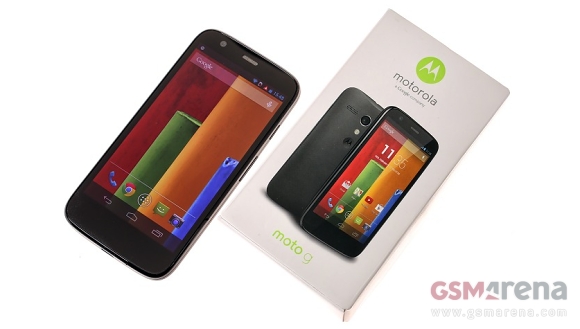
The budget-friendly Moto G is Motorola’s “most successful, highest-selling smartphone”. Rick Osterloh, the senior vice president of product management in Motorola revealed the news at an MWC press dinner.
Motorola’s SVP went on to mention that the company makes money on every Moto G it sells. The profits are said to increase even further after the completion of the company’s acquisition by Lenovo.
The news should hardly catch anyone by surprise. With a combination of premium build quality, timely OS updates, and affordable price tag, the smartphone was well-received in every market where it was launched.
Furthermore, Motorola dropped a hint on the arrival of an updated Moto X. The smartphone is said to arrive in late summer like its predecessor did last year.
Motorola also announced expanded availability of the Moto Maker customization tool for Moto X. It will arrive in UK and Germany in Q2 this year. The Moto X will also arrive in India and Australia in the coming weeks, though there’s no word on whether it will be customizable.
If you're stuck looking for a new phone, you will likely have stumbled across many-a-Samsung handset, including both the Samsung Galaxy S3 Mini and Galaxy S4 Mini. Both handsets are still proving incredibly popular, so which one should you choose?
Samsung began the rewriting of the mid-range handset market in 2012 with the launch of the Galaxy S3 Mini, a cut down version of its immensely popular Galaxy S3 flagship. This was to be followed a year later with the launch of Galaxy S4 Mini to accompany the upgraded Galaxy S4.
The Galaxy S3 Mini and S4 Mini are handsets born of the same idea, with stripped down specs from their bigger brothers, but equally both come with a much smaller and more palatable price tag.
If you're going to tie yourself into a contract for the next two years, or fork over your hard-earned money for a new device, you're going to want to make sure you've got the right device. Thankfully, we've created this handy guide to give you a run through of the key features of Samsung's baby flagships.
Design
It should be of no surprise that both the Galaxy S3 Mini and S4 Mini follow in the same design natures that were begun with the full fat Galaxy S3 and S4 flagships.
Samsung completely overhauled its mobile design with the Galaxy S3 removing the hard industrial edges of the ageing S2 and replacing them with a curvier nature-inspired pebble design.
This was a design continued and shrunk down with the Galaxy S3 Mini resulting in a more diminutive handset that sits nicely in one hand whilst leaving no hard edges that can make holding a phone a little more unpleasant.
Samsung's curvier design nature was also carried forward the to the Galaxy S4 flagship and consequently the Galaxy S4 Mini.
Measuring 121.6 x 63 x 9.9m, the Galaxy S3 Mini tips the scales at 111.5 g allowing it to sit in the pocket relatively unnoticed. More elongated than the Galaxy S3 Mini, the Galaxy S4 Mini measures at 124.6 x 6.3 x 8.9mm and also weighs only 107g.
Both handsets provide a nice alternative to their larger brothers, sitting more comfortably in one hand than their larger-screened equivalents.
Screen
One of the reasons for the larger footprint of the Galaxy S4 Mini is that it packs a slightly larger screen. Where the Galaxy S3 Mini comes with a 4-inch screen, the Galaxy S4 Mini comes with a 4.2-inch display and also packs an increased resolution; 540 x 960 compared to 480 x 800.
Despite the extra screen space, this gives the Galaxy S4 Mini a slightly increased pixel density of 256ppi to the 233ppi of the S3 Mini and gives it the edge for watching YouTube videos and browsing the web.
On the whole, both the Galaxy S3 Mini and Galaxy S4 Mini come with relatively similar screens as they both pack in the Super AMOLED technology that has made Samsung handsets so popular.
Neither handset is ideal for those that plan on watching a wide range of films, the lower screen resolutions certainly don't lend themselves to HD movies, but both are more than sufficient for texting and web browsing.
Camera
One of the more noticeable differences between the Galaxy S3 Mini and Galaxy S4 Mini is the size of the camera sensors that adorn the rears of the mini devices, as well as the forward facing sensors that capture those all important selfies.
Samsung fitted the Galaxy S3 Mini with a smaller 5MP offering, cut down from the 8MP Galaxy S3 although still allowing it to capture decent images.
Where the Galaxy S4 took an upgrade from 8MP to 13MP, the Galaxy S4 Mini also took an upgrade in size, shipping with an 8MP sensor.
On the front of the Galaxy S3 Mini comes a VGA snapper, again smaller than the 1.9MP offering of the Galaxy S4 Mini. If you're really into Snapchat or sharing self portraits via other social media, the added pixels on Galaxy S4 Mini will eventually prove to be invaluable.
The Galaxy S4 Mini also benefits from a whole new camera app that brings a whole raft of features that take a lot of the complications out of snapping a candid image. Samsung has given the S4 Mini the Auto, Best Photo, Continuous Shot, Best Face, Sound & Shot, Rich Tone (HDR), Panorama, Sports and Night modes found in the Galaxy S4.
That's not to say that the Galaxy S3 Mini misses out, coming with its own tricks. Equipped with Smile Shot and Buddy Photo Share, these allow you to capture an image as soon as the subject smiles, as well as instantaneous capture and tagging of friends photos to make social sharing that bit easier.
For video recording, both the Galaxy S3 Mini and Galaxy S4 Mini are able to record HD images, although this is 720p on the S3 Mini as opposed 1080p on the S4 Mini.
Again, colours appear richer on the shot taken by the S4 Mini. There is noticeably more detail in the background too, rather than disappearing into a bright patch.
Subdued but still with a pulse, according to this Gear Fit
The Barcelona Opera House Chamber Orchestra that performed a seemingly never-ending opener made the Samsung MWC 2014 press conference's 50 minutes feel short and subdued.
However, the South Korean electronics giant still hit a lot more right notes today than it did last year at its widely panned Broadway-inspired product unveiling. There was no song-and-dance routine to distract from the Samsung Galaxy S5 and its new wearables.
Reflecting its stripped-down and refocused talking points, Samsung insisted that it had gauged customer feedback worldwide and opted against delivering an all-encompassing device.
Instead of eye-popping technology with bloated software, it has chosen more practical hardware upgrades in its phone and wearables.
Gear Fit is almost a perfect fit
Samsung already unveiled its follow-up to the Android-based Galaxy Gear smartwatch prior to MWC. Little did we know it was teasin' more than just a Tizen operating system for the minimally changed Gear 2 and Gear Neo.
Turns the smartwatch on its head, then 90 degrees
The Galaxy Fit turns wearables on their head by turning the display 90 degrees and stretching out the high-resolution display. In this way, it checks off another "world's first" for Samsung thanks to its incredibly rich curved Super AMOLED display.
Consumers, still perplexed by Samsung's flexible TVs and curved smartphones, can make sense of this new technology within wrist-mounted wearables.
The Gear Fit is part-smartwatch, part-fitness tracker and fully fashionable. It can receive instant notifications, reject calls, control alarms and keep track of your wellness through S-Health 3.0.
This completely eliminates the need to dig your phone out of your pocket in a number of cases. It also does away with the drudgery of foolishly running to your phone that's charging in another room, only to realize it's just a menial text reply of someone saying "k."
Always on-wrist, this accessory, at just 27 grams, solves these first world problems. And unlike the Fitbit Force, Nike FuelBand SE and Jawbone Up, it includes a heart-rate monitor, a sought-after feature among quantified self fitness enthusiasts.
Samsung still hasn't mastered the art of 'lure'
Gear Fit is being supported by an impressive 20 Galaxy devices. Contrast that to the Galaxy Gear, which initially worked with just one phone, the launching-in-tandem Galaxy Note 3. No one owned this phablet prior to their simultaneous day-one launch. You had to shell out cash for both if you wanted the watch.
On top of that, Samsung announced that it has sold more than 200 million Galaxy phones and tablets worldwide. That translates into a lot of Galaxy Fit-compatible devices.
Samsung could lure iOS and Android owners if it held Fit out on a silver platter
However, Samsung has failed to learn the art of the lure. It finally has an impressive new device that is expected to be cheaper than a smartphone and without a contract.
That's why the Samsung Gear Fit should work with iOS and all Android devices. Without such interoperability, iPhone 5S owners, for example, won't be tempted to own a Samsung phone.
Apple pulled this off when introducing its iPod and later the iPhone, turning millions of PC consumers into Apple-loving Mac users.
At the right price, The Galaxy Fit can act as that same "gateway drug" device that gets people to really appreciate and rely on the Samsung brand. It hasn't learned that tact just yet.
5 features for Galaxy S5
More than software, the Samsung Galaxy S5 boasts a hardware specs bump that stays the needless Smart Stay, Smart Scroll and Smart Pause updates.
Galaxy S5 upgrades were more focused this time
The company laid out its upgrades in five categories based on consumer feedback: design, camera, connectivity, stay fit and life.
With that, we get a perforated, dimple-backed Galaxy S5 rear that's a more pleasing alternative to the faux-leather of the Galaxy S4 and Note 3. On the front is a slightly bigger 5.1-inch screen.
The GSM Association organizes the annual Mobile World Congress and along with it the traditional Global Mobile Awards (its 19th edition this year). More than 175 independent analysts, journalists, academics and subject matter experts throughout the world participated in the judging process. The entry deadline was November 29, 2013, so it's generally last year's products that get awarded every February.
There's a multitude of categories, some of which may sound pretty obscure unless you are in the telco business, so we've shortlisted the few categories that we think would matter most to mobile phone enthusiasts (such as ourselves).
The HTC One was named the Best Smartphone in the past year. The other nominees, which were considered, were the Apple iPhone 5S, the LG G2, the Lumia 1020 and the Samsung Galaxy Note 3. Last year's winner was the Samsung Galaxy SIII.
"The HTC One remained one of the most advanced smartphones throughout 2013. Its great design and excellent user interface continue to provide a differentiated user experience, standing out from the competition."
The Nokia Lumia 520 was announced as the Best Low-Cost Smartphone (sub-$150 wholesale price). The rest of the considered nominees were all Android smartphones and included the Lenovo A390T, the Samsung Galaxy Young, the Sony Xperia E, and the Xiaomi Hongmi.
"A smartphone that hasn’t compromised on quality – a trailblazer for Nokia’s low-cost efforts."
The Nokia 105 was announced Best Entry-level or Featurephone. The other nominees were the Nokia 208, the Nokia 515, the Nokia Asha 210, and the Nokia Asha 503. Last year the winner was the Nokia Asha 305.
"Outstanding value for money, with impressive durability and battery life, this is driving mobile penetration into further markets."
The Apple iPad Air was pointed as the Best Mobile Tablet. The other nominees were the Apple iPad mini 2, the Google Nexus 7 (2013) and the Sony Xperia Tablet Z. At last year's awards it was the original Google Nexus 7 made by Asus.
"The iPad Air packs class-leading performance in an attractive and svelte frame, while its ecosystem has an undisputed advantage in the number of format-optimized apps."
LG was named the Most Innovative Device Manufacturer of the Year. Last year that was Samsung.
"Impressive across the board with ground-breaking innovation – LG is flexing its technological muscle."
The FiLIP wearable locator and phone watch for kids, sold exclusively by AT&T in the US, was announced as the Best Mobile-Enabled Consumer Electronics Device. Sony's SmartWatch 2 was another wearable device among the nominated for this category. Last year it was the Samsung Galaxy Camera that won this one.
"The FiLIP is a new breed of self-reliant wearable device that is a simple way for kids to reach their parents, and for parents to find their children quickly and easily. FiLIP affords parents peace of mind with the ability to quickly call and locate their children. This is a really well designed product fulfilling a clear market need and making a complex solution very simple for the user."
As for the mobile app awards, DEVICE 6 was announced as the Best Entertainment App (Gaming, Music, Sports, Video), CityMapper was called the Best Overall Mobile App, while CamMe was named the Most Innovative Mobile App.
Be sure to check back with us tomorrow, February 26, as that's when the Best New Mobile Handset, Device or Tablet at Mobile World Congress 2014 will be announced. Which one would you pick?