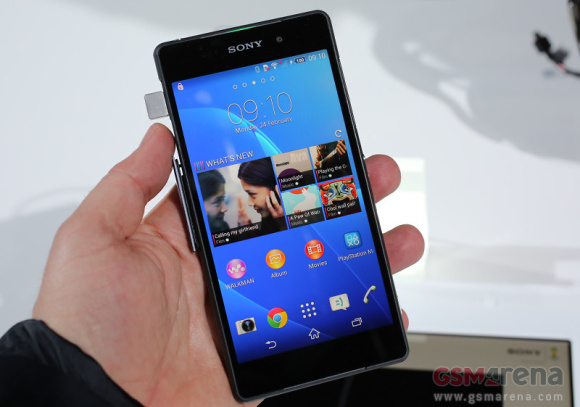
Speaking to Japanese K-Tai.Impress Sony Mobile's Creative Director, Director of Product Planning and UX General Manager, Yoshiro Kurozumi, addresses the early rise to the throne by the Xperia Z2 and why he thinks a half a year upgrade cycle is a better fit for this industry.
According to him, in order to maintain a the flagship status of the product, you must upgrade it faster to keep it competitive. He went on to confirm that the Xperia Z2 will likely be Sony's flagship for only the first half of 2014.
He also commented about design, saying Sony doesn't want to rely on a single design, which could mean the company will perhaps move away from its OmniBalance design language, which has dominated the Xperia line so far (including Z, Z1 and Z2, compact and ultra included).
And while we can extrapolate from Mr. Kurozumi's words that Sony will be releasing its next flagship some time in Q3 or Q4 of 2014 and that it may feature a new design, we truly hope Sony will at least continue to update its Z and Z1 flagships for the sake of those users, who have purchased these devices for a handful amount of money (all of which are still waiting to receive Android 4.4 KitKat).
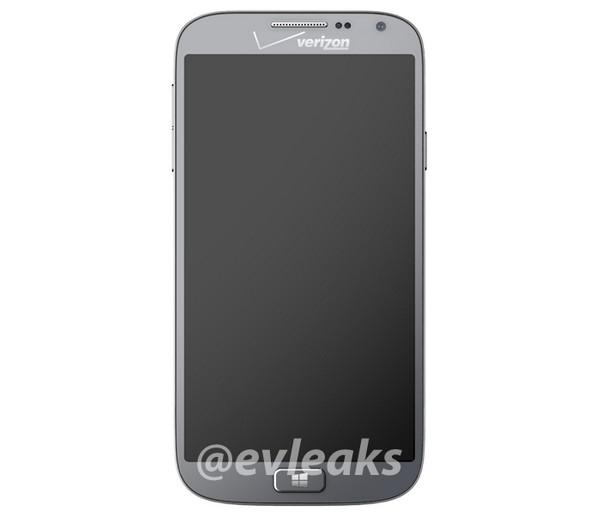
Samsung Huron for Verizon has been confirmed via the GFXBenchmark's database and @evleaks tweets. Huron is supposed to be a Windows Phone 8.1 running device headed to Verizon this spring.
According to the latest info, courtesy once again of the notorious @evleaks, Samsung codenamed Huron will be called ATIV SE. Since Verizon is already offering the first ATIV, we guess the SE might be short for Second Edition.
Anyway, Samsung ATIV SE is rumored to pack either a 4.3" 720p or a 5" 1080p display. It should be running on a quad-core Snapdragon processor with 2GB RAM and a 13MP camera.
As the latest rumor has it the ATIV SE will come with the latest available Windows Phone 8.1 OS. This means it will most probably launch in April or later, after the Microsoft's BUILD conference where the WP 8.1 is going to premiere.
Samsung's going to let developers use the Galaxy S5's fingerprint scanner in their own apps, which means you could be waving goodbye to your passwords for good.
The fingerprint-friendly Pass API was released as part of the S5's development kit, which also includes all the information devs need to create apps for the Gear 2 and Gear Fit.
The fingerprint scanner was already more useful than most, allowing you to control certain parts of the phone with your biometric data, and more apps being able to access the info will certainly attract consumers.
Pass out
"With Pass, you can provide reinforced security, since you can identify whether the current user actually is the authentic owner of the device," the document explains.
PayPal is the first to make use of the open API; its app lets you use your phone and fingerprint scanner combo to pay for things in participating stores.
Unlike Samsung, Apple's TouchID has stayed tightly guarded so you can only use it to unlock your iPhone 5S and authorise payments in Apple's own products like iBooks, iTunes and the App Store.
What did we make of the new Samsung flagship? Read our hands on Samsung Galaxy S5 review to find out
Once in a while, a product pops up that reminds you just how remarkable digital technology can be. The Jabra Motion Bluetooth headset does just that.
It integrates such an impressive array of functionality into such a tiny device, you simply have to marvel at what's possible.
Put another way, it's that Star Trek thing - the Jabra Motion is Lieutenant Uhura's ear-dangling comms device productionised and available to buy.
That's not to say it's unique or even necessarily does its intended job well. Several outfits will do you a full-function Bluetooth headset.
Indeed, the critical point is that you can have a Bluetooth headset for as little as £10 – Amazon.co.uk will do you a Plantronics ML18 for just that. The most basic version of the Jabra Motion typically costs in excess of £60.
On paper, both that device and the Jabra Motion do the same basic job – allow you to connect to your mobile phone via Bluetooth for hands-free calls.
Question is, then, does the Jabra Motion's particular feature set and execution – its controls, its battery life, the quality of its noise cancellation – make it worth the price premium.
The Jabra Motion comes with a complete charging kit
Features
Our review sample is the basic Jabra Motion. That means its a Bluetooth hands-free headset that will connect to any Bluetooth-enabled phone for voice calls.
It has physical controls for receiving and ending calls, audio volume and mute. The micrphone itseld is on a flip-boom which doubles as a power switch for the whole device.
Thanks to an extendable, swiveling ear piece, it's also adjustable for size and can be worn on both left and right ears.
Status lights help with simple syncing
Digital features start with motion and environment-sensitive noise canceling. It also sports voice control both natively and through certain handsets.
That means you have voice control of a number of the Jabra's own functions. But you can also use the full voice control of your handset through the headset. For example, you can access Apple's Siri voice control on iPhones with the headset.
The Jabra Motion also has a few other neat frills, such as using its motion sensor to automatically answer calls when you pick it up.
If this is the entry-level version, other variants add extras like a USB Bluetooth adapter to allow you to connect to PCs and support for Unified Communications (UC) which will be attractive to corporate users.
Performance
Call quality, that's surely one of the biggies for any Bluetooth headset and here the Jabra Motion scores pretty heavily.
Exactly what goes into the noise cancelling tech, we're not sure. But the end result is impressive suppression of car noise. If you didn't already know someone was calling you in-car and on the move with the Motion, you probably wouldn't guess.
And that was with our test car which is a relatively noise cabriolet with a fabric roof. That said, the audio quality for the receiver is a little thin. But if you don't want people to automatically know you're on the road, the Motion gets the job done.
As it happens, the sound quality for the Jabra Motion user is a little skinny, too. You don't notice this much in calls. But it is obvious if you try to listen to music through the ear piece.
Not that you'll likely want to use it as a single-ear wireless headphone. But it does reveal the fundamental quality of the audio of offer. And it's mediocre.
The other major element of the user experience is ease of use and that's a story of wins and losses for the Motion. The least satisfying aspect is physical fit.
The Jabra motion is adjustable and also configurable for both ears. But we found achieving a comfortable, stable fit tricky to achieve.
That's compounded if you wear glasses where the Motion and the arm of your glasses compete for space and stability atop your ear.
Folding mic boom doubles as a power switch
However, we're all different shapes and sizes so our advice here is clear. Try before you buy. The Motion isn't poorly designed, it's adjustable and it may fit you very nicely.
The rest of the usability package, however, is much more successful. Initial setup and syncing is a cinch, as is accepting and ending calls. Ditto volume adjustment and accessing additional features. It all works very smoothly indeed.
The voice control feature is an added boon and means you can have full access to your contacts on the move and hands-free. In our testing, there was no detectable loss of accuracy of Apple's Siri voice control when on the move and using the Motion as an interface.
Battery life is also good. Much will depend on usage. But Jabra claims seven hours talk time and that seems realistic.
The bottom line is that you want the device to last a day on a single charge and so long as you don't spend literally every moment on calls, we reckon you'll get just that.
Google is keenly working on Project Ara, a new endeavor to build a modular smartphone, which was started while Motorola was part of the company, and Google has scheduled an Ara Developers' Conference on April 15-16.
The event will take place in Mountain View, California, and will be streamed online to the whole world. In fact, Google claims that Project Ara is designed for 6 billion people. This indicates that Android maker may be working on a highly affordable modular phone for the masses.
However, everything surrounding Ara has been kept under strict secrecy and nothing has leaked so far.
Google reveals that it has its focus on releasing an alpha version of the Ara Module Developers' Kit (MDK), which will hit the web as a free and open platform specification reference. It will guide and contain developers through everything that's necessary to get them familiar on how to develop an Ara module.
The company wants developers and companies of "all shapes and sizes" to give project Ara a whirl. We'll see what Google has got in store for its modular phone concept in mid-April.
French carrier SFR has posted the Android 4.4 KitKat update plans for the LG G2 and the flagship Sony Xperia phones.
The 4.4.2 update for LG's flagship will arrive over the air on March 3. Note that the KitKat update for the AT&T G2 and Korean G2 is already available, but this should get the ball rolling for all G2's with no update yet.
The current Sony flagship models – Xperia Z1, Z1 Compact and Z Ultra – will get KitKat in April. The Xperia Z1 and Z Ultra were updated to Android 4.3 Jelly Bean in mid-December (Z1 Compact launched with 4.3).
Note that this update schedule applies for SFR and your carrier might be on a different schedule.
The LG F70 is the Korean firm's first push into producing more affordable 4G handsets, something which many manufacturers are doing at MWC 2014.
LG hasn't announced the price of the F70, but the handset is confirmed to arrive in Europe in the coming months.
In terms of design the LG F70 takes cues from the flagship G2, although LG has decided against on screen navigation keys, instead choosing to stick a physical home button below the display, flanked by touch sensitive back and menu options.
The power/lock button is located on the right of the F70, while the volume switch is on the left and both are easy to hit.
The lightweight, plastic build of the F70 feels sturdy, although the rear cover offers little in the way of grip, so you'll need to make sure you've got a firm hold of the phone.
It is a little on the chunky side too, measuring in at 127.2 x 66.4 x 10mm, but the rounded edges means the F70 still sits nicely in the hand.
A 4.5-inch display dominates the front of the LG F70, although its 800 x 480 resolution is a little disappointing as I'm now starting to see 720p options arriving towards the bottom end of the market.
That said, text is still perfectly legible on the F70, but if you look closely you can see that it's a little on the grainy side.
The main selling point of the F70 however is it's 4G connectivity at a lower price point, although I was unable to test out just how quick it could access the web during my short time playing with the device.
I was pleased to find Android 4.4 KitKat installed on the F70, the latest flavour of Google's mobile platform, and LG has stuck its own interface over the top.
One of the features LG's overlay brings to the F70 is Knockcode, a security function which the Korean firm has put on its low-end L-series devices as well as top end products such as the G Pro 2 and G2 Mini.
Knockcode allows you to wake the screen and unlock the F70 by tapping out a pattern on the display of between two and eight knocks.
It 's a clever idea, but one which is a little hit and miss as the F70 didn't always register my taps, forcing me to repeat the pattern.
There's a 1.2GHz quad-core processor and 1GB of RAM inside the LG F70 and it keeps KitKat ticking over nicely with smooth performance and no lag experienced during my hands on.
Rather annoyingly though for a mid range handset it only comes with a tiny 4GB of internal storage. There is a microSD slot allowing you to build on this, but it's still a very low amount and I would have liked a minimum of 8GB.
The camera setup on the LG F70 isn't much to write home about either, with a pretty average 5MP lens on the rear and a VGA offering on the front.
That's fine for the occasional casual snap, but you won't be shooting beautiful vistas with the LG F70.
The rear cover of the F70 comes off, giving you access to the microSIM and microSD slots and also the removable 2440mAh battery.
That's a decent size and should keep the F70 going for a while, although you'll have to wait for our in-depth review to see just how well it performs.
Early verdict
The LG F70 has a mediocre range of specs, but its main focus is the 4G connectivity at a lower price.
If 4G isn't important to you then you may want to check out something like the Motorola Moto G, but for a hassle free handset with access to superfast data speeds the F70 isn't a bad shout.




-580-90.jpg)
-580-90.jpg)
-580-90.jpg)


