However, the prospect has regained the spotlight, at least temporarily, with reports on Thursday claiming the company will launch a 5-inch, Full HD phone this year at a "fraction of the cost" of the Apple iPhone.
The Information website claims to have obtained documents referring to the device by the codename "Project Aria," revealing discussions with potential manufacturing partners in EU and China last spring
The documents speak of strategies for distributing the device across the United States, Europe, China this year.
Hardware form
The report's hint of an affordable price point is little surprise, given Amazon's previous hardware form with Kindle Fire tablets and ereaders, as well as the current direction of the smartphone industry.
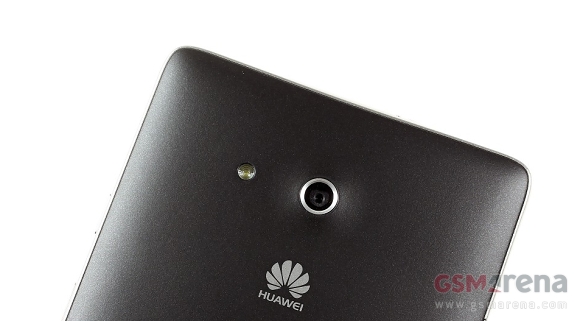
Huawei intends to release a hybrid smartphone which will boot Android and Windows Phone in the United States. The company’s chief marketing officer Shao Yang confirmed the plan in an interview with TrustedReviews.
Huawei’s CMO offered no explanation on why the company decided to offer two competing OS ecosystems in the same device. However, Yang suggested that with Windows Phone alone on board, the device might have a harder time attracting customers.
The upcoming dual-OS smartphone is said to be released at some point in Q2 this year. The handset’s launch will take place around the same time as the rollout of Windows Phone 8.1 by Microsoft.
Huawei’s intentions are should hardly catch anyone by surprise. Recently, Microsoft eased up the hardware requirements for Windows Phone, thus allowing it to easier coexist with another OS on the same device.
Earlier this year we heard info that the upcoming LG G3 will pack a QHD screen – it was too early to see it at the MWC, but now a User Agent Profile substantiates the rumor. The UAProf details the LG D850.
Note that by LG's numbering scheme, the LG G2 is D800, the Nexus 5 is D820 and the LG G Pro 2 is D830. This means the D850 could be a new Nexus or a new phablet. The G Pro 2 is barely a month old and Google doesn’t seem eager to rush out new Nexus devices, so that leaves the G3 as the most likely target.
Still, we're a little wary of such rumors after plenty that promised phones with QHD screens – both the Galaxy S5 and Xperia Z2 were supposed to have that resolution. To put it in numbers, QHD is 4x 720p or 2,560 x 1,440.
That said, the LG G3 is supposed to have a 5.5" screen, which sounds more believable for this resolution – certain 5.5" phablets are supposed to use this resolution.
Notice we said phablets, though considering the LG G2 is still the most compact 5.2" phone months after it launched (and more importantly after the MWC), we're willing to give LG the benefit of the doubt.
The LG G3 is supposed to be announced in May, which is when the doubts should be cleared.
We've been hearing a few whispers about iOS 8 recently, but now we've got something to actually feast our eyes on.
The screenshot above was posted on a Weibo account, claiming to be of iOS 8, and 9to5Mac says it has confirmed its legitimacy "with several sources".
As you can see, the rumoured Healthbook app is sitting on the top right, while Preview and TextEdit are also present.
iSpy
According to "sources in the know" Apple is optimising versions of Preview and TextEdit for iPhone, iPad and iPod Touch, which would explain their appearance here.
These versions will reportedly be made for the purpose of viewing files that are synced to iCloud by OS X, but not editing.
If this picture is real, Apple clearly still has work to do on the icons, as Preview and TextEdit are just copies of their Mac counterparts right now.
The same Weibo user also posted a picture allegedly of the settings screen, which shows the version of iOS to be 8.0.
As convinced as 9to5Mac is that these pictures are the real deal, it would be very easy for someone to knock out a photoshop job like this in no time at all, so we'll remain a tad cautious.
Last year Motorola released the excellent Motorola Moto G and, in doing so, set a new benchmark for affordable smartphones.
For all the excitement surrounding yearly flagship releases, the middle and lower tier markets are boasting the likes of the Moto G, Sony Xperia M and Nokia Lumia 520. Gone are the days when you had to spend over £200 for a quality smartphone.
Enter ZTE, the fourth largest smartphone manufacturer in the world with the ZTE Blade Q Mini: a £60 Android handset that punches well above its weight both in terms of design and features.
That low price does come with a couple of caveats. For starters, it's only available as a PAYG handset and secondly, the Blade Q Mini is exclusive to the Virgin Media network.
It's unlikely the Blade Q Mini will sway serious shoppers from the Motorola Moto G but if you're looking for a temporary replacement, secondary handset or a child's first-time smartphone, then it's very difficult to argue with this offering from the Chinese company.
Looks-wise, it's standard smartphone fare with a lack of physical buttons - thanks to Android's soft-key configuration - and smart rounded corners with a minimal bezel.
The 126 x 64 x 9mm dimensions and 120g weight mean it sits comfortably in the hand with just the right amount of heft to it.
Perhaps in response to the "phablet" movement, we're seeing something of a comeback for the smaller screen thanks to the likes of the Samsung Galaxy S4 mini and the HTC One mini.
The ZTE Blade Q mini fits into this bracket with a 4-inch WVGA display that means you can easily use it with a single hand.
The 800x480 resolution isn't enough to impress these days, but remember I'm talking about a £60 phone here.
The back of the device is covered with a soft, rubberised plastic similar to that found on the back of the Google Nexus 5. It means it's easy to grip the Blade Q mini and I also found it gave it a slightly more premium appearance than if ZTE had just gone with basic plastic.
On the right and left hand side you'll find volume rocker and microUSB charging slot respectively. The top of the phone is reserved for the power switch and the 3.5mm headphone jack. There's nothing but the microphone on the bottom of the chassis.
By having the power switch on the top of the device, you have to shift your grip to switch the phone on and off again. I think ZTE missed a trick by not putting the power button where the microUSB port is.
Had this been the case, you would be able to switch both the power switch and the volume rocker without having to move your fingers or thumb from the traditional position.
The only other buttons are the soft-touch Android keys at the base of the screen. Back, Home and Settings respectively, these keys light up when the phone is activated and are pleasingly responsive.
Sometimes lower-tier smartphones require hard jabs at the navigation keys to register any effect, but that isn't the case here. Haptic feedback is also present, but this can be disabled when the ZTE Blade Q Mini is put on silent mode.
This entire rear panel is removable via a tricky slot on the bottom right, which lets you get to the interior of the Blade Q Mini. Inside you'll find the 1,500 mAh battery as well as the SIM and microSD slots.
One nice feature is a notification light in the top left-hand corner. It will blink at you when you have an incoming email or text, and also acts as a gauge when charging the battery; switching from red to green when you're charged.
While the Blade Q Mini does boast a rear-facing 5MP camera, there's no forward-facing equivalent for taking selfies or using video-chat apps. This isn't a huge omission and isn't surprising given the budget nature of the phone.
As you'd expect on a handset with this price point, you're going to want to be reaching for a microSD card pretty quickly. The Blade Q mini is equipped with a piffling 4GB of internal storage space. Throw in pre-installed apps and the operating system itself and you've only got about 1.5GB to actually work with.
I would recommend equipping the Blade Q Mini with at least a 16GB microSD card if you plan on using it to listen to music, download apps or take a lot of pictures.
As it is, the ZTE Blade Q Mini runs nicely and, given the asking price, is comparable to rival Android phones like the Acer Liquid Z2 or Huawei Ascend Y300.
Microsoft's Windows Phone operating system hasn't been an obvious choice for manufacturers to run their smartphones. The Redmond giant is trying its best to push its mobile OS and its latest efforts will allegedly involve waiving the license fee for Indian OEMs like Lava and Karbonn.
Microsoft at its press conference at Mobile World Congress in Barcelona announced new partners that included Lava and Karbonn for producing Windows Phone smartphones. According to a report from Times of India, Microsoft has been negotiating with the Indian smartphone manufacturers to come with affordable WP devices for the last one year. The waiver of the licensing fee has allegedly helped Microsoft to clinch a deal with the local OEMs.
Microsoft's latest move is quite surprising as the company did not give its OS for free even to Nokia, which has been the major manufacturer of the WP smartphones since 2011. However, Nokia received $250 million every quarter from Microsoft as 'platform support payments'.
Here's what a senior executive from an unnamed Indian company had to say about the waiver of the WP licensing fee - "For our planned Windows Phone handsets, we are not paying Microsoft a licence fee. The company is obviously exploring new models for Windows Phone. It must have realized that the older model where it licenced the OS did not work out well, even with Nokia's support."
A few reports in the past had suggested that Microsoft has been trying to motivate manufacturers to develop WP smartphone by offering them an annual sum of $1 billion. It appears the company is dead set on expanding the reach of its smartphone even if it means giving up on some profits in the short term.
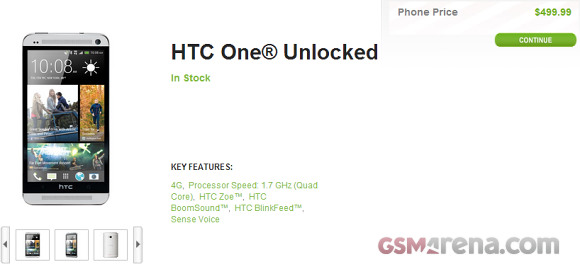
HTC has lowered the price of the contract-free and unlocked version of the HTC One in the USA. It now costs $499.99, $100 below the official price of $599.99.
The price cut happens two weeks before the announcement of its successor - the All New One or simply HTC One 2014. The device might not be official just yet, but it has already leaked numerous times before with specs and everything. It even went on sale on eBay yesterday for $499.99 and quickly found a lucky owner.
HTC One 2014 will supposedly bring a bigger 5" 1080p display, a better Snapdragon 801 chipset and dual-camera setup on the back. It will premiere officially on March 25.




 d to iCloud by OS X, but not editing.